


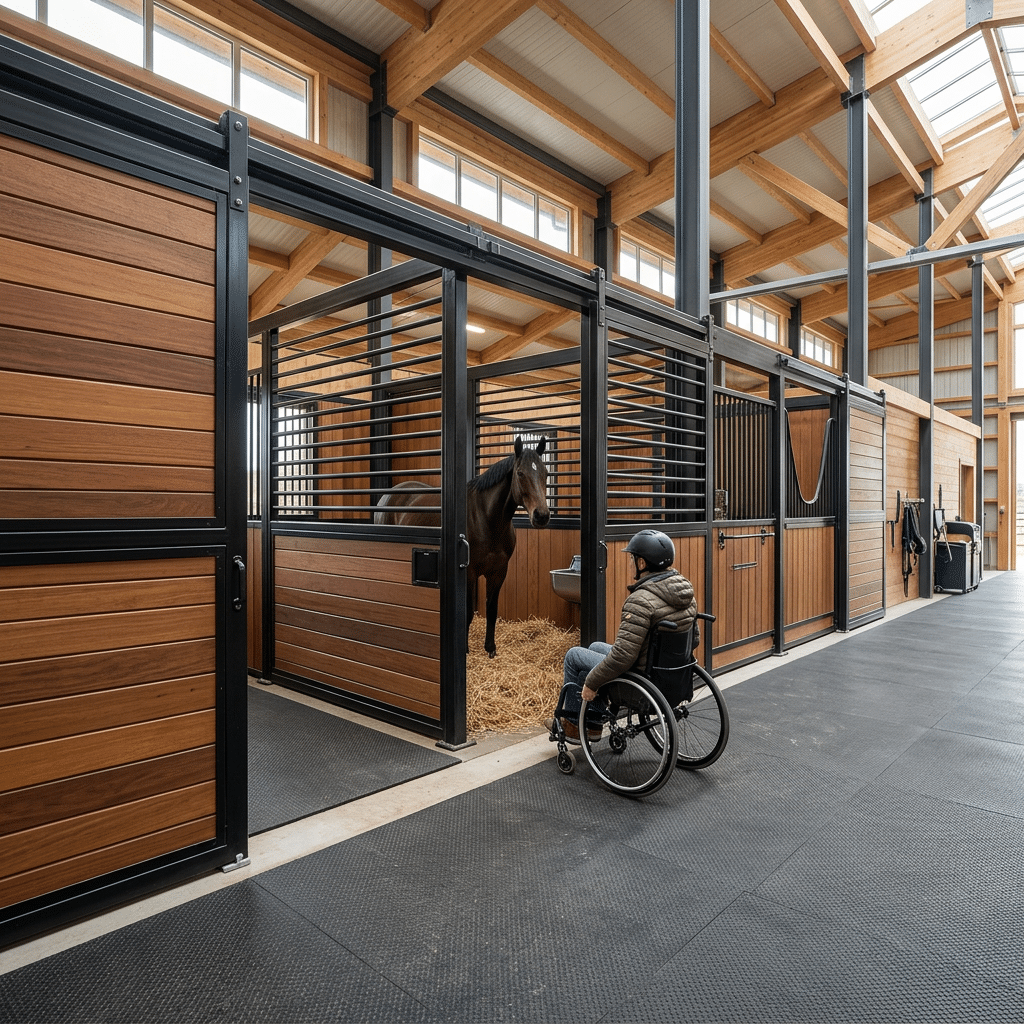
Equine Rehab Centers fail financially when material selection ignores the aggressive reality of hydrotherapy environments. Specifying standard timber for wash bays creates a bacterial sponge that compromises biosecurity and forces expensive retrofits within thirty months.
We benchmark medical-grade infrastructure against the BS EN ISO 1461 hot-dip galvanization standard and high-density bamboo impact ratings. This guide prioritizes Q235B structural steel frameworks and modular flat-pack logistics to maximize facility ROI and minimize long-term maintenance liabilities.
The Rise of ESG (Environmental, Social, Governance) in Construction
Executive Summary: By 2026, ESG has shifted from a niche trend to a regulatory necessity. For equestrian projects, compliance now requires flat-pack logistics, fully recyclable steel lifecycles, and renewable infill materials like bamboo to meet carbon budgets.
Decarbonization and the Circular Economy in 2026
The construction sector is responsible for a massive portion of global CO₂ emissions, prompting regulators to tighten the screws on how projects are approved and financed. By 2026, general promises of “sustainability” are no longer sufficient. Regulators and institutional investors now demand explicit carbon budgets for new developments. This shift moves the industry away from the “take-make-waste” linear model toward a circular economy, where materials are kept in use for as long as possible through reuse, remanufacturing, and recycling.
Investors are increasingly favoring modular and off-site construction methods. By manufacturing components in a controlled factory environment rather than on-site, companies significantly reduce material waste and transportation emissions. This industrial approach also improves governance metrics by ensuring safer working conditions and higher transparency in the supply chain, which are critical factors for securing project insurance and funding in today’s market.

Reducing Carbon Footprint through Flat-Pack Logistics and Recyclable Steel
At DB Stable, we align our manufacturing directly with these 2026 ESG mandates. The most significant immediate impact on a project’s carbon footprint comes from logistics efficiency and material lifecycle management. We moved away from traditional welded-frame shipping to a modular flat-pack system, which drastically reduces the carbon intensity of global distribution.
- Logistics Efficiency: Our flat-pack system loads 30-45 sets per 40HQ container. Traditional welded units only fit 12-15 sets. This reduces shipping-related carbon emissions by over 60% per unit.
- Material Longevity: We use Hot-dip galvanization (Standard BS EN ISO 1461). This ensures steel structures last decades without replacement, supporting circular economy goals by reducing the need for new manufacturing.
- Sustainable Infill: We utilize High-density bamboo (Janka Hardness > 3000 lbf). It creates a durable, renewable alternative to slow-growing hardwoods, regenerating in 3-5 years rather than decades.
- Recyclability: Our Q235B and Q345B steel components are 100% recyclable at the end of their lifecycle, unlike composite or treated wood that often ends up in landfills.
Frequently Asked Questions
How to build an ESG compliant equestrian center?
Building an ESG-compliant center requires a holistic approach to energy, water, and materials. Environmentally, prioritize renewable energy generation (like solar) and closed-loop water management systems for wash bays. Structurally, choose modular steel buildings that reduce construction waste and offer 100% recyclability at end-of-life. Socially, ensure safe working conditions for staff and high welfare standards for horses. Governance requires transparent supply chains; ensure your equipment suppliers (like DB Stable) hold valid ISO 9001 and ISO 1461 certifications to prove material sourcing and longevity claims.
Is bamboo a sustainable building material?
Yes, but the grade matters. Bamboo is a fast-growing grass that sequesters carbon and regenerates in 3-5 years, compared to 30-50 years for hardwoods like oak. For equestrian construction, we specifically use High-Density Strand Woven Bamboo. This processing method compresses bamboo fibers with resin to achieve a Janka hardness over 3000 lbf (harder than oak), solving the durability issues found in raw bamboo while maintaining its renewable profile.
Environmental impact of steel vs wood barns?
Wood generally has lower initial “embodied carbon” during production. However, steel dominates in the “Circular Economy” and long-term maintenance. Wood barns often require chemical treatments to resist rot and cribbing, which complicates disposal. Galvanized steel (Q235B/Q345B) lasts decades with zero maintenance and is 100% recyclable without loss of strength. In high-impact equestrian environments, steel’s longevity often results in a lower lifecycle carbon footprint because it does not need to be replaced or chemically treated repeatedly.
Green certifications for horse stables?
There is no specific global “Green Stable” certification, but commercial standards like LEED (Leadership in Energy and Environmental Design) can be applied to large equestrian facilities. To achieve credits under these frameworks, project managers focus on using materials with Environmental Product Declarations (EPDs), ensuring steel has high recycled content, and utilizing pre-fabricated modular components to minimize on-site waste.
Eco-friendly horse barn manufacturers?
Eco-friendly manufacturing in this sector is defined by material efficiency and logistics. Manufacturers like DB Stable prioritize hot-dip galvanized steel (BS EN ISO 1461) for longevity and flat-pack systems to reduce shipping emissions. When sourcing, look for factories that operate with ISO 14001 (Environmental Management) standards or use renewable infills like bamboo instead of clear-cut hardwoods. Avoid manufacturers relying on welded-frame shipping, as the “shipping air” inefficiency significantly increases the carbon cost per stall.
Moving Away from Old-Growth Timber (Oak/Pine)
Modern equine facilities are replacing traditional Oak and Pine with High-Density Bamboo and HDPE. Old-growth timber rots in hydrotherapy zones; bamboo offers 3x the hardness and superior moisture resistance.
The Hygiene and Durability Limits of Traditional Softwood
Traditional softwoods like Pine and even hardwoods like Oak possess a fatal flaw in modern rehab environments: porosity. In high-traffic hydrotherapy or wash-down zones, these
woods act like a sponge. They absorb water, urine, and biological fluids, creating a breeding ground for bacteria deep within the grain where surface disinfectants cannot reach. This bacterial retention directly compromises the sterile environment required for medical equine rehabilitation.
- Moisture Absorption: Constant exposure to water in wash bays causes rapid rot and warping in softwoods.
- Bacterial Risks: Porous grain structures trap pathogens, making total sterilization impossible.
- Resource Depletion: harvesting 50-year-old trees for stall fronts that degrade within a few years of wet use is no longer a defensible procurement strategy.
Strand Woven Bamboo: The 3000 lbf Janka Standard
We specify Strand Woven Bamboo for our Professional Series because it solves the engineering deficits of natural timber. This is not the hollow bamboo found in gardens. The manufacturing process involves crushing bamboo fibers and compressing them with resin under massive pressure to create a board with a density of roughly 900 kg/m³. This process yields a material that behaves more like a composite than wood.
- Janka Hardness > 3000 lbf: This rating makes our bamboo approximately 3x harder than Red Oak (1290 lbf).
- Impact Resistance: The high density prevents cribbing damage and withstands kicks from recovering horses without splintering.
- Hydrophobic Properties: High resin content and density provide superior resistance to mold and rot in humid therapy zones where oak would fail.
Premium Rust-Proof Stables Built to Last
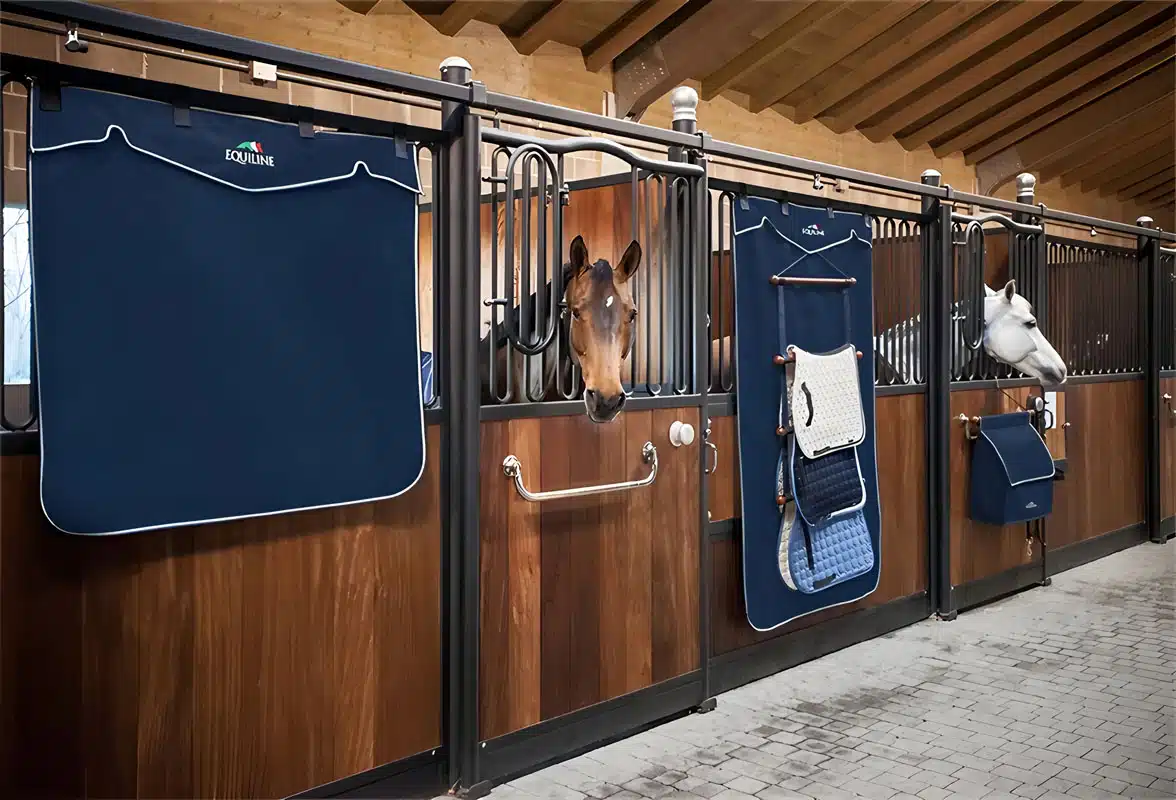
Top Factories Embracing Sustainable Materials
Sustainability is no longer a PR stunt; it’s a supply chain survival strategy. Leading factories are ditching slow-growth timber for high-yield bamboo and infinite-cycle steel to secure long-term viability.
The industrial landscape is shifting. ESG (Environmental, Social, and Governance) compliance has moved from a “nice-to-have” to a hard requirement for securing capital and winning contracts. In the construction and equestrian manufacturing sectors, this means a hard pivot away from materials with heavy carbon debts—like old-growth oak or single-use plastics—toward regenerative and recyclable alternatives.
Top manufacturers are not just changing what they build; they are changing what they build with. We see a clear division in the market: factories clinging to traditional, resource-intensive lumber versus those adopting engineered, high-yield materials that align with 2026 carbon targets.
| Material Category | Regeneration Cycle | Carbon Impact | Industrial Viability |
|---|---|---|---|
| Strand-Woven Bamboo | 3–5 Years | High Sequestration (20-40 tons/acre) | High (Janka > 3000 lbf) |
| Old-Growth Timber (Oak) | 50–80 Years | Carbon release at harvest | Declining (Supply volatility) |
| Q235B Structural Steel | Infinite (Recyclable) | Low Embodied Carbon (if recycled) | Standard (30-50 year lifespan) |
1. The Shift to Strand-Woven Bamboo
Manufacturers facing pressure to reduce deforestation are turning to bamboo, specifically Moso bamboo. Unlike hardwood trees that require decades to mature, bamboo reaches harvestable maturity in just 3 to 5 years. It is a biological machine for carbon capture, sequestering up to 40 tons of CO₂ per acre annually—rates that traditional forests cannot match.
For industrial applications like horse stables, raw bamboo is too weak. The solution adopted by top factories is Strand Woven Bamboo. This process compresses bamboo fibers under extreme pressure to create boards with a Janka hardness rating over 3000 lbf. This makes the material three times harder than oak and impervious to the hoof impacts that typically destroy softer woods.
- Carbon Credit: Bamboo forests produce 35% more oxygen than equivalent tree stands.
- Durability: High density prevents cribbing (chewing) and rot.
- Regeneration: Harvest does not kill the plant; the root system remains intact to prevent soil erosion.
2. Q235B Steel: The Circular Economy Backbone
While wood carries the aesthetic appeal, steel carries the structural load. Progressive factories utilize Q235B structural steel not just for its cost-efficiency, but for its role in the circular economy. Steel is one of the few materials that is 100% recyclable without any loss of properties. A stable frame built today can be melted down and reborn as a bridge beam in 50 years.
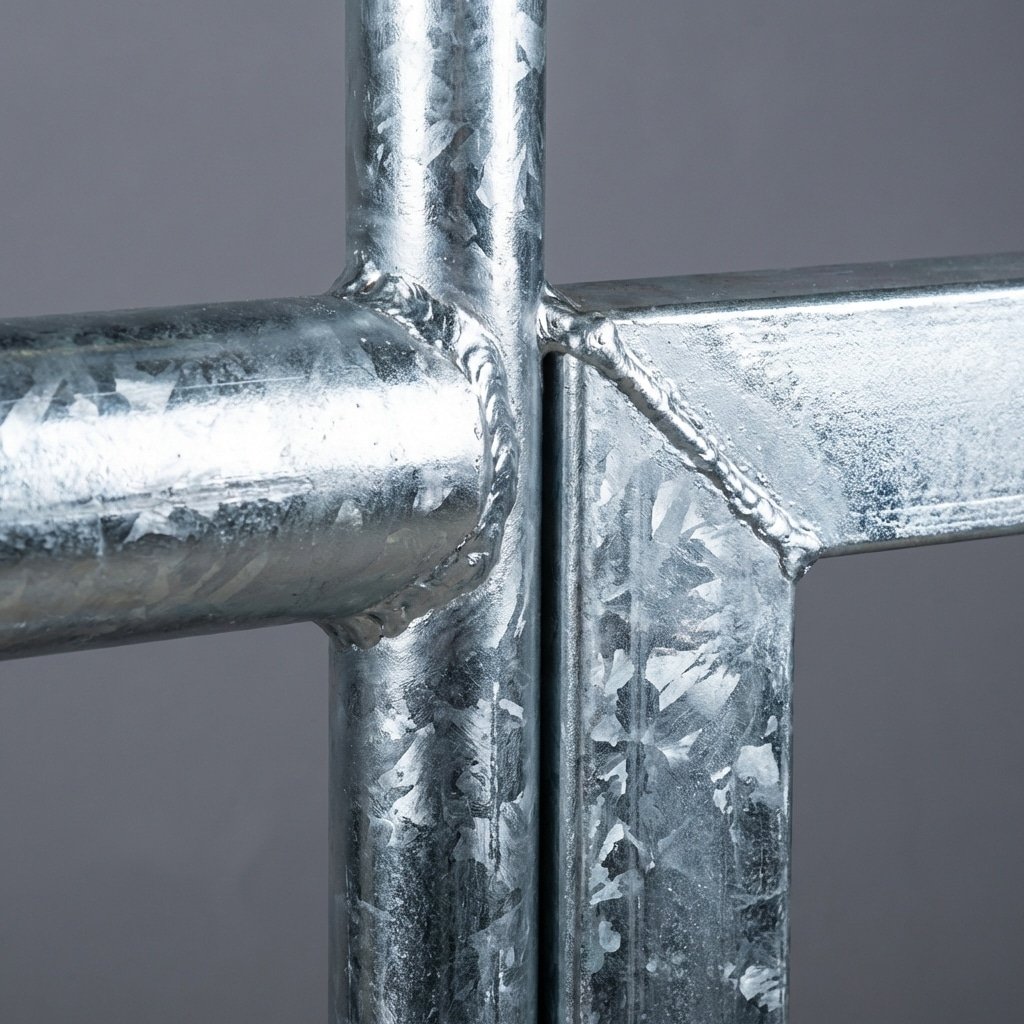
Sustainability in steel is also defined by longevity. If a product rusts out in five years, it is an environmental failure regardless of the material. This is why we adhere to BS EN ISO 1461 standards for hot-dip galvanization. By coating structural parts with over 85 microns of zinc, we extend the service life to 30–50 years, drastically reducing the need for replacement and the associated manufacturing emissions.
3. Logistics as a Sustainability Metric
The most overlooked aspect of a “green factory” is how the product leaves the door. Shipping “air” is a massive contributor to transport emissions. Traditional welded stable panels limit a 40HQ container to just 12–15 sets, forcing distributors to pay for dead space.
We engineered the Flat-Pack System to solve this. By modularizing the design, we fit 30–45 sets into the same container. This simple logistical adjustment reduces the carbon footprint per unit by over 60% compared to fully welded competitors. It proves that smart engineering often delivers better environmental results than expensive certifications.
Strand-Woven Bamboo: A High-Yield Carbon Sink
Strand-woven bamboo combines rapid 3-5 year renewability with extreme structural density, delivering a material three times harder than oak for heavy-duty equine applications.
Rapid Carbon Sequestration Cycles
Traditional timber logging is a slow game. When you fell an Oak tree, you wait over 50 years for its replacement to reach maturity. Bamboo operates on a different timescale entirely. As a grass species, it reaches full maturity in just 3 to 5 years. This rapid growth rate allows for high-frequency harvest cycles, meaning a single hectare of bamboo absorbs carbon repeatedly over the same timeframe it takes a hardwood forest to yield a single crop.
The harvesting method itself reinforces this efficiency. Unlike clear-cutting timber, which kills the tree, harvesting bamboo leaves the root system intact. This living network continues to anchor the soil, preventing erosion and immediately spurring new shoot growth without the need for replanting.
High-Density Compression and Janka Hardness
Environmental benefits are irrelevant if the material cannot withstand a kick from a 500kg warmblood. The strand-woven manufacturing process solves this by compressing raw bamboo fibers under extreme pressure to create a board that physically outperforms traditional hardwo
od.
- Janka Hardness > 3000 lbf: The compression process yields a density rating that is approximately three times harder than Oak.
- 28mm-38mm Profile: We strictly spec these boards at high thicknesses to ensure structural integrity against impact.
- Rot Resistance: The high-density structure leaves little room for moisture ingress, making the boards naturally resistant to mold and the ammonia-rich environment of a stable.
Q235B Steel: The 100% Recyclable Framework
Q235B structural steel balances ductility for safety with 100% recyclability, strictly engineered to a minimum 2.0mm thickness to withstand equine impact and heavy static loads.
Material Properties and Circular Economy
Q235B (equivalent to ASTM A36) serves as the definitive standard for safe equestrian infrastructure. Its chemical composition, specifically a carbon content below 0.22%, dictates its performance under stress. This low-carbon profile ensures superior ductility, meaning the steel absorbs kinetic energy—such as a direct kick—by deforming slightly rather than suffering a catastrophic brittle fracture. This is a critical safety distinction compared to brittle, high-carbon alternatives.
From a sustainability perspective, steel outperforms treated timber and composite alternatives. While chemically treated wood often ends up as hazardous waste due to preservatives, Q235B maintains a circular lifecycle. It supports modern green building projects through specific material advantages:
- 100% Recyclability: The framework can be re-smelted indefinitely at the end of its lifecycle without losing structural properties.
- High Weldability: The material allows for precise fabrication of complex safety components, such as feed doors and partition connectors, without structural weakness.
- Zero-Waste Lifecycle: Prefabricated steel components drastically reduce on-site construction waste compared to traditional carpentry methods.
The 14-Gauge Safety Standard
Material grade fails if the profile lacks density. We enforce a strict minimum wall thickness of 14-gauge (2.0mm – 2.5mm) for all 50mm x 50mm RHS posts. While the broader market frequently cuts costs by utilizing 1.5mm or 1.6mm profiles, these thinner walls fail under real-world conditions. A 1.5mm post will buckle under the weight of a leaning 1,200lb warmblood or deform permanently upon impact.
This structural density is not just about impact resistance; it dictates the static load capacity for the entire facility. Rehab centers and professional barns rely on this framework to support substantial weight:
- Structural Rigidity: Ensures the framework holds the necessary static load for heavy sliding door tracks and upper grills.
- Equipment Mounting: Provides a secure anchor point for heavy medical equipment mounts often required in veterinary and rehabilitation stalls.
- Kick-Proof Assurance: The 2.0mm minimum thickness prevents the steel from shearing or collapsing during aggressive equine behavior.
Frequently Asked Questions
How can an equestrian sports medicine facility achieve ESG compliance?
Compliance requires a tangible strategy across three specific areas rather than vague commitments:
- Environmental: Focus on energy independence. Leading facilities like Equitom now generate up to 80% of their power via solar and use closed-loop water systems for hydrotherapy units.
- Social: Prioritize safety infrastructure. This means installing kick-proof walls (using high-tensile steel) and fire-retardant materials to protect both staff and high-value horses.
- Governance: Audit your supply chain. Ensure your equipment manufacturers hold ISO 9001 (Quality) and ISO 14001 (Environmental Management) certifications to prove ethical sourcing.
Is bamboo a durable enough material for rehab stable stalls?
Standard hollow bamboo is not suitable, but High-Density Strand Woven Bamboo is specifically engineered for this environment. It features a Janka hardness rating exceeding 3,000 lbf, making it three times harder than oak. This density prevents cribbing and resists moisture absorption, a critical factor for wash bays and hydrotherapy zones where wood often rots. From a sustainability perspective, bamboo harvests in 3-5 years compared to the decades required for hardwoods.
Does steel or wood framing have a lower environmental impact?
Wood has lower initial embodied carbon but fails in longevity within clinical equine settings. Wood is porous, retains bacteria, and rots when exposed to the frequent washing required in medical barns. Hot-dip galvanized steel (specifically Q235B or Q345B) creates a sanitary, non-porous surface that lasts decades without replacement. Steel is also 100% recyclable at the end of its life, whereas treated lumber often ends up in landfills. For long-term operations, steel offers a superior lifecycle analysis.
What green certifications are available for equestrian centers?
While no specific “Green Stable” certification exists yet, facilities currently leverage broader construction standards:
- LEED (Leadership in Energy and Environmental Design): Used for the building shell to validate energy efficiency and material selection.
- FSCAP (Farm Stewardship Certification): Validates land management practices, such as manure composting and pasture rotation.
- CalGreen (California): Mandatory in some regions, this code enforces water conservation and construction waste reduction for agricultural structures.
Final Thoughts
Relying on traditional timber in high-moisture rehab zones guarantees rapid structural failure and bacterial risk. Standardizing on Hot-Dip Galvanized Q235B steel and High-Density Bamboo safeguards your investment against rot while satisfying strict 2026 carbon mandates. This strategic shift turns facility infrastructure from a depreciation liability into a long-term, verifiable asset.
Do not gamble capital on compliance; verify your supply chain specifications directly. Request a technical consultation with our engineering team to calculate your flat-pack logistics savings and secure high-yield bamboo inventory for your project. Contact DB Stable now to finalize a rehabilitation environment that defines industry standards.

 English
  Spanish
  French
  Arabic
  German
0 Comments