
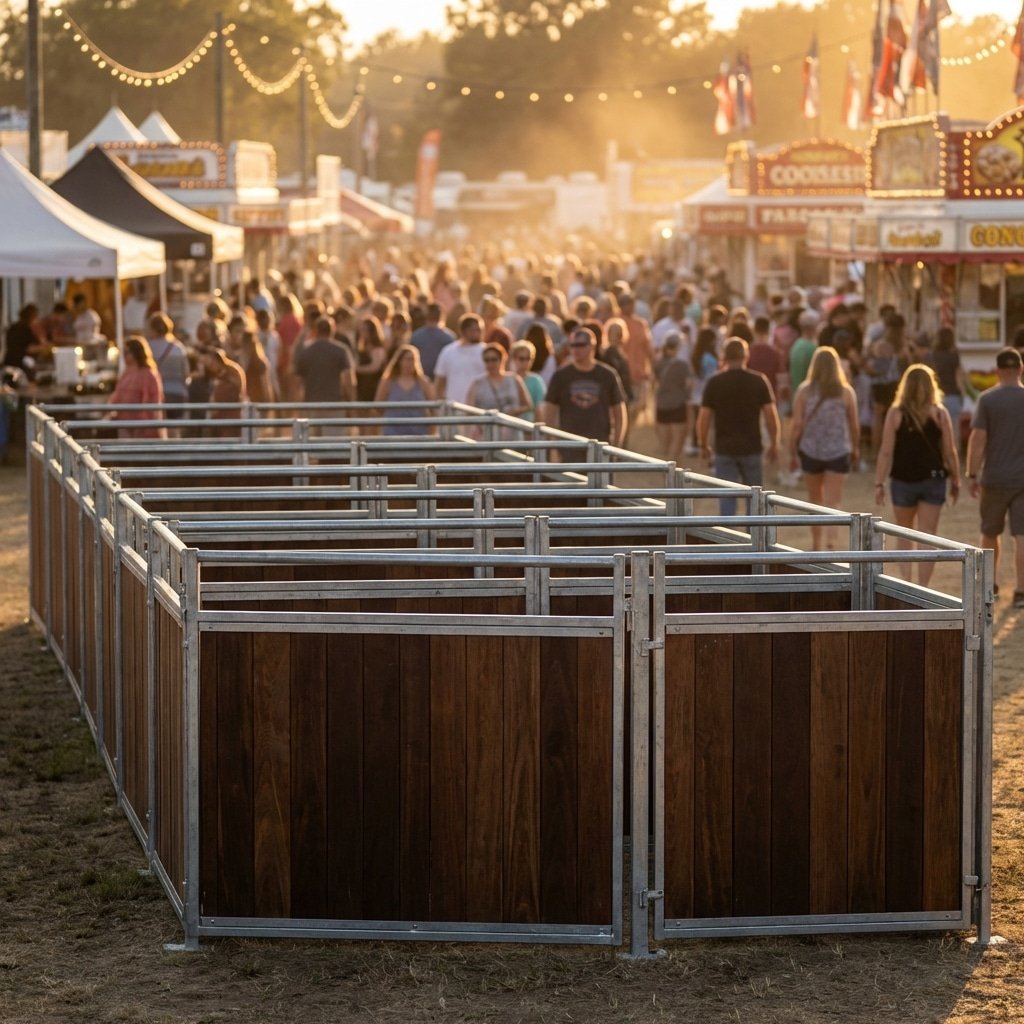
State Fairgrounds jeopardize their bottom line by relying on rental stabling that drains operating budgets without building equity. Relying on temporary leases creates sunk costs, while owning hot-dip galvanized infrastructure converts that expense into a capital asset amortized over ten years. For expo directors, the choice between renting and owning is a calculation of long-term ROI versus immediate cash flow leaks.
This analysis benchmarks high-volume manufacturers against the 500-set delivery threshold required for major events. We evaluate suppliers on their adherence to BS EN ISO 1461 galvanization standards and flat-pack logistics capabilities that fit 45 sets per 40HQ container. Selecting a factory that utilizes Q235B structural steel ensures your facility secures durable, zero-maintenance inventory capable of withstanding decades of rapid assembly cycles.
The Economics of Mega-Events: Renting vs. Owning Stalls
Quick Comparison
| Focus Area | Category | Primary Drivers | Verdict |
|---|---|---|---|
| Vendor Revenue Generation | Economic Impact | Secondary Revenue, Local Spending | Generated ~$78M-$196M in secondary impact, serving as a major contributor to the total economic footprint. |
| Scale of Participation | Logistics & Operations | Lodging, Dining, Vendor Wares | Drives significant local hospitality spending due to multi-day commitments from traveling vendors. |
| Job Support | Employment | Operational Jobs, Concession Roles | Supported 4,486 jobs in 2023, highlighting the massive labor requirement for operations and sales. |
Vendor Revenue Generation
Vendor operations drive a **massive secondary economic impact**, contributing nearly $200 million to the region’s financial ecosystem.
Vendors at the State Fair of Texas generated an estimated secondary economic impact ranging from $78.2 million to $196.2 million in 2023. This substantial figure highlights the financial power of temporary stall rentals.
This activity represents a significant portion of the fair’s total $680 million economic footprint. It demonstrates how mega-events function as major revenue generators for the local economy beyond just ticket sales.
📊 At a Glance:
- 📍 Category: Economic Impact
- 🏭 Core Metrics: Secondary Revenue, Local Spending
- 🌍 Key Markets: Texas, USA
Why It Matters:
| ✅ The Wins | ⚠️ Trade-offs |
|---|---|
|
|
Scale of Participation
**Multi-day vendor commitments** fuel the local economy through increased demand for lodging and dining services.
Concessionaires and exhibitors travel from all over the state, requiring multi-day commitments to operate their stalls effectively. This logistical reality turns the event into a temporary hub for regional commerce rather than just a local gathering.
This scale of participation drives spending far beyond the fairgrounds. While vendors are in town to sell their wares, they heavily utilize local hotels and restaurants, amplifying the event’s overall economic footprint.
📊 At a Glance:
- 📍 Location: Logistics & Operations
- 🏭 Core Strength: Lodging, Dining, Vendor Wares
- 🌍 Key Markets: Regional Vendors
Why We Picked Them:
| ✅ The Wins | ⚠️ Trade-offs |
|---|---|
|
|
Job Support
This metric highlights the **substantial labor requirement** essential for managing stalls and executing sales at mega-events.
In 2023, the event supported 4,486 jobs, with a significant number of roles created specifically through vendor operations and concessions. This volume illustrates the massive human capital investment needed to maintain event standards.
These positions are critical for daily stall management and customer interaction. The data establishes a direct correlation between active vendor presence and immediate job creation within the host community.
📊 At a Glance:
- 📍 Location: Employment
- 🏭 Core Strength: Operational Jobs, Concession Roles
- 🌍 Key Markets: Local Labor Market
Why We Picked Them:
| ✅ The Wins | ⚠️ Trade-offs |
|---|---|
|
|
Premium Galvanized Stables Built To Last
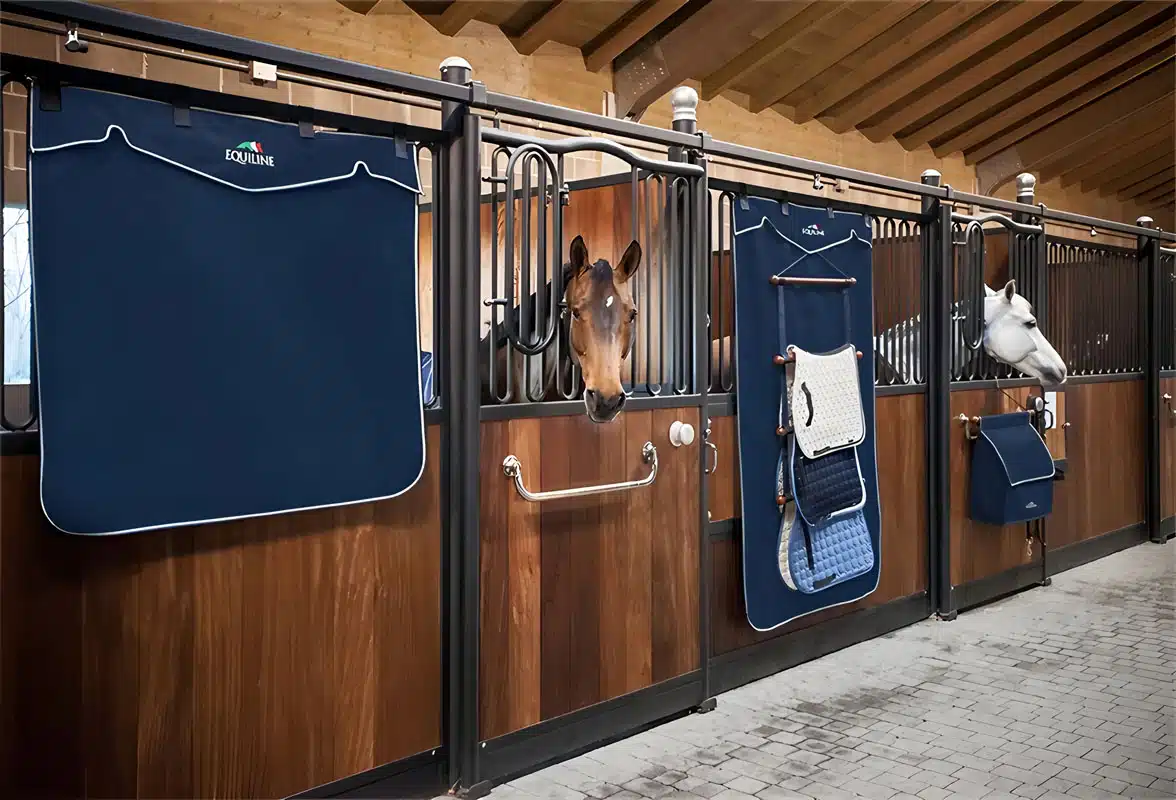

The Economics of Mega-Events: Renting vs. Owning Stalls
Relying on annual rentals for mega-events creates a recurring operational expense that drains budgets without building equity. By shifting to an ownership model using our flat-pack, hot-dip galvanized systems, organizers convert sunk costs into capital assets that amortize over a decade, utilizing high-density logistics to eliminate the traditional storage and transport barriers of owning infrastructure.
CapEx vs. OpEx: Amortizing Infrastructure Costs Over 10 Years
Event organizers often default to renting temporary stabling to avoid upfront costs, but this approach results in a permanent leak in the operating budget. We advocate for a Capital Expenditure (CapEx) strategy where the initial investment is amortized over a 10-year lifespan. This is only financially viable because our steel frameworks are treated with Hot-Dip Galvanization After Fabrication (conforming to BS EN ISO 1461). Unlike painted or pre-galvanized rental panels that rust after a few seasons of outdoor exposure, our zinc coating (avg. > 85 microns on structural parts) protects the asset against corrosion, ensuring it retains value for a decade or more.
Owning the inventory also opens new revenue streams. Fairgrounds and expo centers can act as lessors during their off-season, renting their DB Stable inventory to smaller regional shows. To support this high-cycle usage, we utilize Q235B Structural Steel (or Q345B for cold climates) rather than the flimsy aluminum or PVC often found in rental stocks. This robust material choice ensures the frames withstand the physical stress of repeated assembly and disassembly cycles without warping or fracturing.
The Logistics Multiplier: How Flat-Pack Design Reduces Ownership Burdens
Historically, the sheer volume of space required to store and transport hundreds of stalls discouraged ownership. We solved this density problem through our engineered flat-pack system. While traditional fully welded stalls limit shipping to roughly 12-15 sets per 40HQ container, our modular design allows us to load 30-45 sets per 40HQ container. This efficiency reduces freight and warehousing requirements by over 60%, directly protecting your profit margins against rising logistics costs.
Speed of deployment is equally critical for state fairs with tight setup windows. We package our systems on steel pallets rather than loose loading, allowing forklifts to rapidly offload and position 500+ stalls in a fraction of the time required for manual handling. Furthermore, by pairing these frames with HDPE infill planks, we ensure a “Zero Maintenance” storage experience. Unlike wooden temporary panels that can rot, mold, or attract termites while sitting in a warehouse, HDPE remains impact-resistant and sanitizable, ready for immediate deployment year after year.
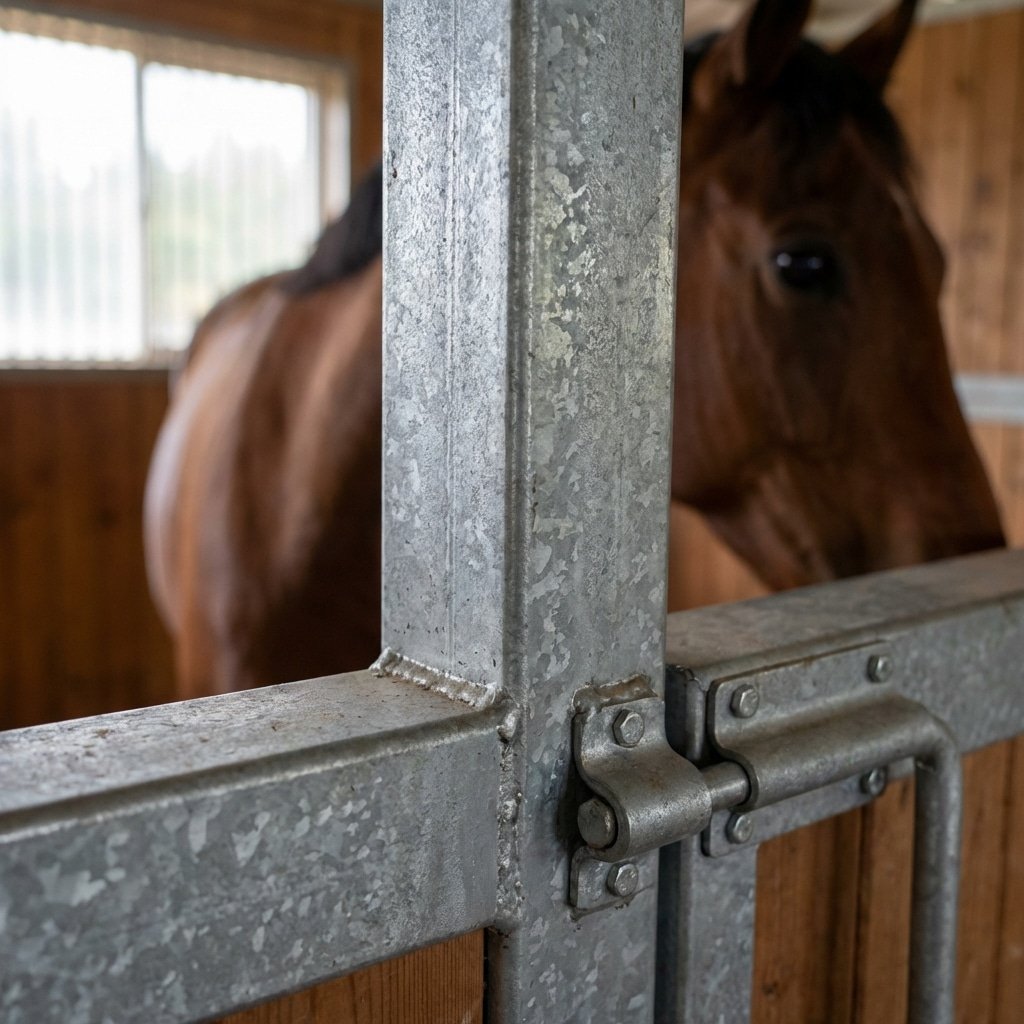
Manufacturing Capacity: Who Can Deliver 500 Sets in 60 Days?
Delivering 500 horse stalls within a strict 60-day window demands a sustained daily output of roughly 8.3 complete sets. Success at this scale requires more than just welding speed; it necessitates secured capacity at ISO 1461 galvanizing plants and a flat-pack logistics strategy that prevents factory floor congestion.
Analyzing Daily Throughput: The 8.3 Unit Threshold
Buyers must distinguish between a factory’s theoretical capacity and its effective capacity. Most manufacturing lines operate at 65-75% efficiency due to necessary equipment maintenance and shift transitions. To counter this, we utilize a flat-pack modular design that significantly reduces cycle time compared to cumbersome, fully welded alternatives. This design choice allows us to scale production and container loading up to 40 sets per 40HQ container, compared to the 12-15 set limit of traditional welded systems.
We validate our capacity by mapping the value stream for Q235B structural steel fabrication. This ensures that no single workstation—whether it is the cutting of 50mm RHS profiles or the welding of door tracks—delays the entire 500-set batch. By optimizing the flow for our standard flat-pack system, we protect the project timeline against unforeseen delays.
Managing Critical Bottlenecks: The Galvanization Queue
The true bottleneck for high-volume orders is rarely the welding process, but rather the Hot-Dip Galvanizing stage. Since we strictly adhere to BS EN ISO 1461 standards by galvanizing after fabrication, we must reserve capacity at the zinc plant weeks in advance. This coordination is vital to accommodate our standard 35-45 day production cycle while handling a volume of this magnitude.
Some competitors may promise faster delivery by using pre-galvanized tubing, but this method sacrifices the 85-micron zinc coating required for long-term rust protection. We refuse to compromise on the “Lifetime” standard. Instead, we mitigate supply chain risks by maintaining a buffer stock of essential materials, including 14-gauge steel and HDPE infill, specifically allocated for large project orders to ensure we meet the deadline without lowering quality specifications.
DB’s Economy Event Series and Flat-Pack Logistics
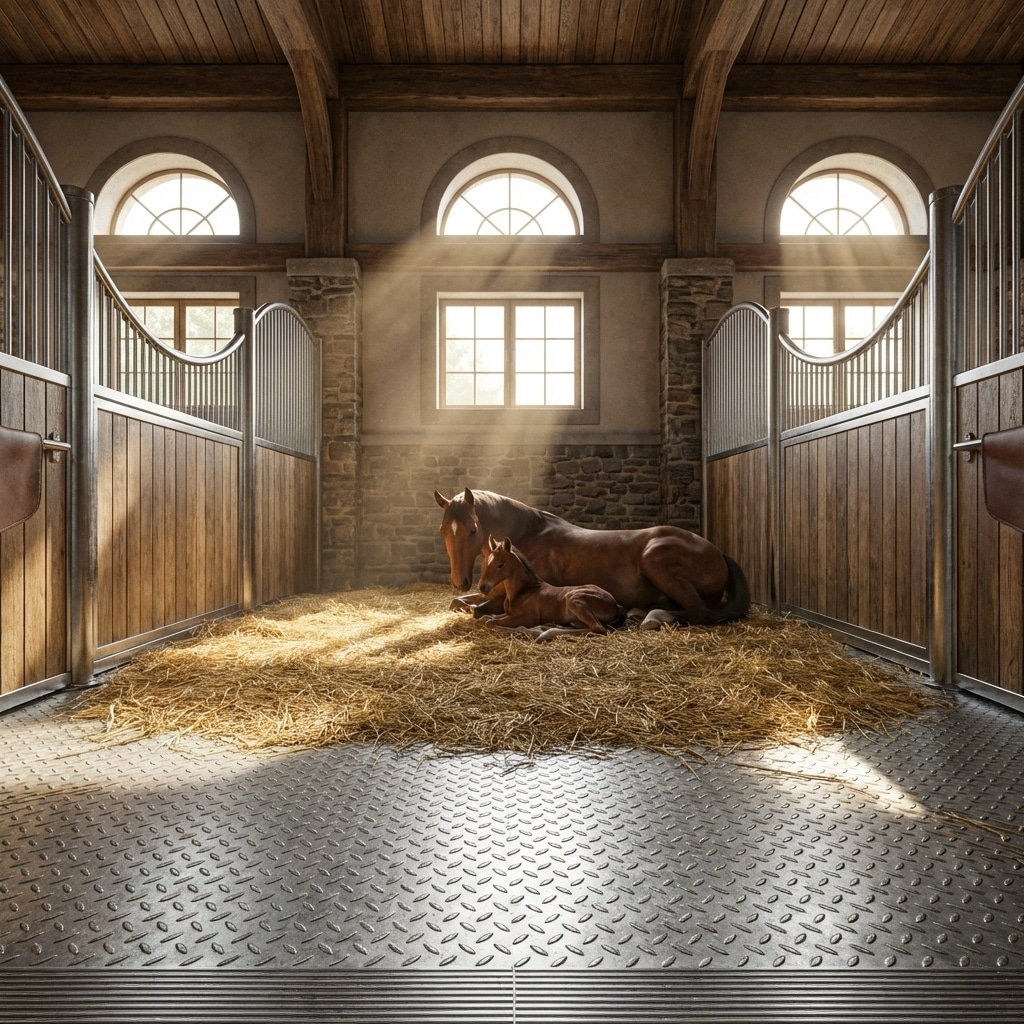
We engineer the Economy Series to balance structural durability with operational efficiency, utilizing Q235B structural steel and zero-maintenance HDPE to withstand high-volume event traffic. Our proprietary flat-pack system transforms logistics from a cost center into a competitive advantage, allowing distributors to ship up to 45 sets per container.
The Economy Series: Engineered for High-Volume Events
We build the Economy Series specifically for the rigors of temporary stabling and large-scale exhibitions. The core framework utilizes Q235B structural steel, treated with Hot-Dip Galvanization After Fabrication (ISO 1461). This process ensures every weld and joint is sealed against rust, preventing the structural degradation common in pre-galvanized alternatives that often fail after a few seasons of outdoor exposure and frequent assembly cycles.
To reduce labor costs for event organizers, we incorporate 28mm-32mm HDPE infill planks. This “Zero Maintenance” surface resists impact and eliminates the need for painting or staining between events. The design also features open top grill sections that promote “Stack Effect Ventilation,” ensuring consistent vertical airflow to keep animals comfortable in dense temporary layouts.
Logistics Efficiency: The Flat-Pack Advantage
Freight costs often determine the viability of a project. Traditional fully welded stalls limit shipping capacity to just 12-15 sets per container, which drives up the landed cost per unit significantly. We address this “Profit Protection” challenge through our precision flat-pack system, which optimizes spatial efficiency to fit 30-45 sets in a single 1x 40HQ container. This approach reduces freight costs by over 60% for large-scale projects.
We secure all components on heavy-duty steel pallets, weighing between 250kg and 450kg per set. This packaging strategy prevents transit damage and enables rapid forklift unloading at the venue, allowing installation crews to begin assembly immediately upon arrival without sorting through loose-loaded components.
Final Thoughts
Relying on perpetual rentals drains operating budgets without building equity. Shifting to our Hot-Dip Galvanized After Fabrication (ISO 1461) system secures a capital asset designed to withstand decades of high-traffic use. Furthermore, our flat-pack logistics strategy maximizes container density to 30-45 sets per 40HQ, directly shielding your bottom line from volatile freight costs.
Executing a 500-stall project requires verified manufacturing throughput, not just sales promises. We invite you to challenge our engineering team with your specific venue layout to demonstrate our capacity and speed. Secure your production slot now or request a Pilot Container to validate the assembly efficiency of our drop-pin system firsthand.
Frequently Asked Questions
Who manufactures temporary stalls for State Fairs?
As a dedicated B2B OEM manufacturer, DB Stable engineers high-volume temporary stalls specifically for state fairs and large events. Our ISO 9001 certified factory produces durable, hot-dip galvanized systems designed to withstand heavy public use, supplying directly to project managers and distributors rather than individual retailers.
How fast can you build 100 horse stalls?
Our standard production cycle for a 100-stall order is 35 to 45 days. This lead time is necessary to ensure every panel undergoes our rigorous hot-dip galvanization process after welding. We adhere to this schedule to guarantee rust protection and structural integrity for mass deployments.
Best bulk horse stabling suppliers?
Reliable bulk suppliers must combine manufacturing capacity with logistics efficiency. We distinguish ourselves by using Q235B structural steel and a specialized flat-pack loading system that fits 30-45 sets in a single 40HQ container, significantly reducing freight costs for wholesale buyers compared to traditional fully welded options.
Cost to outfit an equestrian expo center?
Pricing depends on whether you select our Economy or Professional series. As a source factory, we operate on a volume-based model with a Minimum Order Quantity (MOQ) of one container. This approach provides significant savings over retail pricing for expo centers outfitting entire facilities. Contact us for a precise quote based on your floor plan.
Storage for portable horse stables?
Our system features a steel pallet flat-pack design that simplifies storage between events. Venue teams can safely stack the disassembled panels on these pallets. The ASTM B117 tested hot-dip galvanized coating ensures the equipment remains rust-free even when stored in non-climate-controlled warehouses for extended periods.


 English
  Spanish
  French
  Arabic
  German
0 Comments