


Developing a therapeutic riding facility demands precise architectural compliance to prevent catastrophic liability claims. Standard stable systems frequently fail ADA safety audits, resulting in expensive retrofitting costs that drain non-profit budgets. Ignoring barrier-free clearance specifications creates immediate bottlenecks for mobility devices, jeopardizing both accreditation status and rider safety.
This analysis benchmarks manufacturers against the Q345B High Strength Steel standard required for kick-proof structural integrity. We evaluate suppliers based on their ability to deliver zero-threshold hidden track systems and hot-dip galvanization after fabrication, ensuring your infrastructure meets strict accessibility codes while minimizing long-term maintenance overhead.
Designing Stables for Wheelchair Accessibility (ADA)
Quick Comparison
| Feature / Requirement | Best For | Key Components | Verdict |
|---|---|---|---|
| Accessible Routes and Pathways | Entrances, Aisles | Wide Pathways, Ramps, Non-slip Surfaces | Essential for safe wheelchair navigation and preventing slip-and-fall accidents on firm surfaces. |
| Clear Floor and Ground Space | Barn Aisles, Tacking Areas | Maneuvering Zones, Grooming Areas | Critical for ensuring independence during grooming and preventing congestion in high-traffic areas. |
| Accessible Viewing and Participation Areas | Arenas, Event Spaces | Wheelchair Seating, Companion Seating | Promotes inclusivity for families and ensures visibility regardless of crowd size. |
Accessible Routes and Pathways
**Safe, wide, and firm surfaces** ensure independent navigation for wheelchair users while preventing accidents.
Pathways throughout the stable facility must be at least 36 inches wide with stable, firm, and slip-resistant surfaces to accommodate mobility aids. This fundamental infrastructure requirement prevents common slip-hazards and ensures equipment can move freely.
For elevation changes exceeding ½ inch, ramps with a maximum slope of 1:12 and handrails are mandatory. These specific dimensions prioritize smooth transitions and manageable inclines for manual and electric wheelchair users.
📊 At a Glance:
- 📍 Location: Facility Infrastructure
- 🏭 Core Strength: Wide Pathways, Ramps, Non-slip Surfaces
- 🌍 Key Markets: Entrances, Aisles
Why We Picked Them:
| ✅ The Wins | ⚠️ Trade-offs |
|---|---|
|
|
Clear Floor and Ground Space
This design standard guarantees **autonomous maneuverability** in critical zones like grooming bays while preventing traffic bottlenecks.
A minimum clear floor space of 30 inches by 48 inches is mandatory for stationary positioning. This specific dimension creates the necessary turning radius for safe maneuvering within confined barn aisles and grooming areas.
For setups with adjacent wheelchair spaces, the width requirement can be reduced to a minimum of 33 inches. This adjustment balances strict accessibility compliance with space efficiency in active working zones.
📊 At a Glance:
- 📍 Location: Space Planning
- 🏭 Core Strength: Maneuvering Zones, Grooming Areas
- 🌍 Key Markets: Barn Aisles, Tacking Areas
Why We Picked Them:
| ✅ The Wins | ⚠️ Trade-offs |
|---|---|
|
|
Accessible Viewing and Participation Areas
Mandates **dispersed seating and clear sightlines**, ensuring inclusive participation for all spectators.
Assembly areas for events or demonstrations must provide dispersed wheelchair spaces and companion seating with adequate lines of sight.
These locations must not be obstructed by temporary structures to ensure inclusive participation.
📊 At a Glance:
- 📍 Location: Spectator Zones
- 🏭 Core Strength: Wheelchair Seating, Companion Seating
- 🌍 Key Markets: Arenas, Event Spaces
Why We Picked Them:
| ✅ The Wins | ⚠️ Trade-offs |
|---|---|
|
|
Premium Modular Stables Built for Durability

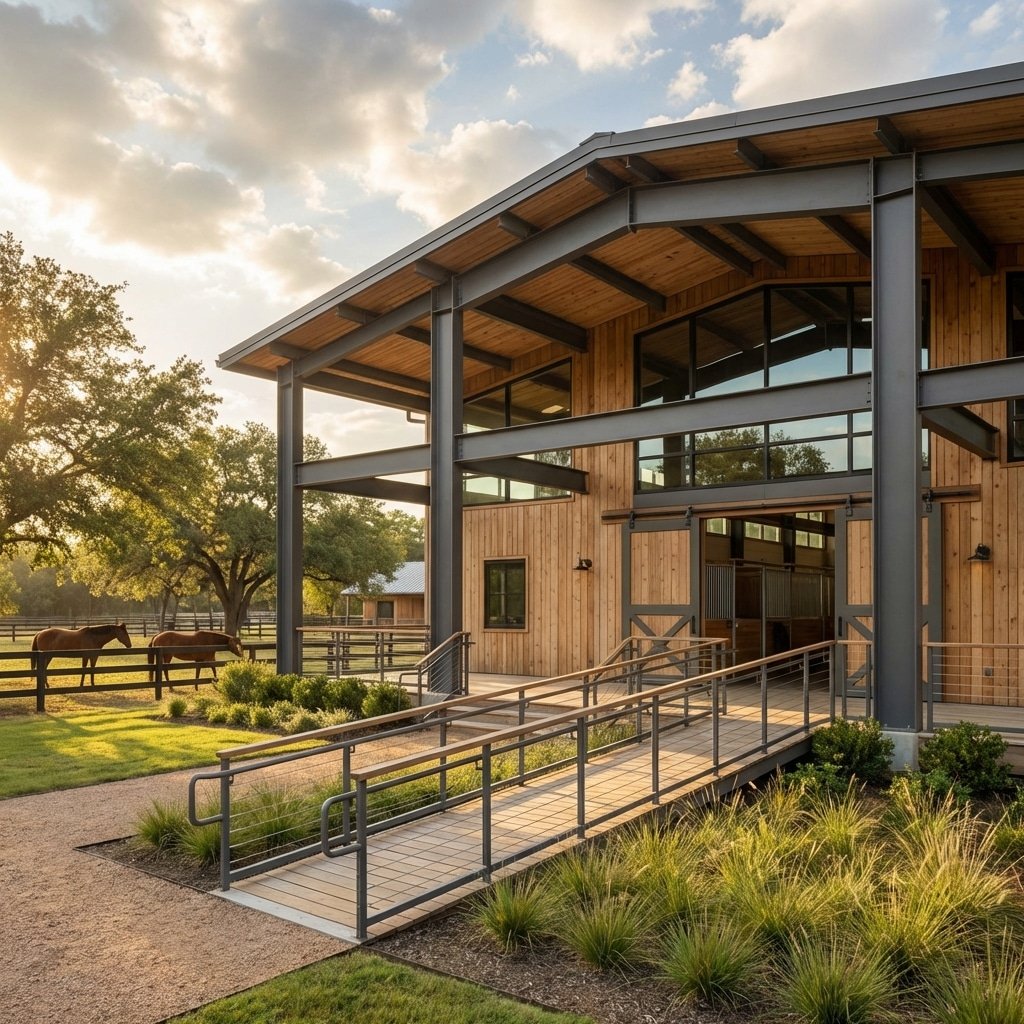
Designing Stables for Wheelchair Accessibility (ADA)
Creating an inclusive equestrian facility requires integrating precise spatial planning with industrial-grade safety features. We engineer our stable systems to support ADA compliance through barrier-free configurations and impact-resistant materials, ensuring a secure environment for therapeutic riding programs and accessible barn management.
Essential Clearances: Aisle Widths and Maneuvering Space
To ensure seamless operation for riders and staff using mobility devices, facility layouts must adhere to ADA guidelines requiring a minimum 36-inch clear width for all accessible barn routes. While our sliding door systems naturally optimize aisle space by eliminating swing variance, we recommend designing main corridors with ample width to guarantee smooth passage for wheelchairs alongside horses.
At critical intersections and tack room entries, we advise incorporating 60-inch turning circles. This allowance permits full rotation for standard and motorized mobility devices, preventing bottlenecks in high-traffic zones. Additionally, grooming bays should be dimensioned with at least 30 inches by 48 inches of clear ground space adjacent to the horse, facilitating side-by-side positioning during therapy sessions or grooming activities.
Flooring selection is equally critical to the structural setup. We recommend ensuring all surfacing is firm and slip-resistant, utilizing rubber pavers or interlocking mats that support wheelchair movement without creating drag. Our stable partitions are designed to anchor securely into concrete curbs or flush flooring systems, ensuring zero-threshold transitions where possible to eliminate tripping hazards.
Specifying Impact-Resistant Materials for Rider Safety
Safety in therapeutic settings is non-negotiable. We utilize Q345B Low Alloy High Strength Steel (equivalent to ASTM Grade 50) for our structural frameworks. This material offers superior impact toughness, providing a “Kick-Proof Guarantee” that is essential for protecting clients and therapy horses from structural failure during accidental impacts.
To prevent injury during tactile interactions, we employ Hot-Dip Galvanization After Fabrication (BS EN ISO 1461). Unlike pre-galvanized alternatives that leave sharp, raw welds, our process involves dipping the entire door frame after welding. This ensures all joints are smooth, burr-free, and coated with over 85 microns of zinc, eliminating rough edges that could cause cuts or abrasions to riders.
For stall infills, we install 28mm-32mm UV Stabilized HDPE planks. These high-density boards create a “Zero Maintenance” sanitized environment that resists mold, bacteria, and moisture absorption—crucial for maintaining health standards in therapy centers. Furthermore, we configure stable fronts with low-profile thresholds and accessible 304 Stainless Steel hardware, designed to operate smoothly with less than 5 pounds of force, accommodating users with limited upper body strength.
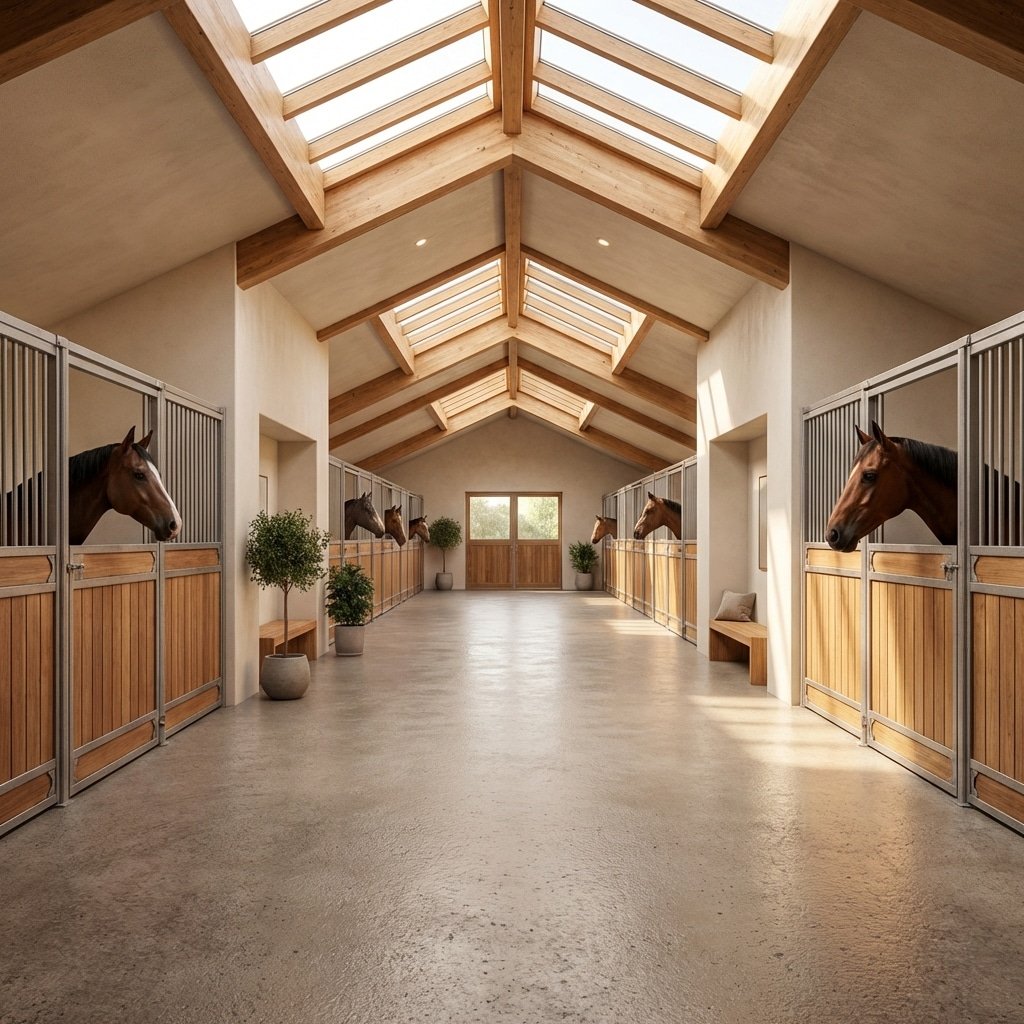
The Aisle Experience: Wide Sliding Doors vs. Swing Doors
Selecting the right door style is a critical decision that impacts both the workflow and safety of your facility. While our hinged doors—often seen in the Royal Series—provide a prestigious European aesthetic for wide aisles, sliding doors remain the operational standard for busy commercial stables. We generally recommend sliding systems for professional equestrian centers to eliminate aisle obstruction, maximize usable square footage, and ensure safe, one-handed handling during peak activity hours.
Sliding Doors: Optimizing Traffic Flow and Handler Safety
For high-traffic facilities like riding schools and training centers, the sliding door is the superior engineering choice. By utilizing our Professional Series’ heavy-duty overhead track system, we eliminate the need for a swing radius, effectively widening your usable aisle space. This allows staff to move equipment and horses freely without the risk of a door protruding into the walkway, a crucial factor in maintaining efficient daily operations and protecting profit margins by reducing accident risks.
Safety is paramount in our design philosophy. Unlike swing doors, our sliding systems are immune to wind gusts, preventing sudden slamming that could injure a handler or a startled horse. The smooth-glide rollers allow for effortless, one-handed operation, ensuring that a handler can always maintain a secure grip on the lead rope. Furthermore, the kick-proof Q345B steel frame and cast-proof bottom clearance ensure the animal remains safe inside, even in high-energy environments.
Hinged Swing Doors: Aesthetic Appeal vs. Operational Space
When the architectural vision calls for a classic, high-end appearance, our hinged swing doors deliver a stunning visual impact. Ideally suited for private estates using our Royal Series, these doors often feature brass finials and powder-coated finishes over the hot-dip galvanized frame. They offer a completely open entryway without bottom guides, creating a clean, traditional look that many luxury stable owners prefer for their private studs.
It is important to consider the operational footprint of this style. A standard hinged door requires a dedicated swing radius of approximately 4 feet, meaning your aisles must be engineered with sufficient width to allow safe passage even when stalls are open. Additionally, the installation demands perfectly leveled concrete floors; unlike our suspended sliding systems, a swing door can drag or stick if the ground is uneven. For these reasons, we advise reserved use of hinged designs for facilities where aesthetic appeal takes precedence over high-volume traffic flow.
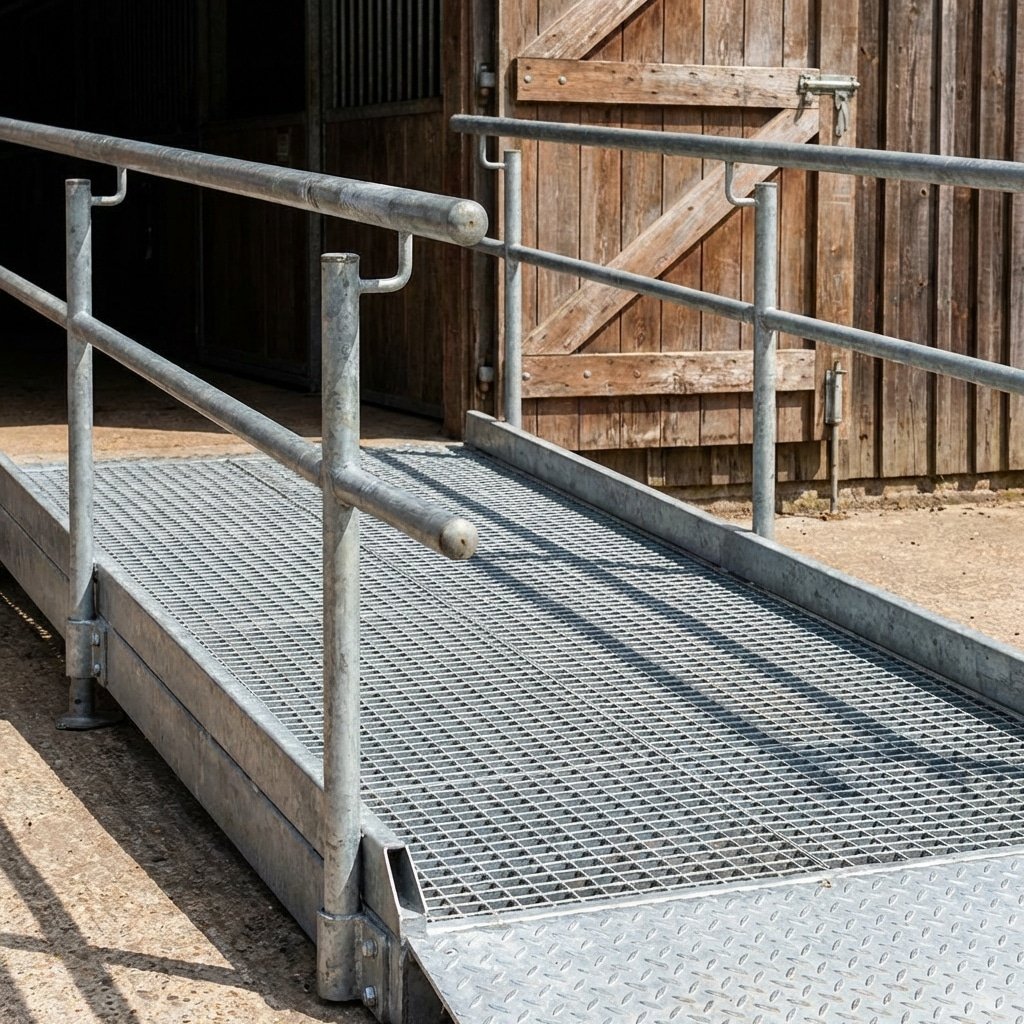
Zero-Threshold Floors: Eliminating Trip Hazards
We eliminate dangerous floor obstructions by utilizing overhead suspension engineering. Our Professional Series ensures a seamless transition between aisle and stall, removing trip hazards for volunteers and wheelchair users while maintaining strict equine safety standards.
Implementing Level Transitions in Therapeutic Barns
Therapeutic riding centers require flush flooring to minimize the physical energy required for wheelchair users to navigate between aisles and stalls. When designing these facilities, we recommend specifying seamless concrete or interlocked rubber pavers that eliminate the need for raised transitions or ramped thresholds. This approach allows our hot-dip galvanized fronts to install directly onto a level plane, ensuring full accessibility.
Level surfaces prevent the “jarring” effect on riders with spinal sensitivities and remove critical tripping obstacles for volunteers walking alongside horses. By avoiding rugs and loose mats at entry points, facility managers ensure free wheel movement and consistent traction for individuals with gait abnormalities. Our engineering team designs every stall front to align perfectly with these flush-floor specifications.
Hardware Solutions: Hidden Tracks and Sliding Doors
Traditional stable doors often utilize raised bottom guide rails (U-channels), which create unavoidable trip hazards and accumulate hygiene-compromising debris. For therapeutic applications, we engineer our Professional Series sliding doors with a Hidden Track System. This design eliminates floor-mounted obstructions entirely, relying on overhead heavy-duty rollers to carry the weight of the door.
Instead of a floor track, we utilize wall-mounted lower guides to stabilize the door panel. This keeps the doorway threshold completely clear for accessibility aids and foot traffic. We maintain a consistent 50mm “Cast-Proof” bottom gap, which ensures airflow and prevents hoof entrapment while ensuring the floor remains a barrier-free zone for all users.
DB’s Smooth-Glide Enclosed Track System
We engineered the Smooth-Glide system to eliminate the friction issues found in traditional open-track stables. By enclosing the roller mechanism within a Hot-Dip Galvanized Q345B steel housing, we protect the hardware from dust and corrosion, ensuring that even heavy bamboo-filled doors operate with minimal physical effort suitable for therapeutic environments.
Engineering the Hidden Track for Minimal Resistance
We equip our Professional Series stall fronts with a specialized hidden track system designed to reduce rolling friction significantly. The mechanism utilizes 304 stainless steel hardware and heavy-duty rollers, ensuring the heavy bamboo or HDPE-filled doors glide with minimal physical effort. This low-resistance operation is a critical requirement for ADA-compliant facilities where users must navigate stall access independently.
Unlike exposed tracks that can rust and bind over time, our process of Hot-Dip Galvanization After Fabrication ensures the sliding path remains smooth and corrosion-free. This allows users with limited upper body strength to operate the doors safely, maintaining the independence central to therapeutic riding programs while eliminating the need for frequent lubrication.
Eliminating Derailment Risks and Debris Buildup
The enclosed design effectively shields the roller mechanism from falling hay, bedding dust, and environmental debris that typically causes jams in traditional open-track systems. We utilize rigid Q345B structural steel for the track housing to prevent the sagging or warping often seen in lighter gauge alternatives, which is a common cause of door derailment in colder climates.
This self-protecting architecture significantly reduces maintenance needs. By preventing debris accumulation and track deformation, we ensure the stable environment remains safe and predictable for therapeutic riding centers and RDA programs. This design choice directly supports profit protection by reducing the labor hours typically lost to clearing jammed tracks or repairing derailed doors.
Final Thoughts
Standard pre-galvanized stalls often leave sharp weld burrs that pose immediate liability risks in therapeutic environments. Our Q345B High Strength Steel frameworks, Hot-Dip Galvanized After Fabrication, ensure a completely smooth, impact-resistant finish that protects vulnerable riders from injury. Investing in this medical-grade safety standard safeguards your facility against costly liability claims and long-term structural failure.
Secure your project’s compliance by consulting our engineering team for a custom, ADA-optimized floor plan. We recommend requesting a Professional Series specification sheet to inspect our hidden track systems and zero-threshold details before you commit. Contact us today to lock in your manufacturing slot and ensure your facility meets every safety benchmark.
Frequently Asked Questions
How to design an ADA compliant horse barn?
Designing for accessibility requires eliminating trip hazards and ensuring ample maneuvering space. We recommend level, zero-threshold flooring throughout the aisle and stall entrances. Additionally, we engineer our stable fronts with lower latches and feed doors operable with one hand, allowing riders with limited mobility to interact safely and independently.
Minimum door width for wheelchair access in barns?
While standard accessibility guidelines typically require a clear width of 36 inches (approx. 915mm), we strongly advise a minimum of 48 inches (1.2m) for equine facilities. This extra width accommodates larger motorized wheelchairs and ensures side-walkers can safely accompany riders into the stall without feeling crowded.
Best stable doors for therapeutic riding centers?
Sliding doors are the safest choice for therapeutic environments because they do not swing out into the aisle, keeping walkways clear for wheelchair users. We recommend our Professional Series featuring the hidden track system, which eliminates floor guides that could otherwise act as tripping hazards or obstructions for wheels.
Are sliding stall doors easier to open?
Yes, provided they use the right hardware. Our system utilizes a heavy-duty enclosed overhead track that protects the rollers from dust and bedding buildup. This ensures the door glides smoothly with minimal physical effort, making it manageable for volunteers or individuals with reduced upper-body strength.
PATH Intl barn safety standards?
These standards prioritize structural integrity and the absence of sharp edges. We align with these safety protocols by using Q345 High Strength Steel for a “Kick-Proof Guarantee” and Hot-Dip Galvanizing every panel after fabrication. This process creates a smooth finish free of dangerous weld burrs that could injure riders or horses.

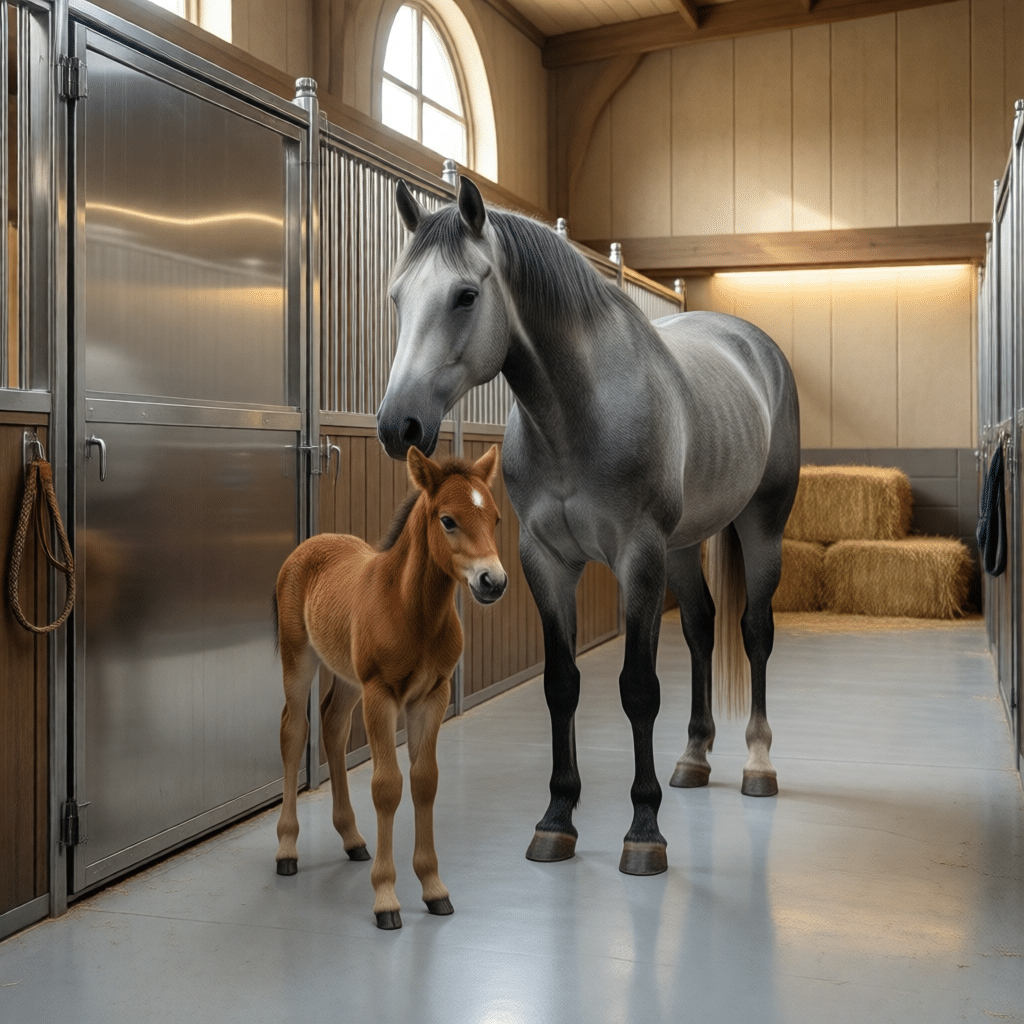
 English
  Spanish
  French
  Arabic
  German
0 Comments