


Installing dedicated Waterer Doors eliminates the labor drain of manual bucket filling and the liability of entering stalls daily. Facility managers often overlook this structural detail, yet reliance on main aisle doors for water access spikes operational time and increases worker compensation risks during winter months.
We engineer these access points using Q235B structural steel with a minimum 14-gauge wall thickness to withstand heavy cribbing. Unlike pre-galvanized alternatives that rust at weld points, our ISO 1461 Hot-Dip Galvanization After Fabrication process ensures zero corrosion risk, protecting your capital investment against ammonia and moisture.
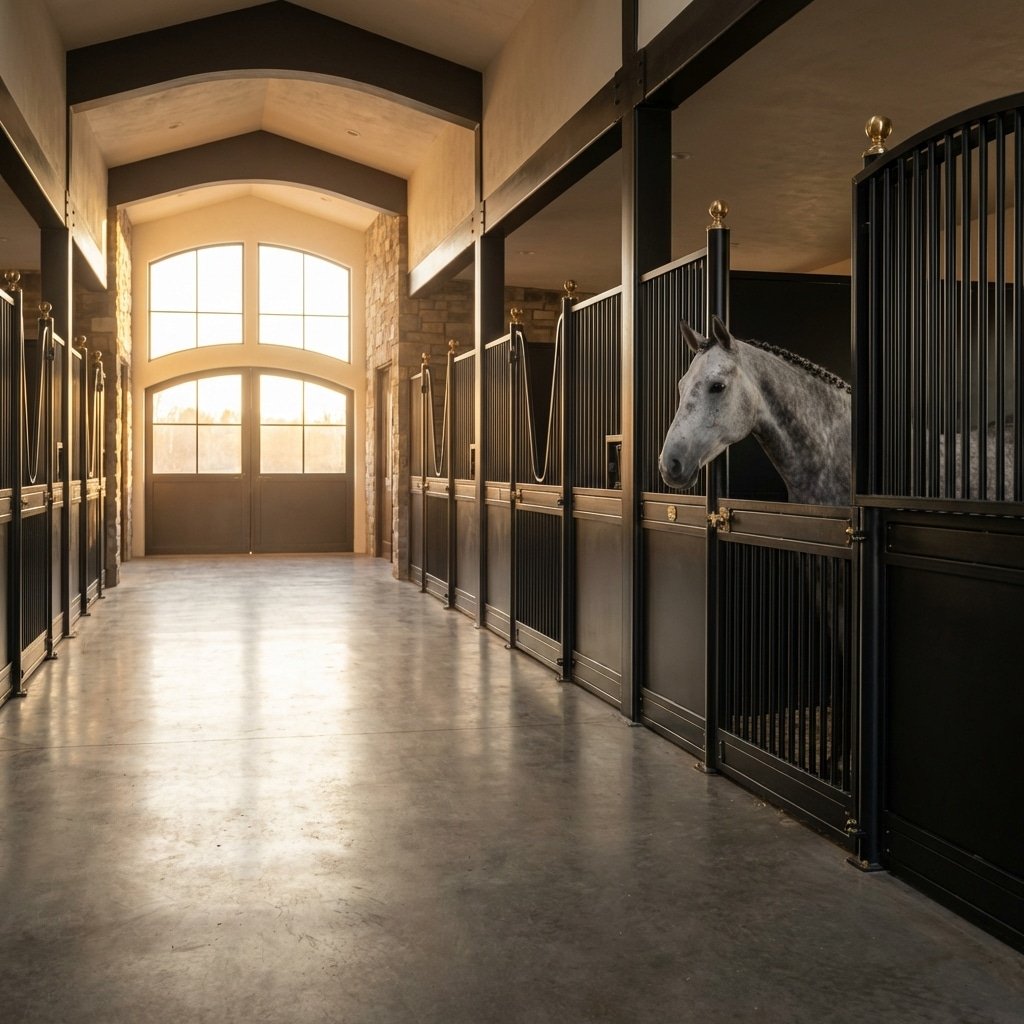
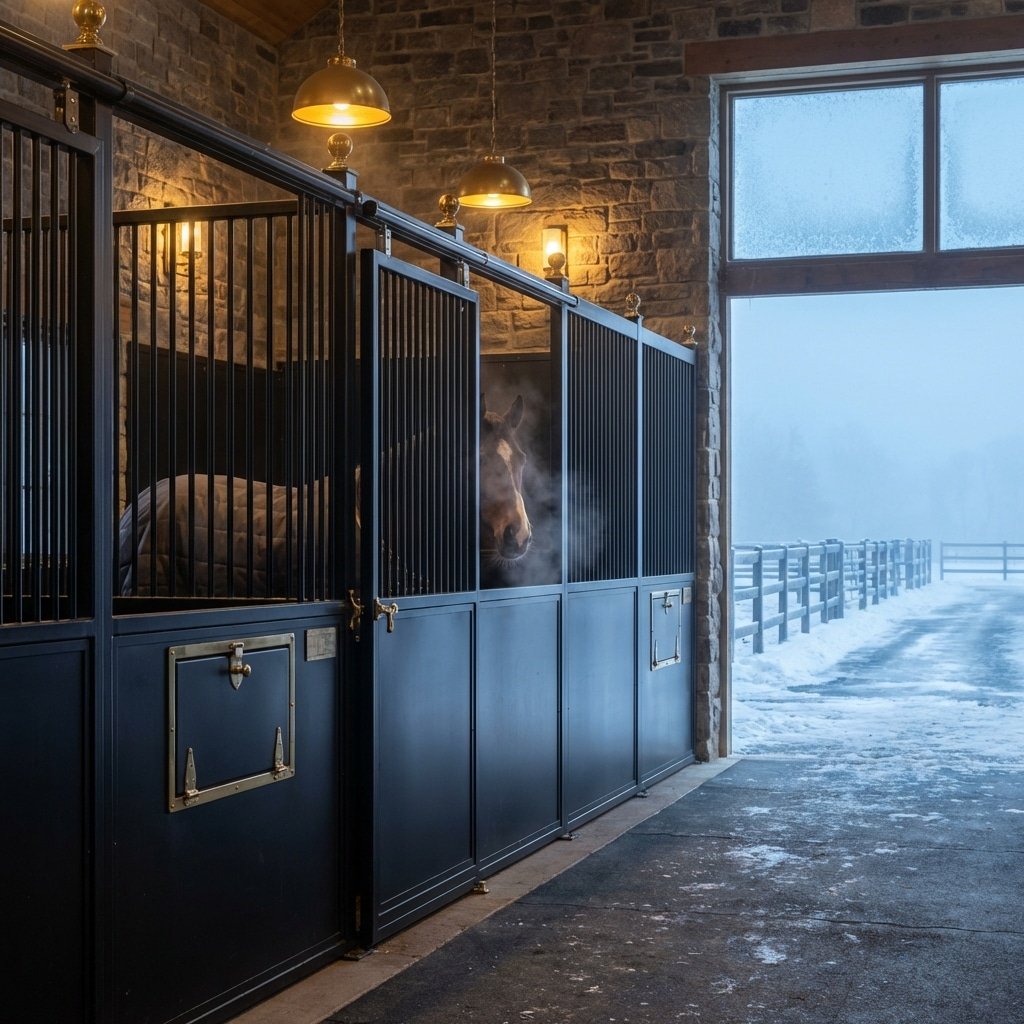
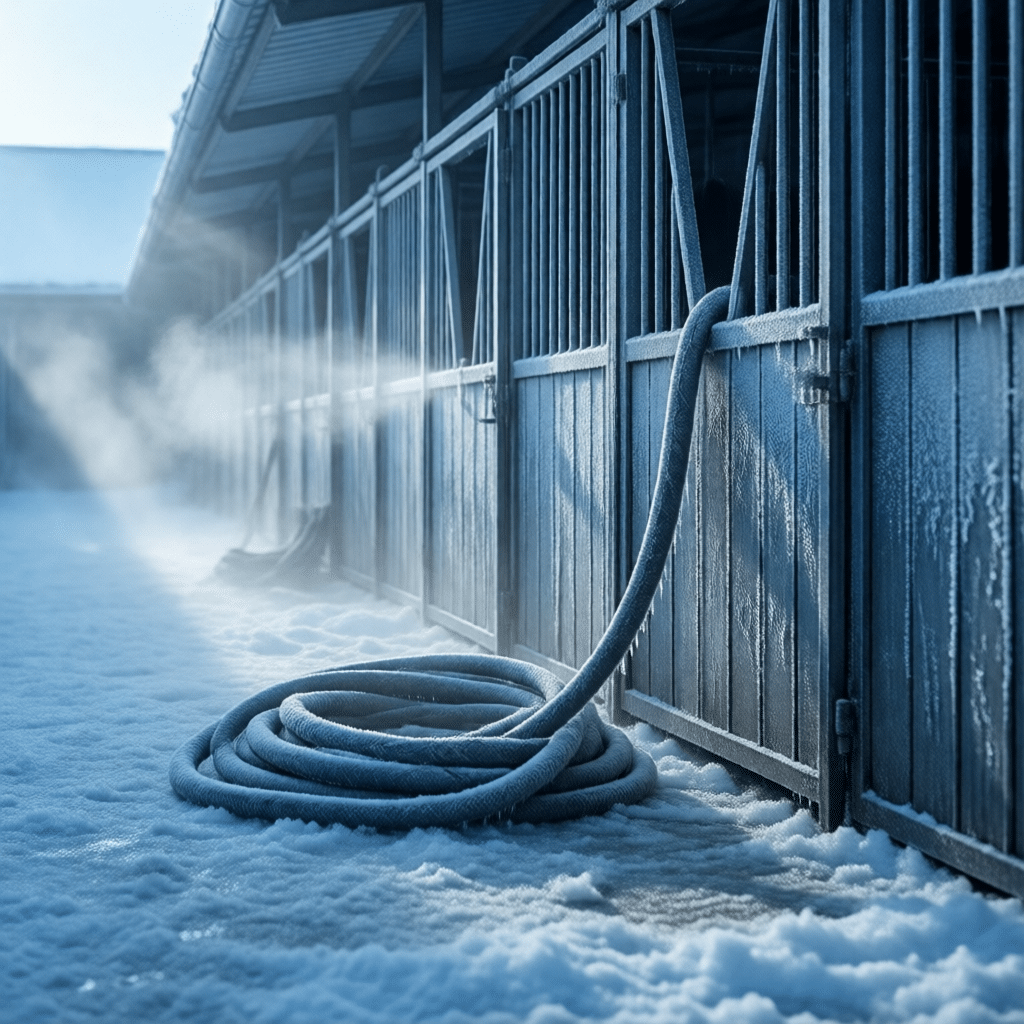
The Nightmare of Hauling Hoses in the Winter
Manual winter watering drains labor and creates a wet, corrosive environment. Our ISO 1461 hot-dip galvanization ensures your stable investment survives decades of damp, freezing conditions.
The Labor Strain of Manual Watering
Any barn manager knows the operational drag of a frozen February morning. When automatic systems fail or aren’t installed, the default is manual hauling. This isn’t just about discomfort; it represents a massive inefficiency in your labor budget. Staff members waste valuable hours breaking ice in buckets rather than focusing on animal care or facility maintenance.
Beyond the time sink, moving heavy hoses and water buckets over frozen, slippery aisles introduces significant liability. One slip can lead to a worker’s compensation claim that costs far more than a proper plumbing upgrade. Also, keeping temporary supply lines from freezing solid in sub-zero temps is a constant battle that distracts from core business operations.
Combating Moisture Corrosion with Hot-Dip Galvanization
Manual watering guarantees one thing: water on the floor. In winter, this creates a permanent high-moisture zone at the base of your stable fronts. This specific environment—a mix of water, urine, and bedding—destroys standard steel.
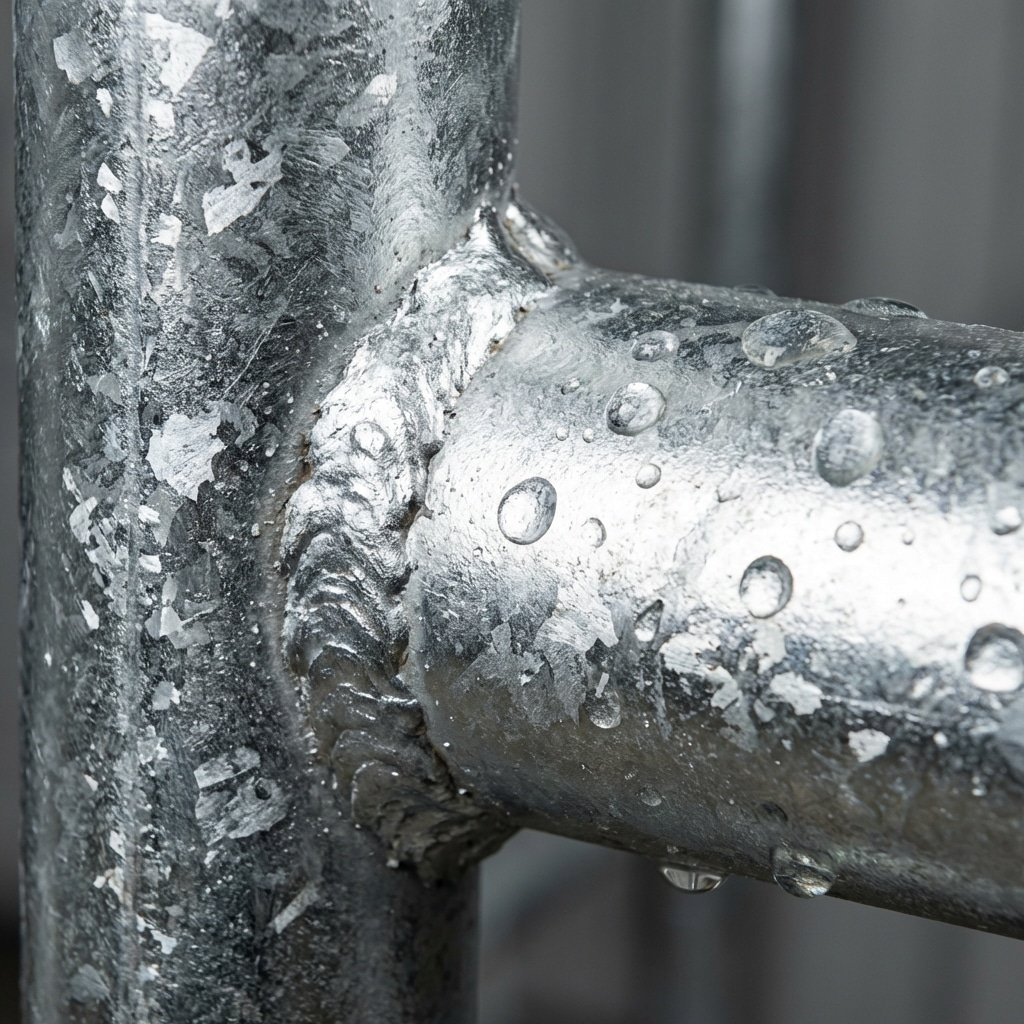
Most competitors use pre-galvanized steel (black tube welded together). The moment that moisture hits the exposed welds, the rust begins. Paint simply peels off under these conditions. At DB Stable, we solve this structurally using BS EN ISO 1461 Hot-Dip Galvanization After Fabrication. We weld the black steel first, then dip the entire partition into molten zinc to ensure total coverage.
- Structural Coverage: We achieve an average coating of >85 microns on structural parts, exceeding industry norms.
- Weld Protection: Because we dip after welding, there are no exposed seams for moisture to penetrate.
- Salt Spray Tested: Our steel passes ASTM B117 testing (>96 hours) with no red rust, proving resilience against the wettest aisle conditions.
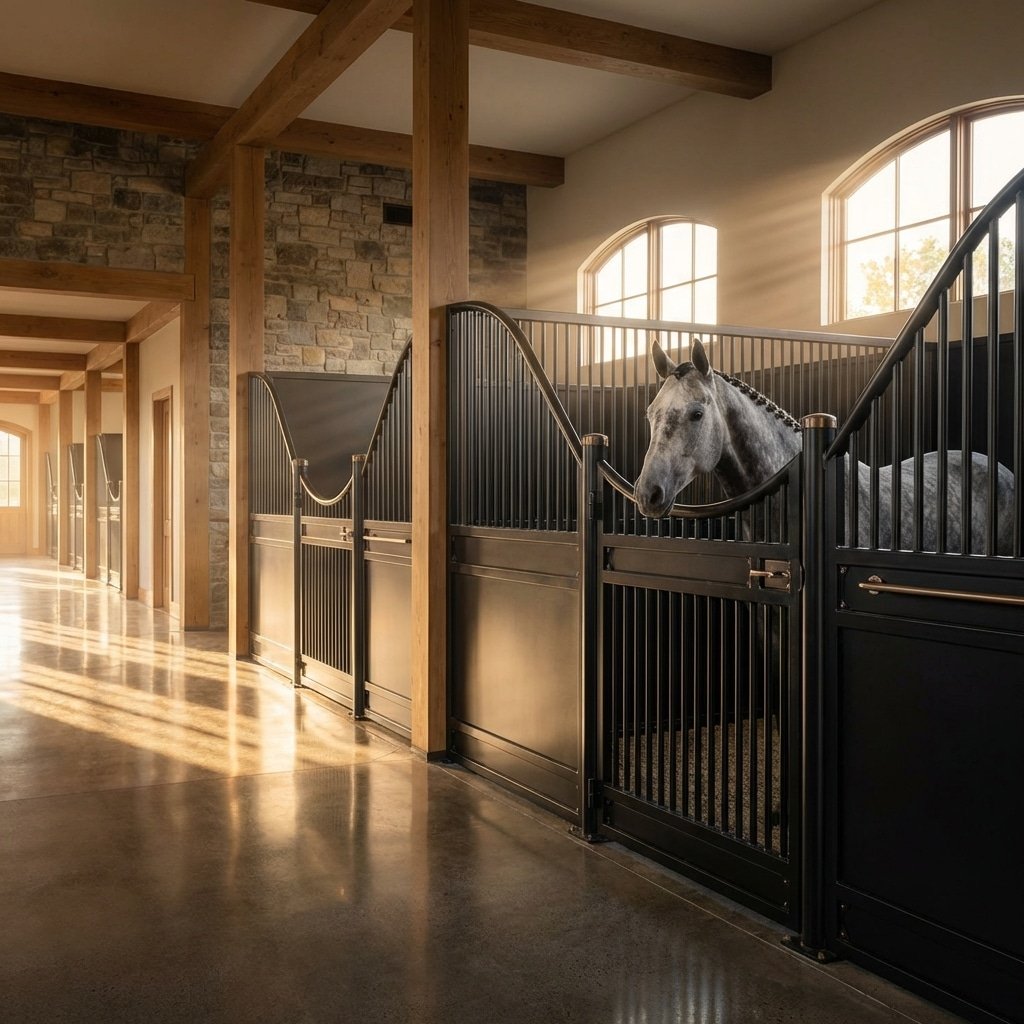
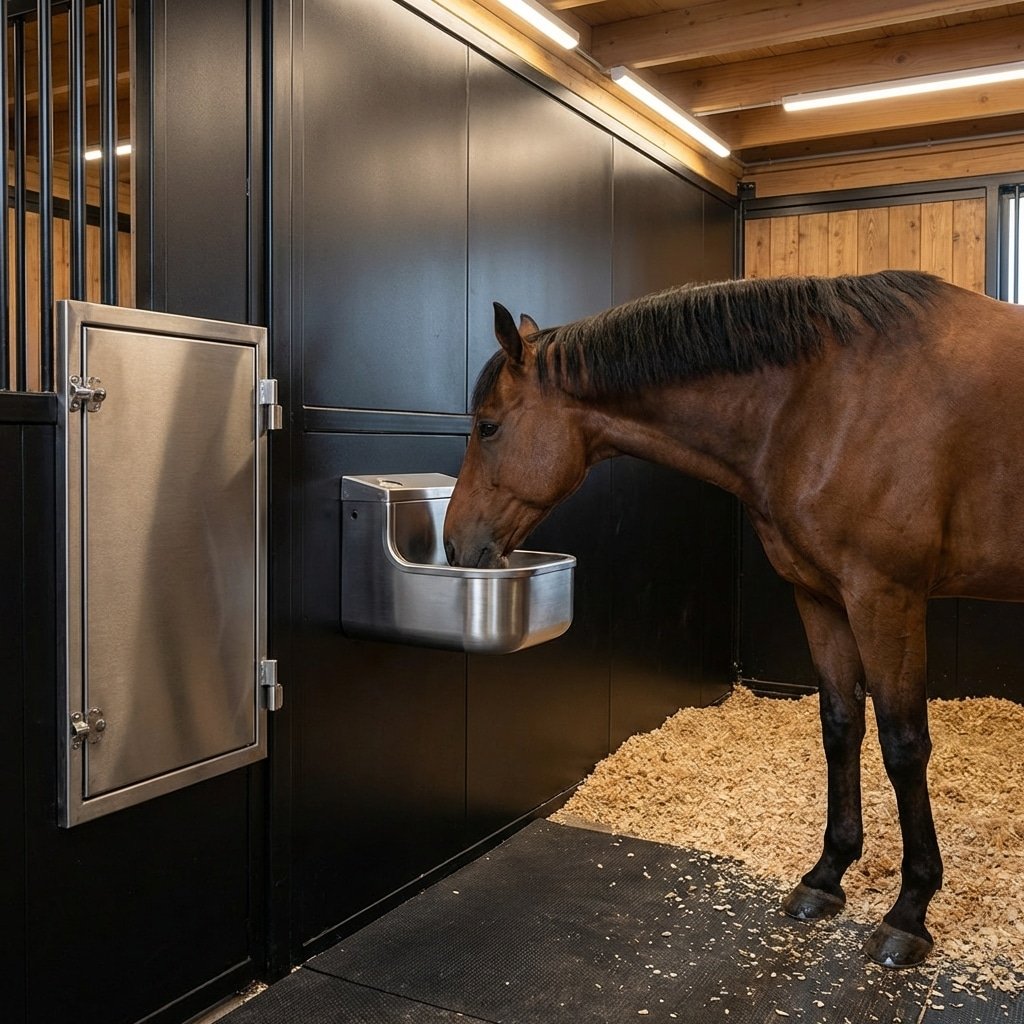
Integrating Automatic Waterers into Steel Horse Stalls
Successful integration requires heavy-duty framing to withstand leverage. We use 14-gauge structural steel to ensure mounting points never fail under equine pressure.
Optimizing Placement: Corner vs. Flush Mounting
Designing a stall for automatic waterers is about more than just plumbing; it is about equine safety and preserving square footage. Professional facilities typically choose between corner mounting to utilize dead space or flush mounting to maximize safety. Regardless of the choice, the water lines must run through the steel casing of the stall front to prevent horses from accessing the PEX or copper pipes.
- Corner Mounting: This method uses triangular brackets to fit the unit into the corner. It efficiently uses space that horses rarely occupy but leaves the unit more exposed to impact if a horse casts or kicks.
- Flush (Recessed) Mounting: We engineer a specific cavity in the stall wall to recess the waterer. This sits flush with the infill, preventing cribbing (biting the unit) and significantly lowering the risk of injury during a panic situation.
- Plumbing Integration: Most high-end builds route supply lines vertically through the stall’s main posts. This requires pre-drilled access points in the steel fabrication phase to keep lines invisible and tamper-proof.
Ensuring Stability with 14-Gauge Structural Steel
An automatic waterer full of water acts as a heavy lever arm on the stall wall. When you add the force of a 1,200 lb horse rubbing against it, the stress on the mounting points is immense. Standard 16-gauge (1.5mm) steel tubing often fails in this application; the bolts simply tear through the thin metal wall over time.
DB Stable solves this by mandating a minimum 2.0mm (14-gauge) wall thickness for all structural tubing using Q235B or Q345B structural steel. This thickness provides the necessary “bite” for the mounting hardware, ensuring the unit stays rigid. For cold climates where steel becomes more brittle, we recommend upgrading to Q345B (ASTM Grade 50 equivalent), which offers superior impact toughness even when frozen. This heavy-duty framing prevents the “wobble” that leads to leaks and structural failure.
Precision-Engineered Stables For Every Climate
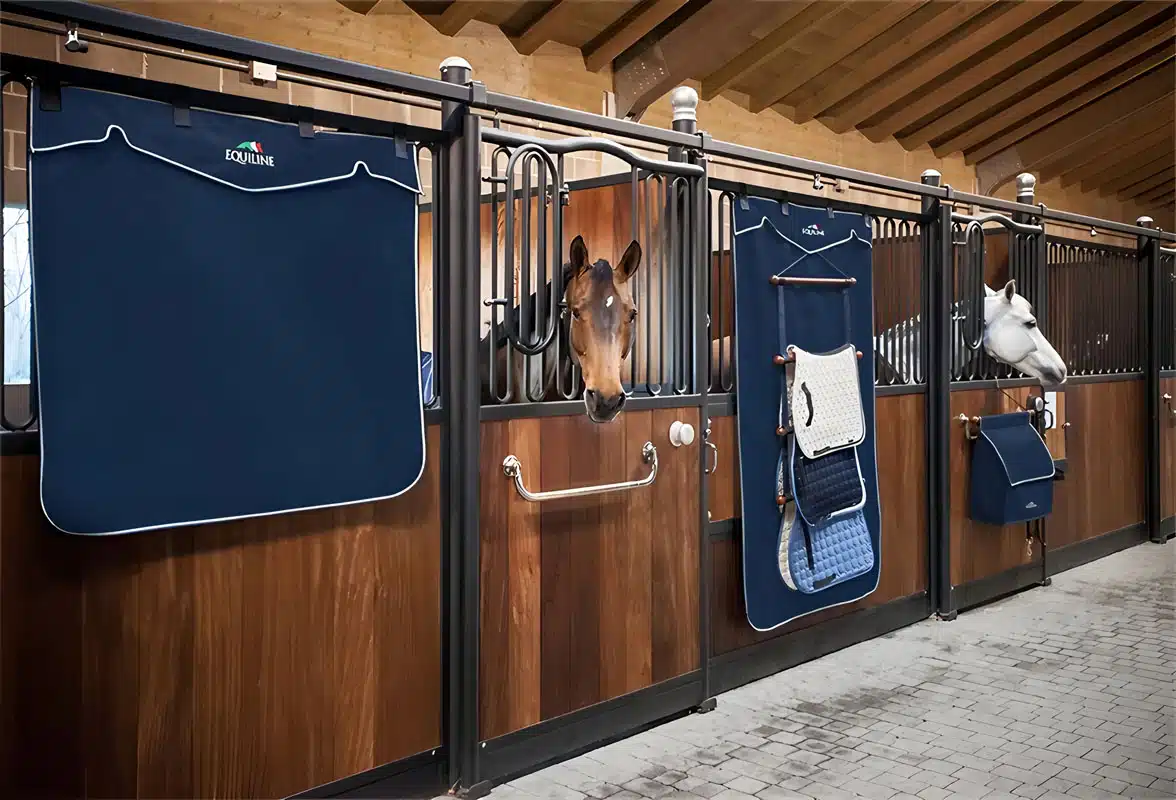
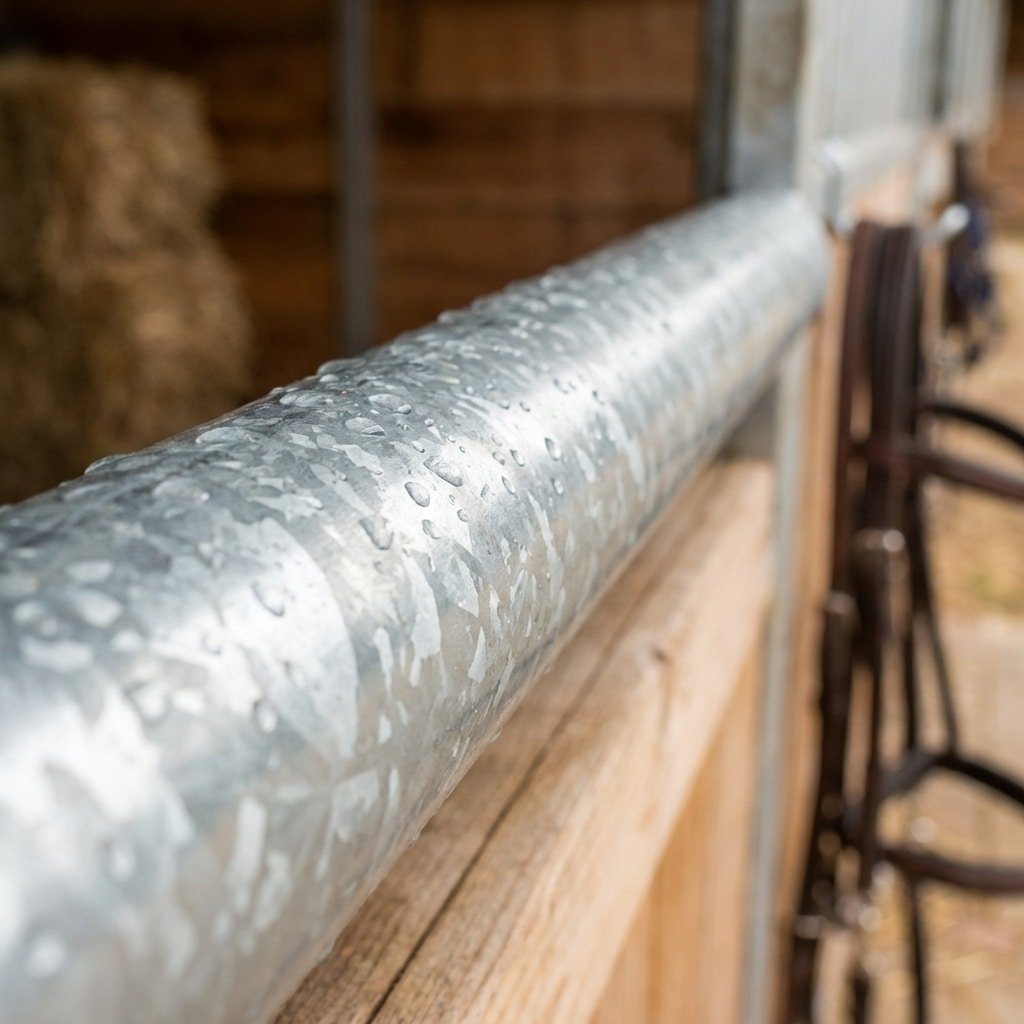
The Hinged Water Door: Quick Aisle Access to Buckets
Integrated aisle-side access allows staff to fill and clean buckets without entering the stall, reducing labor time and keeping handlers safely separated from horses.
| Feature | Standard Stall Setup | DB Hinged Water Door |
|---|---|---|
| Access Method | Must enter stall / Open main door | External aisle-side swing out |
| Safety Barrier | Broken during every refill | Maintained 100% of the time |
| Corrosion Risk | High (Weld joints often rust) | Zero (Hot-Dip Galv After Fab) |
| Hardware | Standard Zinc Plated | 304 Stainless Steel |
Streamlining Daily Chores with Aisle-Side Access
Opening the main sliding door for every water refill creates an operational bottleneck. It breaks the containment barrier, creating an immediate opportunity for the horse to bolt or strike the handler. The hinged water door eliminates this interaction entirely. Staff unlatch the specific access panel from the aisle, swing the bucket out for cleaning or refilling, and lock it back in seconds. For commercial facilities managing 50+ stalls, this minor workflow adjustment recovers hours of labor weekly while ensuring staff never enter the “danger zone” during routine feeding.
- Risk Mitigation: Eliminates the need to open main doors, preventing escape attempts during feeding time.
- Labor Efficiency: Reduces the time required to water an entire barn by allowing rapid aisle-side filling.
- Staff Protection: Maintains a steel barrier between the handler and potentially aggressive horses during care.
Structural Integrity: Galvanized Steel and Stainless Hardware
Water bucket zones are high-corrosion areas. Constant moisture, combined with the acidity in equine saliva and manure, destroys inferior steel quickly. We build these doors using Q235B structural steel with a minimum 14-gauge (2.0mm) wall thickness to withstand heavy cribbing. Crucially, we use Hot-Dip Galvanization After Fabrication (ISO 1461). We weld the black steel first, then dip the entire door unit into molten zinc. This ensures the zinc coating covers every weld seam and crevice, preventing the rust that plagues pre-galvanized competitors. We finish the assembly with 304 Stainless Steel hinges and heavy-duty plunger latches, ensuring the mechanism remains smooth and secure despite constant wet conditions.
DB’s Factory Pre-Drilled Posts for Concealed Plumbing
We laser-cut plumbing ports before Hot-Dip Galvanization to ensure internal steel edges receive full zinc protection, preventing the rust inevitable with on-site drilling.
Utilizing the Structural Cavity for Safety
Most stable installations run water lines externally, leaving them exposed to horse cribbing, kicking, and general impact damage. We engineer the solution directly into the structural framework. By routing PEX or stainless piping through the hollow cavity of our standard 50mm x 50mm RHS or 114mm Round Posts, we completely shield utilities from the animal.
This integration supports the clean, obstruction-free aesthetic required for our Professional and Royal Series projects. It eliminates the need for retrofitted conduit or protective guards, reducing the risk of injury while maintaining immediate access to water systems without visual clutter.
The ‘Drill-Then-Dip’ Rust Protection Protocol
On-site modifications are the leading cause of premature rust in stable systems. When contractors drill holes during installation to feed pipes, they breach the protective zinc layer, exposing raw steel to moisture and ammonia. DB Stable eliminates this failure point by executing all plumbing cuts and ports prior to the Hot-Dip Galvanization process (ISO 1461).
- Full Encapsulation: Because holes are cut before dipping, the molten zinc flows over the cut edges, ensuring the internal rim receives the same >70 microns of coating as the exterior.
- Structural Integrity: We preserve the certified strength of our Q235B and Q345B steel frameworks by avoiding unregulated field drilling.
- Longevity: This process prevents the “rust bleed” often seen around retrofitted plumbing holes within the first 24 months of use.
Frequently Asked Questions
What are the main differences between automatic waterers and manual integrated water lines?
Automatic waterers use float valves or ultrasonic sensors to provide continuous fresh water. This creates a significant labor advantage, saving approximately two hours of daily labor in a standard commercial barn. Integrated water lines rely on aisle spigots and manual buckets. While this method requires more physical work, high-performance sport horse facilities often prefer it because it allows precise monitoring of exactly how much water a horse consumes—a critical health metric that automatic systems often obscure.
What is required to install an automatic waterer in a DB Stable stall?
Installation involves mounting the unit directly to the stall wall. Our 28mm-32mm HDPE or Bamboo infill is dense enough to hold mounting bolts securely without additional backing plates. You must connect the water supply line and ensure proper drainage to prevent stall flooding if a valve malfunctions. If you select our Q345B Cold Climate steel option, the structural integrity remains high even when drilling into the frame for heavy-duty bracket mounts.
Can I use heated waterers with your stable systems?
Yes. For stables in freezing regions, heated waterers or heat trace cables are fully compatible with our stalls. When installing electrical frost protection, you must route cables safely away from the horse’s reach, typically through conduit or behind the infill planks. Our hot-dip galvanized finish (ISO 1461) is essential here, as it protects the steel from the increased localized humidity and condensation often generated by heated water sources in cold barns.
Do you offer solutions for filling buckets without entering the stall?
Yes. If you prefer manual buckets over automatic waterers, our Professional Series includes a 360-degree Swivel Feeder. This mechanism allows you to rotate the feed and water buckets out into the aisle for refilling, then spin them back into the stall. This eliminates the need to open the door or enter the stall, significantly improving safety and speed during feeding times.
Final Thoughts
Installing hinged water doors is a strategic defense against labor bleed and structural corrosion, not just a convenience upgrade. While standard powder-coated fronts fail under constant moisture, our ISO 1461 Hot-Dip Galvanized framework guarantees your investment survives decades of wet aisle conditions. Smart facility managers prioritize this specific infrastructure to permanently eliminate the liability of entering stalls for daily chores.
Stop estimating your maintenance costs and start controlling them with engineered solutions. We recommend requesting a specification sheet for our Professional Series to compare our 2.0mm structural thickness against your current supplier. Contact our engineering team today to secure a production slot for your next container load.

 English
  Spanish
  French
  Arabic
  German
0 Comments