
Strategic Trade Show Sourcing is the primary lever for slashing landed costs in the commercial stable market. Navigating the choice between Spoga Horse and the Canton Fair determines whether you access direct OEM pricing or get trapped by re-sellers protecting their markups.
This guide benchmarks exhibition suppliers against the BS EN ISO 1461 Hot-Dip Galvanization standard. We evaluate manufacturers based on their ability to deliver Q345B structural steel and optimized flat-pack logistics, ensuring your procurement trip yields a scalable, high-margin partnership.
Designing Stables for Wheelchair Accessibility (ADA)
Accessible design demands 36-inch pathways, 60-inch turning radii, and sliding doors to eliminate swing obstructions. Low-profile thresholds are non-negotiable for safe adaptive rider entry.
Essential ADA Guidelines for Aisle and Stall Layouts
Most standard barn aisles fail accessibility audits because they prioritize equine movement over human mobility. For commercial therapeutic riding centers or public facilities, compliance is not just about legality; it is about operational flow. We design layouts that integrate specific spatial mandates directly into the structural grid.
- Continuous Pathway Width: Aisles must maintain a minimum clear width of 36 inches at all points to accommodate standard wheelchairs without forcing the user to adjust their path.
- Maneuvering Clearance: Grooming bays and tack rooms require a clear floor space of at least 30 by 48 inches to allow for stationary maneuvering and turning.
- Ramp Slope Ratios: Any elevation change requires ramps adhering strictly to a 1:12 slope ratio (one inch of rise for every 12 inches of run) to prevent tipping hazards.
- Landing Zones: Ramp endpoints and stall entrances need level landing areas of at least 60 inches to allow users to pause and open doors safely.
Optimizing Access with Sliding Doors and Hidden Track Systems
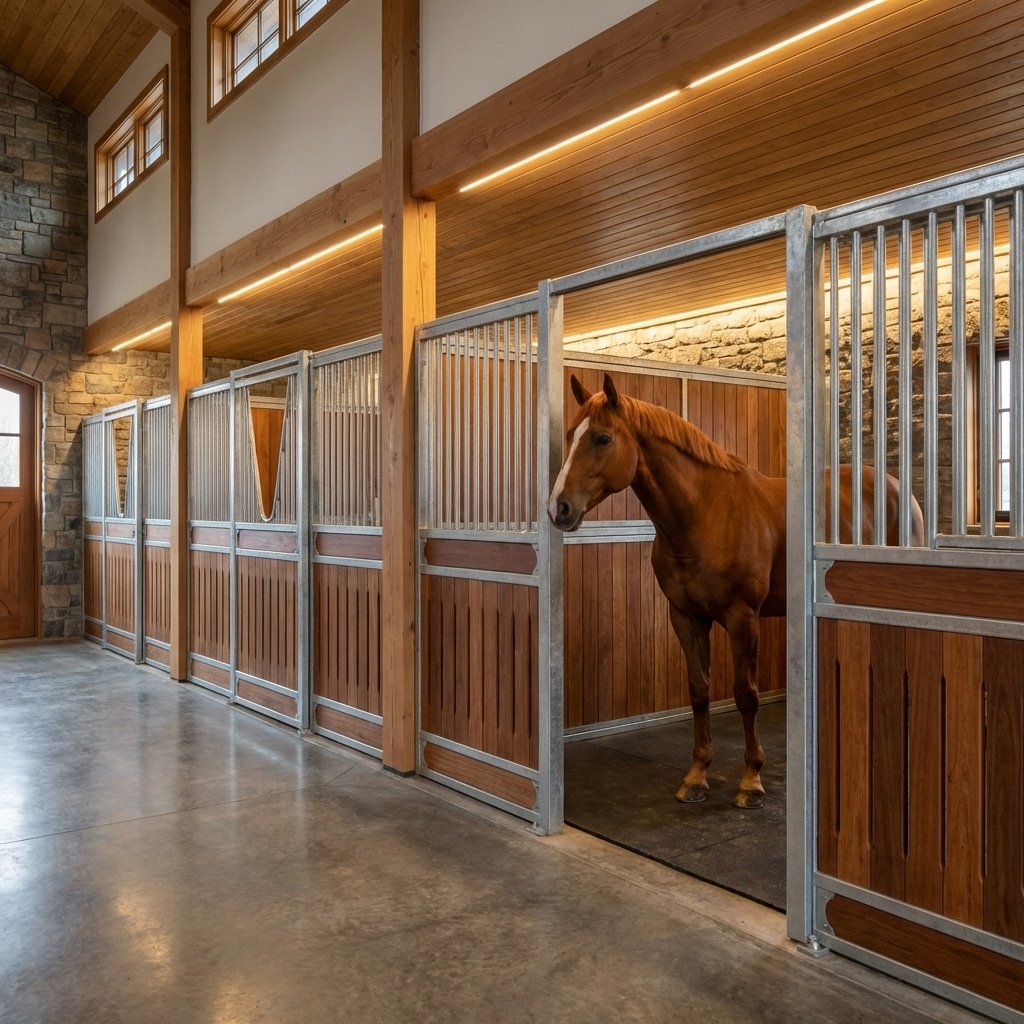
Hinged doors are functionally obsolete in accessible stable design. They require the user to reverse the wheelchair to accommodate the swing arc, creating a barrier to independent entry. We standardize sliding systems for therapeutic projects because they keep the aisle clear and allow single-handed operation.
- Elimination of Swing Arcs: Sliding doors operate on a fixed linear plane, removing the need for a door swing radius and allowing users to enter directly without maneuvering backward.
- Hidden Track System: Our “Professional Series” utilizes a concealed track design that minimizes protruding hardware at the floor level, reducing tripping hazards at the stall threshold.
- Custom Width Manufacturing: Unlike standard off-the-shelf options, we fabricate door openings wider than the 48-inch standard to comfortably fit adaptive equipment and side-walkers.
- Safety Infill Materials: We use smooth HDPE infill which provides a kick-proof surface that is splinter-free, ensuring safety for users interacting with the stall at a lower seated height.
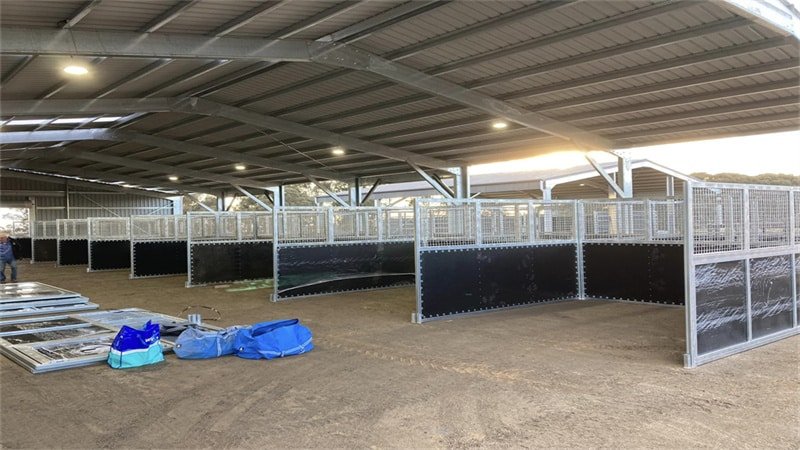
The Aisle Experience: Wide Sliding Doors vs. Swing Doors
Sliding doors maximize safety and flow in commercial barns by eliminating obstruction arcs. Swing doors offer traditional aesthetics but demand significant clearance, best suited for wide, private stables.
Maximizing Workflow: Space Efficiency and Safety
The fundamental difference between these door types dictates the operational speed of your facility. In a busy commercial barn or riding school, the “swing arc” of a traditional hinged door creates a dead zone. A standard 4-foot door swinging into a 12-foot aisle effectively reduces your passable workspace to 8 feet. This bottleneck forces handlers to stop, maneuver the horse around the moving barrier, and then proceed. Multiply this by 20 stalls during morning feed, and you lose significant labor hours to simple friction.
Sliding doors eliminate this hazard entirely. By keeping the barrier within the plane of the stall front, you maintain full aisle width at all times. This is critical when operating machinery; you can drive a tractor or bedding spreader down the center without risking damage to expensive door frames. From a safety perspective, sliding designs prevent entrapment. A spooked horse cannot get pinned between a swinging door and a wall, and sudden gusts of wind won’t slam a heavy steel door into a handler’s path.
Hardware Engineering: Hidden Tracks and Stainless Components
The failure point of most barn doors isn’t the steel panel; it’s the moving hardware. Cheap sliders derail when bedding clogs the floor guides, and cheap swing doors sag as the hinges wear out. We engineer the DB Stable systems to eliminate these specific maintenance headaches using industrial-grade components.
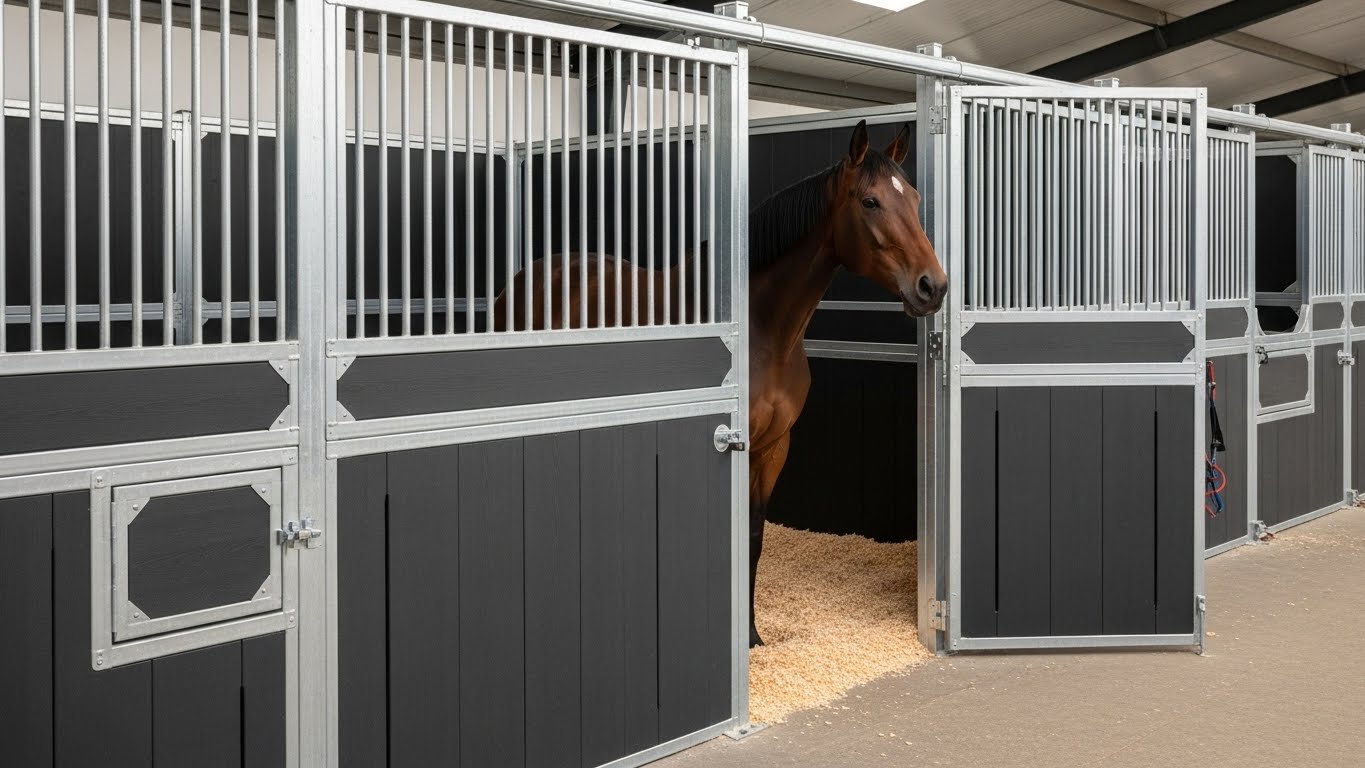
- Professional Series Hidden Track: We utilize an enclosed overhead track system that shields the rollers from dust, hay, and bedding. This prevents the “jam and jump” effect common in exposed roller systems.
- Anti-Sag Hinges: Our swing doors feature heavy-duty adjustable hinges capable of supporting the weight of Q345B steel frames and bamboo infill without drooping over time.
- 304 Stainless Steel Hardware: Every latch, bolt, and connector is made from 304-grade stainless steel to resist the corrosive ammonia environment of a stable.
- Rust Protection: We apply Hot-Dip Galvanization (ISO 1461) after fabrication. This ensures even the friction points and weld seams are coated in 70+ microns of zinc, preventing rust where the door moves most.
Engineered for Safety and 20-Year Durability
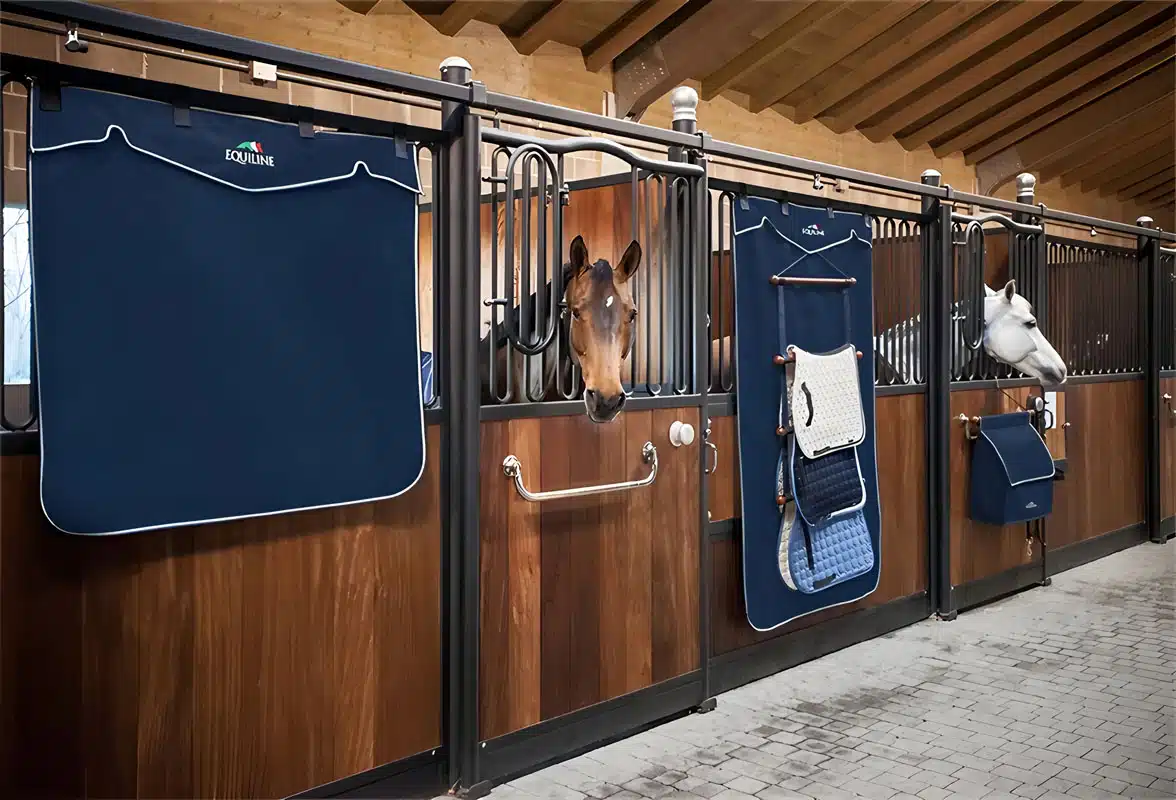
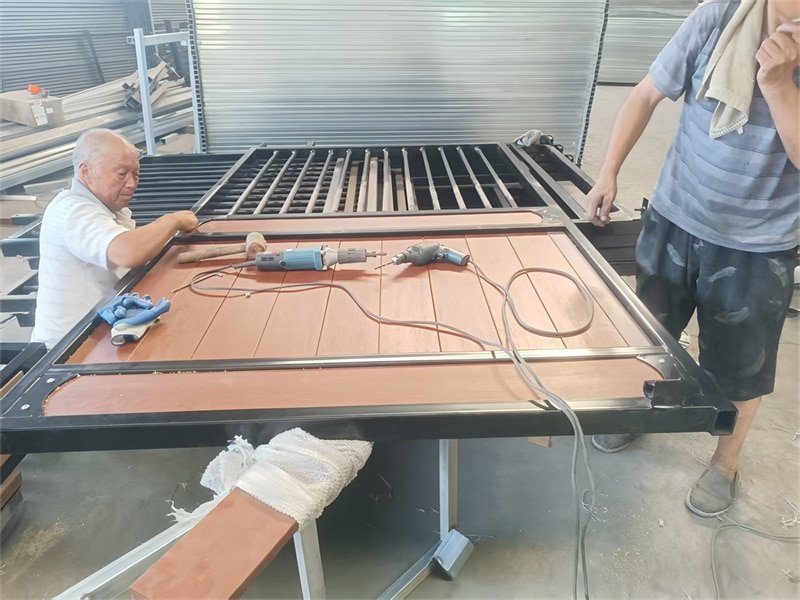
Zero-Threshold Floors: Eliminating Trip Hazards
Zero-threshold designs remove dangerous bottom bars and tracks, preventing horse injuries and simplifying mucking out. Our top-hung system ensures a seamless, barrier-free entry without compromising containment.
Operational Risks of Elevated Ground Tracks
Traditional stable manufacturers often install a U-channel or raised steel bar across the doorway to guide sliding doors. From an engineering perspective, this is a lazy design choice that introduces unnecessary liability into a professional facility.
- Immediate Trip Hazards: Raised thresholds are a primary cause of stumbled entries. Tired performance horses and young foals often drag their hooves, making a 2-inch steel bar a significant injury risk.
- Sanitation Nightmares: Bottom U-channels act as traps for urine-soaked bedding and manure. This accumulation accelerates rust at the base of the frame and creates a breeding ground for bacteria that is nearly impossible to fully clean.
- Workflow Obstruction: A raised track disrupts the movement of wheeled equipment. Staff must physically lift loaded muck carts and feed trolleys over the threshold multiple times a day, increasing physical strain and slowing down daily operations.
Achieving Flush Access with the Hidden Track System
We solved this issue in our Professional Series by removing the floor connection entirely. Instead of relying on the ground for stability, we shifted the mechanical load to the top header.
- Top-Hung Architecture: We utilize a heavy-duty Hidden Track System enclosed within the top rail. This supports the full weight of the door, eliminating the need for a floor-mounted guide rail and leaving the entryway completely clear.
- Cast-Proof Design: Eliminating the threshold does not mean ignoring safety gaps. We engineer the door height to maintain a precise bottom clearance of approximately 50mm. This gap is tight enough to prevent a rolling horse from getting a leg trapped (casting) but open enough to allow smooth operation over bedding.
- Zero Maintenance: Without a bottom track to clog with shavings, the door system requires virtually no daily maintenance. Staff no longer need to dig out debris to force a door open, ensuring the stall is always accessible in an emergency.
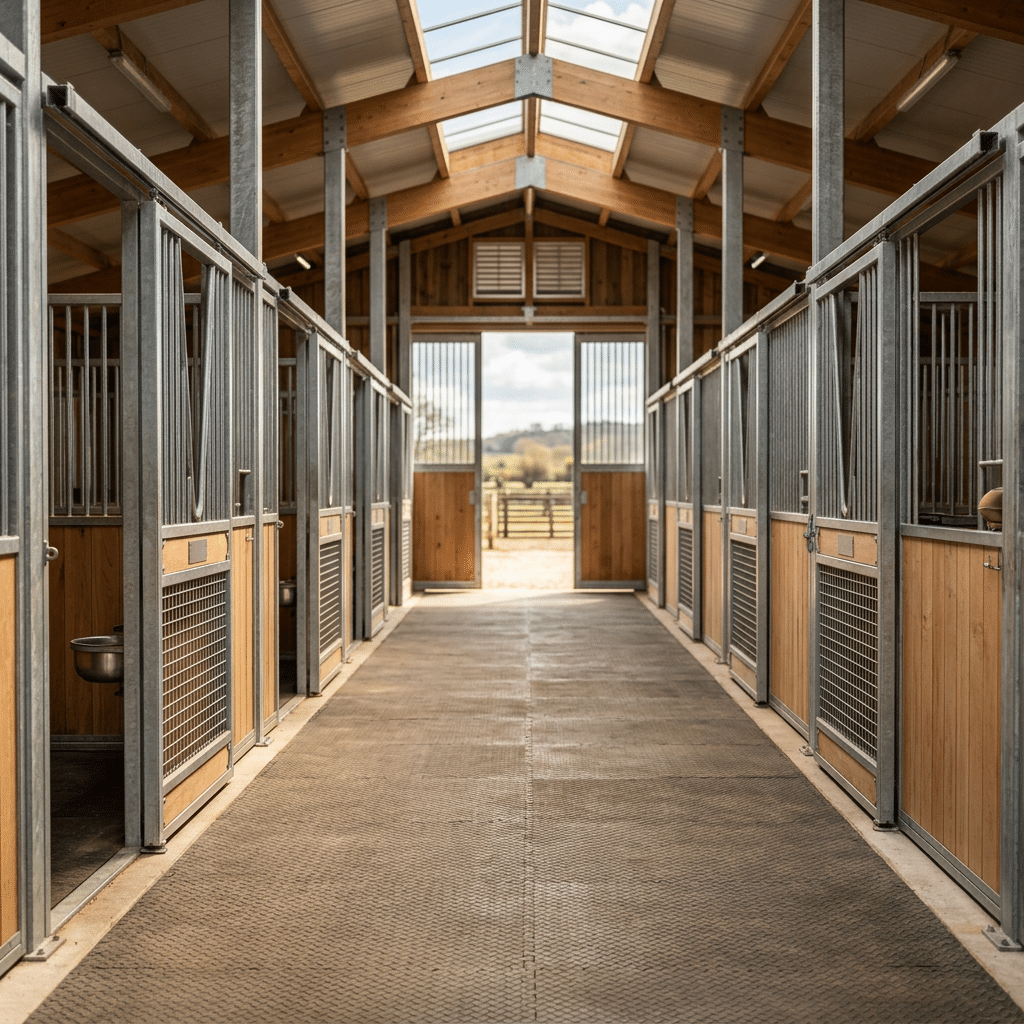
Top Suppliers Engineering for the PATH/RDA Community
Executive Insight: You cannot buy “PATH-Certified” stables from a catalog. True therapeutic infrastructure requires a manufacturing partner who engineers for ADA clearances and zero-threshold safety, not just standard equine dimensions.
The Missing Link in the Supply Chain
If you search for “therapeutic riding stable suppliers,” you will find a massive gap in the market. Most search results point to other riding centers, not equipment manufacturers. This is because the industry lacks dedicated off-the-shelf suppliers for the Professional Association of Therapeutic Horsemanship (PATH) and Riding for the Disabled Association (RDA) sectors. Most facilities make the dangerous mistake of retrofitting “hobby barns” to meet clinical needs.
A safe facility requires an engineering approach, not a retail purchase. You need a supplier who understands that a standard 4-foot sliding door opening isn’t enough when you have a rider, a wheelchair, and two side-walkers maneuvering in an aisle. We bridge this gap by offering direct manufacturing (OEM) services that customize heavy-duty steel structures to meet strict ADA and safety protocols from the design phase.
| Supplier Category | ADA Compliance Capability | Safety Engineering | Cost Basis |
|---|---|---|---|
| Local Generalist Welder | Low. Rarely understands strict clear-width or 1:12 ramp ratios. | Variable. Often uses rough welds or improper latch heights. | High. Custom fabrication labor is expensive. |
| Big-Box Retail Brands | Zero. Sells standard “hobby” sizes (12ft fronts) that cannot be altered. | Standard. Hinged doors create dangerous swing radius hazards. | Highest. Includes retail markup + shipping. |
| Specialized OEM (DB Stable) | Native. Engineers 48″+ openings and zero-threshold tracks. | High. Q345B Impact Steel & One-Hand Latch Systems. | Direct. Wholesale pricing protects non-profit budgets. |
Critical Engineering Criteria for Therapeutic Suppliers
When evaluating a supplier for a PATH/RDA facility, you must ignore aesthetic “European Styles” and focus strictly on operational mechanics. The supplier must demonstrate the ability to modify their production line for accessibility without charging “custom” premiums.
- The 32-Inch Clearance Mandate: A standard stall door often has a frame stop that reduces the clear opening width. ADA standards require a minimum 32-inch clear passage. We recommend engineering stable fronts with minimum 48-inch sliding doors to accommodate powered wheelchairs and side-walkers safely.
- Zero-Threshold Flooring: Most barn doors have a bottom guide or track that creates a trip hazard. For therapeutic centers, the supplier must provide a top-hung track system or a flush-mounted bottom guide that allows for a “Zero-Threshold” floor, eliminating barriers for mobility devices.
- One-Handed Latch Operation: Staff often manage a horse with one hand while assisting a client. Complex pin latches are a liability. We use gravity-assisted or spring-loaded latches that meet ADA operable parts requirements (operable with one hand, no tight grasping).
- Impact Resilience (Q345B Steel): In a therapeutic setting, horses must remain calm, but equipment must be prepared for the worst. We use Q345B (ASTM Grade 50) steel, which offers superior impact toughness compared to the industry-standard Q235B, ensuring safety even if a horse kicks out.
Why Direct Manufacturing is the Only Viable Model
Therapeutic riding centers are often 501(c)(3) non-profits operating on grants and donations. Purchasing through retail distributors wastes limited funds on middleman markups. By sourcing directly from a manufacturer like DB Stable, facilities access ISO 1461 Hot-Dip Galvanized durability at a fraction of the cost.
Our flat-pack logistics system allows us to ship 30-45 stall sets in a single 40HQ container, drastically reducing the landed cost per unit. This “Profit Protection” logistics model ensures that donor money goes into the facility’s infrastructure, not into shipping air.

DB’s Smooth-Glide Enclosed Track System
DB’s Smooth-Glide system replaces exposed rails with an enclosed header track. This design prevents debris jams, eliminates derailment risks, and ensures heavy doors operate effortlessly.
The Safety and Hygiene of Enclosed Tracks
Traditional sliding doors often rely on open U-channel tracks mounted on the floor or exposed rails bolted to the top. In a stable environment, these are magnets for trouble. An open channel acts as a “hay trap,” collecting bedding, dust, and dirt. Over time, this debris compacts and creates friction, causing the door to jump its track or jam completely. Our enclosed system shields the rolling mechanism inside the header, effectively blocking contaminants from entering the glide path.
Safety extends beyond just mechanical function. Exposed rollers and brackets on standard barn doors present snagging hazards. A horse rubbing against the door can easily catch a halter or mane hair in the mechanism. By fully enclosing the track, we create a smooth, flush surface that removes these catch points. This design also significantly reduces maintenance, as the internal components remain protected from the corrosive mix of moisture and ammonia common in busy aisles.
Specifications of the Professional Series Hidden System
We do not offer this system as a retrofit kit; it is engineered as a structural core of our Professional Series. The track is integrated directly into the Q345B heavy-duty header. This high-strength steel box section supports the weight of the entire stable front, ensuring the track never sags or warps under the load of heavy warmblood-grade doors.
- Integrated Header: Built exclusively with Q345B Structural Steel for maximum rigidity and impact resistance.
- Corrosion Resistance: All internal rollers, hangers, and stops utilize 304 Stainless Steel to prevent rust seizure inside the track.
- Structural Design: The fully welded integration creates a unit far stronger than bolt-on rail systems, preventing the “wobble” often found in economy stable fronts.
Final Thoughts
Relying on local welders to retrofit standard barns for ADA compliance is a liability trap that drains your budget and endangers clients. Our **Professional Series** resolves this by integrating mandated 48-inch clearances and zero-threshold tracks directly into the **Q345B steel structure**. This ensures your facility meets strict PATH safety protocols and operational flow requirements the moment installation is complete.
Do not let middleman markups consume the grant funding meant for your horses and riders. Contact our engineering team today to customize a direct **OEM production run** tailored to your specific accessibility requirements. We deliver **ISO 1461** galvanized durability at a wholesale cost that protects your non-profit’s bottom line.

 English
  Spanish
  French
  Arabic
  German
0 Comments