


State Fairgrounds utilizing rental infrastructure bleed operational budgets through recurring third-party margins and volatile logistics fees. Relying on temporary agencies for bulk stabling exposes agricultural centers to supply chain bottlenecks that threaten event timelines and profitability. Transitioning to owned assets converts these sunken rental costs into fixed capital, securing revenue control for decades.
This analysis benchmarks manufacturers capable of delivering 500 sets within a strict 60-day window while adhering to the ISO 1461 Hot-Dip Galvanization standard. We examine production capacity for Q235B structural steel and flat-pack logistics efficiency, identifying partners who optimize freight density to reduce landed costs by over 60 percent.
The Economics of Mega-Events: Renting vs. Owning Stalls
Quick Comparison
| Organization | Location | Key Strength | Verdict |
|---|---|---|---|
| Iowa State Fair | Iowa, USA | Hybrid revenue model generating $629.2M impact and sustaining ~5,000 jobs. | Balanced Powerhouse: Offers a strong mix of massive fair revenue and stable year-round utilization. |
| State Fair of Texas | Texas, USA | Highest economic impact ($680M) and significant tax revenue ($70.5M). | Top Earner: The leader for raw economic scale and tax generation during the primary event window. |
| Georgia National Fairgrounds | Georgia, USA | Highly diversified streams; majority of impact comes from rentals/livestock, not the fair. | Most Diversified: Ideal model for stability, relying heavily on year-round rentals rather than a single event. |
| Oklahoma State Fair | Oklahoma, USA | Acts as a high-volume hub with 180+ annual shows and 2.3M non-fair attendees. | Utilization Leader: Best for continuous asset use and high visitor volume outside the main fair season. |
Iowa State Fair
A dominant economic force, this entity combines an 11-day mega-event with a hybrid year-round revenue model to drive over $600M in impact.
The Iowa State Fair operates as a massive economic engine, generating $629.2 million in total impact according to 2024 data. Beyond the festivities, it sustains nearly 5,000 jobs and contributes significantly to the state’s fiscal health with $17 million in impact.
Unlike events that sit dormant for 11 months, these fairgrounds utilize a continuous engagement strategy. Revenue flows from the core 11-day festival alongside robust year-round event rentals and vendor licensing.
📊 At a Glance:
- 📍 Location: Iowa, USA
- 🏭 Core Strength: Annual State Fair, Event Rentals, Vendor Licensing
- 🌍 Key Markets: Midwest USA
Why We Picked Them:
| ✅ The Wins | ⚠️ Trade-offs |
|---|---|
|
|
State Fair of Texas
The State Fair of Texas is a **financial powerhouse**, delivering the highest cited economic impact of $680 million and driving substantial tax revenue.
As a premier mega-event, this entity functions as a massive economic engine for the region, generating up to $680 million in total impact. It plays a critical role in the local labor market, sustaining 4,486 jobs through its extensive operational ecosystem.
The business model focuses heavily on core fair operations supplemented by robust secondary vendor sales. This strategy is highly effective for fiscal generation, producing an impressive $70.5 million in tax revenues for the state and local municipalities.
📊 At a Glance:
- 📍 Location: Texas, USA
- 🏭 Core Strength: State Fair Events, Concession Licensing
- 🌍 Key Markets: Texas, National
Why We Picked Them:
| ✅ The Wins | ⚠️ Trade-offs |
|---|---|
|
|
Georgia National Fairgrounds
This venue defines **revenue diversification**, proving that year-round rentals and livestock operations can outperform the flagship fair itself in total value.
The Georgia National Fairgrounds operates on a distinct model where the annual fair is just one component of a broader strategy. Instead of banking entirely on an 11-day window, the organization functions as a continuous event hub for the Southeast region.
Data indicates that only $34 million of its $133 million impact comes from the fair, with the vast majority derived from consistent facility rentals. This approach creates a stable financial baseline that is less susceptible to weather or attendance fluctuations during the main event.
📊 At a Glance:
- 📍 Location: Georgia, USA
- 🏭 Core Strength: Livestock Shows, Event Rentals, Agricultural Fair
- 🌍 Key Markets: Southeast USA
Why We Picked Them:
| ✅ The Wins | ⚠️ Trade-offs |
|---|---|
|
|
Oklahoma State Fair
A volume-driven operational model that secures **continuous year-round asset utilization** through hundreds of secondary events.
The Oklahoma State Fair operates as a comprehensive fairgrounds hub, distinguishing itself by hosting approximately 180 shows and exhibitions annually. Unlike models dependent solely on one flagship festival, this entity draws 2.3 million visitors specifically for non-fair events.
This high-frequency strategy emphasizes consistent occupancy, ensuring facilities generate value throughout the calendar year. While the total economic impact is nearly $100 million, the stability comes from a steady stream of activity rather than a single seasonal spike.
📊 At a Glance:
- 📍 Location: Oklahoma, USA
- 🏭 Core Strength: Trade Expos, Livestock Shows, Annual Fair
- 🌍 Key Markets: Oklahoma, Regional
Why We Picked Them:
| ✅ The Wins | ⚠️ Trade-offs |
|---|---|
|
|
Heavy-Duty Stables For Extreme Global Climates
The Economics of Mega-Events: Renting vs. Owning Stalls
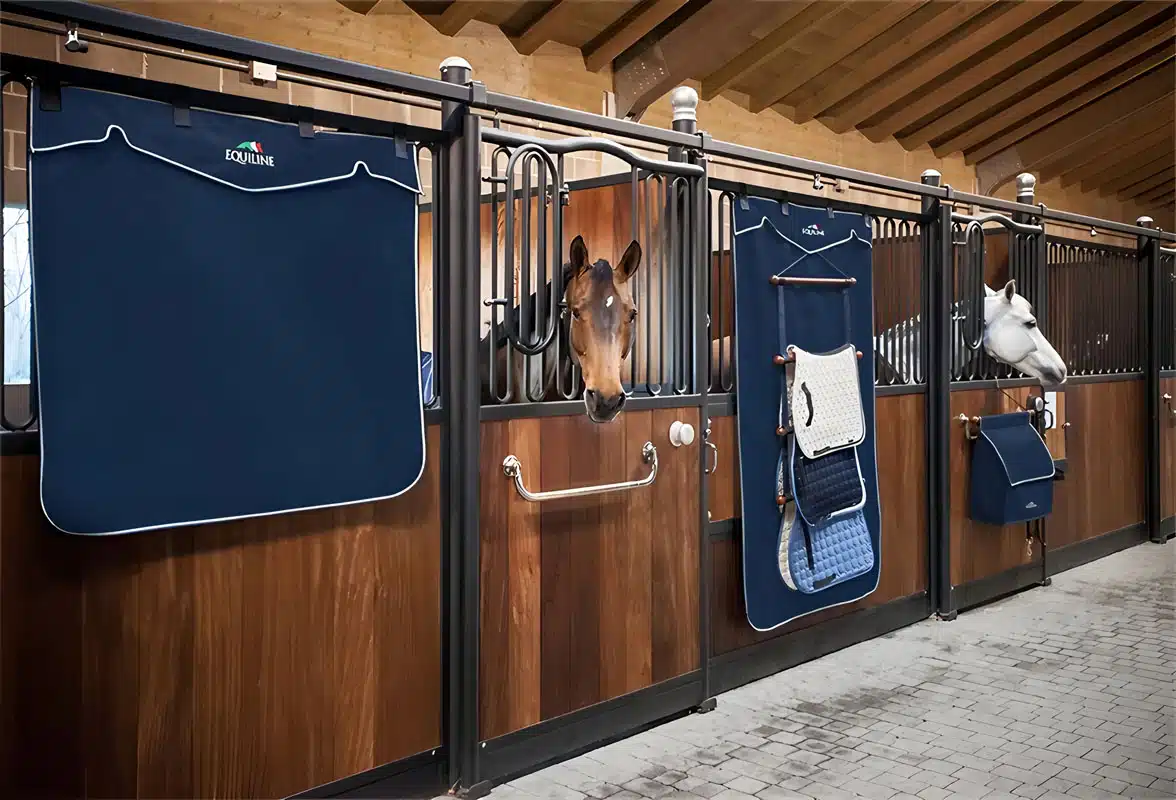
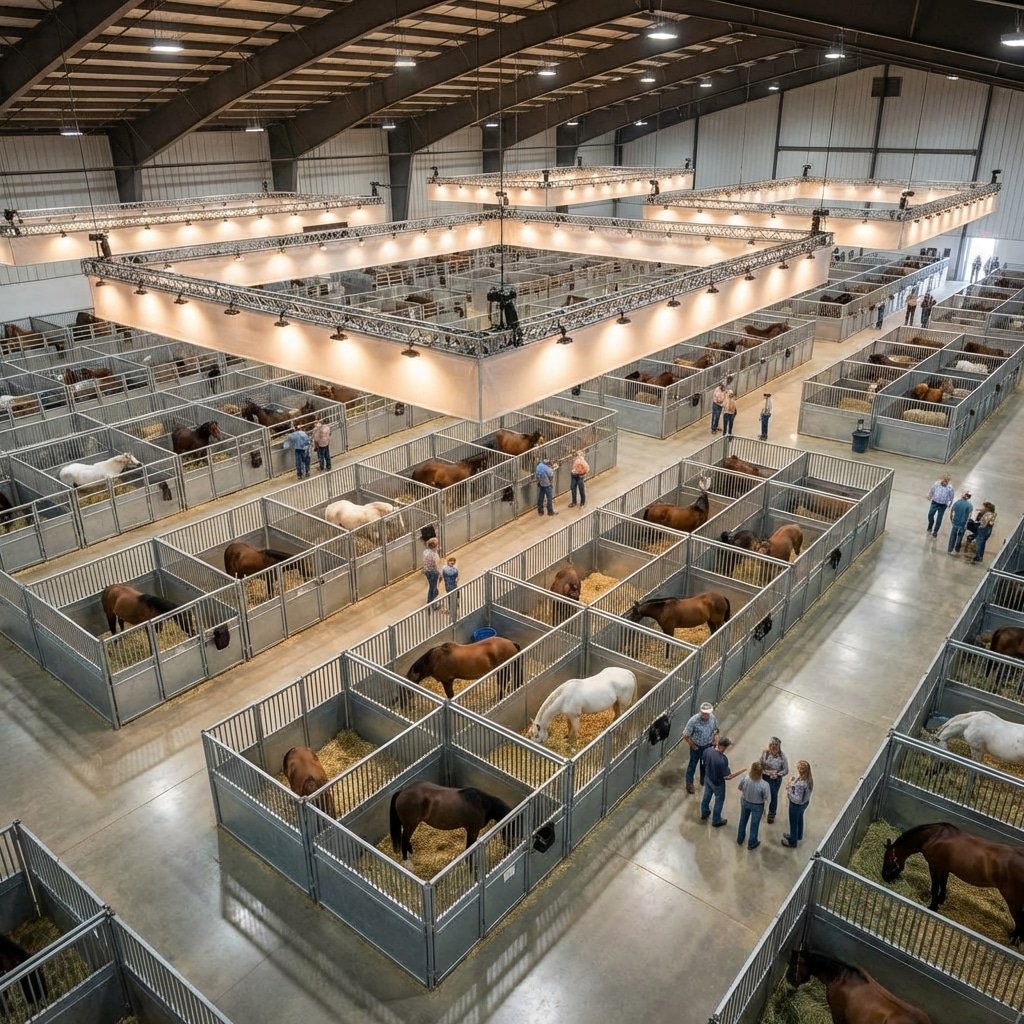
Relying on rental infrastructure for year-round events drains operational budgets through recurring third-party margins and logistics fees. By transitioning to an owned fleet of Hot-Dip Galvanized Economy Series stalls, venues convert volatile expenses into fixed capital assets, securing 100% of stabling revenue while amortizing the investment quickly across multiple seasons.
Comparing Long-Term Costs: Asset Acquisition vs. Recurring Rentals
Venues that operate year-round, such as fairgrounds hosting over 180 shows annually, face unsustainable operational expenses when relying on rented infrastructure for every occasion. Every rental agreement includes sunk costs for delivery, labor, and supplier profit margins that provide no long-term value to the facility. Purchasing a fleet of portable stables breaks this cycle, converting variable rental costs into a one-time capital asset that eliminates third-party markups and secures inventory availability during peak seasons like state fairs.
To ensure this investment delivers a strong ROI, we engineer our Economy Series for maximum longevity. Unlike painted temporary stalls that degrade quickly, our frames undergo Hot-Dip Galvanization after fabrication, achieving a zinc coating average exceeding 70 microns on tubing. This “Lifetime” standard provides superior rust protection against animal waste and weather, allowing the equipment to withstand decades of heavy use. This durability ensures the initial investment is amortized quickly, drastically reducing the cost-per-event compared to perpetual renting.
Operational Efficiency and Revenue Capture
Owning the infrastructure changes the financial dynamic of an event, allowing fairgrounds to capture 100% of the stabling fees charged to exhibitors rather than splitting revenue with rental agencies. This turns the stabling area into a direct profit center. To protect these margins, we utilize HDPE infill planks in our Economy Series. This “Zero Maintenance” solution is impact-absorbing and easy to sanitize, significantly reducing the labor hours and material costs required to turn the facility around between livestock shows.
We also address the logistical challenges of managing a large fleet through our “Profit Protection” flat-pack design. While traditional fully welded stalls result in exorbitant shipping and storage costs, our system allows for 30-45 sets to fit in a single 40HQ container. This efficiency not only reduces initial freight costs by over 60% but also allows venues to store hundreds of disassembled stalls compactly when not in use. Immediate on-site availability further enables venues to capitalize on last-minute event bookings without being constrained by supplier lead times.

Manufacturing Capacity: Who Can Deliver 500 Sets in 60 Days?
Delivering 500 temporary stalls within a strict 60-day window is a logistical stress test that breaks most standard production lines. It requires a manufacturer to sustain a daily output of 8.5 completed units while navigating the fixed time costs of hot-dip galvanization. Success relies on pre-stocked Q235B/Q345B steel reserves and a flat-pack logistics system that clears factory floor space as fast as units are finished.
Analyzing the Daily Output Requirement
To meet a 500-unit quota in two months, the math suggests a factory simply needs to produce 8.5 sets per day. But this theoretical average is dangerous. Real-world manufacturing data shows that most production lines operate at only 65–75% efficiency due to routine equipment maintenance, shift changes, and welding station cooling cycles. Relying on the bare minimum daily output leaves zero margin for error, meaning a single machine failure could derail the entire project timeline.
We approach this by engineering our lines for a design capacity of 12-15 sets per day. This surplus capacity absorbs natural production variances without impacting the final delivery date. Speed also depends heavily on how quickly we can start cutting metal. Instead of waiting for the typical 15-day lead time from steel mills, we maintain a rolling stock of Q235B structural steel and Q345B low-alloy steel. This allows our welding teams to begin fabrication immediately upon order confirmation.
The Galvanization Bottleneck and Supply Chain Velocity
Welding speed means nothing if the finishing process creates a logjam. Our commitment to Hot-Dip Galvanization After Fabrication (BS EN ISO 1461) ensures superior rust protection, but it introduces a fixed 7-10 day cycle external to the welding floor. Unlike competitors who might use pre-galvanized tubing to save time at the expense of weld-joint durability, we account for this necessary dip time by pre-booking capacity at the zinc bath facility. This synchronization ensures that as soon as a batch leaves the welding robots, it enters the galvanization queue without delay.
Volume management is the final hurdle. 500 completed stable sets create immense storage pressure that can choke a factory’s workflow. We solve this with our proprietary Steel Pallet Flat-Pack system. By compacting the components so that 30-45 sets fit into a single 40HQ container, we can move finished inventory off the floor and into shipping containers immediately. This maintains a clear production flow while simultaneously protecting your profit margins on freight. During this rapid assembly, we never skip validation; ASTM B117 Salt Spray tests run in parallel to ensure every batch meets the 85-micron zinc coating standard required for long-term durability.
The Assembly Speed Requirement (Pin Connectors)
Our drop-pin assembly system replaces time-consuming threaded bolts with a gravity-based locking mechanism, enabling a two-person crew to fully erect a stall in under 10 minutes. By integrating 304 Stainless Steel hardware, we ensure rapid, tool-free deployment that meets the strict timeline demands of large-scale equestrian events.
The Mechanics of Drop-Pin Connections
Rapid deployment relies on a lug-and-pin system rather than threaded bolts. Installers secure panels by simply dropping a steel pin through aligned brackets. This gravity-fed approach ensures structural integrity without the slow process of ratcheting nuts and bolts, streamlining the workflow for temporary setups.
This tool-free assembly method eliminates the need for electric drivers or wrenches during the panel joining phase. By removing power tools from the primary assembly step, we significantly reduce fatigue for setup crews working long shifts, maintaining safety and focus throughout the installation process.
We include 304 Stainless Steel connectors in our Hardware Kit to ensure pins slide smoothly without binding. This is critical for outdoor venues, as the pins must remain functional even after the hot-dip galvanized coating undergoes thermal expansion or contraction due to temperature shifts.
Meeting Strict Event Timelines
Large-scale organizers often face tight windows to outfit expo centers. The pin connector design allows a two-person team to erect a complete stall in under 10 minutes, ensuring the venue is ready for horses well before competition starts.
This speed supports the logistics of high-volume orders, such as deploying 500 sets for a State Fair. In these scenarios, minimizing labor hours is critical to the budget and ensures the project remains profitable for the organizer by reducing the time crews spend on-site.
Disassembly is equally efficient, as crews can rapidly pull pins to collapse the Economy Series panels back into flat-pack stacks. This design feature facilitates quick transport to the next venue, protecting your logistics margins by maximizing container loading efficiency.
DB’s Economy Event Series and Flat-Pack Logistics
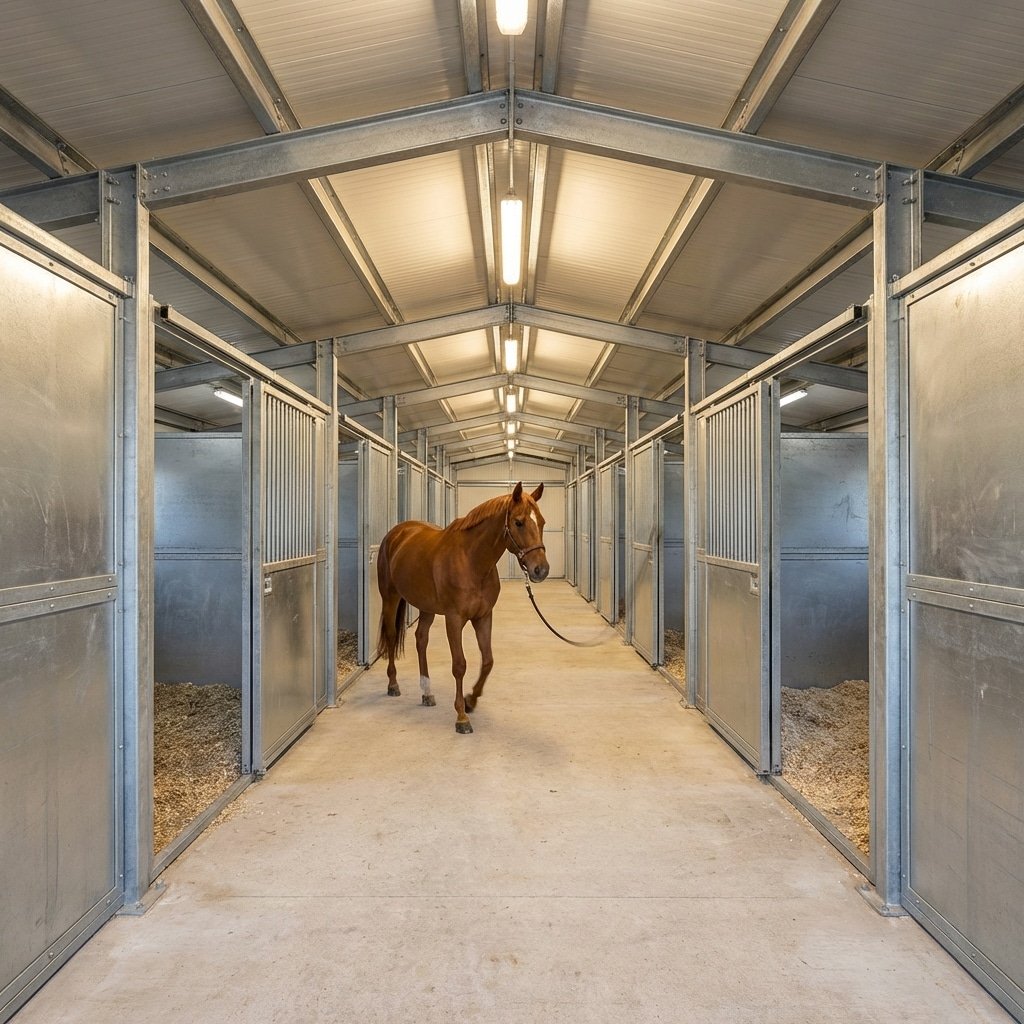
We engineer the Economy Event Series specifically for the rigorous demands of fairgrounds and rental applications. By combining hot-dip galvanized Q235B steel with our proprietary flat-pack logistics, we deliver a zero-maintenance HDPE system that maximizes shipping density—allowing up to 45 sets per container to significantly lower landed costs.
Economy Series Technical Specifications
We design the Economy Series to withstand the high-traffic environment of temporary event hosting and rental stables. Using Q235B structural steel, we build a framework capable of handling the frequent assembly and disassembly cycles required by expo centers. Unlike competitors who use pre-galvanized tubing that rusts at the weld points, we utilize Hot-Dip Galvanization After Fabrication (conforming to BS EN ISO 1461). This process ensures every weld and joint is fully coated in zinc, preventing corrosion even when stalls are stored outdoors between events.
To minimize labor costs for venue operators, we equip this series with 28mm-32mm HDPE infill planks. This material offers a “Zero Maintenance” solution that is impervious to moisture, bacteria, and cribbing. The planks absorb impact energy, providing a “Kick-Proof Guarantee” that protects both the animal and the infrastructure. Furthermore, our open top grill design facilitates Stack Effect Ventilation, a critical feature for maintaining respiratory health in crowded equestrian pavilions.
Strategic Logistics: The Flat-Pack Advantage
Logistics often represent the hidden profit killer in large-scale stall sourcing. Traditional fully welded stalls are bulky, limiting shipping capacity to approximately 12-15 sets per 40HQ container. This inefficiency leads to exorbitant freight costs per unit. We address this through our engineered flat-pack technology, which increases loading density to 30-45 sets per 40HQ container.
This shipping efficiency reduces freight expenses by over 60%, directly supporting the profit protection goals of our distributors and project managers. We package every order on robust steel pallets, ensuring components are secure during transit and allowing for rapid, safe unloading with a standard forklift at the venue site. This system transforms the logistics phase from a cost center into a competitive advantage.
Final Thoughts
Transitioning from rental dependency to an owned fleet of Hot-Dip Galvanized Economy Series stalls transforms a recurring liability into a permanent revenue center. While generic painted steel fails after a few seasons of outdoor exposure, our ISO 1461 post-fabrication dipping process guarantees your investment withstands decades of animal waste and pressure washing. Securing this level of asset durability ensures your fairground captures 100% of stabling fees rather than losing margins to third-party rental agencies.
Large-scale procurement demands logistical precision, which is why we invite you to audit our flat-pack system that fits 45 sets into a single container. Contact our project team today to lock in your manufacturing window and receive a detailed freight analysis for your specific venue location. We are ready to demonstrate how our production capacity delivers 500 units in 60 days without compromising on quality or safety.
Frequently Asked Questions
Who manufactures temporary stalls for State Fairs?
DB Stable serves as a dedicated B2B manufacturer for large-scale event infrastructure. Our Economy Event Series is engineered specifically for State Fairs, featuring hot-dip galvanized frames and impact-resistant HDPE infill designed to withstand heavy public use while maintaining strict safety standards. By sourcing directly from our factory, fairgrounds avoid retail markups and ensure consistent quality across hundreds of units.
How fast can you build 100 horse stalls?
We complete production in 35-45 days. This timeline is necessary to ensure rigorous quality control, specifically for the hot-dip galvanizing process after fabrication (ISO 1461), which protects against rust for decades. Since our flat-pack system allows us to fit 30-45 sets per container, we can manage a 100-stall order efficiently as a standard production run within this timeframe.
Best bulk horse stabling suppliers?
For bulk procurement, sourcing directly from an OEM factory like DB Stable offers significant advantages over retail suppliers. We focus exclusively on distributors and large projects, ensuring consistent ISO 9001 manufacturing standards and competitive volume pricing that is unavailable through standard retail channels. This approach secures your profit margins and guarantees uniform quality across the entire facility.
Cost to outfit an equestrian expo center?
While raw material markets influence final pricing, our logistical efficiency serves as a major cost-saver. Our flat-pack design allows us to fit 30-45 sets in a single 40HQ container, reducing shipping expenses by over 60% compared to traditional welded stalls. This significantly lowers the landed cost per unit, allowing expo centers to allocate budget elsewhere without compromising on the structural integrity of the stables.
Storage for portable horse stables?
We design our portable systems with a specialized steel pallet flat-pack method. This allows fairgrounds to stack panels compactly and safely during the off-season, minimizing the storage footprint. Unlike loose loading, which often leads to scratches and damage during unstacking, our palletized system protects the equipment and its galvanized coating until the next event.

 English
  Spanish
  French
  Arabic
  German
0 Comments