


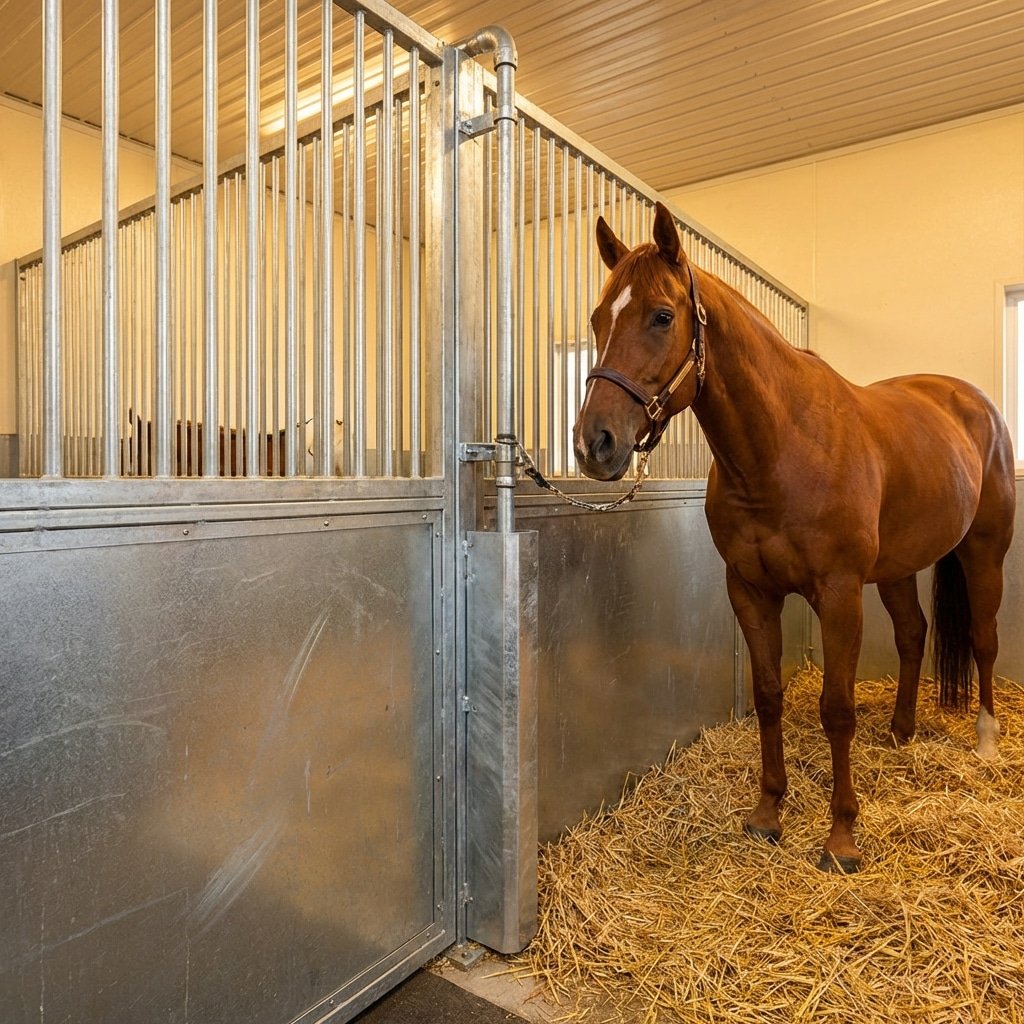
Waterer Pipe Guards act as the critical defense against the inevitable structural failure of exposed PVC in equine facilities. Relying on standard plumbing schedules without armor invites catastrophic flooding events that destroy bedding inventory and compromise stable foundations. A single shattered line often costs more in emergency labor and waste removal than the initial installation savings.
We analyze the mechanical superiority of integrating 14-gauge Q235B structural steel protection over flimsy retrofitted plastics. By embedding the plumbing channel directly into pre-drilled 50x50mm RHS posts, we eliminate on-site fabrication risks and ensure ISO 1461 corrosion resistance. This engineering approach transforms a vulnerably exposed utility into a hardened component of the stable framework.
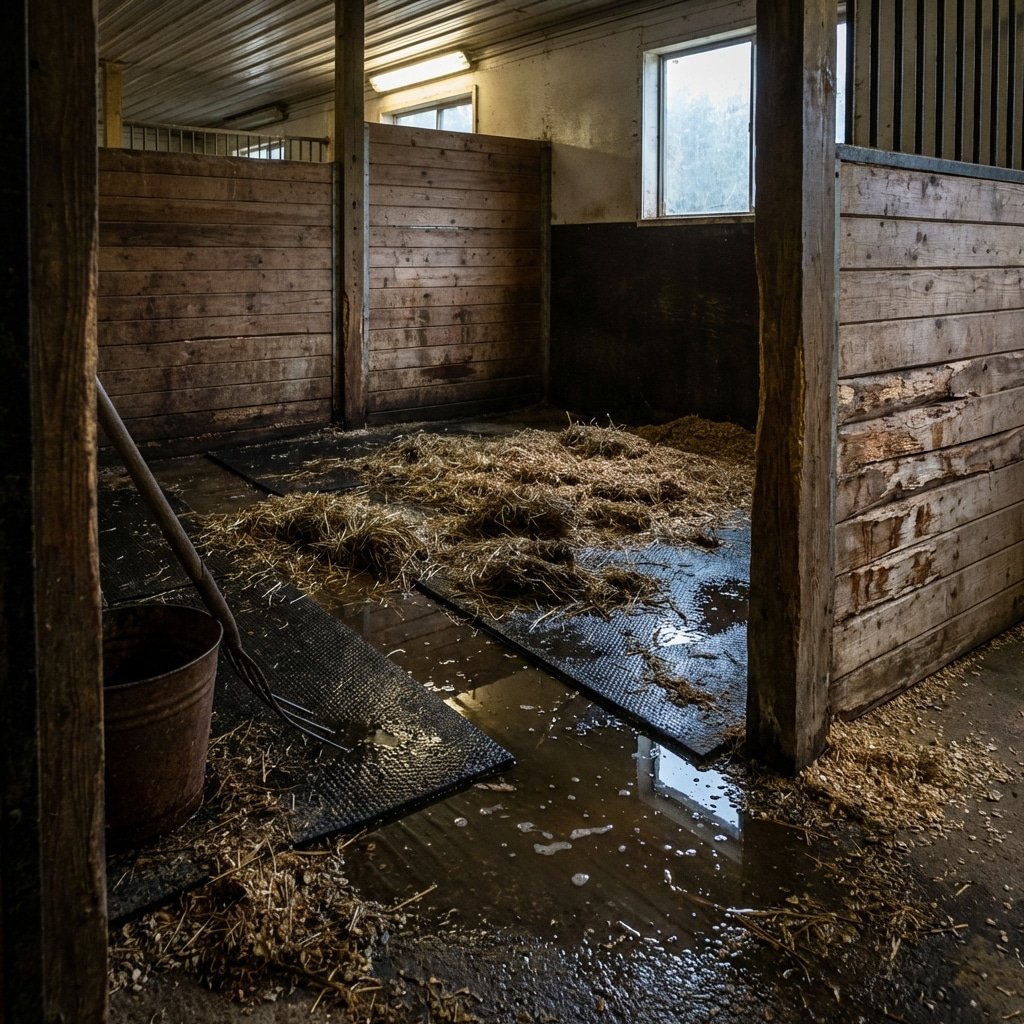
The 2 AM Disaster: A Snapped PVC Pipe in the Stall
Unguarded PVC shatters under impact or freezing, turning a minor component failure into a facility-wide flooding emergency that risks horse safety and infrastructure integrity.
The Structural Vulnerability of Exposed PVC
Most facility managers underestimate the physical mismatch between a 500kg animal and standard Schedule 40 or 80 PVC piping. While PVC is efficient for fluid transport, it possesses zero structural resilience against impact. This weakness is amplified in unheated stables where temperatures drop. Cold PVC loses its plasticity and becomes brittle, meaning it doesn’t bend when a horse rubs against it or kicks out—it shatters instantly.
The contrast in material science here is critical. In our stable manufacturing, we strictly use Q235B structural steel (or Q345B for cold climates) specifically because these materials have high tensile strength and impact toughness. Plastic piping lacks this internal structure. When you leave a waterer line exposed, you are placing a fragile, pressurized vessel directly in the path of a bored or anxious animal. Exposed fittings, particularly elbows and valves, create leverage points that snap cleanly under relatively minor lateral force.
The Cascade of Damage: Flooding and Safety Risks
The immediate consequence of a snapped line is high-volume flooding. Since these breaks often occur overnight when staff is absent, water runs at full pressure for hours. This instantly saturates bedding materials, turning expensive shavings or straw into heavy, sodden waste that requires total removal. The labor cost of this emergency muck-out often exceeds the cost of the plumbing repair itself.
- Slip Hazards: Standing water on rubber mats or concrete creates a slick surface. A startled horse in a flooding stall is at high risk for tendon or ligament injuries due to slipping.
- Accelerated Corrosion: Prolonged moisture exposure attacks any metal fixtures not protected by hot-dip galvanization (ISO 1461).
- Ammonia Retention: Saturated flooring layers trap urine and water, promoting rapid ammonia buildup that affects respiratory health long after the water is drained.

The Equine Toy: Why Horses Bite Exposed Plumbing
Quick Insight: Horses are naturally orally fixated. In confinement, exposed pipes become “toys” or cribbing surfaces. Standard PVC cannot withstand this curiosity, leading to catastrophic leaks.
Natural Oral Investigation Behaviors
Horses experience the world primarily through their lips and teeth. This oral investigation is a biological imperative, not malicious destruction. In a pasture, a horse uses this behavior to sort forage. inside a 12×12 stall, that natural drive doesn’t disappear; it gets redirected toward the environment. The smooth texture and slight give of a PVC pipe make it an attractive target for tactile exploration.
Confinement intensifies this issue. Boredom or a lack of constant forage often triggers “cribbing” or wind-sucking, where the horse latches onto a static object to gulp air. An exposed water line at chest height is mechanically perfect for this habit. To the horse, the plumbing is simply a localized “equine toy” used to relieve stress or expend excess energy. They test static objects for resilience, and unfortunately, residential-grade plumbing fails this test immediately.
The Structural Vulnerability of PVC
Standard plumbing materials are engineered to hold internal water pressure, not to withstand external blunt force or crushing jaw pressure. A horse can exert hundreds of pounds of force per square inch with their molars. When this force meets standard Schedule 40 PVC or soft plastics, the material doesn’t just bend—it shatters or cracks.
This creates the classic “2 AM Disaster.” A bored horse snaps a line during the night, resulting in thousands of gallons of water flooding the bedding, damaging the stable foundation, and potentially causing the horse to ingest plastic shards. This is why reliance on standard plumbing safeguards is negligent in a professional stable environment. Vital infrastructure requires shielding comparable to the structural frame of the building itself.
- Impact Resistance: PVC becomes brittle over time, especially in cold climates, whereas Q235B structural steel (our standard) maintains ductility.
- Cribbing Defense: Soft plastics allow teeth to gain purchase; 14-gauge steel guards deflect the bite entirely.
- Safety Profile: A kicked PVC pipe creates sharp, jagged edges. A kicked steel guard simply dents, protecting both the plumbing and the animal’s leg.
Precision-Engineered Stables With 20-Year Durability
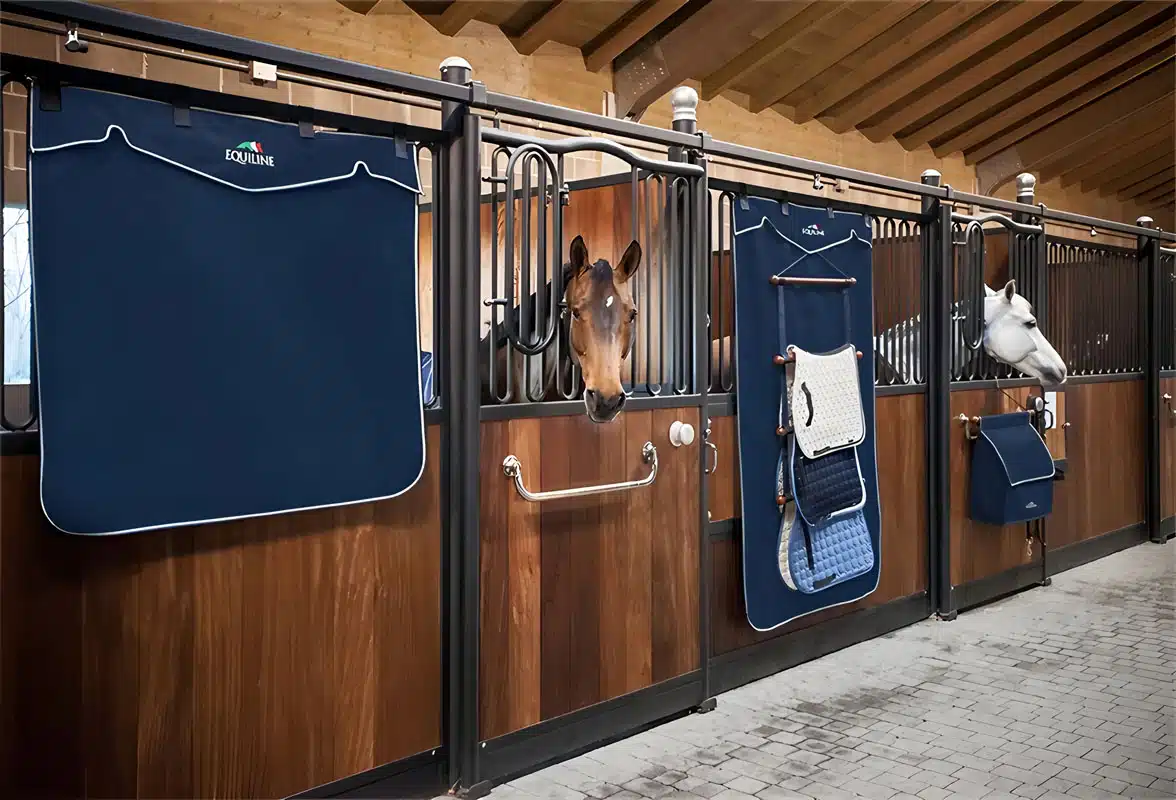
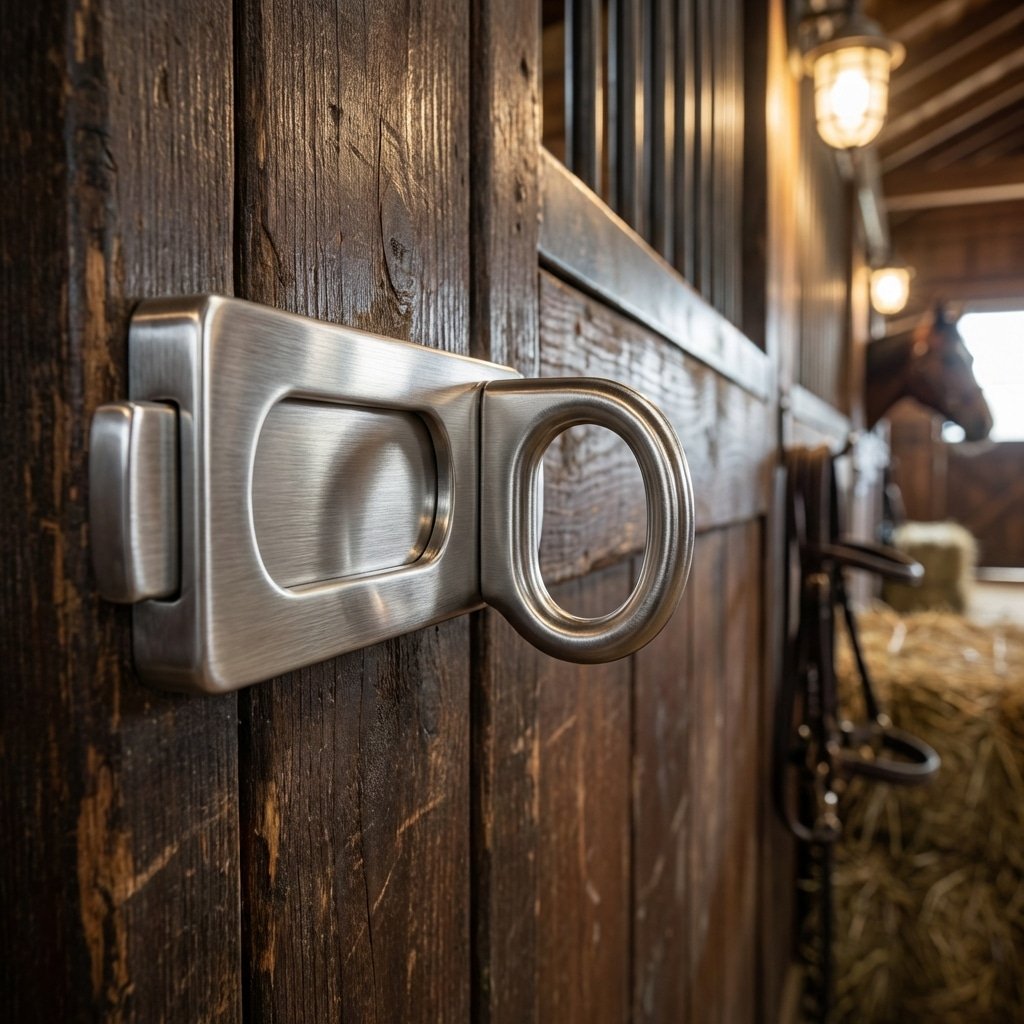
The DB Solution: Pre-Drilled Posts and Steel Pipe Guards
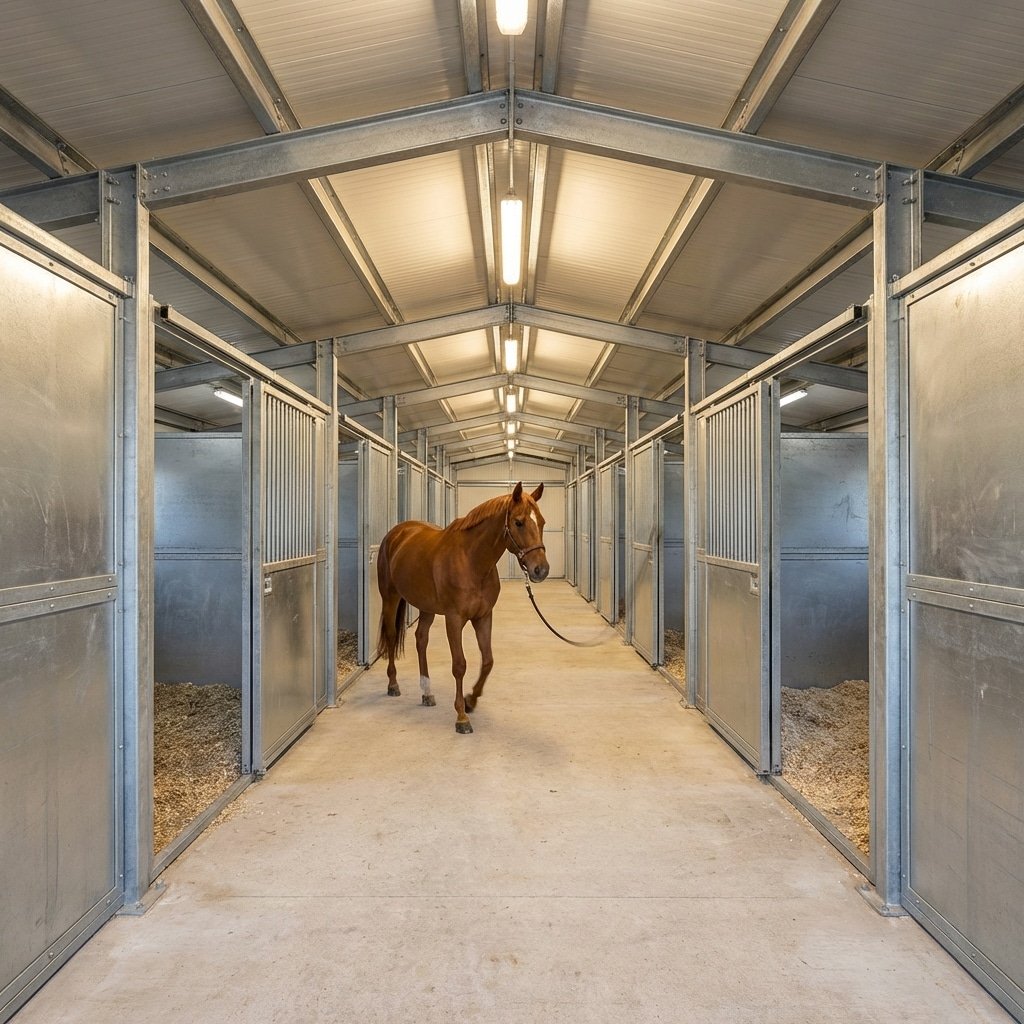
DB Stable integrates water lines directly into the framework using pre-drilled 50x50mm RHS posts and heavy-duty Q235B steel guards, eliminating exposed PVC risks and ensuring ISO 1461 compliance.
Precision Engineering: The Pre-Drilled Mounting System
Most stable failures happen because installation relies on improvisation. A contractor drilling holes on-site invites rust and leaves sharp edges that damage PVC lines. We removed this variable entirely. Our engineering team designs the water system integration directly into the CAD files before a single piece of steel is cut.
- Internal Routing: We laser-cut access points into our standard 50x50mm RHS posts, allowing water lines to route internally where teeth and hooves cannot reach.
- Zero Field Fabrication: Installers do not need to drill, weld, or cut steel on-site. This speeds up assembly and protects the galvanization integrity.
- Standardized Brackets: The mounting points are pre-configured to fit standard automatic waterer brackets, ensuring a flush, gap-free fit that prevents horses from leveraging the unit off the wall.
Material Superiority: Q235B Steel and Hot-Dip Galvanization
Plastic guards crack under impact, and thin-gauge metal crumples. In a commercial environment, a guard must withstand the same force as the stable front itself. We adhere to the exact material specifications found in our Product Bible for structural components, treating the pipe guard as a critical safety feature rather than an accessory.
- Structural Grade Steel: We construct guards from Q235B Structural Steel (ASTM A36 equivalent), matching the strength of our primary stable frames.
- Impact Resistance: With a minimum wall thickness of 2.0mm to 2.5mm, these guards deflect kicks that would shatter standard PVC or aluminum covers.
- ISO 1461 Galvanization: Because these guards sit near water sources, corrosion risk is high. We Hot-Dip Galvanize after fabrication, ensuring zinc coverage exceeds 70 microns on all surfaces, inside and out.

Running Heat Tape Inside the Protective Steel
Executive Summary: Never let the heating element touch the metal guard. The safe protocol is a strict “sandwich” assembly: PVC Pipe > Heat Tape > Foam Insulation > Steel Guard.
Installing electrical heating elements inside a steel enclosure introduces a risk that standard plastic installations do not have: conductivity. If a live heat tape contacts the steel guard directly, you risk energizing the entire metal fixture or tripping breakers instantly. The steel guard is there to stop impact, not to conduct heat or electricity.
The Insulation Buffer: Separating Heat Tape from the Guard
The insulation layer is not optional here. It serves two functions: retaining thermal energy and, more importantly, acting as a physical dielectric barrier between the electrical cable and the conductive steel guard.
- Wrap the PVC First: Apply the heat tape directly to the PVC pipe. Ensure the spirals are evenly spaced and do not overlap, which causes hotspots.
- Apply the Buffer: Install a thick layer of foam or fiberglass insulation over the heat tape. This is your safety zone. It prevents the tape from rubbing against the inside of the steel guard.
- Check the Fit: When you bolt on the steel guard, it should not crush the insulation. Compression reduces thermal efficiency and risks damaging the wire jacket.
Relying on 14-Gauge Q235B Steel for Impact Resistance
The structural integrity of the guard is directly linked to electrical safety. A flimsy guard that dents under impact will compress the insulation and eventually slice into the heat tape, causing a short circuit. We engineer our guards to maintain their shape—and the safety gap inside—even when kicked.
- 14-Gauge Wall Thickness (2.0mm – 2.5mm): We strictly adhere to a 2.0mm minimum. Lighter 16-gauge or 18-gauge options found in retail markets will dent, compromising the internal electrical clearance.
- Q235B Structural Steel: This material provides the rigidity needed to act as an exoskeleton. It withstands equine impact without collapsing onto the sensitive wiring beneath.
- Hot-Dip Galvanization: Condensation forms inside heated enclosures in cold barns. Our guards are Hot-Dip Galvanized after fabrication (ISO 1461), ensuring internal corrosion does not create sharp rust flakes that could abrade the insulation.
Frequently Asked Questions
How deep should water lines be buried to prevent freezing in a stable?
Water lines must sit at least one foot below the local frost line to prevent freezing. In regions with severe winters, this often requires a depth of four to six feet. If pipes run under high-traffic areas like barn aisles or driveways, you must bury them even deeper. The ground impact and vibration from heavy traffic drive frost further into the soil than in undisturbed ground.
What is the best way to protect exposed riser pipes from horse kicks?
Physical barriers are the only reliable protection for exposed pipes inside a stall. Installing a heavy-duty steel guard or a rigid polyethylene cover creates a necessary buffer against impact and chewing. For upright risers, use an insulated earth tube—typically a wide PVC casing filled with foam. This protects the inner pipe physically while utilizing ground heat to prevent freezing.
Is it safe to use heat tape on pipes inside a horse stall?
Heat tape is effective for freeze protection but poses a significant safety risk if exposed. Horses can easily chew through the insulation, leading to electrical shock or fire hazards. You should only use heat tape if it is fully enclosed within a steel guard or conduit that the horse cannot access under any circumstances.
How do I protect the electrical lines for automatic waterers?
Electrical lines for automatic waterers generally require chew protection, such as metal conduit or heavy-gauge PVC shields. Most manufacturers recommend running these lines behind the stall wall or inside a protective channel. This ensures horses cannot reach the wiring or the water supply line.
Final Thoughts
Relying on residential-grade PVC or thin-gauge metal guards in a commercial stable is a financial liability, not a cost-saving measure. By standardizing on DB Stable’s Q235B structural steel and ISO 1461 galvanization, you eliminate the risk of catastrophic “2 AM” flooding events that destroy facility infrastructure. Your clients depend on this level of “Kick-Proof” engineering to protect both their high-value horses and their long-term operational profits.
Do not compromise your project’s safety profile with improvised on-site fabrication. We recommend requesting our technical specification sheet or a physical sample of our 14-gauge steel guards to verify the material density firsthand. Contact our engineering team today to integrate these pre-drilled safety solutions directly into your next bulk order or facility design.

 English
  Spanish
  French
  Arabic
  German
0 Comments