


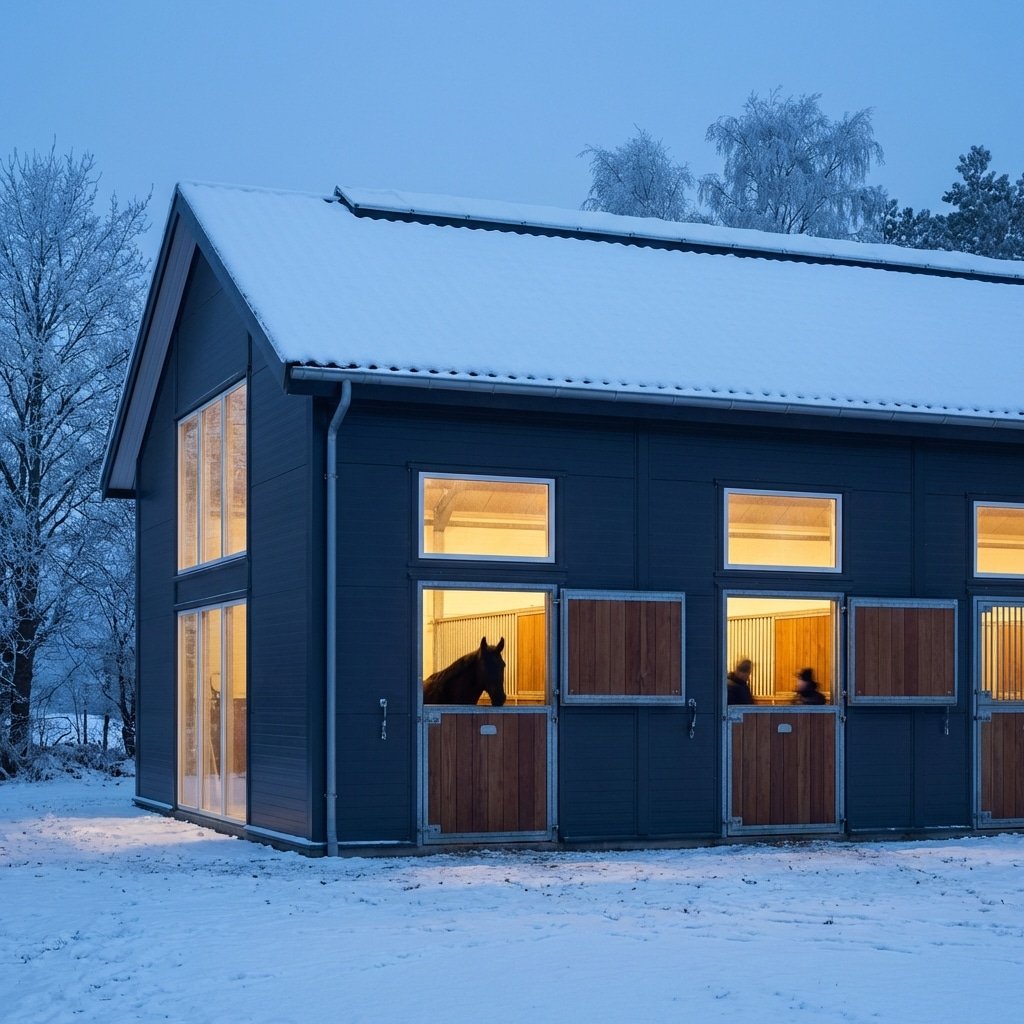
Securing stable equipment for Denmark demands a strict focus on thermal regulation and structural integrity under frost loads. Standard open-grill designs fail to prevent draft-induced respiratory illness, while generic steel often snaps during the brittle transition phase of sub-zero winters, creating significant liability risks for facility managers.
We engineer our systems using Q345B Low Alloy High Strength Steel to guarantee impact resistance even when temperatures drop. By utilizing solid bottom panels with 28mm-32mm HDPE infills, we eliminate floor-level thermal bridges and ensure zero maintenance durability against rot and ammonia corrosion.
Preparing Your Barn for Freezing Danish Winters
Executive Summary: Danish winters demand a dual strategy: Q345B steel to prevent structural brittleness and closed-cell insulation balanced with active ventilation to manage moisture.
Balancing Insulation with Active Ventilation
Many facility managers make the mistake of sealing a barn too tightly in an attempt to retain heat. While insulation is the primary defense against freezing, a completely sealed barn creates a moisture trap. In Nordic climates, the temperature difference between the interior and exterior generates significant condensation. If you do not pair insulation with active ventilation, you risk respiratory issues for the livestock and rapid corrosion of internal metal components.
To maintain a safe internal climate, we recommend specific structural adjustments:
- Use Closed-Cell Spray Foam: This material acts as both an insulator and a vapor barrier, offering superior R-value per inch compared to fiberglass batting, which can sag and hold moisture.
- Eliminate Thermal Bridges: Cold conducts through steel frames into the barn. Ensure insulation covers structural beams or create a thermal break between the exterior sheeting and the interior frame.
- Force Active Ventilation: Install humidistat-controlled fans or ridge vents. You must exchange air to remove ammonia and moisture, even if it means losing some heat.
- Deep Bury Water Lines: Frost lines in Denmark can go deep. Ensure all main water lines are buried 4-6 feet underground or equipped with active heat tape to prevent catastrophic bursting.
Q345B Steel: Preventing Brittle Fractures in Low Temperatures
The most overlooked risk in freezing winters is not the cold air, but the change in steel properties. Standard structural steel (like generic Q235 or A36) loses ductility as temperatures drop below zero. In this “brittle transition” phase, a steel post that would normally dent under a horse’s kick might snap cleanly, causing structural failure or severe injury.
For our clients in Scandinavia and Northern Europe, we strictly specify materials engineered for these conditions:
- Q345B Low Alloy High Strength Steel: We utilize Q345B for our Nordic specifications because it retains higher impact toughness in sub-zero temperatures compared to standard mild steel.
- Hot-Dip Galvanization (ISO 1461): Wet snow and thawing cycles create a highly corrosive environment. We galvanize after fabrication to ensuring a zinc coating thickness over 70 microns on tubing, sealing the steel against rust.
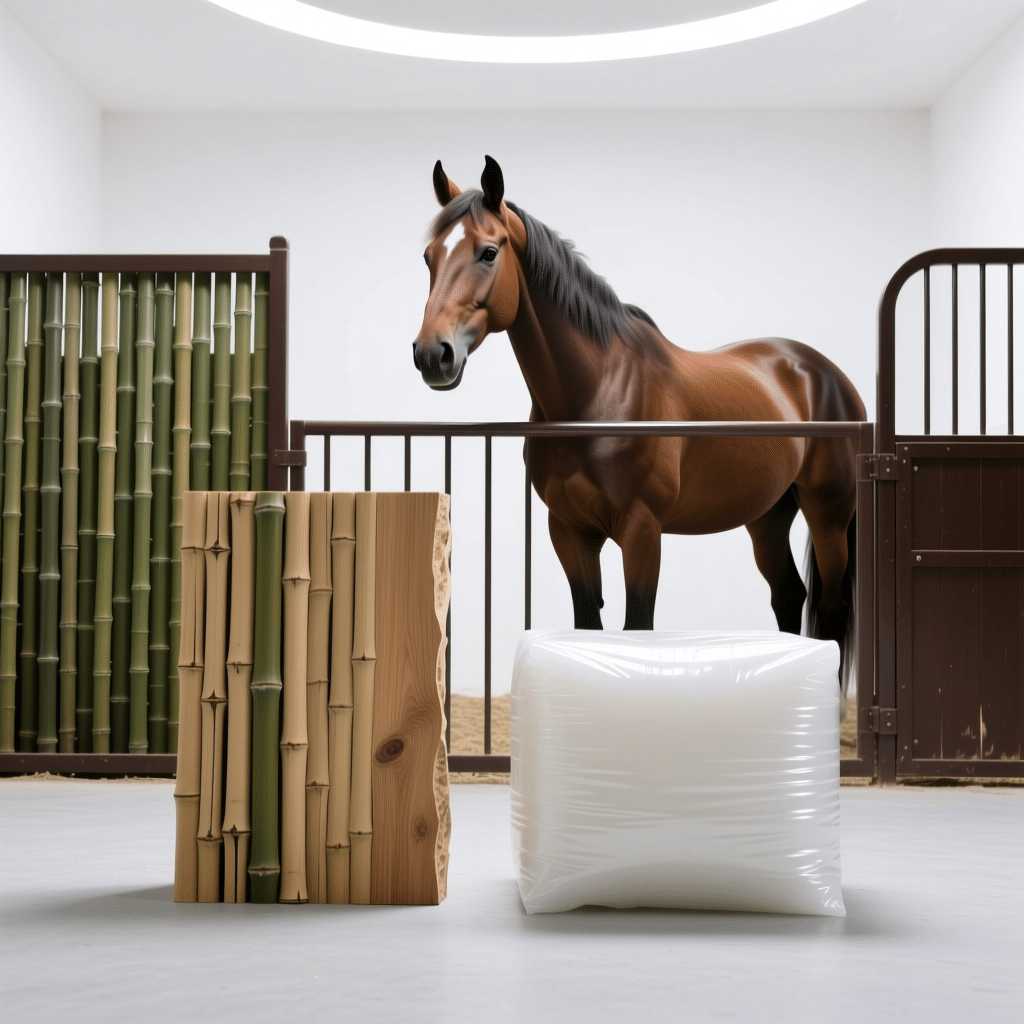
- High-Density Bamboo Infills: Softwood absorbs moisture and expands in damp winters. Our bamboo infills (Janka hardness > 3000 lbf) are far denser and resist the rot and warping common in wet winter months.
Solid Bottom Horse Stall Panels: Stopping Floor Drafts
Solid bottom panels utilizing 28mm-32mm HDPE or bamboo infills create a sealed thermal barrier, blocking floor-level drafts while maintaining essential upper-level airflow.
| Technical Feature | Standard Open Panel | DB Solid Bottom System |
|---|---|---|
| Draft Control | High exposure at floor level | Sealed thermal barrier |
| Infill Material | Thin Plywood (< 20mm) | 28mm-38mm HDPE or Bamboo |
| Steel Specification | Standard Q235 (Mild Steel) | Q345B (Cold Climate Rated) |
| Hygiene Control | Bedding migrates to aisle | Full containment |
Minimizing Respiratory Stress with Draft-Free Zones
In freezing climates like Denmark, floor-level drafts serve as a silent killer for equine performance. Cold air sinks, creating a chill zone exactly where a horse’s legs and belly rest. Solid bottom panels eliminate this thermal bridge. By sealing the lower section of the stall, we force air circulation to occur above the horse’s resting line. This creates “Stack Effect Ventilation,” which keeps fresh air moving through the upper grills without stripping heat from the animal’s core.
Beyond thermal regulation, this design functions as a hygiene firewall. Open-bottom panels allow bedding and ammonia-soaked waste to migrate into aisleways, increasing cross-contamination risks. A solid barrier contains the bedding, effectively reducing daily labor costs for cleaning crews. This approach aligns directly with strict EU animal welfare standards regarding thermal comfort in unheated barns, ensuring horses remain loose and comfortable rather than stiff from cold exposure.
Engineering the Barrier: HDPE and Bamboo Infill Systems
We do not rely on thin sheet metal that dents or wood that rots. DB Stable engineers this barrier using heavy-duty infills fitted into Q345B Low Alloy High Strength Steel frames. We selected Q345B specifically for its impact toughness in sub-zero temperatures, providing a “Kick-Proof Guarantee” that prevents brittle fractures when horses kick the panels on freezing mornings. The steel frames undergo hot-dip galvanization after fabrication, achieving a zinc coating thickness greater than 70 microns to resist corrosion from constant contact with wet bedding and urine.
- HDPE Infill (28mm-32mm): UV-stabilized and impact-absorbing material that offers a “Zero Maintenance” solution, impervious to moisture and rot.
- Bamboo Infill (28mm-38mm): High-density strand woven bamboo with a Janka hardness > 3000 lbf (3x harder than oak) for maximum durability.
- Cast-Proof Design: We engineer a minimal bottom clearance of approximately 50mm, preventing a rolling horse from trapping a hoof under the panel.
- Gap-Free Assembly: Precision-cut tongue and groove boards ensure a tight seal, eliminating air leaks that compromise the thermal barrier.
Factory-Direct Modular Stables With 20-Year Durability

Sealing the Aisle: Heavy-Duty Sliding Barn Doors
Heavy-duty sliding doors maximize aisle space and prevent wind injuries. We use hot-dip galvanized frames and 304 stainless hardware to support heavy HDPE or bamboo infills without sagging.
Space Optimization and Safety Protocols
Traditional hinged doors demand a swing radius that eats up valuable aisle space. In a busy facility, that blocked space creates bottlenecks for handlers, horses, and machinery. Sliding doors eliminate this entirely, keeping the central aisle clear for traffic and reducing the chaos during feeding or cleaning times. Unlike hinged variants, sliding systems do not slam shut in high winds, removing a significant injury risk for both animals and staff.
Beyond operation, structural safety is critical. We strictly implement a “Cast-Proof Design” in our sliding systems. By limiting the gap between the door bottom and the floor to approximately 50mm, we prevent a rolling horse from getting a leg trapped underneath. This specific tolerance is a non-negotiable safety standard often overlooked in generic, light-duty kits.
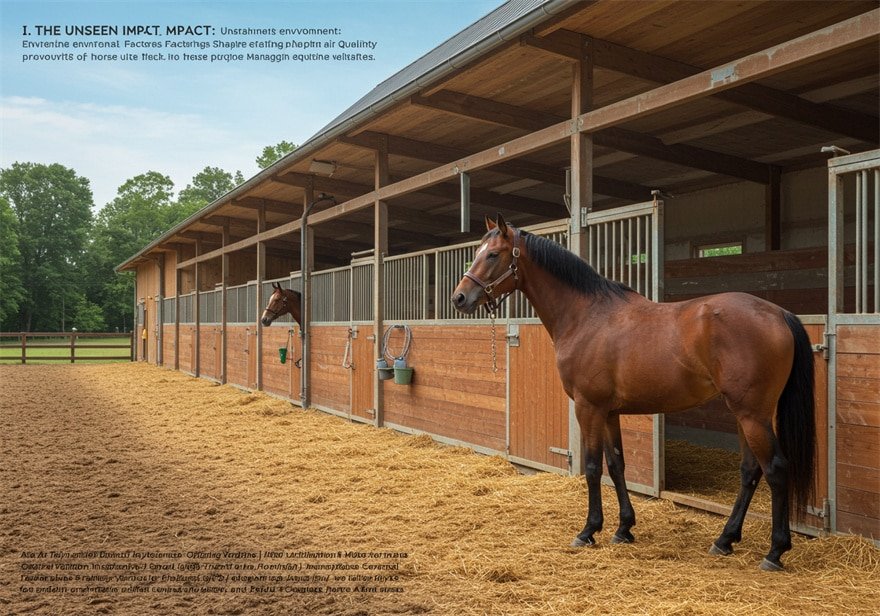
Standard exposed tracks often fail in equestrian environments because they accumulate dust, bedding, and moisture, leading to jammed rollers. Our “Professional Series” solves this with a hidden track design that shields the mechanism from debris while supporting substantial weight.
- Debris Protection: The enclosed track housing prevents dust and bedding buildup, ensuring smooth operation without constant maintenance.
- Corrosion Resistance: We exclusively use 304 Stainless Steel for all anchors and connectors to withstand humid stable environments where standard steel would rust.
- Load Capacity: The system is engineered to carry the heavy deadweight of 38mm Bamboo or 32mm HDPE infills without the sagging common in cheaper aluminum tracks.
Barn Windows: 6mm Tempered Glass for Safety and Light
Tempered safety glass eliminates the risk of arterial injury from shards, while hot-dip galvanized steel guards provide the necessary impact resistance for heavy-duty equestrian use.
The Safety Mechanics of 6mm Tempered Glass
Standard 4mm residential glass has no place in a commercial stable. In an environment defined by large, unpredictable animals and heavy steel equipment, standard glass is a liability waiting to shatter. We strictly specify 6mm tempered safety glass because it fundamentally alters how the material reacts to impact.
- Impact Resistance: Tempered glass undergoes a thermal tempering process that compresses the outer surface, allowing it to resist high-velocity impacts from kicks or equipment strikes that would instantly destroy standard glazing.
- Granular Failure Mode: When the glass limit is exceeded, it does not break into jagged, guillotine-like shards. Instead, it crumbles into blunt, granular chunks (similar to automotive glass), preventing life-threatening cuts to the horse.
- Optical Clarity: Despite the increased thickness and density, this glass maintains high light transmission, essential for regulating a horse’s circadian rhythm during long winter confinement.
Reinforcing Windows with Hot-Dip Galvanized Grills
Glass provides the light, but steel provides the security. We do not rely on the glazing alone to stop a 500kg animal. Every window unit acts as an extension of the stall structure, reinforced by a heavy-duty steel guard designed to absorb the initial force of any impact.
- Q235B Structural Steel: We manufacture window guards using the same Q235B steel found in our stall fronts, ensuring the bars will not bend or deform under pressure.
- ISO 1461 Galvanization: Windows are often exposed to condensation and rain. To prevent rust, we dip the entire welded grill frame into molten zinc after fabrication, achieving a coating thickness exceeding 70 microns.
- Kick-Proof Integration: The steel grill is mounted directly into the stable frame, protecting the glass surface from direct contact. This creates a buffer zone where the steel takes the hit, leaving the glass intact.
Integrating Auto-Heated Waterers into Steel Posts
Concealing plumbing within structural steel posts shields water lines from freezing Nordic winds and prevents horses from destroying sensitive heating elements.
Combating Frost with Internal Plumbing Channels
Exposed plumbing in a Danish winter creates two expensive problems: frozen pipes and damaged equipment. Horses often chew or crib on exposed insulation, leaving heating elements vulnerable to sub-zero winds. We solve this by routing PEX lines and electrical wires directly through the hollow structural section of the stall post.
This internal routing utilizes the steel column as a physical shield against cribbing. It also creates a contained cavity where you can inject expanding foam insulation around the pipe. The steel blocks the wind chill, and the insulation retains heat, ensuring water flows even when barn temperatures drop below freezing.
Utilizing 114mm and RHS Profiles for Installation
We design our structural profiles to accommodate these internal systems without compromising strength. Our **114mm Round Posts** offer significant internal capacity, allowing ample clearance for insulated supply lines and heating cables to pass through without pinching.
- 50mm x 50mm RHS Profiles: We laser-cut these square posts to accept mounting brackets flush against the steel, keeping the waterer secure.
- ISO 1461 Galvanization: Because we dip the steel after fabrication, the interior surfaces are fully zinc-coated.
- Condensation Control: The zinc coating prevents internal rust caused by temperature differences between the cold steel and warm water lines.
Final Thoughts
Standard mild steel becomes a liability in Nordic sub-zero temperatures, often snapping under impact where Q345B Low Alloy High Strength Steel remains resilient. Choosing our cold-rated specification with 28mm HDPE infills eliminates the structural failure points common in freezing, moisture-heavy environments. This investment safeguards your facility against costly seasonal repairs while exceeding strict EU animal welfare standards.
Do not leave your winter infrastructure to chance; verify our material performance firsthand. Request a Technical Specification Sheet today or book a consultation to review our ISO 1461 Galvanization data against your local requirements. Secure your production slot now to ensure delivery before the first frost hits.

 English
  Spanish
  French
  Arabic
  German
0 Comments