


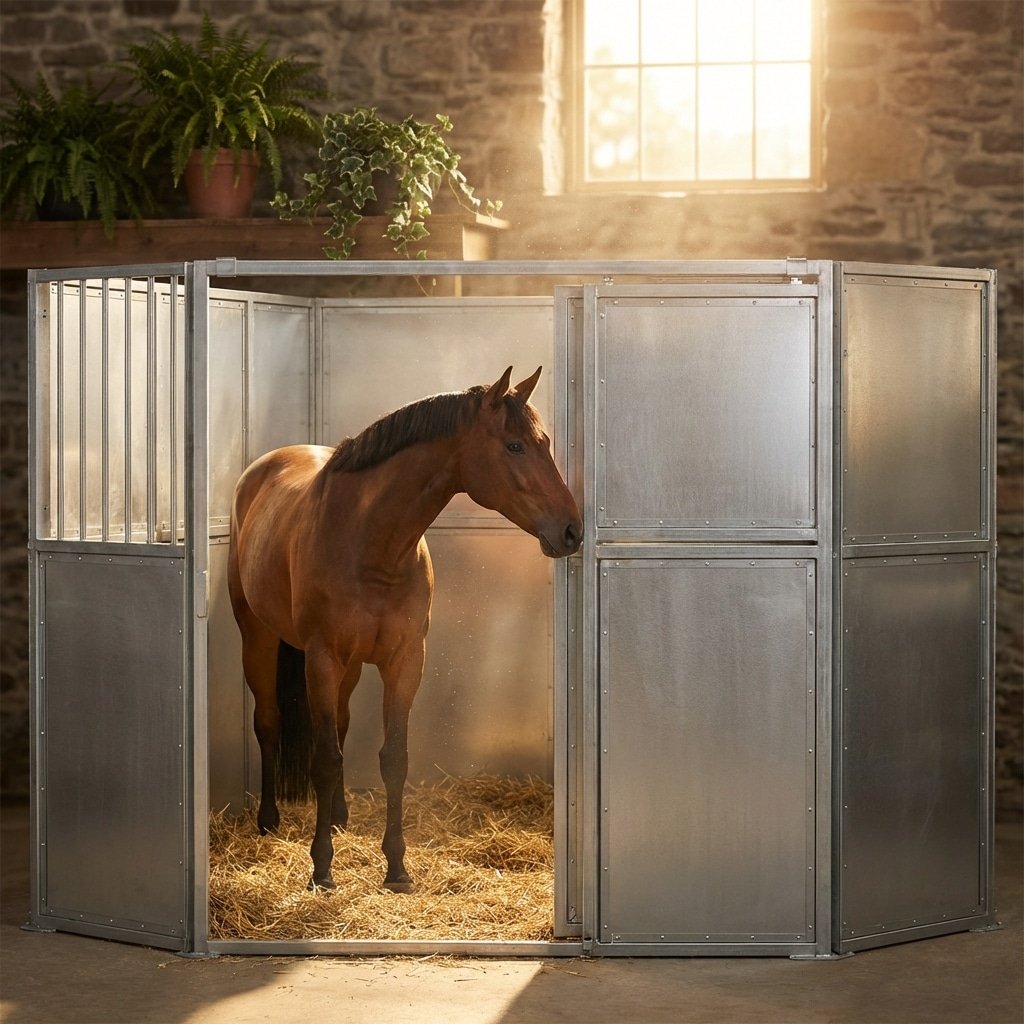
Stressed Horse Safety relies on the structural integrity of containment systems during high-pressure events. Thin 18-gauge tubing frequently shears under impact, transforming a minor spook into a catastrophic insurance liability for venue organizers.
This analysis benchmarks manufacturers against the 14-gauge Q235B steel standard necessary to contain large warmbloods. We evaluate Hot-Dip Galvanization durability and flat-pack logistics efficiency to help you secure kick-proof inventory that protects both animals and operational margins.
The Rise of ESG (Environmental, Social, Governance) in Construction
By 2026, equestrian projects will face strict scrutiny on material lifecycles. Real sustainability isn’t just about solar panels; it’s about reducing embodied carbon through logistics efficiency and galvanized durability.
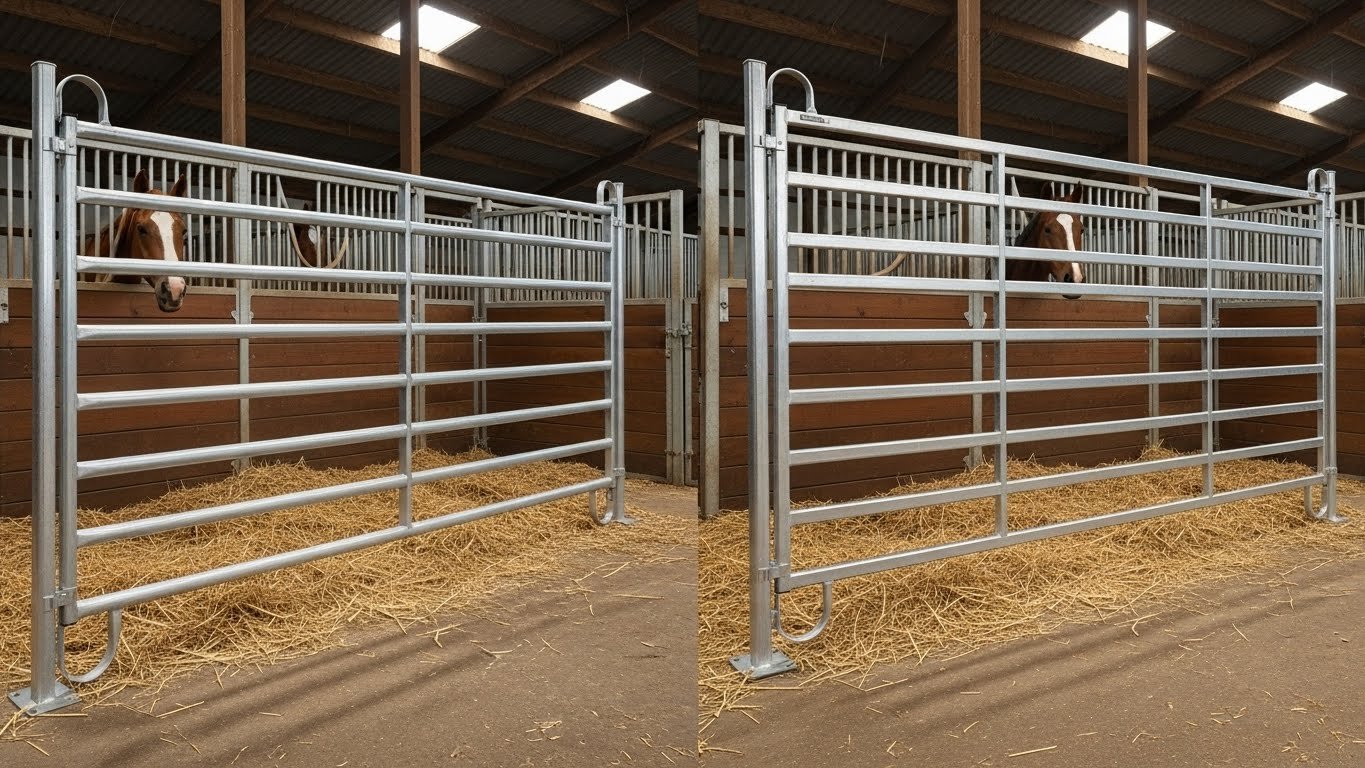
The Three Pillars: Environmental Impact and Social Safety
In the context of agricultural and equestrian infrastructure, ESG dictates how materials are sourced, how safety is engineered, and how quality is governed. We break this down into three non-negotiable standards:
- Environmental (Embodied Carbon): This metric tracks the energy consumed to manufacture and transport materials. We reduce this by prioritizing materials with long lifecycles. Using steel that requires replacement every five years is an environmental failure; using steel that lasts decades is a sustainable success.
- Social (Safety Engineering): Social responsibility in our sector starts with the end-user—the horse and the handler. We design against injury risks using “Kick-Proof” Q345B steel and “Cast-Proof” layouts that prevent horses from getting trapped. It also covers the installation teams; predictable, standardized kits reduce on-site injury risks compared to ad-hoc fabrication.
- Governance (Certified Standards): Transparency is the new currency. We adhere to international standards like ISO 9001 for management and ISO 1461 for galvanization. This ensures that every component is traceable and manufactured under ethical labor conditions, meeting the strict compliance requirements of modern B2B tenders.
Achieving Sustainability through Flat-Pack Logistics and ISO 1461 Durability
Most “green” conversations ignore the massive carbon footprint of logistics. Shipping air is expensive and environmentally damaging. We address this through our proprietary Flat-Pack System, which fundamentally changes the carbon math of equipping a facility.
- Logistics Efficiency (Carbon Reduction): Traditional fully welded stables limit a 40HQ container to just 12-15 sets. Our Flat-Pack design loads 30-45 sets in the same space. This effectively reduces shipping-related carbon emissions by over 60% per unit, aligning perfectly with Scope 3 emission reduction targets.
- Lifecycle Sustainability (BS EN ISO 1461): The most sustainable product is the one you don’t have to replace. We utilize Hot-Dip Galvanization after fabrication to achieve a coating thickness exceeding 85 microns on structural parts. This ensures a rust-free lifespan of decades, preventing the waste associated with cheaper, pre-galvanized alternatives that fail within a few years.
- Sustainable Material Sourcing: We offer High-Density Bamboo (Janka Hardness > 3000 lbf) as a rapidly renewable alternative to slow-growth hardwoods like Oak. For low-maintenance requirements, our UV-stabilized HDPE is fully recyclable, eliminating the need for toxic chemical preservatives often used on wood.
Moving Away from Old-Growth Timber (Oak/Pine)
Traditional timber rots under ammonia exposure and splinters under impact. We rely exclusively on High-Density Bamboo (3x harder than Oak) and UV-Stabilized HDPE for superior durability and hygiene.
The Vulnerabilities of Traditional Oak and Pine
Softwoods like Pine simply lack the density required for commercial equestrian environments. Horses frequently “crib” (chew) on exposed edges, and a single heavy kick can shatter a pine board, creating dangerous splinters that risk significant injury. Even traditional hardwoods like Oak are not immune; they demand frequent sealing to resist the corrosive effects of ammonia found in urine. Without strict maintenance schedules, moisture penetrates the grain, leading to rot from the inside out.
Beyond performance, old-growth timber presents a sourcing challenge. Environmental scrutiny regarding deforestation is tightening, and raw material costs are volatile. Relying on slow-maturing species for industrial applications is no longer an efficient or sustainable procurement strategy for large-scale projects.
High-Density Bamboo and HDPE: The Modern Standard
To eliminate the maintenance burden and safety risks of wood, we engineer our systems using High-Density Strand Woven Bamboo and UV-Stabilized HDPE. These materials align with our “Kick-Proof Guarantee,” offering superior mechanics without the ecological drawbacks of deforestation.
- Strand Woven Bamboo: Features a Janka Hardness rating > 3000 lbf, making it 3x harder than Oak and naturally resistant to mold and rot.
- UV Stabilized HDPE: Available in 28mm-32mm profiles, this material is impervious to water and urine, offering a true “Zero Maintenance” lifecycle that can be power-washed daily.
- Impact Safety: Unlike timber which fractures into sharp spikes, both materials absorb heavy impacts without splintering, ensuring the safety of anxious or aggressive horses.
Premium Stables Built For Extreme Climates

Top Factories Embracing Sustainable Materials
Executive Insight: Leading B2B manufacturers are abandoning slow-growth timber for high-density bamboo and recycled HDPE. This shift is not just ethical; it delivers products with 3x the density of oak and zero maintenance requirements.
Manufacturing giants like Siemens, Lego, and Tesla have set a global precedent: sustainability is now a core operational metric, not a marketing sidebar. In the industrial and equestrian construction sectors, this trend manifests in a specific material pivot. We are seeing a decisive move away from finite resources—like old-growth hardwoods and virgin plastics—toward engineered renewables and circular-economy metals. This strategy allows factories to lower embodied carbon while simultaneously increasing the mechanical durability of the final product.
| Material Standard | Environmental Advantage | Technical Performance (Product Bible) |
|---|---|---|
| Rapid renewal (3-5 years) & negative carbon footprint | Janka Hardness > 3000 lbf (3x harder than Oak) | |
| Recycled HDPE | Diverts landfill waste; eliminates chemical treatments | UV Stabilized; Zero maintenance; Rot-proof |
| Q235B/Q345B Steel | 100% Recyclable; Closed-loop production | Hot-Dip Galvanized (ISO 1461); 50+ year lifespan |
1. The Shift to High-Density Strand Woven Bamboo
Traditional factories relied on Oak or Pine, which require 30 to 100 years to mature. This creates a sustainability deficit and supply chain volatility. Modern “Green Factories” utilize strand-woven bamboo, which reaches maturity in just 5 years. Unlike hollow bamboo stems used in decor, strand-woven processing compresses fibers under immense pressure to create boards with densities exceeding 1,100 kg/m³.
This material choice fundamentally alters the carbon equation of a project. Bamboo sequesters up to 4 times more CO₂ than comparable timber stands. For B2B buyers, the advantage is physical: DB Stable specifies 28mm–38mm bamboo infills because they resist hoof impact and moisture far better than traditional softwoods, eliminating the need for toxic chemical preservatives.
2. Integration of Recycled HDPE (High-Density Polyethylene)
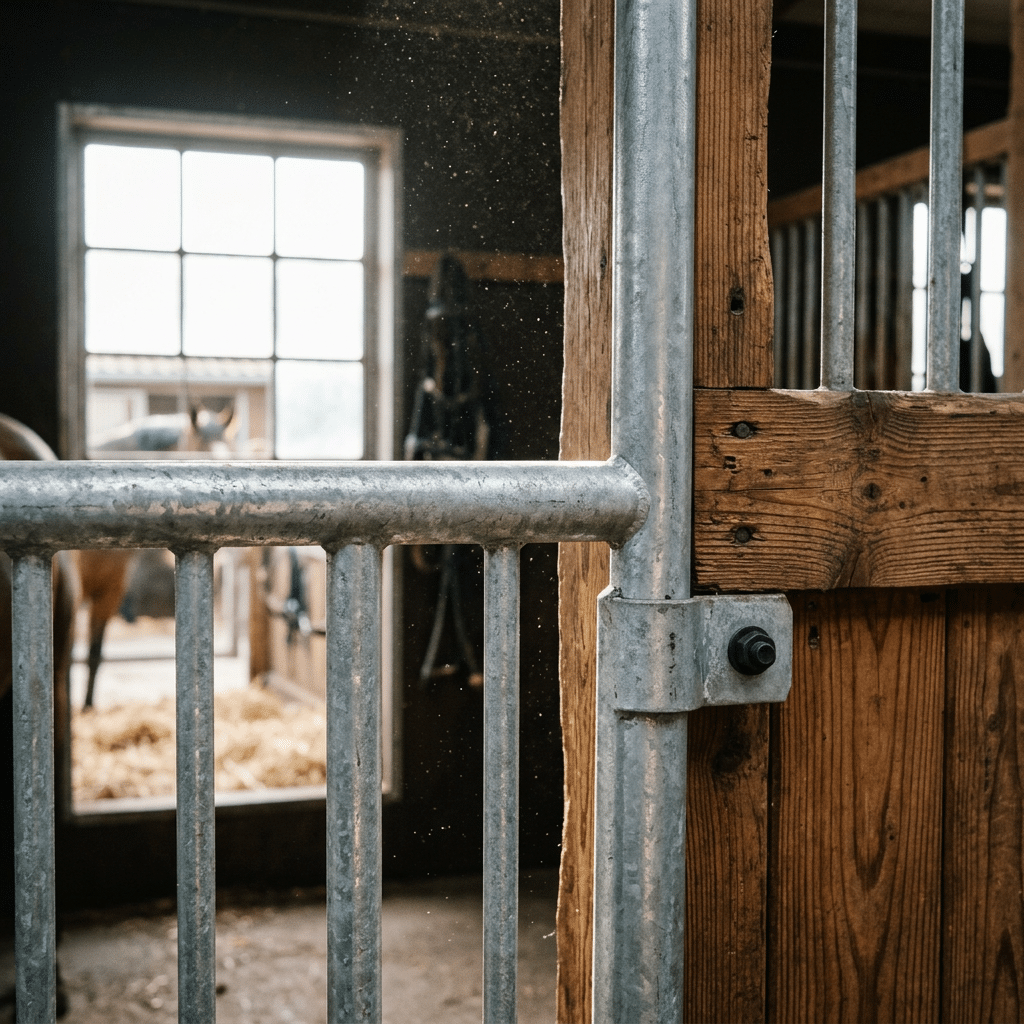
Leading manufacturers are replacing virgin PVC and timber with recycled HDPE for high-wear areas. This material serves a dual purpose: it acts as a sink for recycled plastics (diverting waste from landfills) and provides a “Kick-Proof” barrier that horses cannot splinter. We utilize UV-stabilized HDPE to prevent the degradation often seen in cheaper plastics. This results in a “Zero Maintenance” product lifecycle, where the environmental cost of replacement parts is virtually eliminated.
3. Closed-Loop Steel Fabrication
Steel remains the backbone of industrial construction, but the source matters. Sustainable factories prioritize Q235B and Q345B steel grades due to their 100% recyclability. The process does not end at the mill; the protection method defines the product’s longevity. We strictly adhere to Hot-Dip Galvanization after fabrication (BS EN ISO 1461 standards). This ensures the steel lasts decades without replacement, significantly reducing the lifetime carbon footprint compared to painted steel that rusts and requires frequent replacement.
Strand-Woven Bamboo: A High-Yield Carbon Sink
Strand-woven bamboo acts as a formidable carbon locker, sequestering CO₂ at double the rate of timber and preserving it within high-density structural planks that outlast oak.
Biological Efficiency: Absorbing 2 Tons of CO₂ Per Plant
The sustainability argument for bamboo relies on speed. While traditional hardwood forests require 40 to 80 years to reach maturity, bamboo is a grass that matures in just 4 to 6 years. This rapid regeneration cycle creates a massive carbon deficit in the atmosphere compared to standard timber operations.
- Rapid Sequestration: A single bamboo plant sequesters approximately 2 tons of CO₂ over a standard 7-year growth cycle.
- Oxygen Output: Bamboo groves release 35% more oxygen into the atmosphere than equivalent hardwood forests.
- Regenerative Root Systems: Unlike trees that die upon harvesting, bamboo’s rhizome root network remains intact, preventing soil erosion and enabling immediate regrowth without replanting.
Strand-Woven Technology: Locking Carbon into Heavy-Duty Stalls
Raw bamboo is hollow and unsuitable for equine environments. We utilize strand-woven technology to convert this raw grass into an industrial-grade material. By shredding the bamboo into fibers and compressing them under extreme pressure with eco-friendly resins, we create a plank that permanently locks the captured carbon into the structure of the stable.
This process creates a material density that exceeds 1,100 kg/m³, effectively fossilizing the carbon for the lifespan of the building.
- Extreme Hardness: The compression process results in a Janka Hardness rating > 3000 lbf, making it 3x harder than oak and impervious to horse kicks or cribbing.
- Material Efficiency: Strand-weaving utilizes the entire bamboo culm, including offcuts, significantly reducing industrial waste compared to square-milling round logs.
- Extended Lifecycle: Unlike softwoods that rot and release carbon back into the atmosphere within 10-15 years, strand-woven bamboo creates a “forever board” that keeps carbon sequestered for decades.
- Steel Alternative: It functions as a lower eco-cost alternative to cement and steel partitions, offering comparable durability with a negative carbon footprint.
Q235B Steel: The 100% Recyclable Framework
Q235B mild carbon steel (ASTM A36) combines infinite recyclability with high ductility, preventing brittle fractures while ensuring end-of-life scrap value unlike composite alternatives.
The Closed-Loop Lifecycle of Carbon Steel
Unlike composite plastics or treated timber that eventually become landfill waste, Q235B is a ferrous material that operates within a true closed-loop lifecycle. This steel grade does not degrade during the recycling process. You can melt down a 20-year-old stable framework and recast it into new structural beams without any loss of tensile strength or ductility. This infinite recyclability creates a permanent material loop that significantly reduces the environmental impact associated with raw iron ore extraction.
For facility owners, this translates to tangible asset recovery rather than a disposal liability. When a stable reaches the end of its service life, the steel framework retains significant scrap market value. This contrasts sharply with alternative construction materials that often require payment for removal and dumping. We utilize Q235B not just for its structural performance, but because it aligns the economic interests of the facility owner with sustainable circular economy principles.
Engineering Specs: ASTM A36 Equivalence and 14-Gauge Tubing
We strictly standardize our production on Q235B structural steel, which is the direct technical equivalent to the American standard ASTM A36. This specific grade is selected for its critical balance of strength and ductility. In an equestrian environment, ductility is a safety feature. If a 600kg warmblood delivers a panic kick to a structural column, the steel is engineered to deform (absorb energy) rather than shear or snap. Brittle fractures create sharp, jagged edges that can be fatal to horses; Q235B eliminates this risk.
- Material Standard: Q235B Carbon Steel (ASTM A36 Equivalent).
- Wall Thickness: Minimum 14-Gauge (2.0mm – 2.5mm) strictly enforced to prevent crumpling.
- Galvanization Compatibility: Silicon content optimized for BS EN ISO 1461 hot-dip bonding (>70 microns).
- Safety Profile: Superior ductility prevents brittle fractures common in high-carbon or recycled scrap alloys.
Frequently Asked Questions
How to build an ESG compliant equestrian center?
Building an ESG-compliant facility requires shifting focus from simple aesthetics to measurable environmental impact, animal welfare, and governance. You need a structured approach that addresses the full lifecycle of your infrastructure.
Environmental (E): Energy & Material Longevity
Beyond standard solar integration and rainwater harvesting, the durability of your infrastructure is your biggest environmental lever. Replacing a rusted stable after five years is a carbon disaster. We strictly use Hot-Dip Galvanization (ISO 1461) to ensure structural steel lasts decades, not years. This reduces the “churn and burn” waste cycle common with cheaper pre-galvanized products.
Social (S): Safety & Welfare
Social responsibility in equestrianism centers on safety for both staff and animals. We mandate Q345B High Strength Steel for high-stress zones to prevent brittle fractures during kicks, reducing injury risk. Additionally, utilizing low-VOC materials like our HDPE infills eliminates the need for toxic paints or varnishes in the workspace.
Governance (G): Ethical Sourcing
Transparent supply chains are non-negotiable. This means verifying that your steel and bamboo sources comply with labor standards and environmental regulations, ensuring your project meets global compliance benchmarks.
Is bamboo a sustainable building material?
Yes, but specifically when processed as High-Density Strand Woven Bamboo. Standard bamboo lacks the density required for equine applications, but strand-woven varieties offer a superior eco-profile compared to traditional hardwoods like Oak or Teak.
- Rapid Regeneration: Bamboo matures in 3–5 years, compared to 30–50 years for hardwoods, preventing old-growth deforestation.
- Carbon Sequestration: Bamboo absorbs up to four times more CO₂ than many tree species during its growth cycle.
- Durability as Sustainability: Our bamboo infills boast a Janka hardness exceeding 3000 lbf (3x harder than Oak). This extreme density resists cribbing and chewing, extending the product’s lifespan and reducing replacement waste.
Environmental impact of steel vs wood barns?
This is a trade-off between “Embodied Carbon” (manufacturing) and “Lifecycle Carbon” (durability and logistics). While wood initially has lower production emissions, steel offers superior long-term advantages in an industrial setting.
The Logistics Factor (Profit Protection)
Shipping heavy timber or fully welded frames is carbon-intensive. Our engineered Flat-Pack System allows us to load 30–45 sets per 40HQ container, compared to the industry average of 12–15 sets for welded frames. This efficiency reduces freight emissions (and costs) by over 60%.
Recyclability & Waste
Q235B Steel is 100% recyclable without degradation. At the end of a barn’s 50+ year life, the steel framework can be re-smelted. In contrast, treated lumber often ends up in landfills due to chemical preservatives. For high-traffic stables, steel provides a circular economy solution that wood cannot match.
Green certifications for horse stables?
Standard certifications like LEED are often ill-suited for agricultural structures due to their focus on urban HVAC and lighting systems. However, relevant standards do exist for equestrian projects aiming for verifiable sustainability.
CalGreen (California Green Building Standards Code) is the most applicable regulatory framework, mandating specific water conservation and material recycling benchmarks for agricultural buildings. It serves as a solid baseline for any eco-conscious project.
For the structure itself, look for ISO 1461 compliance. This standard governs the hot-dip galvanizing process, certifying the zinc coating thickness (we adhere to >70 microns). While not a “green label” per se, it is the technical guarantee of longevity, which is the most effective form of sustainability.
Eco-friendly horse barn manufacturers?
Sustainable manufacturing in this sector is defined by three things: material sourcing, pre-fabrication efficiency, and steel recyclability. Several manufacturers have moved the industry forward by adopting modular principles that reduce construction waste.
- MD Barnmaster & Coffman Barns: Pioneers in modular/prefab design. Their approach minimizes on-site waste and construction time compared to traditional stick-built barns.
- DB Stable (OEM/ODM): We focus on the high-volume B2B sector using Hot-Dip Galvanized After Fabrication technology. By welding black steel first and dipping later, we ensure zero rust-related failures, maximizing the lifecycle of the steel.
- DC Structures: Known for utilizing engineered wood products like heavy timber, which offers lower embodied carbon than concrete.
When selecting a partner, verify they use 100% Recyclable Steel (Q235B/Q345B) and offer sustainable infill options like Bamboo or HDPE rather than uncertified hardwoods.
Final Thoughts
Skimping on steel gauge transforms a stable from a capital asset into a liability claim waiting to happen. We standardize on 14-gauge Q235B steel, hot-dipped to ISO 1461 standards, because it guarantees structural integrity against a 600kg impact. This specification protects your clients from injury lawsuits and safeguards your dealership from reputation-damaging warranty failures.
Secure your supply chain by verifying our “Kick-Proof” engineering firsthand. Request our specific flat-pack logistics guide to see how we load up to 45 sets per container, maximizing your freight margins. Contact our team today to configure a sample trial order tailored to your market’s safety requirements.

 English
  Spanish
  French
  Arabic
  German
0 Comments