


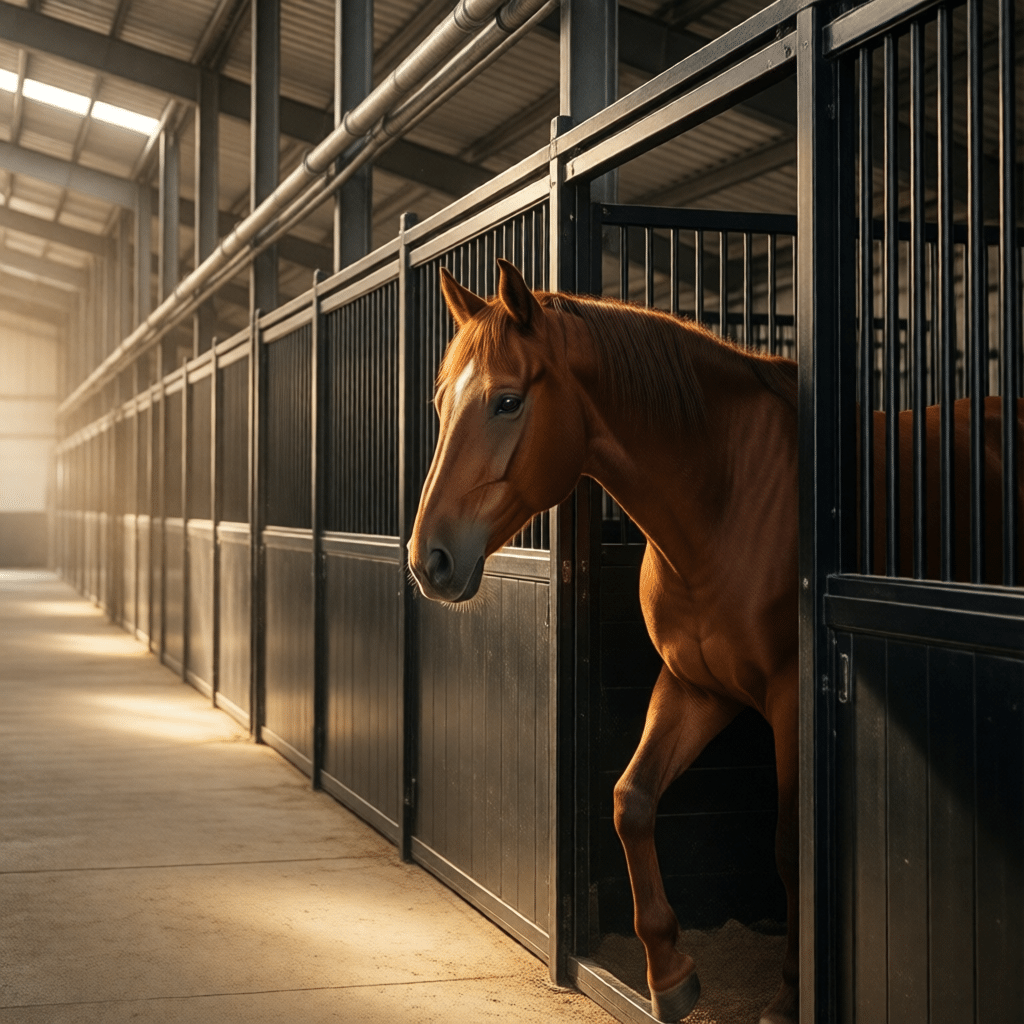
Proper Lighting Conduit installation on steel frames differentiates a code-compliant facility from a fire hazard. Exposed cabling in agricultural environments invites rodent damage, creating a liability loop that destroys builder reputation and threatens livestock safety.
This protocol details the mounting standards for rigid metal systems onto Q235B and Q345B structural steel profiles. We examine the specific clamping techniques and cold galvanizing treatments required to maintain the ISO 1461 rust protection standard while ensuring a vibration-free electrical path.
The Chewing Hazard: Exposed Wires in the Barn
Exposed nonmetallic cabling in barns is a primary fire risk due to rodent damage. Safety codes strictly mandate rigid conduit or Metal-Clad (MC) cable to isolate conductors from pests.
Vulnerabilit
y of Exposed Nonmetallic Sheathed Cable
Standard residential wiring, commonly known as NM-B or Romex, fails catastrophically in agricultural environments. The soft PVC insulation offers zero resistance to pests; rodents actively target these cables, chewing through the outer jacket to reach the conductors inside. In a barn setting, this biological habit creates an immediate, critical failure point.
Once the insulation is compromised, live copper conductors are exposed to the environment. In a stable, this is a recipe for disaster. The combination of exposed electricity and the high dust content of hay or bedding creates a high-probability fire risk. Furthermore, barns are inherently damp environments. Moisture ingress into these chewed sections significantly increases the likelihood of electrical arcing, which can ignite surrounding flammable materials long before a breaker trips.
Defensive Wiring: Conduit and Metal-Clad Solutions
To mitigate these risks, electrical codes for agricultural buildings enforce the use of hardened physical barriers. You cannot rely on insulation alone; you must mechanically isolate the wiring from the environment.
- Metal-Clad (MC) Cable: This is the industry standard for interior barn wiring. The interlocking metal armor breaks rodent teeth and prevents them from reaching the internal conductors.
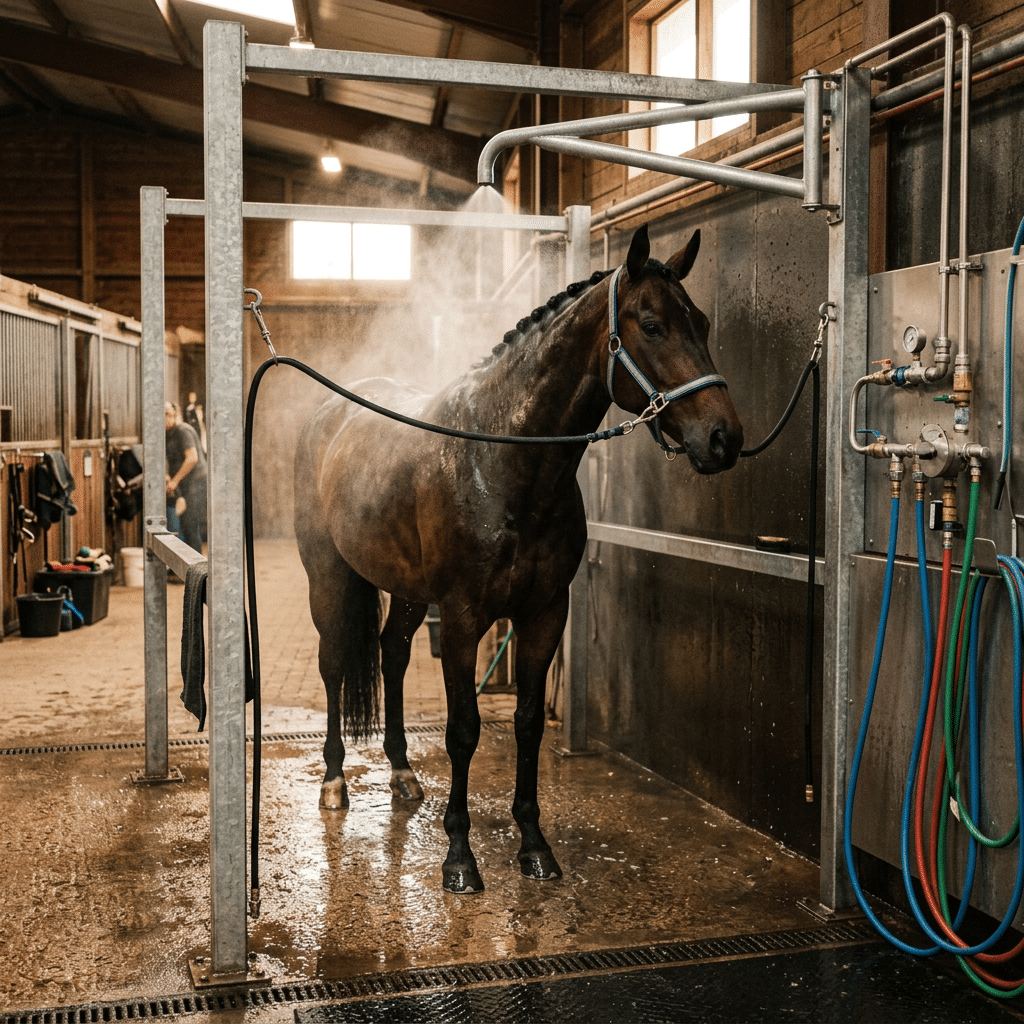
- Liquid-Tight Flexible Conduit: In wash bays and areas regularly exposed to water, metal armor is insufficient. You must install liquid-tight conduit to prevent moisture from corroding the system.
- Schedule 80 PVC: For any wiring run vertically or exposed above ground level, standard Schedule 40 PVC is too brittle. Code requires Schedule 80 PVC, which has thicker walls to withstand physical impact from animals or machinery.
Why Romex Wire is Illegal in Commercial Equine Stalls
Romex fails in barns because ammonia degrades its sheathing and rodents chew the soft insulation. NEC Article 547 mandates conduit to prevent fire and electrocution risks.
Susceptibility to Ammonia Corrosion and Moisture
Standard residential wiring fails in agricultural settings because the environment is chemically aggressive. Type NM (Romex) cable is rated strictly for normally dry locations, but commercial stables are classified as damp or wet environments due to wash stalls, humidity, and animal waste.
- Chemical Degradation: Ammonia fumes from horse urine degrade standard PVC sheathing, causing insulation failure over time.
- Moisture Ingress: The soft outer jacket allows moisture to penetrate, leading to short circuits in humid barn aisles.
- Rodent Vulnerability: Exposed soft insulation attracts rodents in hay storage areas, creating immediate fire risks where flammable materials are present.
Incompatibility with “Kick-Proof” Safety Standards
NEC Article 547 mandates that all wiring must be protected from “physical damage” caused by livestock. In a commercial facility, this requirement is non-negotiable. Exposed Romex offers zero structural resistance and creates a lethal point of failure in an otherwise secure environment.
- Structural Mismatch: Unlike our Q345B steel frames designed to absorb heavy impacts, Romex shears under minimal force.
- Impact Risk: A single kick or bite can sever the wire, leaving live conductors exposed near the animal.
- Safety Violation: Using unprotected wire violates the “Engineering Safety” core principle by introducing electrocution hazards directly into the stall.
Premium Custom Stables Built for 20-Year Durability

Routing Rigid Metal Conduit (RMC) Along DB Steel Frames
Executive Summary: Route RMC along the upper third of 50mm RHS or 114mm round posts to keep it out of equine reach. Use stainless steel clamps at strict intervals to prevent vibration. Always treat new drill holes with cold galvanizing spray to preserve the ISO 1461 rust protection standard.
Installing rigid metal conduit (RMC) on DB Stable’s hot-dip galvanized frames requires specific protocols to maintain the structural warranty and finish integrity. Unlike wood structures where fasteners are forgiving, our Q235B and Q345B steel profiles demand precise drilling and corrosion management. The goal is to secure the electrical path without compromising the ISO 1461 zinc coating that protects the steel from the ammonia-rich barn environment.
| Installation Component | DB Stable Specification | ||
|---|---|---|---|
| Compatible Profiles | Hardware Material | 304 Stainless Steel (Prevents Galvanic Corrosion) | |
| Drill Point Treatment | Cold Galvanizing Spray (Included in Install Kit) | ||
| Conduit Type | Rigid Metal Conduit (RMC) |
Mounting Protocols for 50mm RHS and Round Posts
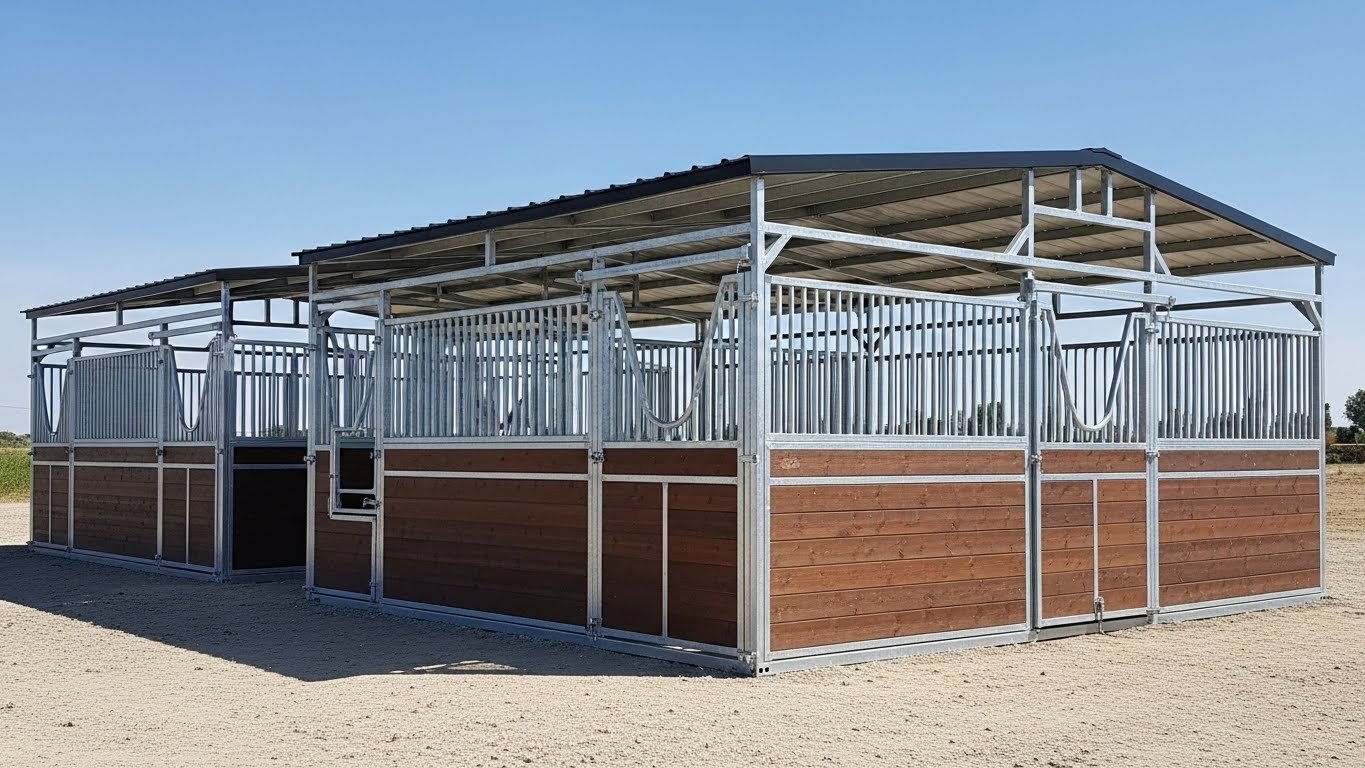
Our stable systems primarily utilize 50mm x 50mm RHS (Square Hollow Section) or 114mm round posts. Standard pipe clamps often fail to grip these profiles securely, leading to vibration and noise that can unsettle high-strung horses. You must use heavy-duty clamps specifically sized for these dimensions. Securing conduit loosely allows movement, which eventually strips screw threads or damages the external zinc layer through friction.
- Profile-Specific Clamps: Use square-back clamps for the 50mm RHS posts and radius-matched clamps for the 114mm round posts to ensure 100% surface contact.
- Vibration Control: Install brackets at tight, regular intervals (typically every 1.5 meters or less) to ensure the conduit remains rigid. Loose conduit creates rattling noises when horses kick the stalls.
- Material Compatibility: We supply 304 Stainless Steel hardware in our installation kits. Do not substitute this with zinc-plated or standard steel fasteners, as galvanic corrosion will occur between dissimilar metals, compromising the mount strength over time.
Preserving the ISO 1461 Galvanized Finish
DB Stable panels undergo hot-dip galvanization after fabrication, sealing the steel in a 70-85 micron zinc coating. Drilling holes for conduit straps breaks this seal. If left untreated, rust will bleed from these points within weeks due to stable moisture levels. Every installer must rigorously apply the provided cold galvanizing touch-up spray to restore the protective barrier immediately after drilling.
- Immediate Sealing: Apply the provided cold galvanizing spray to any fresh drill hole or surface abrasion before mounting the clamp. This seals the raw steel against ammonia and moisture.
- Thermal Expansion: Steel barns in regions like Northern Europe or Canada experience significant thermal contraction. Install expansion and deflection fittings to prevent the conduit from buckling or pulling anchors out of the frame during freeze-thaw cycles.
- Wire Protection: Ensure all RMC ends are reamed flat and are burr-free. A sharp edge inside the conduit can strip wire insulation during the pull, creating a hidden short circuit within the metal frame.
Mounting Dust-Proof LED Fixtures Securely
Secure mounting prevents vibration damage and maintains the IP66 seal, ensuring your lighting investment lasts as long as the galvanized steel structure.
Surface Mounting vs. Suspended Installation
The choice between bolting fixtures directly to the structure or hanging them depends entirely on your roof height and the horses’ reach. For standard stable rows with lower rooflines, surface mounting is the only safe option. It keeps the fixture tight against the ceiling or wall, minimizing the risk of a horse rearing up and shattering the lens. This method also simplifies maintenance, as you can pressure wash the surface without the fixture swinging around.
Suspended mounting involves using chains or rods to drop the light source lower. This acts as a solution for high-bay central aisles or arenas where the truss height exceeds 4 meters. Dropping the light improves the spread and reduces shadows, but it introduces a swing factor during cleaning or heavy winds. Regardless of the method, the fixture itself must maintain an IP66 rating to block the inevitable dust ingress found in every barn.
Securing to the 50mm x 50mm RHS Framework
When installing on a DB Stable structure, you attach directly to our standard 50mm x 50mm RHS (Square Hollow Section) headers. Unlike the flimsy 1.5mm tubing used by budget competitors, our 2.0mm wall thickness provides a solid bite for self-tapping screws. However, drilling into the frame compromises the hot-dip coating, so you must follow a strict protocol to prevent rust.
- Anchor Point: Mount fixtures directly to the RHS headers for maximum rigidity. This eliminates vibration that typically causes LED driver failure.
- Seal the Breach: Drilling into hot-dip galvanized steel exposes raw iron. You must immediately apply Cold Galvanizing Spray to the hole and the screw head to prevent rust from starting at the connection point.
- Hardware Selection: Use 304 Stainless Steel hardware. This prevents galvanic corrosion between the fixture and the steel frame, ensuring the connection remains secure in damp stable environments.
Frequently Asked Questions
Can I use standard residential Romex wiring in a horse barn?
Generally, no. Most electrical codes prohibit exposed Romex (NM-B) cable in barns because rodents and horses can easily chew through the sheathing, creating a severe fire hazard. All wiring accessible to animals must be encased in rigid metal conduit (RMC) or Schedule 80 PVC to prevent physical damage.
What is the safest type of lighting fixture for horse stalls?
LED fixtures are the safest choice because they generate minimal heat, reducing the risk of igniting hay or dust. Look for fixtures with an IP66 or IP67 rating, which certifies they are dust-tight and water-resistant. Additionally, all bulbs must be enclosed in shatterproof polycarbonate cages to prevent glass from falling into bedding if impacted.
Why do barn outlets require GFCI protection?
Barns are inherently damp environments with conductive concrete or dirt floors. A Ground Fault Circuit Interrupter (GFCI) is critical for any outlet near water sources—such as automatic waterers or wash bays—to instantly cut power if a fault occurs, preventing potentially fatal shocks to horses and handlers.
How high should electrical switches and outlets be mounted?
Outlets and switches should be mounted well out of a horse’s reach, typically at least 4 to 5 feet high, or placed on the exterior of the stall front. If they must be inside the stall (e.g., for heated buckets), they require heavy-duty cast metal covers and conduit protection to withstand kicking or rubbing.
Final Thoughts
Ignoring electrical code to save on conduit costs exposes your clients to catastrophic fire liability and instantly voids the warranty on our steel structures. Pairing our hot-dip galvanized Q235B frames with properly sealed RMC ensures the facility withstands aggressive ammonia corrosion for decades without compromising the zinc barrier. Professional builders know that the only profitable installation is one that never generates a liability claim.
Secure your project pipeline by integrating these safety protocols directly into your stable designs. Contact our engineering team today to request specific CAD details for conduit routing or to order a sample section of our ISO 1461 galvanized profile. We are ready to support your next commercial bid with factory-direct precision.

 English
  Spanish
  French
  Arabic
  German
0 Comments