


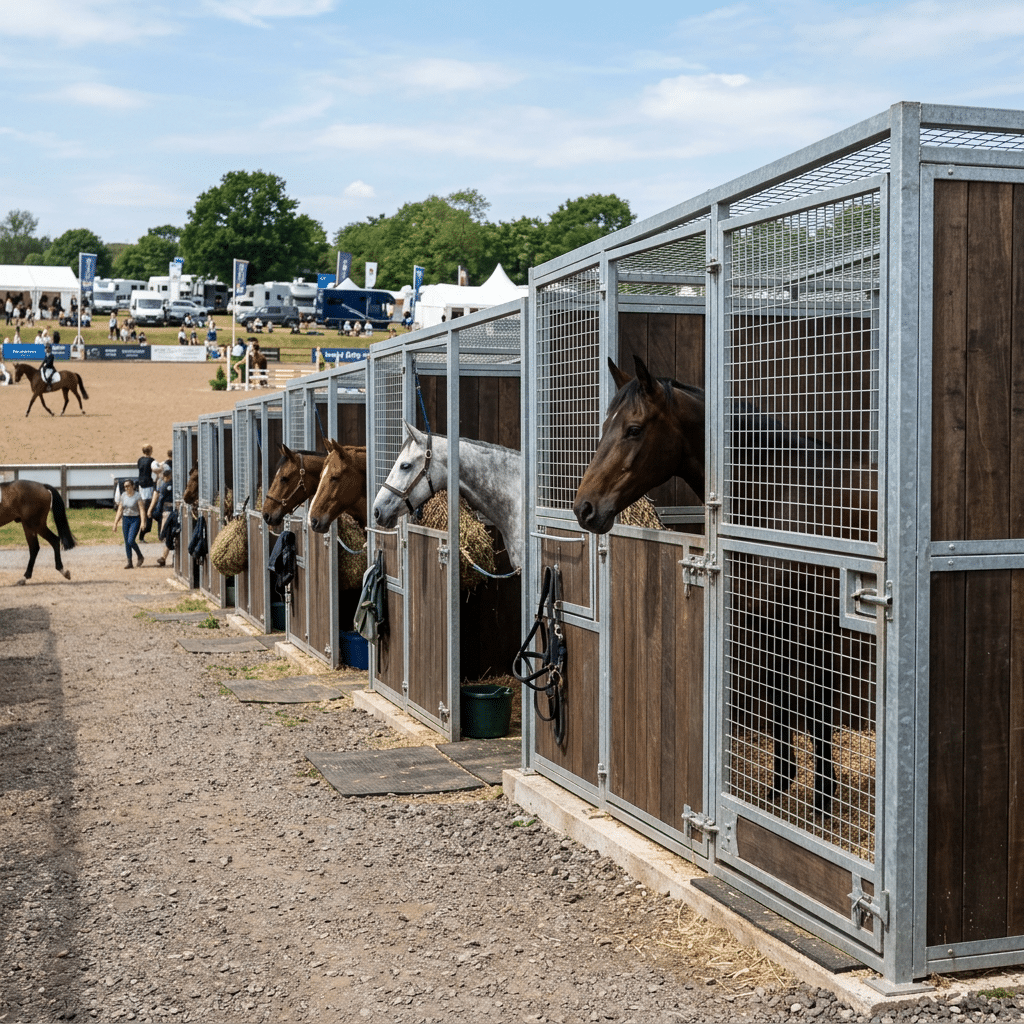
Improper Bucket Heights in stall design introduce preventable veterinary liabilities that drain financial resources. Relying on arbitrary hanging methods turns a hydration source into a drowning trap for foals or a colic risk for adults, significantly increasing long-term maintenance costs.
We resolve this variable using the engineering protocols of the DB Stable Professional Series. By welding Swivel Feeders to Q345 steel frames before Hot-Dip Galvanization, we permanently secure the 40-inch safety standard and remove human error from daily stable management.
The Drowning Hazard for Foals (Hanging Too Low)
Foals are top-heavy and cannot escape steep-sided buckets. Hanging water below chest height turns a standard hydration source into a fatal trap.
The Trap Mechanism: Accessibility and Entrapment
Foals possess a dangerous mix of high curiosity and poor physical coordination. Unlike adult horses, their center of gravity is high, and their legs are disproportionately long. This biological design makes them unstable when leaning over low objects. If a bucket hangs low enough to be stepped into or stumbled over, the physics of the container works against them.
- Top-Heavy Instability: Foals leaning into low buckets easily lose balance and topple forward.
- Vertical Wall Trap: Standard 5-gallon buckets have steep sides that prevent the animal from pushing back out.
- Zero Traction: Smooth plastic surfaces deny wet hooves the grip necessary to scramble free, acting like a vacuum seal.
Defining the Safe Zone: The Nose-Level Rule
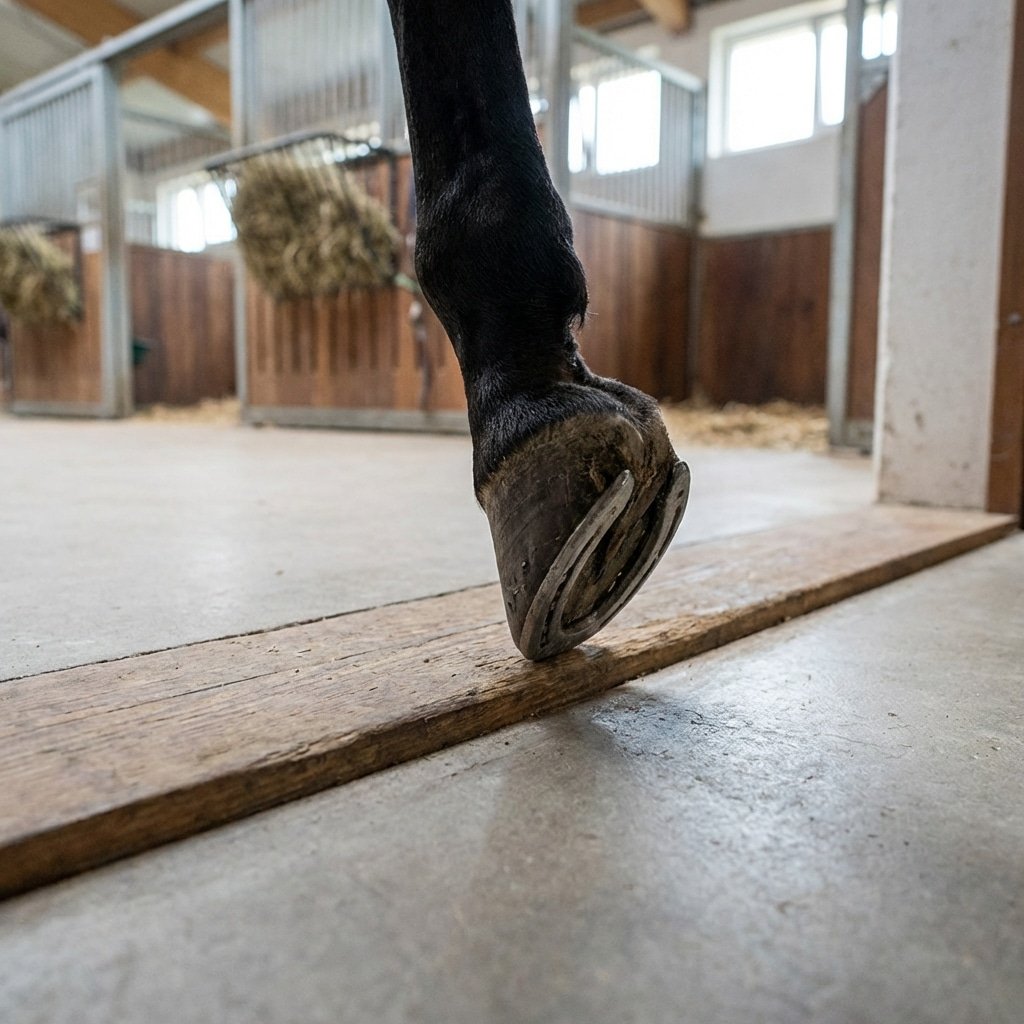
You prevent drowning by mechanically blocking entry. The bucket rim must sit exactly at nose level, just above the foal’s chest. This height allows comfortable drinking but creates a physical barrier that the foal’s chest hits before their center of gravity shifts too far forward. A bucket mounted here makes it physically impossible for the animal to fall inside.
- Chest Block: Install the bucket so the rim impacts the chest, preventing the foal from stepping in.
- Rigid Inspection: Use secure clips or snaps. Open-ended J-hooks are dangerous because a foal playing with the bucket can dislodge it, dropping it to the floor where the drowning risk returns.
- Structural Integrity: Ensure the hanger cannot slide down the stall bars under weight.
The Dehydration Risk (Hanging Too High)
When water buckets hang at human eye level, horses lose their natural gravity-assisted swallowing mechanism. This physical strain discourages intake, leading to chronic dehydration and impaction colic. Fixed-height feeders eliminate this variability.
Anatomical Strain: The Biomechanics of Swallowing
Horses are anatomical grazers designed to drink with their heads lowered. This position allows gravity to assist the passage of water through the esophagus naturally. When facil
ity staff hang buckets too high, they force the horse to adopt an unnatural “giraffe” posture.
This posture strains the neck muscles and inhibits the natural suction-pump mechanism required for effective swallowing. The horse physically struggles to ingest water. Consequently, this physical discomfort acts as a deterrent, causing the animal to consume only the bare minimum water required for survival rather than optimal hydration. This behavior significantly increases the risk of impaction colic, a condition directly linked to insufficient water intake.
Standardization Strategy: The Professional Series Swivel Feeder
A common cause of improperly placed buckets is “Groom’s Bias.” Staff unknowingly hang buckets at their own waist or chest height because it makes lifting heavy water containers easier, completely ignoring the horse’s biomechanical needs. We eliminate this variable at the manufacturing level.
The **DB Stable Professional Series** addresses this by integrating **Aluminium Swivel Feeders** directly into the stall front framework. By welding the feeder system at a fixed, engineered height during the fabrication of the Q345 steel frame, the design removes human error entirely. This ensures every horse accesses water at the safest ergonomic level, regardless of who cleans the stall that day.
Premium Galvanized Stables Built To Last
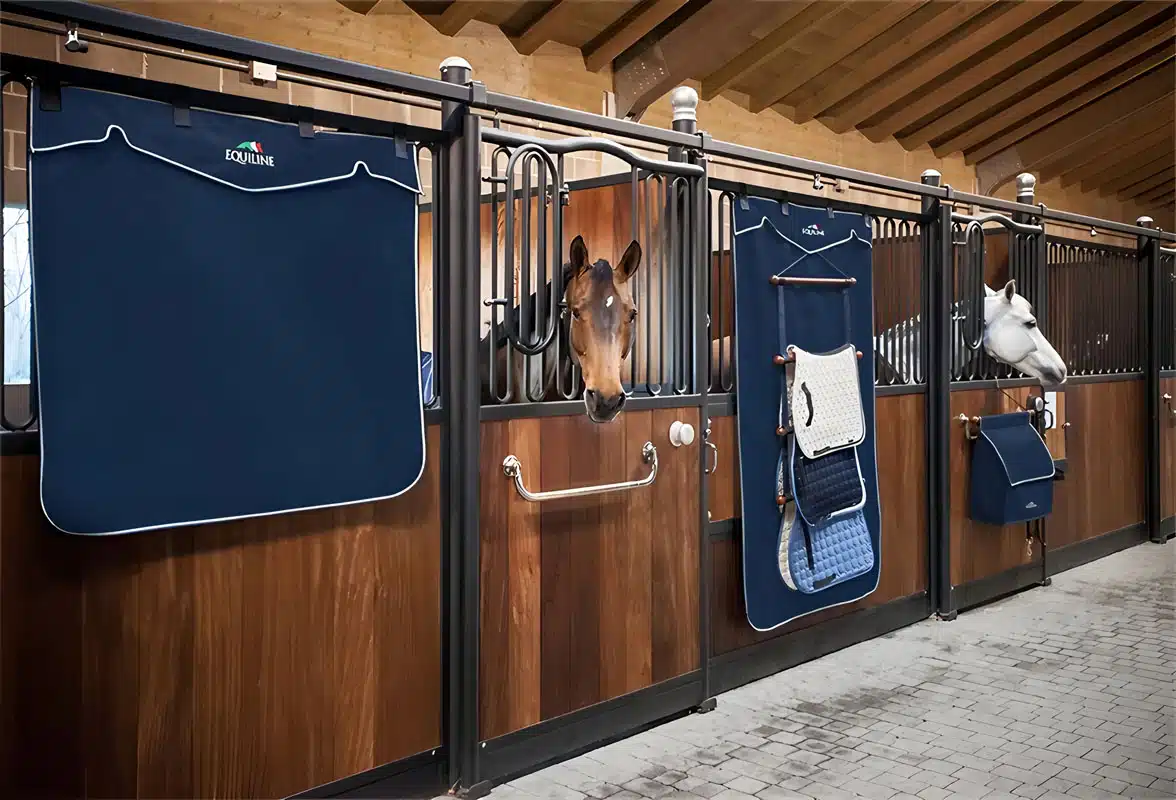
The Golden Rule: The 40-Inch Chest Height Standard
Mounting buckets at chest level (approx. 40 inches) aligns natural swallowing mechanics with safety clearances, preventing leg entrapment and reducing bedding contamination.
| Safety Variable | Risk: Too Low (< 36") | Risk: Too High (> 48″) | The 40-Inch Standard |
|---|---|---|---|
| Anatomical Impact | Increases strain; invites pawing. | Aspiration risk; reduced intake. | Natural swallowing angle. |
| Physical Safety | Leg entrapment/cast risk. | Neck strain; frustration. | Clears the “Knee Lift” zone. |
| Hygiene Control | Bedding kicks into water. | Difficult for grooms to clean. | Minimizes debris contamination. |
The Biomechanics of Safe Hydration
The 40-inch standard is not arbitrary; it is an engineered calculation based on the average horse’s chest height and range of motion. Unlike grazing, where the head is at ground level, stall confinement introduces artificial risks like bedding dust and confined spaces. We position the bucket rim at chest level to balance three critical mechanical factors:
- Facilitating Natural Swallowing: This height reduces neck strain compared to ground feeding but keeps the head low enough to ensure the airway remains protected, avoiding the aspiration risks associated with high-mounted hay racks or waterers.
- The ‘Anti-Pawing’ Clearance: A bucket rim at 40 inches sits above the natural “knee lift” height of a pawing horse. This prevents the horse from accidentally hooking a leg over the rim or stepping inside, which is a primary cause of panic-induced tendon injuries in stables.
- Reducing Debris Contamination: By keeping the water source elevated, we place it outside the immediate trajectory of bedding kicked up during stall movement. This keeps water cleaner for longer and reduces labor costs associated with frequent re-filling.

Standardizing Height with Professional Swivel Feeders
In large commercial facilities, relying on grooms to hang buckets with straps introduces inconsistency. One stall might be at 35 inches, the next at 45. This variance creates operational inefficiencies and safety gaps. DB Stable addresses this in the Professional Series by integrating Swivel Feeders directly into the steel framework.
- Eliminating ‘Bucket Slide’: Unlike hanging straps or snap hooks that can slide along bars or be adjusted incorrectly, our integrated swivel system fixes the feed and water height permanently at the manufacturing stage. The 40-inch standard is welded into the design.
- Cast-Proof Synergy: This fixed upper height complements our strict 50mm bottom gap standard. By controlling both the bottom clearance (to prevent rolling entrapment) and the top feeding height (to prevent pawing entrapment), the Professional Series creates a fully safety-engineered vertical profile.
DB’s Pre-Welded Bucket Rings on Stall Fronts
We weld bucket rings to the Q235B frame before galvanization, creating a fused, rust-proof bond that eliminates the safety hazards of aftermarket bolt-on hardware.
Eliminating Loose Hardware Risks
Aftermarket bolt-on hooks and portable hangers introduce unnecessary liability into a professional stable. These accessories often loosen over time due to daily use, leaving sharp screws or metal edges exposed that can lacerate a horse’s face or eyelid. By integrating the hardware directly into the manufacturing process, we remove these failure points entirely.
- Zero Protrusions: Our design removes the need for protruding screws, clamps, or bolt-on snaps that frequently snag halters or injure horses.
- Standardized Safety Height: We set the mounting height during the OEM design phase, guaranteeing every bucket hangs at the safe, chest-level position across the entire facility.
- Impact Resistance: Aggressive feeders and horses that paw at the
ir water will dislodge screw-mounted hooks. Our welded rings are fused to the structural steel, making them impossible to knock off.
Sealed Joints via Hot-Dip Galvanization
The primary cause of rust on stall fronts is the “burn mark” left when accessories are welded onto tubing after it has been galvanized. This destroys the zinc layer and invites corrosion immediately. DB Stable reverses this process to ensure longevity.
- Pre-Process Welding: We weld the rings to the raw Q235B steel frame before the assembly enters the zinc bath.
- Full Encapsulation: Because the ring is present during the dip, the weld joint is fully encapsulated with over 85 microns of zinc, meeting BS EN ISO 1461 standards.
- No Rust Bleed: This method eliminates the “rust bleed” typically seen where heat-affected zones on pre-galvanized tubing begin to corrode within months of installation.
Frequently Asked Questions
What is the ideal height for hanging a horse’s water bucket?
Mount water buckets just above the horse’s chest height, which typically lands between 38 and 48 inches (96-122 cm) off the ground. This specific zone encourages a natural drinking posture that supports hydration. More importantly, keeping the bucket at this level prevents horses from accidentally stepping into it or getting a leg hung up, which is a common cause of stall injuries.
Where is the best location in the stall to place the water bucket?
Industry data shows horses drink more water when buckets sit near the stall door rather than near hay feeders. Position the bucket roughly 8 inches inside the door opening. This placement allows staff to monitor water levels and refill buckets without entering the stall, saving labor time. It also separates the water from food sources, keeping the supply cleaner and reducing wasted water from hay contamination.
How do I safely attach water buckets to metal stall fronts?
On metal systems like DB Stable’s, secure buckets using double-ended snaps attached to pre-welded rings or smooth eyehooks. Avoid open hooks, as these easily catch on halters or eyelids. For a safer, permanent solution, our Professional Series stalls utilize integrated swivel feeders. These allow the bucket to swing out for filling, eliminating the need for loose hanging hardware entirely and reducing risk inside the stall.
Why are flat-back buckets recommended over round buckets?
Flat-back buckets sit flush against the stall wall, drastically reducing wobbling and splashing compared to round options. This stability stops horses from playing with the bucket or knocking it over, which keeps the bedding dry and ensures water remains available throughout the night. Wet bedding compromises hoof health and increases ammonia levels, so the stability of a flat-back design is a functional necessity, not just a preference.
Final Thoughts
Relying on end-users to install aftermarket hooks introduces liability and rust points that damage your brand’s reputation. DB Stable eliminates this risk by welding bucket rings and swivel systems to the Q235B frame before hot-dip galvanization. This process guarantees a rust-proof, impact-resistant finish that secures both the animal’s safety and your long-term client trust.
Don’t leave safety standards to chance; standardize your inventory with our engineered Professional Series. We invite you to request a specification sheet or schedule a consultation to review our OEM integration for your next project. Contact our engineering team today to secure a manufacturing partner that prioritizes equine biomechanics.

 English
  Spanish
  French
  Arabic
  German
0 Comments