
Draft Custom Sizing is the only reliable defense against the liability of cast horses in professional warmblood facilities. Standard 12-foot stalls physically trap rolling draft breeds, turning a routine movement into a lethal panic event that destroys partition walls and fractures limbs.
Our engineering protocol mandates Q345B Low Alloy High Strength Steel to absorb these high-impact forces without bowing. We combine this with a strict 50mm cast-proof bottom gap and modular flat-pack logistics to deliver 14-foot spans that maintain structural rigidity while protecting your freight margins.
The Biomechanics of a Rolling Draft Horse
Draft breeds rely on momentum rather than spinal flexibility to roll, creating high-impact forces that demand specific “cast-proof” clearances to prevent catastrophic leg entrapment.
Spinal Rotation and Limb Extension
You cannot build a stable for a Percheron using the same physics as a Thoroughbred. Lighter breeds possess enough spinal flexibility to lower themselves and roll with relative control. Draft horses, due to their immense mass and spinal rigidity—particularly in the T10-T12 region—do not have this luxury. They rely on momentum to initiate rotation.
This creates a violent “slam” rather than a gentle roll. To generate the leverage needed to flip their 900kg+ frames, they fully extend their legs. This action transforms their limbs into rigid levers that strike partition walls with significant force. If the stall wall lacks impact absorption, the horse risks fracturing the partition. More critically, if the wall has improper ground clearance, this limb extension forces the hoof into the bottom gap, leading to entrapment.
Engineering Safety: The “Cast-Proof” 50mm Bottom Gap
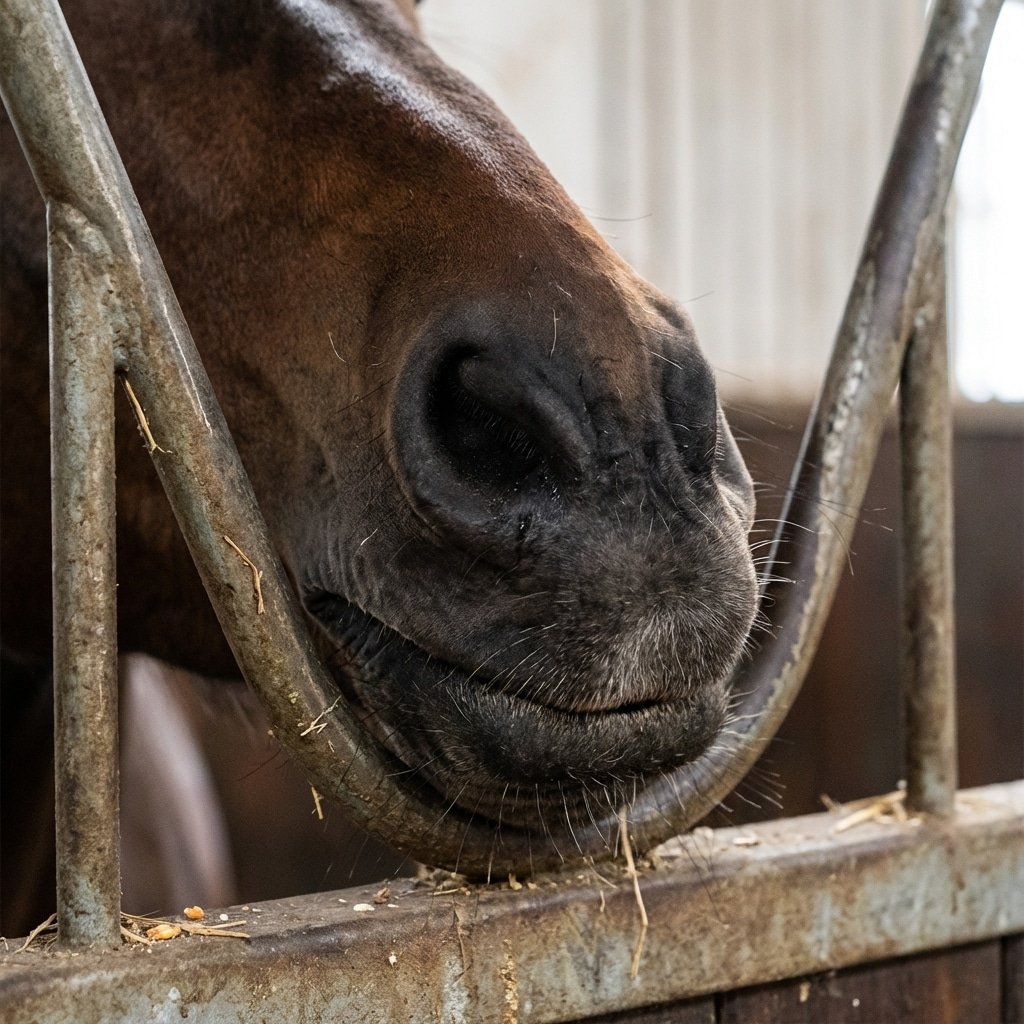
The biomechanical reality of this rolling motion dictates our engineering standards at DB Stable. Standard equine stalls often feature bottom gaps of 100mm (4 inches) or more to facilitate bedding removal. For a draft horse, this dimension is a liability. When the horse attempts to right itself, the hooves slide along the floor seeking purchase. A 100mm gap allows the hoof to slide under the partition, trapping the leg as the horse’s body weight shifts back.
We mitigate this specific risk through our “Cast-Proof” design protocol:
- Minimal Bottom Clearance: We restrict the bottom opening to approximately 50mm. This is too narrow for a draft hoof to enter but remains sufficient for drainage.
- Deflection Barrier: The 50mm gap forces the hoof to deflect off the bottom rail rather than slide underneath it during the violent righting phase.
- Tendon Protection: By physically blocking the slide-under motion, we prevent the “scissor” effect that severs flexor tendons when a cast horse panics.
The “Cast” Risk in a Standard 12×12 Box
Standard 12×12 stalls lack the floor space for a draft horse’s rolling radius, creating a lethal “casting” trap. Our 50mm safety gap prevents fatal entrapment during these panic events.
The Geometry of Entrapment: Why 12 Feet Fails
A 17hh+ draft horse is not just taller than a light riding horse;
they possess a significantly longer body barrel and heavier skeletal structure. When a horse rolls to relieve spinal pressure, they require full leg extension to generate the leverage needed to right themselves. In a standard 12-foot width, the wall physically blocks this extension, creating a mechanical failure point known as “casting.”
Walls in a 12×12 configuration create a “trap zone.” Once a draft horse rolls too close to the partition, they cannot gain the leverage to stand. Unlike lighter breeds, a 2,000lb animal cannot easily “shimmy” away from the wall. The resulting panic causes the horse to thrash violently against the infill, often leading to catastrophic leg fractures or structural damage to the stable itself before handlers can intervene.
Engineering Safety: The “Cast-Proof” Bottom Gap
DB Stable mitigates this risk through a strict manufacturing protocol we call “Cast-Proof Design.” We engineer a specific bottom gap—approximately 50mm—between the floor surface and the bottom steel channel of the partition.
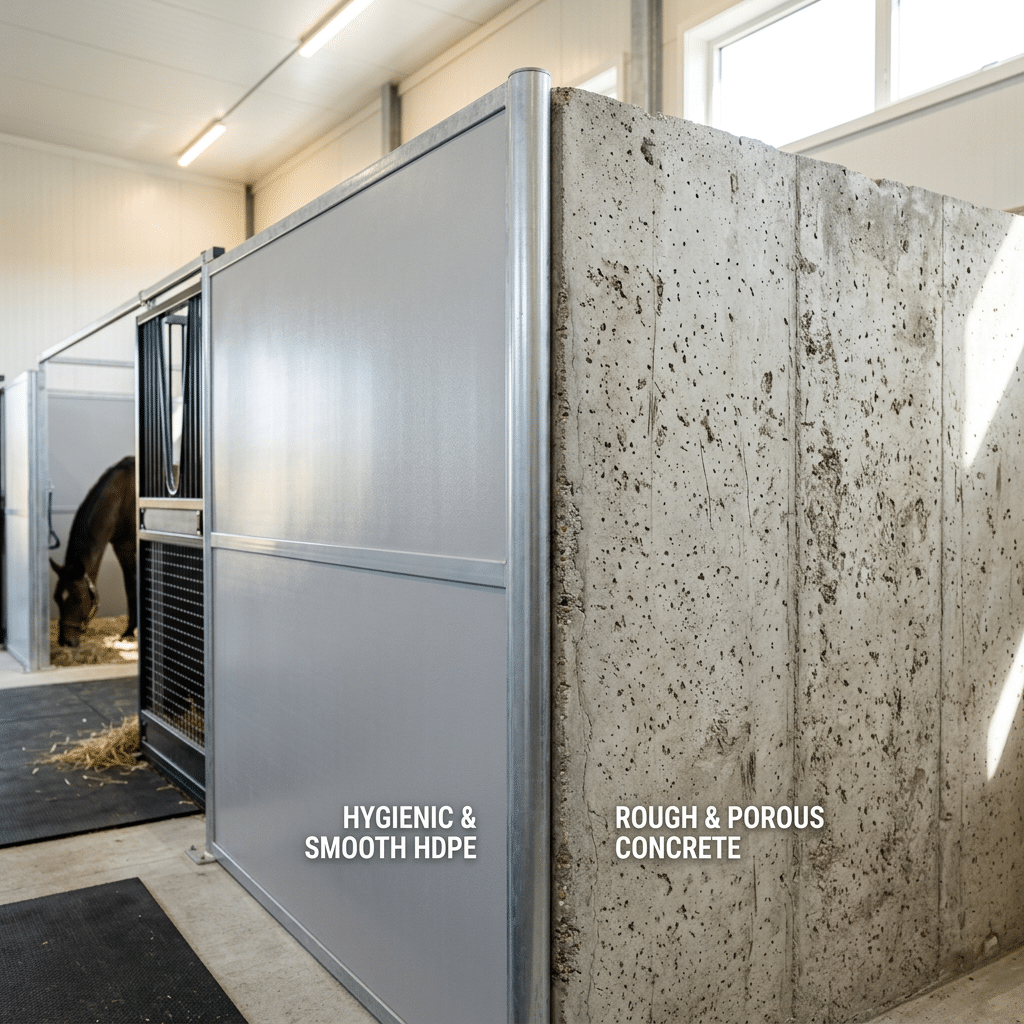
This clearance is calculated for safety. If the gap is too large (over 100mm), a rolling horse can shove a hoof underneath the rail, leading to snapped cannon bones when they attempt to stand. Our 50mm specification is tight enough to prevent hoof entry but allows sufficient drainage to keep the bottom board dry. We pair this engineering with smooth, impact-absorbing HDPE or high-density Bamboo infills to prevent abrasion injuries if a horse does become pinned against the panel.
Premium Custom Stables Built for Extreme Durability
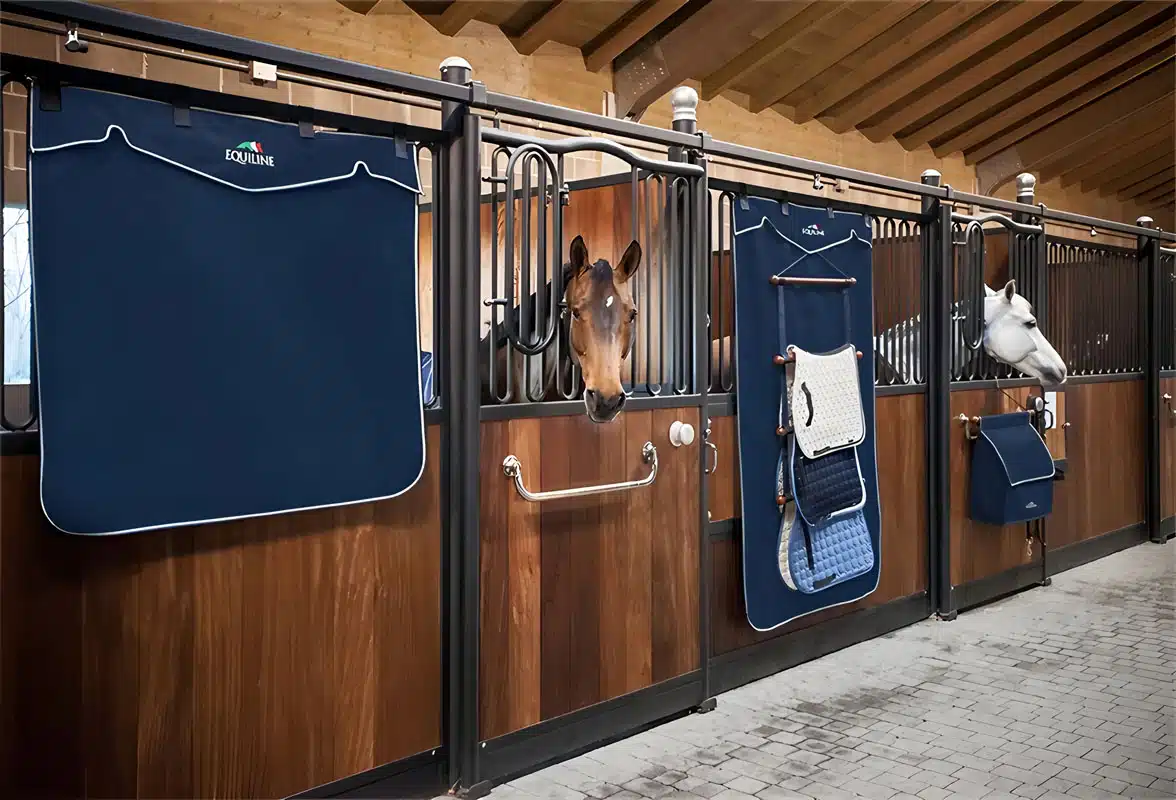
Expanding the Footprint: 12×14 and 14×14 Stall Kits
Draft breeds require 14-foot depths to prevent casting, a safety necessity that demands higher-tensile Q345B steel and modular flat-pack logistics to keep freight costs viable.
| Feature | Standard Box (12’x12′) | Draft Configuration (14’x14′) |
|---|---|---|
| Target Animal Size | Up to 16.2 Hands | 17 Hands & Draft Breeds |
| Steel Specification | Q235B (Standard Structural) | Q345B (High Tensile) |
| Casting Risk | High for Large Breeds | Minimized (Adequate Rolling Space) |
| Logistics Model | Standard Container Loading | Flat-Pack (Mandatory for 4m+ Lengths) |
The Ergonomic Necessity: Why Large Breeds Demand 14-Foot Depths
The industry standard 12×12 box works for the average Quarter Horse or Thoroughbred, but it fails larger breeds. Draft horses and warmbloods exceeding 17 hands face significant biomechanical risks in these smaller footprints. When a large animal lies down to sleep or roll, a 12-foot width often leaves them with insufficient clearance to stand back up without getting trapped against the partition wall.
This entrapment, known as getting “cast,” leads to panic, thrashing, and often severe injury to the horse or the handler attempting a rescue. Increasing the stall depth to 14 feet provides the necessary geometric clearance for these breeds to complete a full rolling motion safely. Consequently, we see a distinct shift in facility design: premium barns housing dressage warmbloods or draft breeds are abandoning the 12×12 layout in favor of 12×14 or 14×14 configurations to mitigate liability and ensure animal welfare.
Configuring the DB Modular Kit for Extended Spans
Building a 14-foot stall front requires more than just stretching a standard tube. As the span increases, the structural rigidity of standard carbon steel can be compromised, leading to bowing or flexing under impact. DB Stable addresses this physics problem and the associated logistical challenges through specific material and engineering choices.
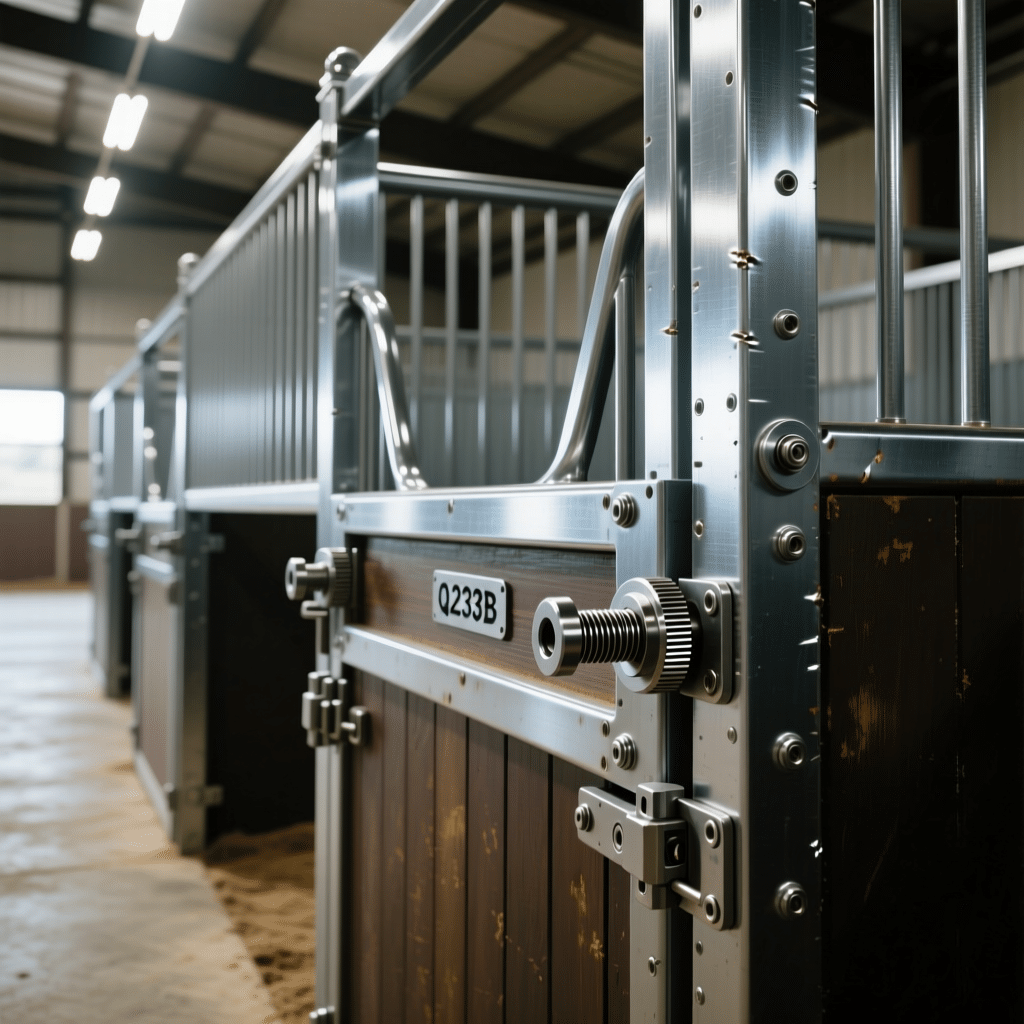
- Q345B High Strength Steel: We upgrade the steel grade from standard Q235B to Q345B Low Alloy High Strength Steel for 14-foot spans. This ensures the partition maintains rigidity and resists kick-impact deformation over the longer distance without requiring excessive vertical bracing.
- Steel Pallet Flat-Pack Logistics: Shipping a fully welded 14-foot (approx. 4.2 meter) frame is logistically ruinous. It consumes excessive container volume and incurs “oversized” freight surcharges. Our system uses a flat-pack design where posts, grids, and channels are packed densely on steel pallets, allowing us to fit 30-45 sets in a 40HQ container regardless of the expanded dimensions.
- Modular Installation: Distributors do not need to weld onsite. The kits utilize scalable HDPE or Bamboo infills and adjustable 304 stainless steel connectors. This allows the 14×14 units to be assembled with the same speed and tools as a standard unit, ensuring the “Profit Protection” of your installation margins.
Upgrading to 14-Gauge Steel to Match the Mass
Standard 16-gauge frames fail under draft horse pressure. We strictly mandate 14-gauge (2.0mm+) Q345B steel to ensure impact resistance and prevent structural bowing.
Structural Density and Impact Resistance
Most manufacturers push 16-gauge (approx. 1.5mm) steel because it reduces shipping weight and material costs. While this suffices for a standard 1,000lb riding horse, it becomes a liability for draft breeds. Mass dictates survival in the stable environment. When a 2,000lb Clydesdale or Percheron leans its full weight against a partition wall, lighter steel profiles flex and bow. This deformation immediately compromises latch mechanisms and cracks weld joints.
We upgrade to 14-gauge to significantly increase the steel density. This added mass functions as a shock absorber. When a heavy hoof strikes the post, the denser material dissipates the kinetic energy rather than buckling under the localized force. You simply must match
the mass of the containment structure to the mass of the animal it holds.
The 2.0mm Q345B Profile Specification
We do not rely on vague “heavy-duty” marketing labels. Our engineering protocol strictly prohibits any tubing thinner than 2.0mm (14-gauge) for draft-grade projects. This specification involves more than just wall thickness; it dictates the exact alloy and treatment used to secure our “Kick-Proof Guarantee.”
- Material Standard: We utilize Q345B Low Alloy High Strength Steel (equivalent to ASTM Grade 50). This offers superior toughness compared to standard Q235B, specifically preventing brittle fractures during high-impact events.
- Zinc Coating: Our hot-dip galvanization process adds approximately 70-85 microns of protective zinc after fabrication, slightly increasing the final outer dimensions.
- Minimum Threshold: Every tube profile must meet the 2.0mm minimum requirement to pass QC for draft stable orders.
Frequently Asked Questions
What is the recommended stall size for a 17-hand warmblood or draft horse?
Standard 12′ x 12′ (3.65m) stalls are often liability traps for horses exceeding 17 hands. These larger animals require more floor space to lie down and roll without getting “cast” (trapped against a wall). We recommend upgrading to a 12′ x 14′ or 14′ x 14′ footprint. Our modular manufacturing process allows us to produce extended partition panels to achieve these exact dimensions without requiring a complete custom engineering fee.
Can I order custom-width stall fronts to fit my existing barn columns?
Yes. As a direct OEM manufacturer, we fabricate strictly to order rather than pulling fixed sizes from stock. If your barn posts sit at non-standard intervals (e.g., 11′ 6″ or 3.8m), we adjust the steel frame length to fit your specific opening. We typically deduct a 10-20mm installation tolerance from your clear width measurement to ensure the frames slide in smoothly without shimming or cutting on-site.
Are your stalls strong enough for heavy Draft breeds?
Yes, but you must specify the right materials. For draft horses, we mandate our Q345B High Strength Steel option (equivalent to ASTM Grade 50). This structural grade offers superior impact toughness compared to standard Q235B carbon steel, preventing brittle fractures from heavy kicks. We combine this with a 14-gauge (2.0mm+) tube wall thickness and 28mm solid HDPE or Bamboo infills to create a “Kick-Proof” barrier capable of absorbing massive force.
Does the installation kit include all necessary hardware?
Yes. We ship complete systems, not just steel frames. Each flat-pack unit includes the hot-dip galvanized frames, pre-cut infill planks, and a comprehensive 304 Stainless Steel hardware kit containing floor anchors, connectors, and screws. We also include a can of cold galvanizing spray in every shipment, allowing your team to instantly seal any scratches that occur during the unloading or assembly process.
Final Thoughts
Skimping on steel grade for draft breeds creates a direct liability for your breeding operation or dealership. Our Q345B High Strength Steel and “Cast-Proof” 50mm bottom gap provide the only structural insurance capable of withstanding a 900kg impact. You simply cannot build a reputation for safety by gambling on standard 16-gauge carbon profiles.
We engineer these extended 14-foot systems with flat-pack logistics that protect your margins against “oversized” freight surcharges. Contact our engineering team today to configure a custom draft layout that fits your facility’s specific column grid. Let’s secure your stock with equipment built for heavy-duty performance.

 English
  Spanish
  French
  Arabic
  German
0 Comments