


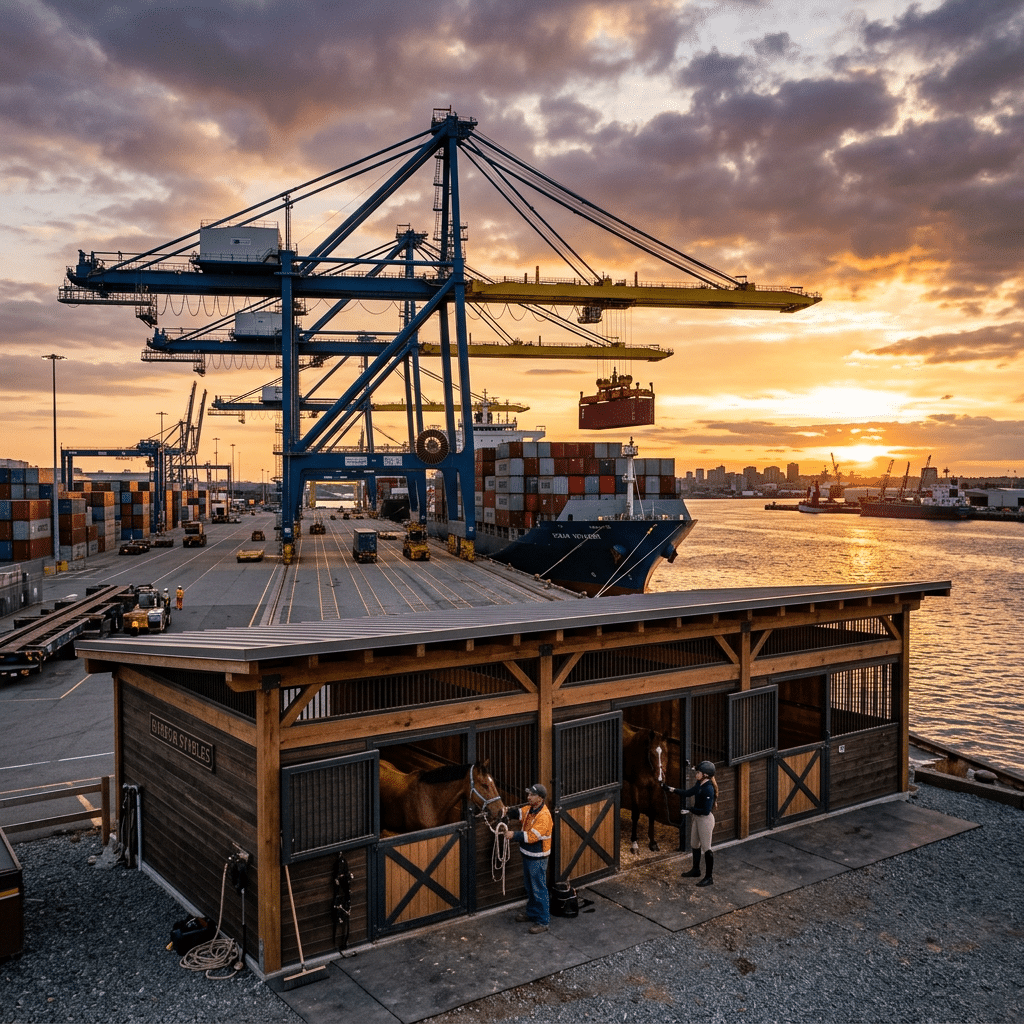
Operating successful Commercial Stud Farms demands infrastructure that eliminates injury risks while minimizing long-term maintenance cycles. Installing inadequate stalling systems made from softwood or light-gauge pre-galvanized steel invites catastrophic failure, turning minor cribbing or kicking incidents into expensive veterinary emergencies and unplanned replacement costs.
We benchmark stabling solutions against the BS EN ISO 1461 hot-dip galvanization standard to guarantee resistance against ammonia corrosion. By prioritizing Q235B structural steel and high-density strand woven bamboo with a Janka hardness exceeding 3000 lbf, facility owners can secure a kick-proof environment that protects high-value bloodstock and preserves operational margins.
The Rise of ESG (Environmental, Social, Governance) in Construction
Sustainable stabling relies on material longevity and logistics. We use Hot-Dip Galvanized Steel and renewable Bamboo to minimize replacement cycles and cut freight emissions through flat-pack efficiency.
The Environmental Impact of Galvanized Steel Framing
In the equine industry, the most sustainable product is the one you don’t have to replace. Traditional timber framing rots, and painted steel eventually peels, leading to early failure and landfill waste. We prioritize a circular material lifecycle by using fully recyclable structural steel protected by industrial-grade zinc.
Our approach focuses on extending the “service life” of the facility to reduce its total carbon footprint over time. By utilizing Hot-Dip Galvanization (BS EN ISO 1461), we bond zinc to the steel at 450°C. This creates a metallurgical bond that prevents rust for decades, unlike surface paints that flake off and contaminate the soil.
- Steel Grades: We use Q235B (Standard) or Q345B (Cold Climate) for structural integrity that outlasts timber.
- Zinc Coating: Structural parts receive > 85 microns of zinc, ensuring resistance against ammonia and moisture.
- Recyclability: Steel is 100% recyclable without loss of quality, supporting circular economy principles.
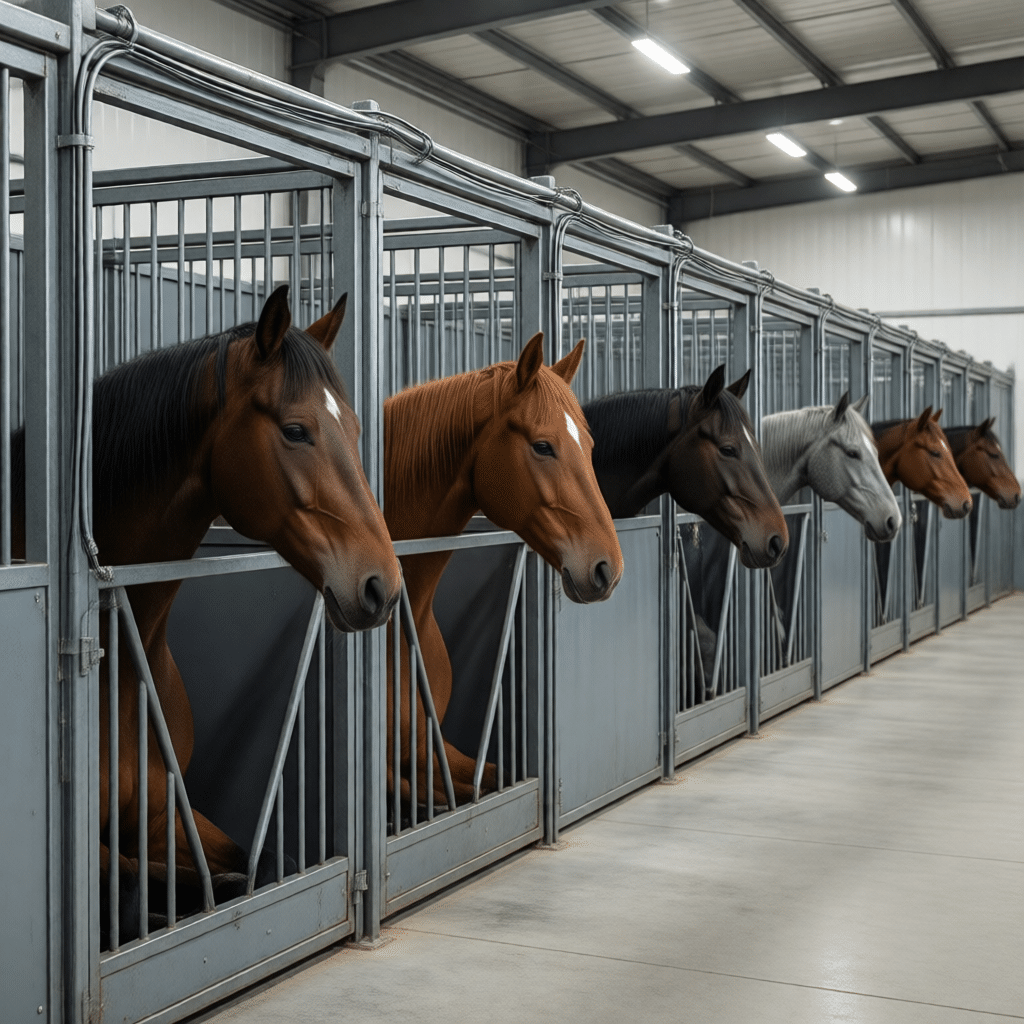
Eco-Friendly Infill Options: Bamboo vs. HDPE
Choosing the right infill is a balance between renewable sourcing and chemical reduction. We offer two distinct paths for ESG-conscious projects: High-Density Bamboo for carbon sequestration and HDPE for chemical-free maintenance.
Bamboo is a grass, not a tree, meaning it regenerates in 3–5 years compared to the 30–50 years required for oak. Our High-Density Strand Woven Bamboo is engineered to be 3x harder than oak (Janka Hardness > 3000 lbf), which prevents horses from chewing it. This durability solves the common issue of equine cribbing destroying wood, further reducing waste.
HDPE (High-Density Polyethylene) tackles the “chemical load” problem. Wooden stables require regular application of varnishes, stains, and preservatives to fight rot—chemicals that can leach into the ground. HDPE requires zero treatment. It is UV stabilized and cleans with water.
- Waste Reduction: Our plank system is modular. If one board is damaged, you replace just that board, not the entire panel.
- Logistics Efficiency: Our Flat-Pack system fits 30-45 sets in a container (vs. 12-15 for welded systems), cutting shipping emissions by over 60%.
- Safety: No toxic preservatives are used in our bamboo or HDPE, protecting animal health.
Moving Away from Old-Growth Timber (Oak/Pine)
Commercial stables are ditching Oak and Pine. Old-growth availability is restricted, and softwoods can’t handle the kick load. The smart money is on engineered Bamboo and HDPE.
The Ecological and Practical Limits of Traditional Softwood
Let’s be honest about “traditional” timber. The massive Oak barns of the last century were built from old-growth tree
s that took over 100 years to mature. That supply chain is effectively broken. Today, paying a premium for hardwood often gets you younger, less dense timber that is prone to warping before the project is even finished. Environmental restrictions have turned high-grade Oak into a luxury item rather than a structural standard.
Pine presents a different set of problems. In a high-traffic commercial stable, softwood is a liability. It lacks the fiber density required for heavy-duty equine use, leading to rapid degradation that impacts safety and aesthetics.
- Cribbing Risk: Secondary-growth Pine is soft. Horses chew through rails quickly, creating dangerous splinter hazards and unsightly damage.
- Impact Failure: Softwoods often fail under direct impact. A kick from a warmblood can snap a standard pine board, risking injury to the animal.
- The Maintenance Trap: Natural timber requires constant stripping, varnishing, and treating. If you miss a cycle, rot and ammonia damage set in immediately.
The DB Stable Solution: High Density Strand Woven Bamboo
We don’t use bamboo just to check a “green” box; we use it because it outperforms wood mechanically. We specify High Density Strand Woven Bamboo to solve the hardness issue while maintaining the traditional aesthetic that facility owners want. This isn’t the hollow bamboo you see in gardens; it is a solid, compressed engineered board.
- Technical Specs: We use 28mm-38mm thick boards compressed under extreme pressure.
- Hardness Rating: With a Janka Hardness of > 3000 lbf, this material is 3x harder than Red Oak. It resists cribbing and hoof impact better than any natural timber.
- Moisture Resistance: Engineered for stability, it resists the mold and rot that typically plague wash bays and humid stable blocks.
- Operational Value: You get the structural integrity of concrete with the look of premium hardwood, eliminating the budget drain of constant board replacement.
Premium Horse Stables With 20-Year Durability
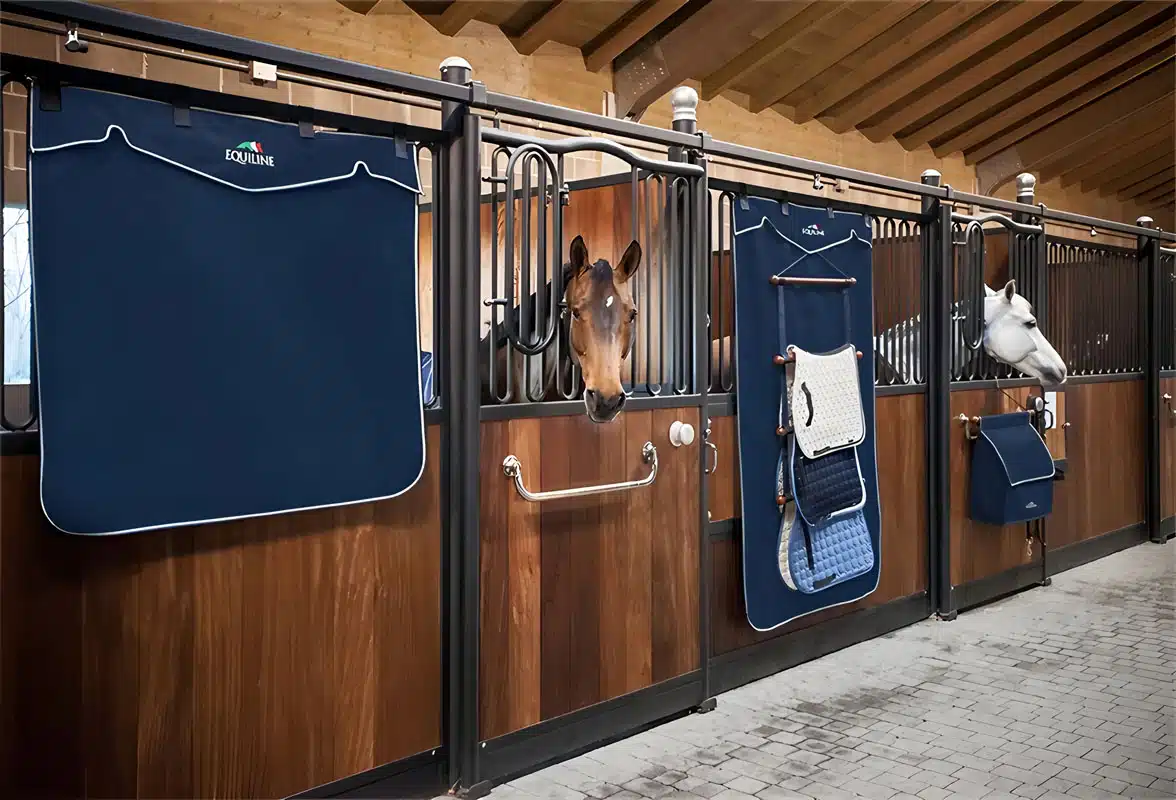
Top Factories Embracing Sustainable Materials
Sustainable manufacturing has shifted from a PR exercise to a competitive necessity. These five producers leverage recycled steel and bio-composites to meet tightening ESG mandates and carbon budgets.
| Manufacturer | Core Material Focus | Primary Environmental Advantage |
|---|---|---|
| Super Stud Building Products | Steel Framing | High Recycled Content & Waste Reduction |
| DTE Materials | Agrifiber Composites | Carbon Sequestration via Plant Matter |
| Earth Merchant | Bio-based Alternatives | Circular Economy Supply Chain |
| EcoSteel | Prefabricated Steel | Zero-Waste Construction & Recyclability |
| Nucor Buildings Group | Structural Steel | Electric Arc Furnace (EAF) Recycling |
Super Stud Building Products
Super Stud actively aligns its production with LEED certification standards, recognizing that modern commercial projects require documented sustainability credentials. They differentiate themselves by strictly controlling the recycled content in their steel framing systems, ensuring they meet the stringent requirements of green building codes.
- Recycled Content: Incorporates a minimum of 25% recycled steel in products.
- Waste Management: Implements comprehensive waste-reduction programs during fabrication.
- Certification Support: Provides documentation essential for projects seeking LEED v4 credits.
DTE Materials
DTE Materials addresses the “Growth & Regeneration Mismatch” inherent in traditional timber by utilizing rapid-growth agricultural fibers. By processing crops like hemp—which mature in months rather than decades—they produce medium-density fiberboards and insulation materials that act as carbon sinks rather than carbon emitters.
- Harvest Cycle: Utilizes crops with < 1 year maturity vs. 30-40 years for timber.
- Carbon Profile: Capitalizes on the rapid carbon-fixing capabilities of biomass.
Earth Merchant
Earth Merchant focuses on the distribution and integration of bio-based construction alternatives. Their approach targets the replacement of old-growth timber and high-emission concrete with materials that offer improved lifecycle assessments. This aligns with the broader industry trend where buyers now demand transparency regarding material origin and embodied carbon.

EcoSteel
EcoSteel leverages the inherent benefits of pre-engineered metal buildings (PEMB) to eliminate job-site waste. Unlike traditional wood framing, where cut-offs are common, EcoSteel’s components are fabricated to exact specifications in the factory. This method utilizes steel’s 100% recyclability to ensure that even at the end of a building’s life, the materials return to the supply chain rather than a landfill.
- Material Efficiency: Prefabrication reduces on-site scrap to near zero.
- Thermal Performance: Steel structures support advanced insulation for operational energy savings.
- Lifecycle: Steel components allow for indefinite recycling without strength loss.
Nucor Buildings Group
As a giant in the American steel industry, Nucor exemplifies the circular economy on a massive scale. The company relies heavily on Electric Arc Furnace (EAF) technology, which recycles scrap metal into new structural products. This process uses significantly less energy than traditional blast furnaces and keeps millions of tons of steel out of landfills annually.
- Recycling Rate: Supports the US industry average where 70% of steel is recycled.
- Grade Standards: Produces Q235B/A36 equivalent grades that are 100% recyclable.
- Carbon Footprint: Lower embodied carbon compared to virgin steel production methods.
Strand-Woven Bamboo: A High-Yield Carbon Sink
Strand-woven bamboo combines rapid 3-5 year growth cycles with ultra-high-density compression (1,200 kg/m³), effectively locking sequestered carbon into a structure three times harder than oak.
Rapid Regeneration and Carbon Capture
Traditional hardwood forestry typically relies on 40 to 60-year maturation cycles and often involves harvesting methods that disturb soil carbon. Bamboo operates on a fundamentally different biological engine. Because it is a grass rather than a tree, the rhizome root system remains intact after harvesting. This allows the ecosystem to function as a continuous carbon sink without the soil erosion or carbon release associated with clear-cutting and replanting.
The speed of regeneration is the primary driver of its efficiency. While an oak tree might take decades to mature, bamboo is ready for harvest in just 3 to 5 years. This rapid turnover allows established bamboo forestry operations to sequester between 20 and 40 tons of carbon per acre annually. By using bamboo, we tap into a renewable cycle that absorbs significantly more CO₂ than slow-growing softwoods or hardwoods used in standard stable construction.
tyle=”margin-top: 30px; margin-bottom: 15px; font-weight: 600; line-height: 1.3;”>High-Density Strand Woven Construction (1,200 kg/m³)
Carbon sequestration is only effective if the resulting product has a long service life. If a material rots or breaks within a few years, that carbon is released back into the atmosphere too quickly. DB Stable utilizes a high-density strand woven process to ensure the carbon stays locked away for decades. Unlike solid timber milling, which wastes significant biomass, we shred the bamboo into fibers and compress them under immense pressure to maximize yield per acre.
- Extreme Density: We compress fibers to a density of 1,200 kg/m³, creating a board that is denser than water and stores more carbon per cubic meter than traditional woods.
- Impact Resistance: With a Janka Hardness rating > 3000 lbf, this material is 3x harder than Red Oak, making it impervious to cribbing (chewing) and hoof impact.
- Efficient Manufacturing: The strand-woven method utilizes the entire bamboo culm, reducing waste and ensuring nearly 100% of the harvested carbon is retained in the final board.
This process transforms a fast-growing grass into a structural material capable of withstanding the abusive environment of a horse stable. By choosing high-density bamboo, facility owners are not just selecting a durable infill; they are effectively installing a carbon storage bank that outperforms steel and concrete in environmental impact.
Q235B Steel: The 100% Recyclable Framework
Q235B steel supports circular economy goals by retaining 100% mechanical strength during re-smelting, allowing infinite recycling loops without the structural degradation common in other construction materials.
The Circular Economy: Reusing Steel Without Degradation
Steel stands apart from plastics and composite materials because it avoids “down-cycling.” When a steel framework reaches the end of its life, facilities can re-smelt the material repeatedly without losing tensile strength or ductility. This capability ensures that a dismantled stable today becomes the structural beam of tomorrow, rather than landfill waste.
Farm management benefits directly from this lifecycle. Using recyclable materials mitigates disposal costs and reduces the agricultural construction footprint. Modern steel production pipelines now incorporate approximately 70% recycled content standard, creating a sustainable, closed-loop system for equestrian infrastructure immediately upon installation.
Material Spec: Q235B (ASTM A36) Performance Profile
We utilize Q235B Structural Steel (equivalent to ASTM A36) for all standard frameworks to strictly maintain consistent density and weldability. Unlike generic iron or lower-grade alloys, Q235B provides the necessary structural efficiency to engineer 50mm x 50mm RHS profiles that are lighter to transport yet stronger under impact.
The specific chemical composition of Q235B is critical for the finishing process. It supports effective Hot-Dip Galvanization (ISO 1461), creating a metallurgical bond between the zinc and steel. This extends the usable life of the framework to 30-50 years, delaying the recycling phase and maximizing the utility of the initial carbon investment.
Frequently Asked Questions
How to build an ESG compliant equestrian center?
Building for ESG (Environmental, Social, Governance) requires a three-pillar strategy. Environmentally, focus on energy independence using onsite solar and rainwater harvesting systems to reduce operational footprints. Socially, you must prioritize strict safety protocols for staff and high welfare standards for animals, including safe handling equipment and injury-prevention designs. Governance involves ethical supply chains; ensure your equipment providers adhere to labor laws and anti-corruption standards (like ISO 9001 factories).
Is bamboo a sustainable building material?
Yes, bamboo outperforms traditional hardwood in sustainability metrics. It reaches maturity in 3–5 years, compared to 30–50 years for oak or pine, allowing for rapid regeneration without deforestation. High-density strand-woven bamboo (used in heavy-duty stabling) sequesters more carbon per hectare than equivalent timber forests. Because the root system remains intact during harvest, it prevents soil erosion and maintains the carbon sink, making it a “carbon negative” material choice for infills.
Environmental impact of steel vs wood barns?
Wood framing typically has lower initial “embodied carbon” because trees absorb CO2 as they grow. However, steel dominates in lifecycle analysis. Steel is 100% recyclable and durable enough to last decades without chemical treatments for rot or termites. Wood often requires replacement sooner and ends up in landfills if treated with preservatives. For long-term commercial projects, steel’s longevity and recyclability often outweigh wood’s initial carbon benefit.
Green certifications for horse stables?
Standard LEED certification is difficult for agricultural buildings to achieve as it targets urban commercial structures. Instead, look to CalGreen (mandatory in California) which covers water conservation and material recycling in agricultural structures. Facility owners should also conduct energy audits and pursue sustainable agriculture recognitions, which focus on practical farm management metrics like manure management and pasture biodiversity rather than just office-centric building codes.
Eco-friendly horse barn manufacturers?
The most eco-friendly manufacturers are those adopting Prefabricated Modular Steel and Mass Timber technologies. Companies using modular steel systems (like DB Stable) reduce logistics carbon by up to 60% through flat-pack efficiency compared to fully welded alternatives. Look for manufacturers that use Hot-Dip Galvanization (ISO 1461) to eliminate the need for toxic paints and frequent replacements. Manufacturers utilizing bamboo infills also score higher on sustainability than those relying on slow-growth hardwoods.
Final Thoughts
Sustainable stabling is about reducing operational expenditure, not just checking a green box. By selecting ISO 1461 Hot-Dip Galvanized frameworks and high-density bamboo, you eliminate the recurring repair cycle that drains facility budgets. This infrastructure serves as a tangible asset that protects your margins while meeting tightening ESG mandates.
Stop estimating lifecycle costs and start validating performance. We invite you to request a material sample kit to test the 3000 lbf hardness of our bamboo and the integrity of our zinc coating firsthand. Contact our engineering team today to configure a flat-pack trial order that optimizes your logistics spend.

 English
  Spanish
  French
  Arabic
  German
0 Comments