


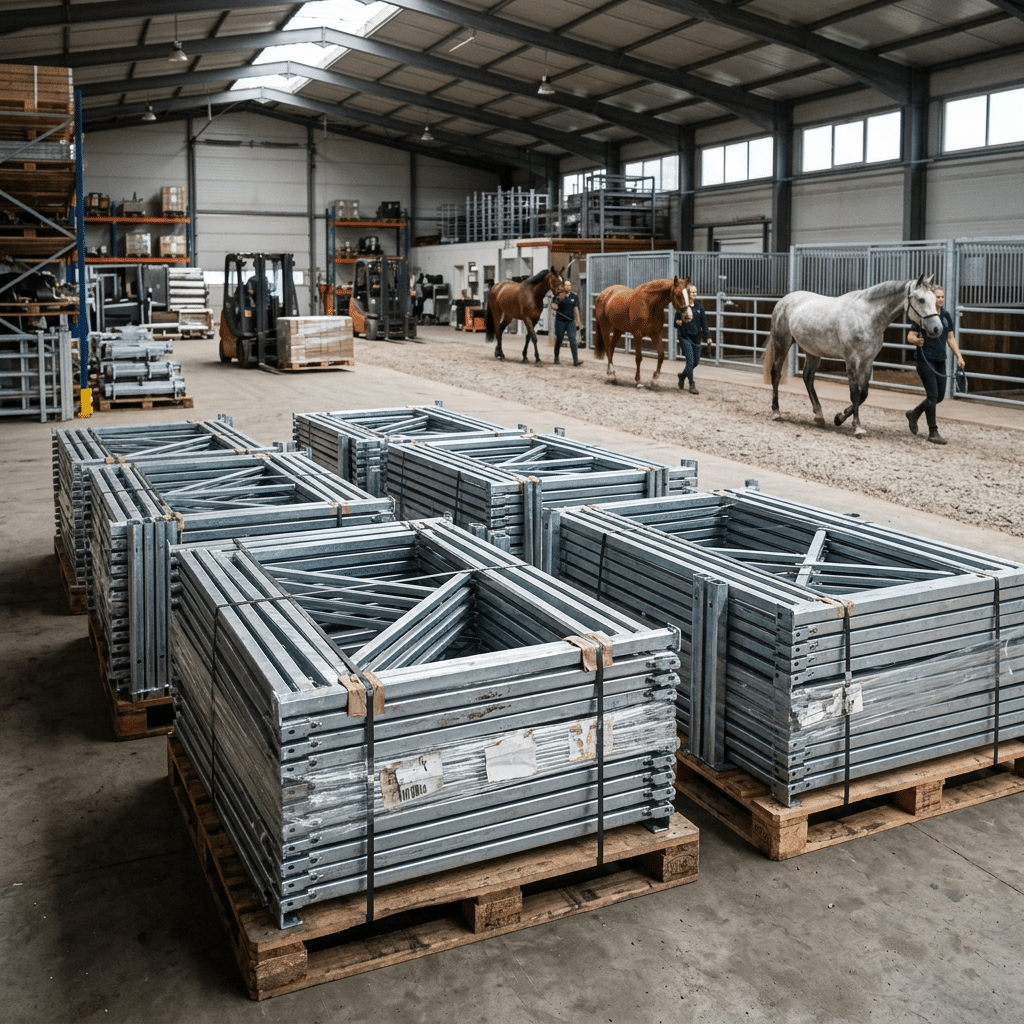
Calculating true rental fleet ROI depends on mitigating two primary costs: asset degradation and logistics. Fleets using treated wood or pre-galvanized steel face constant maintenance burdens and high freight expenses, which systematically erode profit margins and shorten the asset’s service life.
This analysis directly compares material performance against the ISO 1461 hot-dip galvanization standard. We measure how zero-maintenance HDPE infill and flat-pack container loading (30-45 sets per 40HQ) impact the total cost of ownership and protect your investment.
The Rot Cycle in High-Humidity Environments
High humidity and constant moisture accelerate the decay of horse stables, rusting steel frames and rotting wood infill. This cycle compromises safety and leads to expensive repairs and depreciation.
How Moisture Accelerates Structural Failure
Continuous moisture creates the perfect conditions for rust. On unprotected or pre-galvanized steel, this process is even faster. Welding burns off the thin zinc coating on pre-galvanized tubes, leaving the joints completely exposed to corrosion from day one. This rust compromises the structural integrity of the entire stable front or partition.
Traditional infill materials like timber or standard composite boards act like sponges. They absorb atmospheric water, which leads to swelling, warping, and eventually, mold growth and rot. A rotting board isn’t just an eyesore; it’s a safety hazard that can no longer withstand a kick, putting both the horse and the asset’s value at risk.
The Role of Galvanization and Rot-Resistant Infill
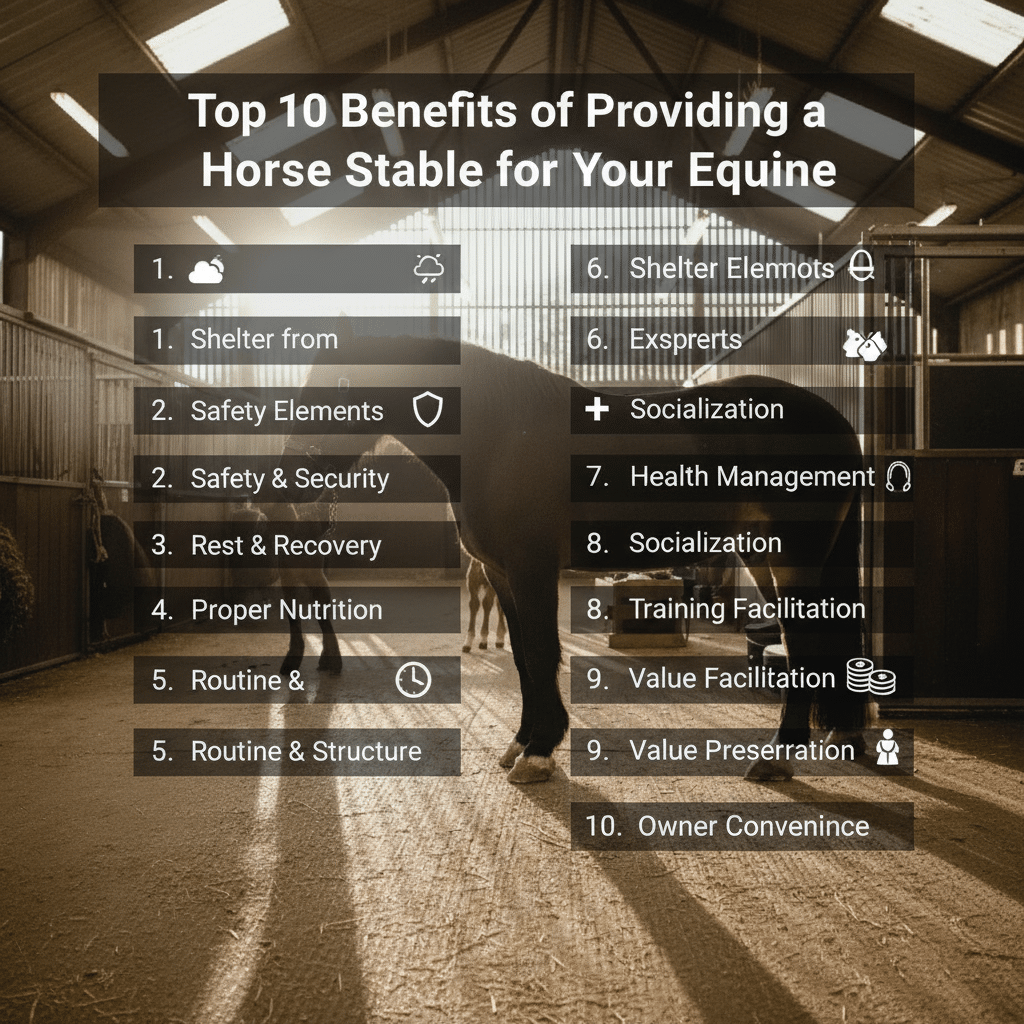
To fight the rot cycle, the entire steel frame must undergo Hot-Dip Galvanization After Fabrication. This means the complete, welded panel is dipped into molten zinc, creating a thick, uniform coating that conforms to ISO 1461. This process ensures an average zinc thickness of over 70 microns, even on the welds, effectively sealing the steel from moisture and preventing rust.
The right infill is just as critical. Using non-porous HDPE (High-Density Polyethylene) or high-density, mold-resistant Bamboo eliminates the moisture absorption problem entirely. These materials do not swell, warp, or decay like wood, providing a zero-maintenance solution that directly protects the owner’s investment and ensures long-term safety in humid conditions.
Material Comparison for Tropical Climates
In tropical climates, material choice dictates long-term cost. Hot-dip galvanized steel, UV-stabilized HDPE, and high-density bamboo prevent rust, rot, and sun damage, ensuring structural integrity.
| Material | Performance in High Hum idity | UV & Heat Resistance | Maintenance & Lifetime Cost |
|---|---|---|---|
| Hot-Dip Galvanized Steel | Excellent. A zinc coating of over 70 microns (to ISO 1461) protects welded joints from rust caused by humidity and salt spray. Prevents structural corrosion. | Excellent. Unaffected by UV radiation or high heat, maintaining its structural strength without degradation. | Very Low. Requires occasional cleaning but no recoating. The “hot-dip after fabrication” process ensures decades of service life, avoiding replacement costs. |
| Treated Pine | Poor. It is a porous material that absorbs moisture (up to 22% by weight), creating ideal conditions for mold and rot, even when treated. Requires constant ventilation. | Fair. Can crack, warp, and fade under constant UV exposure. Requires regular sealing to maintain integrity. | High. A false economy. Needs frequent inspection, cleaning, and resealing to delay inevitable rot. High labor and replacement costs over its short lifespan. |
| High-Density Bamboo | Very Good. Strand-woven bamboo is thermally treated to remove sugars, making it resistant to mold and rot. Its high density (~1,200 kg/m³) resists water absorption. | Excellent. Extremely stable in high heat and resists warping. Its hardness (Janka >3000 lbf) also prevents physical damage. | Low. A durable, long-term investment. Requires minimal upkeep compared to any traditional wood, providing superior lifetime value. |
| HDPE (UV-Stabilized) | Excellent. HDPE is waterproof and non-porous, so it cannot absorb moisture. This completely eliminates any risk of rot, swelling, or mold growth. | Very Good. Must be UV-stabilized. Our 28-32mm boards contain additives to prevent brittleness and fading from prolonged sun exposure. | Zero. This is the main B2B selling point. It requires no painting, sealing, or treatment. It is a fit-and-forget solution ideal for large-scale facilities. |
Framework: The Galvanization Standard
In tropical regions, the biggest point of failure for steel stables is at the welds. Many manufacturers use pre-galvanized tubes and weld them together, burning off the protective zinc at the joints. These exposed welds start rusting almost immediately in high humidity. We use a “hot-dip after fabrication” process. The entire steel panel is welded first from raw Q235B steel, then submerged in molten zinc. This process conforms to ISO 1461 and guarantees a thick, seamless coating that protects every edge and weld from corrosion.
Infill: Lifetime Value Over Upfront Price
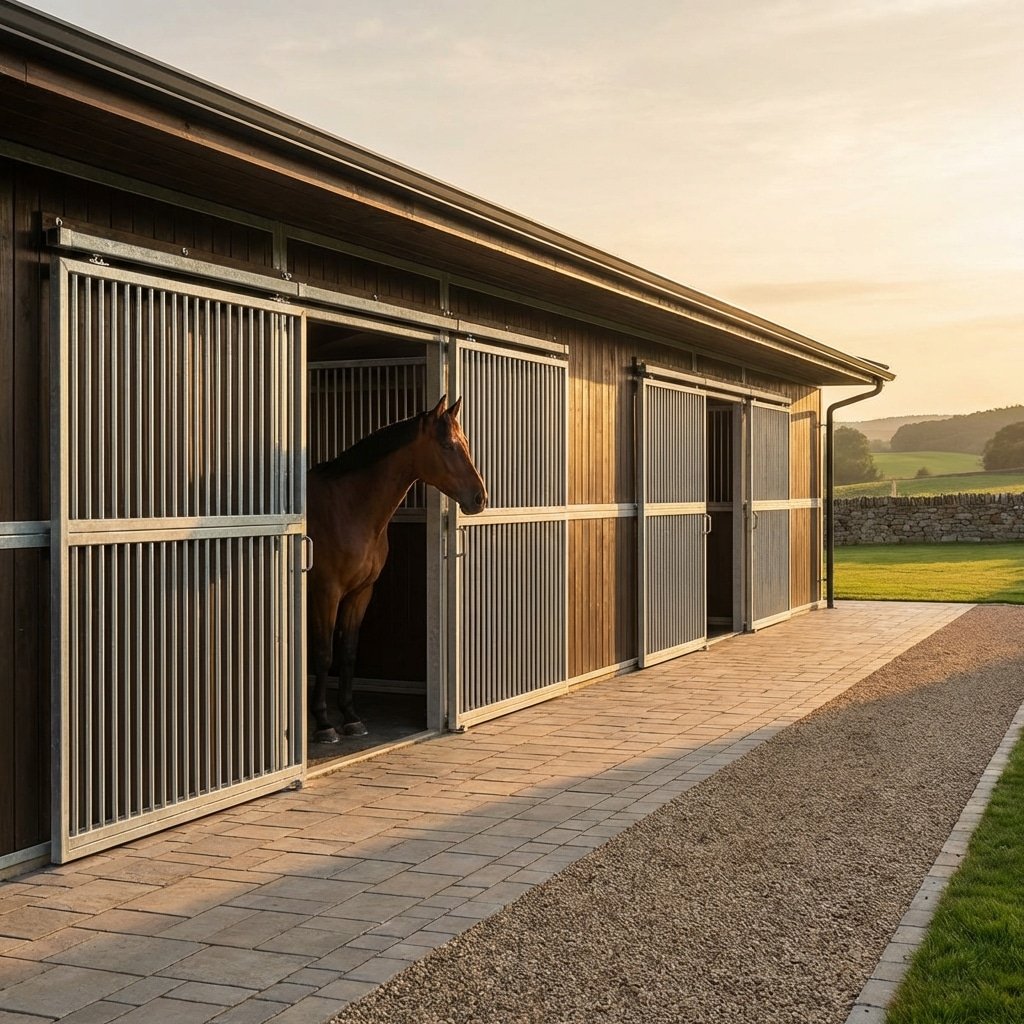
The choice of infill material directly impacts long-term operational costs, especially for large equestrian facilities. While treated pine seems cheap initially, its high water absorption rate makes it a liability in the tropics. It becomes a breeding ground for mold and requires constant maintenance before failing completely.
For distributors and project managers, focusing on total cost of ownership is key. Our UV-stabilized HDPE offers zero maintenance, a critical factor in reducing labor budgets. High-density bamboo provides extreme durability and rot resistance, making it a premium solution that blends aesthetics with performance. Both options eliminate the recurring costs and safety risks tied to rotting wood.
System Design: Materials and Airflow
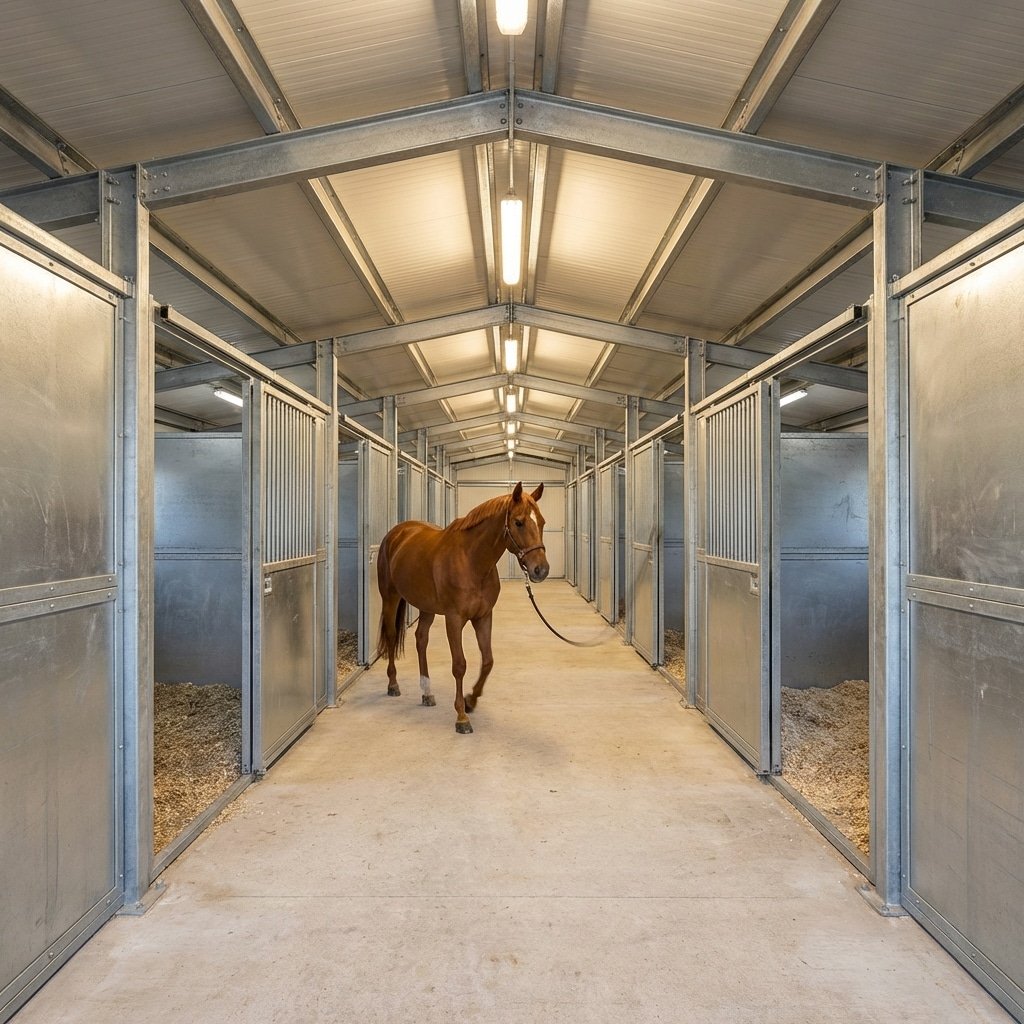
Proper material selection works best as part of a system designed for ventilation. Non-porous materials like HDPE and dense bamboo don’t hold moisture, allowing any surface condensation to evaporate quickly. When combined with open-top grill designs, this creates a “stack effect ventilation” pattern. Hot, moist air rises and exits through the top of the stall front, while cooler, drier air is drawn in from the bottom, constantly working to reduce ambient humidity within the stable.
Globally Compliant Stables Built to Last
Airflow Design to Prevent Tropical Fungal Infections
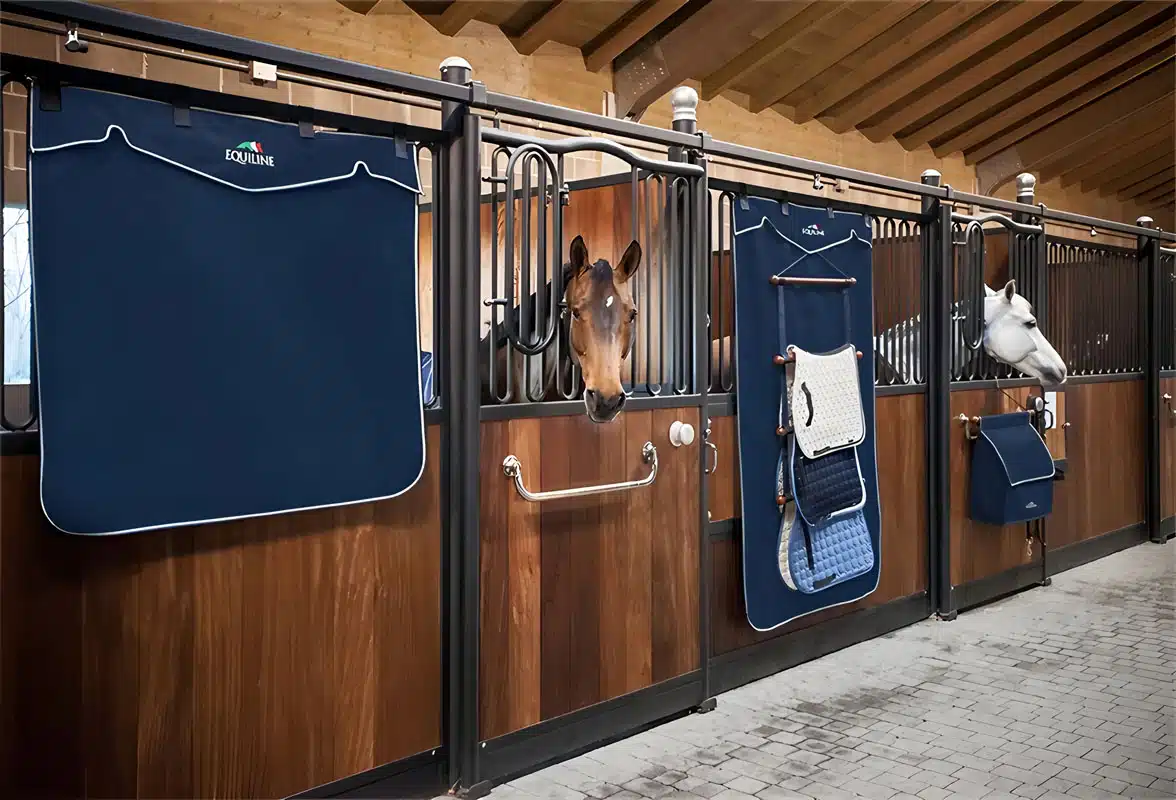
Effective airflow design for tropical stables uses open-grill tops to create vertical air movement (stack effect), preventing the stagnant, humid air pockets where fungi thrive.
How Air Circulation Disrupts Fungal Growth
Fungi flourish in the exact conditions common to tropical stables: stagnant air and high moisture. Without consistent air movement, humidity gets trapped, creating damp surfaces and pockets of saturated air. This is the ideal breeding ground for fungal spores. A well-designed ventilation system actively prevents this by keeping air in motion, which dries surfaces and breaks up the humid pockets before mold and other fungi can take hold.
Achieving Stack Effect Ventilation with Open Grills
Our stable fronts and partitions are built with an open top grill design for a specific reason. This feature promotes a natural process called “Stack Effect Ventilation.” Warm, moist air—from the horse’s breath and body heat—is less dense and naturally rises. The open grills provide an escape path for this humid air at the top of the stall. As it exits, it creates a gentle suction that pulls cooler, drier air in from below, ensuring constant, silent circulation without any mechanical parts.
Frequently Asked Questions
What is the difference between pre-galvanized steel and hot-dip galvanization after fabrication?
Hot-dip galvanization after fabrication involves dipping the entire, fully welded steel panel into molten zinc. This process coats every edge, corner, and weld, creating a complete, seamless barrier against rust that complies with ISO 1461 standards. Stalls made from pre-galvanized tubes have unprotected welds, which are the most common points of failure and rusting.
What steel is best for stables in very cold climates?
For regions with harsh winters, Q345B low-alloy steel is the recommended option. It possesses superior low-temperature impact toughness compared to standard Q235 steel. This property prevents the steel from becoming brittle and fracturing from horse kicks in freezing temperatures, ensuring the structure remains safe and durable.
Does high-density bamboo infill rot in humid conditions?
No, high-density strand-woven bamboo is highly resistant to rot. During manufacturing, it undergoes thermal treatment and extreme compression, which removes the natural sugars that attract mold and creates a dense material that does not absorb water. This process gives it a Durability Class 1 rating, ensuring a lifespan of 25 years or more even in damp environments.
Is HDPE infill completely waterproof?
HDPE is highly water-resistant. Its surface is hydrophobic, causing water to bead and run off, and its water absorption rate is less than 0.01%. This means it will not swell, warp, or degrade when exposed to rain or frequent washing, making it a zero-maintenance material that remains stable in any climate.
How can stall design improve ventilation and reduce mold?
Effective ventilation is key to preventing mold. Stall designs with open-top grills and mesh partitions promote natural airflow, a phenomenon known as the ‘stack effect.’ This allows warm, moist air to rise and escape, drawing in fresh, cooler air from below. This constant air exchange helps keep bedding dry and significantly reduces humidity and the risk of mold growth.
Final Thoughts
While generic stalls offer a lower initial price, they lock you into a costly cycle of rust and rot. Our system—built with Hot-Dip Galvanization after fabrication and zero-maintenance HDPE—is engineered to protect your asset’s value and maximize rental income from day one. This isn’t just a better stable; it’s a more profitable business model.
Don’t guess on quality—verify the engineering for yourself. The next logical step is a small trial order to test our build quality and the efficiency of our flat-pack design. Contact our team to configure a sample set and get a logistics quote that demonstrates the freight savings.

 English
  Spanish
  French
  Arabic
  German
0 Comments