


Airflow audits reveal the direct link between stagnant stall air and chronic respiratory conditions like heaves. A persistent cough or a visible heave line is not just a health issue; it is a clear symptom of poor facility design, frequently caused by solid partitions that trap ammonia and dust.
This audit identifies these ‘dead air zones’ and explains the physics behind effective solutions. We examine how open-grill partitions, engineered to promote ‘Stack Effect Ventilation,’ eliminate these pockets by allowing stale air to rise and exit, a critical function that solid walls prevent.
Recognizing the Signs of Equine Asthma (Heaves)
Key signs of equine asthma include a chronic cough, flared nostrils, and labored breathing. A visible ‘heave line’ may form. Symptoms often worsen inside poorly ventilated stables.
Primary Symptoms: What to Watch For
Identifying equine asthma early comes down to spotting a few consistent signs. These aren’t subtle if you know what to look for, and they often point directly to an underlying respiratory problem.
- A persistent, dry cough that shows up randomly, during feeding, or with light exercise.
- Flared nostrils and a faster breathing rate, even when the horse is resting.
- A visible muscle ridge along the abdomen, known as a ‘heave line,’ which develops from the constant effort of pushing air out.
- A clear drop in performance or an unwillingness to exercise.
How Stable Design Impacts Airborne Triggers
A horse’s environment is the single biggest factor in managing asthma. The stall isn’t just a box; it’s an air quality system that can either help or hurt the horse’s respiratory health.
- Dust and mold are the main triggers, and they build up fast in stalls with poor ventilation. Stagnant, humid air is a breeding ground for these irritants.
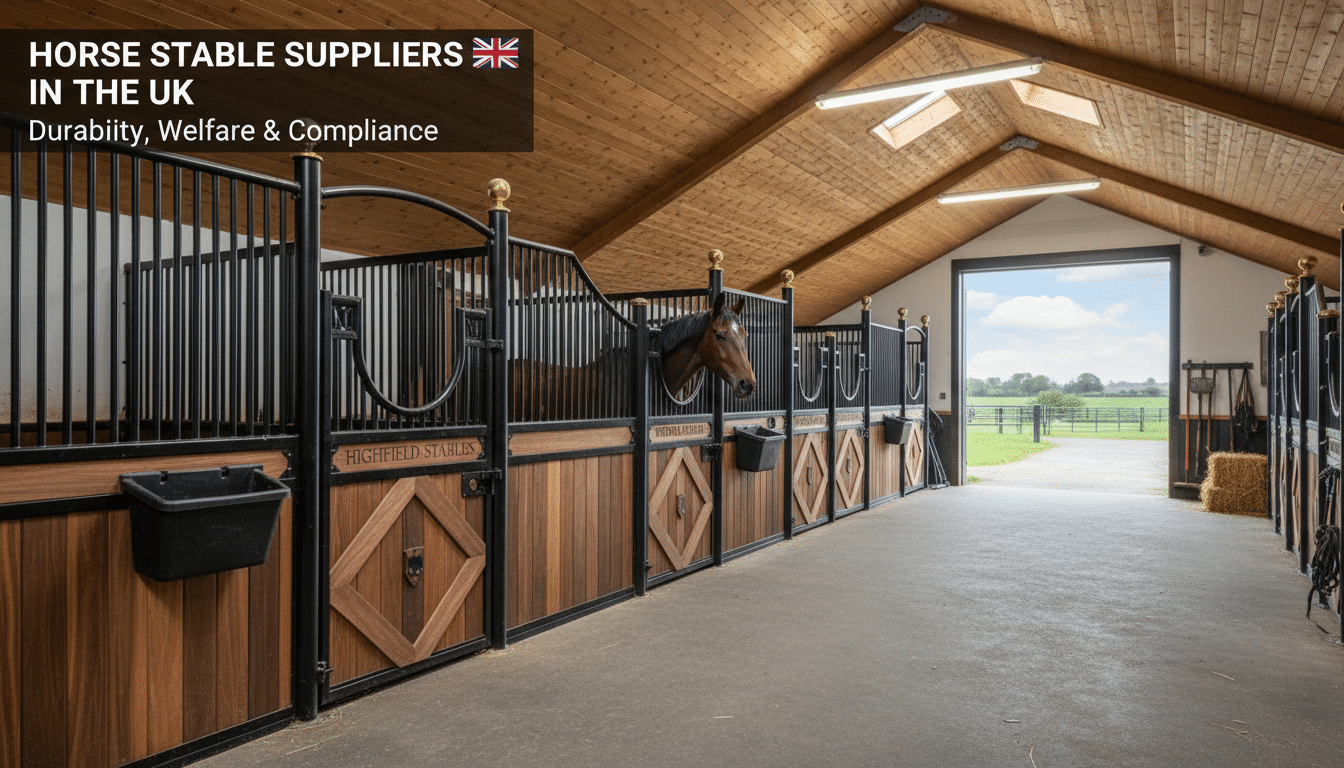
- Open-grill partitions are engineered to create “Stack Effect Ventilation.” This design allows warm, stale air to rise and exit, pulling fresh, clean air in from below. It’s a simple physics-based solution that constantly cycles air without any mechanical parts.
- Infill material matters. Traditional wood is porous; it absorbs moisture and can harbor mold. Non-porous materials like our UV-stabilized HDPE or high-density bamboo are far superior. They don’t absorb moisture, resist mold growth, and are much easier to clean, which cuts down on airborne particles.
The Smoke Test: Identifying Dead Air Zones in a Stall
A smoke pencil reveals stagnant ‘dead air’ zones in a stall. This test confirms poor ventilation, a problem solved by open-grill partitions designed for natural airflow.
Visualizing Stall Airflow with a Smoke Pencil
You don’t need complex equipment to find ventilation problems. A simple tool like a non-toxic smoke pencil or theatrical fogger lets you see how air actually moves ins
ide a stall. Release a small amount of smoke and watch its path. Pay close attention to corners and areas near solid walls. If the smoke just hangs in the air, swirls in place, or takes a long time to clear, you’ve found a ‘dead air zone.’ These pockets of stagnant air are a clear sign of poor air exchange, which is a direct threat to equine respiratory health.
How Open-Grill Designs Create Stack Effect Ventilation
Dead air zones aren’t just a random occurrence; they’re usually a result of poor stall design. Solid partitions block cross-flow and trap stale air. Properly engineered stable fronts and partitions with open-grill tops are designed to counter this by promoting “Stack Effect Ventilation.” This natural process allows warm, moist, and ammonia-laden air from the horse’s breathing to rise and escape through the upper grills. As this stale air exits, it pulls fresher, cooler, oxygen-rich air in from below. This creates constant, gentle air circulation that effectively eliminates the dead zones a smoke test would reveal, ensuring a healthier environment inside the stall.
Durable, Compliant Stables for Global Facilities.
The Culprit: Solid Partitions Blocking Cross-Breezes
Solid partitions act like walls, blocking the cross-breezes needed to flush out stalls. This obstruction traps dust, ammonia, and moisture, creating unhealthy dead air zones where horses breathe.
How Solid Walls Stop Air Circulation
Effective ventilation relies on a simple principle: air moves from high-pressure areas (windward side) to low-pressure areas (leeward side). A solid stall partition is a physical wall dropped right in the middle of this pathway. It completely obstructs the natural movement of air across the barn.
This isn’t just theory. Research shows internal walls can reduce airflow rates by over 11%, creating stagnant pockets of air. The blockage traps airborne dust, ammonia from urine, and moisture directly in the horse’s breathing zone, turning the stall into a containment cell for respiratory irritants.
The Advantage of an Open Grill Design
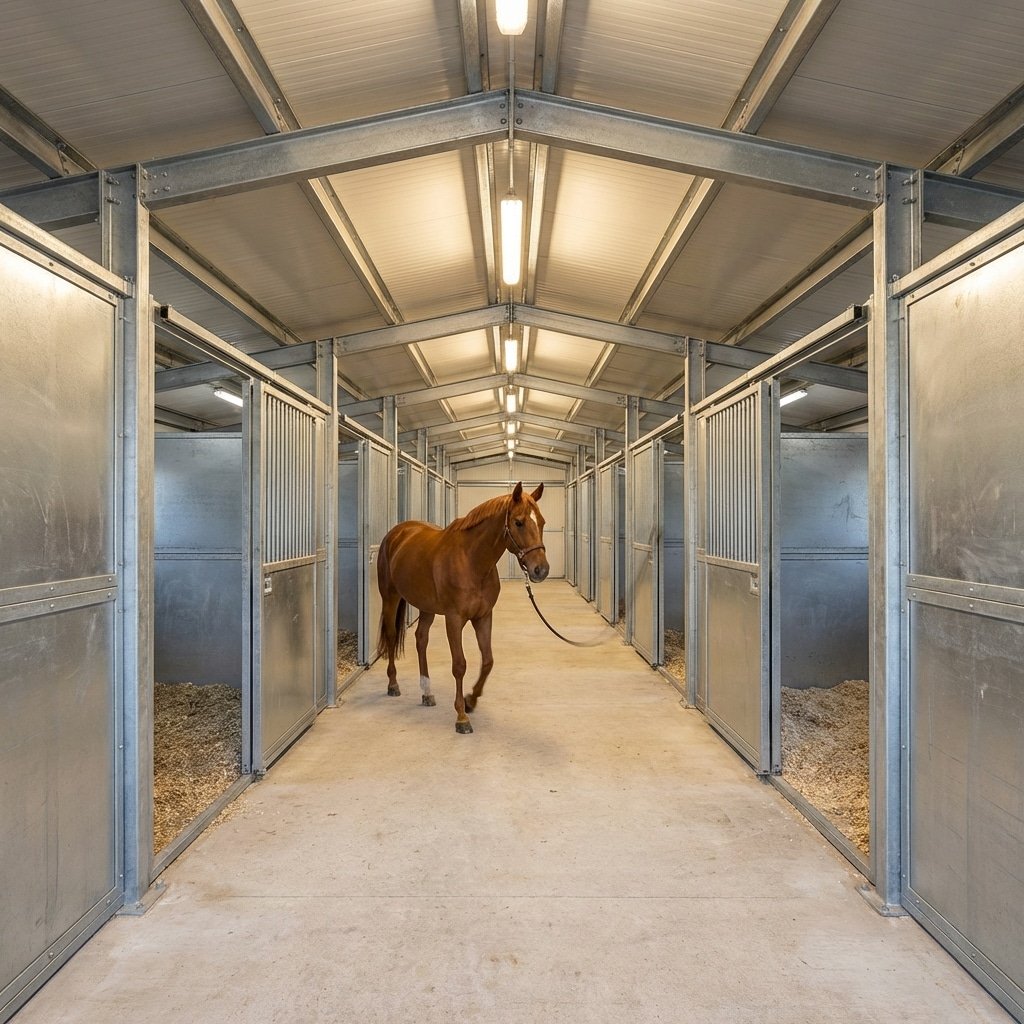
The solution is to allow air to pass through the partition. DB Stable dividers are engineered with an open top grill for this exact reason. This design allows air to move freely between stalls, breaking up the dead air zones created by solid walls and letting the barn’s ventilation system work as intended.
This open structure also promotes “Stack Effect Ventilation.” As warm, stale air from the horse’s breath and body heat rises, it can easily escape through the top grills and exit the barn’s ridge vents. This process pulls cooler, fresh air in at lower levels. It’s a simple and effective way to solve the ventilation problem without compromising the safety or structural integrity of the stall.
The Fix: Retrofitting Half-Mesh Dividers
Retrofitting half-mesh dividers is a practical way to improve ventilation. Replacing solid partitions allows cross-breezes, cutting ammonia buildup and reducing respiratory risks.
Solid stall partitions are a common cause of poor barn ventilation. They create dead air zones, trapping ammonia, dust, and moisture—the main triggers for equine respiratory problems like asthma. The most direct fix is to replace these solid barriers with partitions that allow air to move freely between stalls.
| Design Principle | General Solution (Mesh Dividers) | The DB Stable Engineering Standard |
|---|---|---|
| Cross-Ventilation | Replaces solid walls to allow continuous air exchange and promote the natural “stack effect.” | Features an open top grill engineered from structural steel to maximize air exchange and vertical airflow. |
| Durability & Rust Prevention | Uses permeable screens or mesh panels to define the space without blocking air. | The entire panel is built from Q235B steel, then Hot-Dipped Galvanized after fabrication to BS EN ISO 1461 for complete rust protection. |
| Animal Safety | Maintains a secure and clear boundary for each horse. | Includes a ‘Cast-Proof’ minimal bottom gap design that prevents trapped limbs while still allowing low-level air circulation. |
Balancing Airflow with Stall Separation
The fundamental problem with solid stall walls is that they create dead air zones. They physically block the cross-ventilation needed to clear out stale, ammonia-laden air. Using half-mesh or grilled partitions solves this without sacrificing stall integrity. These dividers maintain a secure, defined boundary for each horse but allow fresh air to circulate continuously throughout the entire barn. This airflow also encourages the “Stack Effect,” where warm, moist air naturally rises and exits through upper vents, pulling in cooler, fresh air from below.
The DB Stable Open Grill Design Standard
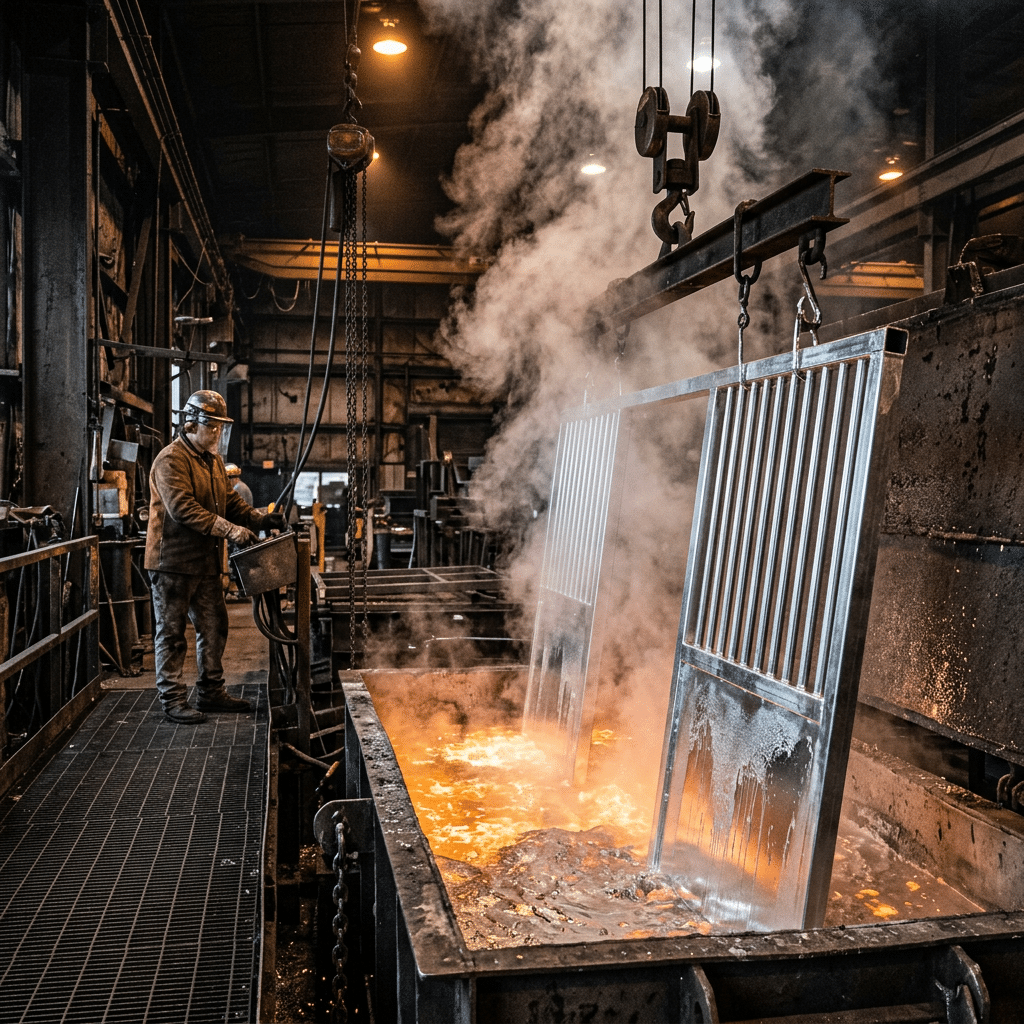
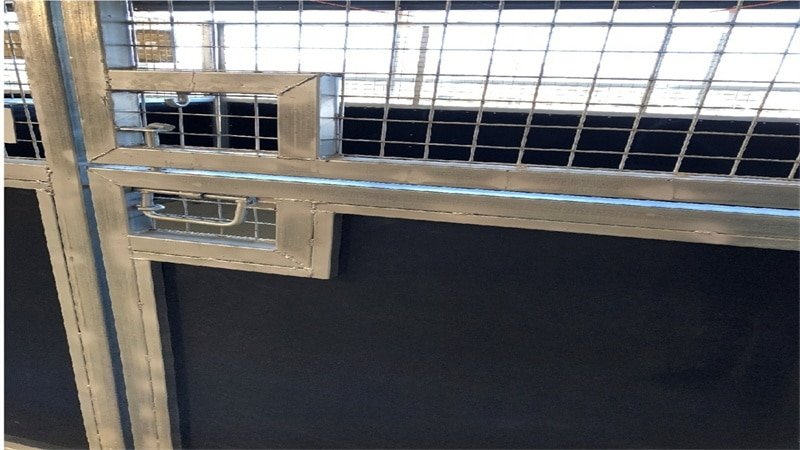
Our engineering focuses on maximizing both airflow and durability. Each partition features an open top grill built from Q235B structural steel, specifically designed for efficient air exchange. To guarantee longevity, the entire welded panel undergoes Hot-Dip Galvanization after fabrication. This process, conforming to the BS EN ISO 1461 standard, coats every surface and weld with a thick layer of zinc for superior rust prevention. The design also incorporates a ‘Cast-Proof’ minimal bottom gap, ensuring horse safety without restricting the critical airflow needed near the floor to dry bedding.
Roof Pitch and the Physics of Exhausting Ammonia
A steep roof pitch enhances the natural upward movement of lighter-than-air ammonia gas, creating a chimney effect that efficiently draws the harmful gas out of the stall.
How the Stack Effect Vents Lighter-Than-Air Gases
Ammonia gas, a byproduct of urine and manure, is less dense than the cooler ambient air in a barn. This simple fact of physics causes it to rise naturally. The upward airflow is known as the “stack effect.”
A well-designed barn leverages this effect. The entire structure, especially a steep-pitched roof, acts like a large, passive chimney. It constantly pulls the stale, ammonia-filled air from the stall level up towards the roof’s peak, where it can be exhausted through vents.
Open Grill Designs: The First Step in Vertical Ventilation
A high-pitched roof is useless if the ammonia can’t get to it. Solid partitions or fully-boarded stall fronts trap the rising gas right in the horse’s breathing zone, completely negating the benefits of the barn’s overall design.
This is why our stable fronts and partitions feature an open top grill design. This isn’t just for looks; it’s an engineered feature essential for what we call “Stack Effect Ventilation.” The grills create an unimpeded pathway for ammonia to rise out of the stall and join the natural upward airflow towards the roof vents.
Frequently Asked Questions
Why is my horse coughing only when inside the stable?
Stable coughing is often a reaction to environmental irritants. Poor ventilation traps dust from hay and bedding, mold spores, and ammonia from urine. These particles can irritate your horse’s airways, leading to conditions like Equine Asthma (Heaves). Infectious causes are also possible, so persistent coughing warrants a veterinary consultation.
Do solid stall walls make respiratory issues worse?
Yes, solid partitions can contribute to respiratory problems by blocking cross-breezes and restricting air circulation. This traps airborne dust, allergens, and ammonia within the stall, creating a stagnant and unhealthy micro-environment for the horse.
How can I improve my barn’s ventilation?
The most effective strategy combines natural and mechanical methods. Ensure you have open ridge vents and eave inlets to allow warm, stale air to escape. Using stall fronts and partitions with open grilles or mesh promotes crucial cross-flow at the horse’s level. In hot climates, fans can supplement this natural airflow.
How do I know if my stable has poor airflow?
Look for visual signs like condensation on surfaces, persistent dust buildup, and a strong smell of ammonia. A simple way to test airflow is with a smoke bomb; in a well-ventilated barn, the smoke should clear within 2-3 minutes through vents and other outlets.
Are mesh or grilled stall partitions better for airflow than solid ones?
Absolutely. Mesh or grilled partitions are designed to be breathable barriers that allow for continuous natural air circulation. This open design helps disperse dust and ammonia, reducing the need for costly mechanical ventilation systems and supporting better respiratory health compared to solid walls which block airflow.
Final Thoughts
Solid partitions are a direct cause of failed health inspections and costly equine asthma diagnoses. While cheaper options exist, they create a clear liability that our engineered Stack Effect Ventilation systems solve. Investing in stalls built to BS EN ISO 1461 galvanizing standards protects both the horses and your business reputation.
Verify the engineering for yourself. A small trial order is the best way to evaluate the structural integrity and airflow benefits of our designs firsthand. Contact our team to review the technical catalog and discuss the correct specifications for your facility or dealership.

 English
  Spanish
  French
  Arabic
  German
0 Comments