


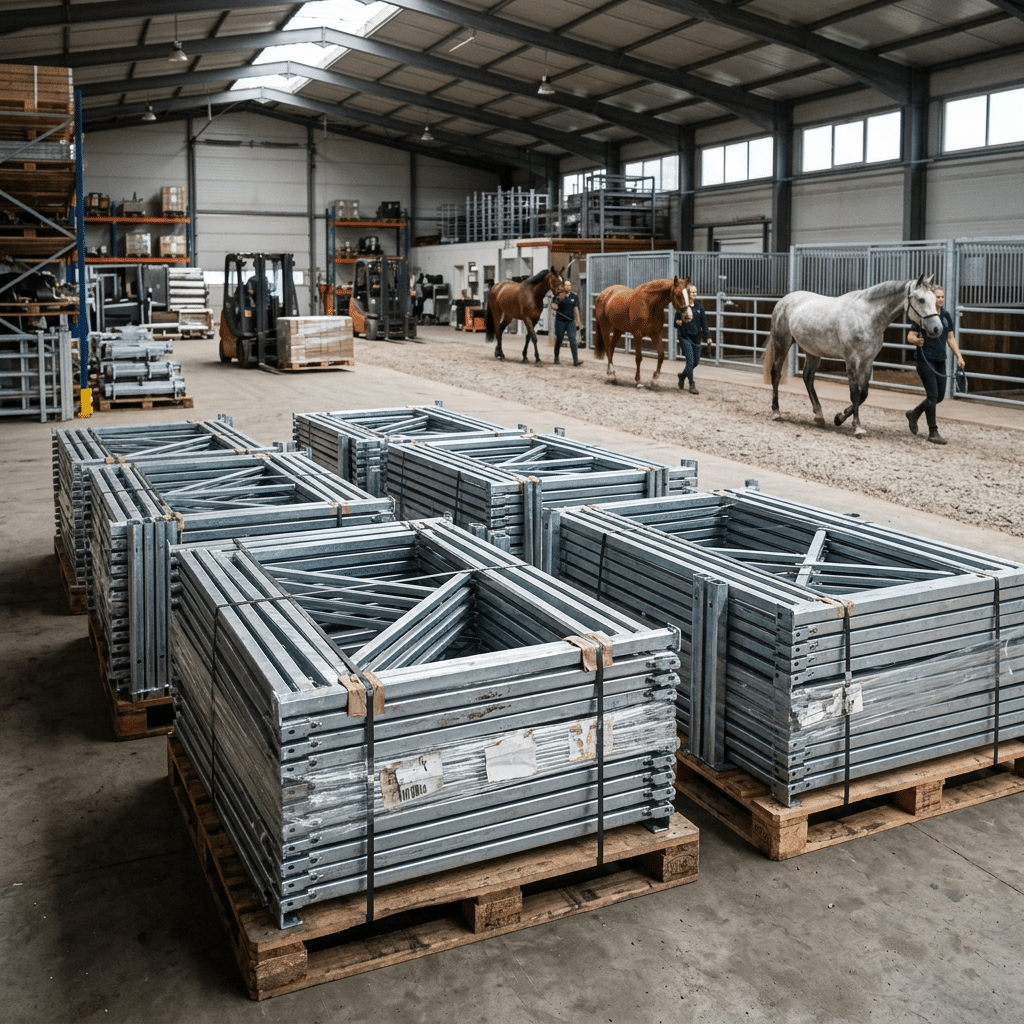
Managing anti-dumping duties remains the primary challenge when importing steel horse stables, where a simple customs error can destroy profitability. A misclassification can subject a shipment to punitive tariffs under Section 232, instantly erasing margins and creating costly delays at the port of entry. Knowing how to dispute fedex customs classification steel structures becomes essential if discrepancies arise, ensuring you avoid unnecessary penalties while securing your shipment.
This analysis explains how to secure the correct HS Code 7308.90. We examine how a verifiable Certificate of Origin and documented processes like Hot-Dip After Fabrication distinguish a finished good from raw materials, protecting your supply chain from these financial risks. Having a valid hot dip galvanized after fabrication certificate template ready ensures customs agents recognize the product status immediately, preventing delays associated with incomplete paperwork.
The Global Steel Tariff Landscape (USA Section 232 & EU Quotas)
In 2026, distributors importing steel goods into the USA face a 50% Section 232 tariff. Correctly classifying products like horse stables under HS Code 7308.90 is key to avoiding higher duties.
Current State of USA Section 232 Tariffs
Distributors importing steel products into the United States must account for significant Section 232 duties. These tariffs are based on the Trade Expansion Act of 1962, which grants authority to regulate imports that threaten national security. The current rate structure is straightforward but steep, though some buyers explore a Section 232 tariff exemption for agricultural steel buildings to mitigate these costs where applicable.
- Global Rate: As of 2026, the United States applies a 50% tariff on most steel imports. This significant cost impact makes Incoterms crucial, so buyers must carefully weigh DDP vs DAP for importing steel stables from China to understand who bears the risk and expense of these duties during transit.
- UK Exception: Imports from the United Kingdom face a lower, but still substantial, rate of 25%. This variance highlights why some buyers start with a horse stable sample import duty free USA process to test logistics before scaling to full shipments subject to these rates.
Using HS Code 7308.90 to Manage Import Costs
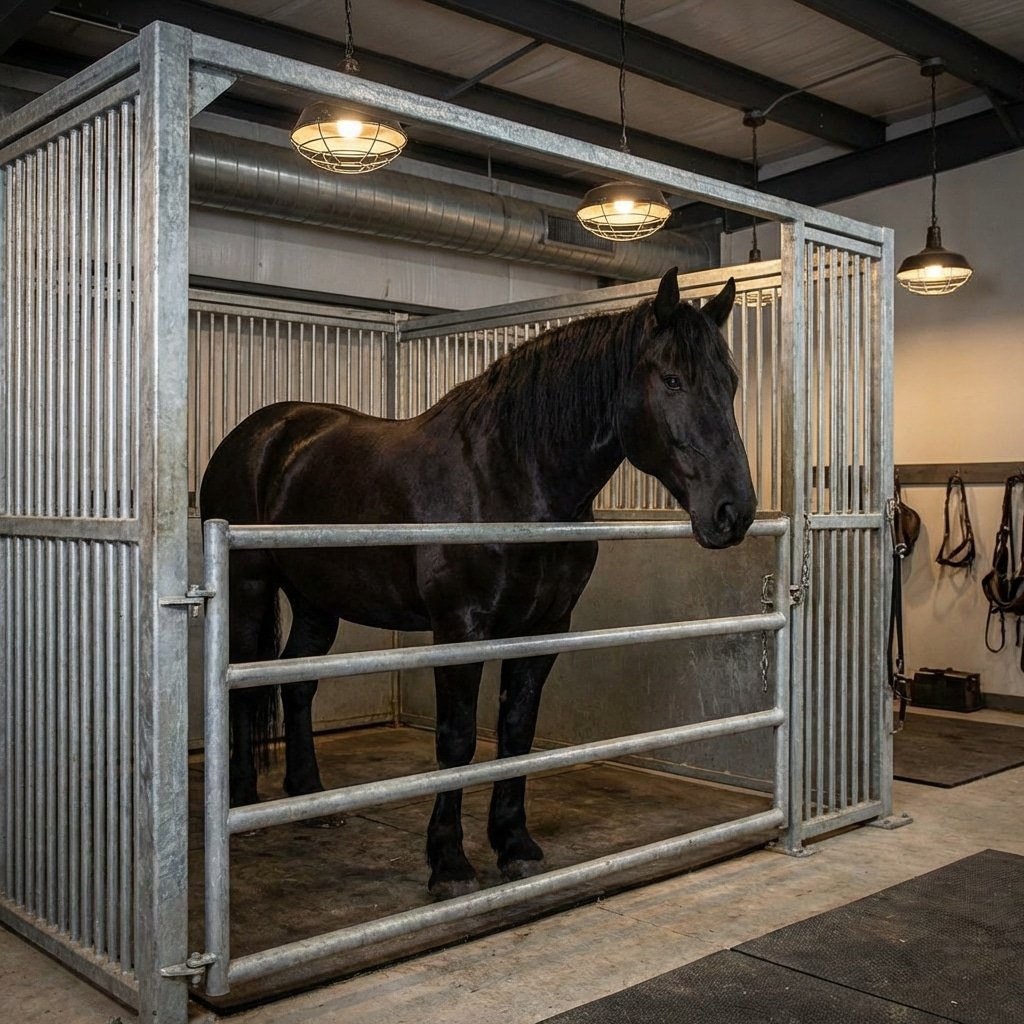
Product classification is one of the few tools importers have to manage these high costs. All DB Stable systems are declared under HS Code 7308.90, which covers Structures of Iron or Steel. Understanding the nuance in HS code 7308.90 vs 9406.90 horse stable tariff classifications ensures you are not overpaying on duties meant for different product categories.
This is not an accident. This specific code prevents customs from misclassifying the stables as Prefabricated Buildings (HS Code 9406). That category often carries higher duties and requires more complex import documentation. Securing a CBP binding ruling for prefabricated steel buildings can provide long-term certainty, ensuring the product is assessed at the correct rate for structural steel components, not as a complete building.
Raw Steel vs. Finished Goods: The Crucial Distinction
Raw steel is an unprocessed commodity often hit by material tariffs. A finished good, like a DB Stable panel, is a manufactured product with a specific HS code (7308.90).
| Attribute | Raw Steel (Commodity) | Finished Good (Manufactured Article) |
|---|---|---|
| State | Unprocessed, intermediary product like pig iron. High in carbon, making it brittle. | Processed, fabricated, and finished. Includes welding, cutting, and coating. |
| Function | Feedstock for making other steel products. Not for direct structural use. | A functional item with a specific purpose, like a horse stall panel or building beam. |
| Customs Identity | Classified as a raw material, often subject to Section 232 commodity tariffs. | Classified as a specific manufactured structure, like HS Code 7308.90. |
| Tariff Risk | High. Directly targeted by broad tariffs on raw materials. | Lower. Subject to duties for its specific product category, not raw material levies. |
Supply Chain Position: From Molten Steel to Usable Product
The distinction for customs is not complicated. Raw steel, often called pig iron, is an intermediate product. It comes out of the furnace with high carbon content, which makes it brittle and useless for any direct structural application. It is simply the feedstock for making real steel products, a classification detail that becomes critical when processing a customs duty refund on returned steel goods USA if errors occur.
Finished goods emerge once raw materials undergo significant processing. Steel is refined and formed into structural tubes or plates, then fabricated for specific applications. For customs officials, this transformation marks the critical shift in classification. Once material becomes a functional item, it is no longer just steel; it is a product. This distinction is central to understanding HS code 7308.90 vs 9406.90 horse stable tariff implications.
How ‘Hot-Dip After Fabrication’ Creates a Finished Good
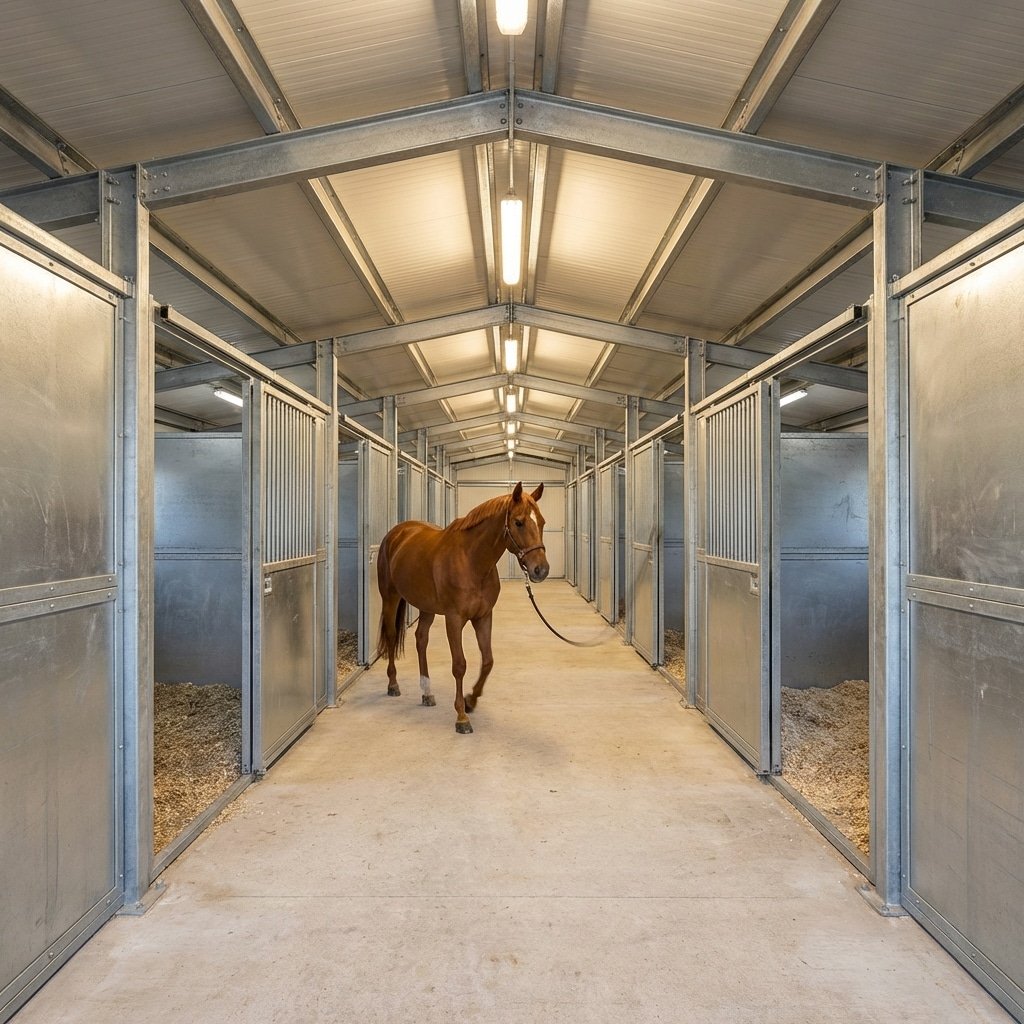
DB Stable panels qualify as finished goods due to the substantial manufacturing process involved. We fabricate the panels by welding Q235B structural steel into its final form. This represents a significant step, yet the process extends further. Documentation such as a hot dip galvanized after fabrication certificate template verifies the completion of these value-added stages.
Following fabrication, the entire welded structure is submerged in molten zinc. This Hot-Dip After Fabrication method conforms to BS EN ISO 1461 and provides a complete protective coating. This is not a simple coating but a value-added finishing process that fundamentally alters the product. The result is a complex manufactured article correctly classified under HS Code 7308.90, potentially qualifying for Section 232 tariff exemption for agricultural steel buildings rather than facing punitive commodity tariffs.
Globally-Compliant Stables Engineered for 20+ Years

Using HS Code 7308.90 to Validate “Manufactured Structures”
HS Code 7308.90 classifies stables as ‘Structures of Iron/Steel,’ not ‘prefabricated buildings.’ This crucial distinction helps distributors avoid high import tariffs and complex building regulations.
The Critical Distinction: Structures vs. Prefabricated Buildings
Customs authorities draw a clear line between manufactured structures and complete buildings. This distinction directly impacts the tariffs and regulations an importer will face, influencing decisions on DDP vs DAP for importing steel stables from China. Getting this classification wrong is an expensive mistake that can destroy profit margins.
The key lies in the classification. One category covers industrial goods, while the other is treated more like real estate. Securing a CBP binding ruling for prefabricated steel buildings can clarify this status before shipment, preventing costly delays at the border.
- HS Code 7308.90 covers structures and parts of structures, including frames, panels, partitions, and beams made from iron or steel. Understanding this definition helps importers know how to dispute fedex customs classification steel structures if discrepancies arise during logistics handling.
- HS Code 9406 applies to complete or nearly complete buildings. This classification often triggers much higher import duties and can involve complex local building code compliance. Misclassification here may lead to returned shipments, complicating processes for customs duty refund on returned steel goods USA.
DB Stable’s Classification Strategy for Tariff Protection
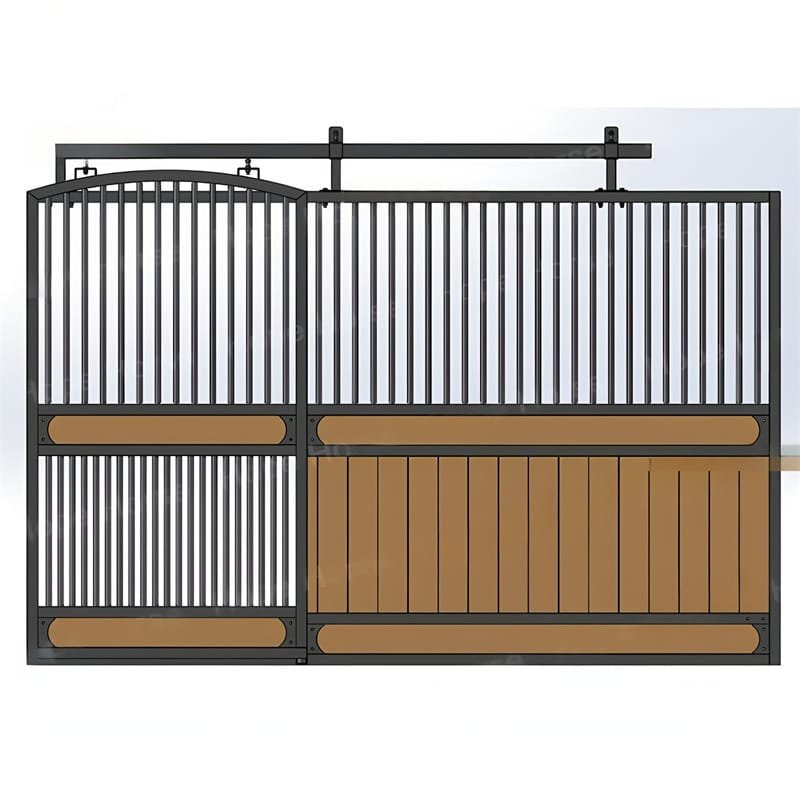
We classify all DB Stable horse stable systems under HS Code 7308.90. This is a deliberate strategy to protect our distributors. By correctly defining our products as Structures of Iron/Steel, we ensure they are processed as manufactured goods, not buildings. This approach avoids the regulatory hurdles often associated with a horse stable sample import duty free USA entry.
This strategy streamlines customs clearance and protects partners from heavy tariffs and regulatory hurdles associated with importing finished structures. By clarifying terms like DDP vs DAP for importing steel stables from China, we ensure a predictable supply chain. We also guide clients on potential benefits such as the Section 232 tariff exemption for agricultural steel buildings, reducing overall landed costs.
Certificate of Origin and Supply Chain Transparency
A Certificate of Origin proves a product’s country of manufacture for customs. Our ISO 9001 and ISO 1461 certifications provide verifiable proof of our production standards, supporting this document.
The Role of the Certificate of Origin (CO) in Imports
A Certificate of Origin serves as an official passport for your products, verifying the country of manufacture for global trade. It is a formal declaration relied upon by customs authorities, of
ten supporting applications for a CBP binding ruling for prefabricated steel buildings to secure classification certainty before shipment.
Customs officials use the CO to apply correct tariff rates, quotas, or anti-dumping duties. Accurate documentation is essential to avoid delays and penalties, serving as critical evidence should you need to navigate processes like how to dispute fedex customs classification steel structures or correct errors before they escalate.
Precision starts with the correct HS Code. Our stable systems utilize 7308.90 (Structures of Iron/Steel) rather than being miscategorized as prefabricated buildings. Understanding the HS code 7308.90 vs 9406.90 horse stable tariff distinction prevents regulatory issues and ensures appropriate duty assessment.
How Factory Certifications Support Verifiable Transparency
Supply chain transparency requires tangible proof beyond verbal claims. For our B2B partners, verifiable factory certifications provide this evidence, which is critical for scenarios such as horse stable sample import duty free USA where documentation undergoes strict scrutiny.
Our ISO 9001 (Quality Management System) certification offers documented evidence of a consistent and traceable manufacturing process. This gives partners confidence that every component is produced to a repeatable standard, reinforcing reliability across large orders.
Compliance with ISO 1461 for Hot-Dip Galvanization validates our rust protection process, a core quality feature of our products. We supply a hot dip galvanized after fabrication certificate template to ensure the zinc coating thickness and durability meet specified requirements.
These certifications substantiate the information on the Certificate of Origin. They provide importers with the official documentation needed for smooth customs clearance and to demonstrate market compliance to their own customers, including support for claims like a customs duty refund on returned steel goods USA.
Fixing Prices with DB’s 30-Day Quote Guarantee
Our 30-day quote guarantee locks in your order price. This protects your project budget and profit margins from sudden increases in steel and global shipping costs.
For any business engaged in international trade, price volatility represents a significant risk. A project that appears profitable one week can become a liability the next. We designed our price guarantee to provide B2B clients with a reliable tool for managing this uncertainty and securing their financial outcomes.
The landed cost of a horse stable system is exposed to several external factors that can shift without warning. Project managers and distributors must account for these moving targets, such as deciding between DDP vs DAP for importing steel stables from China, which creates significant financial risk if not calculated correctly.
- Raw Material Costs: The market price for structural steel, including the Q235 and Q345 grades we use, fluctuates based on global industrial demand and raw ore availability. Compliance documentation, such as a hot dip galvanized after fabrication certificate template, also impacts final valuation and acceptance.
- Ocean Freight Rates: Container shipping fees are famously unpredictable and can spike due to port congestion, fuel costs, or geopolitical events.
- Trade Tariffs: Sudden changes in international trade policy can introduce new duties, instantly altering the final cost of imported goods. Understanding the HS code 7308.90 vs 9406.90 horse stable tariff distinction or securing a CBP binding ruling for prefabricated steel buildings helps mitigate these shocks. Some projects may even qualify for a Section 232 tariff exemption for agricultural steel buildings.
How the 30-Day Price Lock Secures Your Project Budget
Our commercial policy directly addresses these risks. When you receive a formal quote from DB Stable, we guarantee the ex-factory price for a full 30 days. Even if steel prices go up or other costs change on our end, your price remains fixed.
This provides a stable cost basis, which is critical for distributors bidding on large construction or equestrian facility projects. You can build your own pricing with confidence, knowing your direct material costs are secure. It gives you the necessary window to arrange project financing and organize logistics without the threat of unexpected cost increases eating into your margin. We see this as providing genuine profit protection for our partners.
Frequently Asked Questions
Are there tariffs on importing horse stalls in 2026?
While sourcing based on the lowest price is tempting, it exposes your shipment to customs reclassification and punitive tariffs. Proper documentation helps when you need to know how to dispute fedex customs classification steel structures or process a customs duty refund on returned steel goods USA. Additionally, verifying if a horse stable sample import duty free USA option exists can reduce initial testing costs. A supplier who masters compliance isn’t a cost, it’s margin insurance. This is how you protect your landed cost and build a reliable supply chain.
What is the Section 232 steel tariff?
Documentation supports your import strategy, but physical verification confirms value. We recommend starting with a trial order of 3-5 stable sets to inspect our Hot-Dip After Fabrication quality and flat-pack efficiency directly. This step allows you to validate the hot dip galvanized after fabrication certificate template and clarify logistics terms like DDP vs DAP for importing steel stables from China before scaling. Contact our team to secure a 30-day fixed quote and discuss project specifics, including HS code 7308.90 vs 9406.90 horse stable tariff classifications.
What is the correct HS Code for horse stable components?
Navigating Steel Anti-Dumping Tariffs and Section 232 Tariff Exemption for Agricultural Steel Buildings
How can importers manage or avoid anti-dumping duties?
Manage Horse Stable Anti-Dumping Duties using the correct HS Code 7308.90 and ISO 1461 certified Hot-Dip After Fabrication. We assist with CBP binding ruling for prefabricated steel buildings and advise on horse stable sample import duty free USA possibilities. Wholesale inquiries only.
Are import taxes from China to the U.S. higher now?
horse-stable-anti-dumping-duties
Final Thoughts
Horse Stable Anti-Dumping Duties, how to dispute fedex customs classification steel structures, customs duty refund on returned steel goods USA
The documentation is only half the story. We suggest a trial order of 3-5 stable sets to verify our ‘Hot-Dip After Fabrication’ quality and flat-pack efficiency firsthand. Contact our team to get a 30-day fixed quote and discuss your project’s specific requirements.

 English
  Spanish
  French
  Arabic
  German
0 Comments