Luxury club aesthetics are the primary driver of premium boarding rates, yet sourcing based on appearance alone leads to premature finish failure. When a powder coat peels or steel shows rust, it not only forces costly repairs but also undermines the perception of quality that high-net-worth clients pay for.
This analysis focuses on the engineering behind the VIP experience, benchmarking materials against ISO 1461 galvanizing standards. We evaluate how components like dual-protection finishes and high-density bamboo create a durable, high-value environment that justifies a top-tier price point.
The Business of Luxury: Why Aesthetics Drive Boarding Rates
High-end aesthetics create a perception of superior quality and care. This allows facility owners to justify premium boarding rates to clients who value a top-tier environment.
The connection between a stable’s appearance and its boarding fees is direct. A facility’s design and material choices are not just about looks; they are tangible signals about the quality of the operation. When a client sees meticulous attention to detail in the architecture, they assume the same level of care applies to their horse. This perceived value is what unlocks premium pricing.
Feature
Standard Facility (Functional Focus)
Premier Facility (Value Signal)
Client Perception
Safe and adequate.
Uncompromising investment in quality and security.
Surface Finish
Basic hot-dip galvanized steel.
Dual-protection powder coat over galvanized steel.
Architectural Details
Standard rectangular frames.
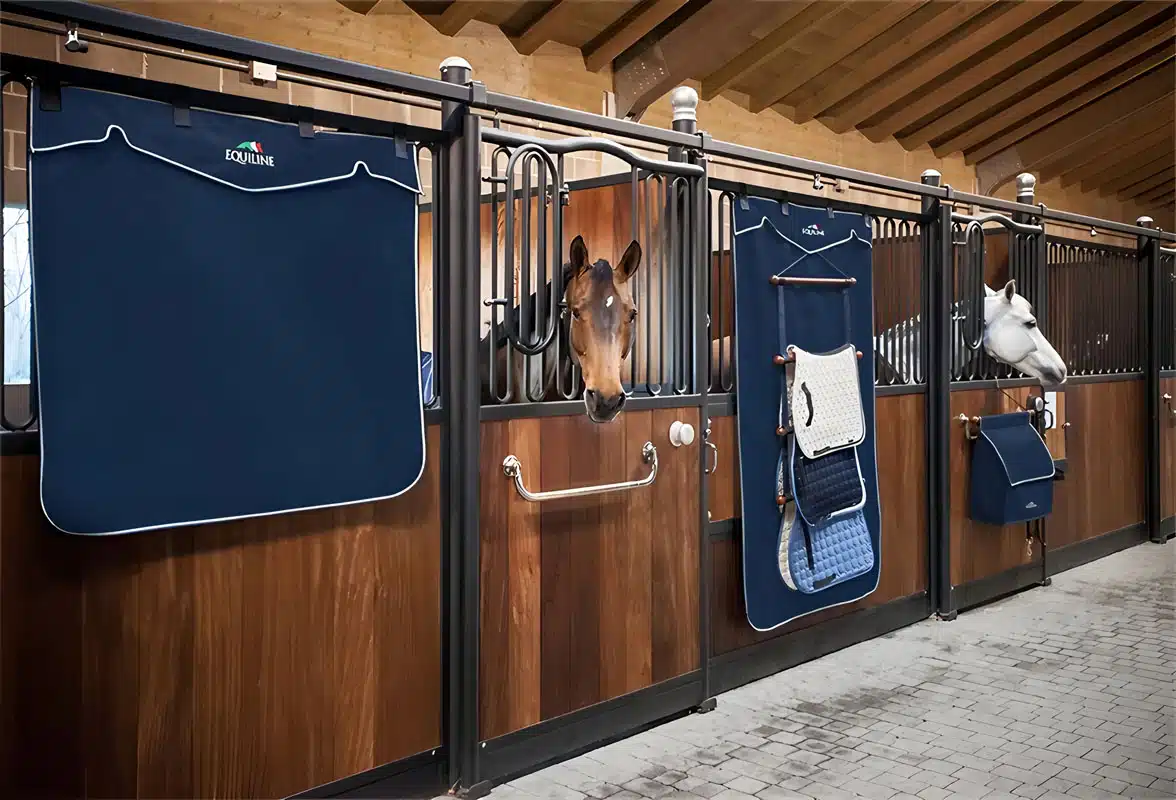
European arches and decorative brass finials.
Business Outcome
Competition based primarily on price.
Commands premium rates and attracts a stable, high-value clientele.
How Visual Appeal Translates to Perceived Value
A visually impressive facility does more than look good—it reassures clients that no expense is spared on their horse’s well-being and security. The quality of the stable fronts, the cleanliness of the aisles, and the refinement of the hardware all contribute to a powerful first impression. This environment signals a professional, well-managed operation that justifies a higher price point.
Elegant, well-maintained stables also attract a specific type of clientele. These are horse owners who value quality and are less sensitive to price. They are looking for the best, not the cheapest. Building a facility that meets these aesthetic standards helps create a more stable and profitable revenue stream by attracting and retaining these top-tier boarders.
Finishes That Define a Premier Facility
Specific material choices are what separate a standard barn from a luxury one. For example, our Royal Series offers a dual-protection **Powder Coat over Galvanized** finish. This process provides the underlying corrosion resistance of galvanization with a sophisticated matte or custom-colored topcoat, delivering both durability and a high-end look.
It’s the architectural details that complete the picture. Elements like solid **Brass Finials** on posts and classic **European Arches** on stall fronts immediately elevate a stable from merely functional to exclusive. These features are a clear investment in aesthetics, telling clients that this is a facility operating at the highest level.
The “European Courtyard” Layout for Maximum Visual Impact
The Philosophy Behind the Courtyard Design
The core idea is to shift the stable complex from a purely functional back-of-house area into the visual and emotional heart of the property. The design centers the entire facility around an intimate, multi-functional courtyard that blends classic architectural charm with the demands of a modern equestrian operation.
It relies on layered design and carefully planned sightlines to build a sense of cohesive elegance. Instead of long, monotonous barn aisles, the courtyard creates visual interest and a feeling of calm. This approach makes the stables a primary aesthetic feature of the estate, not just a place to house horses.
Executing the Look with Royal Series Arches and Finishes
This architectural vision is achievable with specific, high-grade components. Our Royal Series provides the foundational elements for this aesthetic, starting with classic European arches that define the courtyard’s look and feel. These aren’t just decorative; they are engineered structural components.
Authentic detailing is critical. Solid brass or gold-finished finials offer the small, correct touches that signal a premium build. The design is supported by our dual-protection finish: a powder coat applied over a hot-dip galvanized steel frame. This process allows for sophisticated color palettes that align with luxury branding while ensuring lifetime rust protection.
Global Horse Stables Engineered to Last
Our hot-dipped galvanized steel frames offer 20 years of rust-proof durability, engineered to meet international compliance standards. With a monthly capacity of over 500 units, we deliver custom, climate-ready solutions for your facility in just 4-6 weeks.
Powder Coat over HDG: Achieving the Matte Black / Brass Look
Achieving a durable matte black or brass look on steel stables requires a “duplex system”—a specialized powder coat over a hot-dip galvanized base, demanding careful preparation.
The Technical Process for a Flawless Duplex Finish
Applying a powder coat over hot-dip galvanized steel isn’t a simple spray-and-bake job. If the prep work is wrong, the finish will fail by blistering or peeling off in sheets. The adhesion depends entirely on a strict surface preparation protocol that addresses the unique chemistry of the galvanized zinc surface.
The process starts with pre-baking the galvanized steel. This crucial step heats the part to force out any trapped moisture or gases from the zinc layer, a process called outgassing. Skipping this causes pinholes and blisters in the final powder coat.
A light surface profiling is then done to create a mechanical grip for the powder. This is followed by a chemical cleaning and conversion coating.
For the best possible bond, the powder coating must be applied within 12 hours of the initial galvanizing process. Any longer, and the zinc surface begins to passivate, which compromises adhesion.
The Royal Series: Dual Protection with Luxury Accents
This dual-layer protection system is the standard finish for our Royal Series stables. It delivers both lifetime performance and the high-end aesthetics required for private estates and premier stud farms. The base layer is a heavy hot-dip galvanized coating compliant with ISO 1461, which provides fundamental corrosion protection. The powder coat top layer adds the refined matte black or custom color finish.
The final look is completed with solid brass or gold-finished finials, matching the premium finish and creating the distinctive European aesthetic the series is known for.
Strand-Woven Bamboo: The Look of Hardwood, The Strength of Steel
This engineered material compresses bamboo fibers into a board over three times harder than oak, making it highly resistant to kicks, moisture, and rot.
How Compression Creates Superior Density
<
p style=”line-height: 1.8; margin-bottom: 28px;”>The manufacturing process for strand-woven bamboo is straightforward and effective. We take mature Moso bamboo and shred it into fibrous strands. These strands are then fused together under intense heat and pressure, forming an incredibly dense and solid plank. This method creates a material that is significantly harder and more dimensionally stable than any traditional hardwood, which is critical in a demanding stable environment.
DB Stable’s High-Density Bamboo Infill Specifications
Our bamboo infill isn’t a standard off-the-shelf product. It’s engineered specifically for the equine industry to deliver performance where it counts. It provides the classic look of wood without the associated weaknesses.
Janka Hardness: Achieves a rating greater than 3000 lbf. This makes it three times harder than oak and provides exceptional resistance to damage from horse kicks.
Board Thickness: Available in 28mm to 38mm thicknesses to suit the structural requirements of different stable series, from Professional to Royal.
Environmental Resistance: Engineered for high resistance to mold, moisture, and rot, ensuring a long service life and a more hygienic environment for the horses.
Integrating Viewing Galleries with Stable Aisles
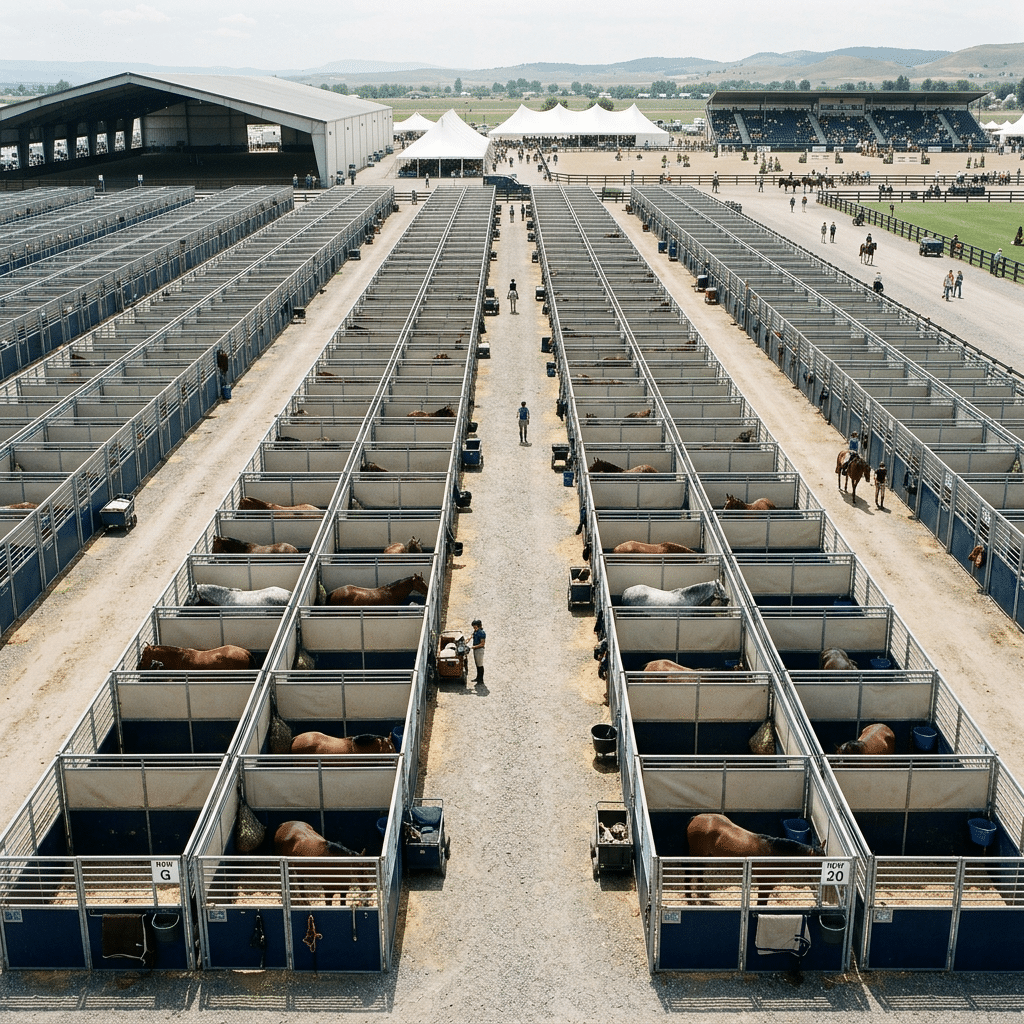
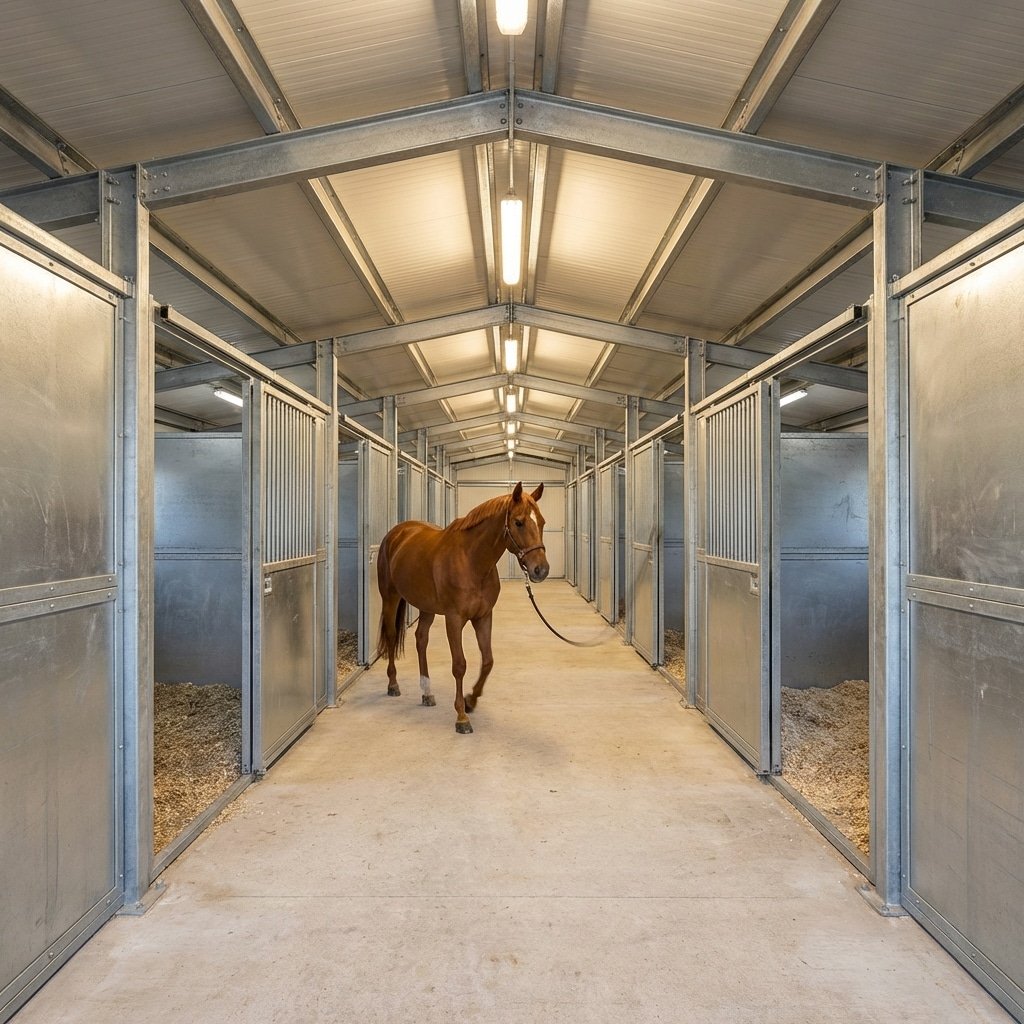
Wide central aisles (12+ feet) paired with open-front stable designs improve light, airflow, and observation. This layout merges operational efficiency with a luxury aesthetic.
Designing Aisles for Maximum Visibility and Airflow
The foundation of a functional viewing gallery is a wide, unobstructed central aisle. A 12-foot width is the minimum standard, providing a clear line of sight for monitoring horse health and behavior from a distance. For busier training centers or commercial facilities, expanding this to 14 or 16 feet allows for safer movement of horses and equipment.
This open layout isn’t just for looks. It’s critical for promoting natural ventilation. The wide corridor encourages what we call ‘Stack Effect Ventilation,’ a process where warmer, stale air rises and exits through roof vents, drawing in fresh, cooler air from below. This constant air exchange dramatically improves air quality and helps reduce respiratory risks for the horses.
Open-Grill Fronts: The Key to an Unobstructed View
A wide aisle is only effective if you can see into the stalls. This is where the stable front design becomes essential. Our stable fronts, especially the Open Top Grill design found in the Economy Series, provide excellent visibility into the stall without compromising the security of the structure.
This design choice accomplishes two goals. First, it ensures horses feel less isolated and can observe their surroundings, which aligns with modern animal welfare standards. Second, it allows handlers, owners, and visitors to interact with the horses and perform visual checks safely from the aisle. It’s a simple engineering choice that enhances both management and the daily experience for the animal.
Frequently Asked Questions
What are the key principles for designing a luxury equestrian center?
A luxury equestrian center balances high-performance function with refined architecture. Key principles include creating an efficient layout with wide center aisles (14-16 feet) and spacious stalls (at least 12×12 feet), maximizing natural light and airflow, and using high-quality, durable materials. The design should ensure a seamless and safe flow between stables, arenas, and paddocks.
What defines a ‘European-style’ horse stall?
European-style stalls are known for their open and social design. They typically feature hinged doors with signature swooping wings on either side, which enhances visibility and ventilation. Constructed from heavy-gauge steel, these stalls allow horses to see their surroundings and socialize while remaining securely contained, making them well-suited for calm, well-mannered horses.
What are the best color schemes for a modern horse barn?
Timeless luxury schemes often use gray siding with white trim, which offers a refined look while effectively masking dirt. Another classic is white siding with black doors for a sharp, upscale contrast. A popular modern trend is black board-and-batten siding paired with bronze-stained doors, creating a bold and contemporary aesthetic.
What services distinguish a high-end horse boarding facility?
Beyond basic care, high-end facilities provide customized feeding programs, state-of-the-art heated barns with climate control, and multiple specialized riding arenas. They also offer equine wellness services such as treadmills, light solariums, and therapy plates. For owners, key amenities include climate-controlled viewing lounges, private tack lockers, and 24/7 facility access.
Final Thoughts
Basic galvanized stalls meet a budget but cannot command premium rates or protect a luxury brand’s reputation. Our dual-protection Powder Coat over Galvanized system is engineered to prevent the rust and finish failure common in lesser products. This investment is the difference between a simple barn and a high-value asset.
Your project’s reputation is built on details you can trust. Verify our engineering and dual-protection finish firsthand with a trial order of 3-5 stables. Contact our team to discuss project-specific requirements or OEM development.
Hey, I’m Frank Zhang, the founder of DB Stable, Family-run business, An expert of Horse Stable specialist. In the past 15 years, we have helped 55 countries and 120+ Clients like ranch, farm to protect their horses. The purpose of this article is to share with the knowledge related to horse stable keep your horse safe.




 English
  Spanish
  French
  Arabic
  German
0 Comments