The Aluminum vs Wood Jumps decision defines your long-term maintenance budget. While wooden jumps have a lower entry price, they introduce recurring costs from rot, warping, and mandatory repainting. This cycle of labor and material expenses directly impacts a show center’s profitability and a private owner’s resources.
We analyze the total cost of ownership by comparing powder-coated aluminum against pressure-treated wood. The comparison focuses on empirical data for weight, weather degradation, and repair costs to provide a clear financial basis for your investment.
The Secret Supply Chain of Equestrian Catalogs
No single “secret” supply chain exists. The real advantage for distributors comes from smart logistics, like flat-pack systems that cut shipping costs and protect profit margins.
Unpacking the Global Manufacturing Hubs
The idea of a hidden source for equestrian goods is a myth. The reality is that dominant production for metalwork, tack, and apparel comes from specialized industrial regions, primarily in Asia. These hubs serve global brands and distributors by offering scale and manufacturing expertise that is difficult to replicate locally.
Key export markets like Europe, Australia, and North America drive demand. Each has specific requirements that a good source factory must meet, from high animal welfare standards in Germany to materials with high UV and salt spray resistance for the Australian climate.
How Flat-Pack Engineering Protects Distributor Profits
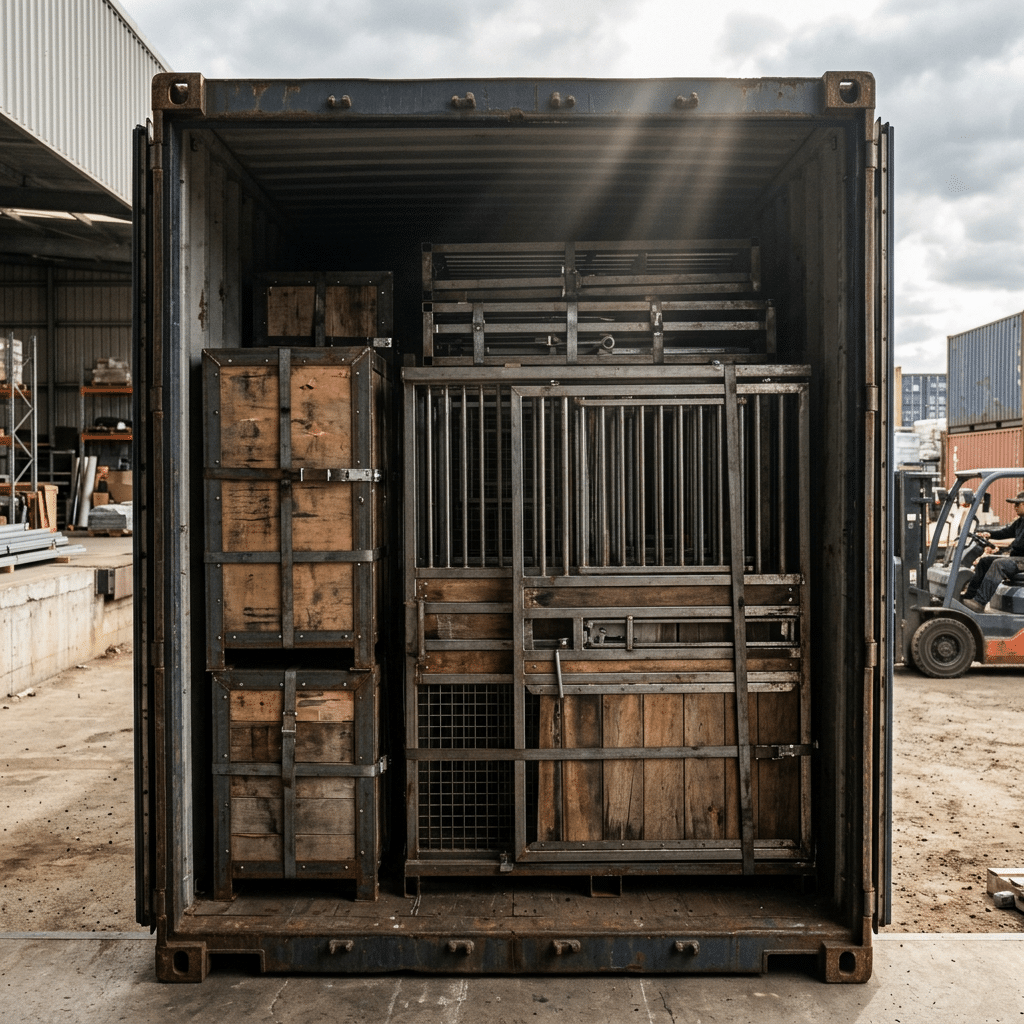
The most significant cost variable in sourcing large equipment like horse stalls isn’t the product—it’s the shipping. Traditionally, fully welded stables are bulky and inefficient to transport, allowing only 12 to 15 sets to fit into a 40-foot container. This kills profit margins before the product even lands.
We designed our steel pallet flat-pack system to solve this problem directly. By engineering our stables for efficient packing, we can fit 30 to 45 sets in the same 40HQ container. This provides direct “Profit Protection” for our B2B clients, saving them over 60% on ocean freight costs and making their business more competitive.
What Makes a Good OEM Partner? (Scalability & QC)
Verifiable Quality Systems and Production Capacity
Any factory can claim to have quality control. A real partner has a quality *system* integrated from raw material intake to final packing. It’s not about a guy with a checklist at the end of the line; it’s about documented processes that ensure the first stable front is identical to the five-hundredth. This prevents defects, reduces warranty claims, and protects your brand’s reputation.
Your source factory must also prove it can scale with your business. They need the infrastructure to handle a small trial order of 3-5 stables for market testing just as efficiently as a full 40HQ distributor container holding 30-45 sets. Without this flexibility, your growth is tied to their production bottlenecks.
ISO 9001 Certification and Flat-Pack Logistics
Formal certifications are your first line of defense. An ISO 9001 (Quality Management) certificate isn’t just a piece of paper; it’s independent verification that the factory has established and maintains a legitimate, repeatable system for producing consistent products. It’s a baseline requirement for any serious long-term partnership.
Logistics engineering is just as critical as product engineering. Shipping fully welded stables is a financial dead end—a 40HQ container might only fit 12-15 sets. Our steel pallet flat-pack system allows us to load 30-45 sets into the same container. This isn’t a minor tweak; it’s a 60%+ freight saving that directly protects your profit margins and makes your pricing competitive in the market.
Global Stables Engineered for 20-Year Durability
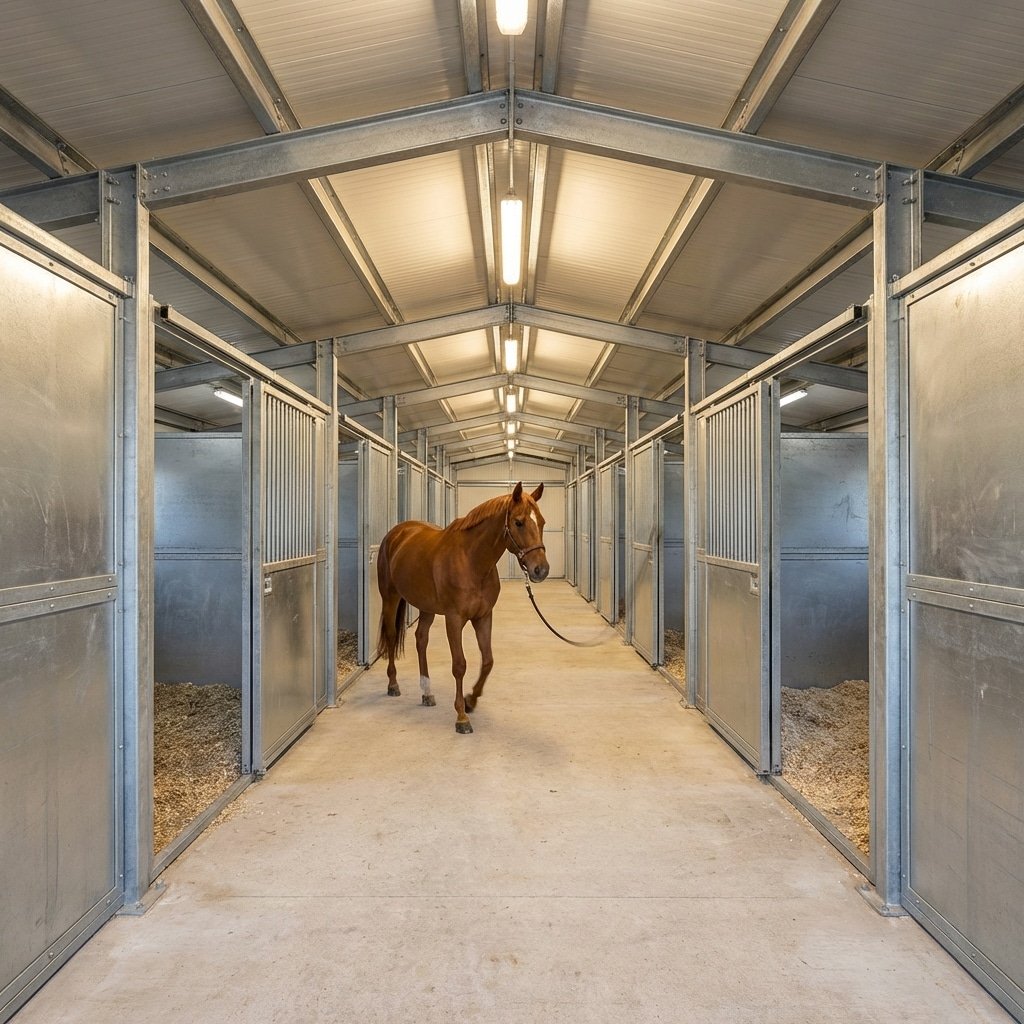
Our precision-engineered stables are built with hot-dipped galvanized steel and heavy-duty infills, guaranteeing decades of rust-proof performance in any climate. With a 500-unit monthly capacity and fast global shipping, we deliver durable, compliant solutions to keep your project on schedule.
Top white-label factories are global, spanning Asia, Europe, and North America. They focus on cosmetics and natural formulations, balancing cost efficiency against regional certifications and market access.
When sourcing a white-label partner, the choice often comes down to geography, specialization, and certifications. The following factories represent a cross-section of what the market offers, from high-volume hubs in Asia to specialized, eco-certified producers in Europe and North America.
Company
Location
Specialization
Key Advantage
Metro Private Label
Guangzhou, China
Serums, skincare formulations
Leverages China’s primary cosmetics manufacturing hub for efficient supply chains.
COSMECO
Italy
Skincare, haircare, natural makeup
Offers premium, trend-driven formulations with key European eco-certifications (COSMOS, ECOCERT).
Made By Nature Labs
Sofia, Bulgaria
Natural personal care products
Provides access to over 400 exclusive, eco-friendly formulations with sustainable packaging.
Vitelle Labs
Vancouver, Canada
Plant-derived cosmetics, spa-grade products
Focuses on natural formulations for the North American spa and eco-conscious markets.
Nutrix
Salt Lake City, USA
Serums, private label skincare
Provides US-based manufacturing with an established reputation for skincare development.
Each manufacturer caters to different business needs. Your choice depends on your brand’s specific goals for market position, price point, and sustainability claims.
Intellectual Property (IP) Protection in China
China’s IP system now has specialized courts, punitive damages, and active anti-counterfeiting campaigns. This creates a more secure environment for patent and trademark holders.
Reformed Legal Frameworks and Specialized Courts
<
p style=”line-height: 1.8; margin-bottom: 28px;”>China modernized its IP system with foundational legal and institutional changes. The goal is to provide more reliable and efficient protection for intellectual property rights holders.
Core IP laws, including the Trademark and Patent Laws, were amended to establish a high-standard punitive damages system against infringers.
The creation of specialized IP courts and a dedicated Supreme Court IP tribunal helps streamline appeals and improves the efficiency of enforcement.
Protections for trade secrets under the Anti-Unfair Competition Law were strengthened, raising the statutory damages for infringement.
Active Enforcement and Anti-Counterfeiting Actions
Beyond legal reforms, China actively enforces IP rights through targeted campaigns and regulatory actions that address both physical and digital markets.
The ‘Iron Fist’ campaign directly combats trademark infringement, malicious registrations, and the sale of counterfeit goods.
The China National Intellectual Property Administration (CNIPA) implemented new regulations to resolve procedural delays in trademark review cases.
Enforcement now extends to emerging digital technologies, including protections for artificial intelligence and data property rights.
The DB Advantage: Your Brand, Our Engineering
We operate as your dedicated source factory for horse stables. Our flat-pack engineering cuts shipping costs by over 60%, protecting your margins while you build your brand.
Building Your Reputation with Our OEM/ODM Expertise
We function strictly as a B2B OEM/ODM source factory. This means we don’t compete with you; we manufacture for distributors and large-scale projects, allowing you to sell expertly engineered stables under your own brand. You focus on sales and building your reputation, and we handle the production complexities.
Our engineering is designed to meet specific market demands, from high UV resistance needed for the Australian climate to frost resistance required for European animal welfare standards. Factory certifications like ISO 9001 provide a verifiable quality guarantee you can pass directly to your customers, giving your brand a solid foundation of trust.
Engineering for Logistics: The Flat-Pack Advantage
Shipping fully-welded stables is expensive and inefficient. It eats into your profit margin before the product even reaches your warehouse. We solved this problem by designing a robust flat-pack system that directly protects your bottom line.
Our system allows you to fit 30-45 stable sets into a single 40HQ container. That’s more than double the 12-15 sets you could fit with traditional designs. This efficiency translates into what we call ‘Profit Protection’—a direct savings of over 60% on freight costs. All components are shipped on secure steel pallets, which ensures unloading is safe, organized, and straightforward at the destination.
Frequently Asked Questions
What is involved in starting a new equestrian equipment brand?
It starts with defining your niche—professional riders have different needs than recreational ones. From there, you develop a brand identity and create detailed tech packs for your designs. The critical step is partnering with a specialized OEM manufacturer who understands the technical requirements. It’s smart to start with a focused line of 2-3 core products to build a reputation for quality before you expand your catalog.
Do you offer white label or private label manufacturing?
Yes. We operate as an OEM/ODM source factory. We specialize in engineering and producing horse stable systems that distributors can sell under their own brand name. This model lets you leverage our production expertise and quality control, so you can focus on building your brand, marketing, and sales in your local market without investing in factory infrastructure.
What is a typical Minimum Order Quantity (MOQ) for horse stables?
Our MOQ is structured to support different business scales. We can arrange a trial order of 3-5 stable sets for initial evaluation. For larger projects, a 20GP container holding about 10-15 sets is a common starting point. Established distributors get the most value from a 40HQ container, which fits 30-45 sets and maximizes freight savings.
How can I protect my custom stable designs from being copied?
You can use a design patent to protect the unique visual appearance of your stable designs. This form of intellectual property covers the ornamental look of a product, not its function. For it to qualify, your design has to be new and not purely functional. It’s a cost-effective way to prevent competitors from copying your aesthetic, with protection lasting up to 15 years in many countries.
What is the difference between pre-galvanized steel and hot-dip galvanization after fabrication?
Pre-galvanized steel involves welding tubes that are already coated. The intense heat of welding burns off the protective zinc at every joint, leaving those points vulnerable to rust. We use ‘Hot-Dip Galvanization After Fabrication.’ This means we fabricate the entire steel panel from raw black steel first and then submerge the completed structure in molten zinc. This process coats every single surface, including all the welds, ensuring complete rust protection that meets ISO 1461 standards.
Final Thoughts
While pre-galvanized stables offer a lower upfront cost, that saving is quickly lost to rust claims and warranty replacements. Hot-Dip Galvanization After Fabrication is the only process that guarantees complete protection, especially at the welds. This isn’t just about longevity—it’s about protecting your profit margin and your reputation as a quality supplier.
Don’t take our word for it—verify the engineering yourself. A trial order of 3-5 stables is the most direct way to confirm our fitment, finish, and the logistical advantage of our flat-pack system. Contact our team to get a project quote and discuss your OEM/ODM specifications.
Hey, I’m Frank Zhang, the founder of DB Stable, Family-run business, An expert of Horse Stable specialist. In the past 15 years, we have helped 55 countries and 120+ Clients like ranch, farm to protect their horses. The purpose of this article is to share with the knowledge related to horse stable keep your horse safe.




 English
  Spanish
  French
  Arabic
  German
0 Comments