


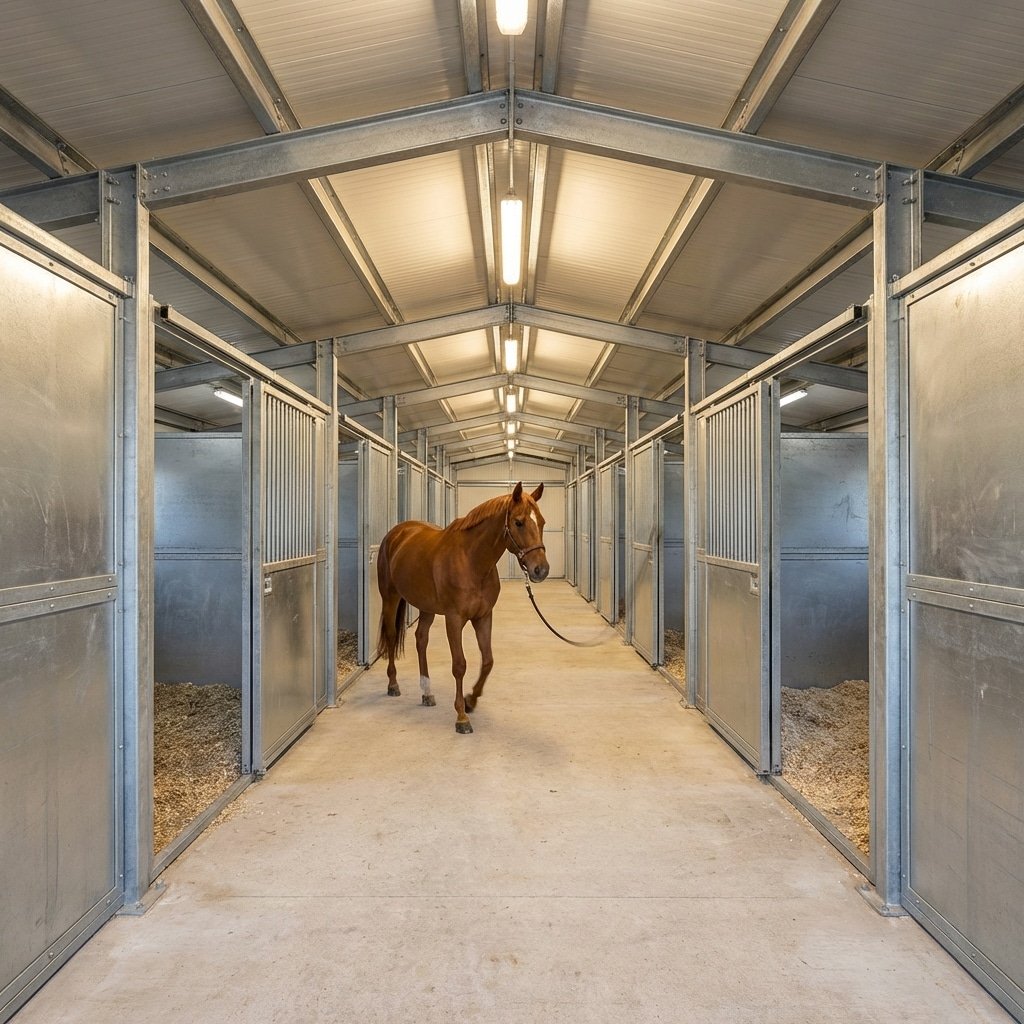
Stalls for aggressive horses must eliminate the risk of structural failure. Standard-issue hardware often leads to bent steel and splintered wood, creating a cycle of expensive replacement orders and significant safety liability for facility operators and distributors.
This technical breakdown examines the material science of high-impact environments. We analyze the performance of Q345B high-strength steel and impact-absorbing HDPE infill, providing clear metrics for hardware that prevents both horse injury and costly structural damage.
Identifying the Trigger: Food Aggression vs. Boredom
Food aggression is a survival instinct to protect a resource. Boredom-related actions stem from a lack of stimulation. Knowing the difference is the first step to managing stall-damaging behavior.
Resource Guarding vs. Frustration-Based Actions
Food aggression is a raw survival instinct. A horse pins its ears, lunges, or threatens to kick to defend its feed from what it sees as a threat—be it a human or another horse. It’s not about anger; it’s about protecting a valuable resource, a behavior hardwired from times when food was scarce.
Frustration-based actions look different. Pawing, kicking the stall door, or tossing their head are often responses to unmet needs. The horse is bored, anxious about a delayed feeding schedule, or lacks mental stimulation. This isn’t resource guarding; it’s a reaction to the stable environment itself.

How Stall Design Can Reduce Feeding Time Stress
The right hardware can de-escalate these situations before they start. Swivel feeders, a standard feature in our Professional Series, allow handlers to provide grain from outside the stall. This simple design change removes the human presence from the horse’s personal space during feeding, eliminating a major source of conflict and stress for a food-aggressive horse.
For the bored horse, stall design is just as critical. Open-top grill designs provide essential visual stimulation and social contact with other horses. They also promote what we call “Stack Effect Ventilation,” improving air quality. A less isolated, more comfortable horse is far less likely to develop chronic stress and the destructive habits that come with it.
The Structural Test: Can Your Stall Take a 1200 PSI Kick?
A horse’s kick can shatter standard steel. We use Q345B high-strength steel and a minimum 14-gauge wall to absorb impact and prevent brittle failure, even in cold climates.
The Physics of a Full-Force Kick
A powerful kick from a horse isn’t a blunt push; it’s a high-velocity impact that concentrates massive energy into a very small area. This puts extreme stress on steel tubing and, more critically, on the weld points connecting the frame. Lower-grade steel might just dent, but the real risk is brittle fracture. In cold weather, standard steel loses its ductility and can shatter like glass upon impact, creating sharp, dangerous edges.
Engineering with Q345B High-Strength Steel
To handle this force, we build our stall frames with Q345B low-alloy, high-strength steel. This material is chosen for its superior impact toughness, which allows it to absorb and dissipate energy without fracturing. It’s specifically engineered to remain resilient in low temperatures. We pair this with a strict minimum 14-gauge (2.0mm) wall thickness for all framework. Anything thinner simply lacks the structural mass to safely manage the kinetic energy of a direct kick.
Get Custom Stables Built for Any Climate
Why Bamboo Can Be Too Hard (Joint Concussion)
High-density bamboo is durable but its extreme hardness (>3000 lbf Janka) creates an unyielding surface. Kicking this rigid wall repeatedly can transmit shock back into a horse’s joints.
Understanding Repetitive Stress on Joints
When a horse kicks a completely rigid wall, the force of that impact has nowhere to go but back into the leg. This reflected shock, repeated over time, can contribute to micro-trauma in the joints, potentially leading to inflammation or long-term concussion-related soundness issues.
The Advantage of Impact-Absorbing HDPE Infill
This is why DB Stable offers HDPE infill specifically engineered for its impact-absorbing properties. Unlike ultra-hard bamboo, our 28mm-32mm HDPE planks flex slightly on impact. This action dissipates the kick’s energy instead of reflecting it, protecting the horse’s joints from excessive shock.
The HDPE Advantage: Impact Absorption and Flex
HDPE flexes on impact, absorbing kick force without shattering. This resilience protects both horse and stall, creating a durable, zero-maintenance solution for high-stress environments.
When dealing with powerful or aggressive horses, stall material isn’t just a detail—it’s a critical safety and operational component. Traditional materials like wood splinter and break, while brittle plastics can shatter into dangerous shards. High-Density Polyethylene (HDPE) is engineered to solve this problem by flexing under load, turning
a potentially destructive impact into harmless, temporary deformation.
| Feature | HDPE | Wood |
|---|---|---|
| Impact Response | Flexes and absorbs force | Cracks, splinters, or breaks |
| Safety Outcome | Lowers injury risk to horse and handler | Creates dangerous splinters and sharp edges |
| Maintenance Demand | Zero maintenance required | Requires frequent sealing, repair, and replacement |
How HDPE Flexes to Dissipate Kick Energy
The physics behind HDPE’s performance is straightforward. Instead of rigidly resisting force, its molecular structure allows it to give way temporarily. A powerful kick that would snap a wooden plank merely causes an HDPE board to bow, absorbing the kinetic energy. Once the force is gone, the material returns to its original shape with no structural damage. This property drastically reduces the rebound force, which protects the horse’s joints from the concussive trauma of kicking a hard, unforgiving surface.
- Flexes upon impact rather than breaking or cracking like wood.
- Absorbs kinetic energy by converting it into safe, temporary deformation.
- Reduces rebound force and trauma to the horse’s joints compared to rigid surfaces.
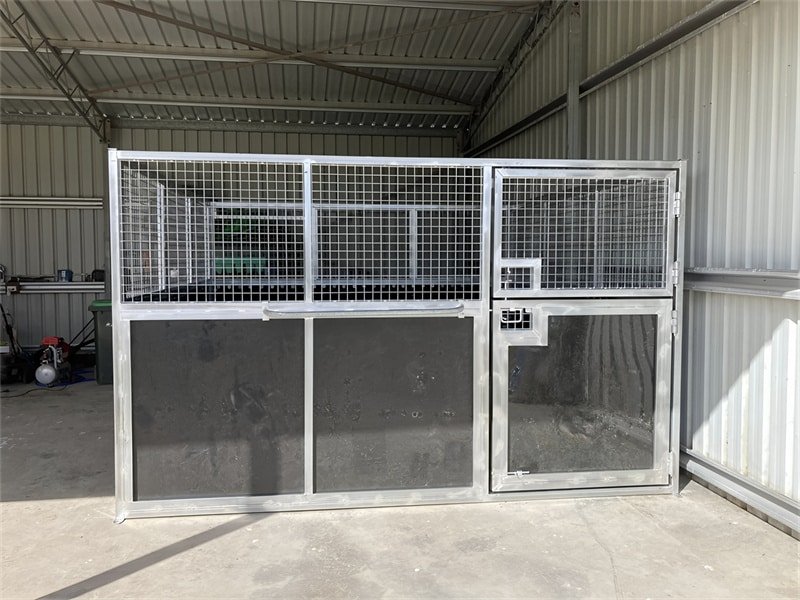
DB Stable’s 28mm UV-Stabilized ‘Kick-Proof’ Planks
We use this material science to our clients’ advantage. DB Stable’s infill planks are not just generic plastic; they are specifically engineered for equestrian environments. The thickness and material composition are key. By using heavy-duty planks and ensuring they are properly stabilized, the material avoids becoming brittle over time—a common failure point for cheaper plastics exposed to sunlight and extreme temperatures.
- Thickness: Utilizes 28mm-32mm thick HDPE planks for maximum impact absorption.
- Durability: Features UV stabilization, ensuring long-term resilience without becoming brittle in harsh climates like Australia or freezing European winters.
- Longevity: Engineered to be a true zero-maintenance infill option, as it is completely impervious to moisture, rot, and pests.
Heavy-Duty Anchoring Systems (304 Stainless)
304 stainless steel expansion bolts create a strong, vibration-resistant hold in concrete. This material offers reliable corrosion resistance in barn environments, ensuring long-term structural integrity.
How Expansion Anchors Create a Secure Hold
Expansion anchors are mechanical fasteners designed specifically to secure structures to concrete. When you tighten the bolt, it expands the anchor’s base within the concrete, creating a powerful friction grip. This des
ign provides a secure, vibration-resistant connection that is essential for withstanding the kicks and impacts common in any stable environment.
The Included 304 Stainless Steel Hardware Kit
Every stable system includes a complete hardware kit with all anchor bolts, connectors, and screws made from 304 stainless steel. This material offers dependable corrosion resistance in standard outdoor and moist barn settings, effectively preventing rust. Using stainless steel for every component ensures the long-term structural integrity and safety of the entire installation.
Frequently Asked Questions
What are the best materials for a stall for a horse that kicks?
The best solution combines a strong frame with impact-absorbing infill. The frame should be a heavy-duty, hot-dip galvanized steel like Q235B or Q345B. The critical part is the infill. High-density materials like 28mm HDPE or 38mm strand-woven bamboo absorb the force of kicks, protecting the horse’s joints and preventing damage to the stall itself. Lining the walls with rubber mats adds another layer of safety.
How can I stop my horse from kicking the stable door?
First, figure out why it’s happening—it could be boredom, anxiety, or just trying to get your attention. Protect the door and the horse with impact-absorbing materials like HDPE. After that, work on the behavior. Ignore attention-seeking kicks. Give a playful horse more exercise and turnout. For an anxious horse, try to remove whatever is causing the stress. A calm environment is your best tool.
Are rubber kick pads a complete solution?
No. Rubber pads are an excellent safety feature for preventing injury, but they don’t solve the behavior. They absorb impact and protect a horse’s hocks from damage. Think of them as a bandage, not a cure. They work best when combined with a durable stall built from kick-resistant materials, but they won’t stop the horse from kicking in the first place.
Can a horse actually injure itself by kicking the stall?
Yes, and the injuries can be severe. A puncture wound over a joint is the biggest risk; if it gets infected, it can lead to permanent lameness. Kicking hard surfaces like concrete or wood can also cause hock sores, deep bruising, and long-term damage to joints and nerves. It’s not a behavior to ignore.
How strong is the 14-gauge steel used in stable construction?
14-gauge (2.0mm) steel is very strong, but the grade matters. Standard Q235B steel has a yield strength around 36,000 psi. For colder climates or particularly aggressive horses, we use Q345B high-strength steel, which has a yield strength over 50,000 psi. In a properly engineered frame, this is more than enough to handle repeated kicks without failing.
Final Thoughts
Choosing stalls on price alone transfers the risk of failure directly to your client. Our specification—Q345B steel and impact-absorbing HDPE—is engineered to eliminate the long-term costs of broken boards, vet bills, and reputation damage. This isn’t just a stall; it’s a zero-maintenance asset that protects both the horse and your business.
The next step is to validate these engineering claims yourself. Request our full technical catalog or discuss a trial order for your market. Our team is ready to specify a system that meets your distributor requirements.

 English
  Spanish
  French
  Arabic
  German
0 Comments