


To effectively stop wood chewing, you must engineer the problem out of the stall itself. Relying on temporary fixes like sprays or softwoods leads directly to property damage and the risk of colic from ingested splinters. For stable builders and distributors, this represents a significant liability and a source of client complaints.
This analysis contrasts temporary fixes with permanent material solutions. We benchmark standard wood against chew-resistant materials like UV-stabilized HDPE and high-density bamboo, which has a Janka hardness over 3000 lbf. The goal is to specify a stall that eliminates the risk of splinter-related vet bills by design.
Why Horses Chew: Boredom, Ulcers, and Habit
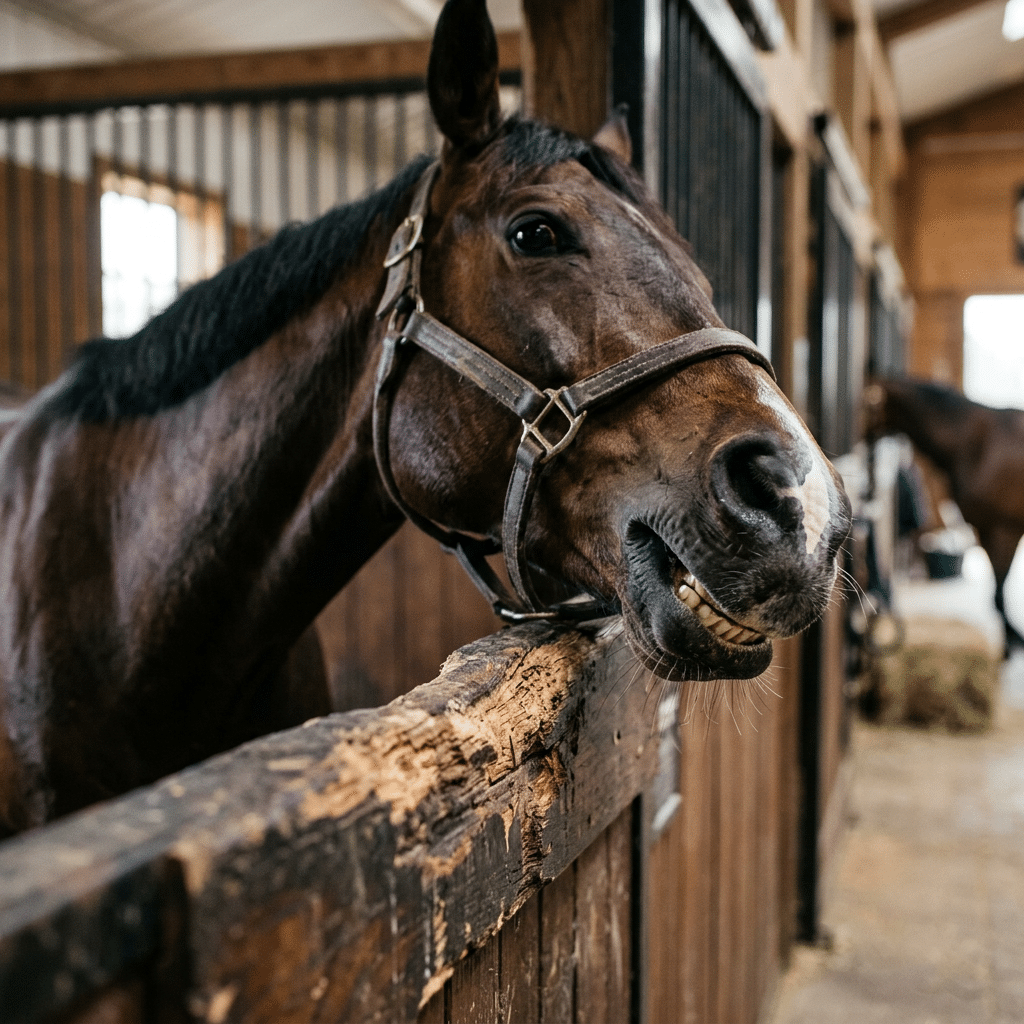
Horses chew due to boredom, ulcers, or stress. This habit can lead to colic from wood splinters, making the choice of stable infill material a critical safety decision.
The Link Between Confinement, Stress, and Ulcers
A horse suffering from gastric ulcers will often chew wood to generate more saliva. The saliva acts as a natural buffer, providing temporary relief from painful stomach acid. This behavior is especially common in stalled horses on high-grain diets who lack constant access to forage, which is the primary driver of saliva production.
Boredom is another major trigger. Horses confined to stalls for long stretches with little exercise or social interaction look for ways to occupy their time. Chewing on stall boards becomes a default activity, a predictable outlet for an animal built to move and graze for most of the day.
Stress from isolation, abrupt changes in routine, or instability in the herd can also manifest as wood chewing. What starts as a coping mechanism can quickly become a deep-seated habit, persisting even after the original stressor is gone.
Chew-Resistant Infill: The Value of HDPE and Bamboo
Choosing the right infill material is a direct way to engineer this problem out of the stable. High-Density Polyethylene (HDPE) planks offer a zero-maintenance, impact-absorbing surface. Horses find it unappealing to chew, and because it doesn’t splinter, it removes the risk of ingestion-related injuries entirely.
High-density, strand-woven bamboo is another excellent solution. With a Janka hardness rating over 3000 lbf, it’s about three times harder than oak. This extreme density makes it highly resistant to damage from chewing, kicking, and daily wear. It simply isn’t worth the effort for most horses to try and chew it.
Both materials eliminate the primary health risk associated with wood chewing: the ingestion of splinters. This directly mitigates the danger of colic and other serious gastrointestinal injuries, making the stable environment fundamentally safer.
The Failure of Anti-Chew Sprays and Pastes
Anti-chew sprays are unreliable. Effectiveness varies, they require constant reapplication, and horses simply find untreated spots. The real fix is using materials that are physically difficult to chew.
Inconsistent Results and Constant Reapplication
The core problem with anti-chew sprays is that they depend on a horse’s reaction to taste, which is never guaranteed. Some horses simply tolerate or even acclimate to the taste of bitterants like denatonium benzoate. What works for one animal might be completely ignored by another.
Even when a spray works, its effect is temporary. Rain, barn cleaning, and the horse’s own licking will wear it away, demanding constant reapplication to maintain any level of protection. It’s almost impossible to get perfect, uniform coverage, and a bored horse is an expert at finding the one patch of wood you missed.
The Material Solution: High-Density Bamboo and HDPE
Instead of fighting a behavioral symptom with a temporary chemical, a better approach is to use materials that remove the incentive or ability to chew in the first place. This is about engineering a physical barrier, not relying on a taste deterrent.
Our high-density strand woven bamboo is a prime example. At three times the hardness of oak, it is physically unrewarding for a horse to chew. It’s too tough to splinter or damage easily, so the horse quickly learns the effort isn’t worth it. UV-stabilized HDPE infill works on a different principle. As a non-porous plastic, it offers zero taste and produces no splinters, completely removing the motivation for cribbing or chewing. Both materials solve the problem permanently, built directly into the stall’s design.
Get Premium Horse Stables Engineered Globally.
The Splinter Danger: Colic and Vet Bills
When a horse chews its wooden stall, it can swallow sharp splinters. These fragments cause blockages or internal punctures, leading to colic and expensive emergency vet bills.
How Ingested Wood Fragments Cause Internal Damage
A horse’s digestive system isn’t designed to handle sharp, indigestible materials. When a horse swallows wood shards from a chewed stall board, these fragments can cause serious physical trauma. The sharp points can puncture the esophagus, stomach lining, or intestines, leading to internal bleeding and severe infection. If the splinters don’t cause a puncture, they can accumulate in the gut and form a dense, impassable blockage. This condition, known as impaction colic, is extremely painful and often requires costly and high-risk surgery to resolve.
HDPE and Bamboo as Splinter-Proof Solutions
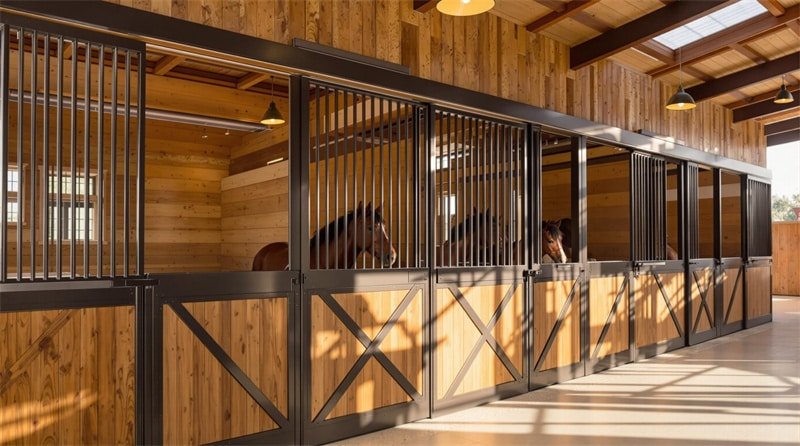
The most direct way to prevent splinter ingestion is to remove wood from the horse’s environment. Engineered infill materials eliminate this specific risk by design. They are built to withstand the pressures of stabled life without cracking or breaking into dangerous fragments.
- Impact-Absorbing HDPE: This material flexes under pressure from kicks or chewing instead of splintering. It’s a true ‘Zero Maintenance’ surface that doesn’t crack, rot, or create hazardous shards.
- High-Density Bamboo: DB Stable’s strand-woven bamboo is three times harder than oak, making it incredibly resistant to chewing. Its density prevents horses from breaking off pieces that could be ingested.
Using these materials for stall walls and doors removes the source of the problem. You completely engineer the risk of splinter-related colic out of the stable.
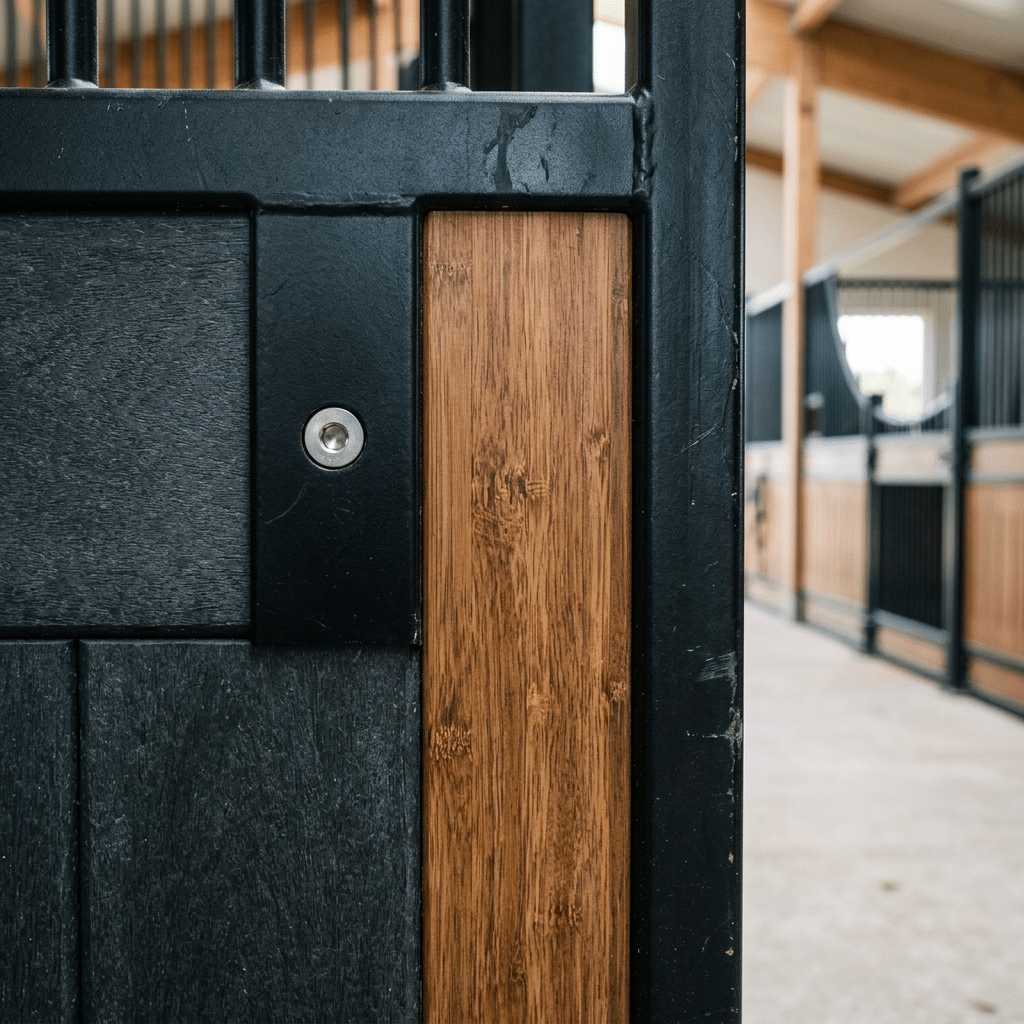
The Hardware Fix: Capping Wood vs. High-Density Bamboo
Metal capping protects softwood but adds maintenance and potential hazards. High-density bamboo is naturally chew-resistant with a Janka hardness over 3000 lbf, eliminating any need for extra hardware.
| Feature | Capped Softwood | High-Density Bamboo |
|---|---|---|
| Chew Protection | An add-on metal barrier | Inherent material property |
| Hardness | Low (varies by wood) | Janka Hardness > 3000 lbf |
| Failure Mode | Bends or breaks, creating sharp edges | Resists chewing, kicks, and moisture |
| Maintenance | Requires inspection and replacement | None required for chew resistance |
The Limits of Capping Traditional Softwood
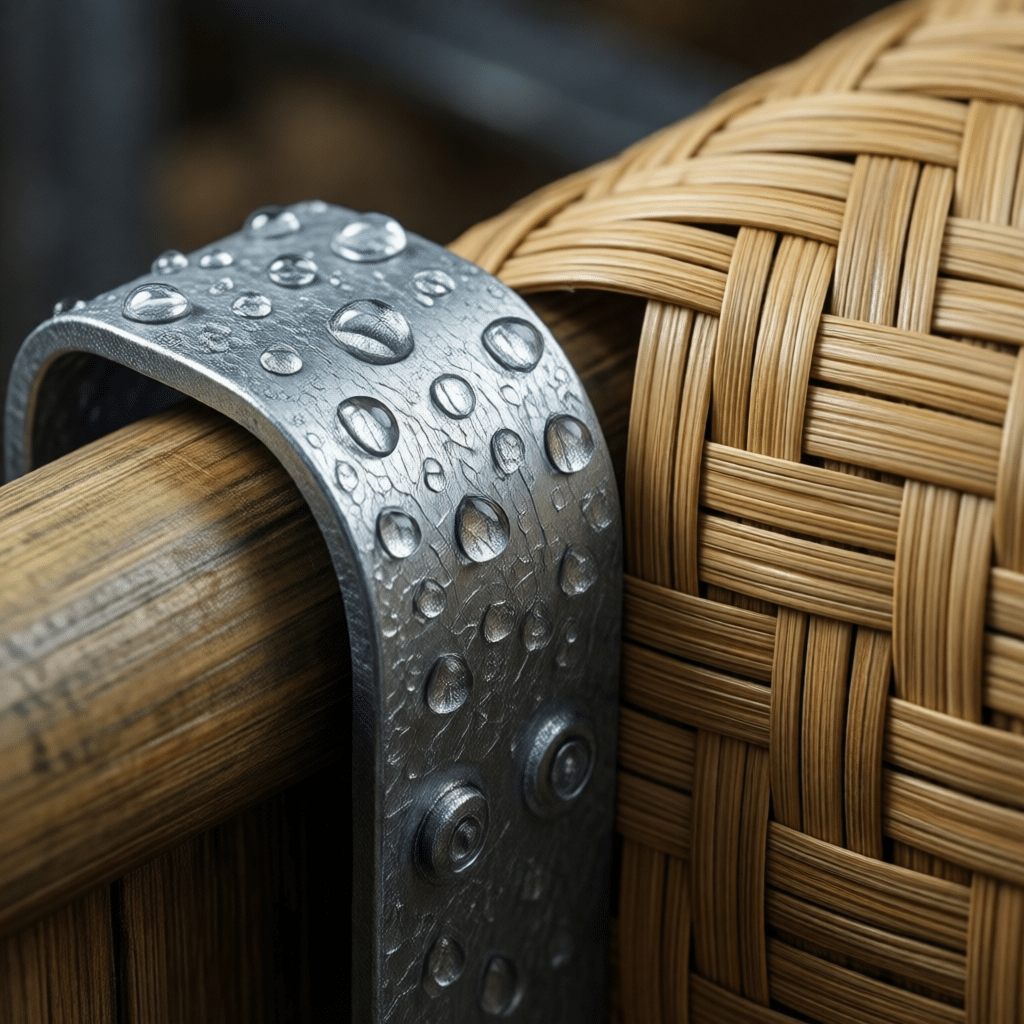
Bolting metal caps onto softwood planks is a common way to physically block a horse from chewing the edges. It’s a reactive fix to protect a vulnerable material.
The problem is that these caps don’t last forever. A solid kick or repeated impacts from equipment can bend or break the metal. This creates sharp, jagged edges that pose a significant injury risk inside the stall.
High-Density Bamboo: A Chew-Resistant Material
Our stable infill provides a built-in solution. We use High Density Strand Woven Bamboo, which has a Janka hardness rating over 3000 lbf.
This material is approximately three times harder than Oak. It naturally resists chewing, kicks, and moisture without needing any protective hardware. The durability isn’t an add-on; it’s an inherent property of the material itself.

Designing for Socialization to Reduce Stress (Yoke Doors)
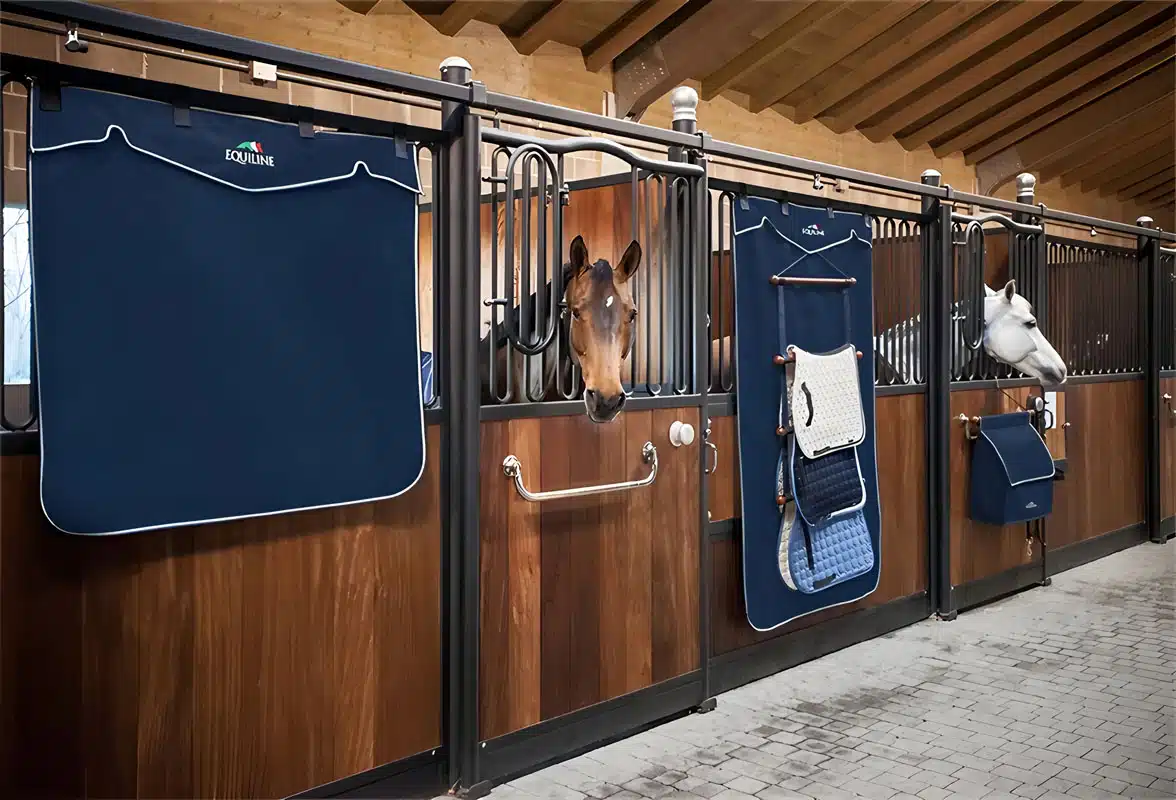
Yoke doors are specialized stall openings that allow horses to safely interact with neighbors. This visual contact reduces the isolation-induced stress that often leads to wood chewing.
How Open Designs Encourage Natural Social Behavior
Horses are herd animals. Complete isolation in a solid-walled stall directly contradicts their natural instincts and is a major source of stress and boredom. Open-style stall fronts with yoke openings allow horses to see, hear, and interact with their neighbors. This constant visual contact provides necessary mental stimulation by letting them observe the daily activity in the barn. Fulfilling this basic social need helps keep a horse calm and significantly reduces the odds of developing stress-induced habits like wood chewing or cribbing.
Design Options from Practical Yokes to European Arches
Yoke designs range from practical to highly aesthetic. Common options include fixed V-shaped yokes or hinged fold-down panels that can be secured open or closed depending on management needs. The open grilles typical of these designs also improve barn airflow, promoting “Stack Effect Ventilation” that lowers dust and ammonia levels. For high-end facilities, premium custom styles are available. Our Royal Series, for instance, features elegant European arches and brass finials, offering the same socialization benefits for premier private estates and stud farms.
Frequently Asked Questions
Why do horses chew wood in their stalls?
Horses often chew wood due to boredom, stress, or a diet lacking enough long-stem fiber. This behavior satisfies their natural chewing instinct, especially when stabled for long periods with limited access to forage. It can also sometimes indicate a nutritional deficiency, such as a lack of salt or phosphorus.
Do anti-cribbing collars stop wood chewing?
Anti-cribbing collars can effectively prevent the behavior while a horse is wearing one, but they do not address the root cause. The chewing behavior typically returns once the collar is removed. It’s best to combine their use with management changes like increasing turnout and providing more forage.
Can splinters from chewed stalls cause colic?
Yes, swallowing wood splinters is a serious health risk that can lead to colic. These indigestible fragments can cause severe intestinal blockages (impaction colic), puncture the digestive tract, or contribute to the formation of intestinal stones, known as enteroliths.
What types of wood are safest around horses?
While no wood is completely risk-free due to splintering, some are considered safer for horses, including willow, birch, and apple. It is critical to always avoid woods that are toxic to horses, such as black walnut and cherry, in any part of their environment.
How can I protect stall edges from being chewed?
The most effective way to protect stall edges is to install physical barriers like metal chew guards. Other deterrents include electric hot wires or applying non-toxic repellent products. Addressing the underlying cause by providing free-choice hay and regular exercise also helps reduce the motivation to chew.
Final Thoughts
Selling softwood stalls creates a cycle of damage claims and costly replacements for your clients. Our High-Density Bamboo and HDPE infills are permanent solutions that engineer the risk of splinter-related colic out of the stable. Stocking a kick-proof, chew-proof system protects your customers and solidifies your reputation as a quality supplier.
Don’t sell on specs alone—provide a tangible solution. Request a material sample kit to test the durability of our bamboo and HDPE against your current offerings. Contact our team to configure a trial order or discuss your OEM branding needs.


 English
  Spanish
  French
  Arabic
  German
0 Comments