


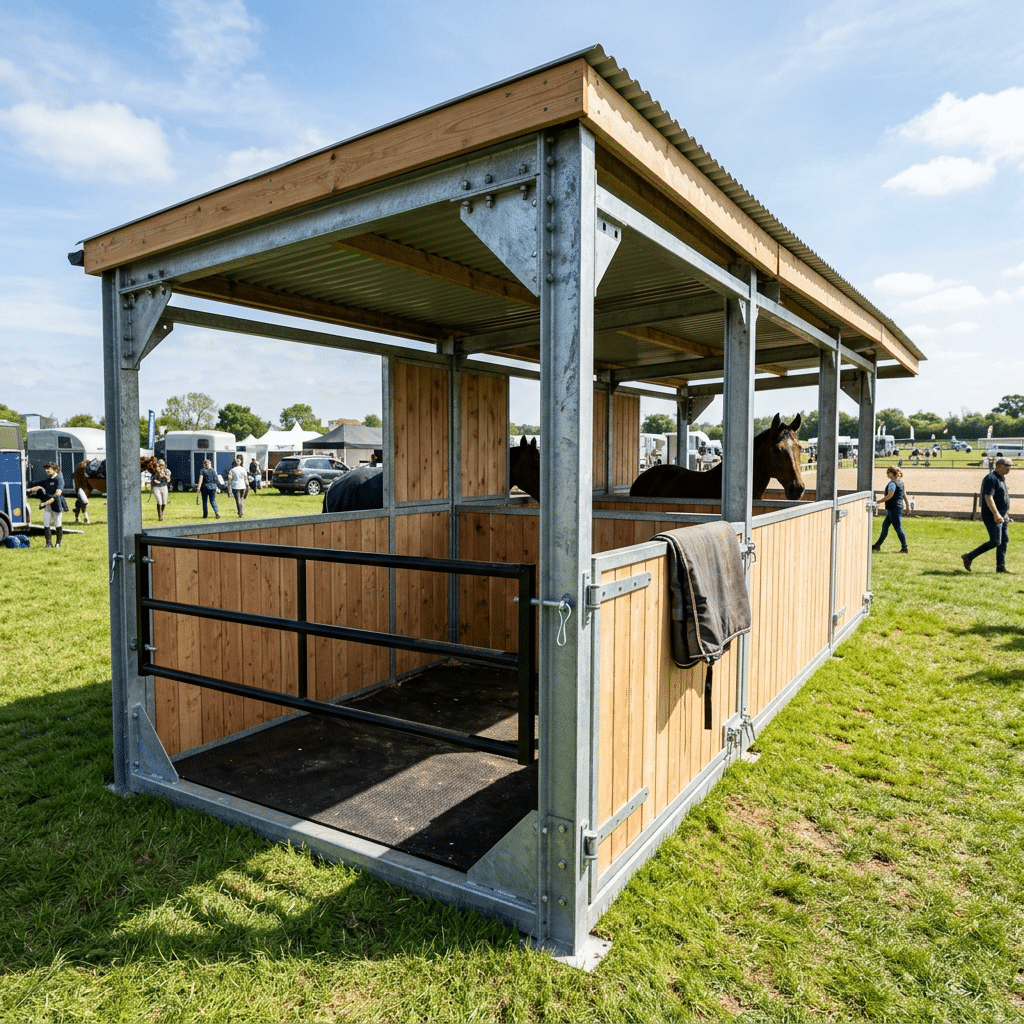
Steel gauge deception is a costly trap where paying for 14-gauge (2.0mm) steel but receiving thinner 16-gauge material creates hidden structural liabilities. This fraud directly leads to dangerous product failures, expensive warranty claims, and financial loss when stalls cannot withstand the impact from a horse.
This analysis benchmarks suppliers against a non-negotiable 2.0mm minimum wall thickness standard. We provide the on-site verification method using digital calipers to confirm you receive the material specified in your contract, protecting both your investment and your reputation.
The Weight Discrepancy: How Suppliers Skim Steel
Suppliers skim steel by faking weighbridge records or substituting specified material with thinner, non-compliant tubing. This fraud creates hidden structural defects and financial losses.
Tactics Used for Under-Delivery
Unscrupulous suppliers use two common methods to bill for steel that is never delivered. Both tactics exploit the gap between procurement documents and on-site verification, leading buyers to pay full price for an underweight and unsafe product.
- Weight Fraud: Operators tamper with electronic weighbridge scales, often using remote devices to inflate the weight recorded on the official documentation. They create fraudulent weigh slips that show a heavier load than what’s actually on the truck.
- Material Substitution: The supplier provides steel tubing with a thinner wall than specified in the contract. A 1.5mm tube looks identical to a 2.0mm tube but weighs significantly less and fails to meet structural load requirements.
The Specification that Prevents Skimming: 14-Gauge Minimum
To eliminate the risk of material substitution, we enforce a non-negotiable manufacturing standard. All structural tubing used in DB Stable systems must have a minimum wall thickness of 14-Gauge, which is equivalent to 2.0mm – 2.5mm.
This hard specification guarantees that every stable panel meets its engineered weight and strength requirements. By prohibiting any steel thinner than 2.0mm, we ensure you receive the material you paid for and protect the structural integrity of your investment. It’s a simple rule that makes gauge deception impossible.
Understanding Steel Gauge: 14-Gauge (2.0mm) vs. 16-Gauge (1.5mm)
14-gauge (2.0mm) steel is 25-30% thicker than 16-gauge (1.5mm). For horse stables, this strength is non-negotiable for resisting kicks and ensuring long-term structural safety.
When sourcing horse stables, the steel gauge of the frame is one of the most critical specifications. A seemingly small difference between 14-gauge and 16-gauge steel directly impacts animal safety, structural longevity, and your investment. Suppliers often substitute thinner 16-gauge material to cut costs, creating a hidden risk for the buyer and the animals. This breakdown shows why the thicker steel is the only viable option.
| Attribute | 14-Gauge Steel | 16-Gauge Steel |
|---|---|---|
| Wall Thickness | ~2.0mm | ~1.5mm |
| Strength & Impact Resistance | Significantly higher; resists bending and denting from powerful kicks. | Lower; prone to deformation and structural failure under impact. |
| Suitability for Horse Stables | The required minimum for all structural frames to ensure safety. | Unsuitable and unsafe for structural components. Only acceptable for light-duty accessories. |
How the Gauge System Works: Lower Number, Thicker Steel
In steel measurement, the gauge system works inversely. A lower number means the material is thicker and stronger. 14-gauge steel has a nominal thickness of 2.0mm, providing the robustness needed for heavy-duty applications.
In contrast, 16-gauge steel is only about 1.5mm thick. This makes it around 25-30% thinner and significantly weaker. A tube with this wall thickness cannot reliably withstand the focused impact of a horse kick and is far more susceptible to bending, denting, and eventual fatigue failure.
The DB Stable Standard: 2.0mm Minimum Wall Thickness
We enforce a strict policy against using any steel tubing thinner than 2.0mm (14-gauge) for our structural stable frames. This isn’t just a preference; it’s a core safety requirement built into our engineering.
This commitment ensures our stable systems can handle powerful impacts and allows us to stand behind our ‘Kick-Proof Guarantee’. Using inadequate 16-gauge steel is a common cost-cutting tactic in the market, but it introduces a severe risk of structural failure that we refuse to accept.
Global Horse Stables Engineered for Durability
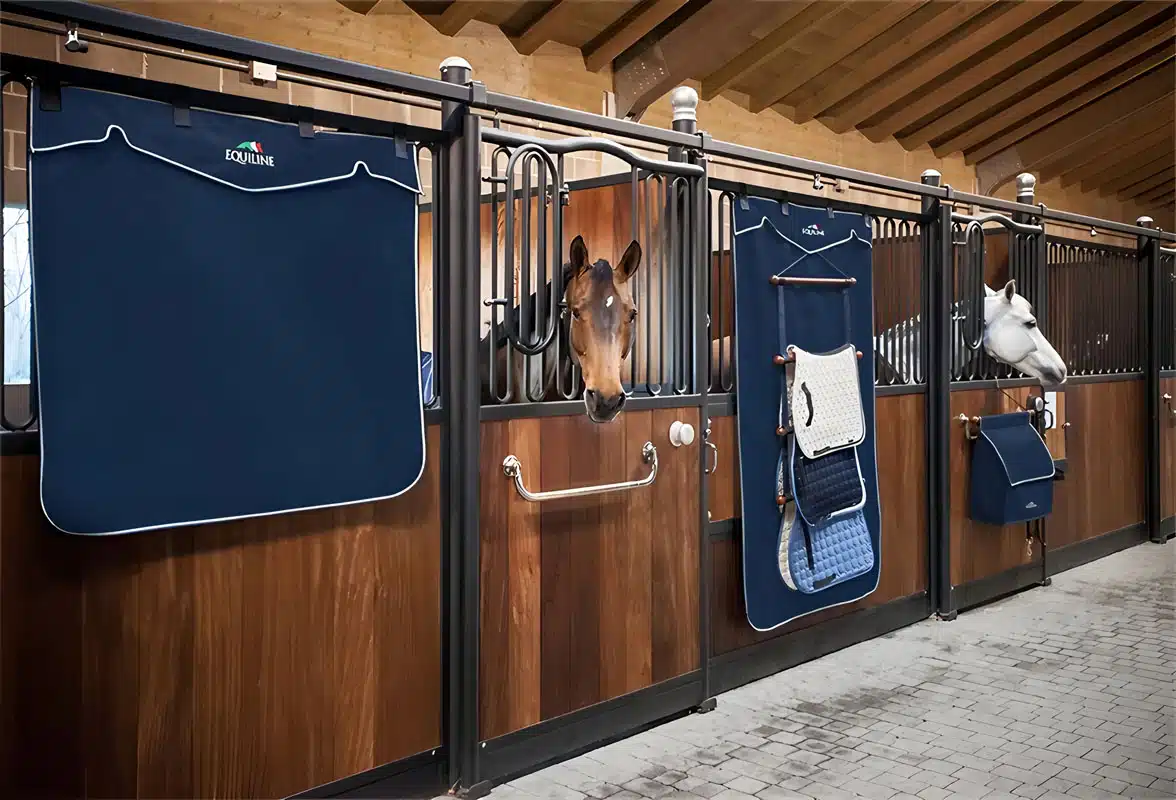
The Kick Test: What Happens to Thin Wall Tubing?
When a horse kicks thin-wall tubing, it dents or fractures, creating sharp edges and structural risks. A proper stable requires a minimum 14-gauge (2.0mm) wall thickness to prevent this.
The Dangers of Dents and Deformations
Steel tubing with a wall thickness under 2.0mm (typically 16-gauge) simply lacks the mass to absorb the force of a horse kick. The impact immediately dents and bends the tube. This deformation is not just a cosmetic issue; it’s a direct safety failure.
A compromised tube can create dangerous gaps in the stall panel or expose sharp, fractured metal edges, posing a severe injury risk. Repeated impacts on these weakened points will eventually cause the entire stable panel to fail structurally.
Our Standard: 14-Gauge (2.0mm) Minimum Wall Thickness
We enforce a strict minimum wall thickness of 14-gauge (2.0mm) on all structural steel tubing. This isn’t an optional upgrade; it’s our baseline standard to guarantee the frame can withstand repeated kicks without failing. Anything less is a liability.
For projects in cold climates, we specify Q345B steel. This material offers superior low-temperature impact toughness, preventing the steel from becoming brittle and fracturing from powerful kicks in winter. This material standard is a critical part of a safe, ‘Cast-Proof’ stable design, ensuring the framework remains intact under all expected stresses.
Q235B vs. Q345B: Paying Attention to Steel Grade
Q345B steel offers significantly higher strength than standard Q235B. This is critical for preventing brittle fractures from horse kicks in cold climates, making it a major safety upgrade.
Comparing Strength and General Applications
The most important difference is yield strength—the point at which the steel starts to deform permanently. Q345B steel has a minimum yield strength of 345 MPa, which is nearly 47% higher than the 235 MPa of Q235B. This isn’t a small difference; it&
#8217;s a fundamental shift in load-bearing capacity.
Because of this, Q235B serves as a reliable, cost-effective workhorse for general structural components. It’s what you find in most standard applications. Q345B, on the other hand, is specified for high-stress, heavy-duty equipment like bridges, cranes, and the framework for premium horse stables that demand higher performance and safety margins.
Why Q345B is Critical for Cold Climate Stables
Steel performance changes with temperature. In freezing conditions, standard carbon steel can become brittle. Q345B is a low-alloy steel engineered to maintain its toughness in cold weather. For stables built in Europe, Canada, or the northern United States, this property is essential to prevent structural failures.
A horse can deliver a kick with tremendous force. In winter, that impact on a brittle steel frame can cause a standard post to crack or even shatter. Q345B’s superior strength and low-temperature impact resistance ensure the frame absorbs that energy without fracturing. It’s a direct investment in animal safety and the long-term integrity of the stable.
How to Measure Steel Thickness Before Paying
Use a digital caliper to measure steel thickness at several points before accepting delivery. This quick check verifies the material meets the critical 2.0mm minimum for structural integrity.
Some suppliers cut corners by using thinner steel than specified. This is a common tactic to lower costs, but it compromises the safety and longevity of the final product. Paying for 14-gauge steel and receiving something closer to 16-gauge is a material downgrade that creates a serious structural risk. You need a simple, on-site method to make sure you g
et what you paid for.
Practical Tools for On-Site Verification
You don’t need complex lab equipment to check steel thickness. A couple of handheld tools can give you an immediate and accurate reading right at the delivery truck.
- Digital Calipers: This is the most direct and reliable tool. Simply place the steel between the jaws and close them to get a precise digital reading. It eliminates guesswork and gives you a clear number to compare against your purchase order.
- Ultrasonic Thickness Gauges: These devices are useful for checking larger surfaces or parts where calipers can’t reach. It sends a sound wave through the material to measure its thickness without being destructive.
Confirming the 2.0mm Minimum Wall Thickness
At DB Stable, our engineering standard is non-negotiable: all structural steel tubes must have a wall thickness of at least 2.0mm (14-Gauge). We strictly prohibit using anything thinner because it fails to provide the necessary strength.
Verifying this measurement yourself ensures the stable frame can withstand the force of a horse kick and prevents premature structural failure. It’s a foundational requirement for our “Kick-Proof Guarantee” and a simple way for you to confirm you’re receiving the quality and safety you expect.
Frequently Asked Questions
What is the best steel thickness for horse stalls?
For horse stalls, 14-gauge (approx. 2.0mm – 2.5mm) steel tubing provides the necessary safety and durability. Thinner steel, like 16-gauge (approx. 1.5mm), is not strong enough to reliably withstand kicks and can create a safety hazard. We exclusively use 14-gauge or thicker tubing for all structural frames.
What is the difference between Q235B and Q345B steel?
Q235B is a high-quality structural steel suitable for most climates. For regions with very cold winters, we offer an upgrade to Q345B steel. Q345B has superior low-temperature impact toughness, which prevents the steel from becoming brittle and fracturing from horse kicks in freezing temperatures.
Why is ‘Hot-Dip Galvanization After Fabrication’ important?
This process means the entire stable panel is welded together first and then submerged in molten zinc. This creates a seamless, protective coating inside and out, especially over the welds, which are the most common points for rust to start. Cheaper methods galvanize the tubes before welding, leaving the weld seams exposed and vulnerable.
What are the benefits of HDPE versus Bamboo infill?
HDPE (High-Density Polyethylene) is an impact-absorbing, UV-stabilized material that requires zero maintenance. Bamboo is a natural, eco-friendly option that is extremely dense and hard—over three times harder than oak—making it incredibly durable and resistant to mold and rot.
How does your flat-pack design save on shipping costs?
Traditional fully-welded stable panels are bulky and waste space in a shipping container, allowing only 12-15 sets per 40ft container. Our flat-pack system allows components to be stacked efficiently, fitting 30-45 sets in the same container. This significantly reduces the per-unit shipping cost for distributors.
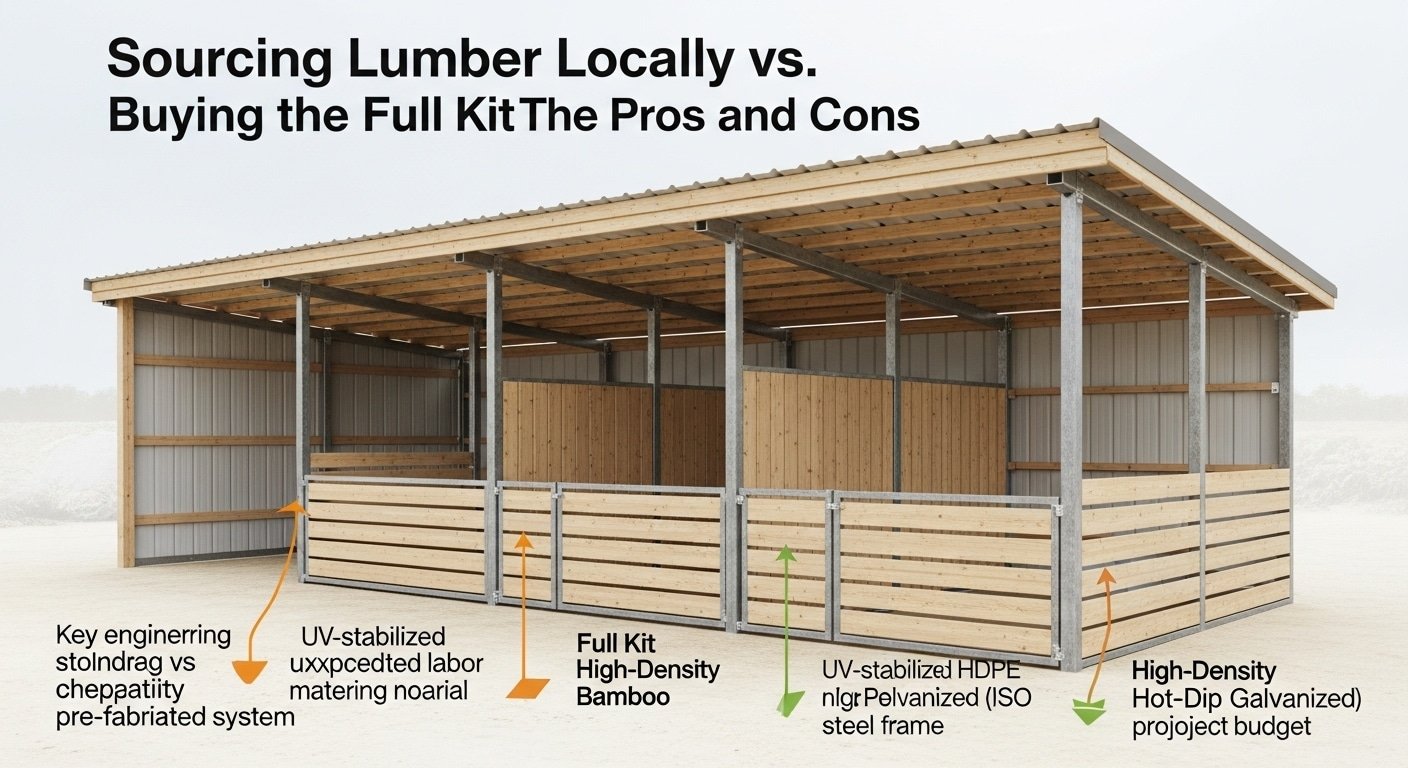
Final Thoughts
While thinner 16-gauge steel lowers an initial quote, it creates unacceptable risks of structural failure and liability. Our mandatory 14-gauge (2.0mm) minimum protects your investment and your reputation. Specifying the correct material is the only way to guarantee safety and performance.
Don’t just trust the spec sheet—measure the steel yourself. We ship trial orders so you can verify our 2.0mm wall thickness and inspect our ISO 1461 galvanizing firsthand. Contact our team to specify your first container and secure your territory.


 English
  Spanish
  French
  Arabic
  German
0 Comments