


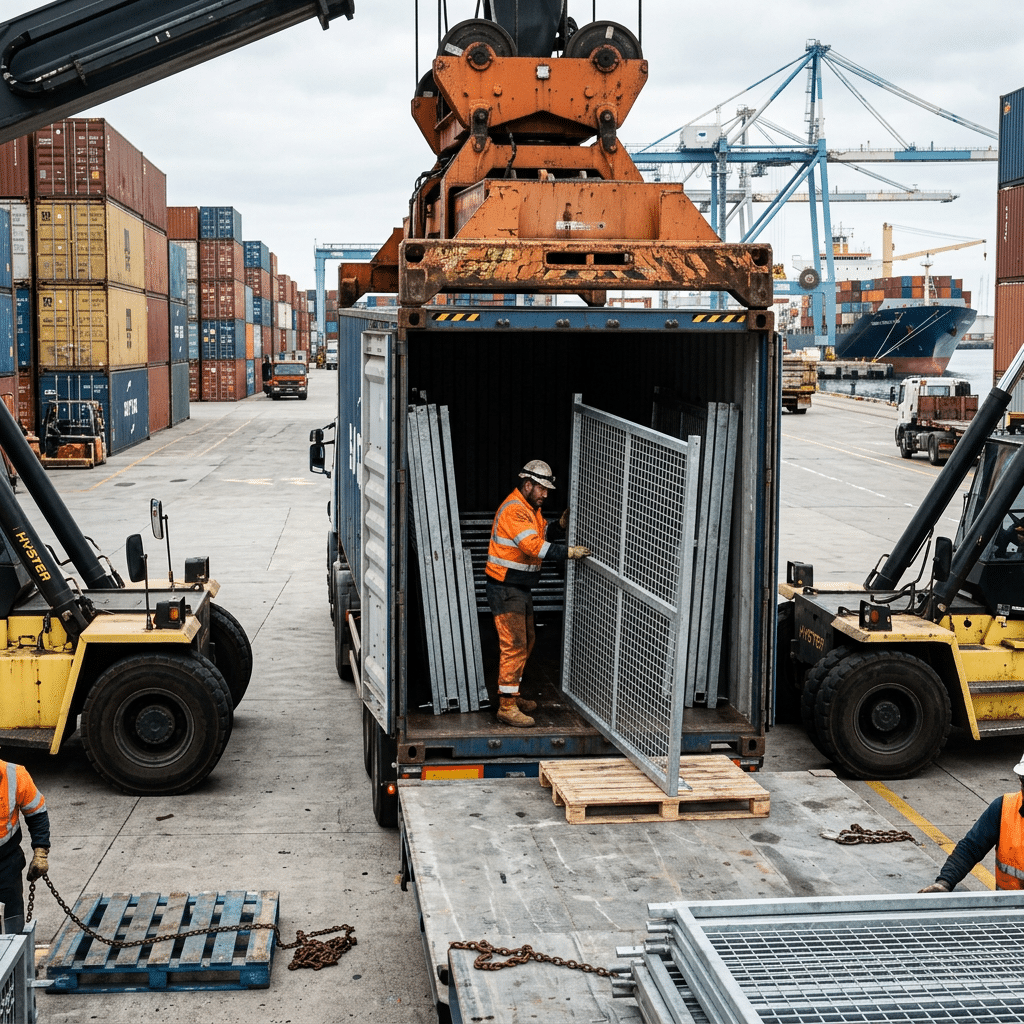
Choosing between bamboo vs pine wood for horse stables is a critical calculation of long-term liability, not just material cost. Standard pine fails predictably from chewing and moisture, creating recurring replacement budgets and the financial risk of splinter-related vet bills. This false economy turns a low upfront price into a significant operational expense.
This analysis benchmarks infill materials against key engineering standards for equine environments. We evaluate high-density strand-woven bamboo with a Janka hardness over 3000 lbf against the known failure points of low-density softwoods to establish a clear standard for safety and durability.
5 Critical Red Flags to Watch For
Focus on verification, not just price. Refusals to show facilities, pre-galvanized welding, and unsafe payment terms are major warnings when sourcing horse stables.
| Red Flag | Why It Matters & What to Do |
|---|---|
| 1. Prices That Are ‘Too Good to Be True’ | An unusually low price almost always means the supplier is cutting corners on materials, labor, or safety standards. You might get thinner steel, inadequate rust protection, or poor-quality infill that puts animals at risk. Always question a price that significantly undercuts the market average. |
| 2. Refusal of Video Calls or Factory Visits | A legitimate factory is proud of its operations. A refusal to show the production line via a live video call suggests they are just a trading company with no control over quality, or they are hiding unsafe conditions and outdated equipment. Insist on a virtual tour before committing. |
| 3. The “Pre-Galvanized” Welding Scam | This is a common and deceptive cost-cutting tactic. Suppliers weld cheap, uncoated black tubes together and then spray-paint the weld seams. These seams are the weakest points and will rust first, compromising the entire structure. We use **Hot-Dip Galvanization After Fabrication**, meaning the entire welded panel is submerged in molten zinc, conforming to ISO 1461 for complete protection. |
| 4. Weight & Steel Gauge Discrepancies | The panel’s weight is a direct indicator of steel thickness. Suppliers may quote 14-gauge steel but deliver a thinner, lighter product that cannot withstand kicks. We strictly use a **minimum 14-gauge (2.0mm) Q235B structural steel** framework. Always request a detailed spec sheet and verify the weight per panel upon delivery. |
| 5. Unsafe Payment Terms & Weak Contracts | Demands for 100% upfront payment via untraceable methods are a sign of potential fraud. A lack of a formal, bilingual contract means you have no legal recourse. Use secure bank transfers with a reasonable deposit and always operate with a binding contract that is enforceable in the supplier’s country. |
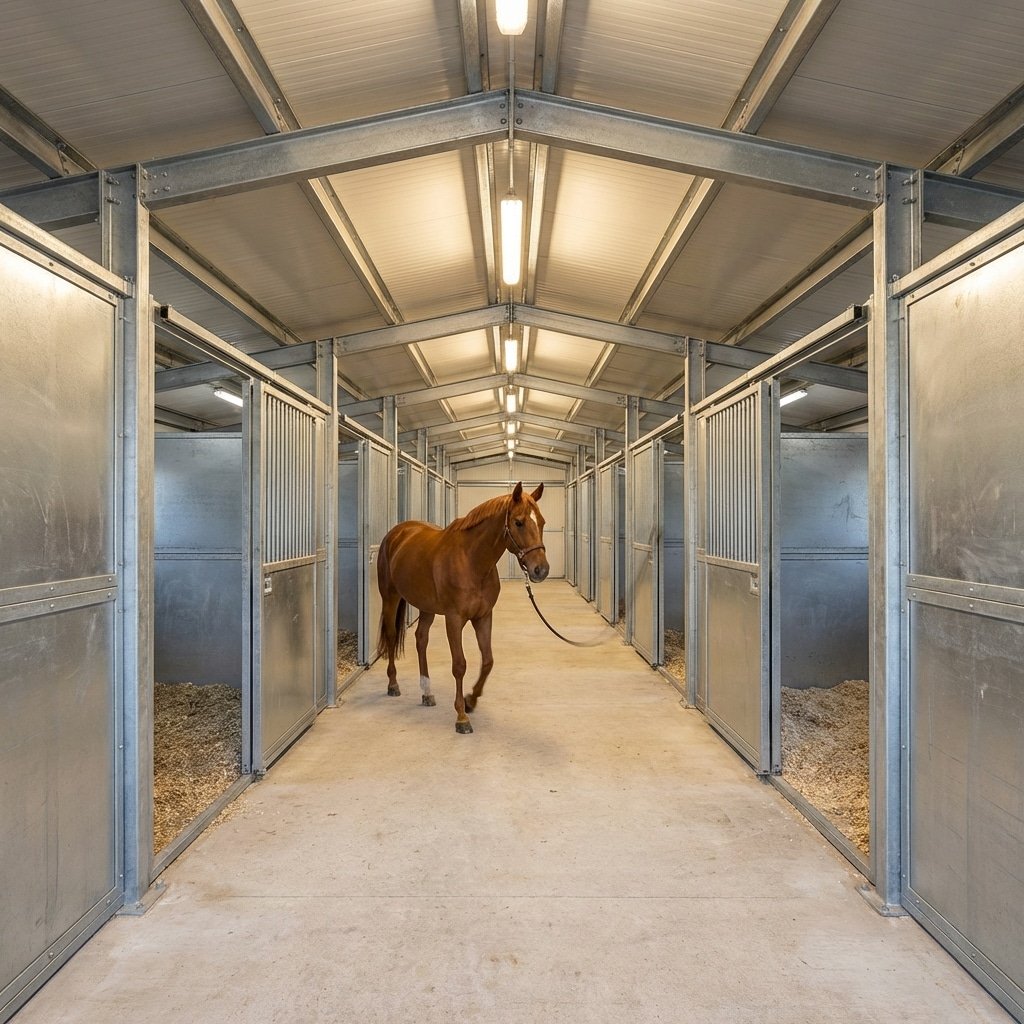
Globally-Trusted Stables Built for Any Climate.

Final Thoughts
While pine stalls promise a lower initial price, our Hot-Dip Galvanization After Fabrication standard is the only way to safeguard your reputation against rust claims. Stocking kick-proof bamboo and rot-resistant HDPE builds the long-term dealer trust that cheap timber erodes.
Don’t guess on durability—verify it. We recommend a small trial order to test our engineered bamboo and galvanized finish in your market. Contact our team to get a quote and discuss your branding requirements.

 English
  Spanish
  French
  Arabic
  German
0 Comments