


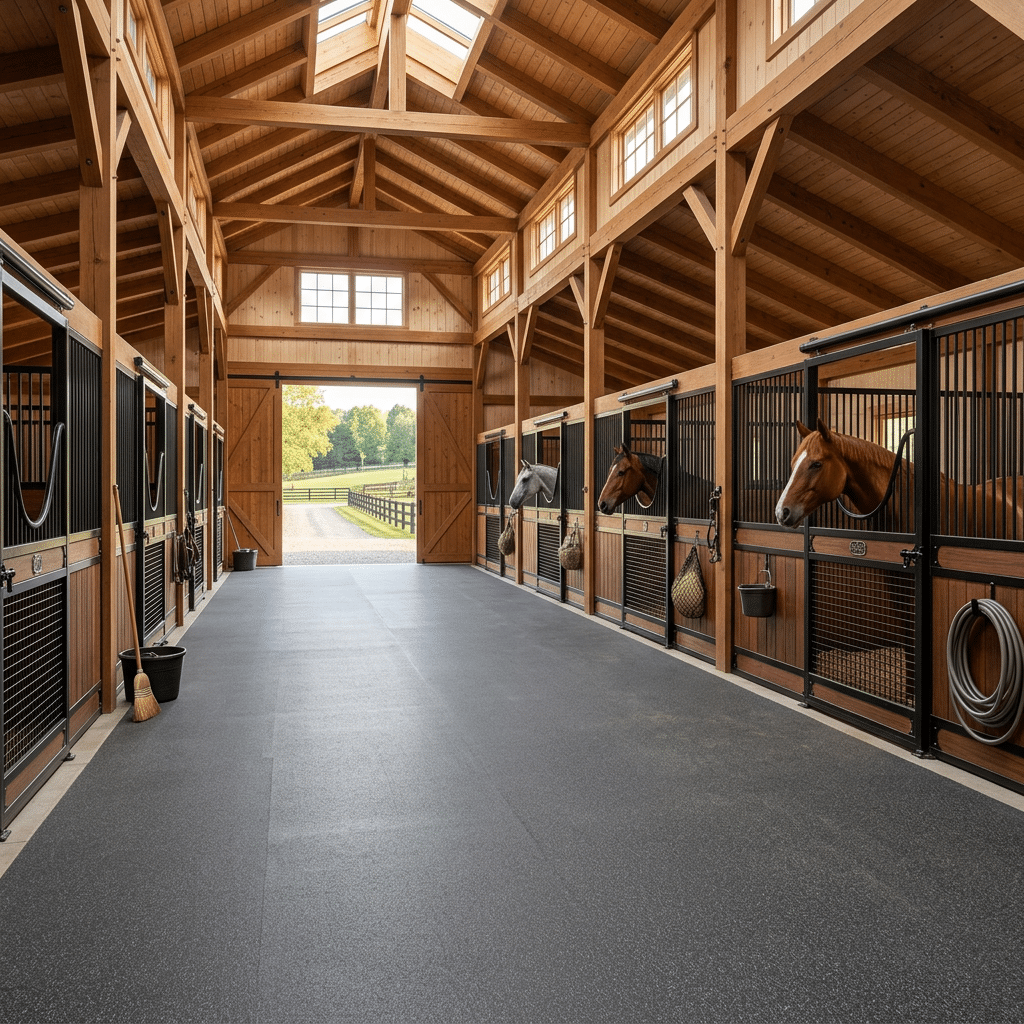
Choosing the right small horse stable floor plans is a critical decision that dictates long-term animal health and operational costs. A flawed layout that neglects core airflow principles leads to chronic respiratory disease, trapping ammonia and pathogens at stall level and creating future liabilities that are nearly impossible to correct post-construction.
This analysis evaluates five layouts based on their ability to create natural “Stack Effect Ventilation.” We show how to integrate essential safety features like open-top grills and Q235B structural steel framing to deliver a safe, healthy, and efficient facility from the blueprint stage.
Globally Compliant Stables Engineered to Last
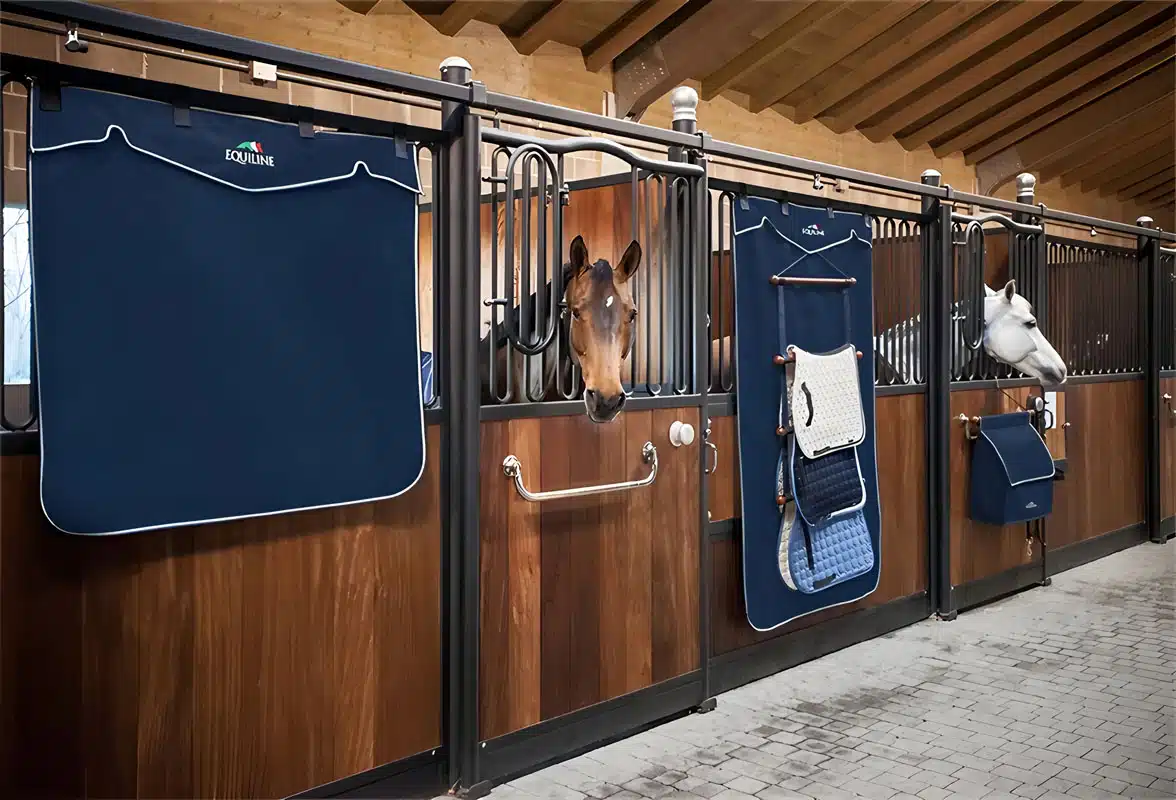
Why is Ventilation the #1 Design Priority?
Poor ventilation directly impacts horse health by trapping ammonia, dust, and pathogens, leading to chronic respiratory diseases. Because airflow is dictated by fundamental structural choices like ceiling height and roof design, it must be engineered into the floor plan from the start and cannot be easily corrected after construction.
Preventing Respiratory Disease and Ammonia Buildup
Poor airflow allows dust, pathogens, and ammonia from urine to get trapped in the lower three feet of the stall—exactly where horses breathe. This concentration of airborne contaminants can lead to long-term health problems, including equine asthma and heaves. A well-ventilated space is essential for diluting and removing these hazards.
Constant air exchange not only removes harmful particles but also controls odors, creating a healthier environment for the horses and a much better workspace for staff. We contribute to this by offering non-porous infill materials. Our zero-maintenance HDPE and high-density, mold-resistant bamboo planks do not absorb moisture or ammonia, which helps keep the air cleaner.
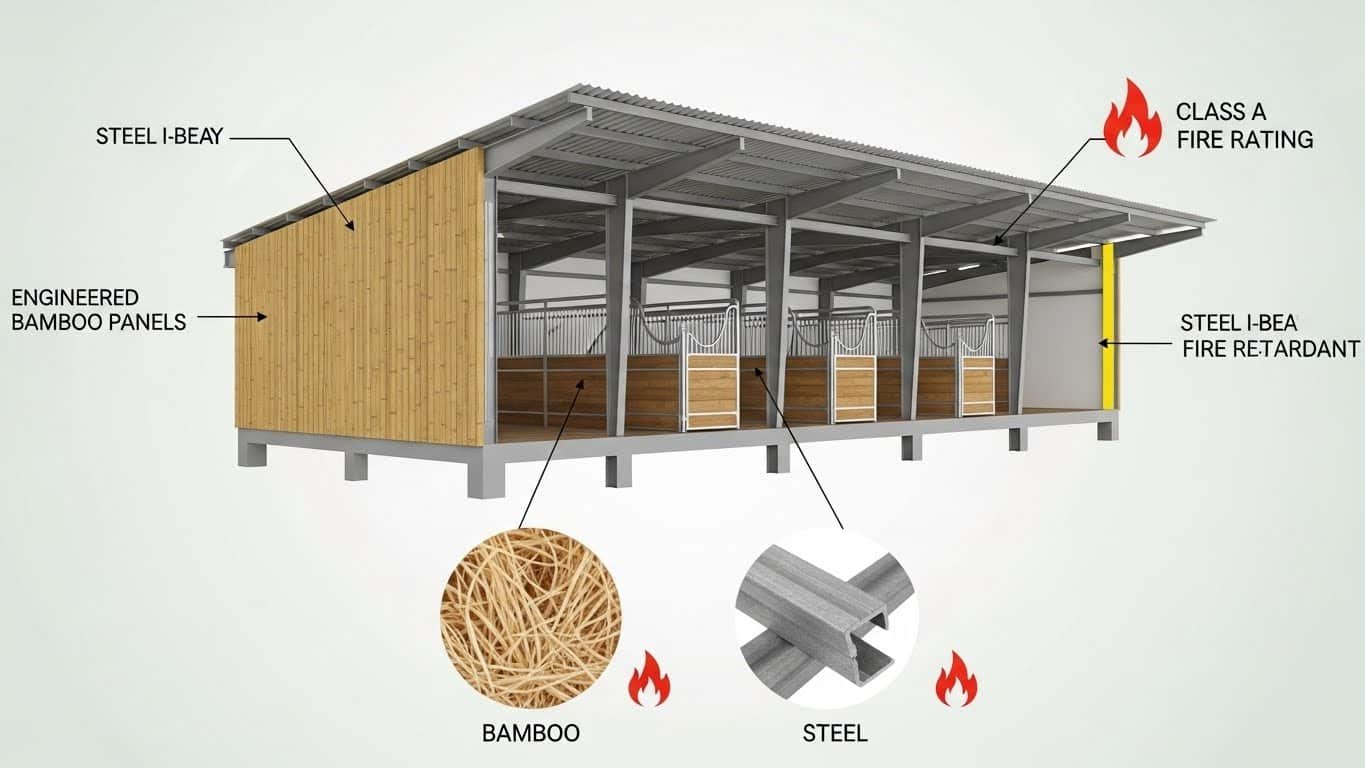
How Ventilation Dictates Structural Design
Effective ventilation is not an accessory; it is an integral part of the barn’s core structure. It governs key decisions like roof pitch, eave openings, and ceiling height. These elements are difficult and expensive to change once the barn is built, making ventilation a critical consideration from the very first blueprint.
The design goal is to achieve vertical airflow, a process we engineer for called the “Stack Effect.” Our stable fronts and partitions are designed with open-top grills that are essential to this system. They allow warm, stale air to rise naturally and exit through roof vents, which in turn draws fresh, cool air into the stable at the horse’s level.
Is the Classic Center Aisle Layout Right for You?
A center aisle layout provides exceptional operational efficiency and horse safety for busy, large-scale facilities. While it requires a significant building footprint, it is the ideal choice for professional operations that can maximize the logistical and ventilation benefits of a well-planned barn.
Efficiency and Safety in High-Traffic Facilities
For
busy riding schools, training centers, and boarding operations, workflow and safety are critical. A wide central aisle, typically 14 to 16 feet, allows small vehicles, hay carts, and multiple horses to pass one another without risk. This open design also gives staff a clear line of sight down the entire stable block, making it easier to monitor horse health and daily activity from a single vantage point.
The layout naturally promotes superior air quality. Our open-top grill designs work with the high ceilings of a center aisle barn to create powerful “Stack Effect Ventilation.” This process draws fresh air in from the sides and pulls stale air, moisture, and ammonia up and out through ridge vents, significantly improving respiratory health for the animals inside.
Space and Project Scale Considerations
The primary consideration for a center aisle barn is its substantial footprint. This design is not well-suited for smaller properties where space is limited. It is planned for larger, professional projects that require a full container of stables, such as a 20GP or 40HQ shipment.
This is where our system provides a major advantage for our B2B partners. Our steel pallet flat-pack shipping allows 30-45 stable sets to fit in a single 40HQ container, compared to just 12-15 sets for fully welded alternatives. This massive reduction in freight cost offers our distributors significant profit protection and makes large-scale center aisle projects economically viable. For private owners with only a few horses, simpler shed-row or courtyard layouts are often a more cost-effective choice.
When Should You Choose the U-Shape Courtyard Layout?
A U-shape courtyard layout is best for larger properties aiming to create a sheltered, private, and efficient central hub. This design protects horses and handlers from the elements, improves workflow by centralizing key facilities, and fosters a community atmosphere, making it ideal for facilities with ten or more horses.
Creating a Sheltered and Efficient Hub
The U-shape layout naturally forms a protected central courtyard. This shields horses and handlers from wind and weather, creating a private and focused work area. By its design, it centralizes key facilities like tack rooms and wash bays, which streamlines daily operations and improves workflow. This configuration is a popular choice for premier private estates, where our Royal Series stables—with their dual-layer powder coat over galvanized protection—are often specified to match the high-end aesthetic.
Best Suited for Larger Properties and Community Focus
A courtyard layout is best suited for properties that can accommodate a larger footprint, typically those housing ten or more horses. The enclosed space helps foster a strong sense of community among boarders or staff. For distributors and large project developers, this scale makes our B2B logistics a critical advantage. Our flat-pack system allows 30-45 stable sets to fit in a single 40HQ container, significantly reducing freight costs and protecting project profits from the start.
Should You Choose Round (114mm) or Square (50mm) Posts?
The choice between our 114mm round and 50mm square posts depends on your project’s primary goal. Round posts offer superior safety for horses in open or outdoor areas, while square posts provide a clean, modern aesthetic that integrates seamlessly into internal barn structures.
Safety and Durability: The Case for Round Posts
The main advantage of a 114mm round post is animal safety. Its smooth profile lacks the sharp corners found on square tubing, which minimizes the risk of injury if a horse rubs or bumps against it. This design allows an animal to glance off the surface, making it the preferred choice for free-standing stalls or facilities with very active horses.
For outdoor use or in climates with significant ground movement, round posts also offer better durability. The circular design distributes stress more evenly, helping it withstand the pressures of freeze-thaw cycles that can affect posts set in the ground. This makes them a reliable option for projects in our European and North American markets.
Structural Integrity and Style: When to Use Square Posts
Our 50mm square posts deliver a clean, modern aesthetic that integrates perfectly into structured barn layouts. They create cri
sp, seamless lines when used for stable fronts and partitions, offering a professional and organized appearance that many facility owners prefer.
Built with standard Q235B structural steel, these posts provide excellent strength and integrity for indoor systems. Because they are designed for internal structures, direct ground contact and extreme weather exposure are not primary concerns. They form a robust and reliable framework for creating secure and stylish internal stable rows.
Ready to Start? Where Can You Download Free CAD Plans?
You can find free stable blueprints in standard DWG format from online libraries like CAD Blocks Free and Bibliocad. These plans are a great visual starting point, but they must be adapted with engineered safety features and correct material specifications to be viable for a real-world project.
Online Libraries for Foundational Stable Blueprints
Several online resources provide free stable blueprints compatible with AutoCAD and other design software. Websites such as CAD Blocks Free, DWG Free, and Bibliocad host a variety of layouts, from small two-stall barns to larger equestrian facilities. These plans help you visualize your initial concept, including aisle dimensions, tack room placement, and overall workflow before seeking a professionally engineered solution.
Adapting Generic Plans for Real-World Safety
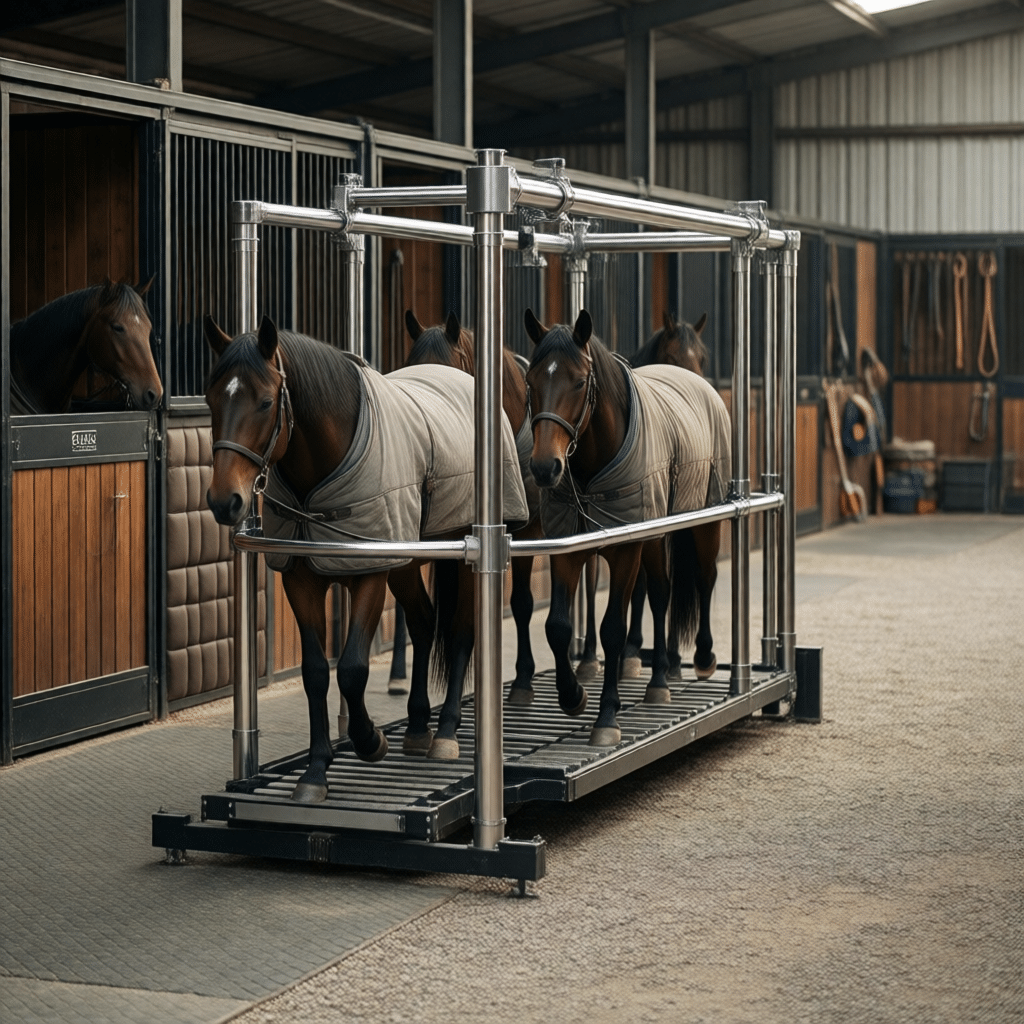
Free plans serve as an excellent starting point, but they rarely specify the critical safety and material details required for a long-lasting stable. When adapting a plan, you must ensure it incorporates designs for proper airflow, like open-top grills that promote a natural “Stack Effect Ventilation” to keep the air fresh and healthy.
A generic layout must also be updated with specific material callouts. For a structure to be durable and safe, it requires specifications like Q235B structural steel for the framework and a “Cast-Proof Design” with minimal bottom gaps. These details transform a basic blueprint into a safe, functional, and reliable equestrian facility.
Final Thoughts
While free plans offer a starting point, they lack the engineered details that prevent costly failures. Specifying Q235B structural steel and a “Hot-Dip After Fabrication” process is the only way to safeguard your project against rust claims and safety liabilities. Investing in certified materials protects your reputation and ensures the long-term health of the animals.
The next step is to adapt these concepts to your specific project. We recommend a consultation to customize these plans with our OEM engineering team. We can then arrange a trial order to let you verify our fabrication quality and fitment firsthand.
Frequently Asked Questions
Is a 10×10 stall too small for a 17hh Warmblood?
A 10×10 stall is considered too small for a 17hh Warmblood. Industry standards suggest a minimum of 12×12 feet for average horses, with 14×14 feet being ideal for larger breeds. This extra space is crucial for allowing the horse to turn around, lie down, and rest comfortably.
What is the ideal aisle width for safety?
For optimal safety, a 14-foot aisle is preferred, while 12 feet is a functional minimum. The extra width of a 14-foot aisle makes it much safer to lead horses, use equipment, and provides better access for emergency situations, reducing the risk of accidents in a busy barn.
Should stable doors open inwards or outwards?
Stable doors must always open outwards into the aisle. This is a critical safety design. If a horse were to collapse against the door, an inward-swinging door would be blocked. An outward-swinging door guarantees you can always gain access in an emergency.
Can I customize the plans for a pole barn?
Yes. As an OEM/ODM source factory, our business is built on customization for distributors and large projects. We can modify dimensions, materials, and features across our product lines, from the Economy to the Royal Series, to meet the specific requirements of your market or facility.
How many air changes per hour (ACH) do I need?
Experts recommend 4-8 air changes per hour (ACH) for optimal equine respiratory health. Our stable designs, featuring open-top grills, are engineered to promote natural “stack effect” ventilation. This helps continuously cycle fresh air, remove moisture, and reduce ammonia levels within the barn.
Do you offer metric and imperial plans?
Yes, we serve global markets and regularly work in both measurement systems. Our engineering team produces plans and fabricates our stable systems using either metric (millimeters) or imperial (feet/inches) units to align with the specific building codes and standards of your country.

 English
  Spanish
  French
  Arabic
  German
0 Comments