


Sourcing the right portable horse stalls is a critical ROI calculation where the initial unit price often hides the true cost. Most systems suffer from two major profit drains: inefficient logistics that limit container loads to just 15 sets and premature rust that shortens an asset’s revenue-generating lifespan.
This 2026 forecast provides a direct comparison based on key engineering standards: ISO 1461 hot-dip galvanization and steel yield strength (Q235B vs. Q345B). The data breaks down how these specifications impact durability, flat-pack freight savings, and the ultimate return for rental and permanent use.
How Do Portable and Permanent Stables Compare Side-by-Side?
Portables offer huge cost savings and flexibility, while permanent stables are built for maximum longevity but are immobile. Our hot-dip galvanization process closes this durability gap.
Initial Cost and Operational Flexibility
The financial difference is significant. A portable stable system can cost up to 75% less than a permanent structure. You completely sidestep the high expenses of laying a foundation or navigating complex building permits. Operationally, the advantage is speed and adaptability. You can assemble, reconfigure, or relocate an entire portable setup in a few hours. A fixed barn gives you zero flexibility once it’s built.
Closing the Durability Gap with Hot-Dip Galvanization
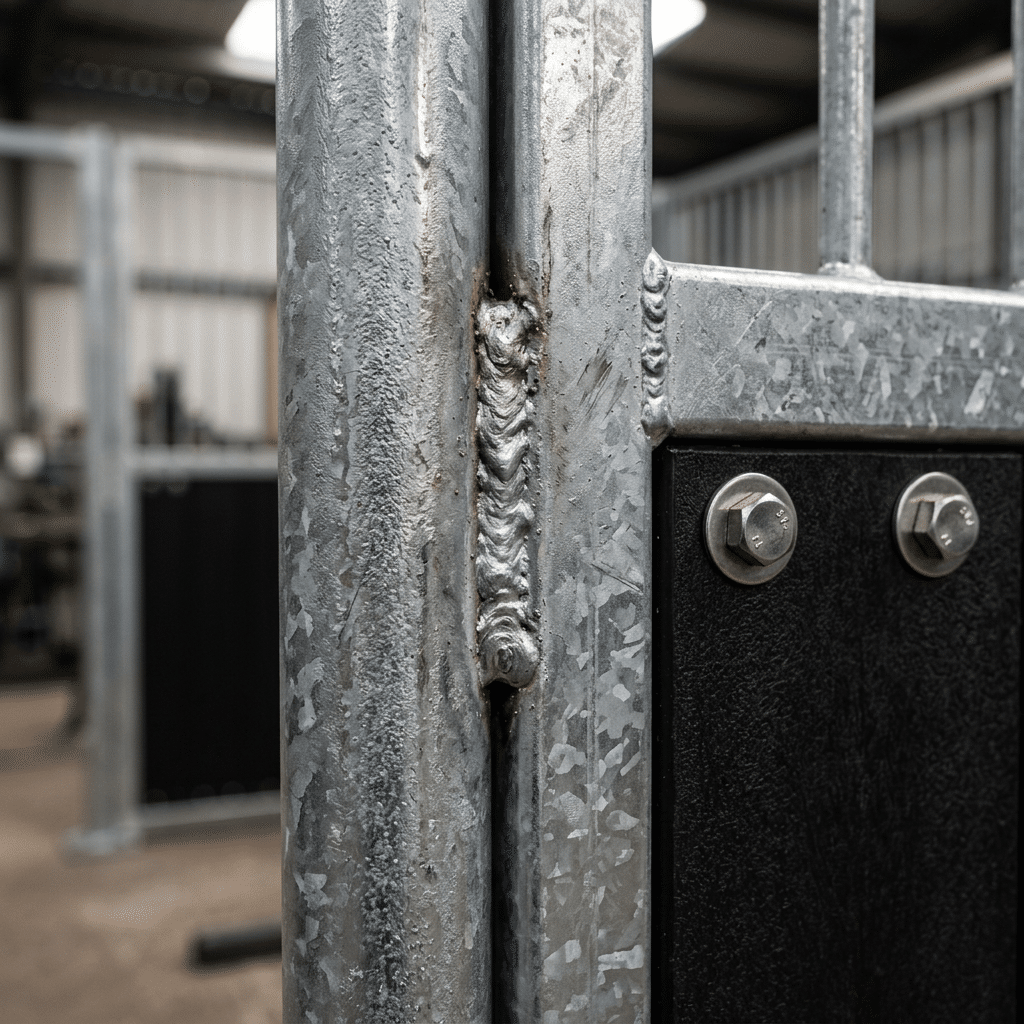
Most off-the-shelf portable stalls have a service life of 5-10 years before rust becomes a major issue. We address this head-on. Our systems are built for a much longer lifespan because we use a strict Hot-Dip Galvanization process *after* all welding and fabrication is complete. This isn’t a pre-galvanized sheet that gets burned away at the weld points; the entire finished panel is submerged.
This method ensures a protective zinc coating that exceeds 70 microns, fully compliant with ISO 1461 standards. The result is superior rust protection that brings the longevity of our portable systems much closer to that of permanent structures, making them a more reliable long-term asset for your business.
Why Does Flat-Pack Shipping Save You 60% on Freight?
Flat-pack shipping saves over 60% on freight by maximizing container space. Shipping disassembled stables lets us load 30-45 sets per container, versus only 12-15 fully welded sets.
The Core Principle: Maximizing Shipping Container Volume
International freig
ht costs are a game of volume, not just weight. Shipping carriers charge based on the cubic meters your cargo occupies in a container. A fully assembled horse stable is bulky and inefficient, shipping large amounts of empty, unusable air.
Our flat-pack system solves this problem directly. We collapse the entire structure into dense, stackable components loaded onto custom steel pallets. This method eliminates the wasted space, which maximizes loading density and cuts the cost for every single unit you import.
Container Loading: A Direct Comparison
The numbers show the real-world impact on landed costs for our distributors. The difference in loading capacity between traditional methods and our system is significant.
| Shipping Method | Sets per 40HQ Container | Resulting Freight Cost |
|---|---|---|
| Traditional Fully Welded Stalls | 12-15 sets | High Cost Per Unit |
| DB Stable Flat-Pack System | 30-45 sets | 60%+ Cost Reduction Per Unit |
This dramatic increase in loading capacity means the freight cost is spread across more than double the number of units. This is a core part of what we call “Profit Protection” for our B2B clients, ensuring your margins aren’t eroded by inefficient logistics.
Get Custom Horse Stables Built to Last.

Can Portable Stalls Really Withstand Heavy Use? (Q235B vs Q345B)
Yes, stalls built with either steel can handle heavy use, but Q345B offers superior performance. Q235B is standard, while Q345B provides 47% greater yield strength for high-impact use and cold climates.
Comparing the Mechanical Strength of Q235B vs. Q345B
Q235B is a standard structural steel with a yield strength of 235 MPa. It’s suitable for general-purpose stabling and facilities that don’t face extreme demands. It gets the job done reliably in most scenarios.
Q345B is a low-alloy, high-strength steel featuring a yield strength of 345 MPa. This gives it a significant advantage in resilience for demanding applications. The primary difference is Q345B’s ability to handle far greater stress and impact before it deforms. For equine safety, that extra capacity is not a small detail.
The Kick-Proof Advantage of Q345B in Cold Climates
DB Stable offers Q345B steel as a premium option because of its superior low-temperature impact toughness. In cold winters, standard steel can become brittle. A powerful kick that would normally just dent a stall can cause a brittle fracture, creating a serious safety hazard.
This material is the correct choice for professional training centers, breeding operations, and any facility in a region with freezing temperatures. It prevents brittle failure and ensures the stall frame remains structurally sound, even after repeated impacts in the cold.
Which Option Yields the Highest ROI for Rentals?
Renting offers the best ROI for short-term needs like seasonal events. For facilities with continuous use, purchasing provides a better long-term return by eliminating recurring fees.
Analyzing the Break-Even Point: Usage Frequency
Renting is the most profitable path for temporary or unpredictable demand. Think horse shows, seasonal overflow, or one-off clinics. This model avoids a large capital outlay for an asset that would otherwise sit idle, turning stalls into a pure operating expense paid only when generating revenue.
Ownership delivers a higher ROI once usage becomes frequent and predictable. For busy boarding facilities or event centers, the initial investment is spread across more days. This systematically lowers the per-use cost until it drops below the daily rental rate, turning the stalls into a valuable, revenue-generating asset.

Ho
w Durable Materials Maximize Long-Term Ownership ROI
The long-term return on purchased stalls depends entirely on their construction. Using Hot-Dip Galvanization After Fabrication, compliant with ISO 1461, provides genuine lifetime rust protection. This process maximizes the service life of the steel frame, protecting the asset’s value and ensuring a high resale value down the line.
Infill choice also directly impacts profitability. Opting for zero-maintenance HDPE infill eliminates the recurring operational costs associated with repairing or replacing damaged wood planks. Every dollar not spent on upkeep is a dollar that goes straight to the bottom line, increasing the total return of the asset over its lifespan.
Frequently Asked Questions
Can these stalls withstand heavy kicks from horses?
Yes. Our stalls are engineered for high-impact resistance. We use heavy-gauge Q235B and Q345B steel tubing (minimum 14-gauge) and offer infill options like impact-absorbing HDPE or high-density bamboo, which is three times harder than oak. The fully welded frames, galvanized after fabrication, provide the structural integrity needed for demanding environments.
How many stable sets can fit in a 40HQ container?
Our flat-pack shipping system allows 30-45 stable sets to fit into a single 40HQ container. This is a significant advantage over traditionally welded stalls, which typically only fit 12-15 sets, and it can reduce sea freight costs by over 60%.
How long does it take to assemble a stable?
Assembly time varies with the complexity of the layout. However, our modular panel systems are designed for efficiency. A basic stall can be assembled by two people relatively quickly, often in under an hour. Full barn installations will take longer but are significantly faster than constructing a permanent building from scratch.
Do I need a building permit for these stables?
Permit requirements depend entirely on your local jurisdiction, including county and city regulations. While some areas may have exemptions for agricultural or temporary structures below a certain size, it is always essential to check with your local building and zoning department before installation to ensure full compliance.
Can DB Stable stalls be used for permanent installations?
Absolutely. While portable, our stalls are built to permanent standards. The use of hot-dip galvanized steel meeting ISO 1461 standards, stainless steel hardware, and durable infill materials ensures they are robust enough for long-term, permanent use as main barn loose boxes.
Final Thoughts
While generic, pre-galvanized stalls have a lower ticket price, they expose your business to rust complaints and safety liabilities. Our strict Hot-Dip Galvanization After Fabrication standard (ISO 1461) is what safeguards your reputation. This engineering focus, from steel grade to flat-pack shipping, directly protects your profit margins.
Verify the quality for yourself. We recommend a small trial order to test our material finish and fitment before committing to a full container. Contact our team to configure your trial sets and discuss OEM requirements for your market.

 English
  Spanish
  French
  Arabic
  German
0 Comments