


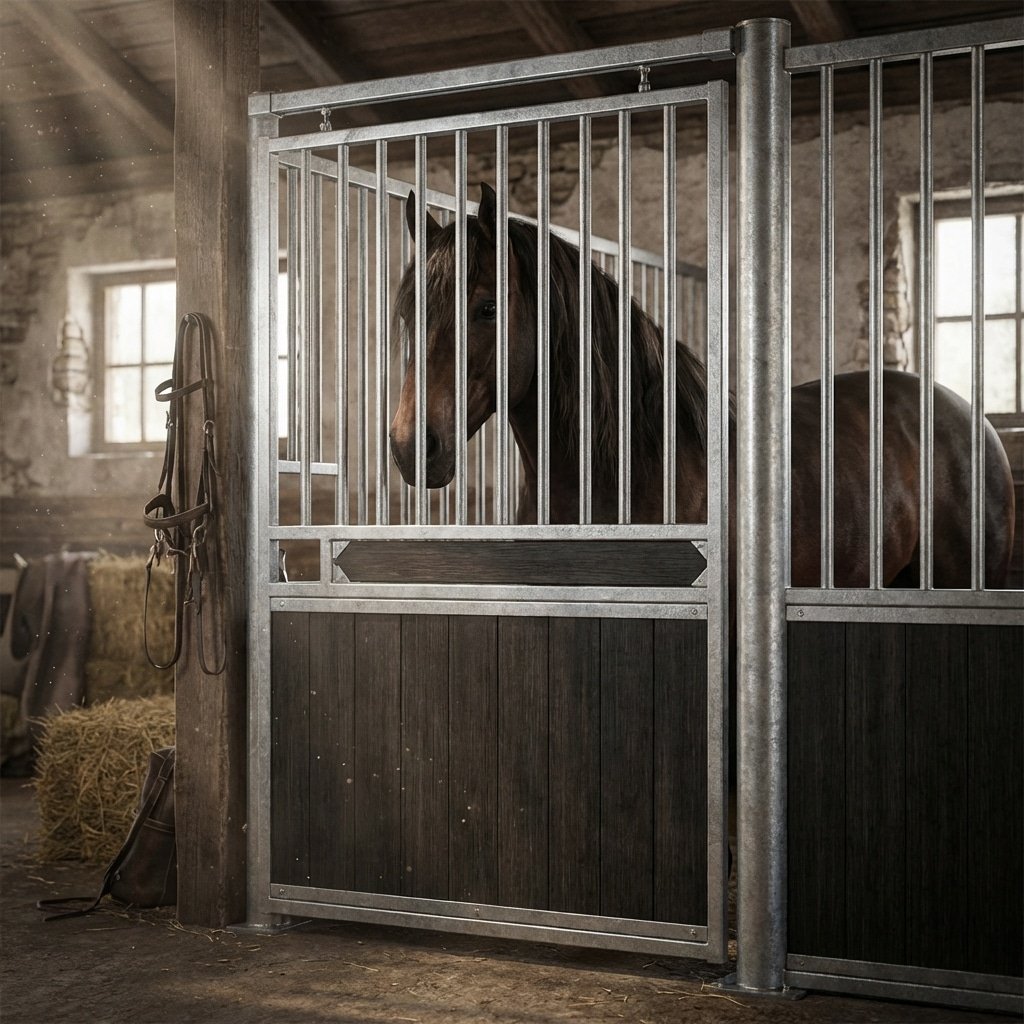
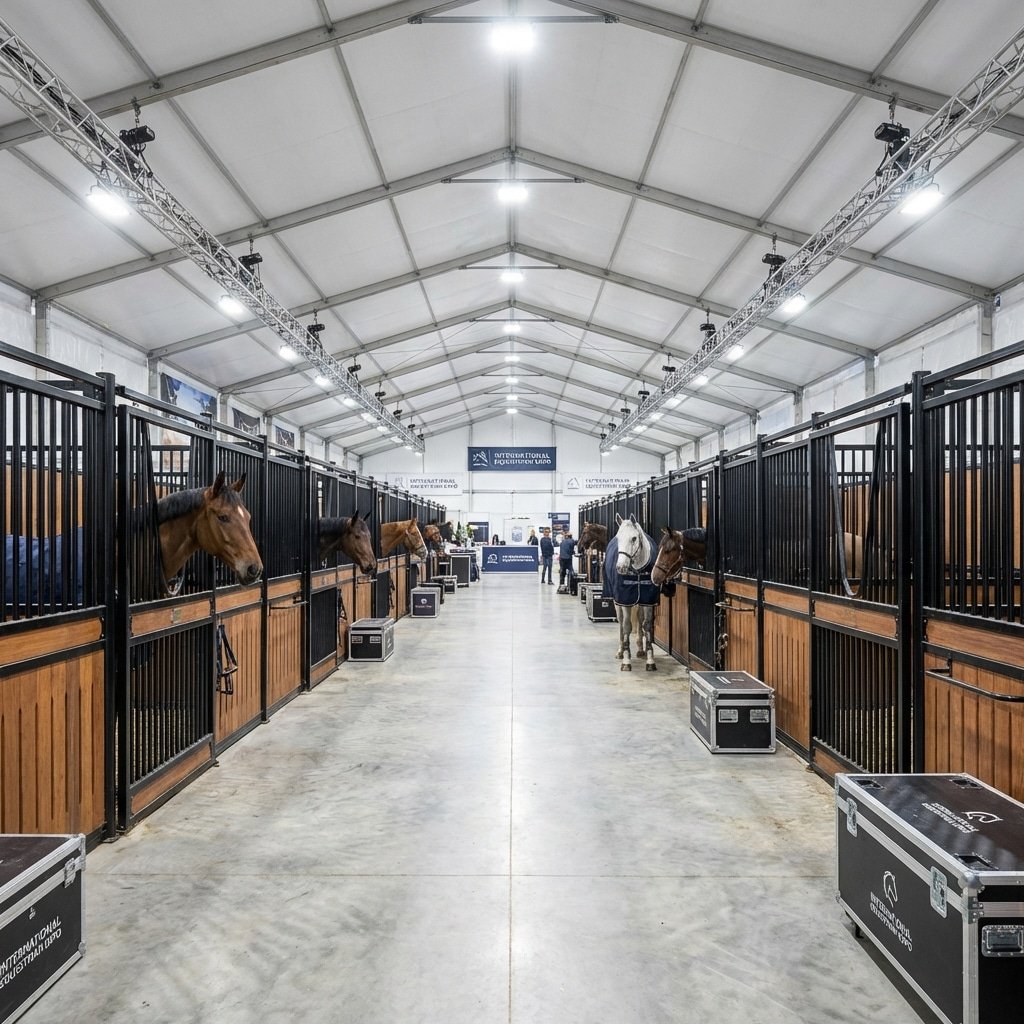
Stressed Horse Safety is the primary variable defining your facility’s liability exposure and insurance premiums. When a 500kg animal panics within a temporary event stall, standard 16-gauge tubing frequently buckles while softwood infills shatter into dangerous projectiles. These structural failures transform minor behavioral incidents into catastrophic veterinary events and costly legal disputes for organizers.
This report validates why 14-gauge Q235B structural steel is the non-negotiable baseline for professional containment. We benchmark the impact resistance of high-density strand woven bamboo against traditional timber, utilizing Janka hardness ratings exceeding 3000 lbf to guarantee kick-proof performance. This engineering strategy secures asset longevity and drastically reduces maintenance overhead for high-volume venues.
The Rise of ESG (Environmental, Social, Governance) in Construction
ESG is no longer optional; it is a regulatory license to operate. With construction causing 34% of global emissions, mandate-compliant materials like renewable bamboo and galvanized steel are now financial necessities.
From Voluntary to Mandatory: The New Compliance Standard
The construction industry accounts for approximately 34% of global CO2 emissions. This massive footprint has forced regulators to shift from asking for voluntary sustainability reports to demanding mandatory disclosures. Frameworks like TCFD (Task Force on Climate-related Financial Disclosures) and SASB are now the baseline, not the exception.
This shift impacts your bottom line directly through green financing. Banks and investors are prioritizing projects that can verify lower embodied carbon. You cannot simply claim a project is “eco-friendly” anymore; you need data proving your materials reduce environmental impact and align with circular economy principles. If your supply chain lacks transparency or relies on high-carbon legacy materials, you risk losing access to premium capital and project approvals.
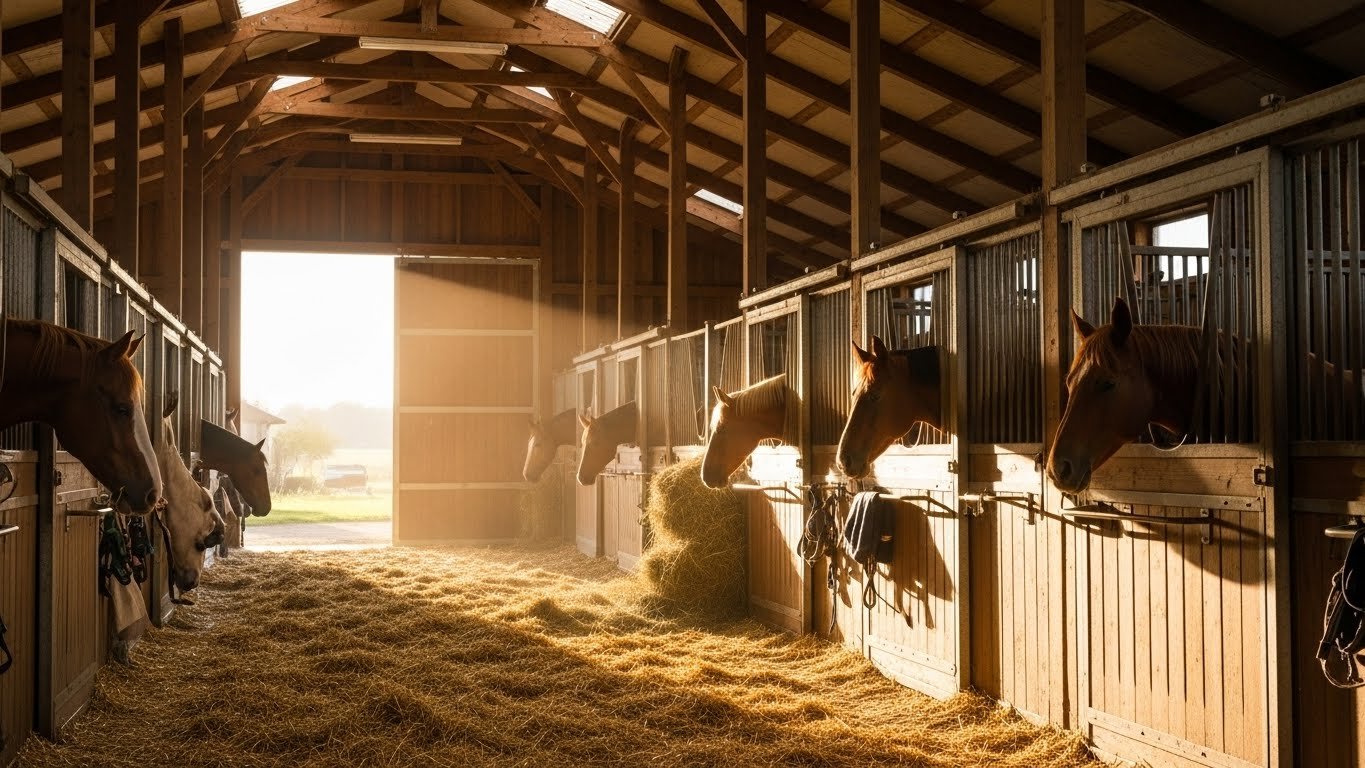
Sustainable Material Choices: Bamboo Infill and Galvanized Longevity
Meeting these new standards requires selecting materials engineered for both carbon efficiency and extreme durability. We align our manufacturing with these ESG goals through three specific technical avenues:
- High Density Strand Woven Bamboo: Unlike traditional hardwoods that take decades to regenerate, bamboo matures in 3-5 years. Our bamboo infill (Janka Hardness > 3000 lbf) is denser than oak and naturally resistant to mold, offering a renewable alternative that doesn’t sacrifice structural integrity.
- ISO 1461 Hot-Dip Galvanization: True sustainability is longevity. Replacing a rusted stable every five years is an environmental failure. We hot-dip galvanize after fabrication, applying a zinc coating exceeding 85 microns. This extends the product lifecycle to 20+ years, drastically reducing replacement waste.
- Low-Carbon Logistics (Flat-Pack): Transport is a major contributor to Scope 3 emissions. Traditional welded stables fill a container with just 12-15 sets (mostly shipping air). Our engineered flat-pack system fits 30-45 sets per 40HQ container. This efficiency cuts transport carbon emissions per unit by over 60%, a critical metric for ESG reporting.
Moving Away from Old-Growth Timber (Oak/Pine)
Traditional timber poses severe injury risks from splintering. We engineer stables with High-Density Bamboo and HDPE to ensure kick-proof safety and zero maintenance.
For decades, Oak and Pine served as the default materials for equine housing. But in a high-volume professional environment—such as riding schools, police units, or breeding farms—traditional wood has become a liability. It rots, it breaks, and most dangerously, it hurts horses. We have shifted our manufacturing focus entirely to engineered materials that eliminate these risks while protecting the asset lifespan for our B2B clients.
The Safety Hazards of Splintering Softwood
The primary reason we advise distributors against stocking softwood stables is the catastrophic injury potential. Pine and lower-grade Oak lack the density to withstand a direct strike from a panicked animal. When a 500kg horse kicks a pine board, the wood does not simply crack; it shatters into jagged shards. These splinters can puncture legs and tendons, turning a minor behavioral incident into a career-ending veterinary event.
Beyond the immediate physical danger, wood creates a biological hazard. Timber is naturally porous. It absorbs urine, water, and saliva, creating a permanent breeding ground for bacteria and ammonia. Facility managers cannot effectively sanitize wood that has soaked up fluids for years; they can only replace it. This cycle of rot and replacement drains operational budgets.
Behavioral issues further degrade wooden structures. Anxious horses often “crib” or chew on soft timber ledges. This constant gnawing compromises the structural integrity of the partition walls and leaves the facility looking dilapidated. A “chew-proof” wood solution does not exist without toxic chemical treatments, which introduces a new set of welfare concerns.
High-Density Bamboo and HDPE: The ‘Kick-Proof’ Standard
To solve the liability issues of timber, DB Stable utilizes materials engineered for impact resistance and hygiene. Our “Kick-Proof Guarantee” relies on specific density metrics that natural wood cannot achieve.
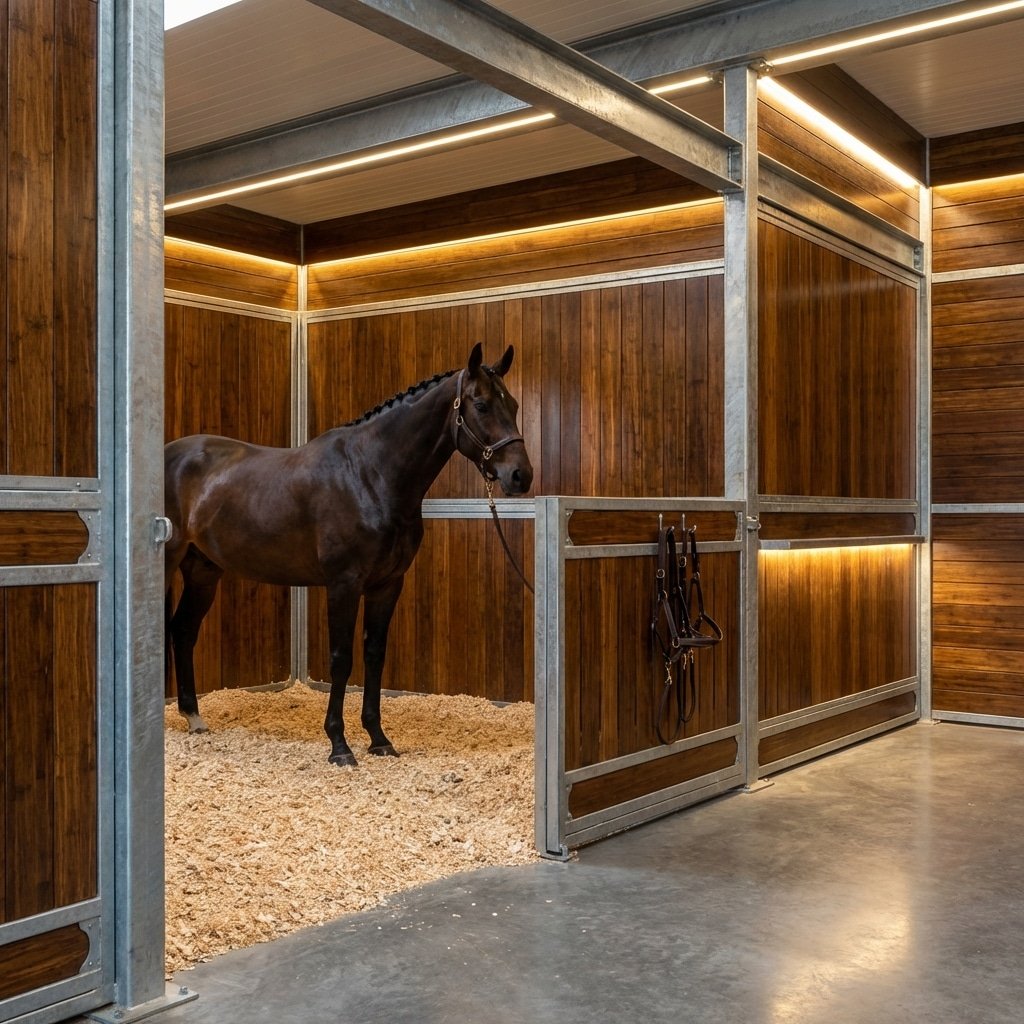
- Strand Woven Bamboo (High Density): We use bamboo processed to a Janka Hardness rating exceeding 3000 lbf. This makes it 3x harder than Red Oak. It is dense enough to resist teeth marks and strong enough to withstand heavy impacts without shattering.
- HDPE (High-Density Polyethylene): For facilities prioritizing utility, we install 28mm-32mm UV-stabilized HDPE planks. This material offers superior shock absorption. If a horse kicks the wall, the material absorbs the energy rather than transferring it back into the leg or shattering.
- Zero Maintenance: Both Bamboo and HDPE are impervious to moisture, rot, and ammonia. Staff can power wash these walls daily without degradation, ensuring a sanitized environment with zero structural decay.
By switching to these engineered infills, facility owners eliminate the risk of splintering injuries and the recurring cost of replacing rotted boards. This ensures the stable remains a safe, professional environment for decades, rather than a maintenance burden after five years.
Premium Modular Stables Engineered For Durability
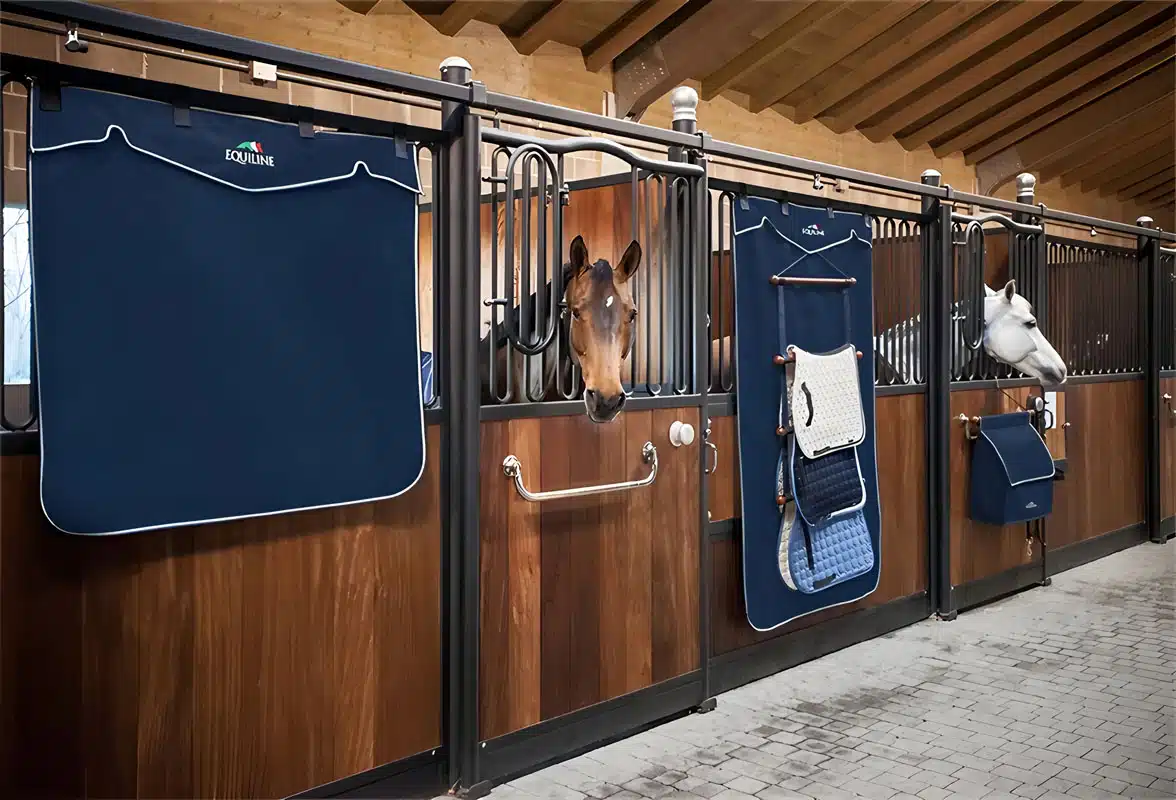
Top Factories Embracing Sustainable Materials
ESG compliance is no longer optional; it is a competitive necessity. Top manufacturers are shifting to Q235B steel and strand-woven bamboo to meet carbon budgets while securing long-term asset value.
| Material Category | Sustainable Standard | Operational Advantage |
|---|---|---|
| Structural Framework | Q235B / Q345B Steel | 100% Recyclable; infinite re-smelting without strength loss. |
| Infill Material | Strand-Woven Bamboo | 3x Harder than Oa k; matures in 3-5 years (vs. 50 years for timber). |
| Lifecycle Protection | Hot-Dip Galvanization (ISO 1461) | Extends asset lifespan to 30-50 years, reducing replacement waste. |
| Logistics | Flat-Pack Modular | High density loading (40HQ = 30-45 sets) slashes shipping carbon. |
The Shift to ESG-Driven Manufacturing
The construction and manufacturing sectors generate approximately 34% of global CO₂ emissions. Consequently, Environmental, Social, and Governance (ESG) criteria have transitioned from marketing fluff to a strict regulatory mandate. By 2026, compliance will directly impact financing access and project bidding. Leaders in the sector are moving away from ideological debates and treating energy choices as pragmatic business decisions. This shift drives the adoption of materials that offer measurable carbon reduction without sacrificing structural integrity.
Engineered Bamboo: The Hardwood Killer
Factories are abandoning old-growth timber (like Oak and Pine) due to depletion concerns and long regeneration cycles. The superior alternative is Strand-Woven Bamboo. Unlike traditional wood that requires decades to mature, bamboo reaches harvest maturity in just 3-5 years. When processed into high-density strand-woven boards, it becomes a verified carbon sink, sequestering carbon even after processing.
- Density & Durability: Industrial processing compresses bamboo fibers to achieve a Janka hardness exceeding 3000 lbf, making it significantly tougher than Oak.
- Carbon Performance: Moso bamboo forests sequester 20-40 tons of carbon per acre annually, nearly 4x the rate of some tree species.
- Regeneration: The root system remains intact after harvest, preventing soil erosion and allowing rapid regrowth without replanting.
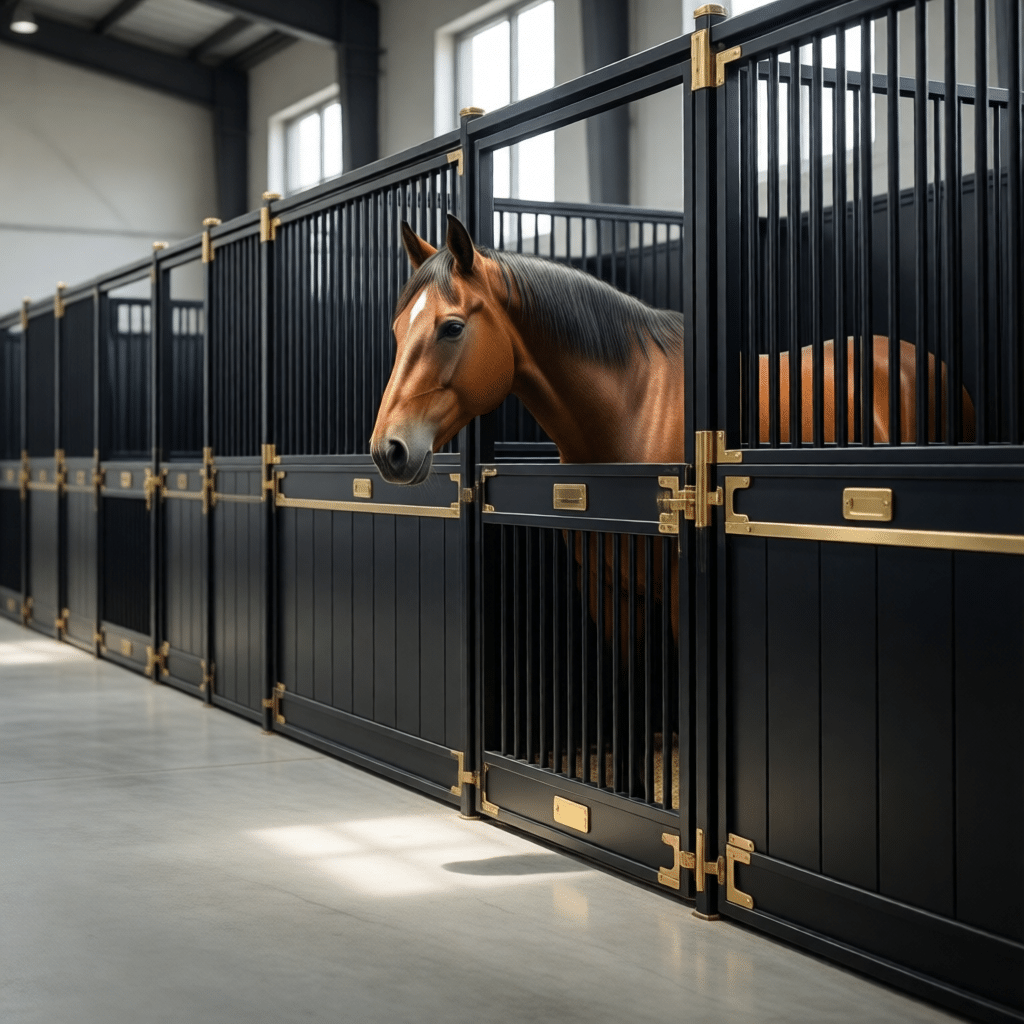
Q235B Steel: The Circular Economy Standard
In the industrial B2B context, Q235B Structural Steel is the backbone of sustainable factories. Unlike concrete, which creates massive landfill waste at the end of a building’s life, steel operates in a closed-loop system. It is 100% recyclable and retains its structural properties through infinite re-smelting cycles.
The sustainability of steel is defined by its longevity. We utilize Hot-Dip Galvanization (ISO 1461) to coat the steel in zinc. This is not merely aesthetic; it prevents corrosion for decades. A stall front that lasts 30 years creates a significantly lower environmental footprint than a painted mild steel product that rusts and requires replacement every 5-7 years.
Modular Logistics as a Carbon Strategy
Sustainability extends beyond raw materials to logistics. Traditional fully welded stable panels are bulky, allowing only 12-15 sets per 40HQ container. This inefficiency doubles shipping emissions per unit.
Top factories now utilize modular, flat-pack designs. By engineering systems that bolt together on-site, we increase container capacity to 30-45 sets. This drastic improvement reduces the carbon footprint per stall by over 60% during transit, aligning logistics costs with environmental responsibility.
Strand-Woven Bamboo: A High-Yield Carbon Sink
Strand-woven bamboo acts as a massive carbon sink, sequestering -600 kg of CO₂ per cubic meter while delivering structural hardness superior to steel and concrete.
Achieving a Negative Carbon Footprint
Research indicates a carbon footprint of -600 kg CO₂-eq/m³ for strand-woven bamboo. This material effectively absorbs more carbon during its growth phase than its industrial production emits. Unlike traditional timber, which requires decades to regenerate, bamboo plantations operate on rapid cycles, sequestering up to 306 tonnes of carbon per hectare over 60 years.
The critical factor here is density. By shredding bamboo and compressing it under extreme pressure, we lock biogenic carbon into the material for the product’s entire lifespan. This process turns stable partitions into long-term carbon vaults rather than temporary fixtures.
Technical Specs: 3000 lbf Janka Hardness
Carbon sequestration is meaningless if the product fails in a stable environment. DB Stable utilizes 28mm-38mm High Density Strand Woven boards specifically designed for impact resistance. Standard wood cannot compete with the abuse a 600kg horse dishes out.
- Hardness Rating: > 3000 lbf (Janka), making it 3x harder than Oak.
- Material Density: > 1,100 kg/m³, exceeding that of water.
- Resistance: Naturally impervious to mold and rot, a non-negotiable requirement for humid, ammonia-rich stable environments.
Frequently Asked Questions
How to build an ESG compliant equestrian center?
Building an ESG-compliant facility requires a structured attack across three fronts. Environmentally, you must prioritize renewable energy and closed-loop systems. Leading facilities like Equitom generate 80% of their electricity via solar and achieve 100% water self-sufficiency through rainwater harvesting. Socially, you must address staff burnout. Implement documented safety plans, risk assessments, and wellness facilities for employees, not just horses. Governance requires data, not slogans. Establish board-level oversight and publish measurable targets for waste diversion and vendor compliance before pursuing external certification.
Is bamboo a sustainable building material?
Yes, but with a caveat regarding processing. Bamboo is highly renewable, reaching maturity in 3-5 years compared to 30-50 years for hardwoods, and it self-regenerates from the root without replanting. It absorbs up to four times more CO₂ than many tree species. However, raw bamboo has poor natural durability and rots quickly. For sustainable construction, you must use strand-woven (engineered) bamboo. This processing maintains the carbon benefits while providing the compressive strength of concrete and the density required to resist insects and decay.
Environmental impact of steel vs wood barns?
The choice depends on whether you prioritize embodied carbon or lifecycle longevity. Wood wins on production emissions; manufacturing steel is energy-intensive and produces more initial pollution. However, steel wins on circularity and durability. Steel is 100% recyclable without property loss and, when hot-dip galvanized, lasts 30-50 years with zero structural degradation. Wood barns often require chemical treatments, maintenance, and eventual replacement due to rot or warping. For a permanent, “build once” asset, steel offers a superior long-term environmental profile.
Green certifications for horse stables?
There is no dedicated “Green Stable” certification. However, facilities can pursue LEED certification by adapting commercial building standards. Key credits come from natural ventilation (stack effect), stormwater management, and sustainable material sourcing. Alternatively, strict adherence to regional codes like CalGreen (California) ensures compliance through mandatory water conservation and construction waste recycling. Rather than chasing a plaque, focus on site planning: use pervious pavement, install graywater systems, and implement on-site composting.
Eco-friendly horse barn manufacturers?
Several manufacturers have integrated sustainability into their production models. DC Structures specializes in responsibly sourced heavy timbers, reducing the carbon footprint compared to concrete. MD Barnmaster and Coffman Barns utilize modular, prefab designs that significantly reduce construction waste and site disturbance. WYO Custom Builders focuses on steel structures, which eliminate the need for toxic chemical preservatives required by treated lumber. Additionally, firms like Sustainable Stables offer master planning to integrate the physical structure with the land’s natural ecosystem.
Q235B Steel: The 100% Recyclable Framework
Q235B steel combines 235 MPa yield strength with high ductility to prevent brittle fracture, offering a safer, 100% recyclable alternative to chemically treated timber.
Mechanical Properties: Yield Strength and Ductility
We strictly utilize Q235B low-carbon structural steel for our standard frameworks because it strikes the critical balance between rigidity and ductility. In an equestrian environment, the primary risk isn’t just the load of the roof, but the dynamic, high-velocity impact of a horse kick. Unlike harder, high-carbon steels that become brittle and prone to snapping under sudden force, Q235B allows for slight deformation without catastrophic failure.
- ASTM A36 Equivalence: This grade aligns with global structural standards, ensuring predictable performance unlike ungraded commercial tubing often found in budget alternatives.
- 235 MPa Yield Strength: The material sustains significant pressure while maintaining the partition’s structural integrity.
- Superior Weldability: With a carbon content below 0.22%, Q235B supports deep, consistent welds essential for our “Hot-Dip After Fabrication” process, preventing the zinc coating from peeling at joints.
- Impact Absorption: The material’s ductility ensures that energy from a kick is absorbed through deformation rather than releasing via a sharp, dangerous fracture.
Sustainable Lifecycle and Asset Recovery
Beyond structural safety, steel frameworks offer a clear economic and environmental exit strategy that timber cannot match. Wood treated with preservatives like CCA (Chromated Copper Arsenate) becomes hazardous waste at the end of its lifecycle, often requiring specialized, costly disposal to prevent soil contamination. Steel operates on a circular economy model.
- Zero Landfill Waste: Steel remains the most recycled material globally. When a facility undergoes renovation or demolition, the framework is melted down and repurposed with no loss of metallurgical quality.
- Scrap Value Retention: A steel facility is a liquid asset. The raw material retains intrinsic market value, meaning the owner can recoup a portion of the initial investment as scrap, whereas rotting timber or cracked composite plastics incur removal fees.
- Chemical Safety: Using steel eliminates the need for wood preservatives, protecting the soil, groundwater, and the horses from potential chemical leaching.
Frequently Asked Questions
How to build an ESG compliant equestrian center?
Building an ESG-compliant center requires moving beyond aesthetics to address measurable environmental and social impacts. This involves a structured approach across energy, waste, and welfare.
- Energy & Emissions: Implement solar generation to offset grid dependency. Leading facilities like Equitom Equine Hospital generate 80% of their electricity on-site. Establish a carbon budget that tracks operational energy and staff commuting.
- Water Management: Install closed-loop systems. Rainwater harvesting for arena dampening and wash bays significantly reduces municipal water strain.
- Biodiversity: Dedicate land to natural habitats rather than manicured lawns. Planting native vegetation supports local ecosystems and reduces maintenance chemicals.
- Social Responsibility: Ensure staff safety with documented risk assessments for handling horses and machinery. Provide decent facilities for grooms and support staff to address the industry’s historical work-life balance issues.
- Governance: Formalize these policies. Don’t just “do good”—track data, report on diversity and emissions year-over-year, and require your suppliers to meet similar standards.
Is bamboo a sustainable building material?
Yes, but the type of bamboo matters. While bamboo is a rapid-growth resource (harvestable in 3-5 years vs. 30-50 for hardwood) and an excellent carbon sink, raw bamboo has poor natural durability and rots quickly.
For construction, specifically in stables, sustainability is only valid if the material lasts. We use High-Density Strand Woven Bamboo (Janka hardness > 3000 lbf), which is engineered to resist impact, moisture, and pests. This processing allows the material to retain the environmental benefits of rapid renewability and carbon sequestration without the short lifespan associated with raw bamboo poles.
Environmental impact of steel vs wood barns?
The choice depends on whether you prioritize embodied carbon (production phase) or lifecycle circularity (end-of-life).
- Wood: Wins on production emissions. Trees grow naturally, requiring less energy to harvest than mining and smelting ore. However, wood barns are susceptible to rot, cribbing (chewing), and warping, often leading to shorter lifespans or the use of chemical preservatives that prevent safe disposal.
- Steel: Wins on longevity and recyclability. While production is energy-intensive, steel is 100% recyclable without strength loss. A Hot-Dip Galvanized steel barn can last 30-50 years with minimal maintenance and retains scrap value, whereas a rotted wood barn becomes landfill waste.
Green certifications for horse stables?
There is no dedicated “Green Stable” certification. However, facilities can pursue broader commercial certifications or adhere to regional codes.
- LEED (Leadership in Energy & Environmental Design): Large commercial equestrian centers can apply for LEED credits by focusing on site planning, water efficiency, and sustainable materials (like recycled steel or bamboo), even though the framework isn’t specific to agriculture.
- Regional Codes (e.g., CalGreen): In places like California, agricultural structures must often meet mandatory green building standards regarding construction waste reduction and water conservation.
- Practical Design: Most “green” stables achieve status through design rather than plaques—utilizing stack-effect ventilation, natural lighting to reduce electrical load, and permeable ground surfaces for stormwater management.
Eco-friendly horse barn manufacturers?
Several manufacturers have shifted toward sustainable practices, usually specializing in either responsible timber sourcing or modular steel efficiency.
- DC Structures: Known for using responsibly sourced heavy timbers from the Pacific Northwest, focusing on renewable wood resources.
- MD Barnmaster & Coffman Barns: These companies utilize modular steel construction. The prefab nature reduces on-site construction waste significantly compared to traditional builds, and the metal materials offer high recyclability.
- Mass Timber Specialists: Emerging firms are using Cross-Laminated Timber (CLT) which sequesters carbon while providing structural strength comparable to concrete, though this is a premium, developing market segment.
Frequently Asked Questions
Why is 14-gauge steel recommended over 16-gauge for horse stables?
We strictly adhere to a 14-gauge (minimum 2.0mm) standard because 16-gauge tubing lacks the mass to safely absorb a panic kick from a 500kg horse. Thinner 16-gauge steel often buckles and shears under high-velocity impact, creating sharp “knife-edge” fracture points that can sever tendons. 14-gauge Q235B structural steel maintains integrity under stress, preventing catastrophic injury.
How does bamboo infill compare to traditional hardwood for safety?
Traditional softwoods like pine or spruce often shatter into dangerous jagged shards when kicked. Our High-Density Strand Woven Bamboo is engineered for safety, boasting a Janka hardness rating exceeding 3000 lbf—three times harder than Oak. This density resists cribbing and prevents the splintering issues common with standard lumber infills.
What is the difference between hot-dip galvanization and pre-galvanized steel?
This distinction defines the lifespan of your facility. Pre-galvanized steel is zinc-coated before welding; the heat from welding burns this protection off, leaving joints exposed to rust immediately. Our “Hot-Dip After Fabrication” process (ISO 1461) dips the completely welded frame into molten zinc, sealing every seam and weld with a heavy protective coating (>85 microns) that prevents internal and external corrosion.
Are steel horse barns environmentally sustainable?
Yes, particularly regarding end-of-life disposal. Pressure-treated wood contains chemical preservatives that turn old timber into toxic landfill waste. In contrast, our Q235B steel framework is 100% recyclable indefinitely without losing strength. Steel structures also offer superior durability (30-50 years), reducing the environmental cost associated with frequent repairs and replacements.
Do solid partitions actually help reduce horse stress?
Solid partitions create a necessary visual barrier that prevents “resource guarding” anxiety. Horses are naturally territorial when eating; seeing a neighbor during feeding time can spike cortisol levels and provoke aggression. By blocking this line of sight, solid lower partitions allow anxious horses to relax, leading to better digestion and a calmer stable environment.
Final Thoughts
Choosing lightweight 16-gauge tubing or softwood infill saves upfront capital, but it leaves your facility vulnerable to injury lawsuits and ESG compliance failures. We enforce a strict 14-gauge Q235B steel standard to ensure your stables withstand 500kg impacts while meeting the rigorous demands of modern sustainability mandates. This approach secures your insurance standing and eliminates the financial drain of the rot-and-replace cycle.
Validate these safety metrics on your own site before scaling up. We recommend scheduling a trial delivery of our flat-pack system to test the assembly efficiency and ISO 1461 galvanization quality firsthand. Contact our commercial team to configure a sample load that fits your immediate project timeline.

 English
  Spanish
  French
  Arabic
  German
0 Comments