


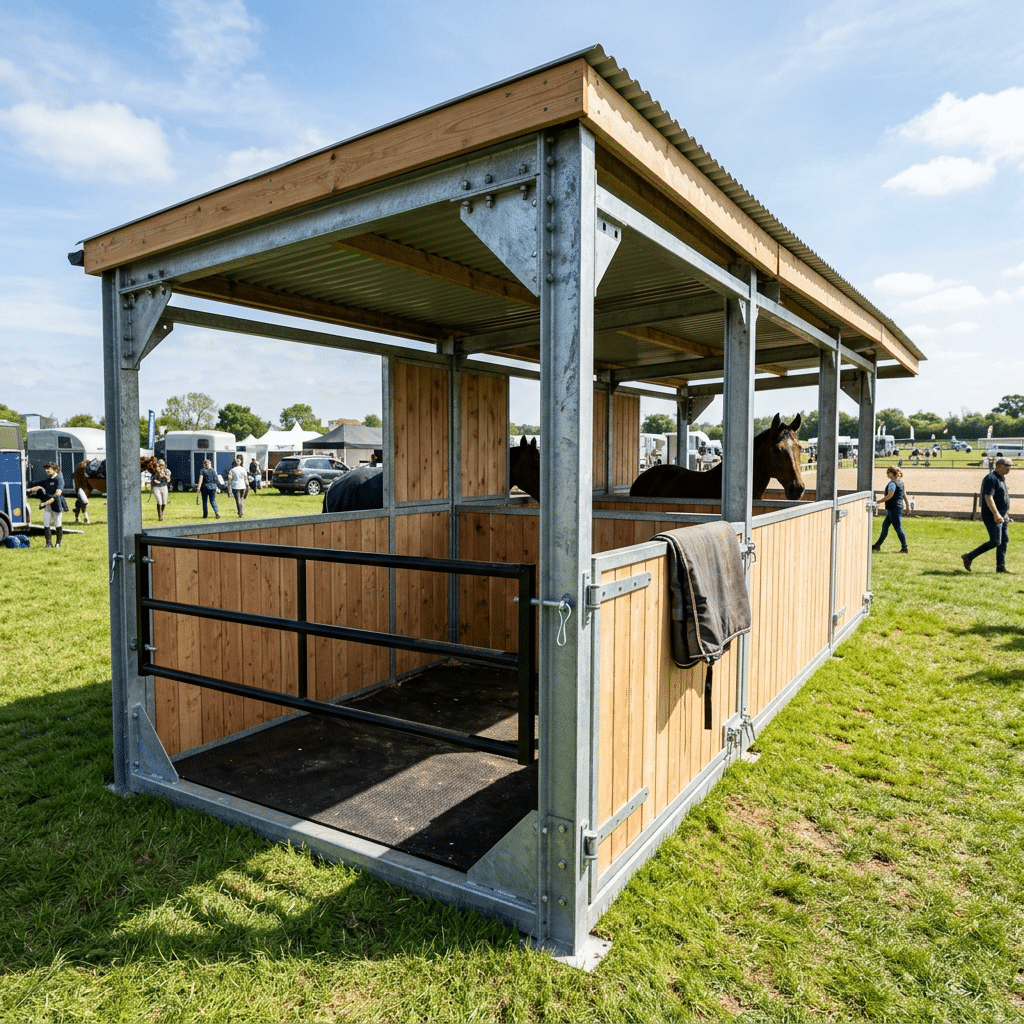
Board replacement in a fully welded stable frame is a costly, destructive process. It requires cutting the structural steel, which voids the factory’s rust protection and creates hours of labor for a repair that permanently weakens the asset and invites corrosion.
This analysis shows how a modular U-channel design eliminates this cycle. The system is engineered to preserve the BS EN ISO 1461 hot-dip galvanized coating, allowing one person to complete the repair in minutes without compromising the frame’s structural integrity.
The Inevitable Farm Accident (Tractors vs. Stables)
On any working farm, equipment collisions with stable panels are inevitable. This reality demands stables built with structural integrity and a modular design for simple, fast repairs.
Why Stable Panels Are Common Casualties of Farm Equipment
It’s just a fact of farm life. Tractors, front-end loaders, and other machinery are always maneuvering in tight spa
ces near the barn. Low-speed bumps and scrapes happen all the time.
These impacts usually damage the lower sections of stable walls and doors. This is the most common point of contact, and it’s why the structural design of these areas is so critical for long-term durability and reparability.
The Role of Structural Steel in Resisting Impact
A stable’s first line of defense is its steel frame. The material specification directly determines how well it stands up to the daily operational risks of a farm. Cheap, thin-walled tubes will buckle and fail, but a properly engineered frame can absorb these hits.
- Standard Material: We build frames with Q235B Structural Steel. We enforce a minimum wall thickness of 14-Gauge (2.0mm) to ensure the frame can take low-speed impacts without deforming.
- Cold Climate Option: For extreme conditions, we use Q345B steel. It offers superior low-temperature toughness, which prevents brittle fractures from equipment bumps during harsh winters.
The Nightmare of Replacing Boards in a Fully Welded Frame
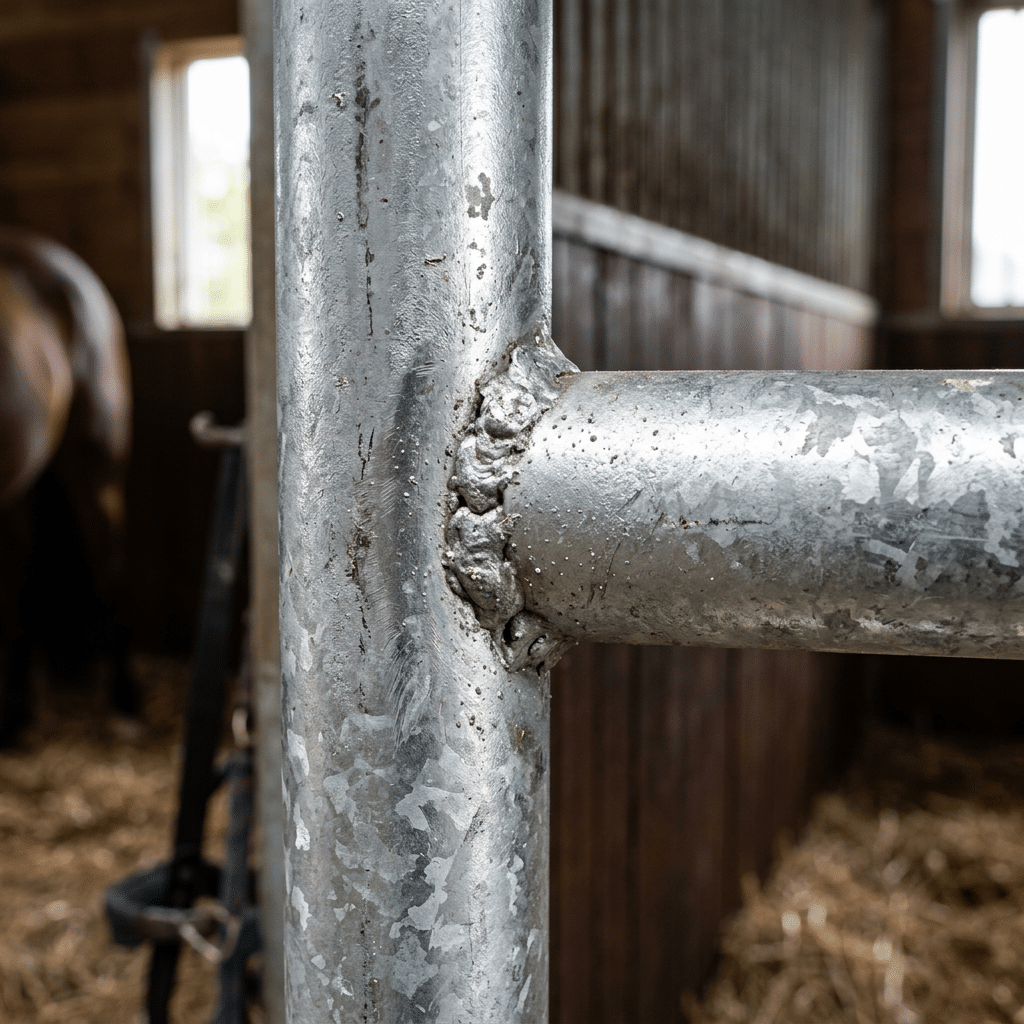
Replacing a board in a fully welded stable requires cutting the steel frame. This destroys the factory rust protection, compromises structural integrity, and creates a costly, weak point prone to corrosion.
The Labor and Risk of Cutting Welded Frames
When a board needs replacement in a non-modular, welded stall, there’s no easy way to slide it out. The only option is to cut into the structural steel tubing with specialized tools. This isn’t just a simple cut; you are compromising the engineered integrity of the frame. Re-welding the section introduces intense heat, which can distort the steel and weaken the entire structure. That repaired weld becomes a new stress point, making it the most likely spot to fail from a future horse kick.
Destroying the Factory Hot-Dip Galvanized Coating
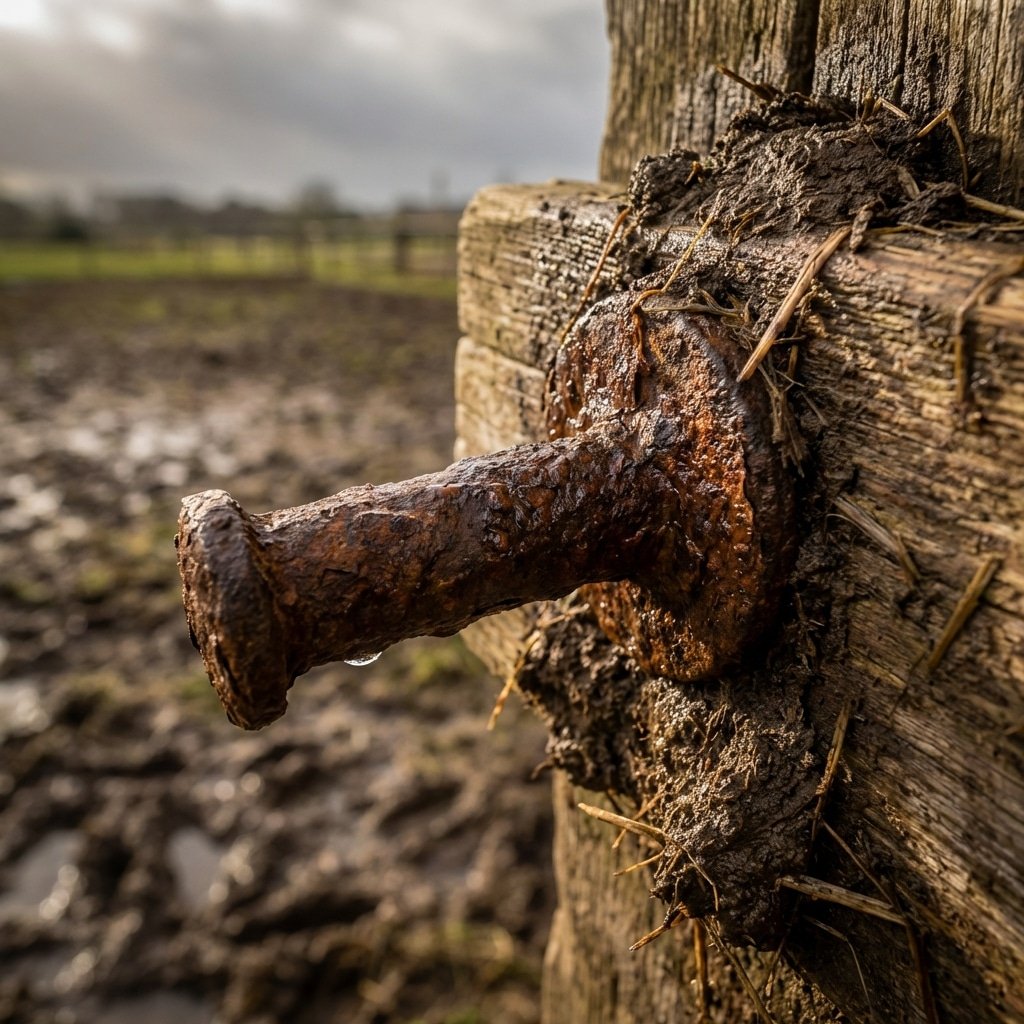
The biggest long-term problem is rust. A proper stable is protected by a hot-dip galvanized coating applied after all welding is finished, conforming to the BS EN ISO 1461 standard. This process creates a thick, metallurgically bonded layer of zinc over every surface. When you cut and weld that frame in the field, you burn this critical protection away.
- The repair site is immediately exposed as raw, unprotected steel, which begins to corrode almost instantly, especially in a damp barn environment.
- Using a can of cold galvanizing spray is a temporary patch, not a true repair. It provides a thin, paint-like layer that offers minimal protection compared to the original hot-dip process.
- Field repairs can never replicate the complete immersion of factory galvanization, leaving the inside of the tubing and the heat-affected zone vulnerable to rusting from the inside out.
Custom Stables Engineered for Any Climate
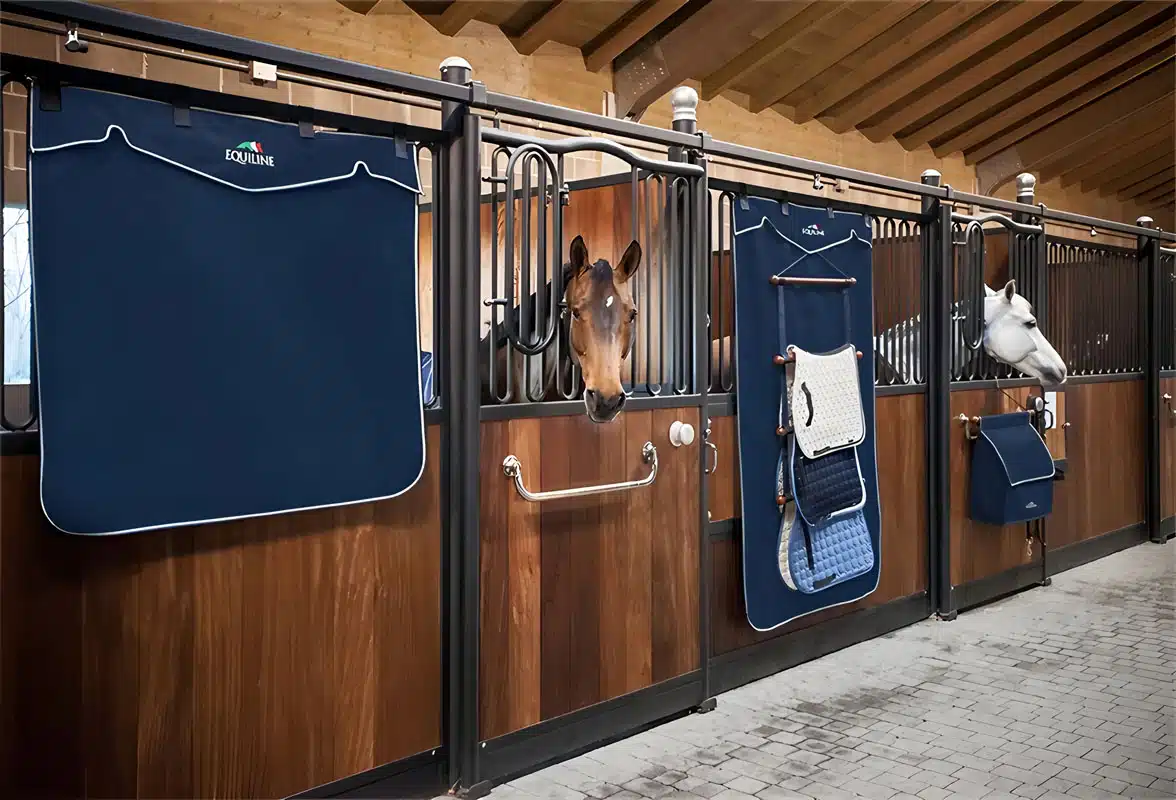
DB’s U-Channel Engineering: The “Guillotine” Drop-In Method
Our U-channel steel frame lets you replace a single damaged HDPE or Bamboo plank by sliding it out from the top. A repair takes minutes, not hours, without dismantling the panel.
Fully welded stable frames are a maintenance liability. When a horse kicks through a single board, the entire panel often needs to be cut apart and re-welded to fix it. This process creates downtime and drives up labor costs. We engineered a system that eliminates this problem entirely.
| Merkmal | DB Stable U-Channel System | Conventional Welded Frame |
|---|---|---|
| Board Replacement Time | 5-10 Minutes | 2-4+ Hours |
| Required Labor | One person, basic tools | Skilled welder, grinders, paint |
| Material Waste | Only the single damaged plank | Potential for multiple planks and frame sections |
| Strukturelle Integrität | Original factory strength is maintained | Compromised; on-site welds are weaker |
How the Drop-In U-Channel System Works
The design is simple and effective. Instead of welding infill boards into a fixed cage, we built the frame to act as a vertical track. This allows for quick and easy access to any individual board.
- The vertical posts of every stable panel have integrated U-channels built into the frame.
- Infill boards are dropped into these channels one by one from an open slot at the top, stacking to form a solid, rattle-free wall.
- To replace a damaged board, you simply unbolt the top cap, slide out the planks above the damaged one, replace it, and slide them back in.

Material Compatibility: Frame and Infill Specifications
The system’s reliability depends on precise manufacturing tolerances between the steel frame and the infill planks. We use specific materials to ensure a perfect fit that is both easy to service and strong enough to withstand daily abuse.
- Steel Frame: We use Hot-Dip Galvanized Q235B structural steel as standard. For cold climates where steel can become brittle, we specify Q345B for its superior low-temperature impact toughness.
- Infill-Optionen: The channels are engineered for a perfect fit with our 28mm-32mm UV-stabilized HDPE or our 28mm-38mm high-density strand woven Bamboo planks.
- Engineering Fit: The design ensures planks slide smoothly into the channels during installation but remain completely secure against kicks and impacts, with no rattling or shifting.
Sourcing Replacement Bamboo/HDPE Planks
Source high-density bamboo for hardness or UV-stabilized HDPE for a zero-maintenance, rot-proof alternative. Ensure plank thickness (28mm-38mm) matches the stable’s existing U-channels for compatibility.
Comparing Bamboo vs. HDPE Market Options
When distributors or project managers need to replace infill boards, the decision usually comes down to two materials. High-density strand-woven bamboo is incredibly hard and appeals to clients who prioritize sustainability. On the other hand, recycled HDPE offers a completely different value: it’s a rot-proof, zero-maintenance solution that absorbs impact, making it ideal for high-moisture environments or operations that need to minimize upkeep.
DB Stable’s Infill Plank Specifications
To ensure compatibility and performance, we stick to precise material specifications. These are the two options we engineer for our stall systems, designed to fit standard U-channels.
- High-Density Strand Woven Bamboo: 28mm-38mm thick. This material has a Janka Hardness rating over 3000 lbf, making it about three times harder than oak. It’s a premium choice for its durability and resistance to mold.
- UV Stabilized HDPE: 28mm-32mm thick. This provides a completely maintenance-free alternative. It absorbs kicks, won’t rot or warp, and is the go-to for facilities in wet climates or for quarantine stalls that require frequent power washing.
Adjusting for Tolerance and Shifting
tyle=”border-left: 4px solid #7E6849; background-color: #f9f9f9; line-height: 1.8;”>
Foundations settle and materials expand. Our deep U-channels give infill boards room to move, ensuring a secure fit that won’t bind or create unsafe gaps.
The Challenge of Real-World Imperfections
No large-scale installation is ever perfectly square or dimensionally exact. Concrete floors settle over time, steel posts may not be perfectly plumb, and the components themselves have minor manufacturing variations. These small imperfections accumulate in a process known as tolerance stacking, where a millimeter here and there can add up to a significant fitment problem across a 4-meter panel.
Materials also respond to their environment. Wood, a common infill choice, naturally expands and contracts with changes in humidity and temperature. A plank that fits perfectly on a dry winter day might bow or crack when it swells during a humid summer. A system built with zero tolerance is a system destined to fail.
U-Channel Design: The Built-In Solution
We engineer our stable systems to account for real-world conditions from the start. The solution is found in the depth and clearance of our steel U-channels that hold the infill planks.
- Our U-channels provide necessary clearance. This allows infill planks to be dropped in easily during installation, even if the support posts aren’t perfectly parallel. It saves installers time and frustration.
- The design accommodates the natural expansion of materials. For our high-density strand woven bamboo, this space prevents the boards from bowing under pressure, which maintains the structural integrity and appearance of the stall wall.
- For a completely stable option, our UV-stabilized HDPE infill minimizes thermal expansion. This material offers a zero-maintenance solution that remains dimensionally consistent in any climate, from the heat of Australia to the frost of Northern Europe.
Häufig gestellte Fragen
How do I replace a damaged infill plank in my DB Stable?
Our U-Channel system makes replacement straightforward. You typically only need to remove a few top or side fasteners to slide out the damaged plank and drop the new one in. Since our HDPE and Bamboo planks are pre-cut to size, no on-site cutting is usually required.
How durable are the steel frames against kicks or accidental impacts?
Our frames are engineered for safety and resilience. We use Q235B structural steel and offer an upgrade to Q345B low-alloy steel for superior impact toughness in cold climates. This ‘Kick-Proof’ design is supported by heavy-gauge tubing and our Hot-Dip After Fabrication process.
Where can I source replacement Bamboo or HDPE planks?
To ensure a perfect match in dimensions, color, and specifications like UV resistance, we recommend contacting us or your original distributor. We provide planks cut to fit our systems, including high-density strand-woven Bamboo and zero-maintenance HDPE options.
What is ‘Hot-Dip After Fabrication’ and why is it important?
This is our core quality standard. We fully weld the entire steel panel before it is submerged in molten zinc. This process coats every surface and weld to ISO 1461 standards for maximum rust protection, which is superior to welding pre-galvanized tubes that leave welds vulnerable.
Abschließende Überlegungen
Fully welded stables seem cheaper until a single board breaks. The cost of cutting, welding, and compromising the factory galvanization (ISO 1461) falls directly on your customer, eroding your brand’s value. Our modular U-channel design turns a costly structural repair into a simple, 5-minute parts replacement.
Verify the engineering for yourself. Request our full technical catalog or a trial order of 3-5 stables to test the system’s fit and finish. Our team is ready to discuss OEM specifications for your market.

 German
  English
  Spanish
  French
  Arabic
0 Kommentare