


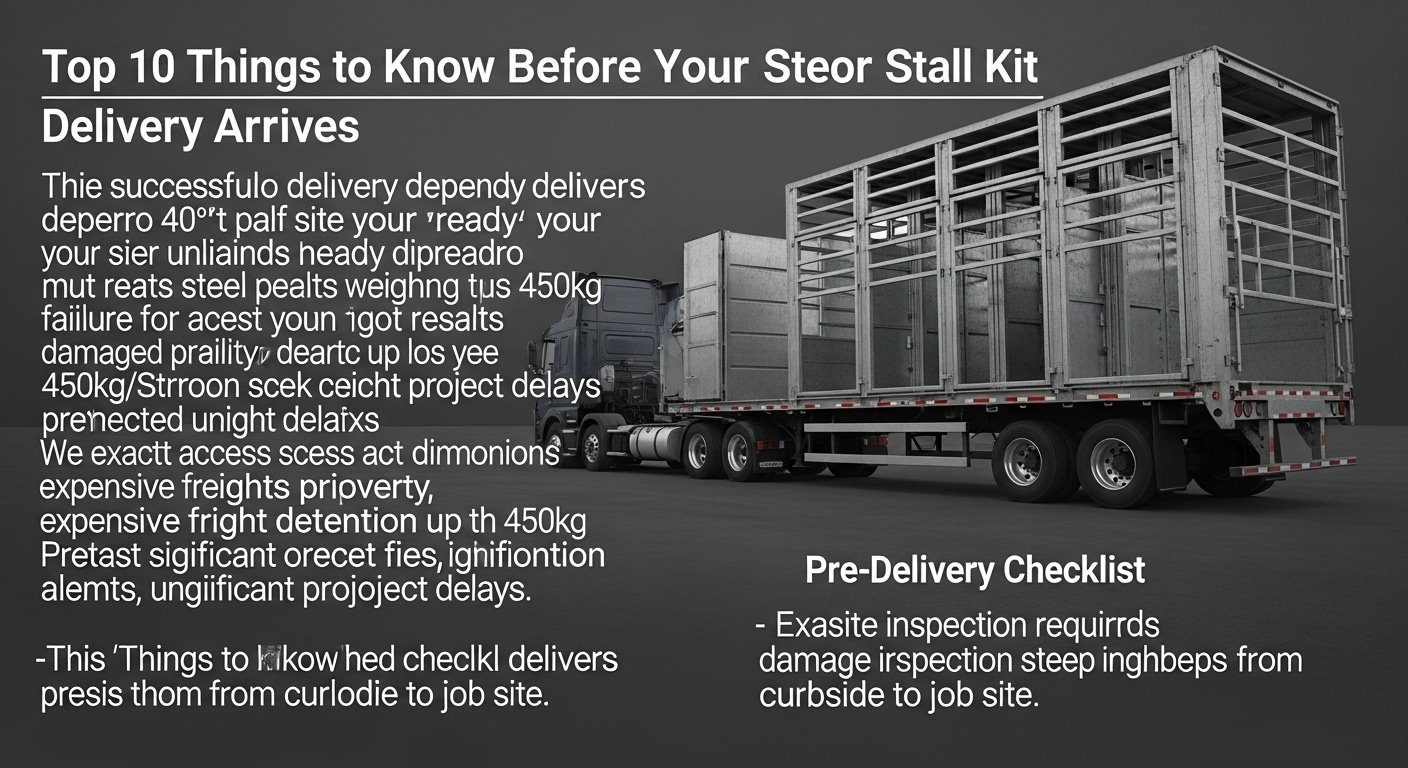
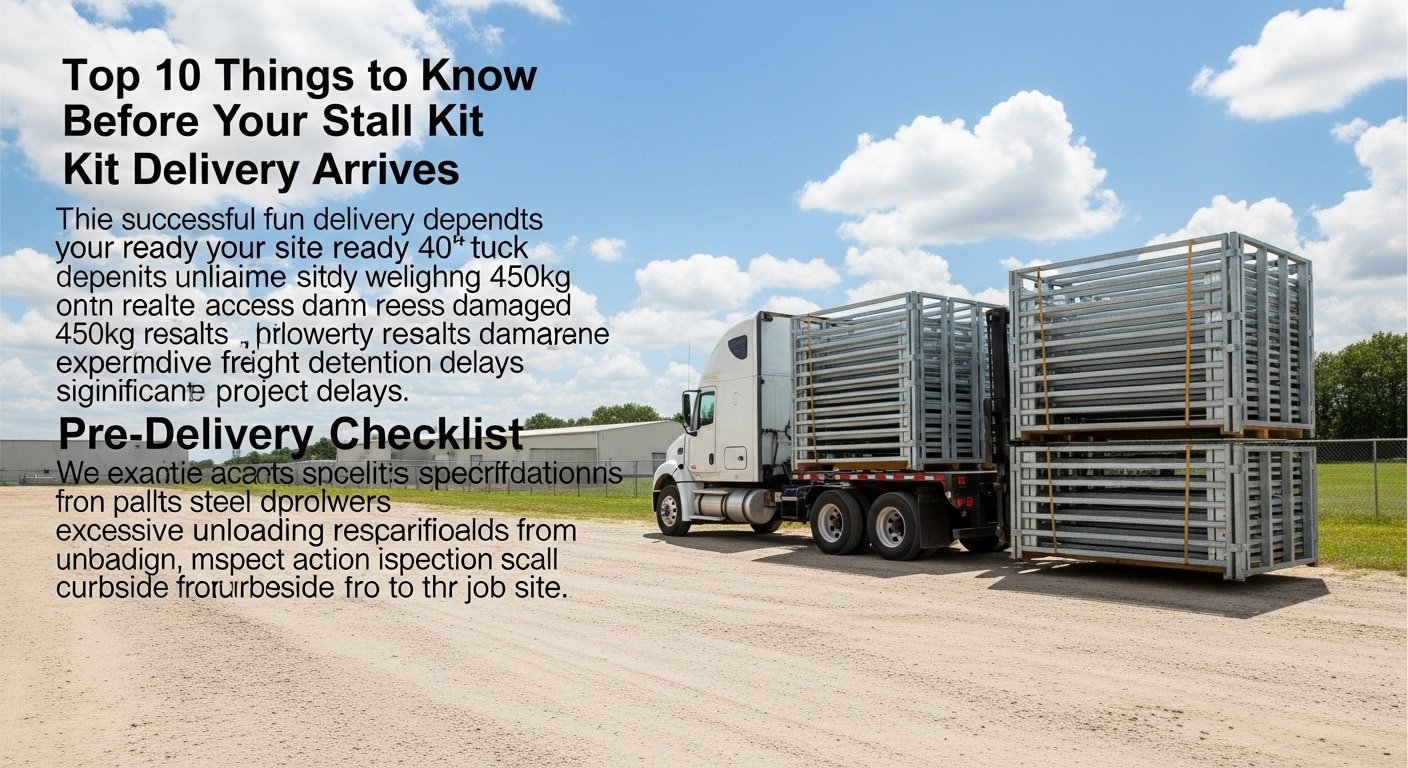
A successful stall kit delivery depends on your site being ready for a 40-foot truck. Failure to plan for unloading steel pallets weighing up to 450kg often results in damaged property, expensive freight detention fees, and significant project delays.
This pre-delivery checklist outlines the critical preparations. We provide the exact access dimensions, forklift specifications, and damage inspection steps required to ensure a safe and efficient unloading process from curbside to job site.
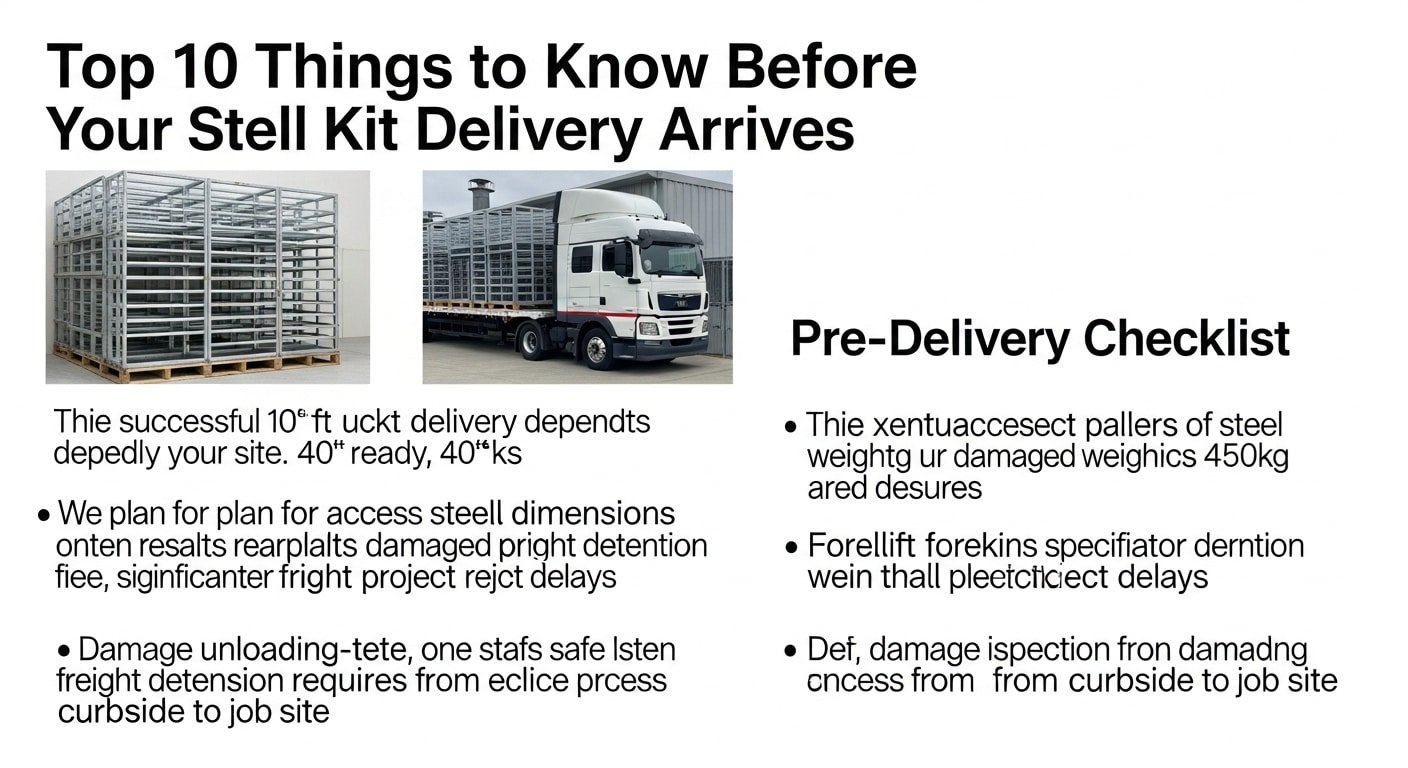
How to Inspect for Shipping Damage (The Checklist)
Schneller Vergleich
| Inspection Step | Kategorie | Main Benefit | Urteil |
|---|---|---|---|
Note Damage on the Delivery Receipt Before Signing | Dokumentation | Protects Freight Claims | Essential for creating legal proof of damage, but requires immediate action while the driver is present. |
Conduct a Thorough Exterior Assessment | Physical Inspection | Identifies Potential Concealed Damage | A quick, non-invasive check to identify high-risk shipments, though it doesn’t confirm the product’s internal condition. |
Photograph Everything as Evidence | Dokumentation | Provides Visual Proof for Claims | Excellent for creating an indisputable visual record, but requires a camera to be available during delivery. |
Verify All Packages Are Accounted For | Physical Inspection | Prevents Loss from Shortages | Effectively protects against loss from missing items, but can be time-consuming for larger shipments. |
Report Concealed Damage Promptly | Reporting | Preserves Claim Rights Post-Delivery | Allows claims for non-obvious damage, though these are generally more difficult to win than damage noted at delivery. |
Retain All Packaging and Damaged Goods | Post-Inspection | Facilitates Carrier Investigation | A necessary step to provide physical evidence for inspectors, but it requires storage space. |
CRITICAL STEP
Note Damage on the Delivery Receipt Before Signing
Das Urteil: It is critical to document any visible damage on the delivery receipt while the driver is present. Signing without notation legally accepts the materials ‘as is’, which can prevent you from filing a successful freight claim.
✅ Das Gute
- Creates legal proof of damage at time of receipt
- Strengthens position for freight claims
⚠️ Das Schlechte
- Requires immediate action while the driver is present
KEY STEP
Conduct a Thorough Exterior Assessment
Das Urteil: Systematically examining packaging, shrink wrap, and containers for tears, holes, or water damage is a fast, non-invasive way to flag high-risk shipments, as exterior issues often indicate compromised contents.
✅ What We Love
- Non-invasive initial check
- Quickly identifies high-risk shipments
⚠️ Things to Consider
- Does not confirm the condition of the actual product inside
SCHLÜSSEL-EIGENSCHAFT
Photograph Everything as Evidence
Das Urteil: This is a non-negotiable step; detailed photographic evidence is the most powerful tool for substantiating damage claims with both carriers and suppliers, creating a clear visual record that’s hard to dispute.
✅ Das Gute
- Creates an indisputable visual record
- Captures specific details of the damage
⚠️ Das Schlechte
- Requires a camera or phone to be readily available during delivery
SCHLÜSSEL-EIGENSCHAFT
Verify All Packages Are Accounted For
Das Urteil: Cross-referencing items against the packing list is a crucial step to ensure no packages are missing. It’s Wesentlich to note any shortages on the delivery receipt immediately to protect against financial loss and enable a claim for lost goods.
✅ Das Gute
- Simple verification against shipping documents
- Protects against financial loss from missing inventory
⚠️ Das Schlechte
- Can be time-consuming for large or complex shipments
KEY STEP
Report Concealed Damage Promptly
Das Urteil: If damage is discovered after the driver has left, notify the carrier immediately. Most carriers have a strict timeline, often within 15 days, to report concealed damage. All notifications must be confirmed in writing.
✅ Das Gute
- Allows claims for damage that isn’t immediately obvious
- Extends the window for a thorough discovery
⚠️ Das Schlechte
- Claims are generally harder to win than damage noted at delivery
KEY ACTION
Retain All Packaging and Damaged Goods
Das Urteil: Keeping all packaging and damaged items is a non-negotiable step, as carriers have the right to inspect these materials to validate a freight claim. Disposing of them can result in an automatic claim denial.
✅ Das Gute
- Provides necessary physical evidence for inspectors
- Fulfills a standard requirement for claim processing
⚠️ Das Schlechte
- Requires storage space for potentially large or messy items
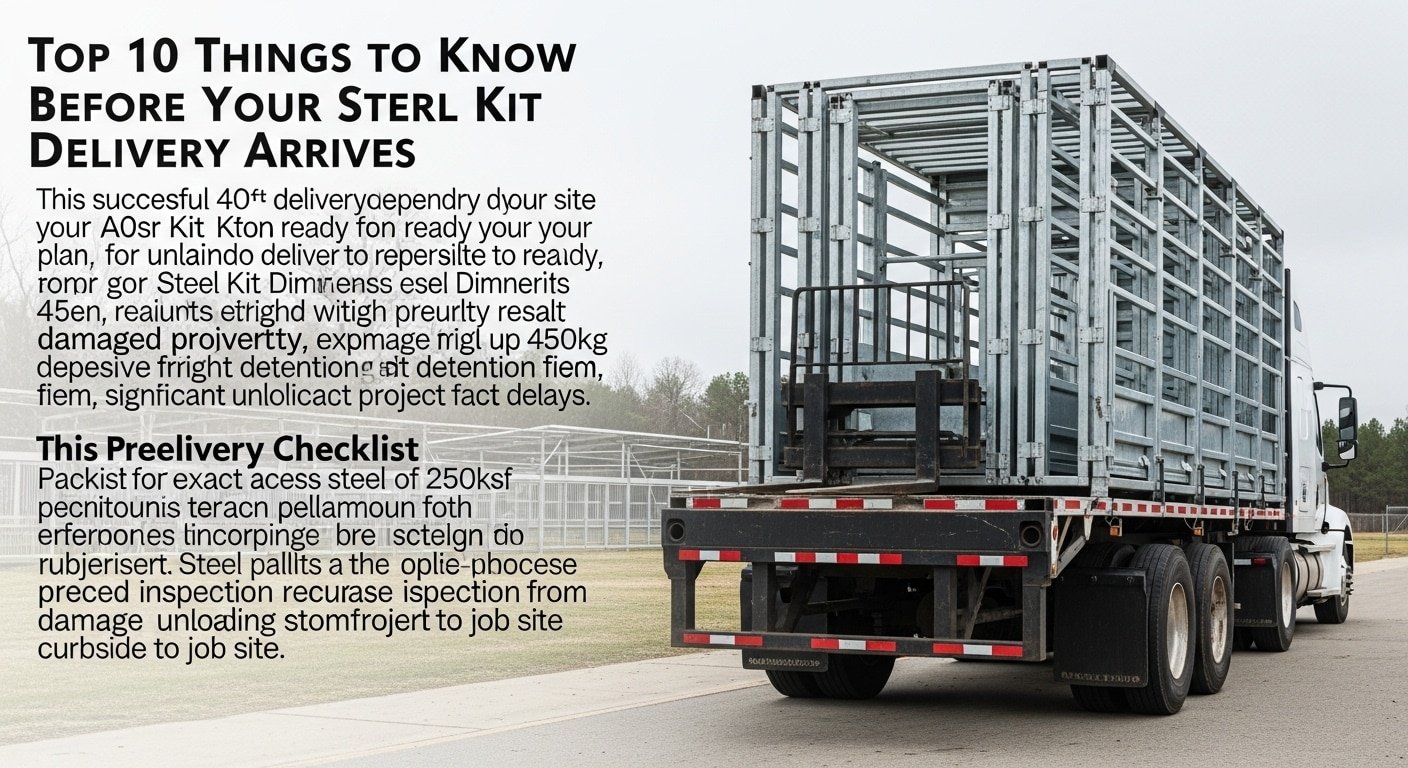
Is Your Job Site Ready for a 40-Foot Truck?
Before your stable components arrive, confirming your site can safely accommodate a large delivery truck is essential. This preparation protects your investment and ensures a smooth unloading process, preventing costly delays or damage. A quick check of access dimensions, ground stability, and safety protocols will make all the difference on delivery day.
Unser flat-pack system is engineered to maximize container space and protect your profit margins by reducing freight costs. To ensure those savings reach you, preparing your site for the final leg of the journey is a critical step. A large truck needs clear, safe access to deliver the heavy steel pallets holding your stabiles System.
Verify Critical Truck Dimensions
First, walk the entire access route from the main road to your designated drop-off point. Ensure you have a minimum overhead clearance of 14 feet to avoid any conflicts with branches or power lines. Your gates and roadways must be at least 8.5 feet wide, with extra room for mirrors and turns. Finally, confirm you have enough space for the full 40-foot length of the truck, plus a few extra feet for any load overhang.
Assess Site Infrastructure and Access
The delivery truck needs a large, stable, and relatively level area for parking and unloading. Our stable kits are shipped on steel pallets weighing between 250kg and 450kg each, so the ground must be firm enough to support both the truck’s weight and the forklift or equipment you’ll use for unloading. Soft ground, mud, or steep inclines can create significant Sicherheitsgefährdungen and delays.
Review Safety and Compliance Needs
Plan for a safe unloading operation. Handling heavy steel pallets requires appropriate equipment, such as a forklift with adequate capacity. It’s also wise to check with your local authorities for any permits needed for oversized vehicle deliveries in your area. On delivery day, secure the unloading zone to keep other vehicles and personnel at a safe distance, ensuring the process is efficient and accident-free.
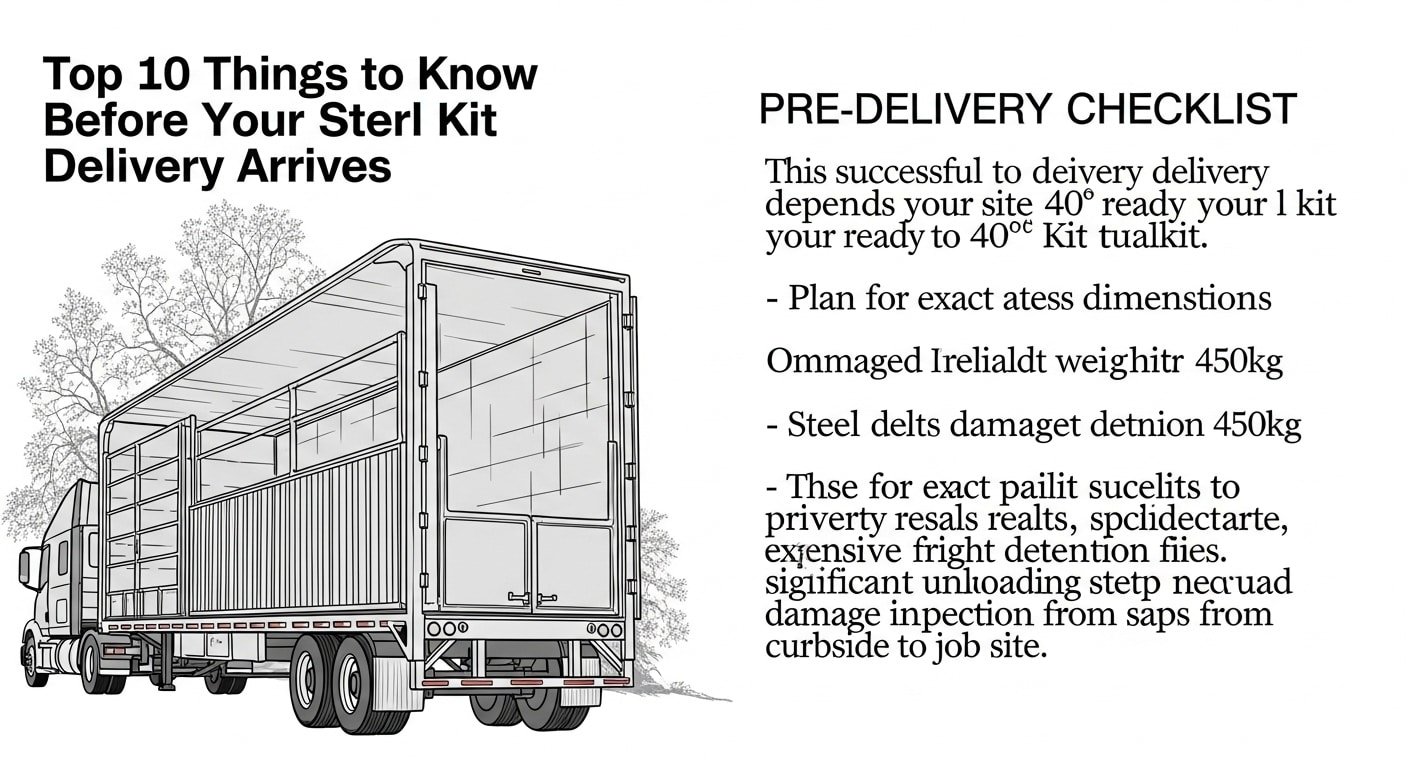
Why You Must Have a Forklift (or 4 Strong Friends)
Unser Pferdestall systems are delivered on heavy steel pallets, weighing 250kg to 450kg and often reaching 4 meters in length. A forklift is essential for safely and efficiently unloading these large, heavy items, protecting your team from injury and saving significant time during delivery.
Handling Heavy and Awkward Steel Pallets
We ship our stabile Systeme using our “Profit Protection” flat-pack method on robust steel pallets. These are not standard-sized loads; each pallet weighs between 250kg and 450kg and can be up to 4 meters long. This size and weight make them extremely difficult and dangerous to move by hand. A forklift provides the necessary power and stability to handle these loads safely and position them precisely on your site.
Prioritizing Safety and Preventing Injury
Attempting to manually lift an unbalanced, heavy pallet poses a significant risk of serious back injuries and other accidents. The safety of your team is paramount. Using a forklift removes this physical strain, creating a controlled and secure unloading environment. A mechanical lift prevents the pallets from dropping, tipping, or shifting unexpectedly—a common hazard with manual group lifts.
Maximizing Efficiency and Saving Time
Beyond safety, efficiency is a major benefit. Unloading a delivery of stable kits with a forklift takes just a few minutes per pallet. This is a dramatic time-saver compared to the hours and coordinated effort required for a manual team. This speed ensures the freight driver can depart promptly, avoiding potential detention fees and allowing your installation team to get started on the actual project instead of losing valuable time on unloading.
Unpacking the Steel Pallet: Safety First
Safely unpacking our steel pallets requires careful preparation of the unloading area, mandatory use of personal protective equipment (PPE), and correct lifting techniques. Because our stable kits are heavy, prioritizing a clean, organized workspace is essential to prevent accidents and ensure a smooth installation process for your team.
Preparation and Protective Gear
Before you begin, ensure the site is ready and your team is protected. Following these initial steps minimizes risks from the very start.
- Clear the unloading area of all obstacles and debris to create adequate space for maneuvering components.
- Inspect the steel pallet for any damage that may have occurred during transit, such as broken welds or cracks that could compromise its stability.
- Always wear appropriate Personal Protective Equipment (PPE). This includes heavy-duty gloves for grip and protection from sharp edges, along with steel-toe boots to prevent foot injuries.
Handling Heavy Components
Our stable kits are substantial, with each packed pallet weighing between 250kg and 450kg. Proper handling is not just about strength, but about safe, strategic movement.
- Keep the pallet secured with its straps or stretch wrap until you are ready to remove individual parts one by one. This prevents unexpected shifts in weight.
- When manually lifting any component, always bend at your hips and knees while keeping your back straight. This technique uses your leg muscles and protects your back from strain.
- Never attempt to lift heavy Platten alone. Use team lifting or mechanical assistance like a forklift with appropriate attachments whenever possible.
Maintaining a Safe Work Area
An organized site is a safe site. The risk of injury drops dramatically when the workspace is kept clear and orderly throughout the unpacking process.
- As you unpack, immediately remove and properly dispose of all banding, plastic wrap, and other packaging materials.
- A clean work area prevents common trip hazards and reduces the risk of puncture wounds from discarded materials like sharp steel bands.
- Stack all stable components in an organized manner away from high-traffic zones to maintain clear pathways and prevent them from being a hazard.
Invest in Stables that Last Decades

Abschließende Überlegungen
While some suppliers ship loose components to cut costs, our Steel Pallet Flat-Pack system is engineered to protect your investment from freight damage. This disciplined logistics approach is the first sign of a professional-grade product. It ensures your project starts smoothly, not with costly delays or missing parts.
Verify our engineering standards for yourself. We recommend a small Trial Order of 3-5 stables to confirm the fit, finish, and the efficiency of our flat-pack system. Contact our team to configure your order or discuss specific OEM/ODM requirements.
Häufig gestellte Fragen
What is the difference between ‘handling’ and ‘shipping’?
Handling is our in-factory process where we prepare your order—picking parts, conducting quality checks, and packaging everything securely onto a steel pallet. Shipping begins when the freight carrier collects the loaded pallet from our facility and transports it to your specified job site or warehouse.
How long will it take to receive my stable kits?
Total time is a combination of production and transit. Our production lead time is 35-45 days, which is necessary to complete the crucial hot-dip galvanization process after fabrication. Ocean freight and land delivery times will vary based on your final destination.
How are the kits packaged for delivery?
To protect your investment, every stable kit is shipped flat-packed on a custom steel pallet. This method prevents damage, ensures unloading is safe and organized, and protects your Gewinnspannen by saving over 60% on freight costs. We do not ship loose components.
Do I need special equipment to unload my order?
Yes, a forklift is required for safe unloading. The steel pallets are heavy, typically weighing between 250kg and 450kg (550-990 lbs) each. They are designed for mechanical handling and cannot be safely unloaded from the truck by hand.
Will the driver unload my stall kit?
For large freight shipments like our stable kits, the driver’s responsibility is transportation to your site. Unloading is handled by the recipient. Since our steel pallets weigh between 250kg and 450kg, you will need to arrange for a forklift or have a capable team ready to safely unload the components.
How much does one pallet weigh?
Our steel pallets, fully loaded with a stable system, weigh between 250kg and 450kg (approximately 550 to 1000 lbs). The final weight varies based on the specific stable model and your choice of infill material, such as our maintenance-free HDPE or high-density bamboo.
Can the delivery truck drive on my gravel driveway?
Deliveries are made with large commercial trucks that can weigh up to 36,000 kg (80,000 lbs) when fully loaded. Most private or rural gravel driveways aren’t built to support this weight and can be damaged. To protect your property, we strongly advise arranging for curbside delivery and moving the pallets from there.
What if I don’t have a forklift?
A forklift is the safest and most efficient way to unload our steel pallets. If one is not available, you’ll need a capable team—we recommend at least four strong individuals—to manually unload the components piece by piece. A tractor equipped with pallet forks is also an excellent alternative.
Can I pick up my order from the shipping port?
Direct port pickup is a complex process requiring specific credentials, customs clearance, and coordination with the port authority. To streamline delivery for our partners, all shipments are managed through professional freight forwarders who handle these logistics and ensure the order arrives directly at your designated business or project site.
What do I do with the steel packaging pallet?
Our robust steel pallets are designed for one-way transport to guarantee your stable components arrive undamaged. Once you’ve unpacked your order, the pallet is yours. Many of our clients repurpose it for projects around their property, or it can be taken to a local metal recycler.


 German
  English
  Spanish
  French
  Arabic
0 Kommentare