


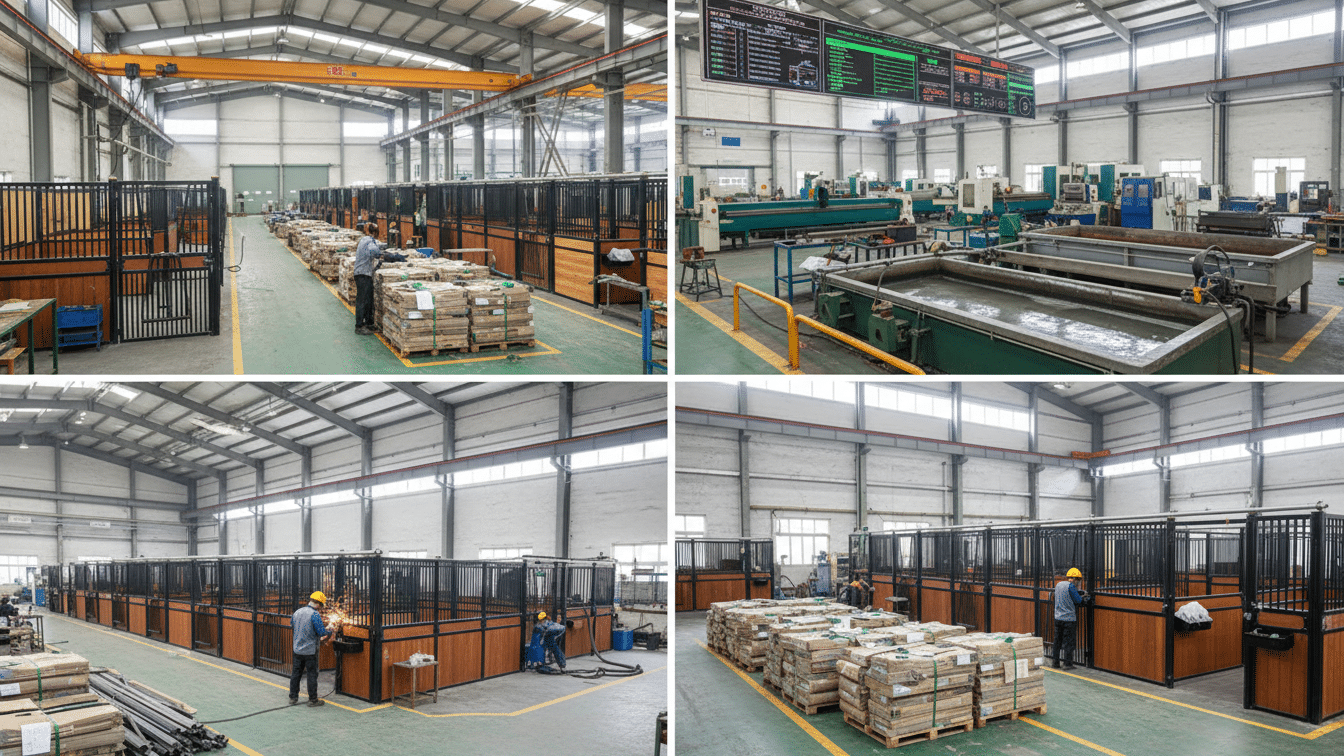
This guide audits critical verification steps, from confirming ISO 1461 compliance and 42-micron zinc coatings to conducting real-time video audits using UDR cameras. We examine how to validate 10mm HDPE durability and ensure every weld meets rigorous export Sicherheitsstandards.
Why Is Choosing the Right Horse Stable Factory a Critical Decision?
Selecting the right factory ensures structural integrity and horse safety through precise engineering standards, such as 14-gauge steel framing and ISO 1461 galvanization. Proper vetting prevents injury risks from inadequate partition heights (under 7.5 feet) and guarantees compliance with ventilation standards required for high-hygrometric environments, ultimately extending facility lifespan by decades.
Impact on Equine Safety and Biomechanics
The physical dimensions of a stable are not merely aesthetic choices; they are dictated by the biomechanical needs of the animal. A standard 1,000-pound horse requires specific clearances to lie down, roll, and stand up without injury. Factories that fail to adhere to these engineered dimensions increase the risk of horses becoming cast or injured during normal movement.
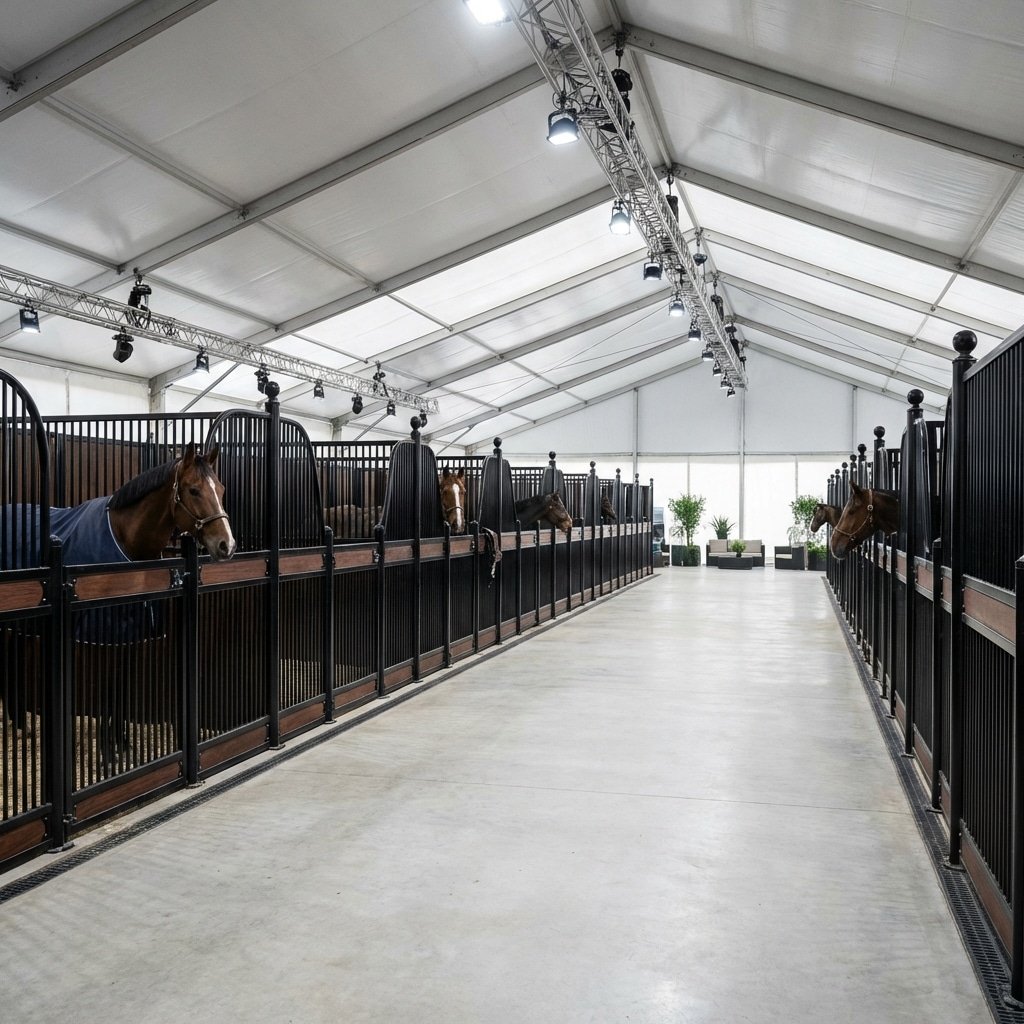
- ✅ Stall Dimensions: Engineering standards mandate a 12 feet by 12 feet area to accommodate the natural turning radius and resting patterns of average riding horses.
- ✅ Partition Height: Walls must meet a minimum height of 7.5 feet, with 8 feet being the standard, to physically prevent a horse from rearing and getting a leg over the partition.
- ✅ Doorway Safety: Openings are historically recommended to be 8 feet tall by 4 feet wide to prevent hip and head trauma as the animal passes through the threshold.
Material Longevity and Structural Engineering
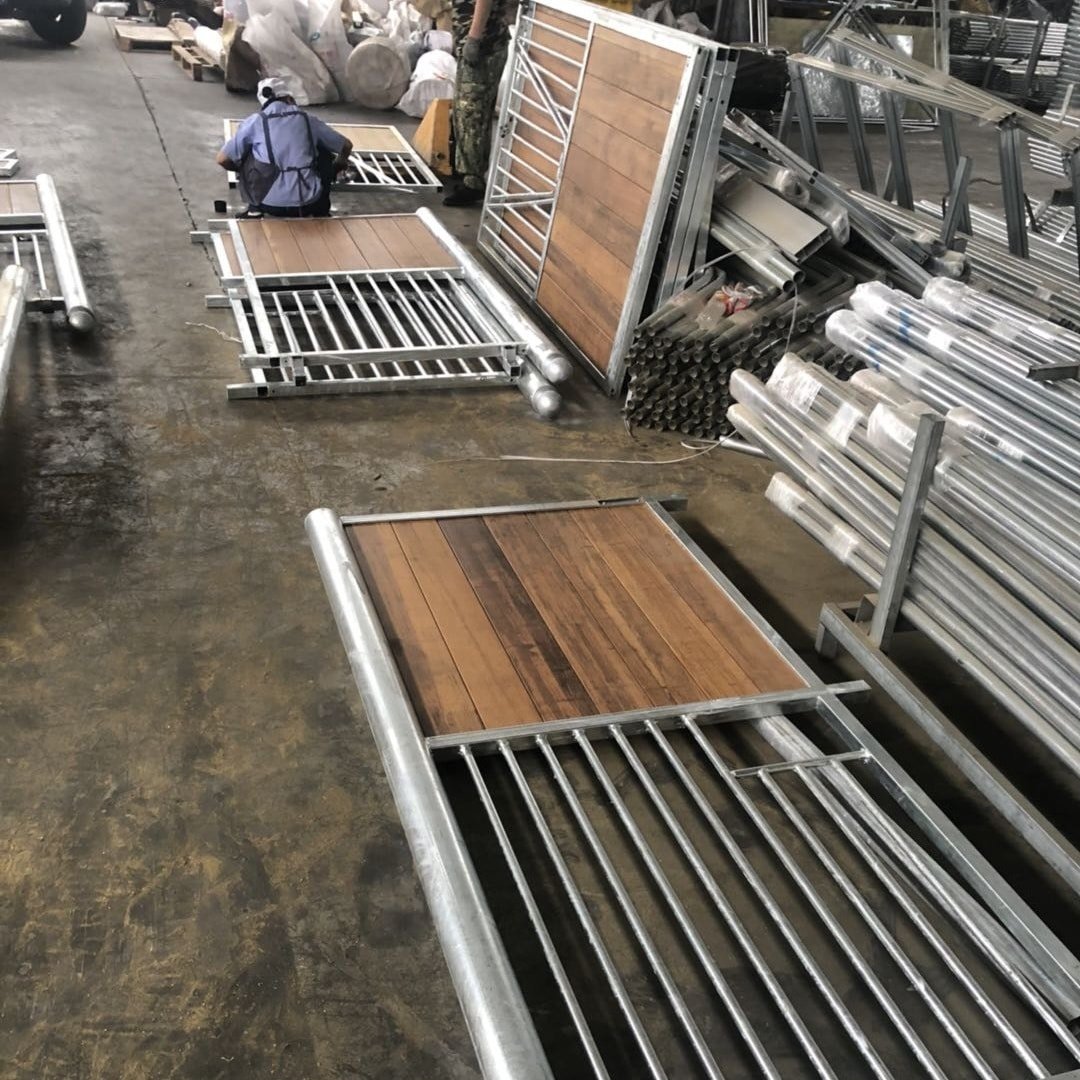
The lifespan of a stable is directly correlated to the manufacturing processes used to treat the metal. Inferior production methods often rely on surface sprays that look acceptable initially but fail quickly under environmental stress. Professional factories utilize hot-dip galvanization, a process where steel is submerged in molten zinc at 450°C. Think of this like dipping a strawberry completely into chocolate; the coating seals the entire object, inside and out, rather than just painting the visible surface.
- ✅ Steel Gauge: Structural integrity relies on minimum 14-gauge pre-galvanized steel (approximately 5/64 inch thick) to withstand the significant impact force a horse can generate.
- ✅ Galvanization Standards: Adherence to NEN-EN-ISO 1461 ensures the zinc coating is chemically bonded to the steel, providing a self-healing barrier against rust.
- ✅ Roofing Purlins: Engineering varies by material weight, requiring 150mm by 75mm purlins at 1.8m centres for metal sheets, compared to tighter spacing for heavier fibre-cement options.
Environmental Control and Operational Efficiency
Stables are classified as high-hygrometric environments, meaning they naturally accumulate moisture from animal respiration and waste. A competent factory designs for air renewal to prevent condensation, which can lead to respiratory illnesses in horses and rapid corrosion of building materials. Furthermore, the integration of smart design elements directly impacts the long-term operational costs of the facility.
- ✅ Modular Efficiency: Using prefabricated, modular components can reduce on-site construction timelines by approximately 20%.
- ✅ Labor Reduction: Facilities designed with automated systems and optimized layouts can reduce daily labor requirements by 30-50% in larger operations.
- ✅ Electrical Safety: Manufacturers adhering to National Rules place switches outside stalls and use moisture-resistant fixtures to prevent fire hazards.
How DB Stable Meets Manufacturing Standards
We align our manufacturing processes with rigorous export quality standards, specifically catering to the Australian and New Zealand markets since 2013. By focusing on the chemical composition of our protective coatings and the density of our infill materials, we address common failure points seen in generic stables. For example, our team of over five product experts ensures that every weld and connector is engineered for maximum rigidity.
- ✅ Galvanization Thickness: Our frame tubes and connectors feature a hot-dip galvanization layer exceeding 42 microns, designed to resist corrosion for over 10 years.
- ✅ Infill Durability: We utilize 10mm thick HDPE boards which offer superior UV resistance and eliminate the thermal expansion issues often found in wood or thinner plastics.
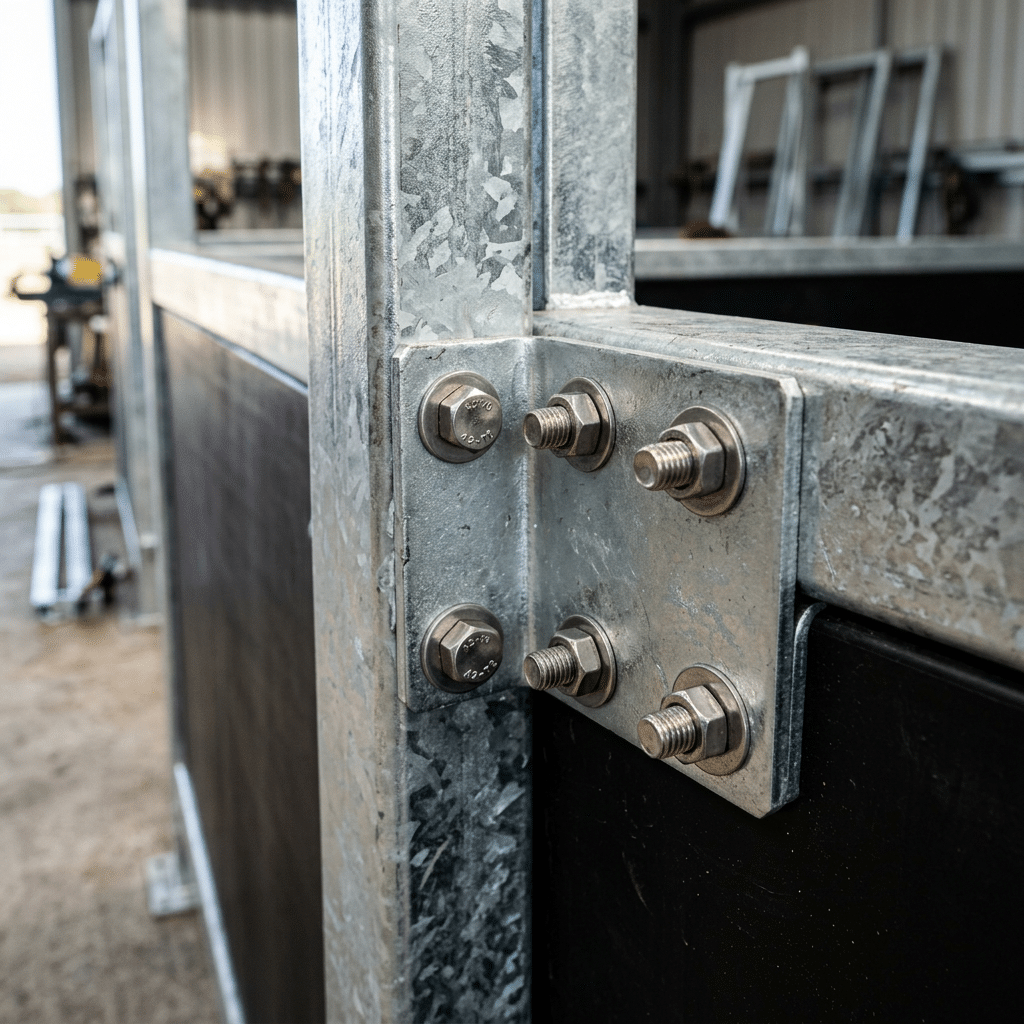
- ✅ Structural Connections: We use 40x40mm square metal tubes fully welded with 6mm steel plates to create connections that remain secure under heavy use.
What Are the Top 12 Factors to Verify Before Ordering Stalls?
Before ordering stalls, verify critical factors across three categories: Material Specs (steel thickness, galvanization depth >42 microns, HDPE UV resistance), Structural Design (welding quality, connection types, roof thickness), and Vendor Reliability (export history, customization options, and verified testimonials). Prioritizing these ensure safety and longevity.
| Kategorie | Critical Factor | Warum es wichtig ist |
|---|---|---|
| Materialien | Galvanization Thickness | Prevents rust (target 42+ microns). |
| Materialien | Infill Material | 10mm HDPE resists rot and kicks. |
| Materialien | UV-Beständigkeit | Prevents plastic from cracking in the sun. |
| Materialien | Roof Specs | Ensures shelter durability (0.4mm+ steel). |
| Structure | Weld Quality | Full welds prevent frame failure. |
| Structure | Connection Strength | Heavy-duty plates keep panels secure. |
| Structure | Hardware Quality | Aluminum feeders resist corrosion. |
| Structure | Edge Safety | Smooth edges prevent animal injury. |
| Vendor | Export History | Proves reliability in regulated markets. |
| Vendor | Personalisierung | Adapts to specific site requirements. |
| Vendor | Assembly Ease | Prefabrication saves setup time. |
| Vendor | Testimonials | Confirms delivery speed and support. |
Material Durability & Rust Resistance
The longevity of a portable stable depends heavily on the materials used. You can think of galvanization like a heavy-duty raincoat for steel; if the coat is too thin, water will eventually soak through and cause rust. High-quality stalls require specific thickness standards to survive outdoor elements.
- ✅ Verify Galvanization Thickness: Ensure steel is hot-dip galvanized to at least 42 microns. This depth acts as a sacrificial layer that protects the core metal for over a decade.
- ✅ Check Infill Material: Look for 10mm thick HDPE boards. Unlike plywood, which acts like a sponge for moisture and bacteria, solid HDPE is impermeable and tough enough to withstand kicks.
- ✅ Assess UV Resistance: Confirm the HDPE contains UV stabilizers. Without this “sunscreen,” plastic boards become brittle and crack under constant sun exposure.
- ✅ Roofing Material: For outdoor units, verify the roof uses steel boards between 0.4mm and 0.8mm thick with a powder coat finish for extra weather protection.
Structural Integrity & Safety Features
A stable must be a fortress that keeps the animal safe from the outside world and from itself. The construction method defines whether the structure will stand firm during a storm or buckle under pressure.
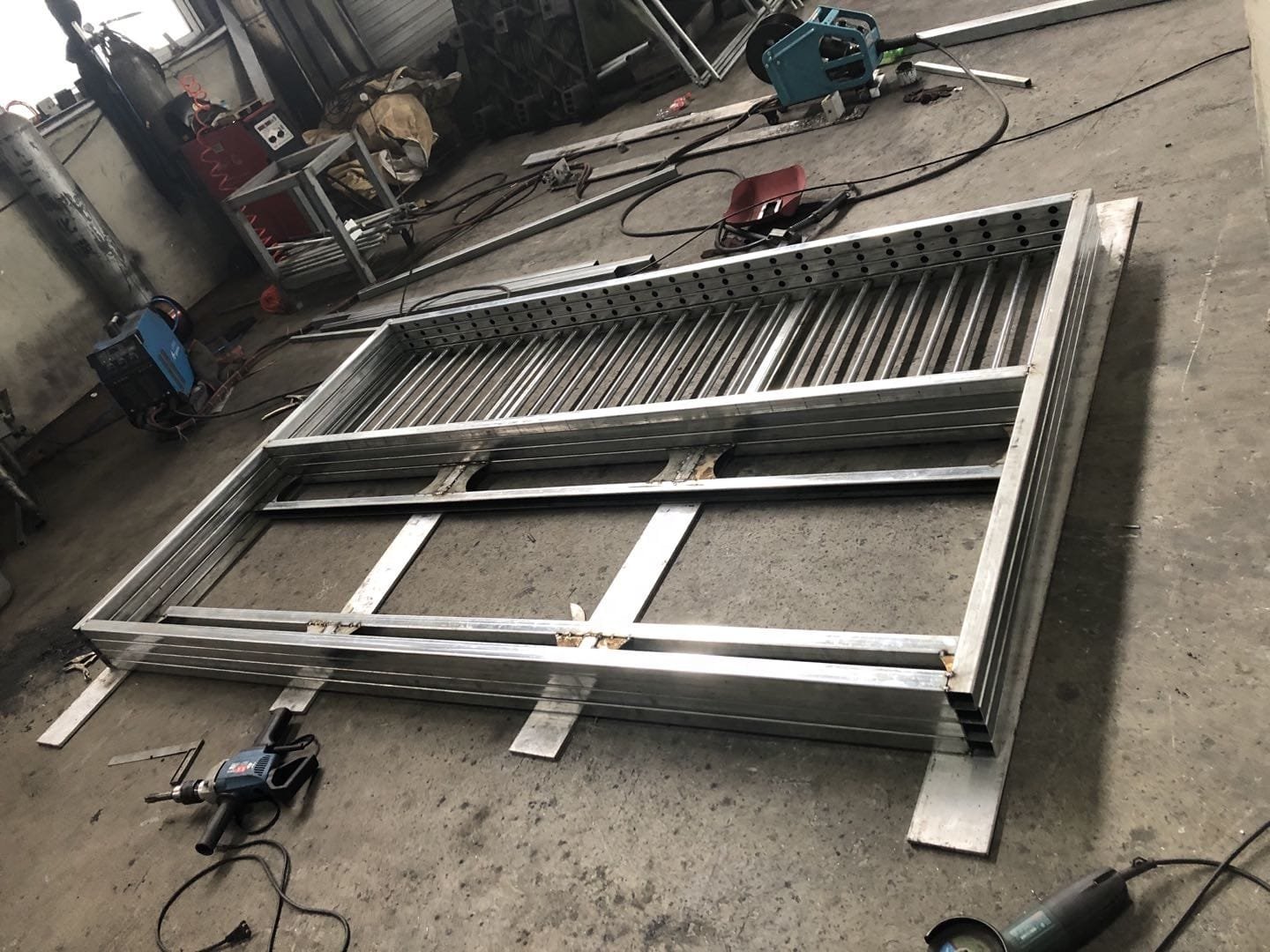
- ✅ Weld Quality: Inspect the frame for full welds rather than spot welds. Full welds on 40x40mm square tubes create a continuous seal, whereas spot welds are like buttons that can pop off under stress.
- ✅ Connection Strength: Verify the use of 6mm steel plates or heavy-duty pins for assembly. Robust connectors ensure the panels do not separate when an animal leans or kicks against them.
- ✅ Hardware Quality: Check for components like aluminum swivel feeders. Aluminum is lightweight yet strong and does not rust, making it safer and easier to clean than cheap steel alternatives.
- ✅ Edge Safety: Ensure all metal edges are smooth. Door tracks, whether sliding or swinging, must be jam-proof to prevent hooves or fingers from getting caught.
Vendor Reliability & Manufacturing Expertise
Buying direct from a factory involves more than just the product; it involves trusting the process. You want a partner who has navigated the logistics of international shipping and understands local regulations.
- ✅ Export Experience: Confirm the manufacturer has a history in regulated markets. For example, a factory exporting to Australia or New Zealand since 2013 understands strict biosecurity and quality standards.
- ✅ Customization Capabilities: Look for the ability to modify designs. A flexible factory can adjust roof angles or splint designs to fit your specific site needs.
- ✅ Ease of Assembly: Check if the system is prefabricated. A truly portable design should fit together like a simple building block set, supported by clear instructions.
- ✅ Verified Testimonials: Look for feedback on delivery speed and installation help. Past clients can reveal if the vendor provides support after the sale is made.
How DB Stable Meets These Strict Vetting Standards
DB Stable aligns its manufacturing processes directly with these 12 critical factors to ensure every unit delivers value and safety. By controlling the entire production line, we maintain strict quality checks that third-party traders often miss.
- ✅ Superior Rust Protection: We use hot-dip galvanized steel with a coating exceeding 42 microns, ensuring a 10-year rust-free lifespan even in coastal climates.
- ✅ Durable Infill Panels: Our stalls come with 10mm UV-resistant HDPE boards. These are specifically engineered to minimize thermal expansion, meaning they stay flat and secure in hot weather.
- ✅ Proven Track Record: Mit direct factory production since 2013, we specialize in meeting the high standards required by Australian and New Zealand clients.
- ✅ Core Value Proposition: Our designs are built on the pillars of Qualität, Flexibility, Durability, Security, and Portability, offering a premium solution at a competitive price point.
How to Conduct a Real-Time Video Audit of the Welding Line?
Conducting a real-time welding audit requires integrating Ultra Dynamic Range (UDR) cameras capable of a 10,000,000:1 contrast ratio to visualize both the bright arc and surrounding metal. The process involves synchronizing visual feeds with machine parameters (voltage, current) via MQTT interfaces and utilizing AI-powered thermal imaging to detect defects aligned with ISO 17635 standards.
Deploying Ultra Dynamic Range (UDR) for Arc Visibility
A standard camera functions much like the human eye; if you stare directly at the sun, everything else goes black. In welding, the electric arc is exponentially brighter than the surrounding metal, creating a contrast ratio that exceeds 1,000,000:1. Standard optical sensors cannot capture both extremes, resulting in footage that is either a washed-out white flare or a pitch-black screen.
To audit a welding line effectively, engineers deploy Ultra Dynamic Range (UDR) systems. Think of this technology as a camera that takes multiple photos at different exposure levels simultaneously and instantly merges them. This allows the system to see the bright electrode tip and the darker cooling weld puddle in the same frame.
- Dynamic Range: A ratio of over 10,000,000:1 is necessary to capture the arc, puddle, and joint geometry without saturation.
- Frame Rate: Cameras must operate at 55 fps or higher at 1280 x 1024 resolution to catch rapid changes during high-speed passes.
- Safety Distance: Wireless monitoring allows auditors to review footage from up to 100 meters away, removing humans from hazardous zones.
Synchronizing Visuals with Parametric Data (MQTT)
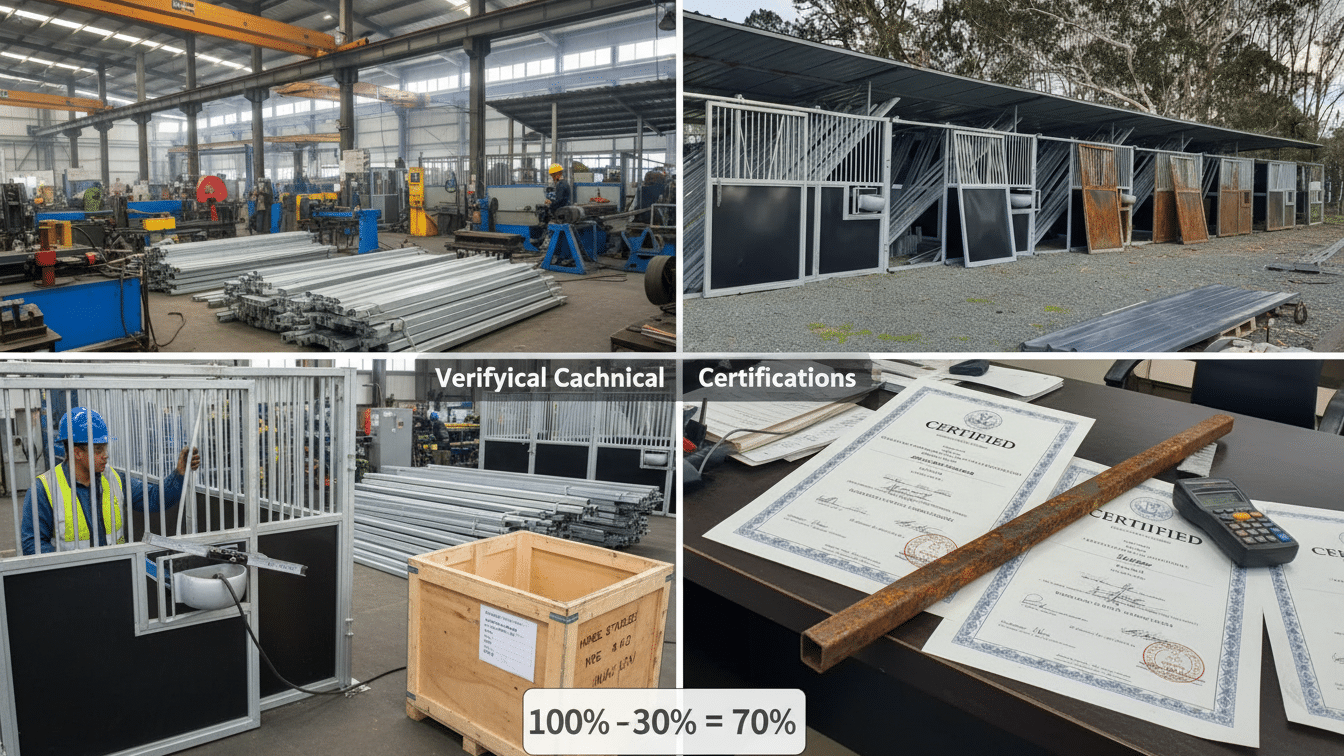
Video footage alone only tells half the story. You might see a weld look perfect on the surface, but if the heat input was too low, the joint will fail under stress. To solve this, technical auditors use MQTT interfaces to marry video files with raw data from the power source.
This process works like a flight data recorder (black box). It overlays real-time statistics directly onto the video feed. When an auditor reviews a specific frame, they can see exactly what the voltage, current, and wire-feed speed were at that precise millisecond.
- Data Overlay: Systems connect to power sources, such as Lincoln Electric Power Wave, to display heat input alongside visual characteristics.
- Actionable Evidence: Correlating a visual defect with a drop in voltage proves the root cause was machine fluctuation rather than operator error.
- Depth Measurement: Laser-based Inline Coherent Imaging (ICI) measures the keyhole depth with micron-level accuracy (up to 40 mm) to verify penetration.
Automating Defect Detection and ISO Compliance
Traditional inspection happens after the product is finished, which wastes time and materials if the item is scrapped. Modern auditing shifts this to in-process monitoring using Artificial Intelligence and thermal imaging. Imagine a spell-checker that highlights typos as you write, rather than waiting until you print the document.
These systems monitor thermal profiles against a “golden weld” baseline. If the temperature deviates from the acceptable range, the system flags the anomaly immediately. This automation creates a digital paper trail that satisfies rigorous industry standards like ISO 17635 and ISO 3834.
- Active Monitoring: The system shifts focus from post-weld inspection to real-time analysis, catching defects as they form.
- Workflow Automation: Anomalies trigger automatic Corrective and Preventive Action (CAPA) protocols to stop production before more bad parts are made.
- Trend Analysis: Statistical Process Control (SPC) dashboards track quality over time to predict maintenance needs.
How DB Stable Ensures Structural Integrity in Welding
While automated lines use digital eyes, the principle of rigorous verification is equally critical in manual fabrication. At DB Stable, we apply these strict audit standards to the construction of our portable horse stables. A horse exerts massive force against stall walls, meaning a weak weld can lead to structural failure and injury.
We utilize a “full welded” technique on our 40x40mm square metal tubes. Unlike spot welding, which just tacks pieces together at intervals, full welding fuses the entire joint perimeter. This acts as a continuous seal, which is vital for the subsequent hot-dip galvanization process. A porous or incomplete weld would trap acid during cleaning, ruining the 42-micron anti-rust coating.
- Connection Strength: We reinforce connections with 6mm steel plates to withstand heavy equine impact.
- Weld Consistency: Manual inspection ensures every joint is fully sealed, preventing moisture ingress and rust formation from the inside out.
- Process Prerequisite: High-quality welding is the mandatory first step to achieving a 10-year lifespan on our hot-dip galvanized finish.
Build World-Class Facilities with Durable, Custom Stables
Equip your center with hot-dipped galvanized steel stables engineered to withstand extreme climates and resist rust for over 20 years. Benefit from modulare Entwürfe that meet international safety standards and reduce installation time by 30%.

What Common Vetting Mistakes Do Buyers Make?
Buyers frequently jeopardize procurement by prioritizing low sticker prices over total cost of ownership (TCO) and failing to validate supplier claims. Critical errors include accepting unverified ISO 9001:2015 certificates, overlooking raw material purity (such as 100% virgin resin), and skipping on-site audits that reveal actual production capacity and equipment health.
The Cost Trap: Prioritizing Price Over Lifecycle Value
Many buyers focus strictly on the sticker price during the initial quote phase. This approach ignores lifecycle cost analysis, often leading to significantly higher long-term expenses due to premature failures. Think of this like buying cheap tires that wear out in half the time; while the initial purchase is cheaper, the total cost over five years is much higher due to frequent replacements.
Short-term Kosteneinsparungen often result in functional incompatibility or warranty complications down the line. Selecting suppliers based solely on initial quotes frequently leads to missed specifications and undelivered timelines because the supplier cut corners to meet that low price point.
Inadequate Verification of Certifications and Materials
Documentation fraud is a significant risk in global procurement. Buyers often fail to independently verify certificates, falling victim to falsified documents like fake Good Manufacturing Practice (GMP) certificates. Simply receiving a PDF is not enough; the issuer must be contacted directly.
- Quality Management Systems: These must be validated to ensure current ISO 9001:2015 certification comes from accredited bodies.
- Lab Accreditation: Neglecting to check for third-party lab accreditation, such as GAI-LAP, compromises testing reliability.
- Material Purity: Inadequate scrutiny of raw material certificates can result in receiving substandard inputs rather than the required 100% virgin resin. This is similar to a bakery claiming to use fresh flour while actually using a cheaper, stale substitute.
Neglecting On-Site Audits and Capacity Checks
Relying on digital communication creates a blind spot regarding a factory’s true capabilities. Accepting production claims without validating backlogs, raw material inventory, or changeover times leads to supply bottlenecks when demand spikes. Skipping on-site factory visits hides red flags like improper storage conditions, Sicherheitsgefährdungen, or missing equipment that indicate unauthorized outsourcing.
Failing to involve maintenance teams in the vetting process misses critical insights into equipment behavior that catalog listings do not reveal. Furthermore, buyers often neglect requesting project references at least 10 years old. Checking these older references is essential to gauge real-world product longevity and see how the product handles a decade of wear and tear.
How DB Stable Mitigates Vetting Risks
To address these common vetting pitfalls, DB Stable provides transparent validation of our manufacturing processes. We operate as a direct factory, established in 2013, which eliminates the risks and communication gaps associated with opaque trading companies.
- Verified Durability: Our hot-dip galvanized steel exceeds 42 microns. Think of this as a permanent, heavy-duty shield that protects the metal from rust for over 10 years.
- Material Integrity: We use 10mm UV-resistant HDPE boards rather than generic fillers. This ensures the stables do not become brittle or faded under the harsh sun.
- Proven Track Record: Our production capacity and quality standards are backed by over a decade of verifiable exports specifically to the Australia and New Zealand markets.
Häufig gestellte Fragen
Can I trust a stable factory I haven’t visited?
Trusting a supplier without on-site verification represents a significant financial risk, as stability claims often mask recently established trading companies. Professional supplier vetting frameworks list factory visits or professional audits as mandatory steps rather than optional precautions. Physical inspections are necessary to reveal operational discipline, waste rates, and safety compliance that remote video calls can easily hide.
Remote vetting often fails to detect certificate forgery or discrepancies between claimed machinery and the actual reality on the shop floor. Without a physical presence, it is difficult to confirm if the machinery shown in videos belongs to the entity you are paying or a different workshop entirely.
How do I verify a Chinese business license?
To verify a Chinese business license, you must locate the Unified Social Credit Code (USCC), which is an 18-digit national registration number unique to every legal business. This code should be cross-checked against the National Enterprise Credit Information Publicity System (NECIPS), which is managed by the SAMR. This process confirms if the entity is legally registered and currently active.
You must also verify that the business scope explicitly covers manufacturing rather than just sales to distinguish actual factories from trading intermediaries. Scanning the QR code on the license can provide access to local government records regarding past audits or blacklisting status.
How much does a third-party factory audit cost?
Audit pricing is not standardized and fluctuates based on facility size, audit complexity, and geographic location. Costs typically follow a time and materials model, factoring in auditor hourly rates and travel expenses. Comprehensive audits generally cover ownership verification, quality control systems, and production capacity analysis.
For government or high-value contracts, audits may involve specialized firms like the DCAA, while private manufacturing audits depend on private firm rates. It is important to define the scope of the audit beforehand to manage costs effectively.
How can I identify fake factory photos?
You can identify fake photos by analyzing EXIF metadata to verify camera models, timestamps, and GPS coordinates; missing data often indicates manipulation. Error Level Analysis (ELA) is another method used to spot compression anomalies that suggest splicing or post-processing edits.
Additionally, look for consistency with ANSI N42.45 or IEC 62945 standards used for image quality verification in industrial contexts. Checking for sensor noise patterns and lens aberrations helps ensure all photos came from the same source device, acting as a digital fingerprint.
Why does registered capital matter for suppliers?
Registered capital represents the initial financial foundation used for operations, not frozen funds. A recommended minimum is six months of operating expenses to ensure the supplier can fund raw materials and labor without immediate cash flow issues. Higher capital limits usually unlock eligibility for government incentives and public project bids, signaling legitimacy.
While high capital indicates financial backing, it also increases shareholder liability. This creates a natural check against reckless business practices, as the owners have more to lose in the event of insolvency or legal action.
Can I inspect raw steel inventory directly?
Direct public access to raw inventory is rare, as visibility is controlled via Enterprise Resource Planning (ERP) systems. Verification generally follows ISO 20915 standards for tracking steel from extraction to the factory gate. Buyers should request batch certificates, traceability tags, and recent cycle count audit reports rather than visual access.
Scrap specification manuals based on ISRI standards are also used to document material grades and chemical composition limits. Relying on documentation generated by these systems is the standard method for quality control and inventory verification.
Abschließende Überlegungen
Remote verification is the only barrier between a secure facility and a safety hazard disguised as a bargain. Prioritizing metrics like 42-micron galvanization and full-perimeter welds prevents the structural failures that inevitably follow “too good to be true” quotes.
Investing in verifiable engineering standards—specifically ISO-compliant coatings and heavy-gauge steel—reduces long-term maintenance costs and protects high-value livestock. Secure a partner that invites audit scrutiny rather than one that hides behind low initial prices.

 German
  English
  Spanish
  French
  Arabic
0 Kommentare