



With freight scams exposed, a supplier’s cheap CIF quote is a direct threat to your margins. The trap is sprung at the destination port, where inflated Destination Terminal Handling Charges (DTHC) hold your cargo hostage and erase any perceived savings.
This analysis provides the strategy to regain control. We show how buying on FOB terms, combined with freight-optimized packaging that fits 30-45 units per container, gives you the leverage to use your own forwarder and eliminate surprise costs.
The “Too Good to Be True” Shipping Quote
A shipping quote far below market rates is a major red flag. It often hides surprise fees or signals the agent can’t actually move your cargo, costing you more later.
The Mechanism of Deceptive Freight Pricing
Unreliable agents know that a cheap quote gets attention fast. They intentionally underprice a shipment to get you to book without doing proper checks. This initial low price is just bait. Once they have your deposit or have you committed, the real costs start appearing as hidden fees or unexpected destination charges.
In many cases, the company offering the rock-bottom price doesn’t even have the operational capacity to handle the shipment. They’re just collecting payments and have no intention of delivering, leaving you with lost money and serious delays.
How Smart Packaging Creates Genuine Savings
Real savings don’t come from shady quotes; they come from smart engineering. Our Steel Pallet Flat-Pack system is designed to maximize every inch of container space. This allows our B2B clients to fit 30-45 stable sets into a single 40HQ container.
Compare that to traditional, fully welded stables, where the same container can only hold 12-15 sets. That difference gives our distributors verifiable freight savings of over 60%. This isn’t a pricing trick—it’s an engineered efficiency that directly protects your profit margins.
CIF vs. FOB: Who Controls the Cargo?
With FOB, the buyer controls shipping once goods are on the vessel. With CIF, the seller controls freight until arrival, often hiding costs in the price.
The Core Difference: Who Hires the Shipper?
The choice between FOB and CIF comes down to one question: who hires and pays the freight forwarder? Under FOB (Free on Board) terms, you—the buyer—select the carrier. This gives you direct control over freight negotiations, schedules, and costs.
When you agree to CIF (Cost, Insurance, and Freight), the seller selects the carrier. They manage the logistics and bundle the shipping and insurance costs into the total product price. This choice determines whether your shipping costs are transparent (FOB) or hidden within the seller’s invoice (CIF).
How Our Flat-Pack System Maximizes Your FOB Advantage
Choosing FOB puts you in control of the container space you’re paying for, and that’s where our engineering creates a significant financial advantage for you. Traditional, fully welded horse stalls are bulky and inefficient to ship; you can only fit 12-15 sets into a 40HQ container.
Our flat-pack design completely changes this calculation. We can load 30-45 stable sets into a single 40HQ container. For distributors who manage their own shipping, this engineering saves over 60% on freight costs per unit. That saving is pure margin, directly protecting your profits.
Durable, Compliant Stables for Any Climate.

The DTHC Trap: Destination Terminal Handling Charges
Destination Terminal Handling Charges (DTHC) are mandatory port fees. The trap is when these fees are inflated or hidden by a supplier’s agent, creating unexpected costs for you.
| The Trap (Supplier’s Forwarder) | The Solution (Your Forwarder) |
|---|---|
| Costs are hidden until the container arrives. The forwarder holds your cargo hostage until you pay their inflated bill. | All destination charges are quoted and agreed upon before the shipment leaves the origin port. No surprises. |
| You have zero control over the process or the final price. Disputes are nearly impossible to win. | You control the logistics partner, the flow of information, and the costs from start to finish. |
| Often happens with CIF or CFR Incoterms, where the seller controls the freight. | Best achieved with FOB Incoterms, which gives you the power to choose your freight carrier. |
What DTHC Is and How It Becomes a Trap
Destination Terminal Handling Charges are real, mandatory fees charged by port operators. They cover the cost of moving your container off the ship, stacking it in the yard, and processing it through the gate. Nobody gets around these. The problem isn’t the fee itself, but the lack of transparency.
The trap is sprung when your supplier’s chosen freight agent gives you a low upfront shipping price, but conveniently “forgets” to disclose the destination fees. Once your container lands, you get hit with an invoice for DTHC and other local charges that are often double or triple the normal rate. If you delay payment to argue the bill, the port starts charging expensive daily storage fees called demurrage, adding pressure to just pay up.
Taking Control of Freight to Avoid Unexpected Fees
The only way to consistently avoid this trap is to take full control of your shipping. You have to stop letting your supplier manage the freight. Here are the steps that matter:
- Use Your Own Freight Forwarder: This is the most critical step. A forwarder that works for you has a vested interest in providing clear pricing and good service. The supplier’s forwarder works for the supplier, not you.
- Demand a Detailed Quote: Your forwarder must provide a quote that explicitly breaks down all anticipated destination charges. This includes DTHC, customs fees, and local handling. Get it in writing before anything ships.
- Buy on FOB Incoterms: Using Free on Board (FOB) terms makes you responsible for arranging and paying for the main sea freight. This legally gives you the right to choose your own logistics partner and sidestep the forwarder your supplier might try to push on you.
Why Trading Companies Use Kickback Freight Agents
Trading companies use freight agents who offer kickbacks—a hidden commission from an inflated shipping invoice. This setup prioritizes their extra profit over securing a fair rate for you.
The Hidden Commission Model: A Conflict of Interest
The system is straightforward and built on a lack of transparency. A freight agent provides an artificially high shipping quote to a trading company, knowing it will be passed on to the end buyer—the importer.
=”line-height: 1.8; margin-bottom: 28px;”>The trading company presents this inflated invoice to you. After you pay it, the agent returns a portion of the overcharged amount directly to the trading company. This kickback is a secret commission, pure and simple.
This creates a clear conflict of interest. The trading company is no longer motivated to find the best market rate for shipping. Its profit incentive is tied directly to how much it can overcharge you on freight, not on providing efficient logistics.
Protecting Your Profits with Freight-Optimized Packaging
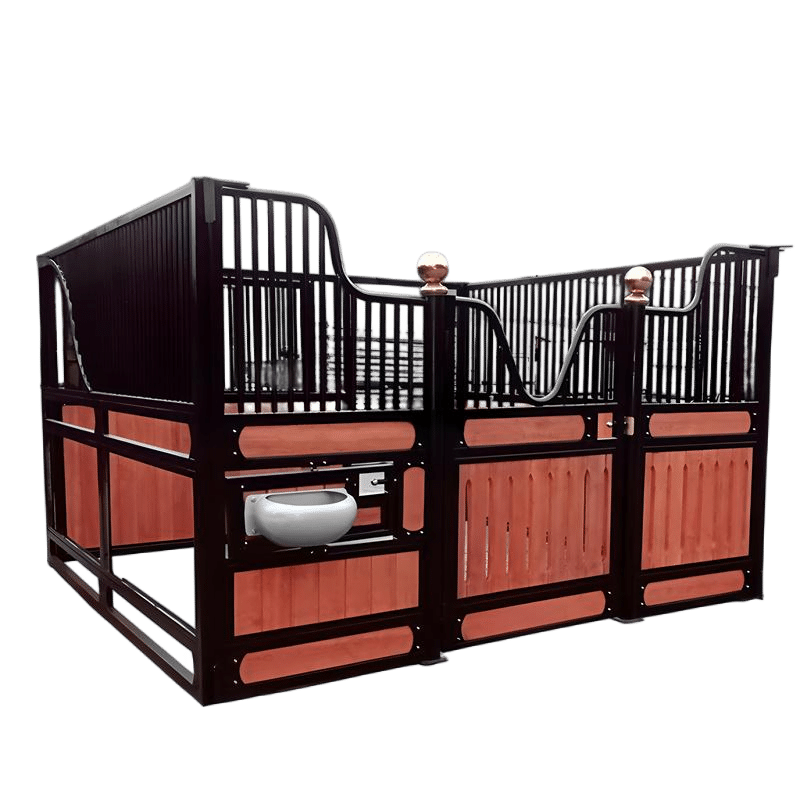
The best defense against inflated logistics costs is to control them at the source. DB Stable’s steel pallet flat-pack system is engineered to maximize container space, directly attacking the cost base where intermediaries find their margins.
Our system allows distributors to load 30-45 stable sets into a single 40HQ container. Compare that to the 12-15 sets typical for traditional fully-welded stables. This high-density loading can save you over 60% on freight costs, a direct boost to your bottom line.
By significantly lowering the base cost of shipping, you regain leverage. You now have the budget and the incentive to use your own trusted freight forwarder, sidestepping intermediaries with built-in conflicts of interest.
How DB Stable Empowers You to Use Your Own Forwarder
We support FOB terms with all shipping data upfront. Our flat-pack system fits 30-45 stable sets in one container, cutting your ocean freight costs by over 60%.
Many overseas suppliers trap distributors with inflated CIF shipping quotes or create scenarios ripe for freight scams. The only way to control your costs and protect your business is to manage your own shipping with a forwarder you trust. We’ve built our entire logistics process around making that possible and profitable for you.
You can’t arrange your own freight without accurate data from the factory. We remove the guesswork by providing everything your forwarder needs to book your shipment and handle customs without surprises. There are no hidden fees or “gotchas” because we give you the raw data.
- Precise Dimensions and Weights: We supply exact data for each steel pallet, so your forwarder can quote accurately and plan container loading.
- Correct HS Code: We use the correct Harmonized System code, 7308.90, to prevent customs delays, inspections, and incorrect tariff calculations that can cripple your margins.
The Cost-Saving Advantage of Our Flat-Pack System
Data transparency is only half the battle. The real key is our packaging engineering. Competitors who ship fully-welded stables make it financially impossible to use your own forwarder because their loading volume is terrible. Our flat-pack system is designed specifically to protect your profits. We can load 30-45 complete stable sets into a single 40HQ container, while bulky welded alternatives only fit 12-15 sets. This high loading density directly saves our distributors over 60% on ocean freight, making it practical and highly profitable to manage your own logistics. It’s a core part of our “Profit Protection” strategy for our partners.
Häufig gestellte Fragen
What are Destination Terminal Handling Charges (DTHC)?
DTHC are fees charged by the destination port to unload a container from the ship and move it to the yard for pickup. These charges cover services like container discharge, stacking, and gate processing. The importer (buyer) is typically responsible for paying DTHC under most Incoterms, but this should always be confirmed in your shipping agreement.
What is the difference between CIF and FOB shipping terms?
The main difference is who controls and pays for shipping. With FOB (Free on Board), the buyer arranges and pays for the main sea freight and insurance, gaining control over logistics. With CIF (Cost, Insurance, and Freight), the seller arranges and pays for these, simplifying the process for the buyer but often at a higher total cost. For both terms, risk transfers to the buyer once the goods are loaded onto the vessel.
How can our company avoid freight forwarder scams?
To avoid scams, always verify a forwarder’s credentials, such as their official registration number, through government databases. Check their insurance certificate directly with the provider. Be cautious of websites with errors or mismatched contact information. It is also wise to use real-time GPS tracking and secure payment methods to protect your shipment and funds.
Who is responsible for paying customs clearance fees?
Typically, the responsibility is split. The exporter handles export clearance fees at the origin, and the importer (buyer) pays for import clearance, duties, and taxes at the destination. The specific Incoterms® in your contract determine the final responsibility. For example, under DDP (Delivered Duty Paid) terms, the seller is responsible for all costs, including import duties.
How do we find a reputable customs broker?
Start by verifying they are licensed by the relevant customs agency in your country. Choose a broker with specific experience in your industry and with your product type. Ask for references, check their track record for clearance speed, and ensure they have strong relationships with local customs officials. Good communication and support are also key signs of a reliable partner.
Abschließende Überlegungen
A low CIF quote often hides inflated destination charges that destroy your profit margin. Our flat-pack system, loading 30-45 stable sets per container, is engineered to make FOB shipping your most profitable option. This gives you full control over logistics and eliminates the financial risks of hidden fees.
Stop getting burned by surprise freight costs and take control of your supply chain. Request a detailed quote for a trial order on FOB terms to see the verifiable savings firsthand. Our team will provide the exact packaging data your forwarder needs to lock in your new profit margin.



 German
  English
  Spanish
  French
  Arabic
0 Kommentare