


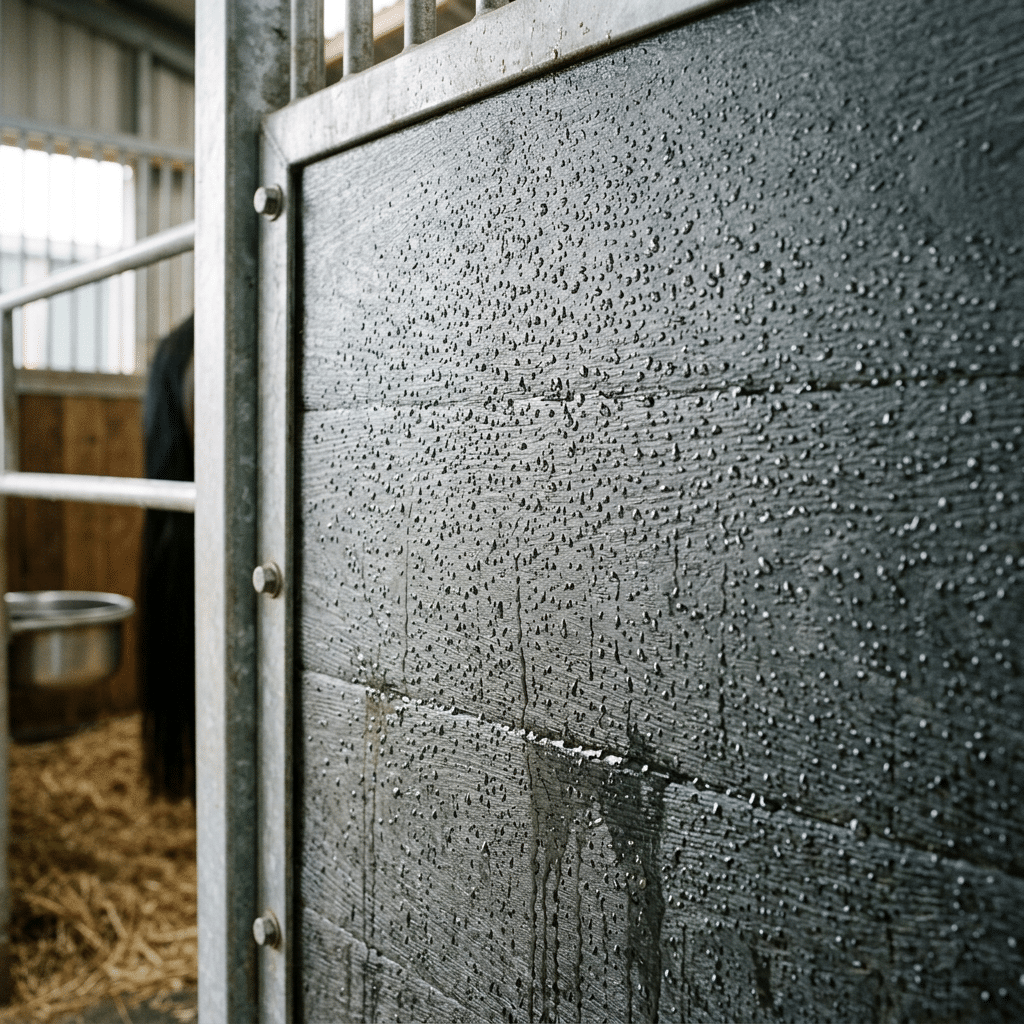
Specifying Draft Horse Stables without engineering for the dynamic loads of a 2000lb animal creates a direct financial liability. Standard stalls often fail under the impact of a powerful kick, resulting in costly structural repairs and the even greater expense of a preventable animal injury.
This analysis provides the architectural specs for structural integrity. We examine the material requirements, including the use of Q345B high-strength steel for impact resistance, and define the minimum stall, door, and ceiling clearances needed to ensure safety and prevent casting.
The Size Problem: Why 12×12 Fails the 17hh+ Horse
A standard 12×12 stall is too small for horses 17 hands or taller. It compromises their ability to rest and turn safely, increasing the risk of injury.
Movement, Rest, and Safety Compromises
A 12×12 foot stall forces a large horse to live in a space that restricts its most basic movements. The animal can’t lie down, get back up, or even turn around without feeling cramped. This isn’t just a comfort issue; it leads to chronic stress and sleep deprivation.
The most immediate danger is the horse getting ‘cast’—stuck against the wall while trying to roll. This is a serious, often fatal, emergency. Industry bodies like the British Horse Society recognize this risk and specify a minimum of 12×14 feet for horses 17hh and taller. For large draft breeds, 16×16 feet is an even more appropriate standard.
Structural Demands of Larger Stall Dimensions
Simply increasing the floor space isn’t the whole solution. A larger stall built for a heavier animal demands a much more robust frame. The structure has to absorb the significant physical forces from a 2,000-pound animal leaning or kicking against it.
For barns in cold climates, material selection is critical. We use Q345B steel because of its superior low-temperature toughness, which prevents brittle fractures when a powerful horse kicks the frame in freezing weather. A proper design for large horses also accounts for vertical space with a ceiling clearance of up to 12 feet and incorporates a ‘Cast-Proof Design’ with minimal floor gaps so legs can’t get trapped.
Structural Loads: The Force of a 2000lb Horse
A 2000lb horse exerts dynamic loads far exceeding its static weight. Stall design must prioritize impact resistance with high-strength steel and thick-walled tubing for long-term structural integrity.
Dynamic Forces: Beyond Static Weight
A 2000lb horse leaning or kicking generates powerful, concentrated impact forces that are many times its actual body weight. The structural challenge isn’t supporting the animal’s static mass when it’s standing still; it’s absorbing the repeated shock from these dynamic loads.
These impacts, not static pressure, are what lead to stall failure. A single, well-placed kick can damage a weak frame, and years of leaning can cause progressive warping. This is the primary design problem that needs to be solved for safety and durability.
Steel framing is the only material that reliably withstands these repeated impacts without breaking. Wood structures often fail over time, cracking under sharp kicks or warping from constant pressure and moisture exposure.
Engineering for Impact: Q345B Steel and Heavy-Gauge Framing
For operations in colder climates, we specify Q345B high-strength steel. It has superior low-temperature impact toughness, which is critical. This prevents brittle fractures when a horse kicks a frozen steel tube in the middle of winter—a common failure point for lesser-grade steel.
Our engineering standard mandates a minimum wall thickness of 14-Gauge (2.0mm – 2.5mm) for all tubing. We prohibit anything thinner because it simply won’t stand up to the stress. This heavy-gauge approach prevents the denting and eventual structural failure that plagues lighter-built stalls.
These material specifications are not optional upgrades; they are the foundation of our ‘Kick-Proof Guarantee’. It’s how we ensure maximum safety and a product that lasts for decades, not just a few seasons.
Durable, Custom Horse Stables for Any Climate

Door Widths: Upgrading from 4ft to 5ft Clearances
Standard 4-foot stall doors are too narrow for draft horses, creating injury risks. A 5-foot clearance is essential for safety, and we custom-fabricate these wider doors with heavy-duty steel frames.
The Safety Hazard of Standard Doors for Broad-Hipped Breeds
A standard 4-foot (48-inch) door is a collision point for large, broad-hipped breeds like Percherons and Clydesdales. Forcing a large animal through a narrow opening frequently leads to hip and hindquarter injuries, bruising, and scarring. The constant risk creates stress for the animal and can lead to expensive vet bills.
Expanding the opening to 5 feet (60 inches) removes this hazard entirely. It gives the horse plenty of room to pass through without contact. This wider clearance also makes a huge difference for handler safety, creating the space needed to lead a large animal without getting pinned against the door frame.
Custom Fabrication Using Heavy-Duty Steel Frameworks
As an OEM/ODM manufacturer, we engineer and build stall fronts with custom 5-foot door clearances. These aren’t just stretched-out versions of a standard door. We build them on our robust Q235B structural steel frames to handle the increased size and weight without compromising integrity.
For facilities in cold climates or barns with particularly powerful horses, we offer an upgrade to Q345B steel. This material provides superior impact toughness at low temperatures, preventing brittle fractures from kicks in the winter. Every custom door we fabricate also incorporates our ‘Cast-Proof Design,’ maintaining a minimal bottom clearance of approximately 50mm. This prevents a horse’s leg from getting trapped while still accommodating the wider access point.
Ceiling Height and Grill Proportions
For large draft breeds, a 12-14 foot ceiling is standard to prevent head injuries. The upper stall grill enables ‘Stack Effect Ventilation,’ pulling stale air out.
Establishing Safe Vertical Clearances
For large horses like drafts and warmbloods, a minimum ceiling height of 12-14 feet is the established safety standard. This clearance isn’t just for comfort; it’s a direct countermeasure against severe head strike injuries that can occur
when a tall horse rears. Providing this vertical space creates a less confined environment and mitigates a common and preventable risk.
Using Open Grills for Stack Effect Ventilation
The top half of the stall partition is just as critical as the ceiling height for air quality. The open grill design of DB Stable partitions is engineered to promote ‘Stack Effect Ventilation.’ This principle uses the natural tendency of warm, moist air to rise. The design ensures a constant vertical airflow that pulls ammonia and dampness up and out of the horse’s breathing zone, supporting better respiratory health.
DB’s Heavy-Duty Custom Sizing for Draft Breeds
For draft breeds, custom sizing means more than bigger dimensions. We use Q345B steel and impact-resistant infill to manage the higher dynamic loads from horses over 17hh.
| Spezifikation | Standard Stalls | Target Horse Weight | Up to 1200 lbs | 2000+ lbs |
|---|---|---|---|---|
| Stahlsorte | Q235B Baustahl | Q345B High-Strength Steel | ||
| Structural Focus | Basic Dimensions & Containment | Dynamic Load Management | ||
| Schlagfestigkeit | Standard (Prone to denting) | Engineered for kicks; prevents brittle fracture |
Reinforcing for Higher Dynamic Loads
A standard stall is typically designed for a horse up to 1200 lbs. A draft breed can easily exceed 2000 lbs, which generates significantly higher dynamic loads. The force from a kick or a heavy lean isn’t just about size; it’s about physics. Simply making a stall larger doesn’t address this fundamental issue.
Our approach focuses on structural reinforcement. This means using thicker steel profiles, engineering stronger connection points, and designing the entire system to absorb and distribute force safely. It’s the difference between a simple container and an engineered safety system built for a much larger, more powerful animal.
Material Upgrades: Q345B Steel and Impact-Resistant Infill
For our heavy-duty stalls, we upgrade from the standard Q235B steel to Q345B high-strength structural steel. This material has superior low-temperature impact toughness. In cold climates, this is critical—it prevents the steel from becoming brittle and fracturing from a powerful kick on a winter morning.
The frame is only part of the solution. Our infill options are engineered to match. We offer 32mm impact-absorbing HDPE for zero maintenance or 38mm high-density bamboo that is three times harder than oak. Both are specifically chosen to back our ‘Kick-Proof Guarantee’ and provide a safe, durable barrier that won’t shatter or splinter under pressure.
Häufig gestellte Fragen
What is the ideal stall size for a draft horse?
A 12×12 foot stall is the absolute minimum, but 14×14 feet is much better for smaller draft breeds or warmbloods. For larger breeds like Shires and Clydesdales, you need at least 14×16 feet or even 16×16 feet. That extra room is critical so they can turn, lie down, and roll without getting cast against a wall.
How wide should a stall door be for a large horse?
A standard 4-foot door is too tight for most draft horses. A width of 4.5 to 5 feet is the correct size. This extra clearance prevents the common hip scrapes and bruising that happen when a big horse has to squeeze through a narrow opening. It also makes them less likely to panic and rush.
What are the best materials for a draft horse stable?
The best systems use a heavy-gauge steel frame, like Q235B or Q345B, that is hot-dip galvanized after all welding is done. For the walls, you want solid lower panels that can handle kicks—impact-absorbing HDPE or dense bamboo are ideal—with open grills above for ventilation. For flooring, nothing beats a layered approach: a gravel base for drainage topped with heavy-duty rubber mats for joint support.
Are 14×14 stalls considered a custom size?
No, 14×14 stalls are a standard, readily available size for larger horses. It’s the recommended dimension for any draft breed, warmblood, stallion, or any horse over 1500 pounds. This size ensures they have enough space for healthy movement and proper rest.
What is the minimum ceiling height for a barn housing large horses?
A ceiling height of 10 to 12 feet is the standard for barns with draft horses. While 8 feet is the absolute lowest you can go, the extra height is crucial for preventing head injuries. It also massively improves air circulation, which is vital for respiratory health, especially when combined with open-grill stall fronts that promote airflow.

Abschließende Überlegungen
While lighter-gauge stalls lower initial costs, our mandated Q345B steel and heavy-gauge framing are the only defense against structural failure from a 2000lb animal. This engineering protects your clients from catastrophic injury and protects your brand from liability. Selling a product backed by a Kick-Proof Guarantee secures long-term market trust.
The next step is to match these specifications to your facility. Send our engineering team your project plans for a detailed quote. Or, request our complete product catalog to review the full range of options.

 German
  English
  Spanish
  French
  Arabic
0 Kommentare