


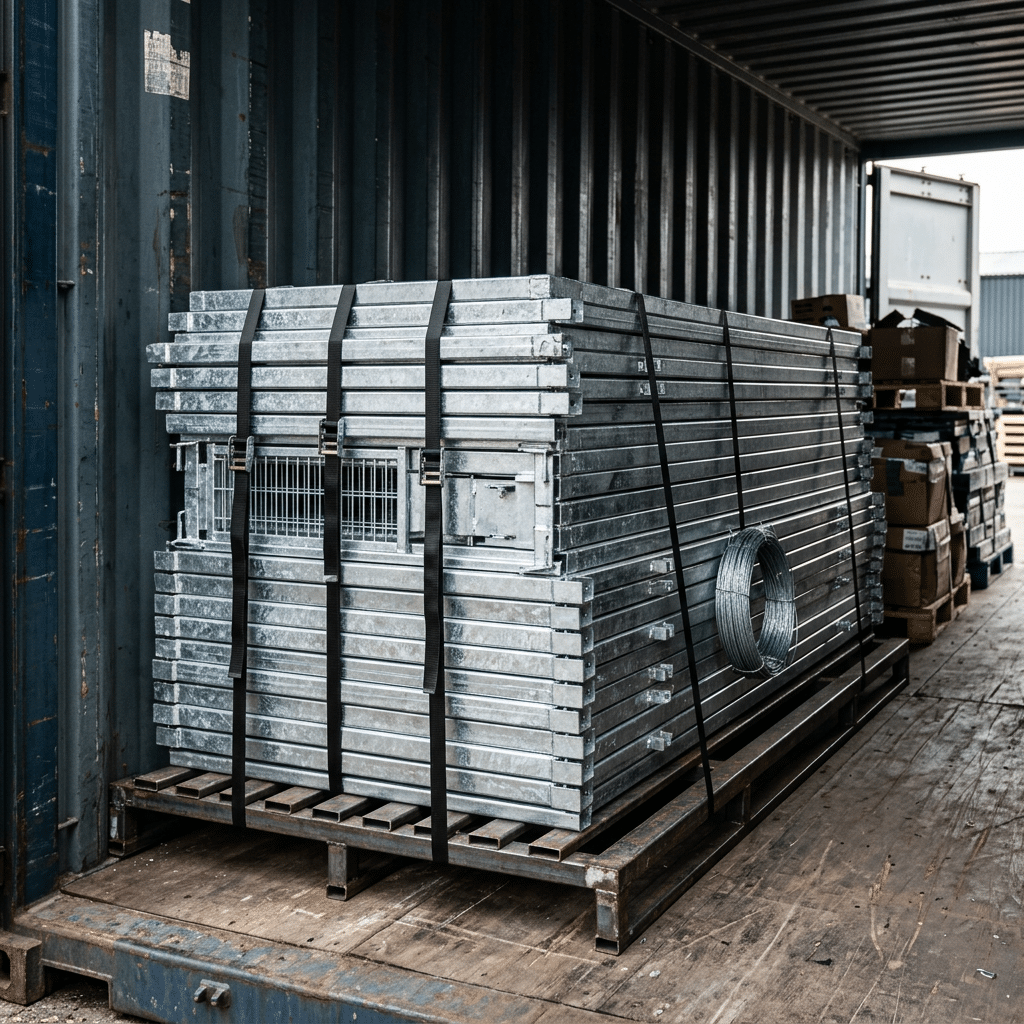
Distributor P&L Math for equestrian products often breaks down due to overlooked freight expenses. Sourcing traditionally welded stables seems straightforward, but fitting only 12-15 sets per container inflates landed costs, erasing your gross margins before the inventory even reaches your warehouse.
This analysis demonstrates how to protect profitability with superior logistics. We calculate the landed cost difference between standard shipping and a Steel Pallet Flat-Pack system, which loads 30-45 sets per container to secure a path to a sustainable 40% margin.
The Local Retail Landscape: Inflated Pricing
Local retail price inflation is volatile, squeezing distributor margins. Factory-direct sourcing with efficient flat-pack shipping lowers your landed costs and protects your profitability.
Understanding Regional Price Variations in 2026
The retail market is highly fragmented. Distributors face major price swings depending on location, with grocery inflation ranging from just 2.3% in some cities to a steep 7.4% in others. This volatility makes consistent profit planning a serious challenge. The problem is often worse in rural areas, where inflation can hit 7.6% compared to 5.6% in urban centers. Less competition and clunky supply chains in these regions put constant pressure on your margins.
Profit Protection Through Efficient Logistics
When the retail environment is unpredictable, controlling your input costs is the only reliable way to protect your business. Our B2B factory-direct model cuts out the middlemen and their markups, giving you a better cost basis from day one. The real advantage comes from logistics. We designed our Steel Pallet Flat-Pack system to maximize container space. You can load 30-45 stable sets into a single 40HQ container, which saves you over 60% on freight costs compared to shipping traditional welded units. That saving goes directly to your bottom line.
Container Economics: Landing 40 Sets for $X
Factory price isn’t the real cost. Landed cost adds 30%+. Our flat-pack design fits 30-45 stables per container, slashing freight costs and protecting distributor profit.
The Ex-Works (EXW) price per stable is just the starting point. Distributors who only focus on the factory price are miscalculating their margins from the very beginning. The real number that matters is the final landed cost per unit, which includes every expense required to get the product from our factory floor to your warehouse.

Calculating True Landed Cost Per Stable
The complete landed cost isn’t complicated, but ignoring it is a fast way to lose money. The formula covers everything: Product Cost + Shipping Freight + Customs Duties + Insurance + Operating Costs. These extra expenses can easily inflate the final per-unit price by 30% or more. Forgetting to factor this in means your planned profit margin disappears before the product even hits your shelves.
The Flat-Pack Advantage: Fitting 30-45 Sets Per Container
This is where logistics becomes a competitive weapon. Traditionally, fully-welded stables are bulky and inefficient to ship, allowing only 12-15 sets to fit into a 40HQ container. The per-unit freight cost becomes enormous.
Our Steel Pallet Flat-Pack system changes this math completely. We designed it to maximize container space, enabling our distributors to load 30 to 45 complete stable sets into a single 40HQ. This efficiency saves over 60% on freight costs compared to the old method. It’s a structural advantage that directly protects your profit margins by drastically reducing the landed cost of each stable.
Get Custom Horse Stables Built to Last 20 Years

The Suggested Retail Price (SRP) Strategy
A Suggested Retail Price (SRP) is a manufacturer’s recommended final price. It protects distributor margins, prevents price wars, and establishes consistent brand value across the market.
What SRP Means for the Distribution Chain
An SRP isn’t just a number; it’s a pricing benchmark that builds a stable financial framework for everyone involved. It’s calculated to ensure there’s enough margin for the manufacturer, the distributor, and the final retailer to all run healthy businesses. It creates a clear and predictable path to profitability.
Think of it as a strategic guideline, not a mandatory price tag. This gives distributors and retailers the flexibility to adjust for local market conditions, special promotions, or bundle deals. The goal is to set a fair value expectation for the end customer, preventing the kind of deep discounting that can erode brand perception and damage the entire sales channel.
Ultimately, the SRP works to prevent destructive price wars. When every partner in the distribution chain has a clear understanding of the product’s intended market value, it discourages a race to the bottom and protects the profit margins necessary for sustainable growth.
Protecting Distributor Margins with Flat-Pack Logistics
A pricing strategy is useless if the underlying costs don’t work. At DB Stable, our entire business model is built to protect our distributors. We operate on a strict B2B basis, meaning we only supply to distributors and large-scale projects. We will never sell directly to an end-user and compete with our own partners.
This commitment is backed by our logistics. Our flat-pack steel pallet system is the key to what we call “Profit Protection.” While competitors shipping fully welded stables can only fit **12-15 sets** in a 40HQ container, our flat-pack design allows us to load **30-45 sets** into the same space. That’s not a small difference—it’s a massive efficiency gain.
This shipping density drastically lowers the per-unit landing cost for our distributors. By cutting freight expenses by more than half, we create a much larger potential profit margin on every single stable sold. This makes hitting the SRP not just possible, but highly profitable for our partners.
Calculating Gross Margin and Warehousing Costs
Gross margin is revenue minus cost of goods sold. For distributors, ocean freight is a major cost. Our flat-pack system cuts this cost, directly protecting your profit.
The Standard Formula for Gross Margin
Gross margin shows the profitability of your products before accounting for overhead. It’s the money left over from sales after paying for the goods themselves. The calculation is simple and essential for any distributor.
- The Formula: (Revenue – Cost of Goods Sold) / Revenue = Gross Margin %
- Cost of Goods Sold (COGS): This is the total landed cost to get the stables to your door. It includes the factory price plus all ocean freight and import duties.
- Operating Expenses (Not COGS): Costs like warehousing, marketing, and sales salaries are treated separately as overhead. They don’t go into the COGS calculation.
How Flat-Pack Logistics Increase Your Margin
Your biggest variable cost as an importer is ocean freight. Reducing it is the fastest way to improve your gross margin. This is a logistics problem, and we solved it with our packaging and loading system.
| Merkmal | Traditional Fully Welded Stables | DB Stable Flat-Pack-System |
|---|---|---|
| Sets per 40HQ Container | 12-15 sets | 30-45 Sätze |
| Freight Cost per Unit | High (Base cost ÷ 12) | Reduced by over 60% |
| Unloading Method | Loose, manual handling | Steel Pallet (Forklift-ready) |
| Warehouse Footprint | Large, awkward | Compact and stackable |
By loading more than double the number of sets into a single 40HQ container, our flat-pack system cuts your ocean freight cost per unit by over 60%. This reduction directly lowers your COGS and protects your profit margin on every shipment. The steel pallet packaging also simplifies unloading and allows for much denser, more efficient warehousing, further reducing your operational costs.
The DB Guarantee: We Never Undercut You
We operate strictly as a B2B source factory and do not sell to end-users. Our flat-pack design also protects your margins by slashing freight costs.
A Strict B2B Model to Prevent Channel Conflict
Our business is built around one core principle: we support our distributors, we don’t compete with them. We function exclusively as an OEM/ODM source factory, supplying B2B partners and large-scale projects. You will never find DB Stabl
e selling directly to individual horse owners or your end-customers. This structure ensures a clean sales channel where your supplier isn’t also your competitor.
Profit Protection Through Smart Logistics
Protecting your profitability goes beyond just preventing sales conflict. It’s engineered into our product. Traditional, fully-welded stables are bulky and expensive to ship, typically allowing only 12-15 sets into a 40HQ container. Our steel pallet flat-pack system changes that math completely. We can load 30-45 stable sets into the same container. This efficiency saves our distributors over 60% on freight costs, providing a tangible competitive advantage and healthier margins right from the start.
Häufig gestellte Fragen
What are typical profit margins for a horse stable business?
A successful horse stable business can expect profit margins between 10% and 25%. Most established operations aim for a 15-20% margin. Profitability is driven by maintaining a high occupancy rate, managing costs like feed and labor, and offering extra services like riding lessons or training.
What does it cost to import a 40ft container of stables?
The total cost varies by route and carrier, but you can expect a range. Ocean freight for a 40ft container is typically $2,200 to $4,500. After adding fees for terminal handling, customs, and documentation, the total landed cost is often between $3,700 and $6,700 before duties.
How can I become a DB Stable distributor?
The best way to start the process is to visit the official website at dbhorsestable.com. Look for a partner or distributor section to find the specific application details, eligibility criteria, and minimum order requirements for your region.
Is it better to dropship or hold my own inventory?
The choice depends on your capital and brand goals. Dropshipping has low startup costs because you don’t buy inventory upfront, but you lose control over fulfillment and have lower margins. Holding inventory requires more cash but gives you full control over quality, branding, and shipping, which usually leads to higher profits.
What is a good retail pricing strategy for horse equipment?
A strong pricing strategy is based on your product’s quality, your competitors’ prices, and your own operational costs. For horse equipment, it is common to run seasonal sales with 30-50% discounts. Setting different price tiers for different customer segments also helps maximize sales.

Abschließende Überlegungen
While competitors focus on a low factory price, that number is irrelevant when high freight costs destroy your margins. Our flat-pack system is an engineered solution designed to protect your landing cost and secure your profit. This logistics advantage is the foundation of a profitable partnership.
The numbers are clear, but seeing the product is the final verification. Request a landed cost quote for a 40HQ container to model your exact profit. Our team can also arrange a trial order to confirm the quality firsthand.



 German
  English
  Spanish
  French
  Arabic
0 Kommentare