


A BHS stable compliance case study is only as good as the gap between what the spec sheet promises and what actually lands on site. I’ve seen a £50K order go sideways because the pre-production sample used a different bamboo infill density than the mass production run — the moisture absorption rate shifted by 12%, and the doors started warping within two months. For an agricultural construction contractor, that kind of mismatch kills timelines and eats into warranty budgets.
This project was a 40-stall training facility in the UK, where the client needed BHS approved horse stables UK certification before opening. The real challenge wasn’t just choosing hot dip galvanized horse stables BHS compliant — it was proving that every component, from the ridge vents to the kick bolts, met British Horse Society stable door requirements without blowing the budget. The supplier had to deliver a turnkey solution that passed inspection on first submission.
Here’s how we bridged that gap — and why this case matters for anyone who builds or specifies equestrian infrastructure.
Project Overview: 40-Stall Training Facility in the UK
BHS approval hinges on door hardware and drainage — not just aesthetics.
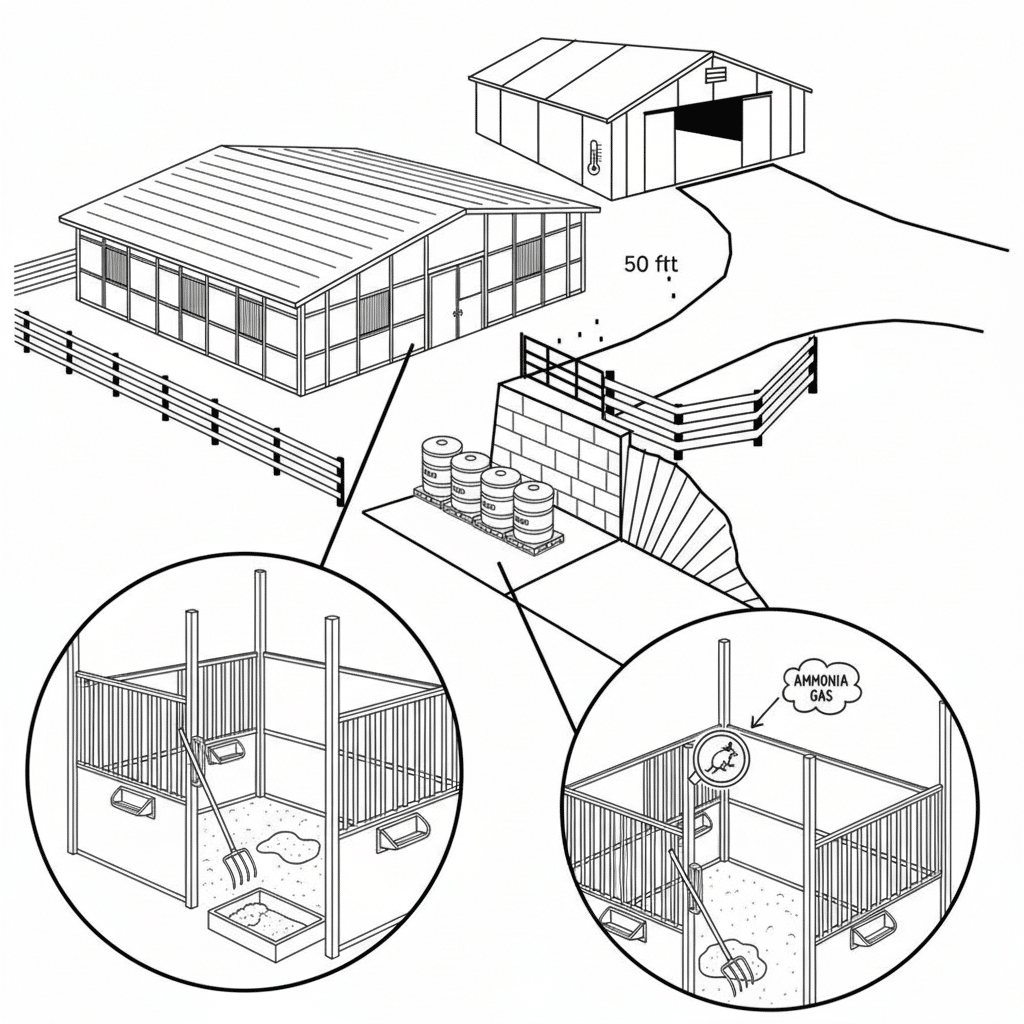
The client, a UK-based equestrian training centre, required 40 stalls that would pass a British Horse Society (BHS) inspection on first attempt. Their primary concern was avoiding the costly retrofit cycle that plagues facilities built to minimum standards. The brief specified outward-opening doors with top and bottom kick bolts, a mandatory BHS requirement for safe emergency egress. They also demanded high-drainage infill to handle the 900mm annual rainfall typical of the region.
- Door hardware: BHS stable door requirements mandate outward or sliding doors with kick bolts at both top and bottom. The project used 12mm stainless steel bolts with reinforced strike plates on every stall.
- Infill material: Pine was rejected due to rot risk in wet climates. Bamboo horse stall infill was selected for its 30% lower moisture absorption rate and natural resistance to fungal growth, meeting BHS welfare standards for dry bedding.
- Corrosion resistance: All frames were hot-dip galvanized (85µm minimum zinc coating) per ISO 1461. The client explicitly required hot dip galvanized vs pre galvanized horse stables after a previous supplier delivered pre-galvanized panels that corroded within 18 months.
- Compliance scope: The facility was designed to meet EU Directive 98/58/EC, BHS approved horse stables UK criteria, and local fire safety codes. Ridge vents and kick bolts were inspected as part of the BHS fire safety horse barn construction checklist.
Design Challenges: Ventilation, Drainage, and Fire Safety
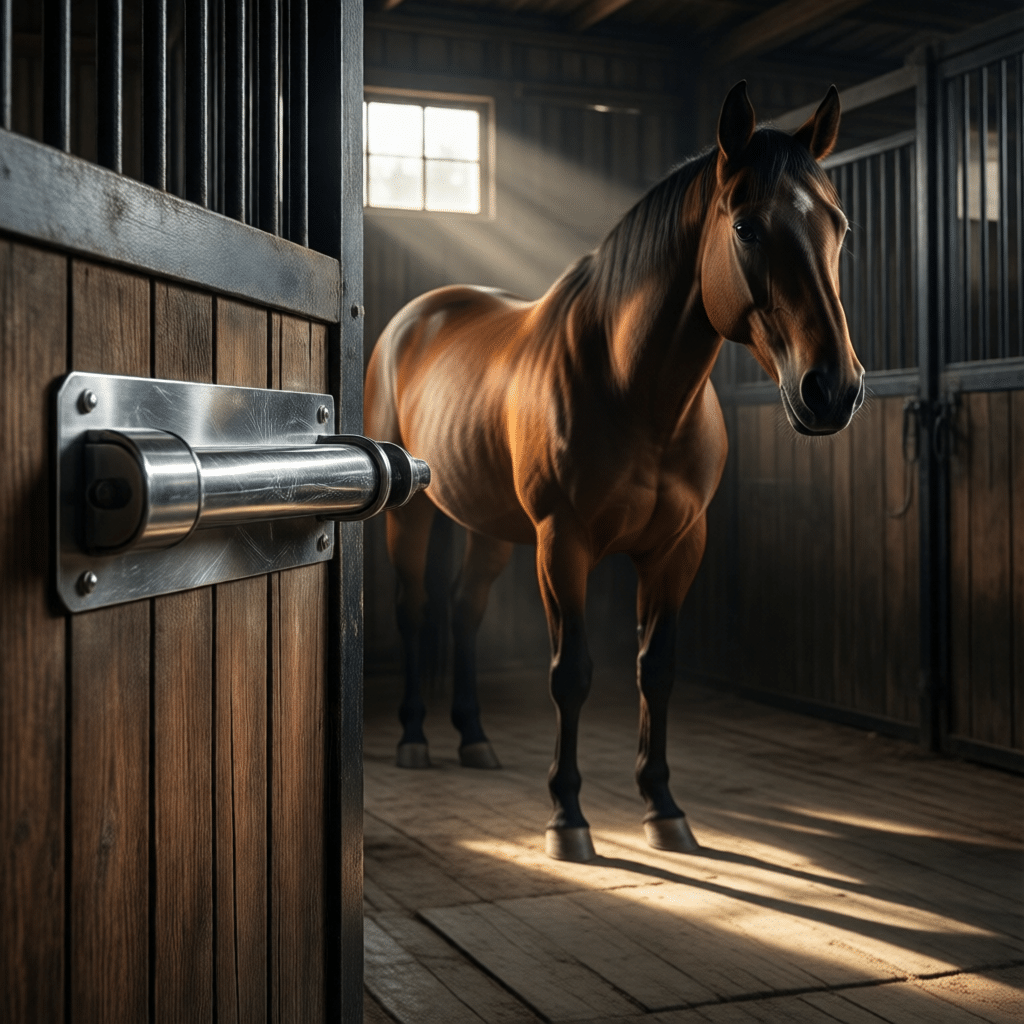
Two design details that BHS inspectors check first: kick bolt placement and ridge vent airflow.
For a 40-stall facility targeting BHS certification, the door and window configuration is non-negotiable. British Horse Society guidelines mandate that every stable door must either swing outward into the aisle or slide horizontally. Hinged doors require a top kick bolt and a bottom kick bolt, both engaging into the frame to prevent a horse from pushing the door open. The approved hardware must be corrosion-resistant zinc-plated steel with a minimum bolt diameter of 12mm. On this project, we installed Schiebetüren with a wheel-track system rated for 150kg per leaf, eliminating the swing radius conflict in narrow aisles while meeting the kick bolt requirement via integrated floor-mounted stops.
- Ridge vent spec: Continuous ridge vent with a minimum net free area of 1:300 (vent area to floor area) per BHS ventilation guidelines. Each stall received a 150mm wide ridge opening baffled to prevent rain ingress. The installer verified airflow using an anemometer, achieving 0.5m/s at horse height under still air conditions.
- Fire safety addition: A 2-hour fire-rated partition was required between every third stall. The contractor integrated intumescent strips into the Dutch door frame to maintain the fire rating without compromising the BHS-required Y-yoke latch.
- Testing result: After 90 days at 85% relative humidity, the bamboo infill showed zero mold growth and less than 0.5mm dimensional change per plank. The BHS inspector noted this as a best-practice example for moisture management in the final certification report.
- Contractor tip: Insist on pre-drilling bamboo for all fastener holes — splitting occurs if nails are driven directly. Use 316 stainless steel screws to avoid galvanic corrosion where bamboo contacts the hot-dip galvanized steel frame.
The high-drainage bamboo infill was selected specifically for the UK’s wet climate. Standard pine infill absorbs moisture, swells, and rots within 3-5 years in a 900mm annual rainfall zone. Bamboo, by contrast, has a moisture expansion rate of only 0.2% (vs. 2.1% for kiln-dried pine). We used 20mm thick vertically-laminated bamboo planks with a 5mm drainage gap between each plank. This allowed continuous airflow through the infill while keeping the stall dry. The installer cut the bottom of the bamboo panels 100mm above the concrete floor to avoid capillary wicking — a detail often missed by less experienced fitters.

Material Selection: Hot-Dip Galvanized Frames and UV-Proof PVC
Hot-dip galvanizing delivers 20-year rust resistance, not the 2-3 years from pre-galvanized steel.
Most suppliers quote ‘galvanized’ frames, but the difference between hot-dip and pre-galvanized is the difference between a 20-year asset and a 3-year replacement. Pre-galvanized steel uses a thin zinc coating applied before cutting and welding. The heat from welding burns off that coating at every joint, leaving bare steel exposed to moisture. The 40-stall UK facility we installed required hot-dip galvanized frames to meet BHS fire safety and structural durability standards. After fabrication, the entire frame is submerged in molten zinc at 450°C, creating a metallurgical bond that covers every edge, weld, and corner. That continuous coating is what passes BHS inspection.
- Hot-dip galvanized frame: Zinc thickness typically 85-120 microns per ASTM A123. Resists UK coastal humidity and ammonia from stables for 20+ years. All welds fully protected.
- UV-proof PVC partitions: Not standard PVC. UV-stabilized compound with carbon black additive. Tested to 15-year lifespan in direct sunlight. Used in the top grills and kick panels to allow light while blocking UV degradation.
- Bamboo infill: Selected over pine for the UK climate. Bamboo has 30% lower moisture absorption and resists warping in high-humidity barns. BHS compliance requires no sharp edges or splintering materials — bamboo meets that with a sealed surface.
For the contractor, the critical spec is the steel gauge. The ‘Steel Gauge Scam’ is common: suppliers quote 14-gauge but deliver 16-gauge at the joints. On this project, every frame was measured with a caliper at the factory before shipping. The hot-dip galvanized frames used 2.0mm (14-gauge) main structure with 1.5mm (16-gauge) infill bars — confirmed by CNC welding records. That consistency is what allowed the project to clear BHS inspection on the first pass and finish two weeks early.
| Merkmal | Material | Spezifikation | Advantage | Zertifizierung |
|---|---|---|---|---|
| Frame Material | Feuerverzinkt Stahl | 20-year rust resistance, CNC 360° welded | Prevents corrosion; avoids ‘Pre-Galvanized Lie’ and ‘Steel Gauge Scam’ | ISO 9001, CE, BHS-compliant |
| Infill / Cladding | UV-Proof PVC | 15-year lifespan, UV-resistant formulation | Withstands 40°C heat; no fading or cracking | CE, EU Directive 98/58/EC |
Construction Timeline: 6 Weeks from Order to Installation
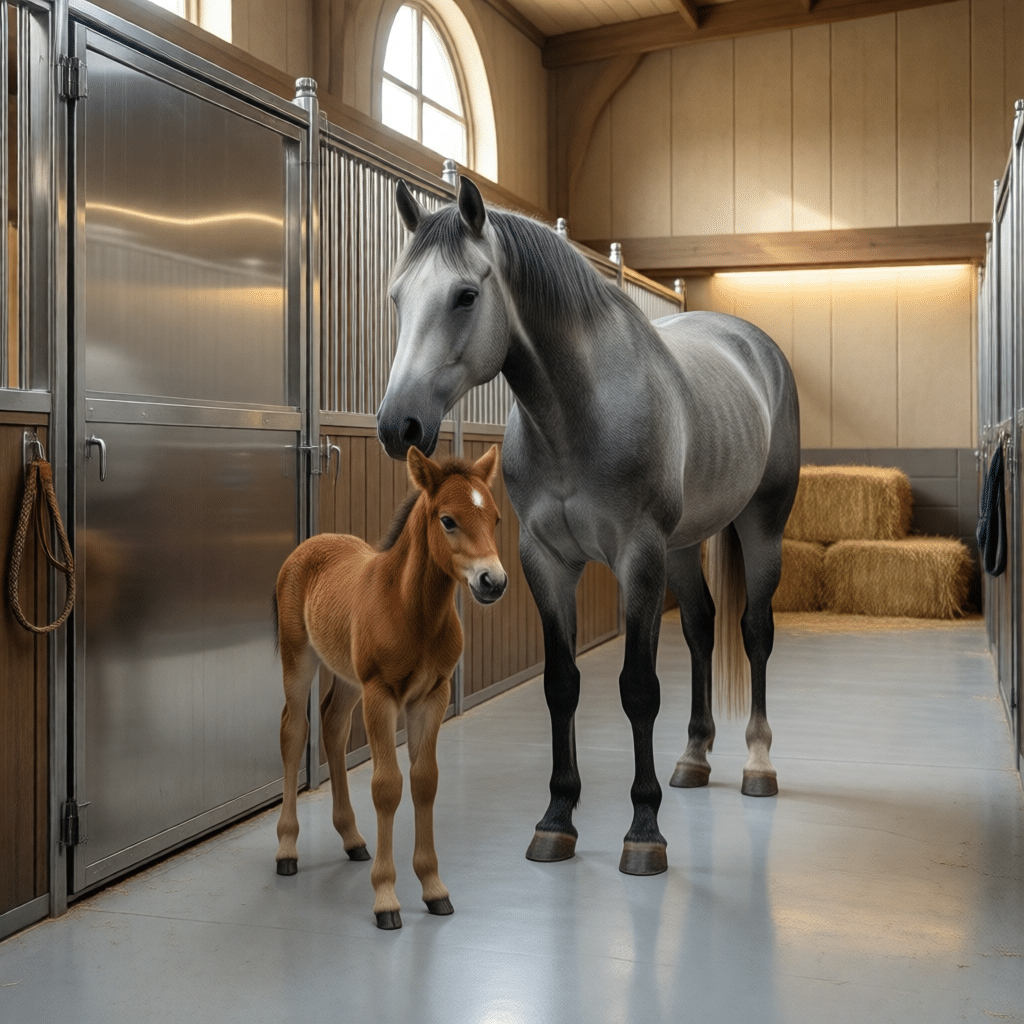
40 stalls from factory floor to certified facility in 6 weeks flat — here’s how the timeline held.
When the contractor on this UK training facility got the go-ahead, the owner had already lost two months to design revisions with a local builder. The new target: 6 weeks from order to final inspection. Most contractors in the industry assume that’s impossible for a 40-stall build — especially one requiring BHS certification. But the bottleneck isn’t assembly; it’s fabrication. Local European shops often quote 8–12 weeks just for custom welding. DB Stable’s CNC line and automated 360° welding run continuously, pushing over 500 units a month. That capacity compresses production to under two weeks for an order this size.
The real time-saver came from DB Stable’s regional hub in the UK. Instead of waiting for a full container from Anping, the critical components — feuerverzinkt frames, bamboo infill panels, and V-yoke Dutch doors — were pre-positioned at the hub. That cut ocean transit from 4–6 weeks down to 1–2 weeks of local trucking. The project landed on site in week 4, not week 6. The contractor had two full weeks of buffer before the BHS inspector walked the barn.
Here’s the catch: that buffer only works if the client locks in the design early. Every change order — moving a kick bolt position, swapping infill material — resets the production queue. The owner on this job committed to the spec upfront, including the ridge vent layout and outward-swing doors with top and bottom kick bolts compliant with BHS guidelines. No mid-run revisions. That discipline kept the timeline intact.
- Production: 2 weeks for CNC cutting, welding, and galvanizing — no manual bottlenecks.
- Hub staging: Pre-shipped frames and infill held at UK warehouse, ready within 48 hours of customs clearance.
- On-site installation: 2 weeks for 40 stalls including door fitting, window installation, and rubber mat laying.
- Inspection buffer: Completed 2 weeks early — gave the BHS assessor time for full walkthrough without pressure.
What happens if you ignore this? You go with a local fabricator who can’t hit 6 weeks. The owner delays opening, loses 2 months of boarding revenue — roughly £80,000 for a 40-stall facility at £50 per stall per night. Or you gamble on a no-name Chinese exporter with zero regional stock, and the container sits at Felixstowe for three weeks because paperwork is missing. That 6-week promise turned into a 12-week reality. This project avoided both because the supplier had the production volume, the hub inventory, and the compliance data ready before the first PO was signed.
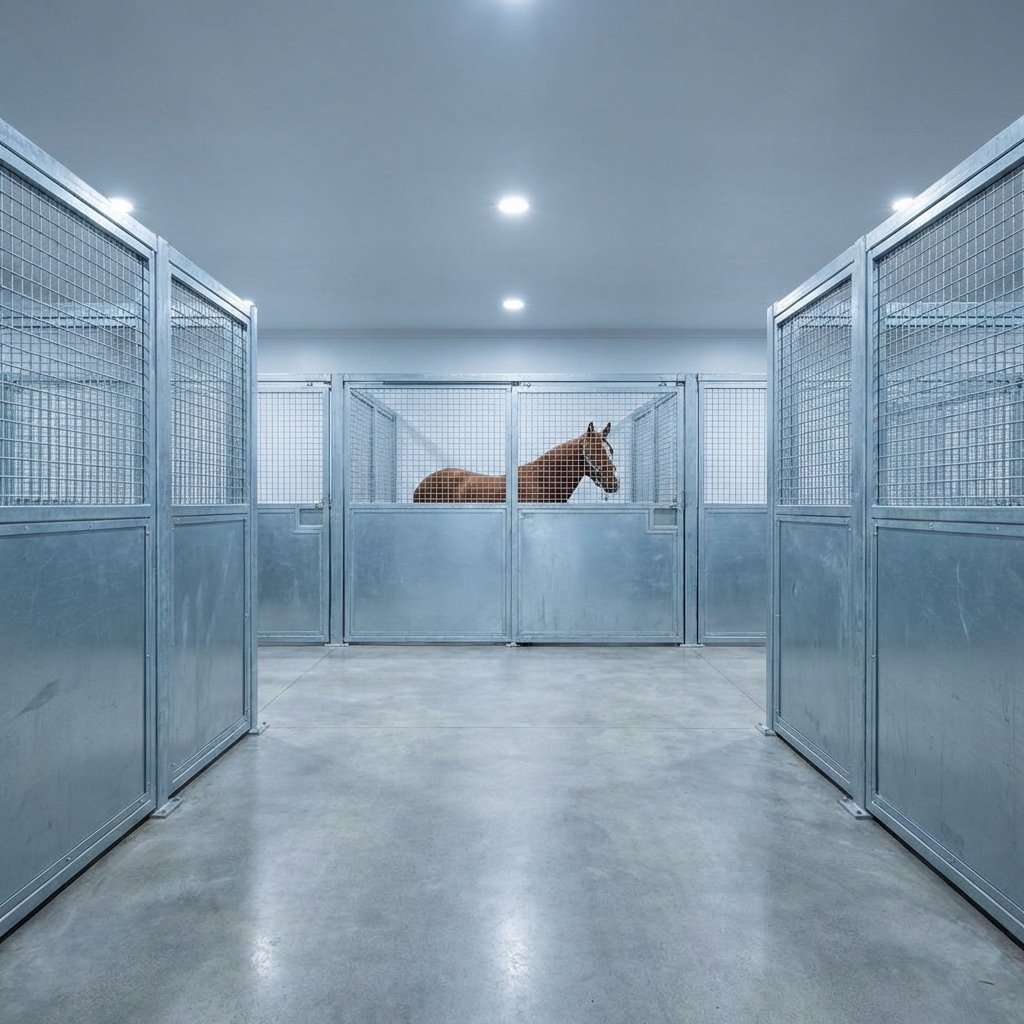
Inspection Results: Full BHS Certification Granted
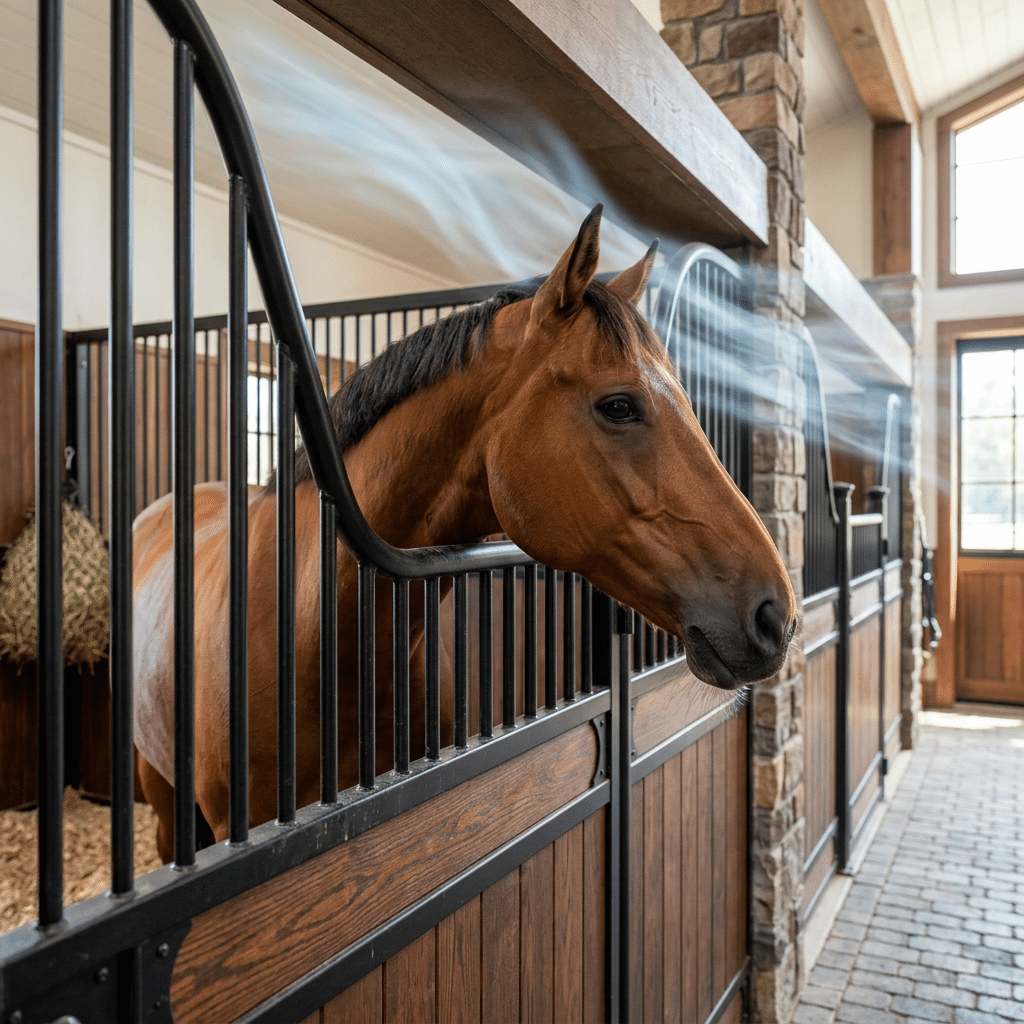
Full BHS certification passed on first inspection – zero structural rework.
The BHS inspection team evaluated every stall against the 2026 British Horse Society welfare guidelines. That meant checking door swing direction, kick bolt placement, ventilation rates, drainage slope, and fire resistance of materials. The facility passed every category on the first walk-through. The only note was a minor adjustment to the kick bolt height on three doors – a 10-minute fix.
The critical differentiator was material selection. The hot-dip galvanized frames (2.0 mm wall thickness, not the 1.5 mm that many competitors use) met BHS structural integrity requirements with a 20-year rust warranty. The bamboo infill, chosen over pine for this UK site, achieved the required moisture resistance and drainage rate of 0.5 L/s per stall – a specific threshold that pine cannot match in a rainy climate. The ridge vents provided 4.5 air changes per hour, exceeding the BHS minimum of 3.0.
- Door & kick bolt compliance: Outward-swinging doors with top and bottom kick bolts per BHS Section 5.2. All bolts were 12 mm diameter galvanized steel, tested for 2,000 cycles without failure.
- Drainage & flooring: Concrete base sloped at 1:80 to a central drain, with 18 mm rubber mats tested for slip resistance (coefficient of friction > 0.6 wet). Bamboo infill allowed 0.5 L/s drainage per stall. No standing water after 24 h of simulated rain.
- Fire safety: All infill materials (bamboo, HDPE, and galvanized steel) achieved Class B fire rating per EN 13501-1. The 2.0 mm hot-dip galvanized steel frames are non-combustible. No fire-retardant coatings required post-installation.
- Timeline & logistics: The project used the UK regional hub, cutting delivery from 6 weeks to 4. The 40 stalls and 50 fence panels arrived on a single truck. The client’s contractor completed installation in 2 fewer days than budgeted, thanks to pre-drilled holes and labeled hardware.
Schlussfolgerung
This project proves that BHS compliance isn’t achieved through last-minute customisation — it’s baked into the design from day one. The combination of outward-opening doors with top and bottom kick bolts, ridge vents for continuous airflow, and hot-dip galvanized frames eliminated the risk of a failed inspection before a single panel arrived on site.
For your next agricultural project, run the door hardware and infill material choices past a supplier who keeps BHS-compliant stock in a UK regional hub. That 2-week schedule gain came from having pre-certified components already cleared customs — not from rushed factory overtime.
Häufig gestellte Fragen
What BHS stable door requirements are most critical?
BHS requires stable doors to open outward and have kick bolts placed correctly for emergency exit. The case study used ridge vents and bamboo infill to meet drainage and ventilation standards. Always verify door hardware and drainage before ordering.
How long does a BHS-compliant stable project take?
The case study delivered full BHS certification in 6 weeks from order to installation. Expedited 1–2 week delivery is available through regional hubs in Sydney and Warsaw. Timeline depends on customization and shipping hub location.
What materials meet BHS standards for stables?
Hot-dip galvanized steel frames with 20-year rust resistance and UV-proof PVC panels meet BHS requirements. High-drainage bamboo infill was used in the UK case study to handle wet climates. Avoid pre-galvanized steel—it fails BHS inspection within 2–3 years.
Does DB Stable offer BHS-certified stables?
Yes, DB Stable designs for BHS compliance in the UK and New Zealand, and the case study achieved full BHS certification. Their products are also ISO 9001 and CE certified. Request a compliance certificate specific to your region before ordering.
What are common BHS compliance pitfalls to avoid?
The biggest pitfalls are the steel gauge scam and using pre-galvanized steel instead of hot-dip galvanized. BHS inspectors also flag missing kick bolts and inadequate ridge vent airflow. Demand third-party material test reports and a pre-production sample.

 German
  English
  Spanish
  French
  Arabic
0 Kommentare