


A rail rarely fails in the middle of a run. It fails at a splice, beside a post, or on the sun-facing side — and on a PVC arena rail it starts as a chalky patch, then a hairline crack, then a section a horse can catch a hoof on. At that point the yard stops debating UV ratings and asks whether a pvc rail replacement splice kit is already on the shelf.
A plastic fence is not simply working or not. The stated figure for UV-stabilized PVC is a 15-year service life — a materials statement, not a wear schedule. Sun, impact and joints take a rail out three different ways, and each asks for a different spare.
Key Takeaways
- Three failure modes: UV chalking, impact splits, and joint failure at the bracket, sleeve or pin.
- A crack across the face is a replacement decision. Surface powder with no crack is a watch item.
- A splice kit is a parts list. Which joint your profile accepts decides what to stock.
- Ordered at 50 panels minimum. One spare section is a parts request, so agree in writing how it gets handled.
- Lead time holds the gap open. Global orders run 4-6 weeks; Sydney and Warsaw hubs run 1-2 weeks.
What actually takes a rail out
Sun is the slow one. UV-stabilized PVC is vinyl compounded with additives that absorb ultraviolet light before it breaks down the wall of the rail, and that package is finite. The same profile ships into an Australian or Spanish summer, where the climate brief calls for material that holds up at 40°C, and into a Polish winter rated to -10°C. Two climates, one additive package, two aging paths.
Impact is the fast one. A rail that takes a kicked corner or a dragged trailer tail fails somewhere the sun never touched, in one event instead of ten seasons. Cold makes that worse: a rail that flexes in warm weather is stiffer in the cold and more likely to split. Where a compound begins to change behavior is a data-sheet question, because this site publishes no wall thickness, impact result or weathering hours.
Joints are the mode a yard usually inspects last, often only after the rail is on the ground. A rail held by a bracket, sleeve or pin usually gives up at the hardware first: the post moves, a fastener works loose, the bracket edge digs in, and the crack starts there.

Triage: which sections get swapped, which stay
Sort the decision by depth. Chalk is powder on the surface and it comes off on a glove. A crack is a line a fingernail catches. A split has an edge you can lift. Only the last two are structural, and only the last two belong on a work order.
Repair options on plastic are limited. A PVC rail is not a steel tube — it cannot be torch-welded back to strength in a paddock — so the practical options are a mechanical splice, a sleeve, or a full section swap. Which one your system allows depends on how the rail was joined at installation, covered in the guide to PVC arena fencing installation.
| What you see on the rail | What it usually points to | The buyer’s move |
|---|---|---|
| Chalky film and color shift, sun side only | Surface additives spent; the profile still carries load | Keep in service; add the bay to the seasonal walk. |
| Hairline crack across the rail face | Stress concentrating at a flaw temperature swing will open | Order a matching section and its connector now. |
| Lifted split, missing chunk, rail out of its bracket | Impact or joint failure; the section is already out | Swap the section, then inspect the post behind it. |
| Damage only where rail meets post | Bracket, fastener or a post that has moved | Replace hardware first; the rail may be sound. |
One position is worth holding: when a crack runs across the face, swapping the section beats defending a field repair. A cut-and-clamped fix on a line a horse leans against daily is harder to explain in a safety review than a factory section with a part number.
What belongs in a replacement splice kit
Ask for the kit as a list, not a noun. The phrase covers three things in trade use: rail with a sleeve, a connector set with fasteners, or a pack that also carries the post bracket. Two packs sold under one name will not necessarily fit the same profile, so get the parts drawing before price enters the conversation.
- Matching rail section: named by profile and color code from the original order, not by a photo of the old fence.
- Connector or sleeve: the part that joins the new length to the standing rail, with the fastener type it expects.
- Fasteners: count and finish matched to the bracket, because mixed metals at a joint are a question to ask. The steel side of this range is hot-dip galvanized with a stated 20-year rust-resistance figure.
- End or post cap: if the damaged section carries one, the replacement needs one too.
- Post bracket or shoe: the item a yard learns is obsolete only when the original comes apart in its hand.

Hardware runs on a different clock from the rail: UV works the exposed face, a fitting fails because something moved. If the fault is a bent bracket or a sheared pin, the section you ordered fixes nothing.
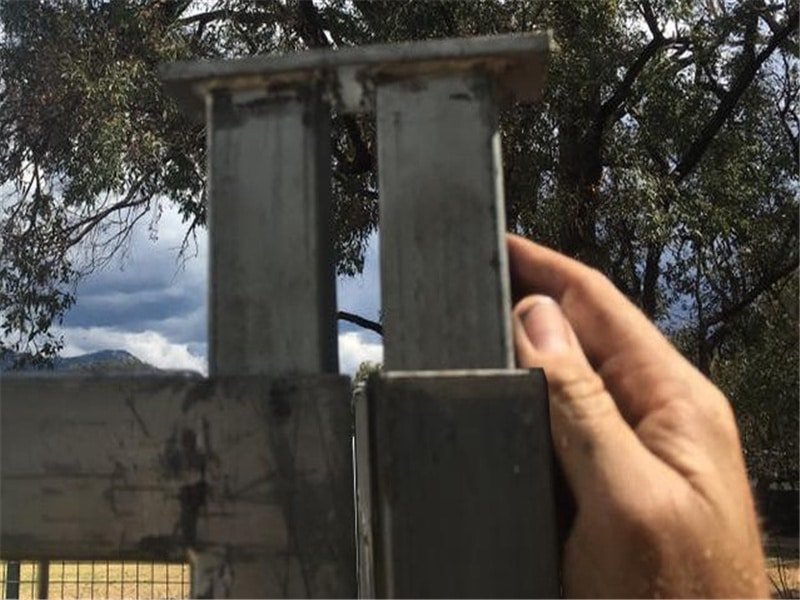
For how panels join at all, the read on fence panel connection systems settles most rail-failure calls before a spare is ordered.
Ordering spares without reopening the fence line
Three numbers decide how long the gap stays open. The first is order minimum, and the stated figure for the range is 10 stable sets or 50 fence panels. One replacement section is not a panel order, so ask in writing how a below-minimum parts request gets handled.
The second is lead time. Global production-to-dispatch sits inside 4-6 weeks, and the Sydney and Warsaw hubs are the express route at 1-2 weeks. A line with a horse in it is not a decoration, so knowing the hub position lets you plan a swap for one weekend.
The third is who signs the parts list. Orders above 20 sets come with a dedicated regional account manager, and it is the shortest route to a written spares recommendation for the profile already in the ground — including which documents sit behind the 15-year material statement, the same evidence path taken in the guide to UV-stabilized rail weathering certificates. Stated volume discounts on batch orders move in the 5%-15% band, so spares folded into a planned order are an easier conversation than spares pulled out of a breakdown.
Die horse fence overview lays out the panel line when a section swap turns into a longer run.
Häufig gestellte Fragen
Can a cracked PVC arena rail be repaired in the field?
A mechanical splice or sleeve is the realistic option; a rail cannot be torch-welded back to strength on site. Ask which joint type your profile accepts, stock that part, and swap the section once a crack has opened.
What do I need before ordering a pvc rail replacement splice kit?
Profile name and color code from the original order, the connector or sleeve type, the fastener the bracket expects, and whether the post bracket is damaged. A photo of the standing fence is not a part number.
How many spare rail sections should a yard carry?
No published figure fits every fence line, so treat it as a stocking decision. A practical floor is one matched section and connector set per profile in use, stored flat and labeled.
Does replacing a rail section change the 15-year material claim?
Read that figure as a materials statement for the profile, not a warranty schedule for a fence. Ask in writing what the document says about a replaced section, and keep the record with the order paperwork.
How fast can a replacement section reach Australia or Poland?
Standard orders run inside 4-6 weeks worldwide. Sydney and Warsaw hub stock is the faster route at 1-2 weeks. Confirm which hub covers your site before the fence fails, not after.
Schlussfolgerung
Sun, impact and joints take rails out three different ways, and a spares shelf built for one of them will not cover the other two. Matching the profile, the connector and the storage conditions is most of the job.
Before the next season starts, add one line to the order file: profile name, connector part, and how many spare sections the yard wants held. Ask for it in writing, and a rail failure stops being a negotiation.


 German
 English
 Spanish
 French
 Arabic
0 Kommentare