
The pre-galvanized lie lives in one word on a quotation: “galvanized.” That single word can cover wire and sheet that were zinc-coated at the mill, then woven, cut and welded into panels afterward — leaving bare steel at the joints and cut edges. It can also cover honest hot-dip galvanizing, where the finished panel goes into the bath last. Same invoice line. Different service life.
For a fence buyer shipping fifty panels at a time, the difference is not technical trivia; it is the spec. This guide gives you the wording to put on the purchase order and a plain check at the container that tells you which product actually arrived. The rust pattern that follows — welds going first — is simply the invoice reading back to you.
Key Takeaways
- “Galvanized” on a quote is not a specification. Ask whether the steel was coated before fabrication (pre-galvanized) or after (hot-dip), and treat a vague answer as a red flag.
- Pre-galvanized panels are coated as coil or wire at the mill, then welded and cut. The weld heat burns zinc back from the joint; the cut edges were never coated.
- Hot-dip after fabrication immerses the finished frame, so joints and edges are covered. This site states its twenty-year rust claim for the hot-dip galvanized line, not for anything merely labeled “galvanized.”
- First rust at the welds and cut edges, while flat faces stay clean, is the signature of the process you actually received.
- Verify before signing: named coating process per component and a hot-dip standard (EN ISO 1461 or ASTM A123) written on the purchase order. Verify at delivery: look at the welds before unloading everything.
- With a 50-panel MOQ and a 4-6 week global lead time, the wrong spec costs you a season of re-orders, not a phone call.
The Pre-Galvanized Lie, in One Paragraph
Three different products hide behind the word galvanized. Pre-galvanized (also called galvanized-before-fabrication, or mill galvanized) means the zinc layer went on as flat sheet or wire at the steel mill, cheap and continuous, before anyone built a panel from it. Electro-galvanized is a thinner zinc deposit, applied the same way, more at home indoors than in a paddock. Hot-dip galvanizing (HDG) is different in kind: the finished, welded, drilled panel is cleaned and dipped in molten zinc after fabrication, so the coating arrives on surfaces that could not be coated any other way — welds, bolt holes, cut edges.
A buyer who pays for the third product and receives the first has not been sold a thinner coating. They have been sold a different manufacturing sequence. That is why the check happens at the quotation, before the money moves.
| Item | Pre-galvanized stock | Hot-dip after fabrication |
|---|---|---|
| When zinc is applied | At the mill, as coil or wire, before assembly | After welding, cutting and drilling are complete |
| Coverage at welds | Burned back by weld heat; bare or patched | Coated along with the rest of the frame |
| Coverage at cut edges | Exposed steel wherever material was cut to length | Zinc reaches the edge with the rest of the part |
| First rust pattern | Joints and edges go before the flat faces | More uniform; early rust often traces damage, not the process |
Why the Welds Rust First
Welding is fire applied to steel. Where the arc passes, the heat burns zinc back from the surface immediately around the bead, and a woven or welded mesh panel is nothing but arcs. A frame assembled from pre-galvanized tube and wire therefore leaves the factory coated on the flat runs and typically uncoated wherever metal was joined or cut — which is why rust on that stock starts at the joints and cut edges. This site’s established guide to why pre-galvanized welds rust and what it costs covers that mechanism and the repair math in depth; this guide stays on the procurement side of the same fact.
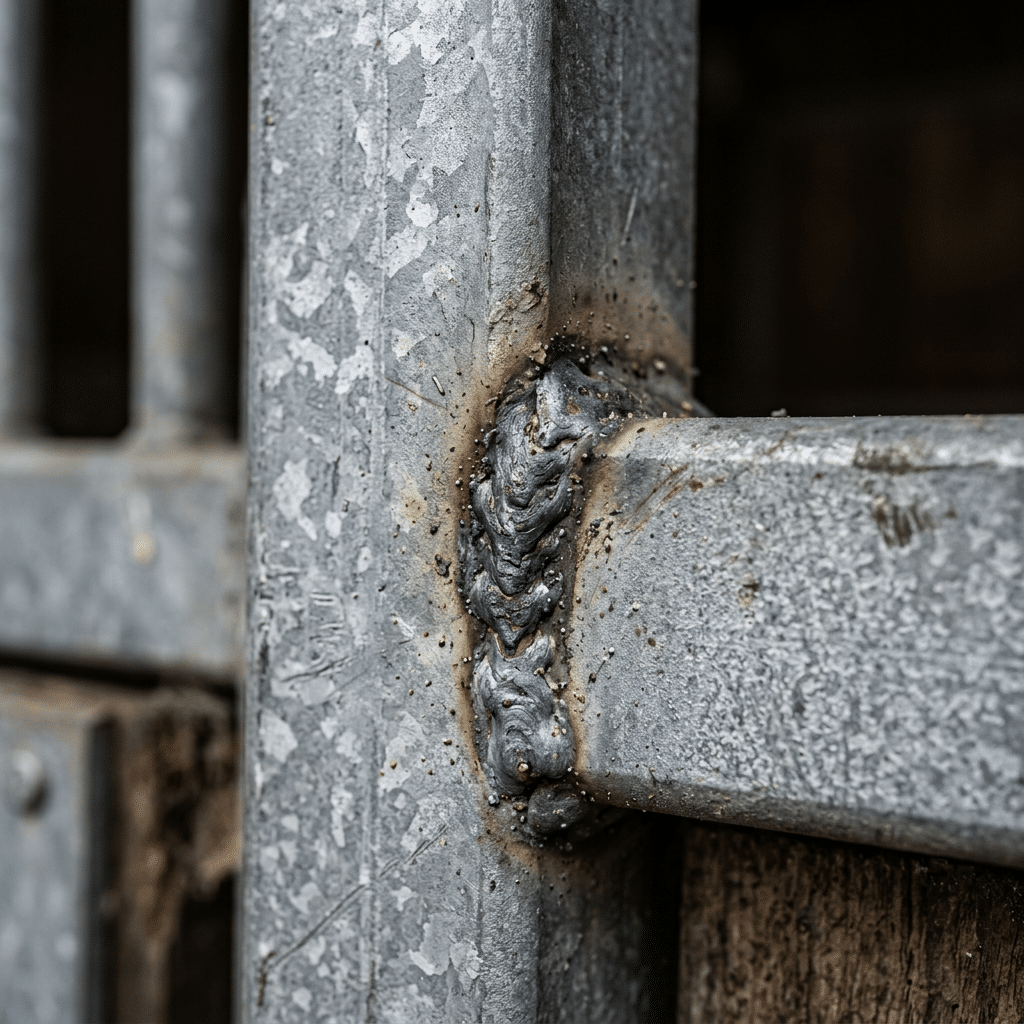
What happens next follows ordinary corrosion logic. Dew, rain and a horse’s breath collect at joints and edges; bare or patched zinc fails first; rust blooms at the weld, then runs down onto the coated faces that were never the weak point. This site’s corrosion-zone guide to galvanized paddock panels covers where field rust appears and how to read it after installation — the pattern is evidence of the process you bought.
Fabrication adds to the problem after the mill: bolt holes are drilled through whatever coating exists, fittings are tightened against it, and a shipped panel rubs its neighbors across an ocean transit. A post-fabrication hot dip coats the drilled, assembled part in one bath; pre-galvanized stock takes every one of those wounds as bare or patched metal.
What the Lie Costs a Buyer
For the yard owner, the cost is not the rust itself; it is what the rust drags along. A weld-rusted line still holds the horse, but sections start failing out of sequence, and replacement bought in ones and twos wastes the ordering structure this site publishes — fence starts at 50 panels, volume orders carry 5%-15% tiered discounts, and global production runs 4-6 weeks. No price lists are published here to run the failure math against; the visible point is that wrong-process steel turns one order into several.
For the dealer or importer, the lie comes back as your name on the invoice. The twenty-year rust resistance this site states for its hot-dip galvanized line travels with the process written on the purchase order, not with the word galvanized. A customer who learns the difference from their own fence post learns it about you. Regional stock in Sydney and Warsaw can turn a 1-2 week replenishment for the right spec into a competitive advantage; no warehouse rescues a fleet of panels that rusted by design.
Verify Before Signing, Inspect on Delivery
Before signing: put four lines on the request and demand the answers in writing on the quote itself. One — the coating process, named per component: rails, mesh or wire, posts, connectors, because a single frame can legitimately mix finishes. Two — if hot-dip, the standard it is hot-dip galvanized to: EN ISO 1461 oder ASTM A123, the two public standards that name post-fabrication hot-dip coating and its inspection. Three — how weld spatter, cut edges and any dip-injured areas were repaired, stated in the supplier’s own words rather than a form. Four — a written confirmation that the goods delivered will match the stated process. A supplier who will not put all four in writing has answered your question already.

On delivery: open one bundle before the crew unloads everything. Look at three welds and one cut edge in daylight. A continuous, dull-matte zinc film over the weld crown suggests the part met the bath after it was built; a scorched, shiny or patched weld ring against otherwise bright tubing suggests it did not. Visual reading is a screening tool, not a lab result — take any doubtful frame back to the four written lines, and photograph what you find before assembly moves the evidence. The steel gauge scam guide on this site applies the same delivery-day discipline to wall thickness; process and thickness are the two halves of one verification.
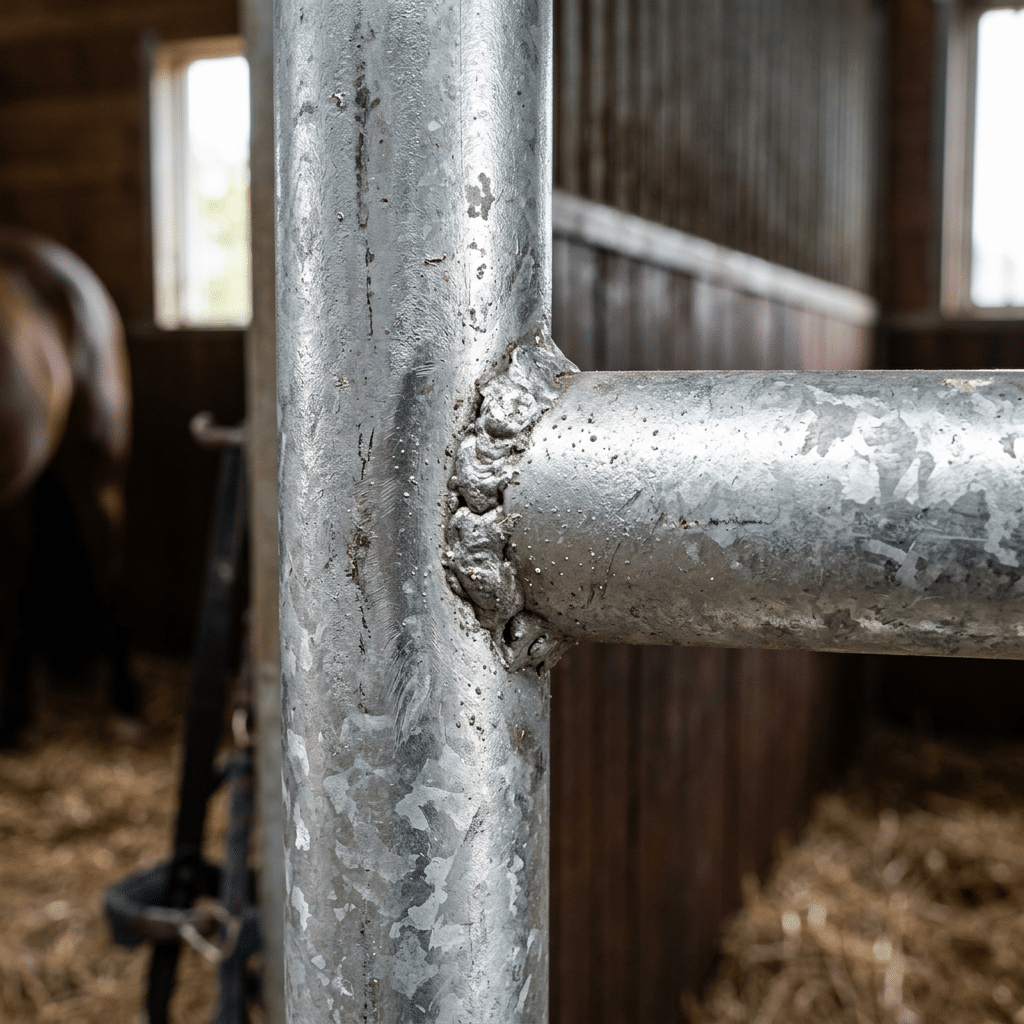
Our position: treat the word galvanized as an unfinished sentence. From the first enquiry, we ask which process, applied when, to which standard, stated per component — and we expect any serious supplier to be comfortable answering all four. The browse-and-compare entry point is the horse fence product page.
Häufig gestellte Fragen
Is pre-galvanized steel always a bad buy?
No — it is honest for dry, sheltered, lightly handled uses, and it prices accordingly. The problem is a horse panel quoted as merely “galvanized”: outdoor rails a herd leans on and hosing wets are a poor fit for coating that stopped before fabrication existed.
Can I tell hot-dip from pre-galvanized just by looking?
You can screen, not certify. Hot-dip usually reads as a continuous dull film that covers welds and edges; scorched or patched weld rings point to coating applied before assembly. For anything that decides a claim, rely on the written process and standard on the purchase order.
What exact wording belongs on my purchase order?
Something close to: “hot-dip galvanized after fabrication to EN ISO 1461 or ASTM A123, coating stated per component, weld and cut-edge repair method documented.” Then require the delivery to match that sentence.
Does the twenty-year rust claim cover the welds?
This site states the twenty-year figure for its hot-dip galvanized steel line, where the bath reaches the weld because it comes after welding. Any warranty claim you make or pass to your customer should name the process and standard, component by component, in writing.
What if the delivered panels look pre-galvanized?
Photograph welds and cut edges before unloading and assembly, note the bundle marks, and put the discrepancy against your purchase-order lines in writing the same day. The delivery-day logic in the steel gauge scam guide applies here unchanged: evidence comes out of the stack, not off it.
Schlussfolgerung
The pre-galvanized lie survives because “galvanized” reads as a fact when it is only half a sentence. Finish the sentence on the quotation — process, timing, standard, per component — and the welds stop being a surprise, because a post-fabrication bath covers exactly the places where the lie would otherwise start.
Send your four written lines with the next request for quotation, then check one bundle at the container before the crew disperses. Start from the horse fence product page, and make the next quote earn the word galvanized.


 German
 English
 Spanish
 French
 Arabic
0 Kommentare