


hot-dip galvanizing vs pre-galvanized is the first checkpoint buyers should lock before they approve a supplier, budget, or production slot. When a supplier shows you a shiny pre-production sample of a horse stable kit, do you assume the full container will match that finish? The question matters more than most buyers realize. A colleague once approved a $50K order based on a sample that looked flawless—only to find rust weeping from every weld joint within 18 months. The culprit wasn’t bad luck. It was a bait-and-switch on the galvanizing method: pre-galvanized sheet metal masquerading as hot-dip. The sample approval process missed the one spec that determines whether a barn lasts 5 years or 20.
What Is the Pre-Galvanized Lie?
Pre-galvanized steel fails at weld points within 2 years.
Here’s the reality: most stable kits labeled ‘galvanized’ use pre-galvanized sheet metal. The zinc coating is applied to the coil before the steel is cut, punched, and welded. That means every shear line, every drill hole, and every weld joint has zero zinc protection. The coating thickness on pre-galvanized steel typically measures only 20–30 microns — barely enough to slow down surface rust in a dry warehouse, let alone a horse barn with urine ammonia and pressure-wash cycles.
Hot-dip galvanizing flips the process. The entire fabricated structure — welds, edges, corners, interior surfaces — gets immersed in a molten zinc bath at approximately 450°C. This creates a metallurgical bond between zinc and steel, forming multiple alloy layers that deliver a coating thickness of 85–120 microns per ASTM A123 standards. There are no unprotected zones. When I audit suppliers for large-scale equestrian projects, this is the single biggest differentiator between a facility that holds up for two decades and one that starts shedding rust flakes before the first major competition season.
- Pre-galvanized failure point: Zinc layer breaks at weld points and cut edges. Rust appears within 18–24 months in humid or ammonia-rich environments like stables.
- Hot-dip coverage advantage: Full immersion coats all surfaces uniformly — including tube interiors if properly vented. No bare metal exposed after fabrication.
- Coating thickness comparison: Pre-galvanized: 20–30 microns. Hot-dip galvanized: 85–120 microns (ASTM A123 Class B). That’s 3–5x more sacrificial zinc protecting your steel.
Visual and Tactile Tests to Identify True Hot-Dip
Two quick field tests separate genuine hot-dip from pre-galvanized steel in under 30 seconds.
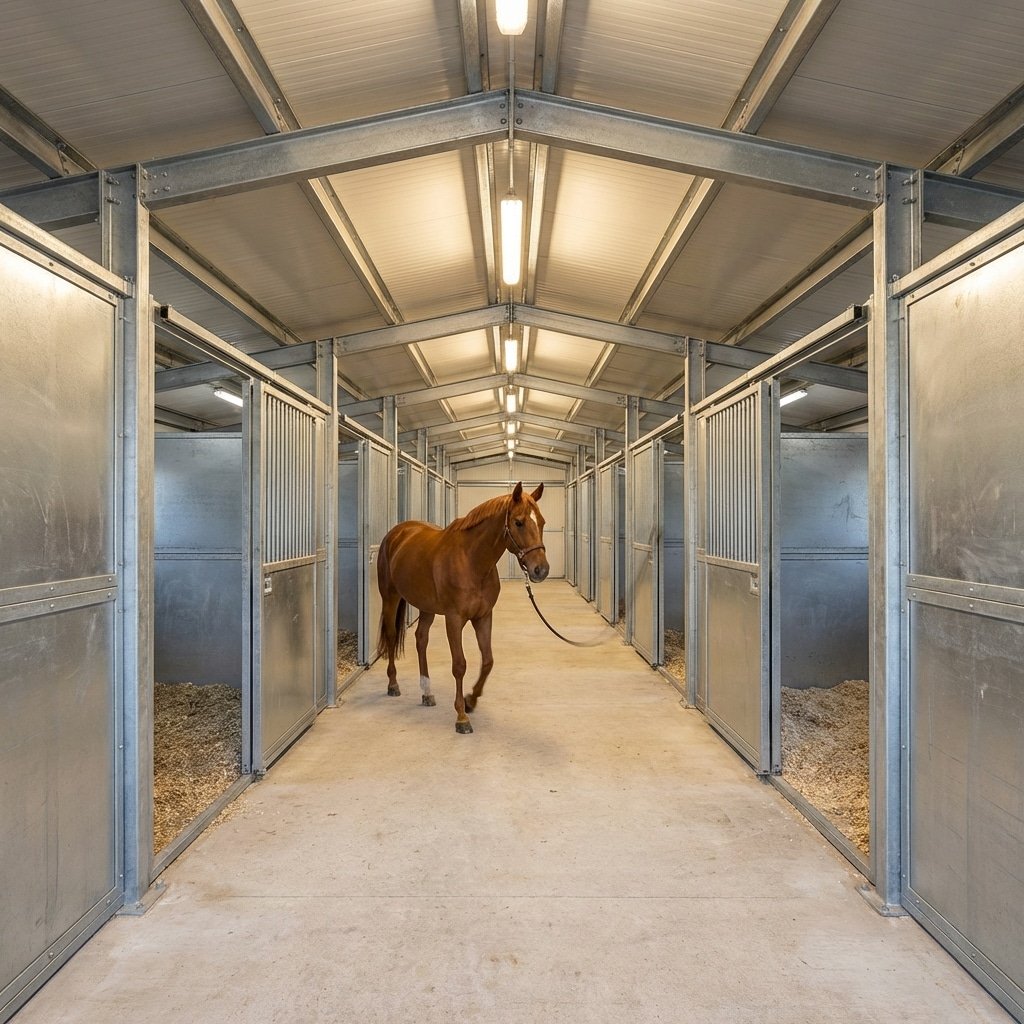
Pre-galvanized steel arrives with a shiny, smooth coating because the zinc is applied to the flat sheet before it’s cut and welded. That slick surface looks great on day one—but every cut edge and weld point is left exposed. True hot-dip galvanizing, where the entire fabricated assembly is immersed in molten zinc, produces a distinct matte finish that feels slightly rough to the touch. You can often see a visible crystalline spangle pattern. If a supplier touts ‘galvanized’ and the surface looks polished like chrome, that’s your first red flag.
- Matte finish vs shiny coating: Hot-dip galvanizing yields an uneven matte-gray surface with zinc-iron intermetallic layers. Pre-galvanized steel has a uniform bright silver appearance. Even if the supplier sandblasts or paints over it, the underlying microstructure doesn’t change.
- Magnetic gauge thickness check: The decisive test. Use a calibrated magnetic thickness gauge on a flat, non-welded area. Pre-galvanized typically measures 20–30 microns. Hot-dip per ASTM A123 should read 85–120 microns. Anything below 50 microns on a load-bearing member means you’re buying pre-galvanized sheet—not structural hot-dip.
- Where to measure: Avoid edges and welds where the coating can be thicker or thinner. Take 3 readings on each member and average them. DB Stable’s process produces a minimum 85 micron coating on parts up to 40 feet long—verified before shipment.
Consequences of Using Pre-Galvanized Steel
Pre-galvanized steel rusts at welds within 2 years — hot-dip covers everything.
The biggest failure point on pre-galvanized horse barns is the weld zone. Pre-galvanized steel arrives with a thin zinc coating (20–30 microns) already applied to the sheet. Once the fabricator cuts, punches, or welds that sheet, the protective layer is destroyed at every edge and weld seam. Those bare spots are now exposed to moisture and oxygen. In a stable environment — with ammonia from urine, daily hosing, and humidity — red rust appears on those welds within 18 to 24 months. The rest of the panel may still look okay, but the structure is already compromised at the joints. That’s where the load is transferred.
Structural weakening follows fast. Rust isn’t just cosmetic — it consumes the base steel. A 2mm wall thickness can lose 0.5mm or more in five years at the weld zone, reducing load capacity by roughly 25%. Once the section loss reaches critical levels, a kick from a horse or a heavy snow load can snap a post or collapse a panel. Pre-galvanized partition rails have been observed to sag after four years because the welds simply corroded away. Compare that to hot-dip galvanized steel, which gets 85–120 microns of zinc after all cutting and welding are done. Every weld, every cut edge, every drilled hole is sealed. That’s why a hot-dip galvanized stable carries a 20-year rust-through warranty — the coating is applied to the finished structure, not the raw coil.
- Coating at weld points: Pre-galvanized: 0 microns (burned off during welding). Hot-dip galvanized: 85–120 microns, continuous over entire weld.
- Time to first rust: Pre-galvanized: 1–2 years at welds and cut edges. Hot-dip galvanized: 15–20 years before any red rust appears.
- Section loss after 5 years: Pre-galvanized: 0.3–0.6mm at weld zones, leading to structural weakening. Hot-dip galvanized: negligible (<0.05mm) because the zinc layer sacrifices itself first.
If you’re contracting a horse barn for a client, specify ASTM A123 Feuerverzinkung in the procurement documents. That standard mandates a minimum 85-micron coating and full coverage after fabrication. Any supplier who can’t provide a mill certificate for hot-dip galvanized steel — or tries to sell you ‘galvanized’ without specifying the process — is passing pre-galvanized material. Don’t let a $50,000 stable become a rust liability in five years.
Industry Standards for Galvanizing
ASTM A123 isn’t optional—it’s the only way to guarantee 20-year rust resistance.
Most buyers assume any ‘galvanized’ steel meets a standard. It doesn’t. ASTM A123 is the governing specification for hot-dip galvanized structural steel—the one that requires full immersion after all cutting, welding, and drilling. Pre-galvanized sheet steel (coil-coated before fabrication) falls outside this standard entirely. If a supplier claims ASTM A123 compliance but ships pre-galvanized parts, you’re looking at rust at every weld and cut edge within 2 years.
- Coating Thickness Requirement: For structural steel sections, ASTM A123 mandates a minimum average coating thickness of 85 microns (3.4 mils). Pre-galvanized sheet typically delivers 20–30 microns—that’s a 3× gap. In salt-spray testing, 85 microns resists red rust for over 2,000 hours; 20 microns fails before 500 hours.
- Coverage After Fabrication: The standard explicitly requires that all fabricated components—including welds, bolted connections, and cut edges—receive the same zinc coating. Pre-galvanized steel can’t meet this because the zinc layer is burned off during welding. With hot-dip, the entire assembled part goes into the bath, so even internal corners get full coverage.
- Verification in the Field: You can check thickness with a magnetic gauge. Measure on the flat surface and at the weld zone. If the weld zone reads below 50 microns, the material is not ASTM A123 compliant. That’s a red flag for structural weakening from pre-galvanized rust within 5 years.
DB Stable’s Hot-Dip Process
80 microns minimum zinc coating ensures 20-year rust-through protection.
A 20-year rust-through warranty is only credible if the zinc coating thickness exceeds 85 microns. Pre-galvanized steel typically carries 20–30 microns — that’s why rust appears at welds and cut edges within two years. DB Stable’s hot-dip process delivers 85–120 microns across the entire structure, including internal surfaces and weld zones. The warranty is not a marketing gimmick; it’s a direct consequence of the coating thickness specified in ASTM A123.
- Coating thickness: 85–120 microns on all steel parts, measured by magnetic gauge after immersion. Industry standard for pre-galvanized is 20–30 microns — a 4x difference.
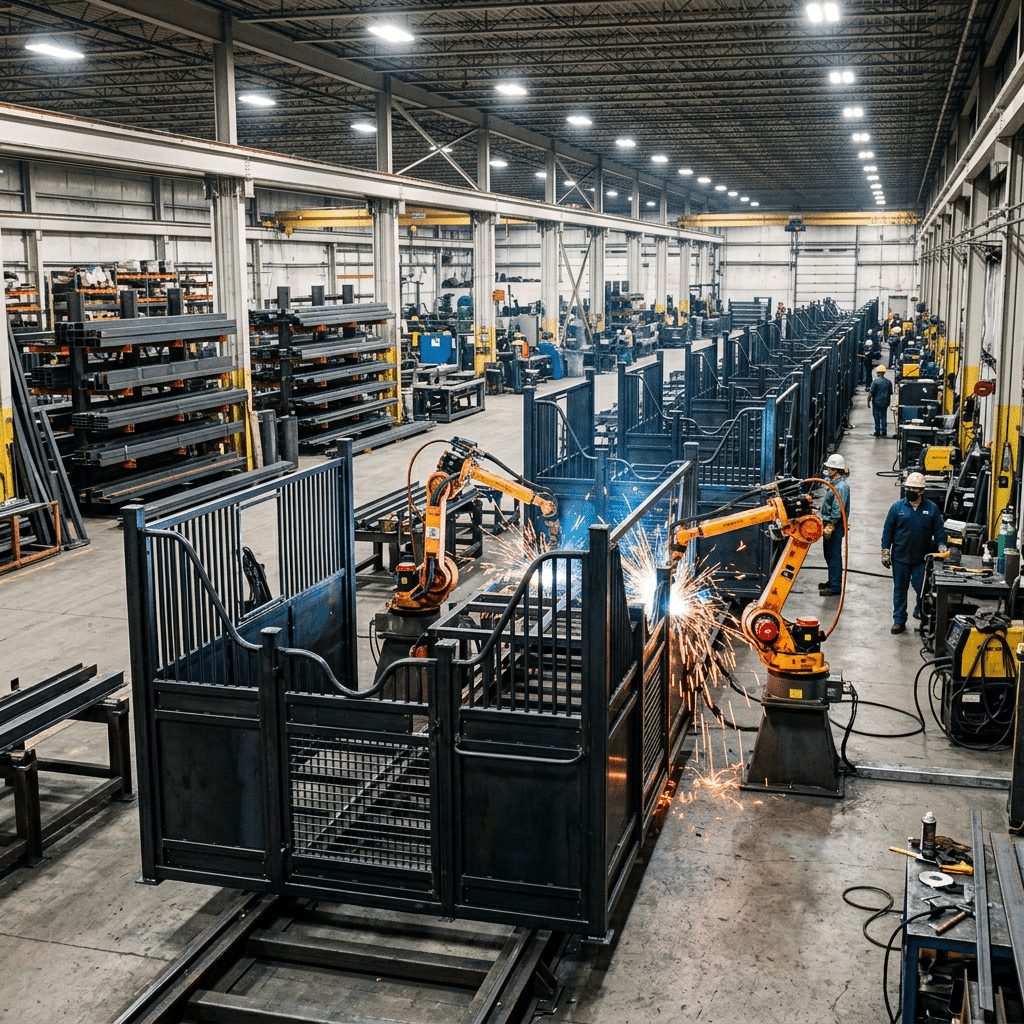
- Immersion tank capacity: Full submersion for parts up to 40 feet. No missed sections, no hand-dipping. Every weld, corner, and internal cavity receives the same zinc layer.
- Weld coverage: Because galvanizing happens after welding, the zinc bonds directly to the weld metal. Pre-galvanized steel loses coating at weld points — that’s where rust starts. DB Stable’s 360° process eliminates that failure point.
For a contractor specifying stables for a 20-year commercial lease, the math is simple: pre-galvanized saves maybe 15% upfront but requires repainting or panel replacement inside a decade. Hot-dip galvanized, at the thickness DB Stable uses, does not rust through for 20 years in outdoor exposure. That’s the difference between a maintenance liability and a fixed asset.
Schlussfolgerung
Skipping the verification step on galvanizing type costs you more than just a warranty void. Pre-galvanized steel will show rust at the weld points within two years, and by year five the structural integrity of the entire stable is compromised. That means a full rebuild on a 40-stall barn, not a simple patch.
Before you sign that FOB pricing sheet, insist on mill test reports and a signed quality tolerance clause that specifies ASTM A123 coating thickness. Include a magnetic gauge reading in the sample approval process — if the supplier cannot deliver 85 microns at the weld, you are accepting a 20-year liability for a 5-year product. Review the current DB Stable range for fully immersed hot-dip galvanized horse barns.
Häufig gestellte Fragen
What is the pre-galvanized lie?
The pre-galvanized lie is that shiny pre-galvanized steel performs like hot-dip, but it rusts at weld points within 2 years. Hot-dip galvanizing immerses the steel after fabrication, covering all welds with a thick, durable. Always specify hot-dip galvanized for long-term barn durability.
How can you tell if steel is hot-dip galvanized?
Two quick field tests: check for a matte, rough texture and measure coating thickness with a magnetic gauge. Hot-dip galvanizing leaves a dull finish and typically exceeds 85 microns, while pre-galvanized is. Use a magnetic gauge to verify thickness before accepting delivery.
What happens when you use pre-galvanized steel in horse barns?
Pre-galvanized steel rusts at weld points and cut edges within 2 years, causing structural weakening and safety hazards. In horse barns, this leads to corroded stall panels and fence posts that require early replacement. Insist on hot-dip galvanized for all structural components.
What galvanizing standard applies to horse barns?
ASTM A123 is the standard for hot-dip galvanized structural steel, specifying minimum coating thickness and adhesion. Horse barn components should comply with ASTM A123 to ensure rust resistance in corrosive environments. Verify supplier certification to ASTM A123 before ordering.
What warranty does DB Stable offer on hot-dip galvanized steel?
DB Stable provides a 20-year rust-through warranty on their hot-dip galvanized steel, with 360° coverage of all welds. This is backed by ISO 9001 and CE certifications, ensuring long-term durability in horse barns. Request the warranty certificate in your contract.

 German
  English
  Spanish
  French
  Arabic
0 Kommentare