


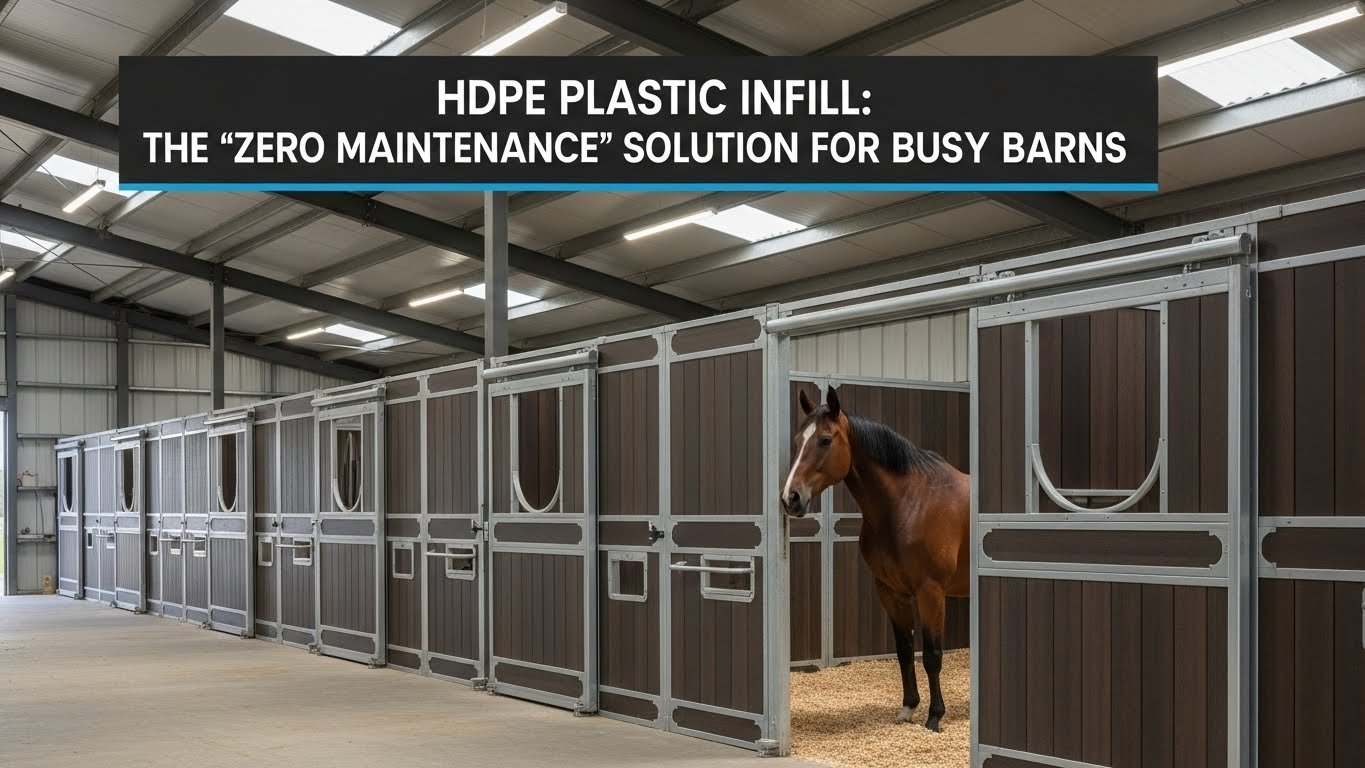
A $50,000 order of bamboo horse stall infill looked fine on the sample approval sheet. Sealed, kiln-dried, 30,000 psi tensile strength — all checked. Then the container arrived. The mass production run had inconsistent sealant coverage; the pre-production sample had used a hand-applied coating, but the factory line switched to a spray system with different viscosity. The panels started cupping within 90 days. That’s the gap between spec sheet and reality.
That kind of failure isn’t rare. It’s why experienced procurement managers treat infill material selection as a climate-specific decision, not a spec-sheet comparison. Bamboo offers natural aesthetics and higher tensile strength — but only if the entire processing chain, from kiln-drying to waterproof sealant, is controlled. HDPE is less romantic but virtually immune to moisture and UV degradation. The real choice isn’t about which is “better”; it’s about which will hold up in your barn’s microclimate over 15–20 years.
We’ll break down tensile strength data, moisture resistance, lifespan projections, and real-world cost per square foot — including bulk pricing for both bamboo and HDPE infill. By the end, you’ll know which material fits your project and how to avoid the sample-to-production gap that burns buyers every year.
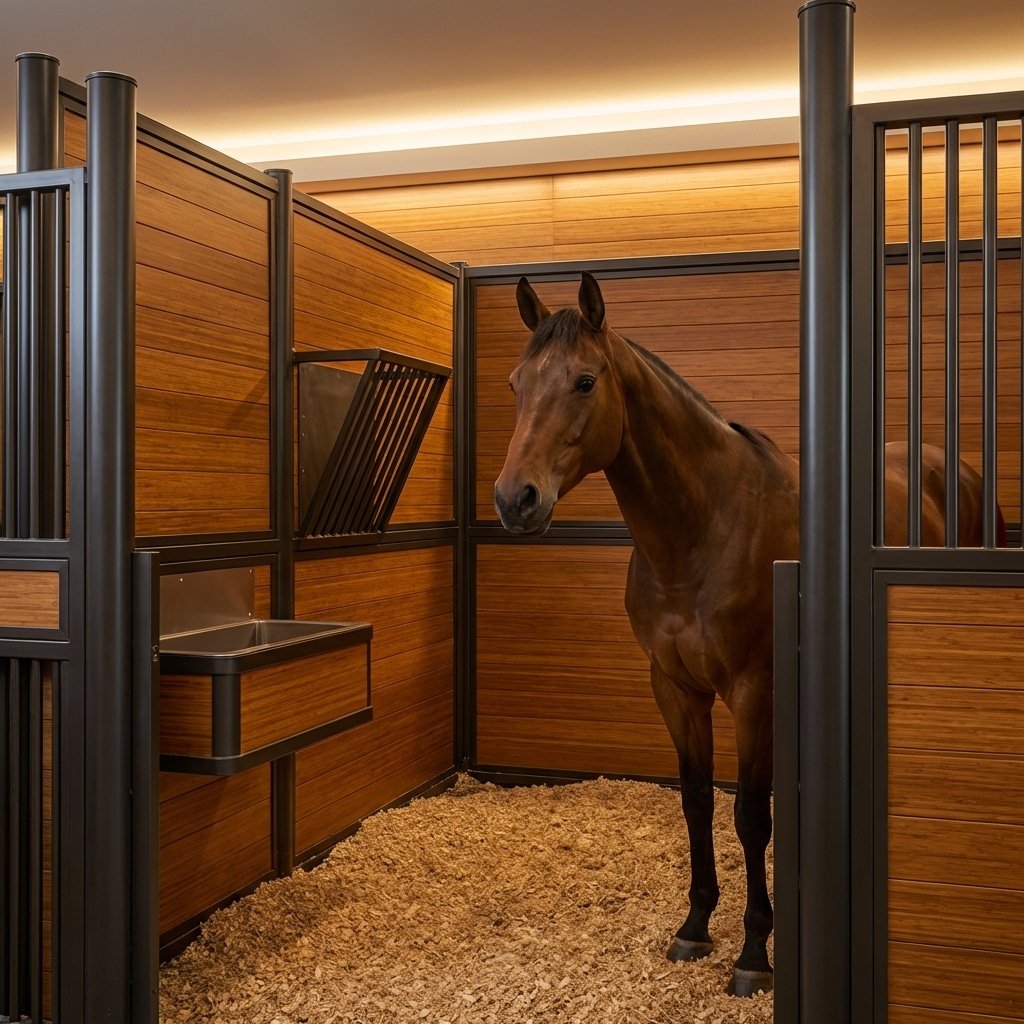
Bamboo Infill – Aesthetic and Strong, But Demands Maintenance
Bamboo infill: high tensile strength (30,000 psi) but requires sealing for moisture protection.
We source bamboo from managed forests and process it through kiln-drying to stabilize moisture content at 8–12%. Each panel is then coated with a waterproof sealant before assembly. Density: 0.8 g/cm³. Compression strength: 10,000 psi. Engineered bamboo panels are up to twice as strong as ordinary wood plywood. Bamboo matures in 3–5 years, making it a renewable resource—but only if the supplier actually uses managed forestry, which not all do.
- Maintenance upside: Natural grain and hardness discourage chewing when sealed. Gentle washing with a damp cloth is sufficient for daily cleaning.
- High-risk failure mode: If the sealant wears off or the panel stays in standing water for 48+ hours, bamboo absorbs moisture and begins to rot. Splinters can appear within 2–3 years in high-humidity barns without re-sealing.
Best use cases: indoor stalls in dry climates (interior France, UK covered barns, German training centers). Does not belong in outdoor stalls exposed to rain, direct UV, or monsoon humidity. For those environments, HDPE is the only rational choice. Most bulk buyers ordering bamboo for French-style estates run dehumidifiers or keep barns at 50–60% relative humidity year-round.
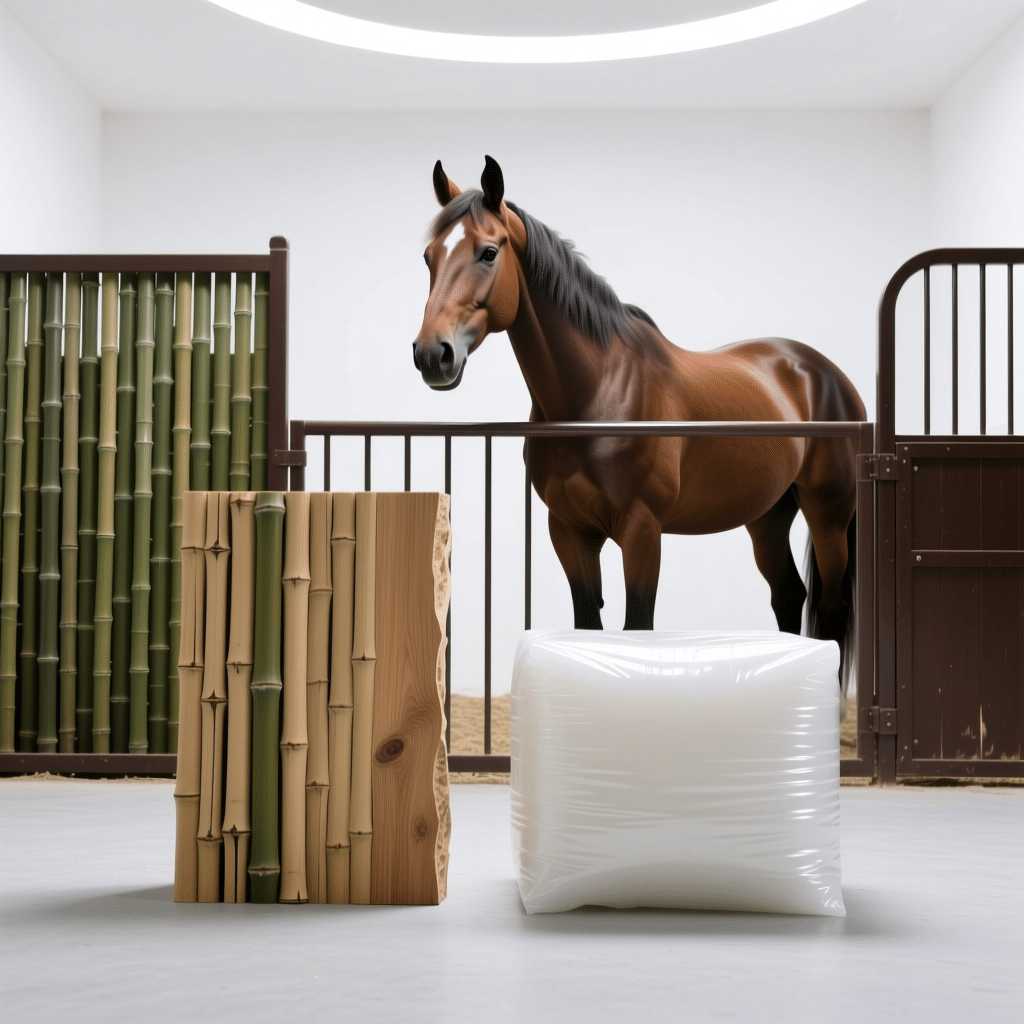
HDPE Infill – Synthetic and Set-and-Forget
HDPE: Zero water absorption, 15-year UV warranty.
HDPE (High-Density Polyethylene) is a UV-stabilized polymer with virtually zero water absorption. Our standard thickness is 1/2-inch, with a 3/4-inch heavy-duty option for high-abuse environments. The material carries a 15-year warranty against fading and brittleness. Unlike bamboo, HDPE does not require sealing or surface treatment.
- Wet climate performance: HDPE never rots, resists ammonia from urine, and can be hosed down repeatedly. It is the recommended choice for humid barns in the UK, New Zealand, and coastal regions.
- Heat limitation: Unreinforced HDPE can warp in sustained temperatures above 120°F. For Australian or Spanish barns where 40°C is normal, our UV-stabilized formulation with extra webbing maintains dimensional stability.
Over a 20-year period, HDPE typically delivers lower total cost of ownership than bamboo. At $6 per sq ft upfront vs. bamboo’s $4, the elimination of refinishing, replacement, and intensive cleaning labor flips the math. Lifespan is 15–20 years with minimal upkeep. For commercial operators running daily turnouts, HDPE cuts labor cost by roughly 30% compared to sealed bamboo.
Head-to-Head Comparison Table
Tensile strength favors bamboo; moisture and UV favor HDPE.
The real choice between bamboo and HDPE infill comes down to your climate and maintenance tolerance. Both materials fit our standard frame system, and you can even mix types within the same barn. Below is the technical comparison every facility owner should see before placing a bulk order.
- Tensile strength: Bamboo: 30,000 psi. HDPE: 5,000 psi. Bamboo is six times stronger in tension, but HDPE’s flexibility handles impact kicks better without splintering.
- Moisture resistance: Bamboo: moderate – requires a factory-applied waterproof sealant; will rot if exposed to standing water. HDPE: excellent – virtually zero water absorption, can be hosed down daily without risk.
- UV resistance: Bamboo: poor – fades and degrades under direct sunlight within 2-3 years. HDPE: excellent – UV-stabilized with a 15-year warranty against fading; ideal for Australia, Spain, and outdoor stalls.
- Lebenserwartung: Bamboo: 10-15 years with proper sealing and indoor use. HDPE: 15-20 years with minimal upkeep – lower total cost of ownership over two decades.
- Cost per sq ft: Bamboo: ~$4. HDPE: ~$6. Bulk orders of 50+ units receive 10% off both materials. While bamboo is cheaper upfront, factor in periodic resealing and replacement labor.
- Best-use recommendation: Bamboo for dry barns in moderate climates (France, UK). HDPE for humid barns and sun-exposed facilities (Australia, Spain). Most bulk buyers order bamboo for show stalls and HDPE for daily training stalls.
| Merkmal | Bamboo | HDPE |
|---|---|---|
| Zugfestigkeit | 30,000 psi | 5,000 psi |
| Feuchtigkeitsresistenz | Moderate (needs sealant) | Excellent (zero absorption) |
| UV-Beständigkeit | Poor (will fade) | Excellent (UV-stabilized, 15-year warranty) |
| Lebenserwartung | 10–15 years | 15–20 years |
| Cost per sq ft | ~$4 | ~$6 |
| Thickness Options | Standard panel | 1/2″ standard, 3/4″ heavy-duty |
Schlussfolgerung
The data tells the story: bamboo at ~$4/sq ft with 30,000 psi tensile strength, HDPE at ~$6/sq ft with zero water absorption and a 15-year UV warranty. But numbers alone don’t decide the winner — your climate does. That’s the detail most sourcing guides ignore. Bamboo shines in dry, temperate barns. HDPE holds up in humid, sun-exposed facilities. The difference isn’t which material is ‘better.’ It’s which material fits your specific conditions.
We stock both infill options for a reason. Each fits the same frame system, so your barn can mix show-quality bamboo stalls with heavy-use HDPE sections. For bulk orders of 50+ units, the 10% discount applies to either choice. Review current pricing on our bamboo stall-fronts page, or contact your regional account manager for a climate-matched recommendation.
Häufig gestellte Fragen
Does bamboo horse stall infill rot?
Yes, bamboo horse stall infill can rot if unsealed or exposed to standing water. Kiln-dried and sealed bamboo resists rot for 10+ years in dry barns. For humid areas, choose HDPE instead.
How long does HDPE infill last?
HDPE infill typically lasts 15 years or more with a manufacturer warranty against fading and rot. It requires no sealing and has virtually zero water absorption. For long-term durability with minimal maintenance, HDPE is the set-and-forget choice.
Is bamboo stronger than HDPE for horse stalls?
Yes, bamboo has higher tensile strength (30,000 psi) compared to HDPE, making it stronger structurally. However, it needs sealing to maintain that strength against moisture. For dry indoor stalls, bamboo wins on strength; for wet areas, HDPE is more reliable.
Which infill is easier to clean?
HDPE infill is easier to clean because it is non-porous and can be hosed down without warping. Bamboo requires gentle washing and sealing to avoid moisture damage. For high-traffic barns where cleaning frequency matters, choose HDPE.
Which infill is best for Australian sun?
HDPE infill is best for Australian sun due to UV-stabilized polymer that resists fading and 40°C heat. It avoids the rotting and warping bamboo would suffer under intense UV. For Australian projects, HDPE is the only low-maintenance option.

 German
  English
  Spanish
  French
  Arabic
0 Kommentare