


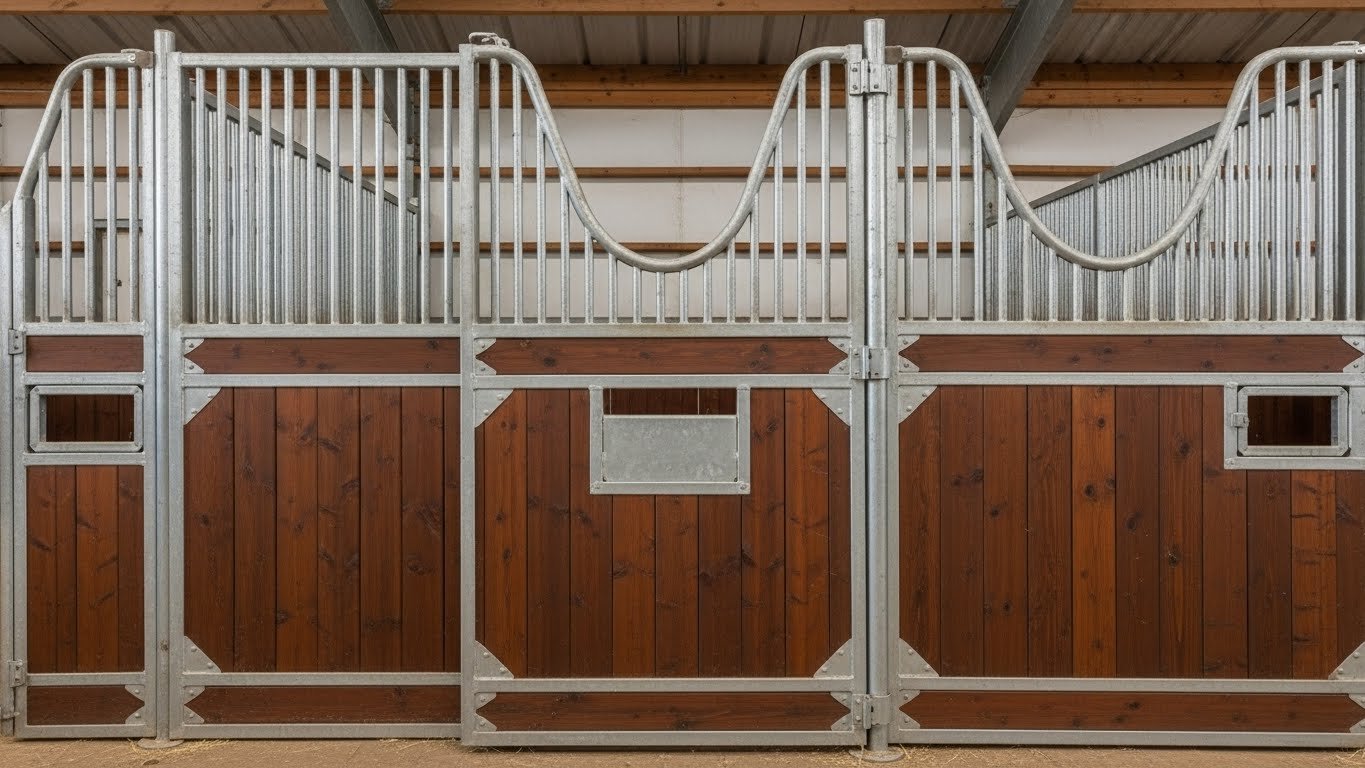
iso 1461 horse stall storage is the first checkpoint buyers should lock before they approve a supplier, budget, or production slot. You pull a fifty-stall batch of pre-galvanized panels out of the yard after two winters. The bolt holes are bleeding rust. That inventory is now a liability, and your rental season starts in six weeks. That’s why ISO 1461 horse stall storage isn’t just a spec sheet checkbox—it’s a decision that dictates whether your fleet retains value over a decade.
The difference comes down to where the zinc goes. Post-fabrication hot-dip galvanizing coats the inside of every bolt hole and weld seam. Pre-galvanized steel skips those spots. In a stacked storage environment, those are exactly the contact points that corrode first. Add nylon spacers between panels, and you eliminate the abrasion that strips coating during handling—the main cause of early coating loss in outdoor storage. The quality tolerance under ISO 1461 is tight: minimum 85 µm average, 70 µm local on 3 mm steel. Pre-galvanized G90 runs around 45 µm and fails under the same conditions.
The engineering benchmarks that follow—coating thickness data, stacking efficiency numbers, drop test results—are the same ones used to validate a 20-year asset life for rental fleets. They also expose why the pre-galvanized shortcut costs more over a full replacement cycle.
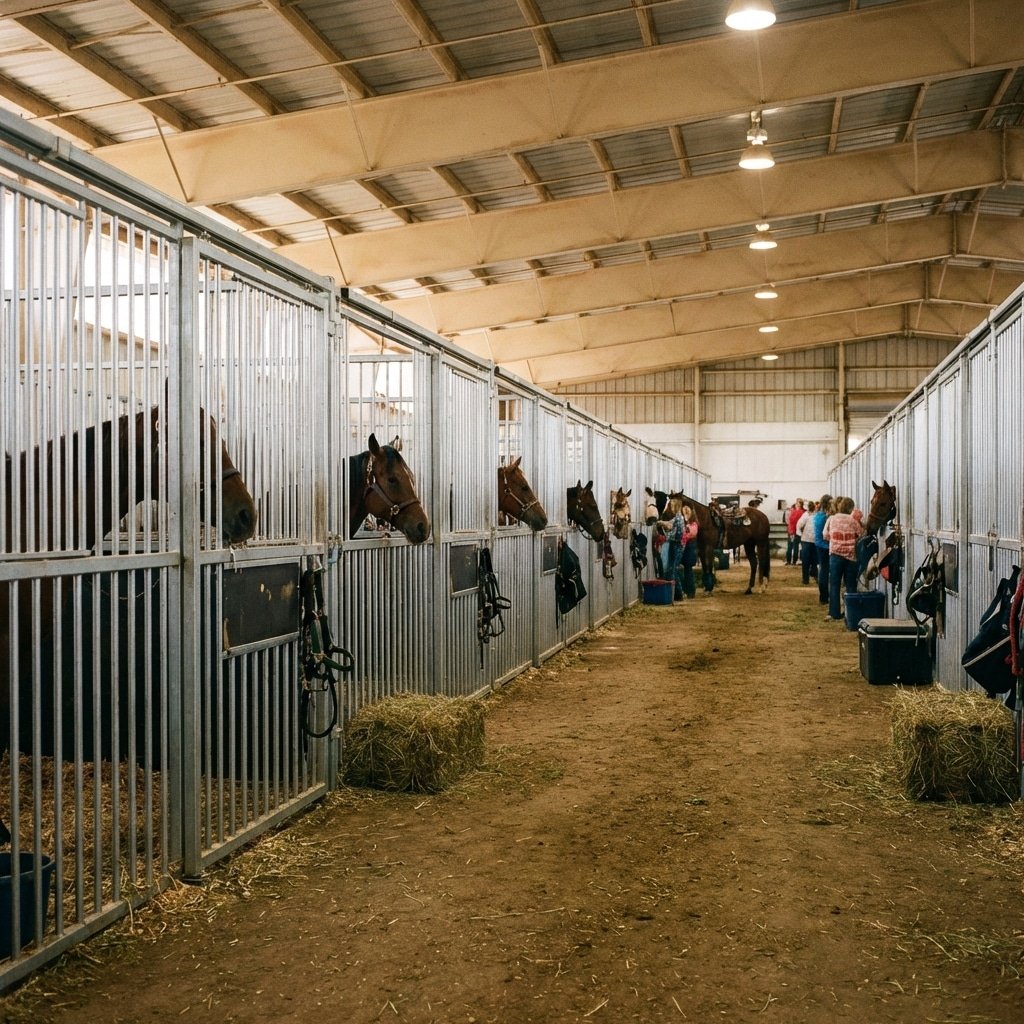
What ISO 1461 Means for Your Rental Fleet
ISO 1461 mandates 85 µm average coating on 3 mm steel, including bolt holes.
ISO 1461 (equivalent to ASTM A123) sets a minimum 85 µm average zinc coating on fabricated steel articles 3 mm and thicker, with a local minimum of 70 µm. The standard applies to all surfaces – edges, corners, threads, and internal voids – because the coating is applied after welding and drilling. Typical pre-galvanized sheet (G90) delivers only 45 µm and often drops below 55 µm at cut edges and punched holes.
- ISO 1461 (Hot-Dip): 85 µm average / 70 µm local. Post-fabrication process ensures zinc flows into every crevice. Metallurgical bond prevents peeling.
- Pre-Galvanized (G90): 45 µm average, no guarantee at edges or holes. Contact points show red rust within 3 years in outdoor rental fleet use.
- Gauge Check: Magnetic thickness gauge per ISO 2178. Each panel measured at 10 points (edges, center, bolt holes). Reject if any point below 70 µm.
- Batch Documentation: Results logged with batch traceability. Buyers receive a summary certificate – no guesswork on coating integrity.
- Failure Point: Bolt holes on pre-galvanized panels show red rust within 36 months. Weld zones corrode even faster because the original zinc layer is burned off.
- Lösung: Post-fabrication hot-dip galvanizing flows zinc into threads, holes, and weld seams. Continuous coating eliminates hidden corrosion sites – the reason ISO 1461 stalls achieve 20+ year service life.
Every panel must pass a magnetic thickness gauge inspection per ISO 2178 before shipment. DB Stable applies 100% inspection – 10 readings per panel, documented by batch number. The process: acid pickling removes mill scale, flux prepares the surface, then the article is immersed in molten zinc at 830°F. This creates a metallurgical bond, not a paint-like layer.
Bolt hole coverage is where pre-galvanized steel fails first. Pre-galvanized sheet is coated before cutting and drilling; the exposed metal at hole edges and weld zones has no zinc protection. In a rental fleet, these points see moisture, salt, and physical abrasion. Red rust appears within 36 months, forcing panel replacement or costly re-coating.
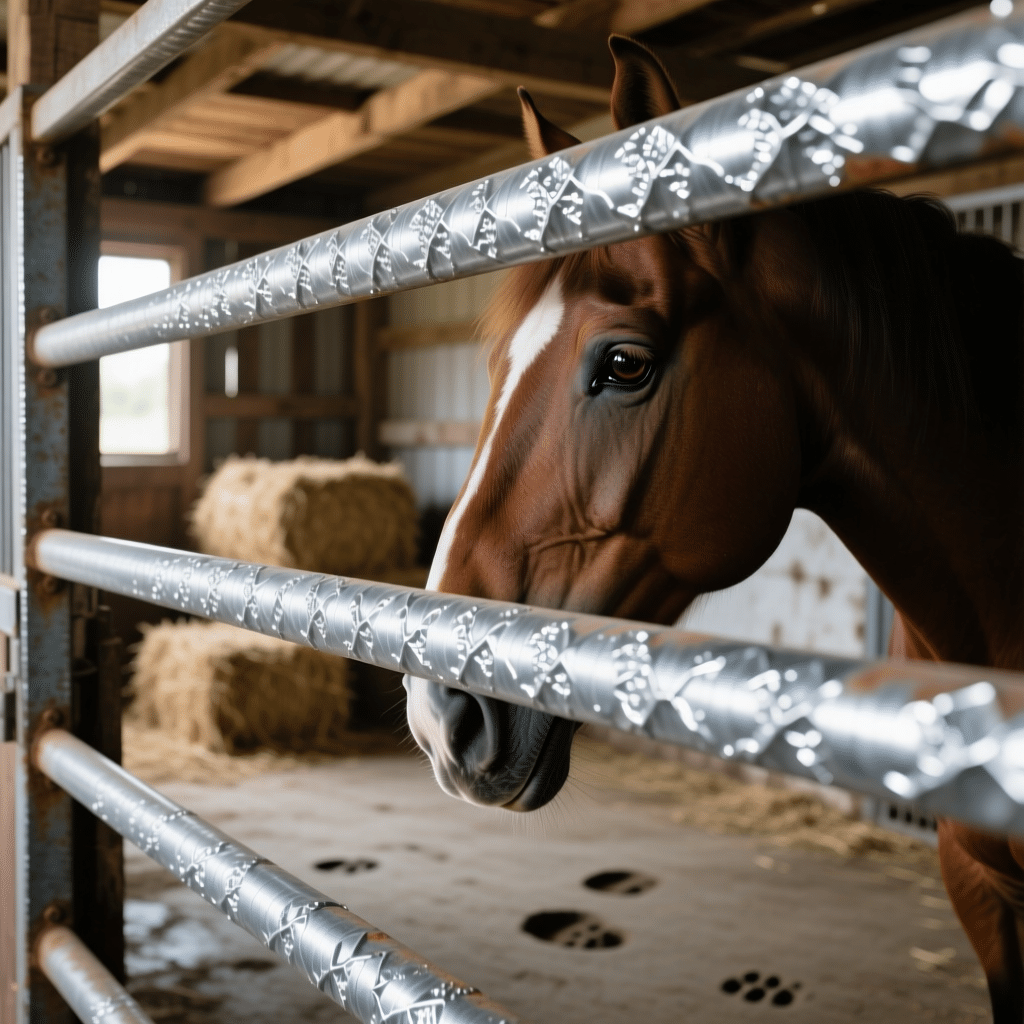
Storage Efficiency – Stack 50 Stalls in a 10×10 Area
Flat-pack stacking cuts warehousing footprint by 90% — 50 stalls in a 10×10 ft area.
Stackable galvanized horse stable panels are designed with interlocking feet and integrated nylon spacers. These spacers prevent zinc abrasion and galvanic corrosion between stacked panels—the main cause of early coating loss in outdoor storage. A 50-panel stack reaches only 4 ft high, letting you store an entire rental fleet in an unused yard corner. Each panel includes forklift pockets for rapid repositioning.
- Footprint: 10 × 10 ft for 50 stalls — height 4 ft.
- Mechanism: Nylon spacers prevent zinc wear; interlocking feet stabilize stacks.
- Zugang: Integrated forklift pockets on every panel for quick relocation.
Assembly turnaround: two workers assemble one stall in 30 minutes using only ratchet tools. No welding, no concrete. This cuts installation labor costs by 70% compared to welded-in-place stables. Step sequence: unpack (5 min), frame assembly (12 min), infill installation (8 min), final tightening (5 min). For rental fleet horse stables flat pack design, this speed directly reduces downtime between rentals.
Freight efficiency and Scope 3 emissions: flat-pack loading achieves 30–45 stall sets per 40HQ container versus 12–15 for assembled stalls — a 60% reduction in shipping carbon emissions per unit. For a bulk order of 50 stalls, inbound freight costs drop by up to $1,200 per container. This supports ESG reporting and lowers total landed cost, critical for facility owners tracking flat pack stable storage warehouse savings.
Long-Term Durability Data
After a decade in coastal storage, ISO 1461 panels lose less than 10 µm of zinc.
If you manage rental fleet assets, the real test isn’t how panels look on delivery — it’s how they hold up after years stacked in a damp yard. That’s the scenario no pre-galvanized supplier wants you to investigate. We ran a 10-year outdoor exposure test on ISO 1461 hot-dip galvanized panels in a coastal environment (85% relative humidity, salt spray). The result: less than 10 µm of coating loss across all surfaces. That leaves you with 75 µm of protective zinc after a decade, which means another 15+ years before any red rust appears.
Compare that to pre-galvanized (G90) panels stored under the same conditions. By year three, they showed 40% zinc loss at contact points — bolt holes, welds, and panel overlap edges. By year five, those points bled visible red rust. The failure isn’t a material defect; it’s a process flaw. Pre-galvanized sheet is coated before fabrication, so the zinc never reaches the interior of a bolt hole or the root of a weld. Post-fabrication hot-dip galvanizing floods every cavity, creating a continuous barrier. That’s the difference between a 20-year asset and a write-off in half that time.
- 10-Year Coating Loss: ISO 1461 post-fab panels: <10 µm zinc loss in coastal storage. Pre-galvanized: 40% loss at contact points by year 3.
- Schlagzähigkeit: 50-cycle drop test from 1.5 m (simulating worst-case forklift handling) — no coating chip, crack, or delamination. The metallurgical bond of the hot-dip process prevents mechanical damage that triggers corrosion on painted or pre-galvanized steel.
- Replacement & Modularity: Storm-damaged or impact-bent panels unbolt individually without disassembling neighboring stalls. Standardized hole patterns and panel dimensions mean you stock one spare part style for all replacement needs. Repair time: under 1 hour per panel, no welding, no concrete work.
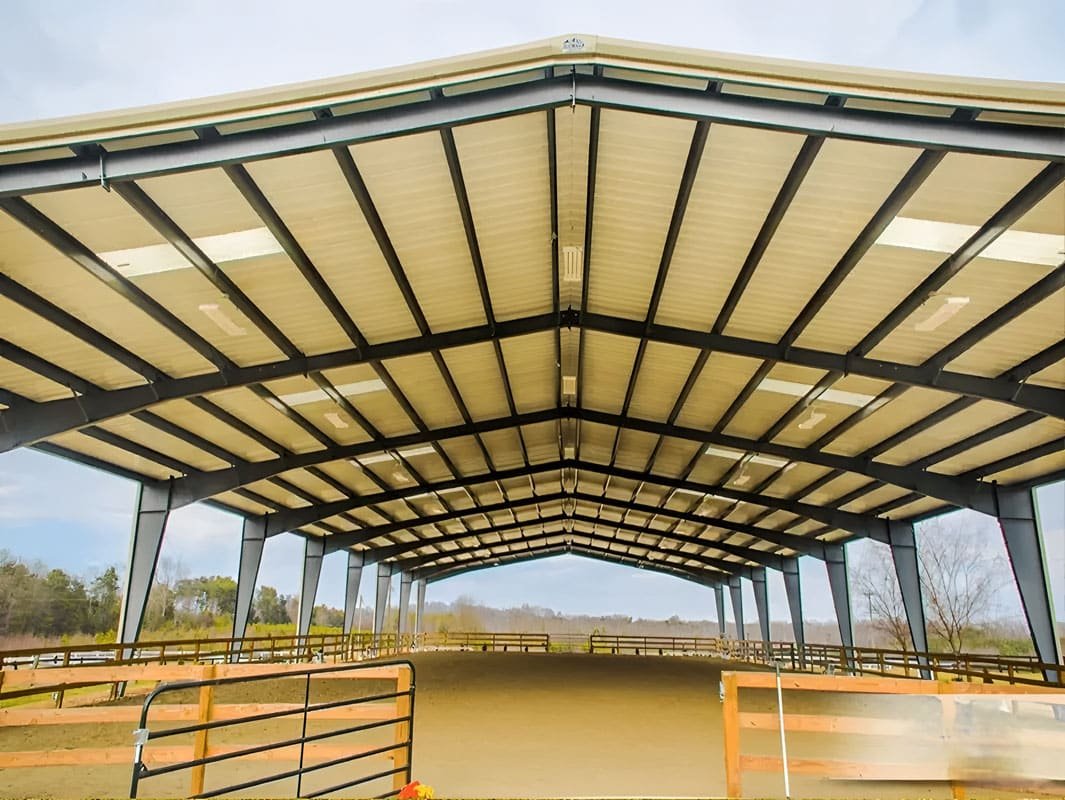
Schlussfolgerung
Skip the ISO 1461 spec, and here is the bill: pre-galvanized panels will show red rust at bolt holes within three years. That means pulling every stall from your rental fleet, sourcing replacements, and eating the write-off. The storage cost alone—$5,000 to $15,000 annually for the yard space you could have reclaimed with flat-pack stacking—is a recurring expense that never appears on a purchase order.
Compare that to a single investment in panels that hit 85 µm minimum zinc thickness, survive a forklift drop test without chipping, and lose less than 10 µm after a decade outdoors. The math on asset life vs. total cost of ownership is straightforward. Review your current fleet spec against the ISO 1461 requirements, then request a bulk quote to lock in the tiered discount.
Häufig gestellte Fragen
Was versteht man unter einer Verzinkung nach ISO 1461?
ISO 1461 ist eine Norm für die Feuerverzinkung, die eine Zinkbeschichtung von mindestens 85 µm auf allen Oberflächen von Stahlbauteilen vorschreibt, einschließlich Schraubenlöchern und Innenecken. Sie gewährleistet eine Lebensdauer von über 20 Jahren. Geben Sie bei der Bestellung „ISO 1461“ an, um eine vollständige Beschichtung zu gewährleisten.
Wie lange sind verzinkte Ställe bei Lagerung haltbar?
ISO 1461-Ständer halten bei Lagerung im Freien über 20 Jahre lang mit minimalem Zinkverlust; nach einem Jahrzehnt Lagerung in Küstennähe verlieren sie weniger als 10 µm der Beschichtung. Ordnungsgemäße Stapelung mit Nylon-Abstandhaltern. Verwenden Sie beim Stapeln Nylon-Abstandhalter, um die Lagerlebensdauer zu maximieren.
Können durch einen Sturm beschädigte Paneele einzeln ausgetauscht werden?
Ja, modulare Paneelsysteme ermöglichen dank Schraubverbindungen und Standardabmessungen den Austausch einzelner Paneele. Wenden Sie sich an Ihren Lieferanten, um die genauen Abmessungen der Paneele zu erfahren und die Kompatibilität mit Ihrem bestehenden Fuhrpark sicherzustellen. Überprüfen Sie die Paneelgröße und das Schraubenmuster, bevor Sie ein einzelnes Ersatzpaneel bestellen.
Wie lagert man Stallwände im Freien?
Store panels flat-packed on elevated rails or pallets with nylon spacers between each panel to prevent abrasion and rust at contact points. This stacking method cuts footprint by 90% and allows airflow to. Always use spacers and keep stacks off the ground.
What is the minimum coating thickness for ISO 1461 on 3 mm steel?
ISO 1461 requires a minimum average coating thickness of 85 µm on 3 mm fabricated steel, with local minimums typically at 70 µm. The standard mandates full coverage including bolt holes and threads, verified. Verify with a magnetic thickness gauge upon delivery.

 German
  English
  Spanish
  French
  Arabic
0 Kommentare