


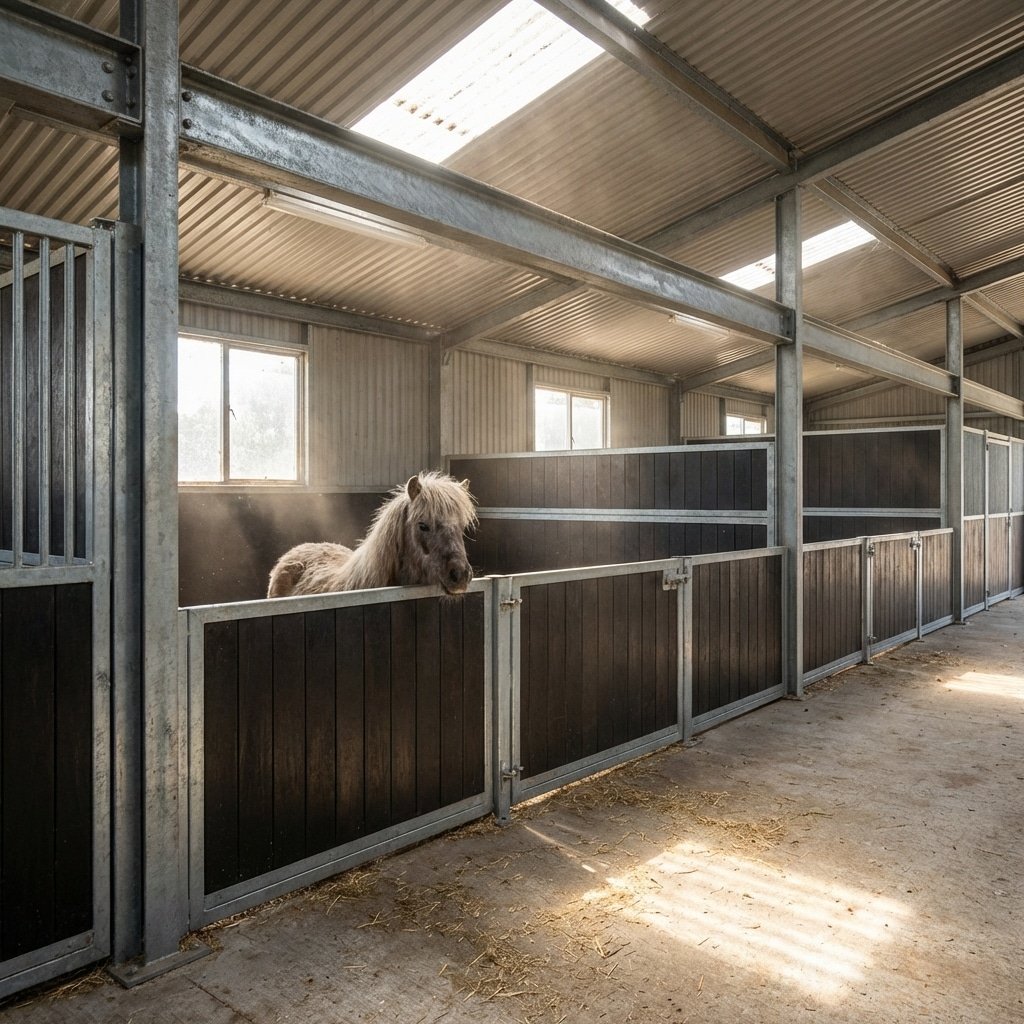
Stabling Miniature Horses in standard equine infrastructure creates an immediate liability for commercial breeders and facility managers. Standard 3-inch grill spacing often traps small hooves, while high solid walls block sightlines, triggering stress-induced vices that damage expensive Standfronten.
We engineer breed-specific safety using custom 1.2m profiles constructed from heavy-duty Q235B structural steel. By reducing grill spacing to a strict 50mm and utilizing Feuerverzinkung to ISO 1461 standards, we eliminate entrapment gaps while ensuring the framework withstands corrosive ammonia at the floor level.
The Claustrophobia of Standard Horse Stalls for Minis
Standard 1.2m solid walls blind miniature horses to their surroundings, causing isolation stress. Lowering sightlines via open-grill designs restores herd contact and prevents behavioral vices.
We need to correct a common misconception: miniature horses rarely suffer from true clinical claustrophobia. What they suffer from is visual isolation caused by lazy design scaling. Standard horse stalls feature solid infill walls (kickboards) that rise approximately 1.2 meters (4 feet) from the ground. For a 16-hand warmblood, this height allows them to rest their head over the partition and socialize. For a miniature horse standing under 38 inches, that same wall acts as a sensory deprivation tank.
When a herd animal cannot see its companions, stress levels spike immediately. This visual blockade triggers separation anxiety often misdiagnosed as “bad temperament.” The animal hears the herd but cannot verify their safety or location. In this high-stress state, minis frequently develop stable vices such as weaving, pacing, or kicking the walls in an attempt to establish contact. You aren’t dealing with a naughty horse; you are dealing with a design flaw that ignores the animal’s biological line of sight.
Enhancing Visibility with Open-Grill Partition Designs
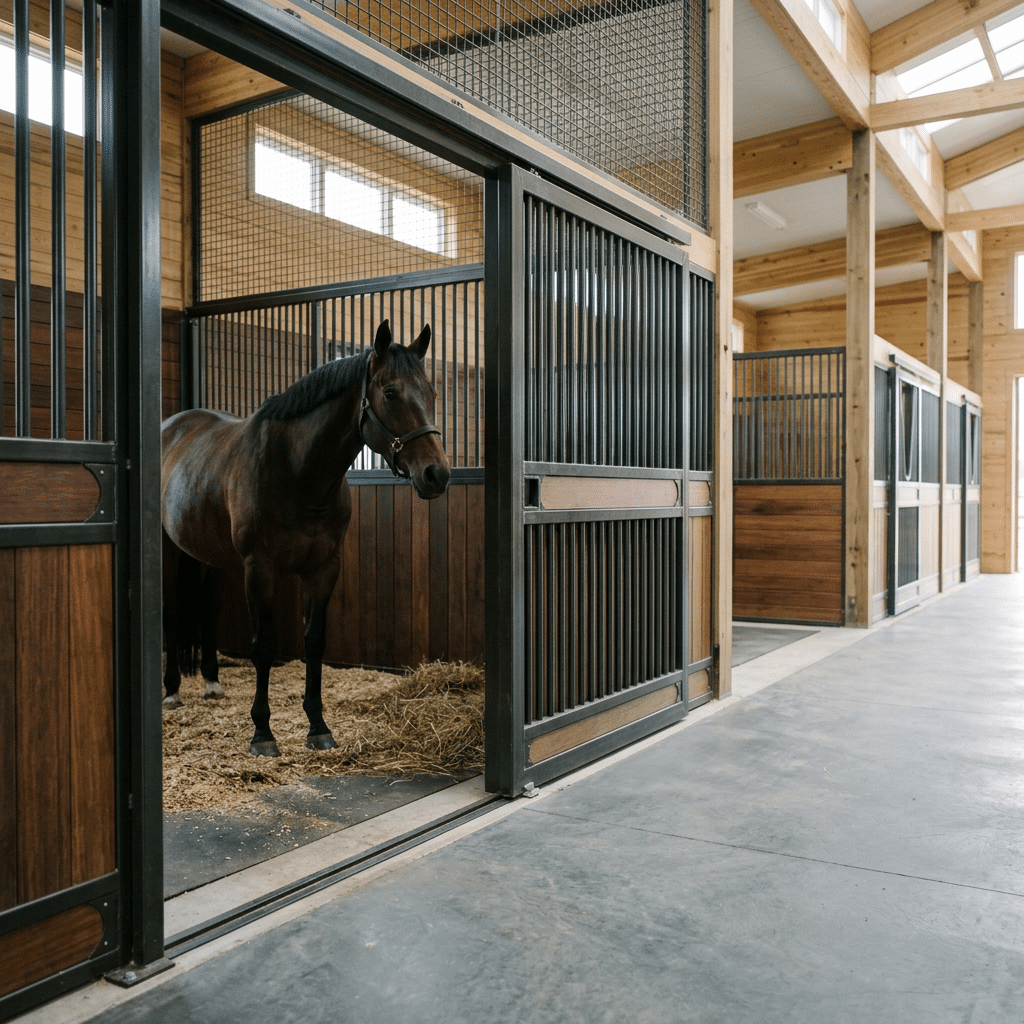
The solution requires modifying the vertical architecture of the stall front and partitions. We address this in our **Economy and Professional Series** by utilizing an **Open Top Grill** design that extends visibility down to the animal’s eye level. Instead of a solid wall, we install vertical bars specifically spaced to prevent Hufeinklemmung while opening up the stall environment.
- Visual Connection: The open grill allows minis to see their neighbors and track barn activity, drastically reducing cortisol levels and anxiety-driven vices.
- Hot-Dip Galvanized Protection: We use Q235B or Q345B steel dipped in zinc (meeting BS EN ISO 1461 standards) to ensure these grills withstand moisture and impact without rusting, unlike cheap pre-galvanized alternatives.
- Belüftung durch Kamineffekt: Solid walls trap ammonia and heavy dust at floor level where minis breathe. Open grills promote vertical airflow, pulling fresh air down to the animal’s breathing zone.
OEM Custom Height Horse Stall Fronts (1.2m)
Standard stalls isolate miniature breeds. We engineer custom 1.2m fronts using heavy-duty structural steel to ensure proper head clearance and socialization without compromising safety.
The Ergonomics of Low-Profile Designs
Putting a 34-inch miniature horse in a standard 2.2m stall is a mistake. For an animal that size, a standard stall front acts as a solid wall. They cannot see over the door or interact with neighbors, which leads to severe isolation stress and behavioral vices like weaving or kicking.
Our OEM division manufactures a specific 1.2m (approx. 4ft) profile to solve this. This height creates a natural visual line for the animal, allowing for necessary herd socialization while keeping them contained. Beyond psychology, this design promotes Kamineffekt-Belüftung. Ammonia and dust settle at lower levels where minis breathe; a lower, open-front design facilitates better airflow at the floor level compared to high, enclosed standard fronts.
| Spezifikation | Standard Horse Stall | DB Miniature OEM Stall |
|---|---|---|
| Total Height | 2.2m – 2.4m | 1.2m (Customizable) |
| Visual Clearance | Above 1.4m (Blind for Minis) | Full visibility |
| Primäres Material | Heavy Structural Steel | Same Heavy Q235B Steel |
Structural Integrity: Q235B Steel & ISO 1461 Galvanization
Many manufacturers treat miniature horse stalls as “hobby” products, using lightweight wire mesh or thin aluminum. We reject that approach. A miniature horse can still deliver significant impact force, and equipment failure here creates sharp edges that lead to catastrophic injuries.
We apply the same industrial specs to our 1.2m line that we use for full-sized warmblood stabling:
- Baustahl Q235B: We use ASTM A36 equivalent steel, not decorative iron. This ensures the frame holds its shape under pressure.
- 50mm x 50mm RHS Profile: We maintain our standard post dimensions with a strict 2.0mm wall thickness. This provides a true Kick-Proof Guarantee, preventing the tubing from denting or buckling.
- Hot-Dip After Fabrication: We weld the black steel components first, then dip the entire chassis into molten zinc. This meets BS EN ISO 1461 standards, ensuring every weld joint is sealed against rust. We do not use pre-galvanized tubes that leave weld seams exposed to corrosion.
Premium Horse Stables Built for Durability
2-Inch Grill Spacing: Preventing Head Entrapment
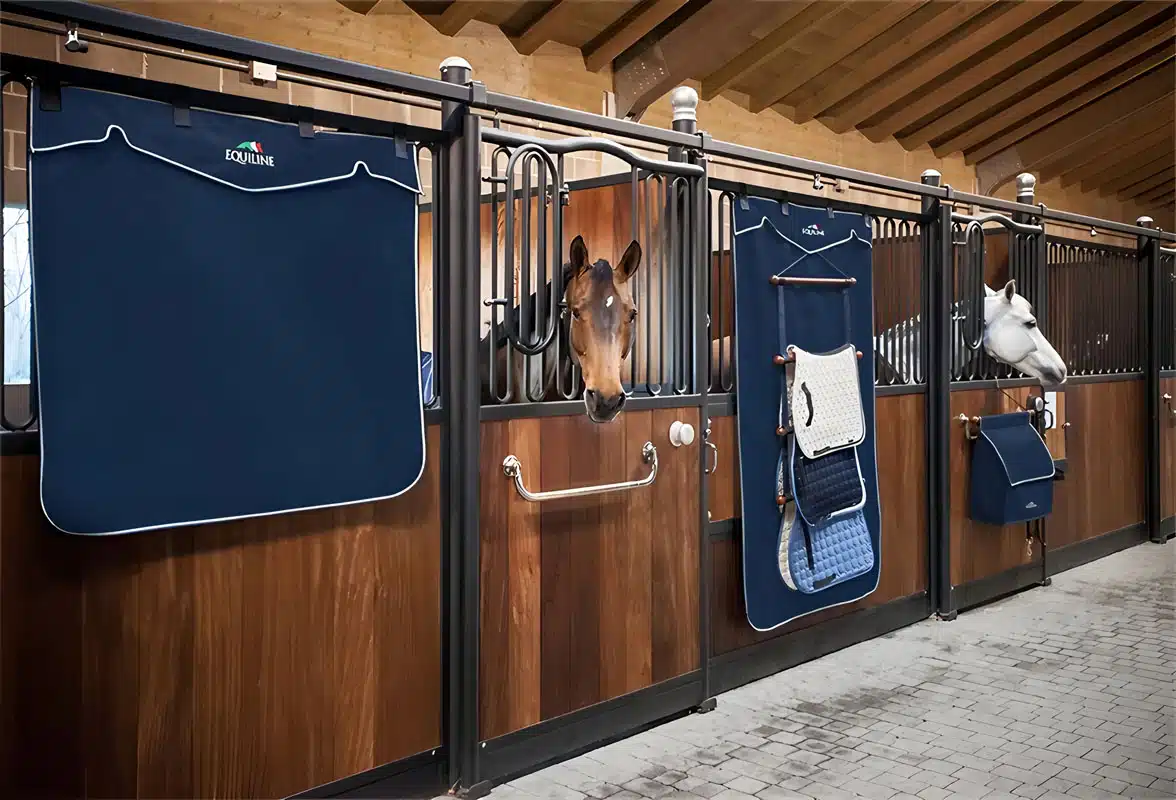
Standard 3-inch spacing allows miniature horse hooves to slip through and become trapped. We mandate a strict 2-inch (50mm) spacing for all mini-specific builds to prevent catastrophic leg fractures.
The Critical Difference Between Standard and Miniature Spacing
Standard horse stalls typically use 3-inch (76mm) bar spacing. This dimension is safe for Warmbloods and Quarter Horses because their hooves are too large to fit between the bars. However, this industry standard becomes a severe liability when housing miniature horses.
Miniature horse hooves are small enough to slide through these 3-inch gaps effortlessly. The danger spikes when the horse kicks out or rears. If a leg slips through, the hoof creates a wedge against the bars, leading to a “scissor effect” when the animal attempts to pull back. Once trapped, the horse’s natural fight-or-flight response triggers panic. This violent struggle against rigid steel frequently results in compound leg fractures or irreparable soft tissue damage before staff can intervene.
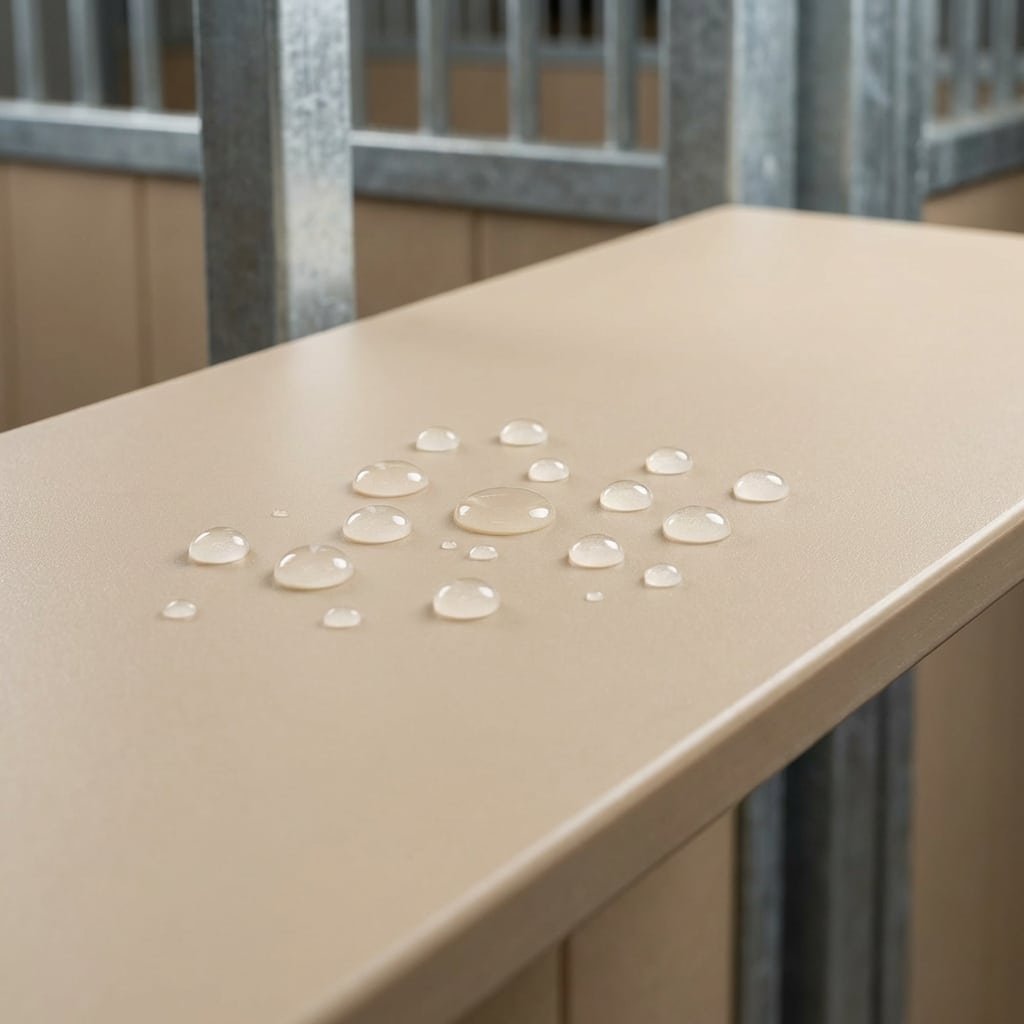
Reducing spacing to 2 inches (50mm) significantly increases the amount of steel and welding required per panel. Many manufacturers cut costs here by using thinner, commercial-grade tubing that bends under impact. At DB Stable, we engineer these tighter grills to withstand the same abuse as our full-sized systems.
- Baustahl Q235B: We use ASTM A36 equivalent steel to ensure the bars remain rigid and do not deform or trap limbs during high-impact events.
- 14-Gauge (2.0mm) Wall Thickness: We strictly prohibit tubing thinner than 2.0mm. This maintains the structural integrity of the grill despite the tighter spacing.
- Feuerverzinkung nach der Herstellung: Tighter spacing means more weld points. We dip the entire panel in molten zinc nach welding (BS EN ISO 1461), ensuring every single joint is sealed against rust. Competitors often weld pre-galvanized tubes, leaving the critical weld spots exposed to immediate corrosion.
Lowering the Yoke Door for Safe Socialization
A lowerable yoke door balances miniature horse welfare with handler safety, offering controlled socialization opportunities while preventing aggression during feeding times.
Balancing Mental Health and Aisle Safety
Social isolation in stabled miniature horses creates significant management problems. When minis are locked behind solid walls without visual contact, they develop high cortisol levels and stress-induced vices like stall weaving or pacing. A completely open top door solves the isolation issue but introduces new risks, such as biting passing horses or grabbing equipment from the aisle.
The adjustable yoke door functions as a mechanical compromise. By using a fold-down design, facility managers control the interaction level based on the specific situation. You can drop the yoke for socialization during calm periods and lock it shut during high-traffic times or feeding. This flexibility directly impacts the behavioral stability of the herd.
- Reducing Cortisol Levels: Visual and tactile contact through the yoke lowers physiological stress markers in stabled horses.
- Preventing Vices: Controlled interaction minimizes boredom-driven habits like wood chewing, weaving, or pacing.
- Flexible Management: The fold-down mechanism allows handlers to restrict the opening during veterinary procedures to prevent aggression.
Technical Specs: Hot-Dip Galvanized Frames and Stainless Hardware
Moving parts in a stable environment are the first to fail. If a yoke door hinge rusts, the mechanism seizes, and the feature becomes useless. We engineer these components to withstand constant friction and moisture exposure. Unlike competitors who paint over welded joints, we submerge the entire door frame in molten zinc after welding to seal every crevice.
- Korrosionsbeständigkeit (ISO 1461): We use Hot-Dip Galvanization After Fabrication. This ensures the zinc coating exceeds 70 microns on tubing, preventing rust from seizing the hinges.
- Heavy-Duty Framework: The frame is constructed from Q235B Structural Steel (14-gauge/2.0mm+), capable of withstanding the weight of leaning horses without warping.
- Secure Latching: We install 304 Stainless Steel hardware for all locking mechanisms, ensuring the yoke remains securely closed even when subjected to impact.
Häufig gestellte Fragen
What are the ideal stall dimensions for miniature horses?
Unlike standard horses that require 12’x12′ boxes, miniature horses thrive in smaller footprints ranging from 6’x8′ (minimum) zu 10’x10′ (optimal). For commercial facilities, the most cost-effective strategy involves subdividing a standard stall frame into two units using a removable partition. This maximizes barn capacity while ensuring each mini has enough room to lie down and turn comfortably.
Do I need custom-height fronts for miniature horses?
Yes. Standard 2.2m (7.2ft) fronts often block a miniature horse’s line of sight, leading to isolation stress and “stall walking.” We recommend OEM custom heights (typically 1.2m / 4ft) or lowering the yoke door section. This modification allows the animal to see over the door and socialize, which is essential for their mental well-being.
What is the safe grill spacing for minis to prevent injury?
Standard 3-inch (76mm) spacing is generally safe for upper grills, but lower sections require tighter spacing (maximum 2 inches / 50mm). Miniature horses have small hooves that can easily slip through wider standard bars if they rear or kick. Using tighter spacing or solid High-Density Bamboo/HDPE infill in the lower zone effectively prevents these entrapment injuries.
Abschließende Überlegungen
Relying on standard 3-inch stall spacing for miniature breeds is a liability that invites catastrophic injury. Our custom 1.2m profiles with strict 50mm spacing eliminate entrapment risks while solving the isolation stress caused by high solid walls. You secure both animal welfare and your facility’s reputation by choosing heavy-duty Q235B steel engineered specifically for this weight class.
Do not compromise your inventory with retrofitted full-size gear that fails safety inspections. Contact our engineering team today to configure a trial order of OEM miniature fronts tailored to your specific barn layout. We stand ready to validate our “Kick-Proof Guarantee” and maximize your margins through our high-density flat-pack logistics.

 German
  English
  Spanish
  French
  Arabic
0 Kommentare