



Off-Season Storage efficiency determines the long-term profitability of your equestrian rental fleet. Failing to protect steel assets from humidity or maximizing stack density forces companies to write off inventory that should yield returns for decades.
This article evaluates the protective capacity of ISO 1461 Hot-Dip Galvanization during dormant periods. We analyze how Steel Pallet Flat-Pack systems reduce warehouse overhead by increasing storage density, securing your bottom line against winter depreciation.
Der Aufstieg von ESG (Environmental, Social, Governance) im Bauwesen
Bis 2026, ESG compliance is mandatory. We support TCFD alignment through high-density flat-pack logistics and hot-dip galvanized durability, drast
ically reducing Scope 3 supply chain emissions.
The Transition to Mandatory Whole-Life Carbon Standards
Sustainability in construction has shifted from a marketing bonus to a legal necessity. Regulatory bodies now enforce strict operational energy standards and embodied carbon limits, effectively retiring voluntary goals. If your project cannot demonstrate adherence to TCFD (Task Force on Climate-related Financial Disclosures) and SASB frameworks, access to institutional capital tightens immediately.
The industry focus now centers on “Whole-Life Carbon.” You must account for emissions from the moment raw material is extracted through to end-of-life recycling. This mandates a procurement shift toward circular economy principles. We prioritize Q235B structural steel and hot-dip galvanization (BS EN ISO 1461) because these materials offer decades of utility and 100% recyclability, unlike disposable alternatives that spike carbon reporting frequency.
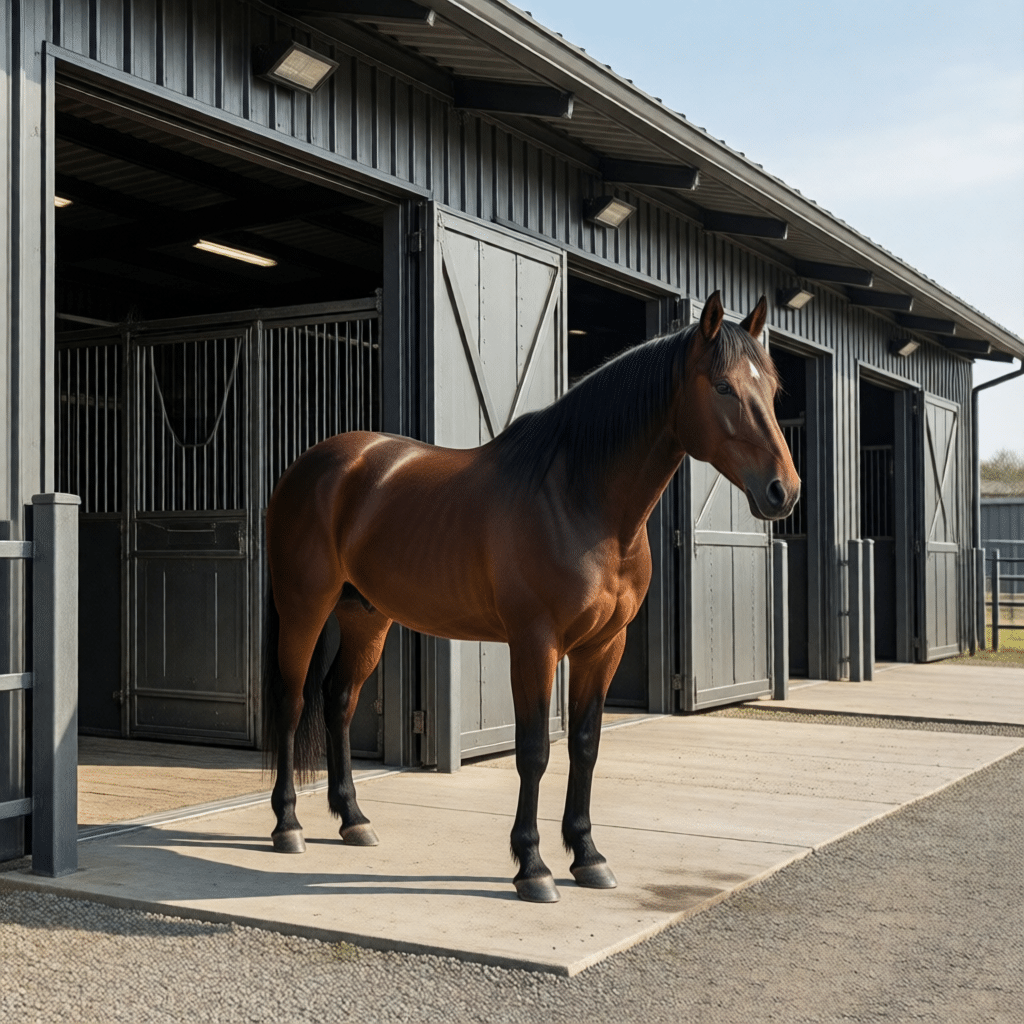
Optimizing Scope 3 Metrics with Flat-Pack Logistics
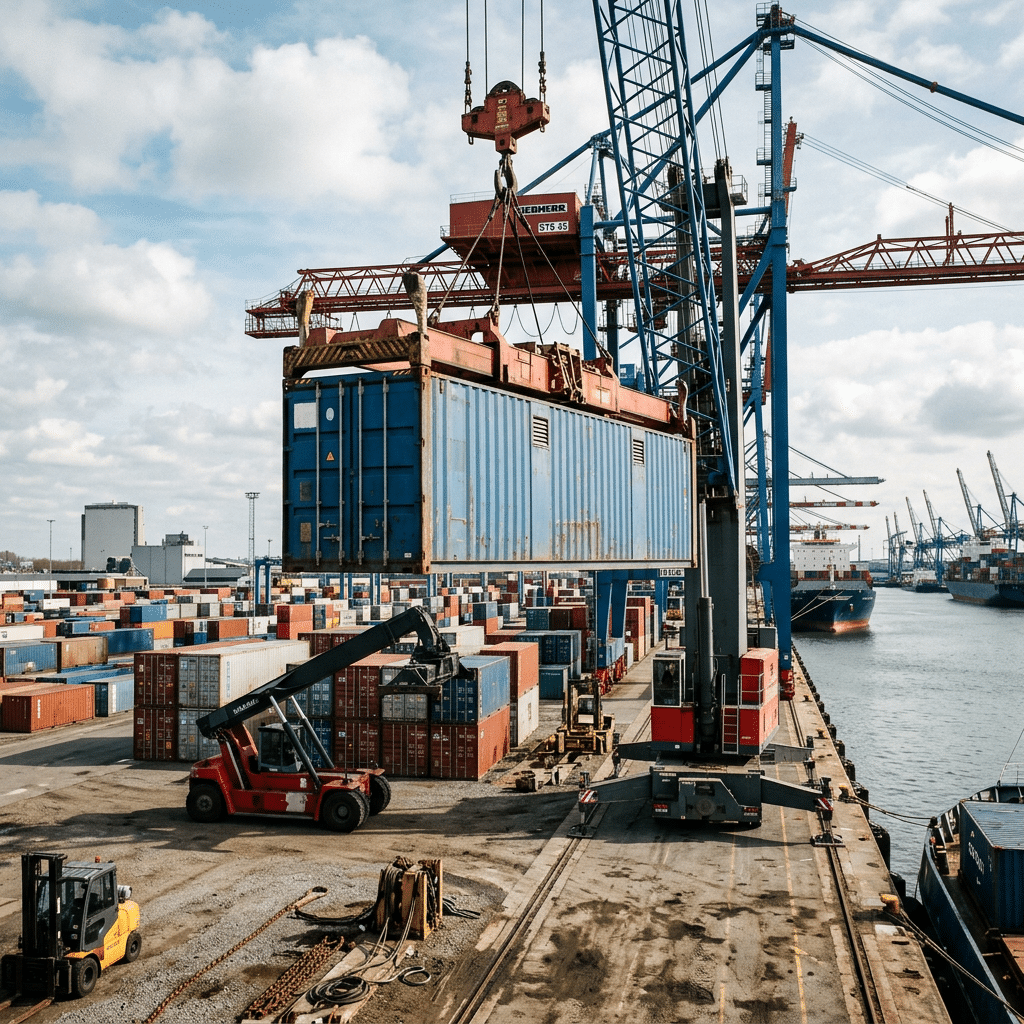
Scope 3 emissions—indirect emissions from your supply chain—are the hardest to control but critical for 2026 compliance. Logistics plays a massive role here. Shipping “air” inside containers is a carbon inefficiency that auditors now flag.
Traditional fully welded stables result in poor volume utilization. You can typically only fit 12 to 15 sets in a 40HQ container. This low density spikes the carbon intensity per unit transported.
Our Steel Pallet Flat-Pack system solves this metric directly:
- Increased Capacity: We load 30–45 sets per 40HQ container.
- Effizienz im Güterverkehr: This reduces freight-related emissions by over 60% per unit.
- Schutz des Gewinns: Lower shipping costs per unit directly improve distributor margins while satisfying decarbonization targets.
For construction firms and distributors, adopting this logistical model provides the concrete data needed to meet strict supply chain decarbonization targets.
Abkehr von Altholz (Eiche/Kiefer)
Traditional softwoods fail in commercial stables due to cribbing and rot. We replace them with High-Density Bamboo (Janka > 3000 lbf) and UV-stabilized HDPE for superior longevity.
The Maintenance Risks of Traditional Lumber
Standard wood is functionally obsolete for high-traffic equestrian facilities. Softwoods like Pine are simply too soft to withstand the environment. Horses easily crib (chew) on the ledges, creating dangerous splinters and compromising the structural integrity of the stall front within months of installation. This forces facility managers into a cycle of frequent board replacement.
Beyond physical damage, traditional timber is porous. It acts like a sponge during wash-downs, absorbing urine and water. This moisture retention creates an ideal breeding ground for bacteria and accelerates rot from the inside out. To combat this, you are forced to sand, varnish, and seal the wood annually—a massive labor cost that eats into operational margins.
High-Density Bamboo: The “Harder Than Oak” Standard
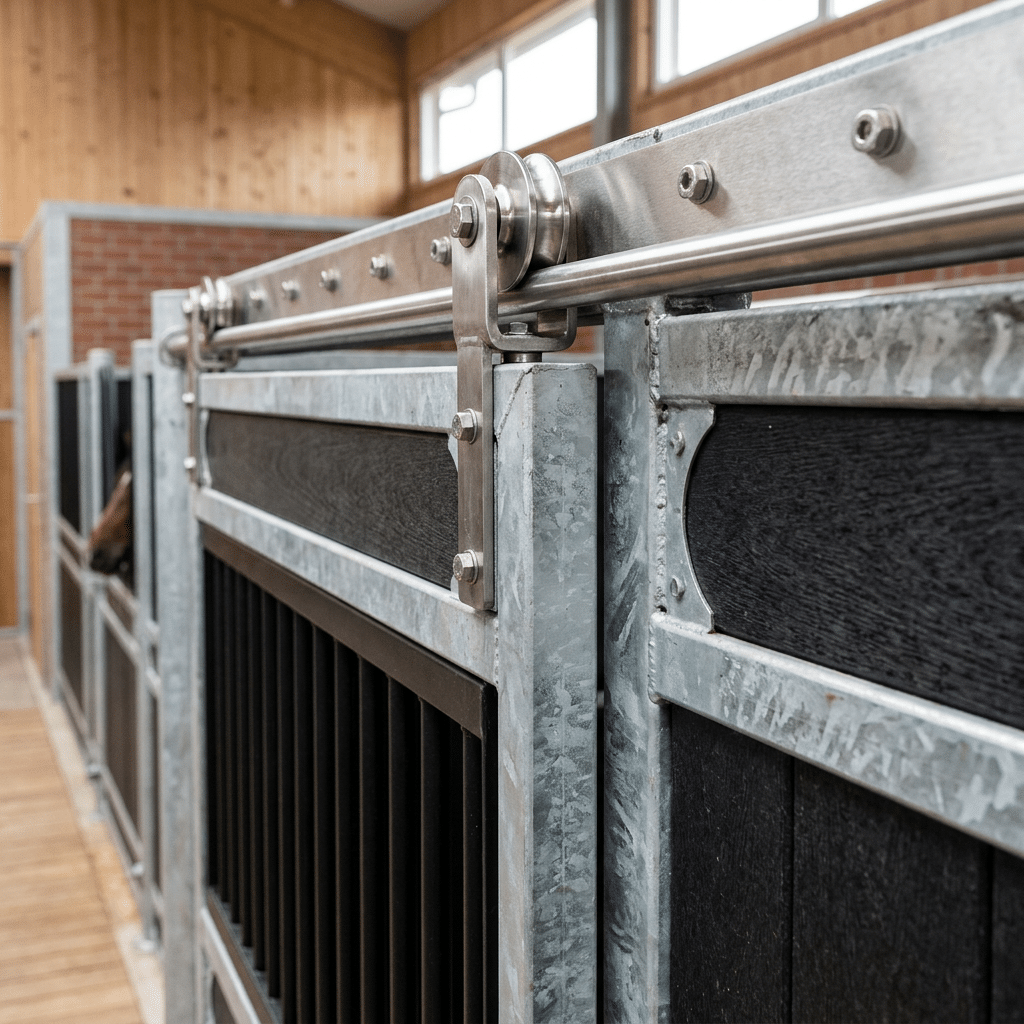
We engineered these risks out of the equation. DB Stable utilizes High Density Strand Woven Bamboo for our Professional and Royal series. This material is not the hollow bamboo used in garden furniture; it is compressed under extreme pressure to achieve a Janka Hardness rating exceeding 3000 lbf. That makes it three times harder than standard Oak.
The density of this material makes it virtually kick-proof and impervious to cribbing—horses cannot sink their teeth into the hardened fibers. For clients demanding a true “install and forget” solution, we offer UV-Stabilized HDPE (High-Density Polyethylene) infills. These composite planks offer:
- Null Wartung: Requires no painting, staining, or sealing ever.
- Absorption von Stößen: Slight flex reduces injury risk during kicks.
- Hygiene: Non-porous surface that can be power-washed and sanitized instantly.
Häufig gestellte Fragen
Wie baut man ein ESG-konformes Reitsportzentrum?
Building an ESG-compliant facility requires a three-pillar approach. Umwelt: Focus on energy independence by installing on-site solar panels (aiming for 80%+ generation) and water purification systems for rainwater harvesting. Soziales: Prioritize employee safety with strict protocols for machinery and horse handling, alongside tangible animal welfare standards. Governance: Implement a transparent code of ethics and prepare for third-party reporting (SASB or TCFD standards) within 2-3 years of operation.
Ist Bambus ein nachhaltiges Baumaterial?
Yes. Bamboo is a grass that regenerates to maturity in just 3-5 years, compared to 30-50 years for hardwoods like Oak. It requires no replanting after harvest because the root system remains intact, preventing soil erosion. Furthermore, bamboo sequesters up to four times more carbon dioxide than many tree species, making it a carbon-negative material choice for eco-conscious construction.
Umweltauswirkungen von Stahl- und Holzscheunen?
Wood framing generally has lower embodied carbon initially because trees absorb CO2 during growth. But steel offers superior long-term sustainability through recyclability and durability. Steel is 100% recyclable and can be repurposed indefinitely without losing strength, whereas wood often ends up in landfills. For a commercial stable intended to last 50+ years, steel’s resistance to rot and pests often offsets the higher initial production energy.
Grüne Zertifizierungen für Pferdeställe?
Standard LEED certification is difficult for agricultural buildings as it is designed for urban commercial structures. Instead, look at the CalGreen-Code (mandatory in California), which covers water conservation and recycled materials for agricultural structures. Facility owners can also pursue sustainable agriculture recognitions or conduct energy audits to validate their environmental claims for marketing purposes.
Eco-friendly horse barn manufacturers?
Several manufacturers prioritize sustainability. MD Barnmaster is known for prefab barns using eco-conscious materials. Coffman Barns offers engineered modular solutions. DC Structures specializes in heavy timber kits using sustainably sourced wood. WYO Custom Builders focuses on metal barns, leveraging steel’s high recyclability and resistance to mold and pests.
Premium Global Stables With 20-Year Durability
Top-Fabriken setzen auf nachhaltige Materialien
Sustainability has shifted from a PR move to a survival strategy. These manufacturers prove that eco-compliance drives efficiency and protects long-term margins against tightening regulations.
The industrial sector is hitting a breaking point. ESG (Environmental, Social, and Governance) compliance is no longer optional—it is a mandatory gatekeeper for doing business in EU and North American markets. We are seeing a hard pivot where manufacturers integrate renewable energy and circular economy principles not just to save the planet, but to secure financing and win contracts.
Leading facilities are moving beyond simple recycling. They are deploying digital twins to track carbon, switching to 100% renewable electricity, and redesigning supply chains to eliminate waste before it even enters the factory floor. The following benchmarks highlight who is actually executing these strategies effectively.
| Fabrik / Marke | Standort | style=”padding: 12px; text-align: left; border: 1px solid #ddd;”>Primary ESG Achievement |
|---|---|---|
| Siemens SEWC | China | Reduced waste by 48% while increasing output by 92% via Digital Twins. |
| Lego | Vietnam | $1bn investment for carbon-neutral operations; powered by 12,400 rooftop solar panels. |
| IKEA | Poland / Global | 408 factories and suppliers switched to 100% renewable electricity by 2023. |
| Schneider Elektrisch | Spanien | Achieved Zero CO2 status using integrated microgrids and battery storage. |
| Nestlé | Serbia & UK | Zero waste to landfill; 100% of factory waste is recycled or recovered. |
1. Siemens Electronics Works Chengdu (SEWC)
Siemens provides a masterclass in decoupling growth from environmental impact. At their Chengdu facility, they increased production output by 92% since 2019, yet simultaneously slashed production waste by 48%. They achieved this through aggressive digitization, using AI-driven analytics and digital twins to predict waste streams before they occur. This is not just “going green”; it is operational excellence that reduces annual CO2 emissions by nearly 3,000 tonnes.
2. Lego’s Clean Energy Transition
Lego is proving that heavy manufacturing does not require fossil fuels. Their new $1 billion facility in Vietnam is designed to be carbon-neutral from day one. The factory operates on a massive solar array featuring 12,400 rooftop panels, supported by a large-scale battery storage solution. This ensures production continuity without relying on the local, often coal-heavy, power grid.
3. IKEA’s Supply Chain Mandate
IKEA is unique because they enforce their standards upstream. They don’t just clean up their own shops; they force their suppliers to adapt. By 2023, 408 of IKEA’s factories and external suppliers had switched to 100% renewable electricity. Their facility in Zbąszynek, Poland, serves as the hub for this strategy, demonstrating that sustainable manufacturing is scalable across a massive, decentralized supply chain.
4. Schneider Electric’s Zero CO2 Blueprint
Schneider Electric’s facility in Barcelona, Spain, represents the technical ceiling of current capabilities. They achieved Zero CO2 status not by buying offsets, but by integrating a microgrid system directly into the factory. Solar panels combined with onsite battery storage allow the facility to generate, store, and consume its own clean energy, insulating the business from volatile energy markets.
5. Procter & Gamble (P&G) Water Stewardship
P&G’s Taicang facility in China focuses heavily on the “E” in ESG through advanced water management. The plant utilizes steam condensate recovery and rainwater harvesting to minimize freshwater withdrawal. Furthermore, they operate on 100% renewable electricity and have achieved zero manufacturing waste to landfill, closing the loop on their production materials.
Stranggeflochtener Bambus: Eine ergiebige Kohlenstoffsenke
Strand-woven bamboo absorbs nearly double the carbon of traditional timber, locking 12 tons per hectare annually into high-density, rot-resistant boards that prevent CO2 release for decades.
Rapid Carbon Sequestration in Bamboo Forestry
Traditional timber relies on multi-decade growth cycles to capture significant carbon. Bamboo accelerates this process dramatically. A managed bamboo plantation absorbs approximately 12 tons of carbon per hectare annually. This figure significantly outperforms traditional forests, which typically average between 6 and 8 tons over the same period.
The biological efficiency of the plant drives this performance. Individual bamboo culms sequester 50-60 kilograms of CO2 during their rapid growth phase. Unlike trees that require replanting after harvest, bamboo regenerates from its own root system (rhizomes). This allows for continuous annual harvesting without soil disturbance. Over a 60-year horizon, a single hectare can store up to 306 tonnes of carbon, creating a renewable resource volume that standard forestry cannot match.
Locking Carbon via High-Density Strand Woven Technology
Carbon sequestration only matters if the carbon stays trapped. If a material rots quickly, that stored CO2 releases back into the atmosphere. The strand-woven manufacturing process solves this by physically locking the carbon into the material structure. We compress shredded bamboo fibers under extreme pressure to achieve a final density of 1,080 kg/m³.
This process transforms a fibrous plant into a construction-grade material with specific durability metrics:
- Janka Hardness: > 3000 lbf (3x harder than Oak).
- Decay Resistance: High density prevents moisture ingress and rot.
- Lifecycle Impact: Creates a negative carbon footprint by offsetting manufacturing emissions.
By engineering a board that resists decay and hoof impact, we extend the product’s lifespan significantly. This durability ensures the carbon remains sequestered within the stable walls for decades rather than being released through premature decomposition. Using this material effectively offsets the higher carbon footprint associated with steel or concrete components in the build.
Q235B-Stahl: Der wiederverwertbare Rahmen 100%
Q235B steel serves as a sustainable structural choice due to its 100% recyclability, allowing indefinite re-smelting without strength loss while meeting rigorous ASTM A36 equivalent standards.
The Sustainability of Indefinite Re-smelting
True sustainability in industrial manufacturing comes down to the end-of-life plan. Unlike composite materials, fiberglass, or chemically treated wood—which often end up as landfill because separating the binders is too costly—carbon steel operates on a closed-loop cycle. You can melt down a 50-year-old stable frame and recast it into a new beam with zero loss in tensile strength or structural integrity.
- 100% Property Retention: The metallurgical properties of Q235B do not degrade during recycling, enabling a true circular lifecycle.
- Abfallvermeidung: Re-smelting significantly lowers the volume of construction waste compared to disposable fiberglass or rotting timber.
- Financial Recovery: Steel retains high scrap value. When a facility is decommissioned, the framework is an asset to be sold, not a disposal cost to be paid.
Comparing Q235B to ASTM A36 Structural Standards
For Western buyers, the “Q235B” designation is simply the engineering code for what you know as ASTM A36. We utilize this specific grade not just for cost, but for chemical predictability. The carbon content in Q235B is tightly controlled, which is critical when we subject the frames to hot-dip galvanization (BS EN ISO 1461). If the silicon or carbon levels are off, the zinc coating won’t adhere correctly, leading to peeling. Q235B ensures the bond is chemical, not just physical.
- Direct ASTM A36 Equivalent: Provides the familiar structural yield strength and ductility required by Western engineering specifications.
- Optimized for Galvanization: Standardized chemical composition prevents the “Sandelin Effect,” ensuring a uniform zinc coating exceeding 85 microns.
- Logistics Precision: Uniform density allows for exact weight calculations, critical for maximizing our flat-pack container loading (30-45 sets per 40HQ).
Häufig gestellte Fragen
Why is hot-dip galvanized steel recommended over wood for portable stables?
Wood framing creates immediate maintenance liabilities. It swells in humidity, rots when in contact with bedding, and requires frequent chemical sealing to remain viable. In contrast, our ISO 1461 hot-dip galvanized steel frames are practically indestructible. They provide a sterilized environment that resists bacteria buildup and requires zero structural maintenance, offering a far better ROI for commercial facilities over a 20-year cycle.
Is bamboo infill durable enough for heavy use?
Yes. We use high-density strand woven bamboo, which is fundamentally different from hollow natural bamboo poles. With a Janka hardness rating over 3,000 lbf, it is three times harder than oak and denser than most hardwoods. This material withstands aggressive kicks without splintering and naturally resists mold and rot, making it the standard for our Professional Series stables.
How does the flat-pack design impact shipping and storage?
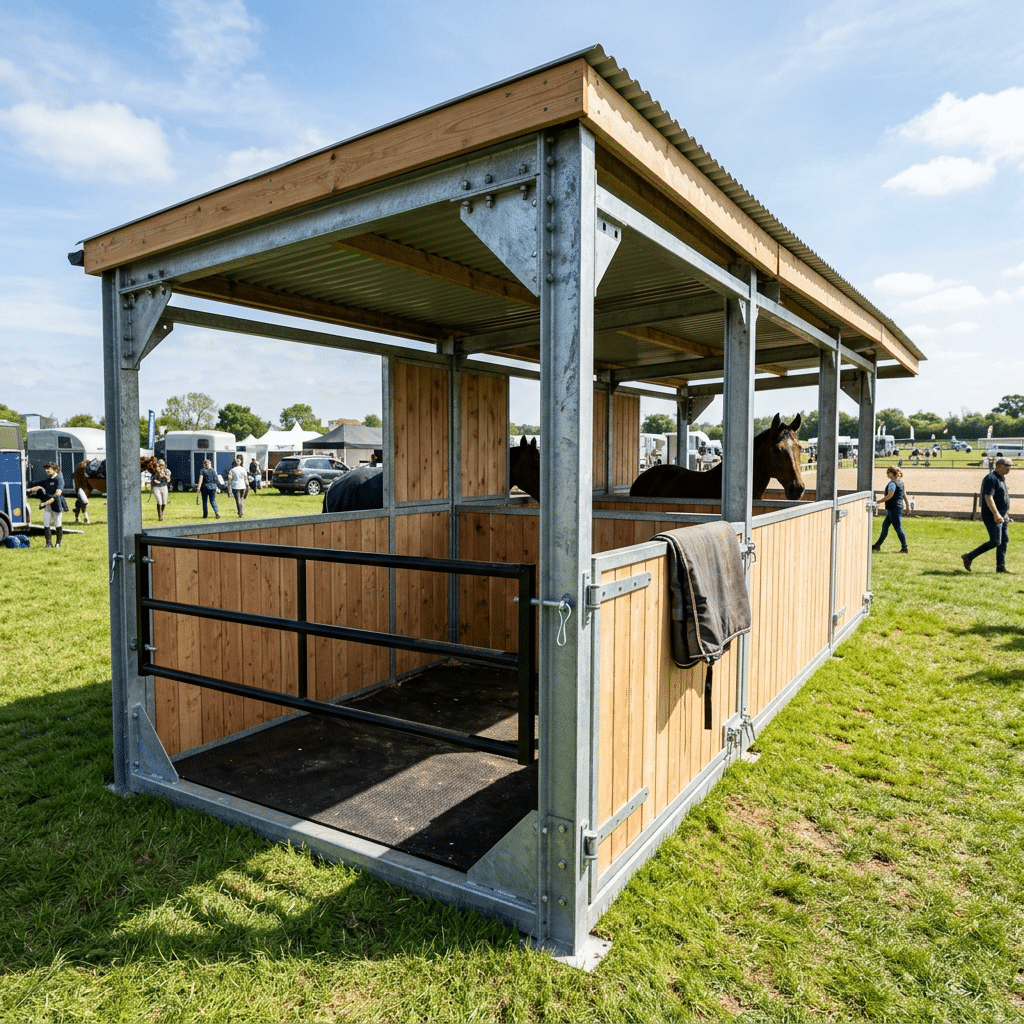
Our flat-pack system is a direct “Profit Protection” strategy for distributors. Traditional fully welded frames take up massive volume, limiting a 40HQ container to just 12-15 sets. Our design allows us to load 30-45 sets per container. This reduces per-unit freight costs by over 60% and minimizes the warehouse footprint required for inventory.
What is the difference between pre-galvanized and hot-dip after fabrication?
This is the single biggest quality factor in stabling. “Pre-galvanized” means the manufacturer buys coated tubes and welds them together, burning the zinc off at the seams and inviting rust immediately. We utilize “Hot-Dip After Fabrication.” We weld the black steel frames first, then dip the entire structure into molten zinc (BS EN ISO 1461). This coats the steel inside and out—including the welds—with an average thickness of 85 microns, ensuring true longevity.
Will HDPE infill boards fade or crack in extreme weather?
No. Our HDPE (High-Density Polyethylene) planks are synthetic and UV-stabilized, specifically engineered for high-UV markets like Australia. Unlike wood, they do not absorb moisture. This prevents the warping, cracking, or swelling cycles that occur with timber during freezing winters or humid summers. It is a true “zero maintenance” solution.
Abschließende Überlegungen
Investing in non-compliant, rotting timber creates an immediate liability on your balance sheet under strict 2026 ESG mandates. Transitioning to Q235B hot-dip galvanized steel and high-density bamboo resolves these Scope 3 emissions while delivering a maintenance-free asset that outlasts traditional wood by decades. This is the only procurement strategy that aligns operational durability with mandatory carbon reporting.
Do not wait for an audit to upgrade your fleet’s sustainability profile. Request our technical data sheets to verify our ISO 1461 galvanization standards or book a trial container to test our high-efficiency flat-pack logistics. Contact our team now to secure inventory that satisfies both your CFO and your environmental compliance officer.

 German
  English
  Spanish
  French
  Arabic
0 Kommentare