


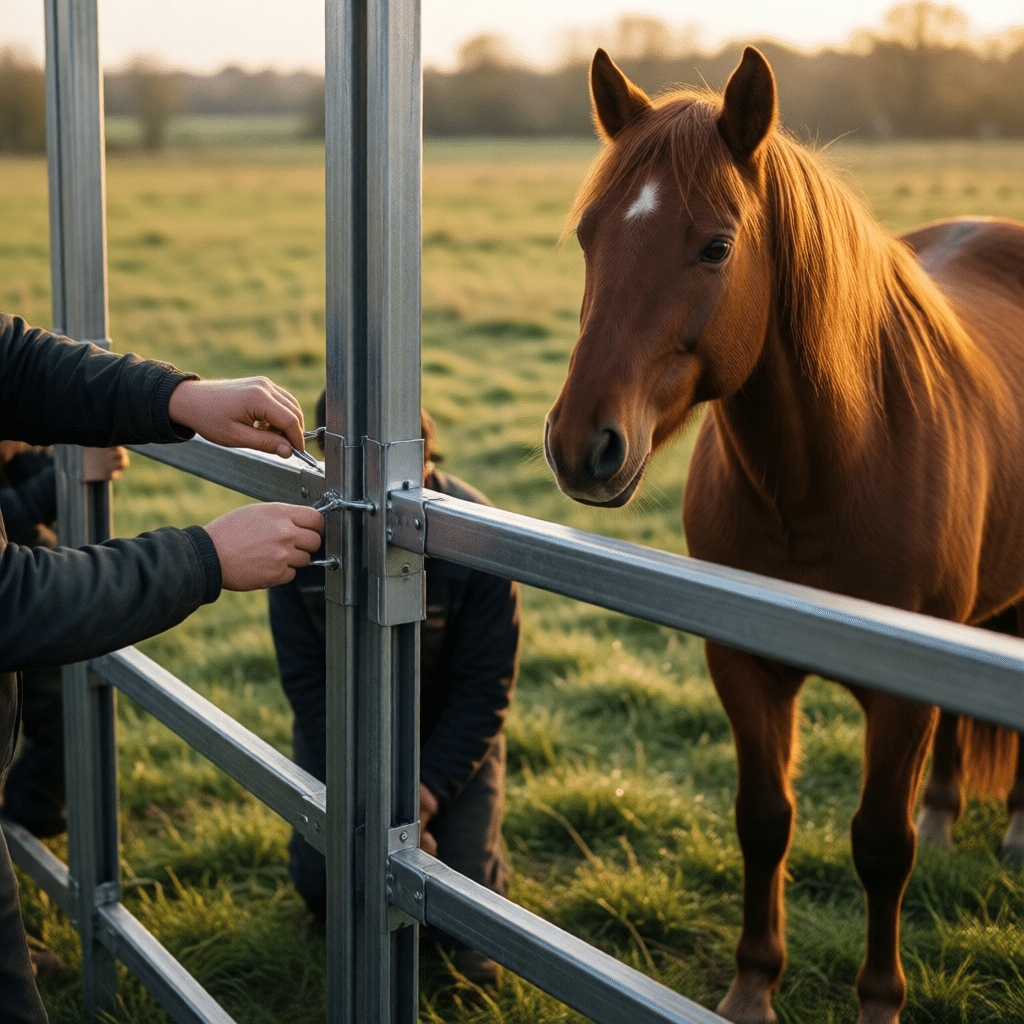
Rapid Assembly (Pin-System) protocols determine whether an event setup takes three days or three hours. For labor contractors managing tight payrolls, relying on bolt-heavy designs creates a bottleneck that erodes profit margins through excessive overtime and specialized tool requirements.
This analysis benchmarks the drop-pin mechanism against the Q235B structural steel standard for durability and speed. We examine how Hot-Dip Galvanization After Fabrication and modular flat-pack logistics allow organizers to secure asset longevity while cutting shipping volume by over 60 percent per container.
Der Aufstieg von ESG (Environmental, Social, Governance) im Bauwesen
By 2026, ESG is a strategic mandate. Regulations now demand low-carbon materials and circular economy practices to cut the construction sector’s 34% share of global CO₂ emissions.
Construction currently accounts for 34% of global CO₂ emissions. This statistic has moved beyond academic concern and triggered strict regulatory carbon budgets. We are seeing a hard shift from “optional green” initiatives to mandatory lifecycle asset development. Project owners and investors now penalize short-term thinking; the market aggressively favors circular economy solutions that minimize replacement waste.
In this environment, the “throwaway culture” of cheap, temporary infrastructure is becoming a liability. Regulations compel developers to prove how a building reduces embodied carbon and how its materials can be recovered at the end of its life. This pushes the industry toward modular, prefabricated components that reduce on-site waste and optimize logistics.
Engineered Sustainability: Hochverdichteter Bambus and ISO 1461 Galvanization
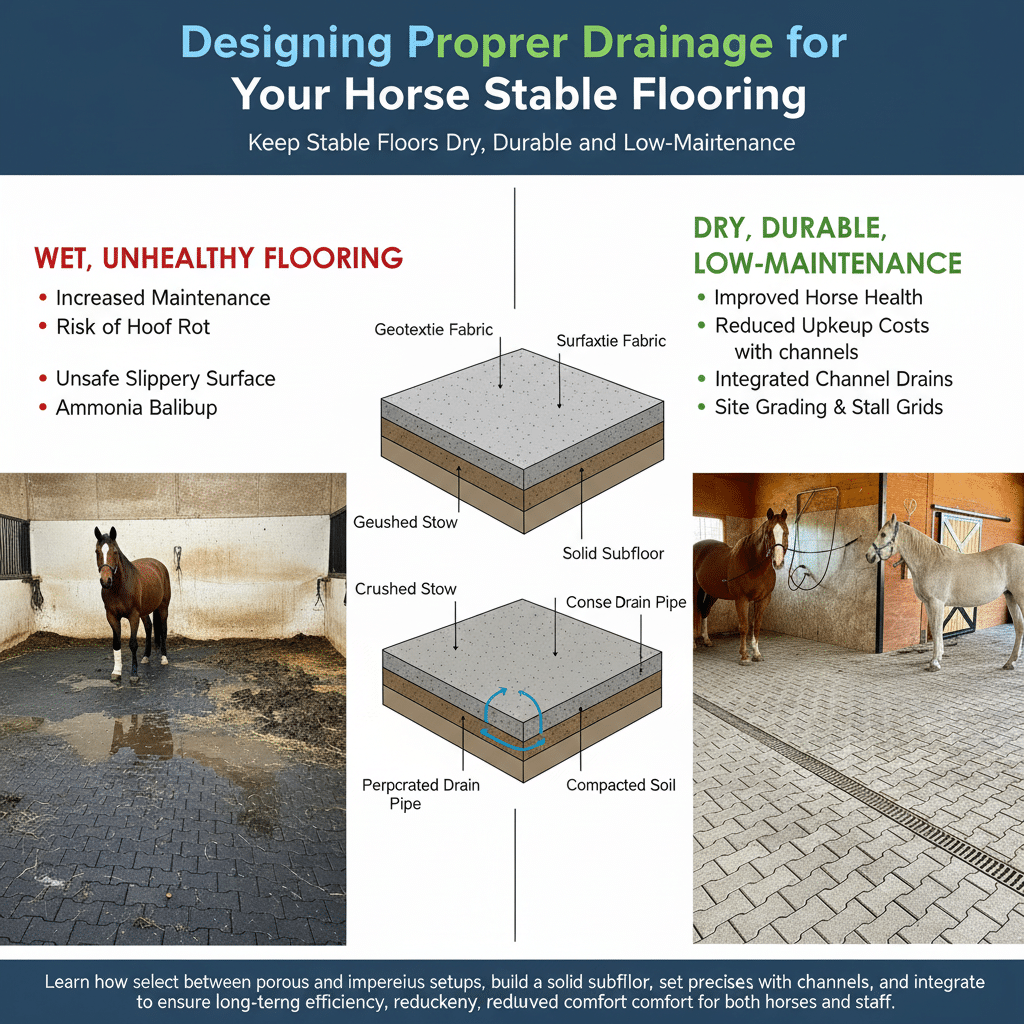
Meeting ESG goals requires specific engineering choices, not just marketing claims. At DB Stable, we align our manufacturing specifications directly with these sustainability mandates through material selection and processing standards.
- Renewable Infill: We utilize High-Density Strand Woven Bamboo. It matures in 3-5 years—compared to 50+ years for traditional hardwoods like Oak—and offers a Janka Hardness rating > 3000 lbf, providing superior durability without contributing to deforestation.
- Extended Asset Lifespan: Sustainability means durability. Our Hot-Dip Galvanization (conforming to BS EN ISO 1461) applies an 85+ micron zinc coating to structural steel. This extends the asset lifespan beyond 10 years, eliminating the carbon cost of frequent replacements.
- Circular Economy Steel: We use Q235B structural steel, which is 100% recyclable. Unlike treated timber which often ends up in landfills, our steel framework can be re-smelted indefinitely.
- Logistics Emissions: Our modular flat-pack design allows us to load 30-45 Sätze per 40HQ container, compared to the industry average of 12 fully welded sets. This reduces shipping-related carbon emissions by over 60% per unit.
Häufig gestellte Fragen
Wie baut man ein ESG-konformes Reitsportzentrum?
Building an ESG-compliant facility requires a three-pillar approach. Umwelt: Focus on energy independence through on-site solar generation and rainwater harvesting systems to reduce grid reliance. Soziales: Prioritize horse welfare and employee safety by installing high-grade, kick-proof infrastructure (like Q345B steel) that minimizes injury risks. Governance: Implement strict ethical procurement policies, ensuring all suppliers adhere to labor standards and anti-corruption practices.
Ist Bambus ein nachhaltiges Baumaterial?
Yes. Bamboo is a grass that regenerates in 3-5 years, significantly faster than the 30-50 years required for traditional hardwoods. It sequesters up to four times more CO₂ than many tree species and does not require replanting after harvest. Our High-Density Strand Woven Bamboo utilizes the entire stalk, minimizing waste while creating a board that is three times harder than Oak and resistant to mold and rot.
Umweltauswirkungen von Stahl- und Holzscheunen?
Wood framing typically has lower initial embodied carbon during the manufacturing phase. However, steel offers superior longevity and is 100% recyclable at the end of its life, supporting circular economy goals. In equestrian environments, wood is susceptible to cribbing (chewing) and rot, leading to frequent repairs. Feuerverzinkter Stahl minimizes these maintenance cycles, reducing the long-term environmental footprint associated with material replacement.
Grüne Zertifizierungen für Pferdeställe?
While LEED is the global standard, it is often tailored to commercial buildings. For equestrian facilities, look toward CalGreen standards or specific sustainable agriculture recognitions. These certifications focus heavily on water conservation, energy efficiency audits, and the use of recycled materials. Achieving these certifications often requires documenting the source of your materials, such as providing certifications for FSC wood or mill certificates for recyclable steel.
Umweltfreundliche Hersteller von Pferdeställen?
True eco-friendly manufacturers prioritize modular, flat-pack designs to drastically reduce logistics emissions. Look for suppliers who utilize hot-dip galvanized steel (like Q235B or Q345B) to ensure the structure lasts decades rather than rotting in years. Additionally, manufacturers offering rapidly renewable infill options, such as High-Density Bamboo or recyclable HDPE, demonstrate a commitment to reducing the strain on old-growth forests.
Abkehr von Altholz (Eiche/Kiefer)
Traditional softwood infills are a maintenance trap; we replace them with High-Density Bamboo (Janka > 3000 lbf) and UV-stabilized HDPE for genuine kick-proof durability.
The Maintenance and Safety Risks of Softwood Infill
Many facility managers still ask for traditional Oak or Pine because of the aesthetic legacy. But in a high-traffic commercial stable, organic softwood is a liability. It degrades quickly under the physical and chemical stress of a horse environment, forcing owners into an expensive cycle of repair and replacement.
- Cribbing & Splintering: Softwood is easy to chew. Horses that “crib” will destroy top boards within months, creating sharp splinters that cause mouth injuries and potential digestive blockages.
- The “Sponge” Effect: Pine and Oak are porous. They absorb urine, water, and saliva, turning stall walls into breeding grounds for bacteria and heavy ammonia smells.
- Annual Labor Costs: To prevent structural rot, you must strip, sand, and varnish organic timber every 12 months. This maintenance downtime kills profitability for rental stables.
- Impact Failure: When a horse kicks a dried pine board, it often snaps into jagged shards. This structural failure poses an immediate laceration risk to the animal’s legs.
High-Density Bamboo and HDPE: The Modern Standards
We engineered the DB Stable system to eliminate these biological weaknesses. We use materials that maintain the visual appeal of wood but act like concrete-reinforced polymers. Our “Kick-Proof Guarantee” relies on superior material density, not luck.
- High-Density Bamboo: We use Strand Woven Bamboo compressed to a Janka Hardness rating > 3000 lbf. This is 3x harder than Red Oak. Horses cannot chew it, and it does not dent under hoof impact.
- HDPE Infill (Zero Maintenance): Our 28mm-32mm recycled plastic planks are UV stabilized and impact-absorbing. They require no painting or varnishing and can be pressure-washed directly.
- Rot & Mold Immunity: Unlike organic timber, our engineered materials are impervious to moisture. They do not rot, swell, or harbor mold spores in damp stable climates.
- Structural Safety: The superior density of these materials absorbs shock rather than shattering. This prevents the catastrophic wall failures common with aged wood.
Premium Modular Stables Built For Extreme Climates
Top-Fabriken setzen auf nachhaltige Materialien
Executive Insight: True industrial sustainability has evolved beyond simple material swapping. The global benchmark now requires integrating circular production systems and on-site renewable energy grids to secure long-term operational resilience.
Leading manufacturers are no longer treating sustainability as a PR exercise. Companies like Lego, Siemens, and IKEA are re-engineering their entire production ecosystems to mitigate supply chain risks and meet aggressive carbon targets. This shift is not just about using recycled plastic; it is about fundamentally changing how energy and materials flow through the factory floor.
| Manufacturing Leader | Key Facility Location | Primary Operational Benchmark |
|---|---|---|
| Siemens Electronics | Chengdu, China | style=”padding: 12px; border: 1px solid #e0e0e0;”>Digital Twins reduced waste by 48% while output rose 92%. |
| Lego-Gruppe | Vietnam | $1bn investment in solar-plus-storage for carbon-neutral operations. |
| IKEA | Zbąszynek, Polen | Transitions 400+ suppliers to 100% renewable electricity. |
| Procter & Gamble | Taicang, China | 100% renewable electricity and steam condensate recovery. |
| Tesla | Schanghai, China | Gigafactory design maximizes yield efficiency to cut emissions. |
1. Siemens Electronics Works (Chengdu)
Siemens defines the standard for “Industry 4.0” sustainability. Their Chengdu facility uses Digital Twin technology to simulate production lines before physical operation. This predictive capability allowed them to reduce energy consumption per unit by 24% and slash production waste by 48% since 2019. By integrating AI-driven waste classification, they divert approximately 3,000 tonnes of CO₂ annually, proving that data architecture is as critical as physical infrastructure.
2. Lego Group (Vietnam)
Lego is constructing a benchmark facility in Vietnam backed by a massive US$1 billion investment. This site targets carbon neutrality not through offsets, but through direct infrastructure. The factory integrates 12,400 rooftop solar panels and utilizes Vietnam’s first large-scale battery storage solution to balance grid dependency. This move signals a transition from passive consumption to active energy management in heavy manufacturing.
3. Schneider Electric (Global Hubs)
Schneider Electric utilizes its own technology to retrofit existing assets. Their Barcelona facility achieved “Zero CO₂” status by deploying a microgrid that combines onsite solar generation with battery storage. Similarly, their Wuxi Smart Factory in China earned the World Economic Forum’s “Advanced Lighthouse” designation for utilizing automated systems to optimize resource use in real-time.
4. IKEA (Poland & Global Supply Chain)
IKEA’s strategy focuses aggressively on Scope 3 emissions—the carbon footprint of their supply chain. Their Zbąszynek facility in Poland serves as the operational hub for this initiative. By 2023, IKEA successfully transitioned 408 factories and third-party suppliers to 100% renewable electricity. This approach forces upstream partners to modernize their energy grids if they wish to retain contracts.
5. Nestlé & Unilever (Zero Waste Initiatives)
Both FMCG giants have moved beyond simple recycling goals. Nestlé’s Surčin facility in Serbia has achieved a “Zero Waste to Landfill” milestone, ensuring every byproduct is either recycled or recovered for energy. Unilever operates flagship facilities in India and the UK that set similar benchmarks, focusing on water neutrality and circular waste streams to decouple growth from environmental impact.
Stranggeflochtener Bambus: Eine ergiebige Kohlenstoffsenke
Strand-woven bamboo achieves a negative carbon footprint by sequestering 50–60 kg of CO2 per culm while delivering structural density exceeding 1,080 kg/m³.
Achieving a Negative Carbon Footprint
Most “green” materials force a compromise on performance, but strand-woven bamboo operates differently. The environmental mechanics start with the growth cycle. Individual bamboo culms sequester between 50 and 60 kilograms of CO2 before harvesting. Unlike traditional timber logging, which often kills the tree and releases soil carbon, bamboo harvesting leaves the root system (rhizome) intact.
This living root network continues to stabilize soil and store carbon long after the culm is cut. When production parameters are optimized, the material achieves a net-negative carbon footprint over its full lifecycle. For industrial projects, this makes strand-woven bamboo a viable structural substitute for high-emission materials like steel and cement, lowering the total embodied carbon of the facility without sacrificing structural integrity.
The 3000+ Janka Hardness Standard
In the equestrian sector, durability is non-negotiable. A horse kick delivers massive force, and standard hardwoods like Oak often splinter under that pressure. We utilize High Density Strand Woven bamboo specifically to address this failure point. By compressing fibers under extreme pressure, we achieve a density of over 1,080 kg/m³.
- Janka Hardness: Exceeds 3000 lbf (Approximately 3x harder than Oak).
- Density Profile: 1,080 kg/m³, creating a naturally mold and rot-resistant board.
- Application: Standard issue for our Professional Series to ensure longevity in high-traffic centers.
This manufacturing process eliminates the air pockets found in softwoods, making the board nearly impervious to moisture and rot. It allows facility owners to deploy a sustainable material that withstands the physical abuse of an active stable environment.
Q235B-Stahl: Der wiederverwertbare Rahmen 100%
Q235B structural steel delivers ASTM A36 strength and 100% recyclability, creating a kick-proof framework that supports circular economy goals without compromising safety.
Infinite Recyclability and Environmental Impact
Steel stands apart as a permanent material in the construction sector. Unlike composite materials or treated timber that eventually degrade into landfill waste, Q235B carbon steel operates within a closed-loop cycle. It can be melted down and reformed indefinitely without losing its essential mechanical properties or structural integrity.
For equestrian facilities, this recyclability drastically reduces the volume of construction waste. When a temporary wood or PVC structure reaches its end of life, it often becomes an environmental burden. In contrast, a Q235B steel framework retains scrap value and re-enters the supply chain. This process aligns directly with green building standards, allowing facility managers to maintain a lower long-term carbon footprint while utilizing heavy-duty materials.
Structural Specs: ASTM A36 Equivalence and Safety
Q235B is the manufacturing equivalent to ASTM A36, the standard specification for carbon structural steel in North America. This grade is selected specifically for its balance of ductility and tensile strength, preventing the brittle fractures that can occur with lower-grade metals under impact.
- Materialnorm: Q235B (ASTM A36 Equivalent) ensures consistent structural performance.
- Profile Thickness: We strictly utilize 14-Spur (2.0mm – 2.5mm) tube profiles to guarantee maximum impact resistance against horse kicks.
- Weldability: The chemical composition of Q235B offers superior weldability, which is critical for our “Hot-Dip After Fabrication” process.
The welding characteristics of Q235B ensure a seamless bond during the galvanization process. Because the steel accepts the zinc coating uniformly, we achieve a metallurgical bond that exceeds 70 microns on tubing and 85 microns on structural parts. This synergy between the base metal and the protective coating provides the “lifetime” rust protection required for damp, high-ammonia stable environments.
Häufig gestellte Fragen
Does the interlocking pin system compromise structural rigidity compared to welded stalls?
No. Our design utilizes close-tolerance Q235B structural steel components that lock firmly into place. Once the drop-pins are inserted, the frame creates a rigid, unified structure capable of withstanding heavy impacts and kicks. This offers stability comparable to permanent welded facilities without the “wobble” found in cheaper bolted assemblies.
How significantly does the tool-free assembly reduce setup time?
The drop-pin system eliminates drilling, bolting, and welding. A small crew of three can typically erect a block of stables in minutes per unit. Our data indicates a 50-stall setup takes approximately 6 hours, which drastically cuts labor costs for temporary events or rapid facility expansions.
Why is ‘Hot-Dip Galvanization After Fabrication’ critical for portable stables?
Portable stables face frequent handling and diverse environments. Unlike pre-galvanized tubing that leaves weld seams exposed and vulnerable, our ISO 1461 process involves dipping the entire welded frame into molten zinc. This guarantees 360-degree protection (>70 microns) inside and out, preventing rust even in high-ammonia environments.
How does the durability of Bamboo infill compare to traditional hardwood?
Our high-density strand woven bamboo is engineered for superior resilience, boasting a Janka hardness of >3000 lbf—approximately three times harder than Oak. Unlike standard timber, it resists rot, mold, and insect damage, making it a sustainable and long-lasting choice for equine housing.
Can these stables be permanently installed despite being designed for portability?
Yes. The flat-pack design reduces transport costs, but the materials meet permanent housing standards. We use 14-gauge steel frames and heavy-duty hardware. Many professional riding centers and stud farms utilize the Professional Series as their primary long-term stabling solution.
Abschließende Überlegungen
Cheap bolted stalls might look attractive on a spreadsheet, but the labor costs of slow assembly and frequent rust repairs quickly destroy that margin. Our ISO 1461 Hot-Dip Galvanized Drop-Pin system slashes setup time by days, turning volatile labor expenses into fixed, predictable asset value. This is the only way to scale your rental inventory without carrying the liability of disposable infrastructure.
You cannot assess true structural rigidity or finish quality from a PDF spec sheet. We recommend scheduling a video inspection of our Professional Series or securing a trial order to validate our “Kick-Proof” claims firsthand. Contact our engineering team today to configure a flat-pack solution that optimizes your next container load.

 German
  English
  Spanish
  French
  Arabic
0 Kommentare