


Equestrian design in France demands architectural grandeur, yet traditional oak infills often warp in damp stable environments. Relying on native timber for luxury stalls creates a maintenance liability where high moisture content causes rot and structural failure within five years.
The Royal Series addresses this by integrating High-Density Strand Woven Bamboo, which exceeds a Janka hardness of 3,000 lbf for superior impact resistance. We combine this with ISO 1461 Hot-Dip Galvanization and solid brass accents, delivering the required aesthetic prestige while eliminating the recurring costs of wood restoration.
Die Ästhetik des französischen Reiterhofs
French equestrian design evolved from Renaissance utility to the ornamental power of Versailles. We replicate this grandeur today using dual-finish steel and brass accents, blending history with industrial durability.
Architectural Grandeur: From Renaissance Châteaux to Imperial Stables
Stables in France began as purely utilitarian wooden sheds, but the Renaissance turned them into architectural statements. The shift started at Château du Rivau, where architects first unified form with function. They introduced glazed windows for ventilation and limestone troughs, moving away from dark, enclosed spaces toward structures that prioritized light and animal welfare.
By the 17th and 18th centuries, this evolution reached its peak with the “Palace for Horses” concept seen at Versailles and Chantilly. These were not mere shelters; they were massive masonry declarations of authority. Architects employed monumental scales, deep embrasures to maximize natural light, and decorative scrolls to frame the animals. The structure itself became a symbol of prestige, proving that housing for the King’s horses demanded the same artistic rigor as the King’s own quarters.
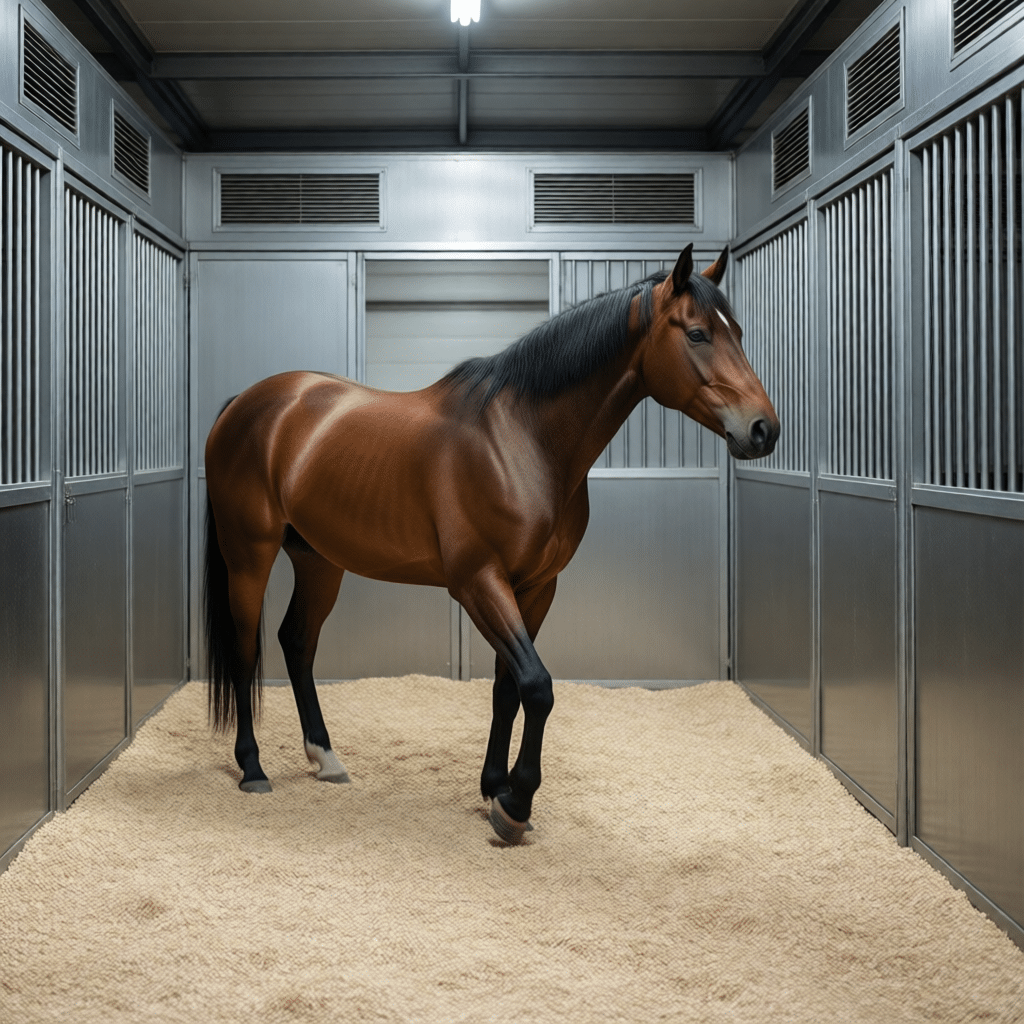
The Royal Series: Integrating European Arches and Brass Finials
We engineered the DB Stable Royal Series to capture this specific historical aesthetic without inheriting the maintenance headaches of 18th-century ironwork. The design relies on the signature European sweeping arch, which opens up the stall front to replicate the airy, cathedral-like atmosphere of a heritage estate. This profile moves the eye upward and reduces the visual weight of the steel.
To match the ornamental prestige of French wrought iron, we integrate solid Brass or Gold Finials as post caps. These accents provide the necessary visual contrast against the dark frames, mimicking the decorative authority of royal stables. However, we do not use the raw iron found in historical restoration, which rusts rapidly in ammonia-rich environments.
- Dual-Finish Protection: We use Q235B structural steel that is Hot-Dip Galvanized (ISO 1461) first, then Powder Coated.
- Dicke des Materials: Frames use 40mm thick board channels and 14-gauge tubing to ensure the “monumental” feel is structural, not just visual.
- Korrosionsbeständigkeit: Unlike traditional iron that requires constant painting, our duplex coating system withstands modern stable humidity and cleaning cycles.
Europäische Bögen und Messingzierleisten an Pferdestallfronten
European arches define luxury stud farms with swept entrances and open ventilation. Our Royal Series combines these curves with solid brass finials and heavy-gauge, powder-coated galvanized steel for maximum prestige and longevity.
The Visual Prestige of European Arched Designs
Standard straight stall fronts serve a function, but arched designs—often referred to as “sw
ept” fronts—establish the identity of a premier facility. This aesthetic dominates high-end private estates and luxury riding centers because it breaks the monotony of linear bars. The design typically features a lower center door height to encourage socialization, while the side wings swoop upward to approximately 8 feet to ensure containment and safety.
Beyond the visual impact, these curved lines serve a practical purpose in the Royal Series. The open radius improves airflow and light penetration, eliminating dark corners in the stable. We engineer these curves using heavy-gauge Q235B or Q345B steel tubing, ensuring that the elegance does not come at the cost of structural integrity.
- Swept Entrance: Creates a gallery-like atmosphere rather than a corridor of cages.
- Enhanced Ventilation: Curved grillwork maximizes air circulation through the “stack effect.”
- Market Positioning: Immediately identifies the facility as a high-value asset.
- Architectural Unity: Radius options can be customized to match existing barn arches or window lines.
Integrating Solid Brass Finials in the Royal Series
In the luxury market, hardware defines the finish quality. For the Royal Series, we reject hollow plated caps that pit and peel after a few seasons. We strictly specify solid cast brass finials. These components add significant weight and permanence to the design, offering a classic gold contrast against the black or dark green powder-coated frames.
These finials are not purely decorative; they serve as critical functional caps for our structural posts (50mm square or 114mm round). By sealing the top of the vertical columns, the finials prevent moisture and debris from entering the internal steel structure. This integrates with our “Dual Protection” system—where the steel is Hot-Dip Galvanized first, then Powder Coated—ensuring the post remains rust-free from the inside out.
- Solid Cast Composition: Durable brass construction distinct from cheap, thin plating.
- Visual Contrast: Gold tones accent the matte Powder Coat over Galvanized finish.
- Post Sealing: Caps the 14-gauge tubing to prevent internal corrosion.
- Royal Series Standard: A mandatory specification for our top-tier luxury projects.
Global Manufacturer of Certified Durable Stables
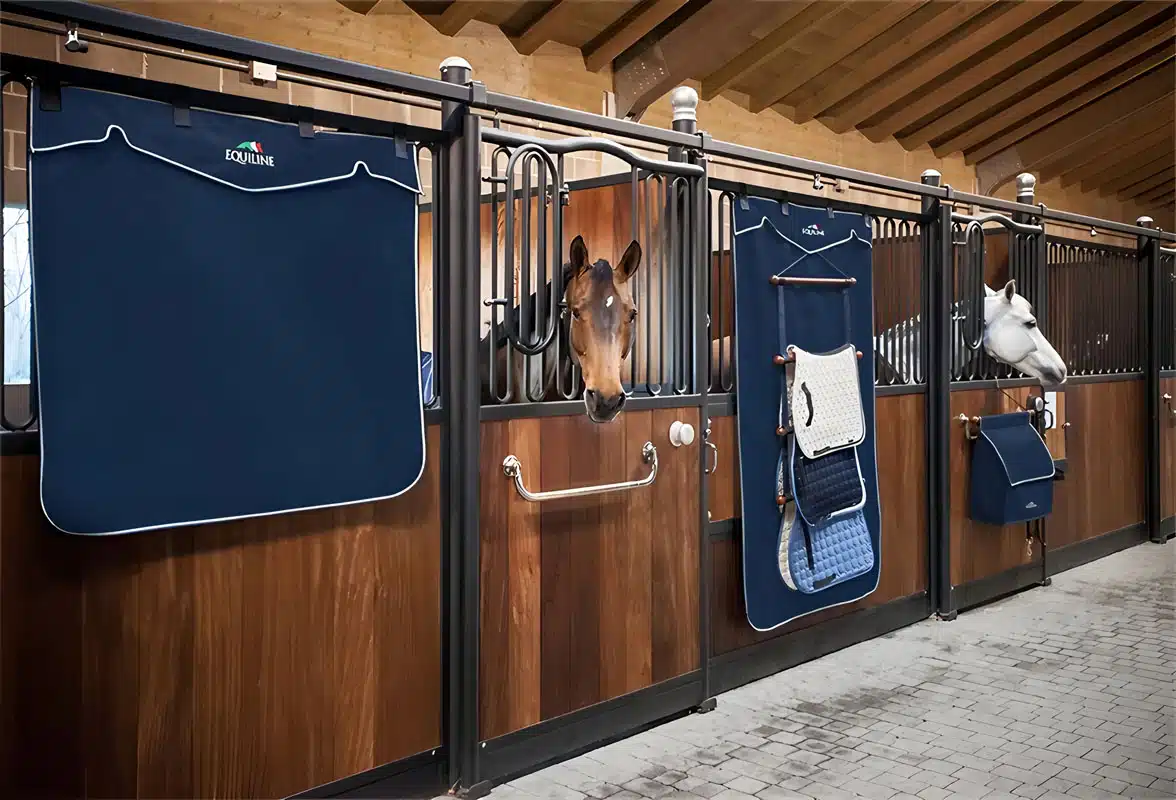
Die Holzdebatte: Warum sich Eichenholz in feuchten Regionen verzieht
Oak naturally absorbs stable humidity like a sponge. Once moisture content exceeds 30%, fibers swell unevenly, causing dangerous twisting and cupping that compromises stall safety.
The Science of Moisture Absorption in Natural Oak
Wood is hygroscopic, meaning it constantly exchanges moisture with its environment. In a horse stable, humidity levels are naturally high due to animal respiration, water buckets, and frequent wash-downs. While oak is a hardwood, it remains porous. When it absorbs moisture from the damp stable air, the water binds to the cell walls.
The critical threshold is the Fiber Saturation Point (FSP), typically between 25% and 30% moisture content. Below this point, water is held within the cell walls; above it, water fills the cell cavities. Warping happens when this absorption occurs unevenly:
- Uneven Expansion: If one side of a board faces a damp aisle and the other faces a dry tack room, the damp side swells while the dry side shrinks.
- Internal Stress: This differential creates massive internal tension. The wood relieves this stress by physically changing shape—twisting, bowing, or cupping.
- Structural Failure: In a stable partition, a warped board can pop screws, create sharp edges, or leave gaps where a hoof can get trapped.
Engineered Stability: The Strand Woven Bamboo Advantage
To eliminate the risks associated with natural timber movement, DB Stable utilizes High Density Strand Woven Bamboo for our Professional and Royal series. This is not the hollow bamboo used in garden furniture; it is an engineered material where bamboo fibers are stripped, shredded, and compressed under immense hydraulic pressure with resin.
This manufacturing process creates a board with a density that fundamentally changes how the material interacts with water:
- High Density Barrier: The material is so dense (Janka Hardness > 3000 lbf) that there is almost no interstitial space for water to penetrate. It resists ingress far better than the open grain of oak.
- Mold and Rot Resistance: Our bamboo is officially rated to resist biological decay, making it suited for the ammonia-rich, damp environment of a working stable.
- Dimensional Stability: Because the fibers are woven and compressed rather than aligned in a single natural grain direction, the boards maintain their shape even when humidity fluctuates.
Strand-Woven Bamboo: Janka 3000 Hardness
Strand-woven bamboo achieves a Janka rating exceeding 3,000 lbf—triple the hardness of Oak—creating an infill specifically engineered to withstand heavy hoof impact and resist moisture-induced rot.
| Leistungsmetrik | Traditional Oak | Strand-Woven-Bambus |
|---|---|---|
| Janka Hardness Rating | ~1,300 lbf | > 3.000 lbf |
| Schlagfestigkeit | Moderate (Prone to splintering) | Extreme (Dense fiber matrix) |
| Moisture Response | Absorbs & Warps |  The High-Density Compression ProcessStandard bamboo flooring or furniture often uses vertical or horizontal grain construction, which retains the natural weakness of the grass. Strand-woven manufacturing fundamentally changes the material’s properties. We strip the bamboo into raw fibers, boil them to remove sugars (eliminating pest attraction), and submerge them in an eco-friendly adhesive resin. These resin-saturated fibers undergo extreme hydraulic compression. The process crushes the fibers together into a solid block, eliminating the natural voids found in timber. This results in a material with a density that far surpasses domestic hardwoods. Because the fibers are woven and compressed rather than aligned in a single grain direction, the finished board is impervious to the splintering common in pine or dry oak. It functions more like a composite material than traditional lumber, yet it utilizes rapid-growth bamboo, aligning with sustainable sourcing requirements. Performance vs. Oak: The 3x Hardness AdvantageOak has long served as the benchmark for stable infills, typically rating between 1,200 and 1,300 on the Janka hardness scale. While decent for general use, oak reaches its limit with aggressive animals. Strand-woven bamboo rates consistently above 3,000 Janka. This massive jump in hardness translates to specific operational advantages in a commercial stable environment:
Dual-Finish Powder Coating over Hot-Dip Galvanizing
The Science of Duplex Protection SystemsMost aesthetic failures in stable manufacturing happen because manufacturers apply powder coating directly onto bare black steel. Once the paint is scratched—and horses will scratch it—moisture touches the steel, creating rust that spreads underneath the paint film. This causes the coating to bubble, flake, and eventually peel off in sheets. We call this “under-film corrosion,” and it destroys the investment within a few years. A duplex system solves this through chemical synergy. The base layer of zinc provides sacrificial (cathodic) protection. If the surface is scratched down to the metal, the surrounding zinc sacrifices itself to protect the steel, effectively healing the wound and preventing rust creep. Simultaneously, the top powder coat layer shields the zinc from atmospheric oxidation, slowing down the consumption rate of the zinc itself. The result is a service life 1.5 to 2.5 times longer than the sum of the individual lives of each coating. Royal Series Specification: Aesthetic Meets Heavy-Duty DefenseOur Royal Series is engineered for estates that demand the visual appeal of European architecture without sacrificing the industrial durability of our “Lifetime” rust warranty. Unlike competitors who rely on pre-galvanized tubing with exposed weld seams, we utilize a strict “Hot-Dip After Fabrication” process before any color is applied.
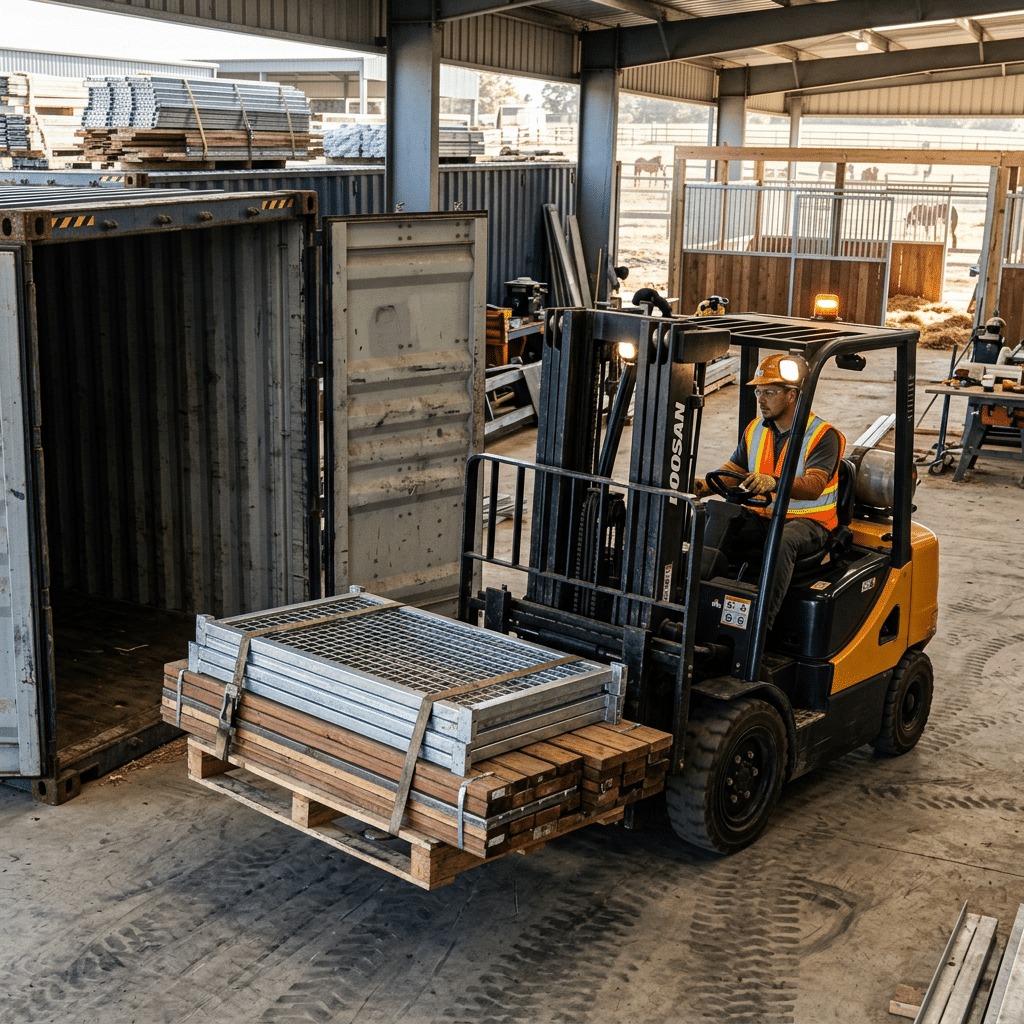
Häufig gestellte FragenWhat distinguishes European-style stall fronts from standard designs?European-style fronts prioritize socialization and aesthetics over total containment. Unlike standard high-front American stalls, European designs feature lower profiles—often with “swoop” wings or dipping arches—that allow horses to put their heads out and interact with the herd. This open design reduces stable vices like cribbing or weaving by alleviating boredom. Structurally, these are considered “furniture-grade” installations. They typically incorporate heavy-gauge steel frames (minimum 14-gauge), hidden latch systems for safety, and decorative elements like brass or gold finials. We engineer these specifically for high-end private estates and professional riding centers where the visual impact of the barn interior is as critical as the functionality. Why is Strand-Woven Bamboo recommended over traditional Oak?Oak has a reputation for tradition, but it fails in modern stable environments. Stables are wet, ammonia-rich areas. Oak is hygroscopic; it absorbs moisture, leading to warping, rotting, and chewing damage over time. Strand-Woven Bamboo solves this through density. We use High-Density Strand Woven Bamboo with a Janka Hardness rating exceeding 3,000 lbf. This makes it more than three times harder than Oak (approx. 1,300 lbf). It effectively resists kicks, does not absorb urine like softwoods, and is naturally resistant to mold. For a commercial facility, this means replacing boards every 15 years instead of every 5. Is powder coating sufficient to prevent rust in horse stables?No. Powder coating applied directly to bare steel is purely cosmetic and will fail within a few years in a barn environment. Horses bite bars, and equipment scratches paint. Once that seal breaks, rust spreads instantly underneath the paint. For true longevity, we rely on “Hot-Dip Galvanization After Fabrication” according to ISO 1461 standards. We weld the black steel first, then dip the entire structure in molten zinc (inside and out). Only nach this metallurgical bond is formed do we apply the powder coat. This “Dual Protection” system ensures that even if the paint is scratched, the zinc layer underneath creates a sacrificial barrier to stop rust from forming. What steel grade is recommended for cold climates or high-impact areas?Standard structural steel (Q235B/ASTM A36) is sufficient for most regions, but it can become brittle in extreme freezing temperatures. If a horse kicks a frozen bar, standard steel carries a higher risk of brittle fracture. For facilities in Northern Europe or Canada, we upgrade to Q345B Niedrig legierter hochfester Stahl. This grade maintains superior impact toughness at low temperatures. It acts as an insurance policy against structural failure during winter months, ensuring the material absorbs the kinetic energy of a kick rather than snapping. How are the stable systems packaged for international shipping?We strictly avoid “loose loading” (hand-stacking individual pieces into a container). Loose loading saves space but almost guarantees scratches, dents, and hours of manual labor during unloading. It ruins the finish before the product is even installed. We use a Stahlpaletten Flat-Pack system. Components are carefully stacked, separated by protective foam, and strapped onto custom steel pallets. This allows a forklift to unload a 40HQ container in under 30 minutes. It protects the galvanization and powder coat during ocean transit and simplifies logistics for distributors managing inventory. Abschließende ÜberlegungenRelying on traditional Oak for damp French stables guarantees future maintenance costs due to warping and rot. Our Royal Series eliminates this liability by pairing the 3,000 lbf Janka hardness of strand-woven bamboo with ISO 1461 hot-dip galvanization. This combination delivers the heritage aesthetic of a chateau while ensuring the structural longevity demanded by modern capital assets. We engineer these systems specifically for high-value renovation projects and exclusive dealer portfolios. Contact our design team today to request a material sample kit or verify our palletized flat-pack logistics for your next container. Let us tailor the Royal Series specifications to match the architectural nuance of your specific estate. Zu diesem BeitragZu diesem Beitrag Frank ZhangAutor Hallo, ich bin Frank Zhang, der Gründer von DB Stable, ein Familienunternehmen, ein Experte für Pferdeställe. Sie könnten auch mögen... 5 häufige Konstruktionsfehler bei Ställen, die zu Verstößen gegen die Bauvorschriften führenStabile Konstruktionsfehler und Verstöße gegen die Vorschriften sind die ersten Punkte, die Käufer überprüfen sollten, bevor sie einen Lieferanten zulassen,... Planung der Belüftung von Pferdeställen: Leitfaden zur LuftströmungstechnikDie Planung der Belüftung eines Pferdestalls ist der erste Punkt, den Käufer prüfen sollten, bevor sie einen Anbieter, ein Budget oder … genehmigen. Fehler bei der Pferdehaltung bei extremen Wetterbedingungen: Ein unverzichtbarer LeitfadenEin wetterbeständiges Scheunendesign ist der erste Punkt, den Käufer prüfen sollten, bevor sie einen Lieferanten, ein Budget oder … genehmigen. |
 German
  English
  Spanish
  French
  Arabic
0 Kommentare