


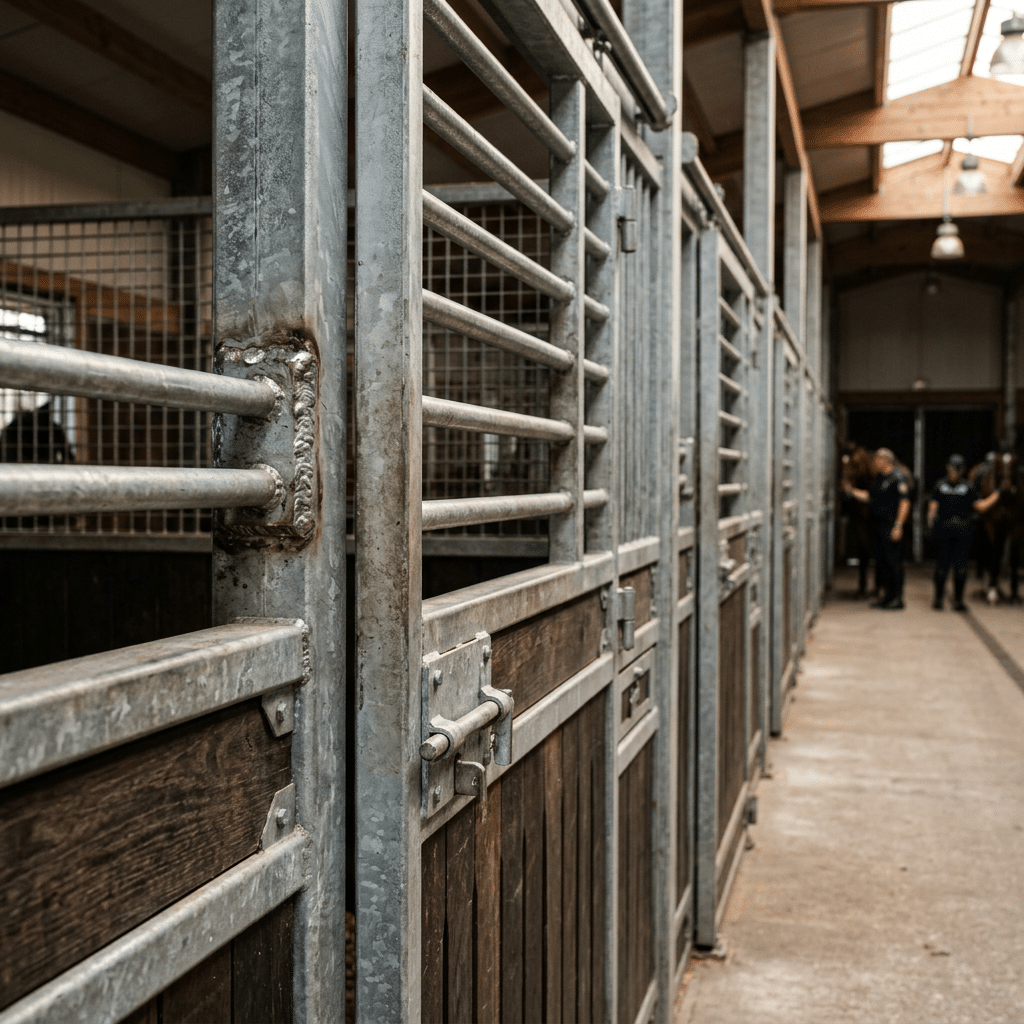
Choosing the wrong infill thickness is a direct route to plank failure and costly warranty claims. Specifying a standard 28mm board for a large Warmblood doesn’t just risk animal injury—it creates a significant liability for the installer and the facility. This isn’t a simple material choice; it’s a critical risk management decision.
This analysis provides the engineering data to specify correctly. We benchmark 28mm and 38mm strand-woven bamboo boards against the 3,000 lbf Janka hardness standard. The goal is to define precisely when the upgrade is a mandatory safety requirement versus an unnecessary project expense.
Understanding Janka Hardness in Strand-Woven Bamboo
The Janka hardness test shows strand-woven bamboo is about three times harder than oak. Its rating over 3,000 lbf makes it exceptionally durable for withstanding horse kicks.
What the Janka Scale Actually Measures
The Janka test isn’t complicated. It measures the force needed to embed a small steel ball into a material. A higher number means the material is harder to dent and can handle more wear. It’s a direct indicator of durability.
To put the numbers in context, a common hardwood like Red Oak scores around 1,280 lbf. The high-density, strand-woven bamboo we use consistently rates between 3,000 and 4,000 lbf. This isn’t a small difference; it’s significantly tougher than traditional wood options.
The 3,000+ lbf Standard for Horse Stable Infill
For our stable infill boards, we specify strand-woven bamboo that exceeds a 3,000 lbf Janka rating. This isn’t an arbitrary number. It’s the threshold required to create a board dense enough to withstand the daily abuse in a stable environment.
This extreme hardness ensures the boards resist splintering, cracking, or denting from powerful horse kicks. The result is a safer enclosure that protects the animal from injury and maintains the structural integrity of the stall for years.
28mm Boards: The Standard for Quarter Horses and Arabs
A 28mm board provides a reliable balance of strength and economy for medium-sized breeds. It’s robust enough for daily wear yet more cost-effective than heavy-duty boards for draft horses.
Why 28mm is the Practical Choice for Athletic Breeds
For agile, powerful breeds like Quarter Hor
ses and Arabs, over-engineering a stall isn’t just expensive—it’s unnecessary. A 28mm board hits the sweet spot, providing the right performance without the extra cost and weight associated with thicker lumber meant for much larger animals.
- Sufficient Impact Resistance: It easily handles the kicks and pressure from the lighter-framed but powerful physique of these athletic horses.
- Cost-Effective Safety: You get proven safety without paying a premium for strength you don’t need. It’s the right tool for the job.
- Lighter Panel Weight: Lighter boards mean the overall stall panels are easier to handle, simplifying installation and reducing the load requirements on your barn’s structure.
Material Options at 28mm: HDPE and Bamboo
The 28mm thickness is available in two high-performance materials, each solving a different problem for barn owners and facility managers.
- HDPE Infill: A 28mm UV-stabilized board that’s engineered to absorb impact. Its key advantage is being a zero-maintenance, easy-to-clean surface that never needs painting or sealing.
- High-Density Bamboo: This 28mm option delivers extreme hardness, with a Janka rating over 3000 lbf. That makes it highly resistant to chewing, scratching, and moisture damage from washing.
Durable Horse Stables for Any Climate

38mm Boards: Mandatory Armor for Warmbloods and Drafts
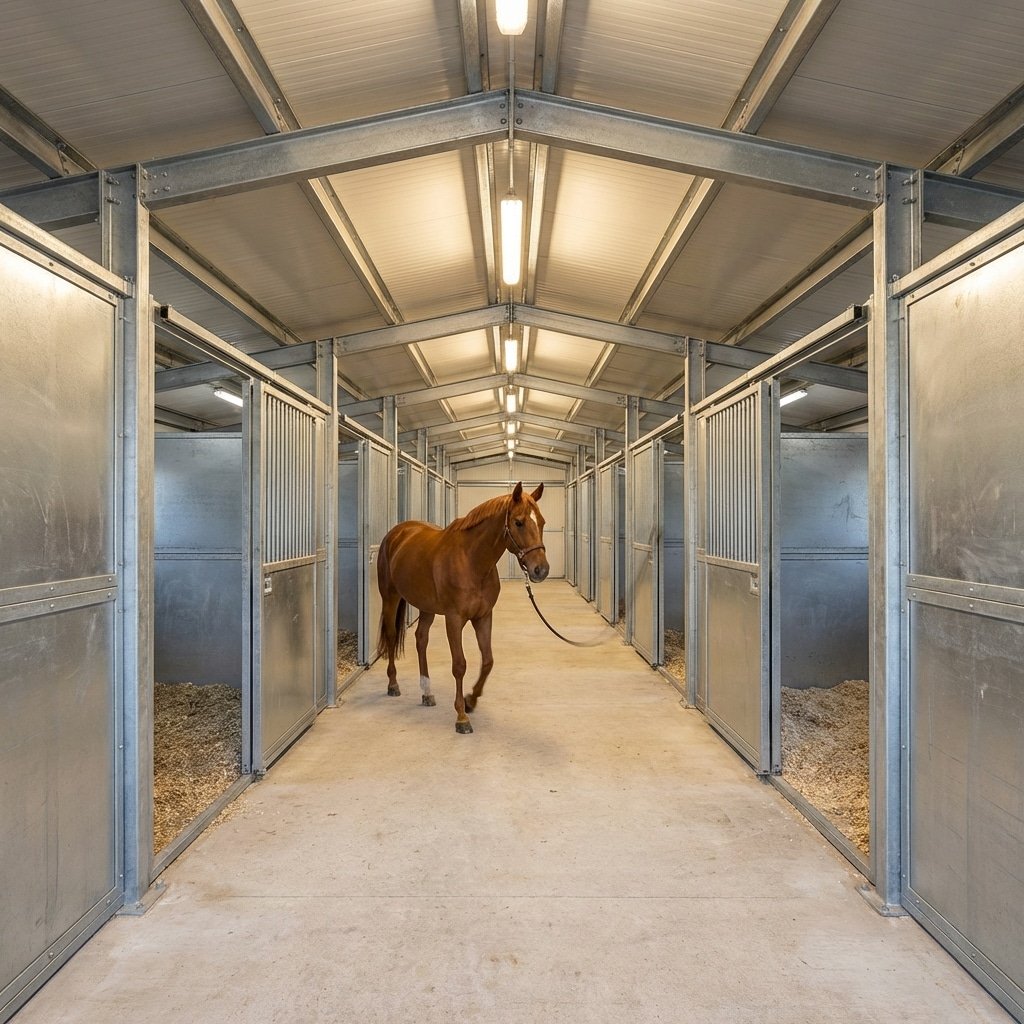
Large breeds like Warmbloods can break standard boards. A 38mm high-density board provides essential armor, preventing injury and stall damage by absorbing powerful kicks.
Why Standard Boards Fail Under Heavy Horse Impact
A Warmblood or draft horse can deliver a kick with immense force, concentrating all that energy into a very small area. The impact is powerful enough to shatter inadequate materials on contact.
Thinner or softer wood boards simply lack the mass and density needed to absorb and dissipate this kind of impact. This structural weakness leads directly to splintering, cracking, or complete failure, putting both the horse and your investment at risk.
The 38mm High-Density Bamboo Specification
Our 38mm infill option is engineered specifically for these high-stress environments. We use High-Density Strand Woven Bamboo, a material chosen for its extreme durability and impact resistance.
- Material: Hochdichter gewebter Bambus
- Janka Hardness: Exceeds 3000 lbf
- Relative Strength: Approximately three times harder than traditional oak
This level of hardness makes the boards exceptionally resistant to damage, providing a safe and secure barrier that can withstand the daily rigors of housing large, powerful animals.
Weight Considerations: Freight Cost vs. Durability
Heavier materials offer superior durability but increase freight costs. Our flat-pack system fits 30-45 sets into a 40HQ container, while welded competitors only fit 12-15, protecting distributor margins.
The Direct Link Between Component Mass and Durability
There’s a straightforward trade-off in stable engineering: mass equals strength. To handle kicks and prevent frame bending, we use a minimum 14-gauge (2.0mm) structural steel tube. Anything thinner compromises the integrity of the stall, period.
The same principle applies to infill. High-density, strand-woven bamboo boards are significantly heavier than common softwoods. This extra weight comes from a Janka hardness rating over 3000 lbf, making them about three times harder than oak and exceptionally resistant to damage over the long term.
Profit Protection with High-Density Container Loading
Heavy components usua
lly mean brutal shipping costs that eat into distributor profits. We engineered a solution to this problem with a steel pallet flat-pack system. The logistics difference is significant.
- DB Stable Flat-Pack: A standard 40HQ container holds 30 to 45 complete stable sets.
- Welded Competitors: The same container fits only 12 to 15 bulky, pre-welded sets.
By maximizing container space, this method directly cuts the per-unit shipping cost. Our partners save over 60% on freight, allowing them to offer a heavier, more durable product without sacrificing their margin.
The “Kick Wall” Hybrid Strategy (38mm Bottom, 28mm Top)
This design uses a heavy-duty 38mm board in the lower kick zone and a lighter 28mm board above. It targets durability where it matters most, reducing panel weight and material costs.
This hybrid approach is an engineering solution, not a compromise. By allocating material strength precisely where horses exert the most force, we can build an incredibly resilient stall wall without the excessive weight or cost of using 38mm boards from top to bottom. It’s a practical strategy for large-scale equestrian facilities where both safety and budget efficiency are critical.
| Wall Section | Board Thickness | Primäres Material | Taste Funktion |
|---|---|---|---|
| Bottom (“Kick Zone”) | 38mm | High-Density Strand-Woven Bamboo | Extreme Impact Resistance |
| Top | 28mm | Bamboo or HDPE | Cost & Weight Reduction |
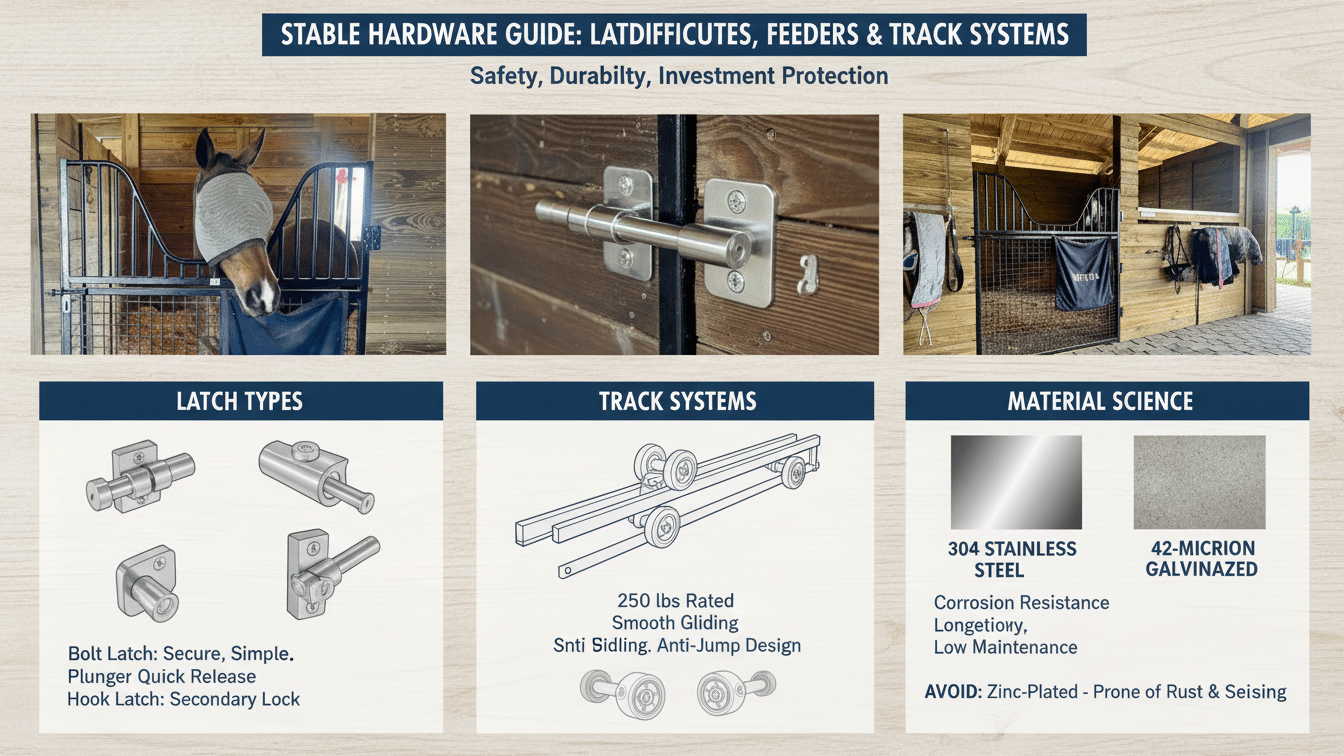
The Rationale for a Two-Tiered Wall System
The logic behind the hybrid wall is based entirely on horse behavior. The lower half of a stall partition endures constant, high-energy impacts from hooves. The upper half does not. A single-thickness wall is either over-engineered at the top or under-engineered at the bottom. This system solves that inefficiency.
- Concentrated Durability: It puts the thickest, most robust material directly in the lower “kick zone,” where over 90% of impacts occur.
- Reduced Weight and Cost: Using lighter 28mm boards for the upper section lowers the overall panel weight, simplifying installation and reducing raw material costs.
- Logistical Efficiency: For large projects, the weight and cost savings scale up, offering a significant budget advantage without compromising the structural integrity of the stall.
Material Selection for the Hybrid Wall
The materials specified for each tier are chosen for their proven performance properties. This isn’t just about thickness; it’s about using the right material for the right job, which is how we can stand behind our Kick-Proof Guarantee.
- Bottom Section (38mm): We use high-density, strand-woven bamboo. With a Janka Hardness rating over 3000 lbf, it is roughly three times harder than oak and designed to absorb and deflect powerful kicks without cracking.
- Top Section (28mm): This section can be specified with matching bamboo for a consistent look or with our impact-absorbing, zero-maintenance HDPE infill. Both are more than adequate for the low-impact upper zone.
This engineered combination is designed to prevent plank breakage, even with high-energy horses or those prone to stall kicking.
Häufig gestellte Fragen
Can a horse actually kick through strand-woven bamboo boards?
No, a horse cannot kick through properly engineered bamboo stable boards. This material has an exceptional density and a hardness rating more than 2.5 times that of oak. Its dense fiber structure is designed to absorb and resist high impact, preventing the cracking and splintering common with softer woods.
Is there a standard thickness for horse stall walls?
There isn’t a single industry-wide standard for thickness, as it often depends on the material used. Traditional wood stalls typically use 2×6 or 2×8 inch tongue-and-groove lumber. The most critical safety standard is actually the wall height, which should be at least 7.5 to 8 feet tall.
What is considered the strongest traditional wood for draft horse stalls?
For conventional wood construction, dense Brazilian hardwood is regarded as one of the strongest and most kick-proof options available. If sourcing a softwood, Southern Yellow Pine is the only one typically recommended due to its superior strength and durability compared to other pines.
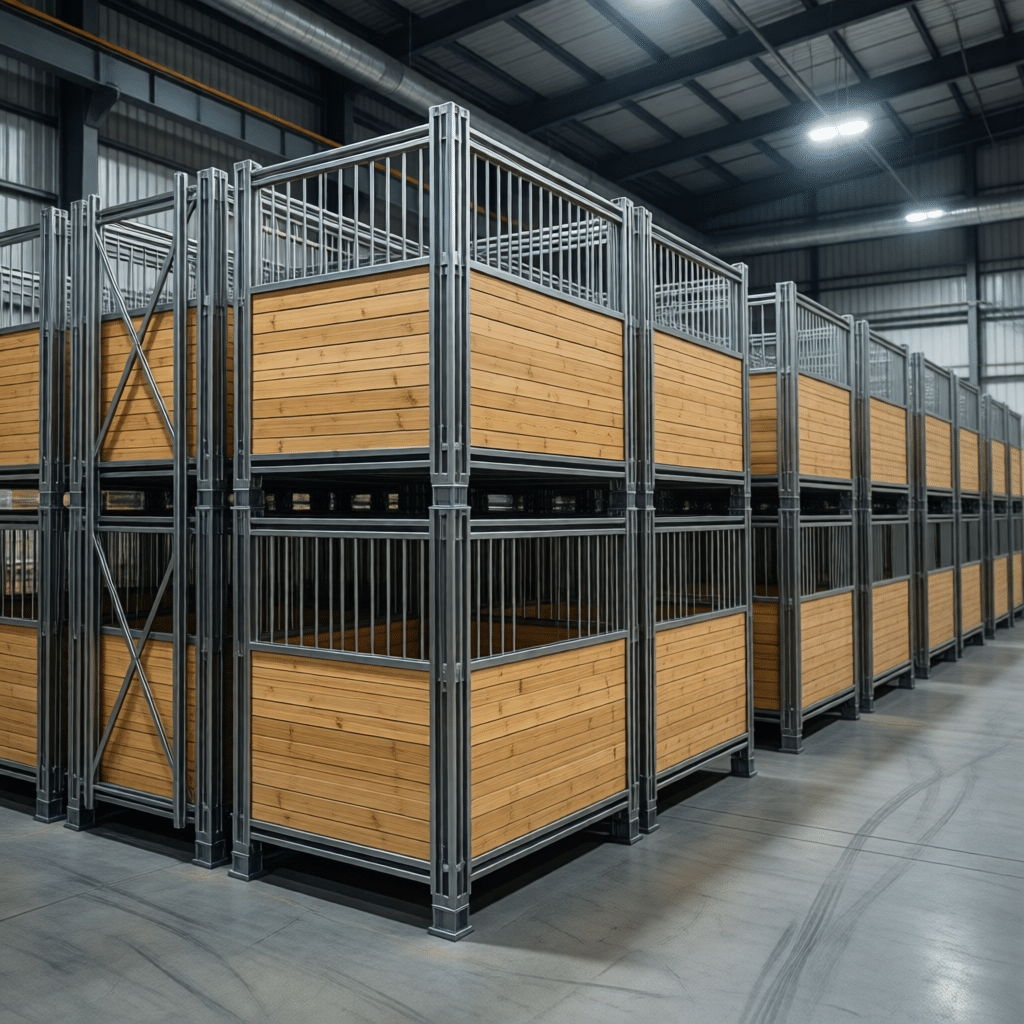
Abschließende Überlegungen
Choosing the right board thickness isn’t about cost—it’s about managing risk. Specifying an under-engineered board for a large horse creates a serious liability that can damage your reputation. Our job is to deliver a kick-proof system that protects your client’s investment and your brand’s credibility.
The next step is to match the correct engineering to your market. Contact our team to configure a quote based on your project needs, from standard distributor orders to full OEM solutions. We recommend starting with a small trial order to validate our quality firsthand.

 German
  English
  Spanish
  French
  Arabic
0 Kommentare