


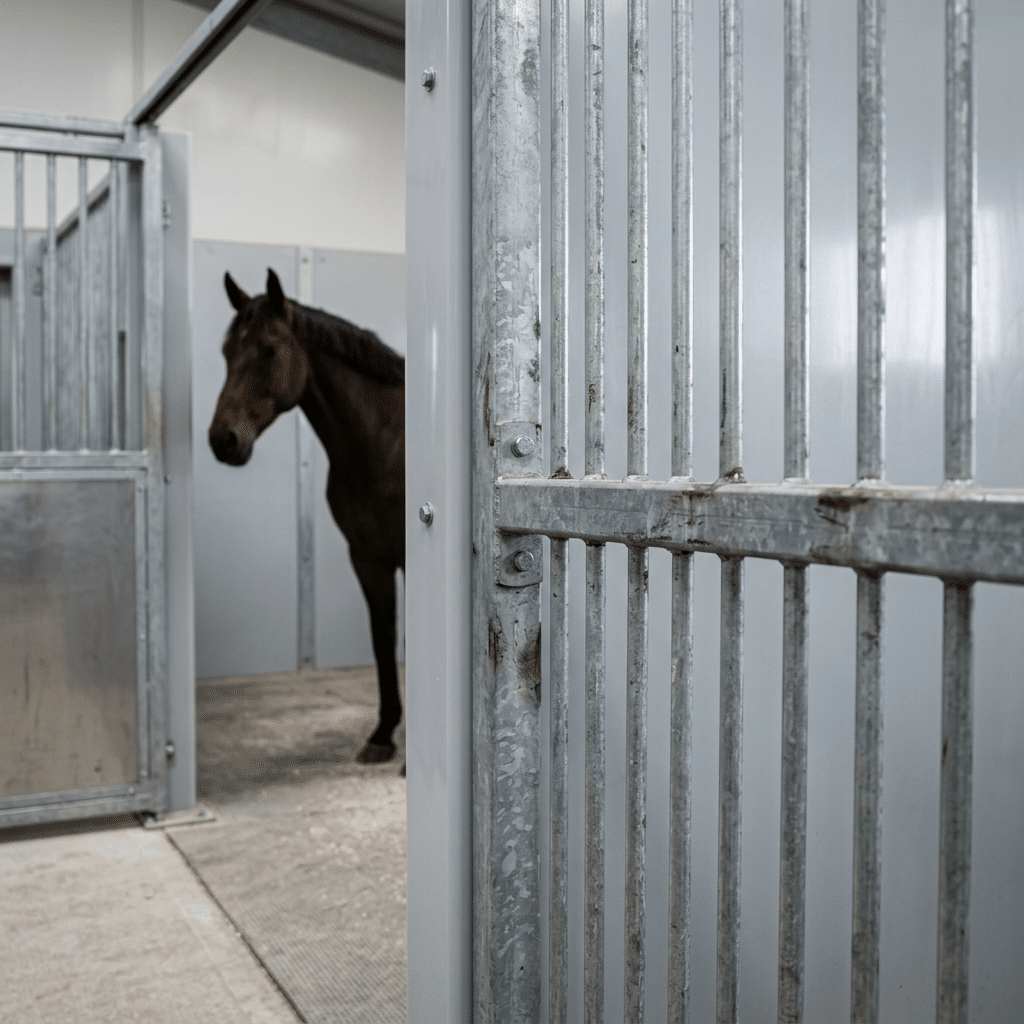
Maximizing a farm’s resale asset value hinges on distinguishing permanent improvements from future liabilities. A traditional wood stable often becomes a financial drain, subject to appraisal penalties from rot and deferred maintenance costs that erode a property’s net worth at the point of sale.
This analysis shows how specific material choices directly protect your investment. We examine how systems built with Hot-Dip Galvanization after fabrication (BS EN ISO 1461) and rot-proof infills like HDPE or high-density bamboo eliminate these risks, securing a premium, turnkey valuation.
The Farm Appraisal: Liabilities vs. Assets
In a farm appraisal, durable buildings are assets. Structures needing constant repair become liabilities. Low-maintenance, galvanized steel stables hold their value and boost a farm’s net worth.
Categorizing Buildings as Long-Term Farm Assets
During a farm appraisal, permanent buildings and improvements are classified as long-term assets. These are structures expected to have a useful life of more than 10 years. Their value contributes directly to the farm’s net worth, which is calculated simply as Total Assets minus Total Liabilities. All traditional structures are subject to depreciation, a process that systematically reduces their value on the balance sheet over time.
Hot-Dip Galvanization: Protecting Your Asset Value
Stables built using a Hot-Dip Galvanization After Fabrication process actively resist rust and structural decay. This significantly slows the rate of depreciation. The process, which conforms to the BS EN ISO 1461 standard, applies a protective zinc coating of over 70 microns. By minimizing future maintenance and avoiding the constant repair costs associated with rust or rot, a properly protected stable remains a valuable asset. It avoids becoming the financial liability that a deteriorating structure represents.
The “Rotted Wood” Penalty on Property Valuations
Rotted wood creates structural liabilities and signals neglect, penalizing a property’s value far beyond repair costs. Rot-proof materials like HDPE or bamboo eliminate this financial risk.
How Rot Devalues Property Beyond Simple Repair Costs
When appraisers or potential buyers find wood rot, they don’t just subtract the cost of a new plank. They see a compounding liability. The penalty hits the valuation from multiple angles.
First, it compromises structural integrity. Rot in load-bearing beams, joists, or support posts isn’t a cosmetic issue; it’s a safety hazard that requires expensive, invasive repairs. This immediately lowers what a buyer is willing to offer.
Second, rot signals a history of deferred maintenance. A buyer or inspector will assume that if visible wood is rotting, other hidden problems likely exist. This perception of systematic neglect undermines confidence and justifies a lower valuation, as they mentally budget for unknown future repairs.
Finally, repair costs escalate. A small patch of rot that could have been fixed early spirals into a major replacement project. Buyers price in this worst-case scenario, often demanding a credit far exceeding the actual repair cost just to close the deal.
The Advantage of Rot-Proof Infill Materials
Using modern infill materials from the start prevents wood rot from ever becoming a liability. It’s a direct investment in preserving the asset value of an equestrian facility. The two primary engineered solutions are HDPE and high-density bamboo.
- HDPE Infill: This is the zero-maintenance solution. High-Density Polyethylene boards are UV-stabilized to prevent sun degradation and engineered to absorb impacts from kicks. They will not rot, warp, crack, or ever require painting.
- High-Density Strand Woven Bamboo: With a Janka Hardness rating over 3000 lbf, this material is three times harder than oak. Its dense, resin-infused structure is naturally resistant to mold, moisture, and rot, providing the classic look of wood without the inherent weakness.
Engineered Horse Stables Built for Any Climate

Why Buyers Pay More for “Turnkey” Biosecure Facilities
Buyers pay a premium for turnkey facilities to eliminate construction risk and project overhead. A complete, factory-engineered system provides immediate operational readiness and a predictable, secure asset.
The decision to invest in a biosecure facility isn’t just about the structure itself; it’s about acquiring a predictable operational asset. Buyers willing to pay a premium for a turnkey solution are buying certainty. They are sidestepping the financial and timeline risks that plague custom construction projects and securing a facility that is operational and compliant from day one.
| Faktor | Turnkey Engineered System | Custom On-Site Build |
|---|---|---|
| Timeline | Predictable & Factory-Controlled | Variable; Subject to Delays |
| Budget | Fixed, Upfront Cost | Prone to Budget Overruns |
| Biosecurity Integrity | Guaranteed (Non-Porous Materials) | Depends on Contractor Expertise |
| Management Load | Minimal Oversight Needed | Requires Constant Management |
The Hidden Costs of Building from Scratch
Building a biosecure facility from scratch introduces variables that a turnkey system eliminates. Custom projects are notorious for timeline creep due to permit approvals, weather, or supply chain issues. Each delay translates to lost operational time and deferred revenue.
Budget overruns are another significant risk. A general contractor might not have experience with the specific demands of biosecurity, leading to errors in material selection or installation. Using porous materials instead of non-porous HDPE, for example, can create a cleaning and sanitation liability that undermines the facility’s purpose. A factory-engineered system guarantees that every component meets a specified biosecurity standard without relying on third-party interpretation.
The All-Inclusive Flat-Pack Installation System
A true turnkey solution arrives ready for assembly, with every component engineered to work together. This removes the guesswork and sourcing headaches that bog down custom builds. The entire system is designed for rapid, correct installation.
- Complete Kit Delivery: Each system ships on a steel pallet, containing all panels, pre-cut infill like UV-stabilized HDPE, and a full hardware kit with 304 Stainless Steel components. Nothing is left to source separately.
- Day-One Durability: The combination of “Zero Maintenance” HDPE infill and steel frames that are “Hot-Dip Galvanized After Fabrication” creates a durable, easy-to-clean environment from the moment assembly is complete. This process ensures total rust protection, unlike cheaper pre-galvanized materials.
- Guaranteed Compatibility: By providing an integrated system, you eliminate the risk of incompatible parts from different suppliers. This accelerates the assembly process and ensures the structural and biosecure integrity of the final build.
The “Move It With You” Backup Plan
Our stables are movable assets, not fixed property liabilities. The flat-pack design lets you disassemble and relocate them, protecting your initial investment if you ever move.
Treating Stables as a Movable Asset, Not a Property Fixture
A traditional barn is built into the ground. It becomes a permanent part of the real estate, a long-term asset that you can’t separate from the land. Our stable systems are different. They are designed from the ground up for disassembly and relocation, functioning more like high-value equipment than a fixed building.
This approach protects your capital. When you sell the property, the stables can be sold separately or simply move with you to the new location. For equestrians who lease land or know a future move is possible, this flexibility is a critical backup plan for their investment.

How the Flat-Pack System Enables Practical Relocation
The logistics are what make relocation realistic and cost-effective. Every stable system ships via our Steel Pallet Flat-Pack method. All components are nested and secured on a steel pallet, preventing loss or damage and making them simple to transport again later.
This packing efficiency is a major advantage for our B2B clients. A standard 40HQ container can hold 30-45 of our flat-pack stable sets. Fully welded structures would only fit 12-15 sets, making the shipping cost per unit unworkable. Our system protects your margins.
The design includes a complete hardware kit with 304 stainless steel connectors and anchor bolts. These components are engineered for a secure, rigid assembly but are just as easily uninstalled when it’s time to move, ensuring the panels are not damaged during the process.
The Aesthetics Premium (Royal Series ROI)
The Royal Series’ premium finishes create a ‘turnkey’ appeal that directly increases property value. It’s an investment in brand perception that attracts and retains high-value clients.
How Visual Appeal Influences Property and Brand Value
High-end facilities are not an expense; they are a balance sheet asset. During a property appraisal, a well-built, visually appealing stable complex is valued as a permanent improvement. It creates a ‘turnkey’ operation that commands a higher sale or lease price because the next owner acquires a ready, professional-grade facility without needing immediate capital investment.
A premium appearance also acts as a powerful marketing tool. Discerning clients associate visual quality with superior anima
l care and professionalism. An immaculate, well-designed stable signals a commitment to excellence, which helps attract and retain the high-value clientele necessary for premier equestrian businesses to thrive.
Royal Series Finishes: Powder Coat Over Galvanization
The return on investment from the Royal Series is built directly into its finish. We use a dual-protection system: every steel component is first Hot-Dip Galvanized after fabrication to the BS EN ISO 1461 standard for baseline corrosion control. Then, we apply a durable powder coat finish. This combination delivers lasting color and far superior rust prevention compared to paint alone.
This series also includes signature design elements that create a distinct, luxury appearance. Features like classic European arches and optional brass or gold finials elevate the stables from functional equipment to architectural features. This level of detail is what appraisers and high-net-worth buyers notice, directly contributing to a higher property valuation.
Häufig gestellte Fragen
Do high-quality horse stables increase my property’s value?
Yes, a well-built and maintained stable is a significant asset that can increase property value. Buyers often pay a premium for turnkey equestrian facilities with safe, durable infrastructure. A dilapidated or unsafe structure, on the other hand, can become a liability that detracts from the property’s worth.
How do appraisers determine the value of a horse property?
Appraisers primarily use a sales comparison approach, analyzing recent sales of similar equine properties. They conduct a detailed physical inspection of the land, residence, and all horse-related structures like barns, arenas, and fencing. It’s important to remember that the construction cost of a new stable doesn’t always translate dollar-for-dollar into appraised market value.
Do property buyers prefer steel or traditional wood stables?
Modern buyers increasingly prefer steel stables for their durability, low maintenance, and long-term value retention. While traditional wood barns offer a classic look, they require significant upkeep. Steel systems, especially those with Hot-Dip Galvanization, provide a longer lifespan and better protection against rot, pests, and weather.
What are the most effective ways to increase a horse property’s value?
Focus on three key areas: quality infrastructure, land management, and presentation. Invest in durable, safe fencing and stables. Implement rotational grazing and keep pastures healthy. Finally, ensure the property has strong curb appeal with regular maintenance, clean facilities, and organized storage.
Can I take my stable with me if I move?
This depends entirely on the stable’s design. A traditional barn built on a permanent concrete foundation is part of the real estate and cannot be moved. However, modular systems like DB Stables are engineered for portability. Their flat-pack, bolt-together construction allows them to be disassembled and relocated, which protects your investment.
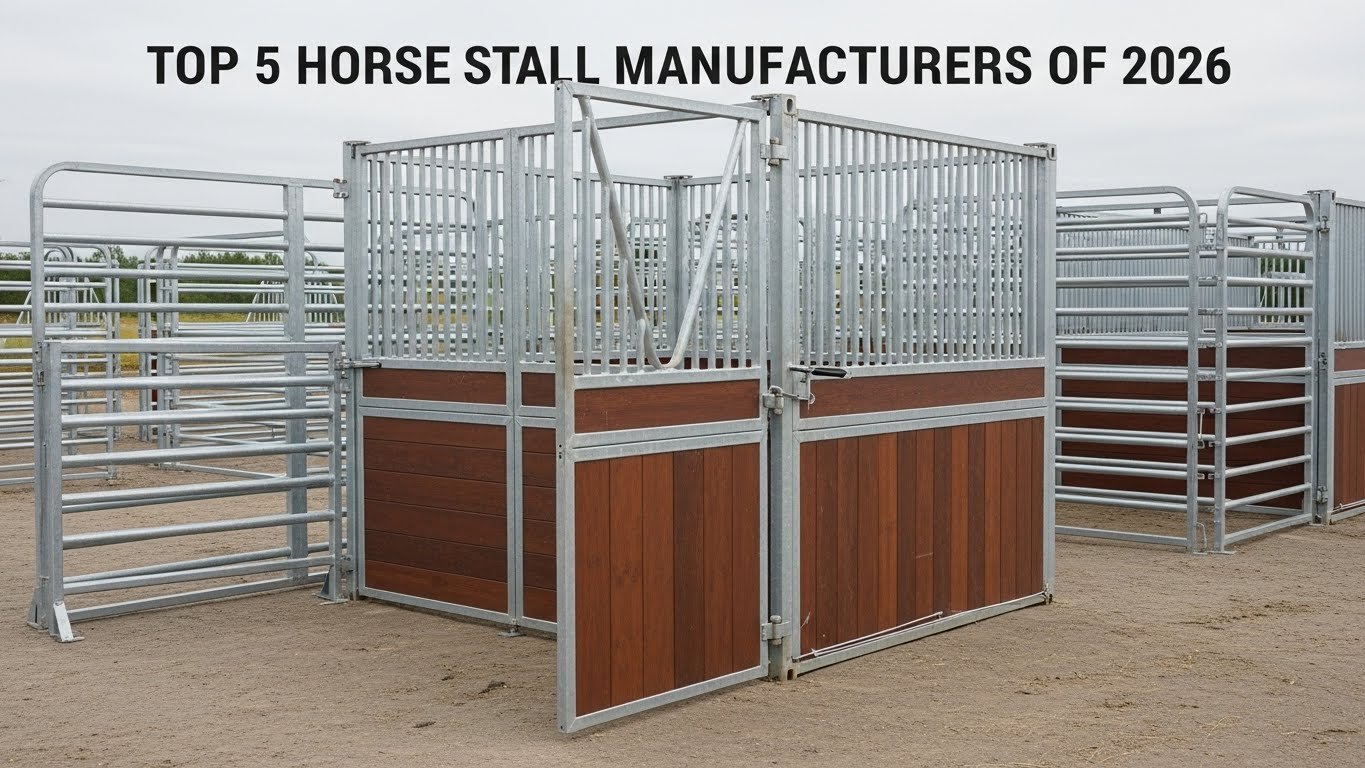
Abschließende Überlegungen
Choosing stables isn’t just a construction decision; it’s a balance sheet calculation. While cheaper options cut initial costs, they create a maintenance liability that actively penalizes a farm’s valuation. Investing in a system built to ISO 1461 standards with rot-proof infill is the only way to guarantee the structure remains a tangible asset.
Verify the engineering before you commit to a project. We recommend starting with our technical catalog to review the material specifications and rust-protection data. For dealers and developers, a small trial order is the most effective way to test the fit, finish, and logistical advantages of our flat-pack system firsthand.

 German
  English
  Spanish
  French
  Arabic
0 Kommentare