
The AU ChAFTA Agreement is designed to eliminate the 5% tariff on horse stables, but a single documentation error can erase this financial advantage. An oversight on the correct HS code or Certificate of Origin directly inflates your landed cost, reducing profit margins on every shipment from China.
This guide details the specific actions required to secure the tariff exemption. We analyze the correct use of HS Code 7308.90 and explain how specifying HDPE infill helps bypass costly biosecurity fumigation, ensuring a predictable and profitable import process.
The ChAFTA Advantage for Australian Importers
The China-Australia Free Trade Agreement removes the 5% tariff on manufactured goods from China. This makes sourcing steel horse stables more affordable, directly improving your landed cost and margins.
Eliminating the 5% Tariff on Manufactured Goods
The China-Australia Free Trade Agreement (ChAFTA) is a straightforward financial benefit for your business. It allows for the duty-free import of most goods manufactured in China, which includes fabricated steel structures like horse stables. This agreement gets rid of the standard 5% tariff that would normally apply to these products. The result is a direct cost saving that lets you source high-quality stable systems more competitively and protect your profit margins back in Australia.
How HS Code 7308.90 Secures Your Tariff Exemption
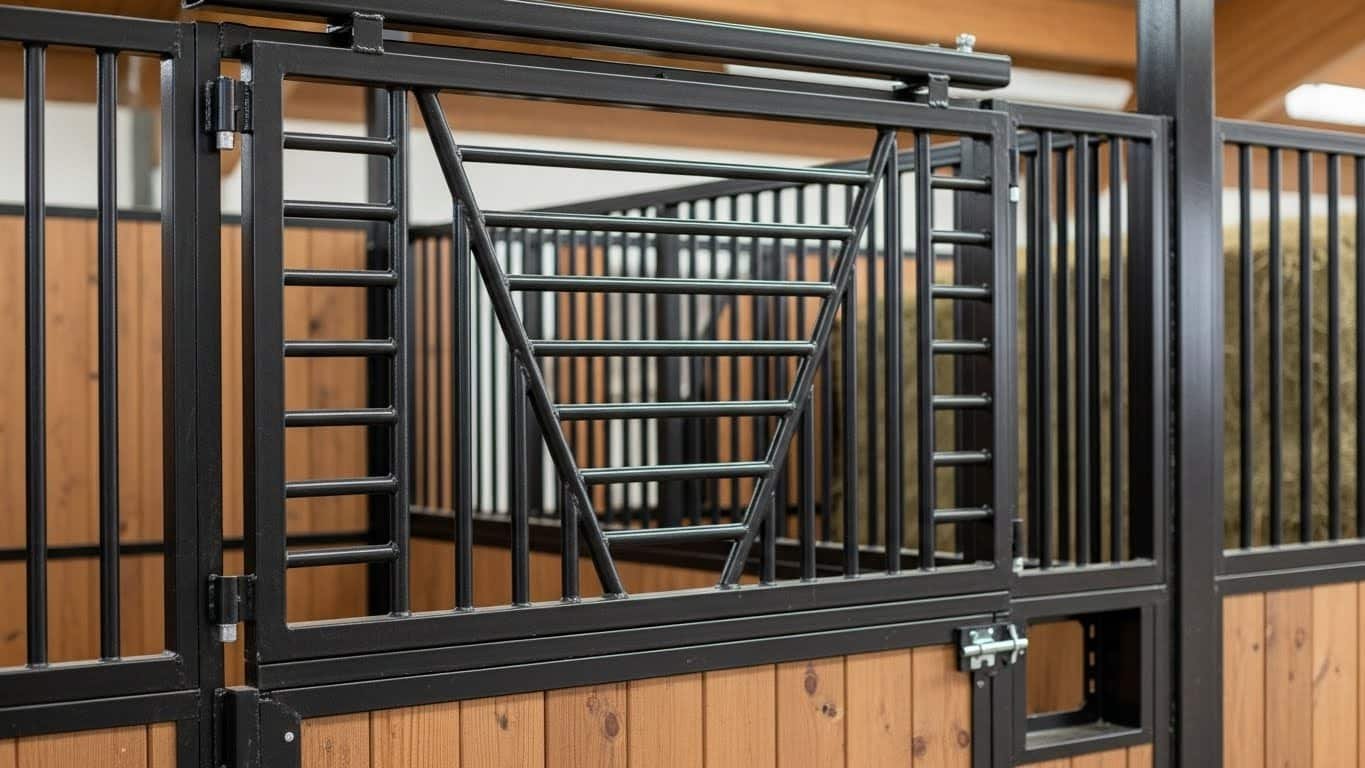
Getting the customs classification right is critical to actually receive these benefits. We classify our horse stable systems under Harmonized System (HS) Code 7308.90, which covers structures of iron or steel. Using this specific code is non-negotiable for customs to apply the ChAFTA tariff exemption correctly. It ensures your shipment avoids being mislabeled as “prefabricated buildings,” a classification that can trigger higher duties and unnecessary regulatory problems. Correct coding means a smooth, predictable, and tariff-free import process.
The Certificate of Origin (COO): Your Golden Ticket
A ChAFTA Certificate of Origin is the document proving your stables are made in China, which you need to get reduced or zero import tariffs. Pairing it with the correct HS Code, 7308.90, protects you from paying higher duties.
| Key Document / Code | Primary Function |
|---|---|
| ChAFTA Certificate of Origin | Provides official proof of origin to qualify for preferential tariff rates. |
| HS Code 7308.90 | Correctly classifies stables as steel structures, avoiding higher tariffs. |
How the COO Unlocks Preferential Tariffs
The Certificate of Origin is the official paperwork that proves your horse stables originate in China. This document is required to qualify for the reduced or eliminated tariffs available under the China-Australia Free Trade Agreement (ChAFTA). Without a valid COO, Australian customs will charge you the standard general duty rates, wiping out your cost advantage.
Each certificate applies to a single shipment and is valid for one year. This system prevents goods from other countries from being illegally routed through China just to exploit the trade agreement’s benefits.
The Importance of HS Code 7308.90
We classify all our horse stable systems under HS Code 7308.90 on every customs document. This code designates them as “Structures of Iron/Steel.” Getting this right is critical. It ensures your shipment avoids being misclassified as a “Prefabricated Building,” a category that frequently gets hit with higher tariffs and much more complex regulatory hurdles at the border. The correct code protects your bottom line.
Globally-Compliant Stables Engineered for Any Climate
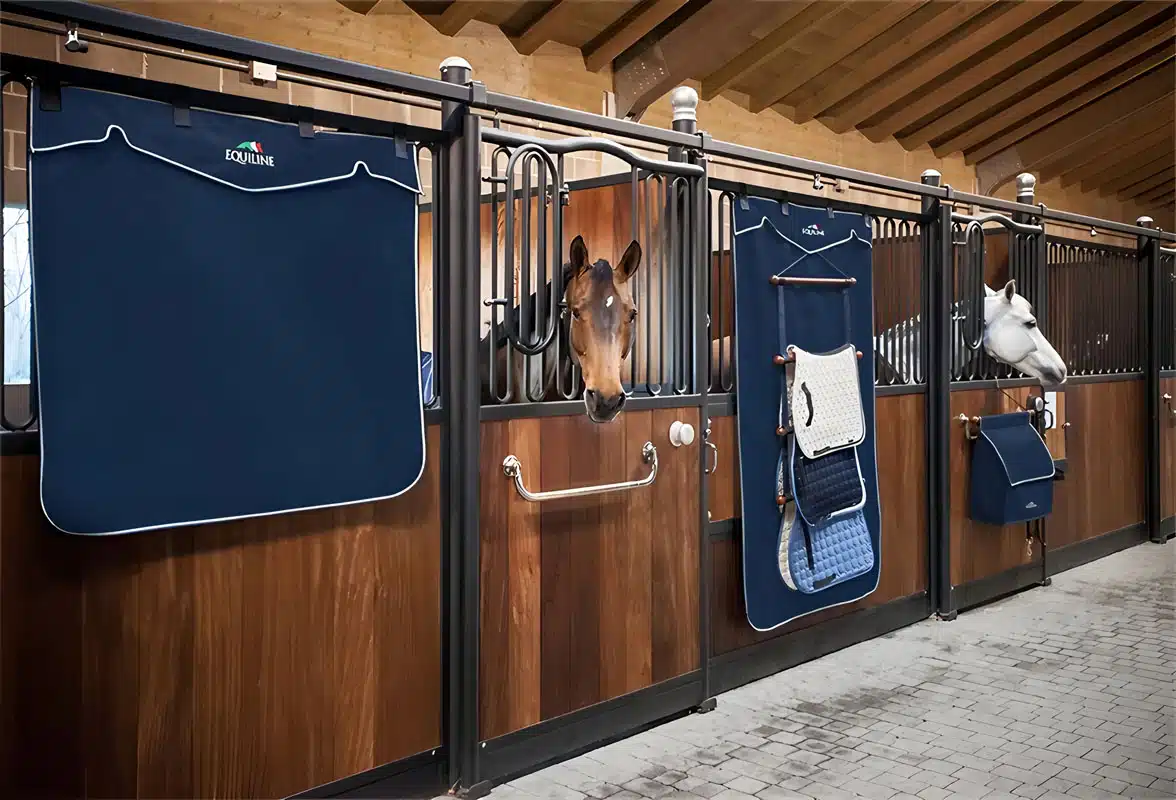
Bypassing Biosecurity (AQIS): The HDPE Advantage
HDPE infill smooths Australian quarantine. Unlike timber needing costly pest treatments, HDPE is a non-organic material that is inherently rot-proof, removing the primary biosecurity risk.
Why Timber Imports Face Strict Quarantine Scrutiny
Importing horse stables with timber infill into Australia introduces significant biosecurity hurdles. Quarantine authorities are strict about organic materials because they pose a direct threat to the country’s ecosystem and agricultural industries.
The core problems with wood are:
- Organic materials like timber can harbor exotic pests, insects, and plant diseases.
- Imports of untreated wood often require mandatory fumigation or heat treatment, adding significant costs and delays.
- Goods that fail inspection can be re-treated, exported, or destroyed at the importer’s expense.
HDPE: The Quarantine-Friendly Infill Material
Selecting HDPE (High-Density Polyethylene) infill is the most direct way to eliminate these biosecurity risks from the start. As a synthetic polymer, it simply doesn’t have the properties that make organic materials a liability at the border.
- Inherently Pest-Proof: HDPE is a non-porous, synthetic polymer. It cannot rot, grow mold, or serve as a host for insect pests.
- No Fumigation Required: As a non-organic material, HDPE requires no fumigation, which simplifies customs clearance and avoids surprise costs.
- Built for Australian Conditions: Our HDPE is UV stabilized to handle harsh sun, offers zero maintenance, and provides a durable, kick-proof surface for stables.
AS/NZS 4680 Compliance for Coastal Australia
AS/NZS 4680 dictates zinc coating thickness to protect steel from rust in coastal salt-air. Our hot-dip process achieves coatings over 70-85 microns, meeting the standard.
Corrosivity Zones and Coating Thickness Requirements
Australia’s coastline is divided into corrosivity categories from C3 (coastal) to C5 (surf seashore) based on how far inland a structure is. This classification determines the level of rust protection needed for long-term survival.
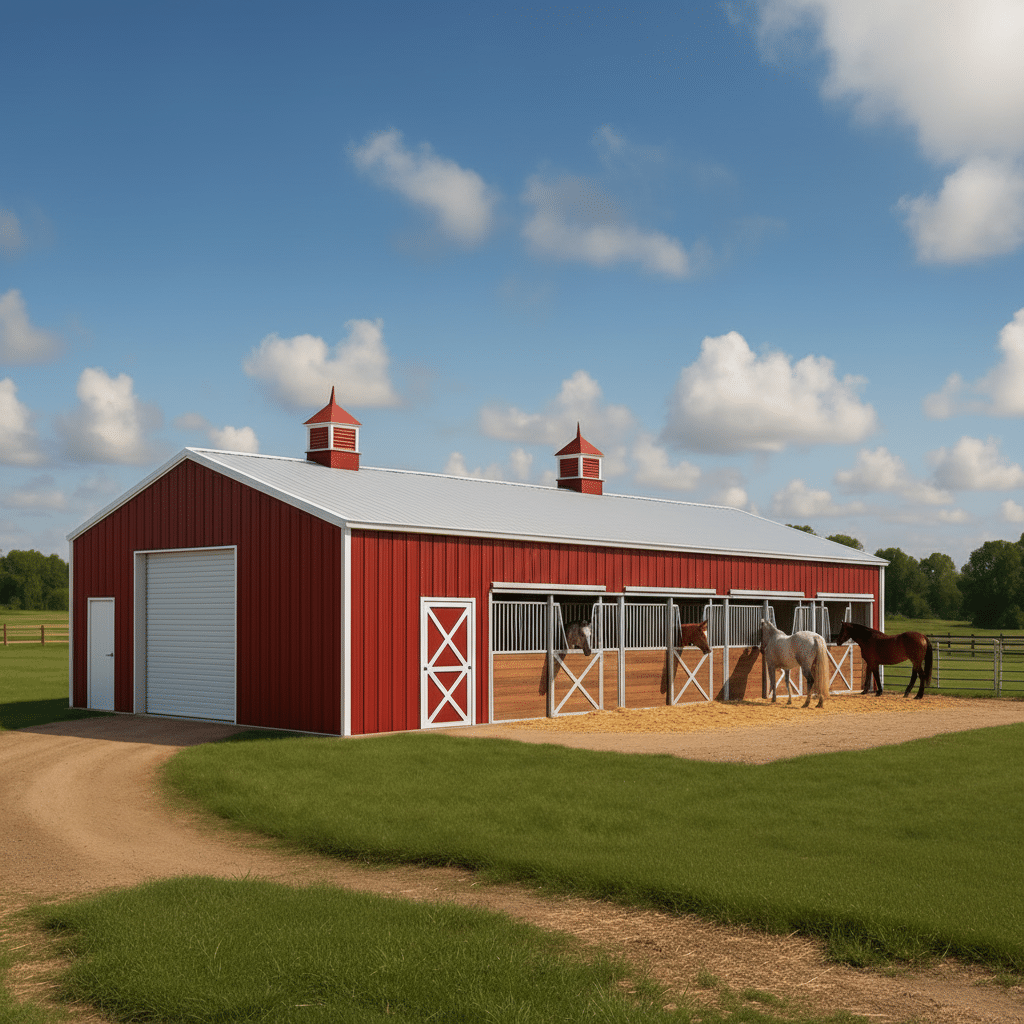
Exceeding the Standard with >70 Micron Hot-Dip Galvanization
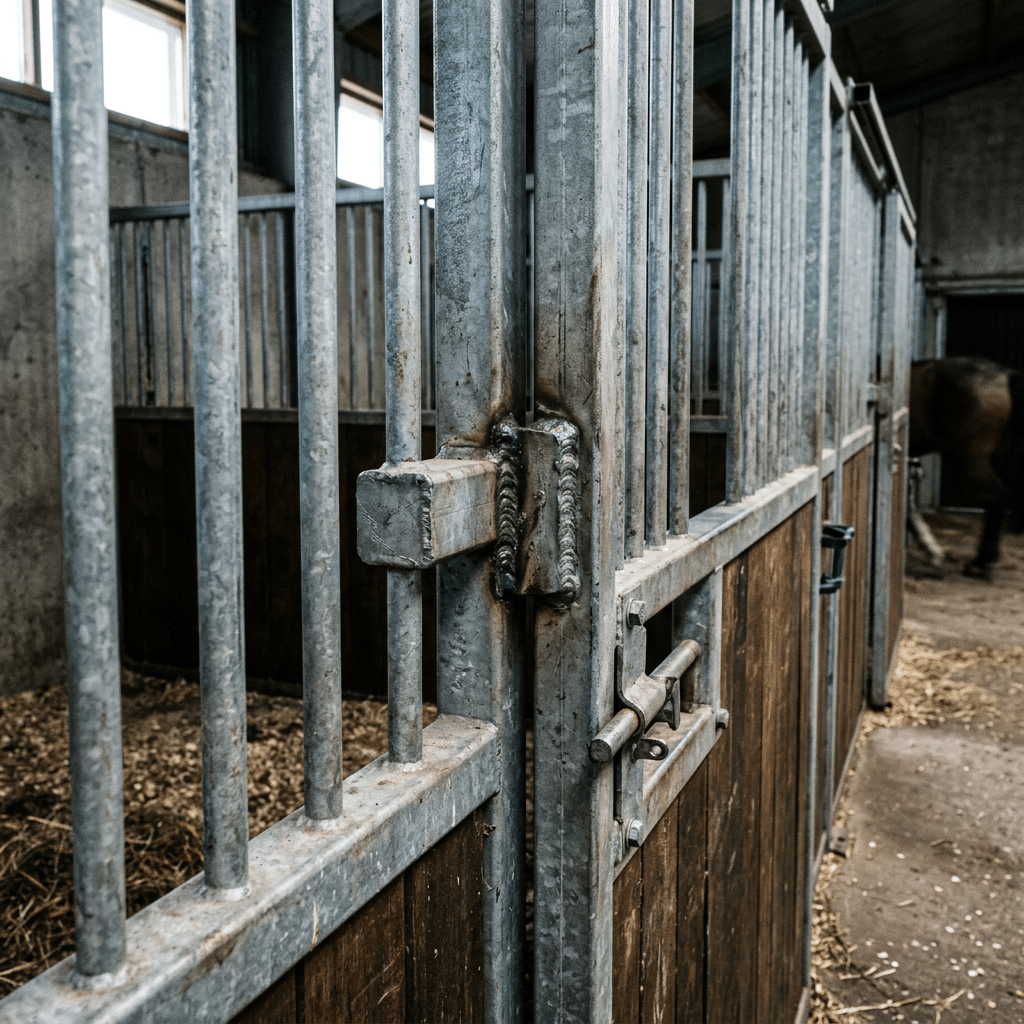
We use a ‘Hot-Dip Galvanization After Fabrication’ process. This means we weld all the components first, then dip the entire finished frame into molten zinc. This method ensures every cut, corner, and weld is completely sealed against corrosion, leaving no weak points.
Our process consistently achieves coating thicknesses that meet the Australian standard. Our tubing has an average coating of over 70 microns, and thicker structural parts measure over 85 microns. This level of protection ensures our stable systems perform reliably against corrosion, even in the high-salinity coastal zones across Australia.
Calculating Your Total Landed Cost to Sydney/Melbourne
Your final price per stable isn’t the factory cost. It’s the total landed cost to your warehouse, including freight, duties, and 10% GST. Nailing this number protects your margins.
Key Components in Your Landed Cost Formula
The factory price is just the starting point. To get a real picture of your expenses and set profitable retail prices, you need to account for every cost required to get the stables from our floor to yours. There are no surprises if you budget for these four mai
n components.
- Produktpreis: This is the straightforward ex-factory price for the stable systems you order.
- International Freight: The cost to ship a 20GP or 40HQ container from our port to Sydney or Melbourne. This is one of your largest variable costs.
- Australian Duties & GST: Our stables are classified under HS Code 7308.90. You need to account for any applicable import duty and the standard 10% GST, which is calculated on the total value of the goods plus freight and insurance.
- Local Charges: Once the container lands, you’ll have costs for customs clearance, port and terminal handling fees, and the final truck delivery to your business site.
How Flat-Pack Design Reduces Your Freight Costs
Freight is often the single biggest variable that can erode a distributor’s profit. We specifically engineered our stables to address this. Instead of shipping bulky, fully-welded panels that waste container space, we use a steel pallet flat-pack system. This approach makes a massive difference to your bottom line.
A standard 40HQ container can only fit about 12-15 fully-welded stables. With our flat-pack design, that same 40HQ container holds 30 to 45 stable sets. This immediately cuts your per-unit shipping cost by over 60%. This logistics efficiency isn’t just a feature; it’s a core part of our strategy to ensure our distributors can maintain healthy profit margins.
Häufig gestellte Fragen
What is the China-Australia Free Trade Agreement (ChAFTA)?
ChAFTA is a trade deal that reduces or eliminates tariffs on goods traded between China and Australia. For importers, this means products like our steel stables (under HS Code 7308.90) can be imported at a lower cost. A Certificate of Origin, which we provide, is necessary to claim these benefits.
Do your horse stables have a 0% import tariff into Australia?
The specific tariff rate for any given year depends on the official ChAFTA phase-out schedule. To secure the lowest possible rate, a valid Certificate of Origin is required. All imports into Australia are also subject to the standard 10% Goods and Services Tax (GST).
Do stables with HDPE infill require costly fumigation for Australian customs?
No. A key advantage of our HDPE infill is that it helps bypass biosecurity hurdles. Australian regulations target organic materials that can carry pests or soil. Since HDPE is an inert, non-organic plastic, it does not require fumigation, saving you both time and money.
How do we get the Certificate of Origin (COO) needed for ChAFTA?
We manage the entire process. As the manufacturer, we apply for and secure the official ChAFTA Certificate of Origin for your shipment from the authorized issuing bodies. This document ensures you can claim the preferential tariff rates when your goods arrive in Australia.
Are your new stables subject to the same strict biosecurity rules as used equipment?
No. Our stables are shipped new from the factory and are not classified as used equipment. This exempts them from the intensive cleaning and disinfection protocols required for used gear, which simplifies the customs and quarantine process significantly.
Abschließende Überlegungen
Importing cheaper stables exposes your business to risks from rust, quarantine fees, and high freight costs that kill margins. Our system is engineered for Australia: AS/NZS 4680 compliant galvanizing, quarantine-safe HDPE, and a flat-pack design that protects your landed cost. This is about delivering a predictable, profitable product.
The next step is to prove the quality for yourself. We recommend a trial order to test our engineering and finish firsthand. Contact our team for a formal landed cost calculation to your specific port.

 German
  English
  Spanish
  French
  Arabic
0 Kommentare