


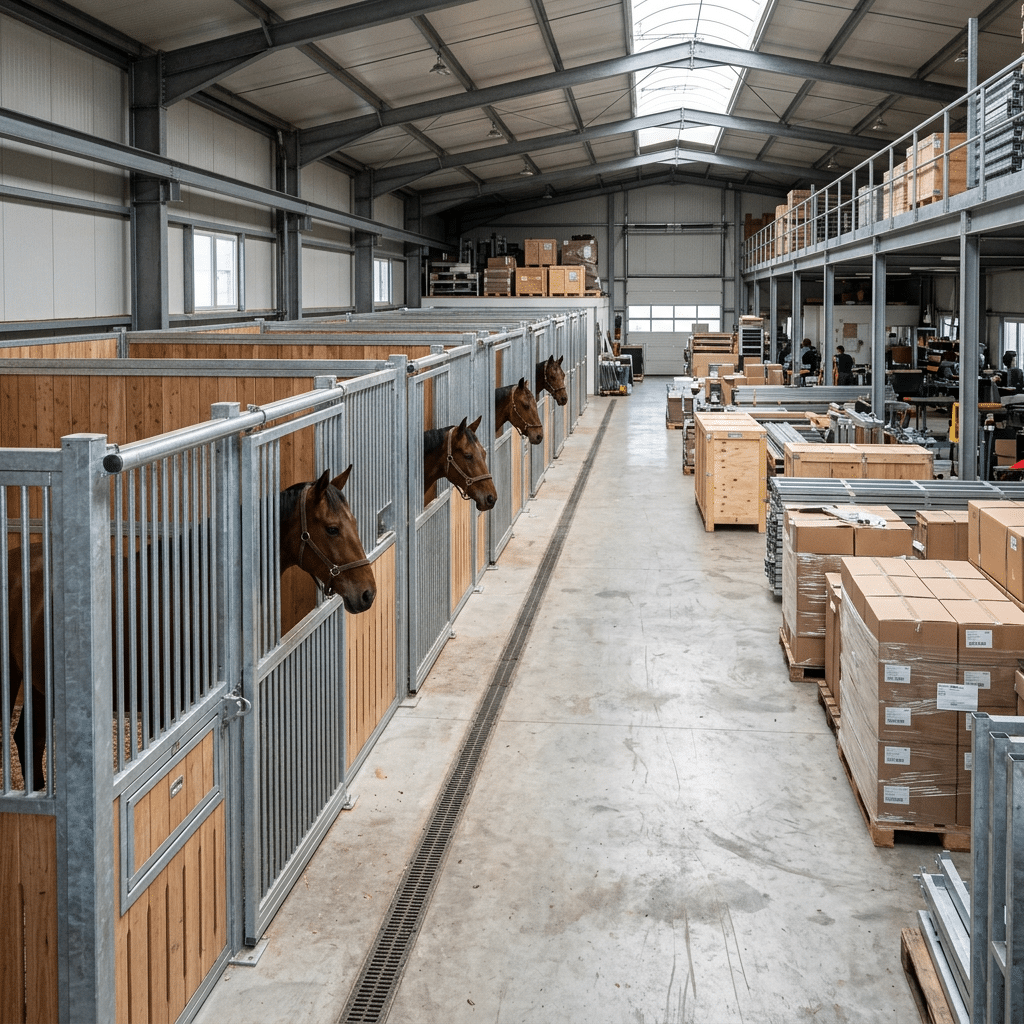
Payment & QC safety is the primary defense against losing your deposit to supplier fraud or receiving non-compliant goods. The financial risk is twofold: a lost wire transfer is an immediate write-off, while a container of defective product quietly destroys your margins through warranty claims and reputational damage.
This guide provides a framework for secure sourcing. We use ISO 9001 certification as a supplier filter and detail how to enforce non-negotiable specs like ISO 1461 galvanizing through third-party inspections and a structured 30/70 T/T payment term.
The Fear of Sourcing Abroad: Losing Your Deposit
Losing a deposit to supplier fraud or bankruptcy is a major risk in global sourcing. The best protection is partnering with a manufacturer with verified, third-party certifications.
Why Deposits Are Vulnerable in Global Trade
Sending money to an overseas supplier always involves a level of risk. From thousands of miles away, it’s difficult to verify a company’s true operational history or financial stability before you transfer funds. This information gap exposes your advance payment to some common, and costly, problems.
- Verification Difficulty: It’s hard to vet an overseas partner’s track record and financial health before committing funds. What you see online isn’t always the full picture.
- Outright Fraud: Some entities pose as legitimate factories, collect deposits from unsuspecting importers, and then disappear without a trace.
- Supplier Bankruptcy: A legitimate but financially unstable supplier can go bankrupt mid-production, leaving your order unfulfilled and your deposit unrecoverable.
The Security of an ISO 9001 Certified System
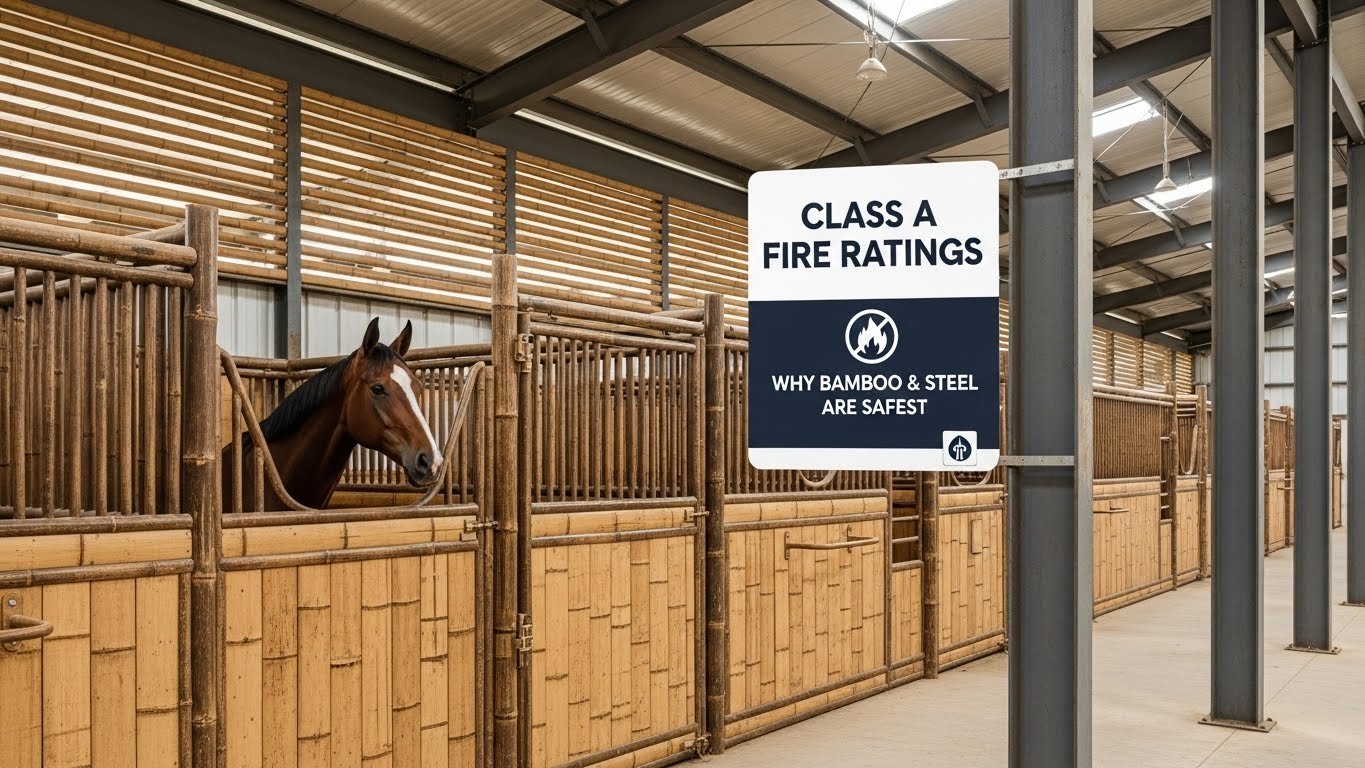
This is where you separate professional operators from the risky ones. A certification isn’t just a piece of paper; it’s proof of a reliable system. As an ISO 9001 certified manufacturer, our quality management system is validated by a third party. This audit confirms we have accountable, standardized procedures in place.
Working with an ISO 9001 certified factory directly addresses the fear of losing your deposit. It confirms legitimacy and operational discipline, filtering out the fly-by-night outfits and dramatically reducing your financial risk.
Writing the Spec Sheet (Define 14-Gauge and ISO 1461)
Your spec sheet must demand 14-gauge (2.0-2.5mm) steel and ISO 1461 galvanizing. This ensures a thick zinc coating is applied *after* welding for true, long-term rust protection.
When you’re sourcing steel horse stables, the technical specification sheet is your most important tool. Vague terms lead to low-quality products. Two details that are absolutely non-negotiable are the steel wall thickness and the galvanizing standard. Getting these wrong means you’ll be replacing rusted-out stalls in a few years.
Defining 14-Gauge Steel Wall Thickness
“14-gauge” isn’t a marketing term; it’s a precise engineering standard. For stable construction, it specifies a steel wall thickness between 2.0mm and 2.5mm. This is the baseline required for the main frame posts and rails to withstand kicks, impacts, and the general stress of daily use.
Some suppliers will try to sell you on thinner materials to cut costs. But requesting anything with a wall thickness under 2.0mm is a direct compromise on safety and structural integrity. The frame is the backbone of the stall, and this is not the place to save a few dollars.
Specifying ISO 1461 for True Rust Protection
Rust protection is all about the details of the galvanizing process. Simply saying “galvanized” is not enough. The correct standard is ISO 1461, which dictates that the steel components are hot-dipped in molten zinc *after* all cutting and welding are complete. This is the only way to seal everything, especially the vulnerable weld seams.
This method produces a thick, protective zinc coating of over 70 microns on all tubing surfaces. It is completely different from using cheap, pre-galvanized tubes. Pre-galv material is welded together, burning off the zinc at the joints and leaving them exposed. Those unprotected welds are always the first point of failure.
Engineered Horse Stables for Any Climate
Pre-Shipment Inspections: Hiring Third-Party QC
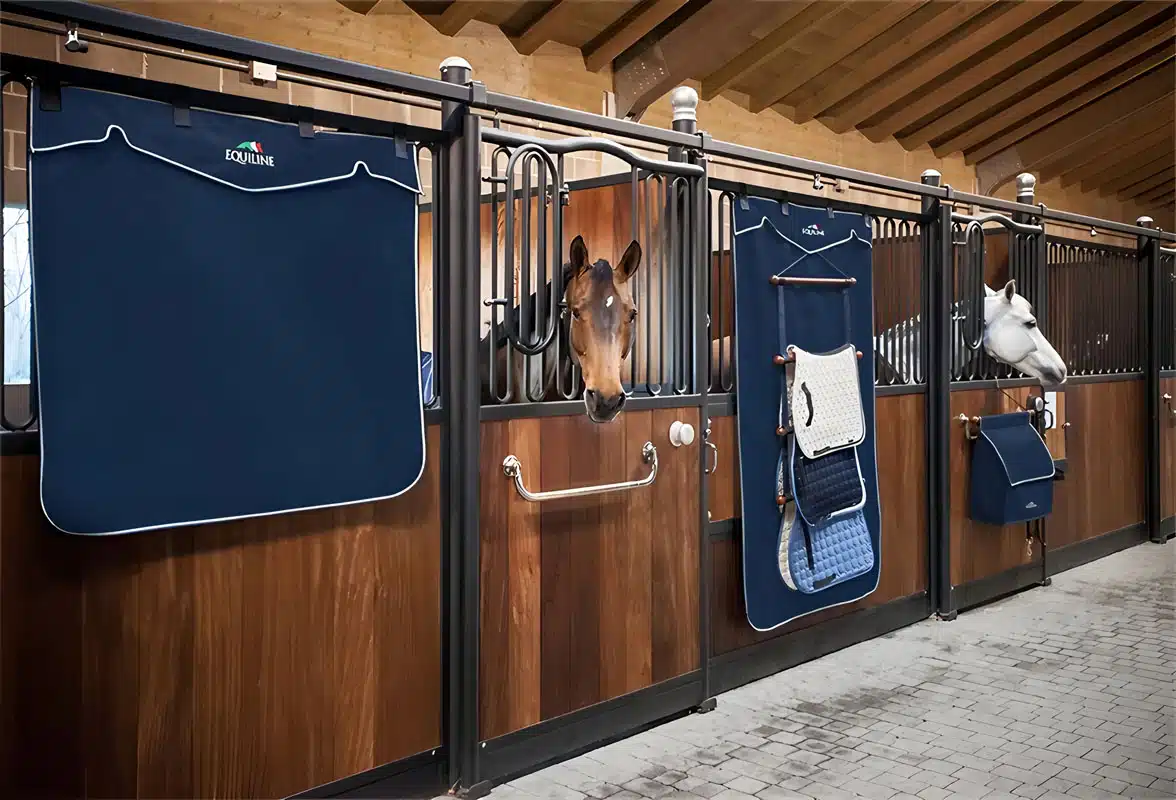
A third-party inspector verifies your horse stable order on-site before shipment. They check quantity, quality, and packaging against your specs, delivering a photo report to prevent import problems.
The Role of an Independent Inspector
Paying for a pre-shipment inspection (PSI) is cheap insurance against receiving a container full of problems. An independent inspector acts as your eyes and ears at the factory, confirming the goods you paid for are the goods being shipped. They follow a standard, systematic process to give you a clear “go” or “no-go” decision.
- Verifies that the final quantity, product quality, and documentation match your purchase order.
- Uses statistical sampling methods (AQL) to evaluate the entire production batch without needing to check every single item.
- Categorizes any identified defects as minor, major, or critical, giving you a clear picture of the shipment’s overall quality.
- Provides a detailed report with photographic evidence, usually within 24 hours, so you can approve or reject the shipment before it leaves.
Your Checklist: Key Specs for a Stable Inspection
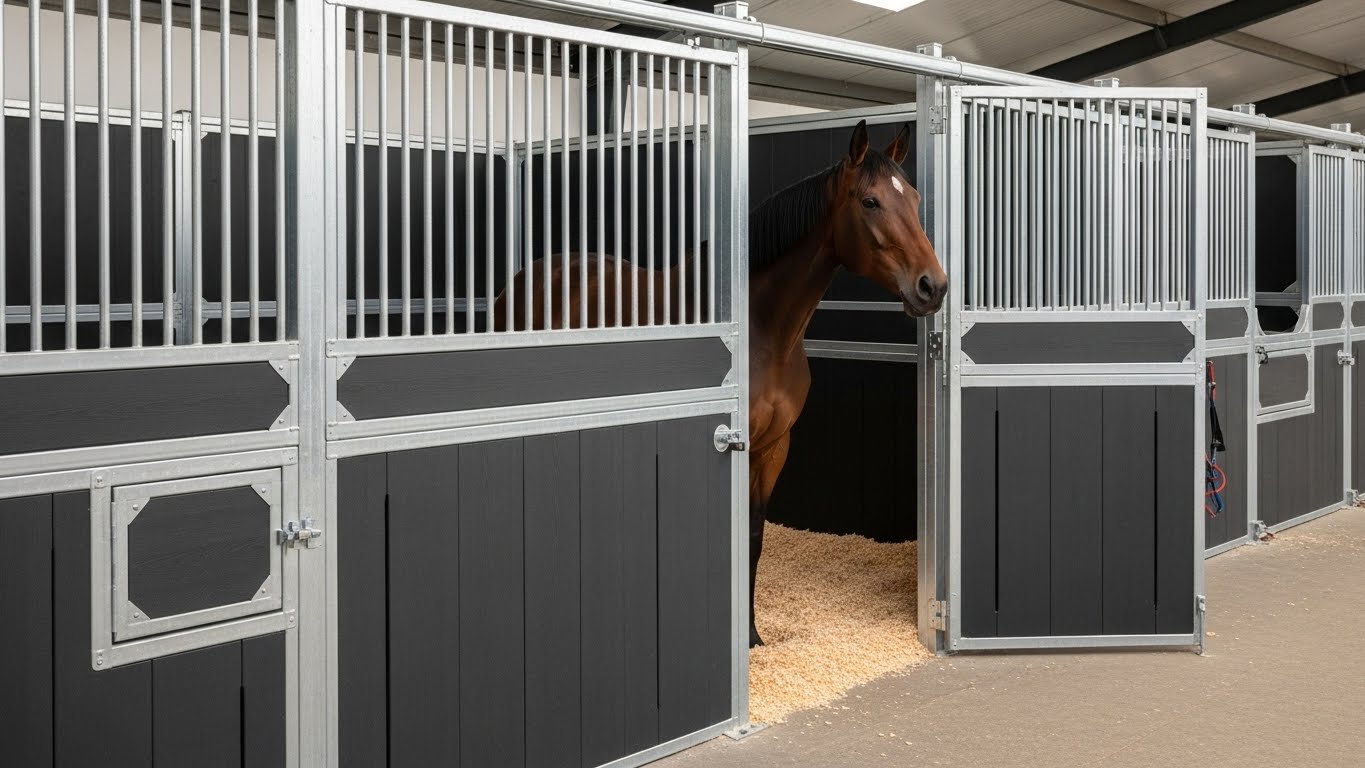
Don’t just tell an inspector to “check the quality.” Give them a specific, non-negotiable checklist. This removes ambiguity and holds the factory accountable for the engineering standards you agreed on. Here are the critical points they must verify for any horse stable system.
- Galvanization Process: Verify the steel is Hot-Dip Galvanized *after* all fabrication is complete, compliant with ISO 1461. This ensures full rust protection, especially at the weld joints.
- Steel Tube Thickness: Measure the wall thickness of the steel tubes with calipers. It must be 14-Gauge (2.0mm) or thicker. Anything less is a structural red flag.
- Hardware Material: Confirm all supplied hardware—including bolts, connectors, and screws—is 304 Stainless Steel for long-term corrosion resistance.
- Packaging Integrity: Check that all goods are securely packed and strapped on steel pallets. This is essential for safe container loading and damage-free transit.
Safe Payment Terms for B2B Importers (T/T, L/C)
Telegraphic Transfer (T/T) is a fast, low-cost option for most import orders, usually structured as 30% down and 70% balance. Letter of Credit (L/C) offers maximum security for large shipments.
T/T vs. L/C: Balancing Speed, Cost, and Security
For international trade, your two main payment options are Telegraphic Transfer (T/T) and Letter of Credit (L/C). T/T is a direct bank wire. It’s fast, usually clearing in 1-3 business days, and has lower bank fees, which is why it’s the most common method. An L/C is different. It uses a bank as a guarantor, promising the supplier gets paid only after providing proof of shipment with all the correct documents. This provides excellent security for very large, high-value orders but comes with higher fees and more paperwork.
| Szenario | Recommended Term | Reasoning |
|---|---|---|
| Trial Order or New Importer | T/T (30% Deposit) | Fast and low-cost way to start. |
| Large Distributor Shipment | L/C | Bank guarantee protects high-value orders. |
| Established Relationship | T/T | Efficient and built on mutual trust. |
The Standard 30/70 T/T Structure for Stable Orders
We use a balanced payment structure that protects both sides. A 30% deposit is required to confirm the order, purchase raw steel, and schedule production with our ISO 1461 certified galvanizing plant. This initial payment gets your project into the manufacturing queue.
The final 70% balance is only due after production is complete and your order has shipped. We provide you with a copy of the Bill of Lading (B/L) as proof of shipment. Once you receive this document, you pay the remaining balance, and we release the original B/L so you can clear customs. This method ensures your money is safe because the bulk of the payment is made only after your goods are on the water. This 30/70 T/T term works well for everything from trial orders of 3-5 sets up to full 40HQ container orders for distributors.
DB’s Transparent Production Updates (Video Tracking)
Our video tracking system gives B2B importers verifiable proof of production. See your order built to spec with correct materials and hot-dip galvanization, removing sourcing risks.
How Video Updates Demystify the Manufacturing Process
When you’re sourcing from overseas, you can’t just drop by the factory. This distance creates risk. Our video tracking system closes that gap by giving you eyes on the factory floor. You can see the raw Q235B steel being cut and welded, confirming that the correct materials and fabrication methods are being used from the start.
This isn’t about marketing; it’s about proof. For B2B importers, this visual evidence builds real trust and mitigates the financial risks of international trade. You see progress before making final payments, ensuring you get exactly what you specified without having to be there in person.
Tracking Key Milestones: From Raw Steel to Galvanization
The most critical part of our quality promise is the anti-rust treatment. We provide video confirmation of the ‘Hot-Dip After Fabrication’ process. This means you see the fully welded stable panels being dipped into molten zinc, a step that protects every cut and weld—something pre-galvanized tubing can’t do.
This visual verification confirms your products meet the BS EN ISO 1461 standard for rust protection. You get a record of this essential quality step before the stables are even packed onto the steel pallet for shipment. It’s the final quality check that ensures long-term durability.
Häufig gestellte Fragen
Is it safe to buy horse stables from a Chinese manufacturer?
Yes, it is safe when you partner with a reputable manufacturer that holds certifications like ISO 9001 and provides test reports for materials. Vetting your supplier by verifying their quality control processes and compliance with international standards like BS EN ISO 1461 for galvanizing is the key to a secure purchase.
What are the safest payment terms for a B2B order?
The most common and secure method is a milestone-based Telegraphic Transfer (T/T): typically 30% to start production, 40% after a mid-production inspection, and the final 30% upon completion before shipping. For very large orders, a Letter of Credit (L/C) offers bank-backed security.
What is a pre-shipment inspection and is it necessary?
A pre-shipment inspection (PSI) is a final quality check performed at the factory when your order is at least 80% complete. An inspector verifies quality, quantity, and packaging against your specifications. It is highly recommended as it’s your last chance to identify and fix any issues before the products are sent.
Do I need an official OEM contract?
Absolutely. An OEM (Original Equipment Manufacturer) contract is a critical legal document that protects your investment. It formally defines all product specifications, quality standards, delivery timelines, payment terms, and intellectual property rights, preventing future disputes.
How can I track the production status of my order?
DB Stable offers transparent production updates. We provide regular photos and videos at key manufacturing stages: raw material preparation, welding, hot-dip galvanizing, and final packaging. This allows you to monitor progress and verify quality remotely throughout the production cycle.
Abschließende Überlegungen
Many suppliers cut costs with thin, pre-galvanized steel, but this leads directly to rust and structural failures. Demanding 14-gauge tubing and ISO 1461 galvanization protects your inventory, your reputation, and your customers. This is the difference between a product that sells and a product that gets returned.
The next step is to verify our engineering for yourself. We recommend a trial order of 3-5 sets to confirm our build quality, galvanization thickness, and fitment. Contact our team to get a quote and discuss your specific OEM requirements.


 German
  English
  Spanish
  French
  Arabic
0 Kommentare