


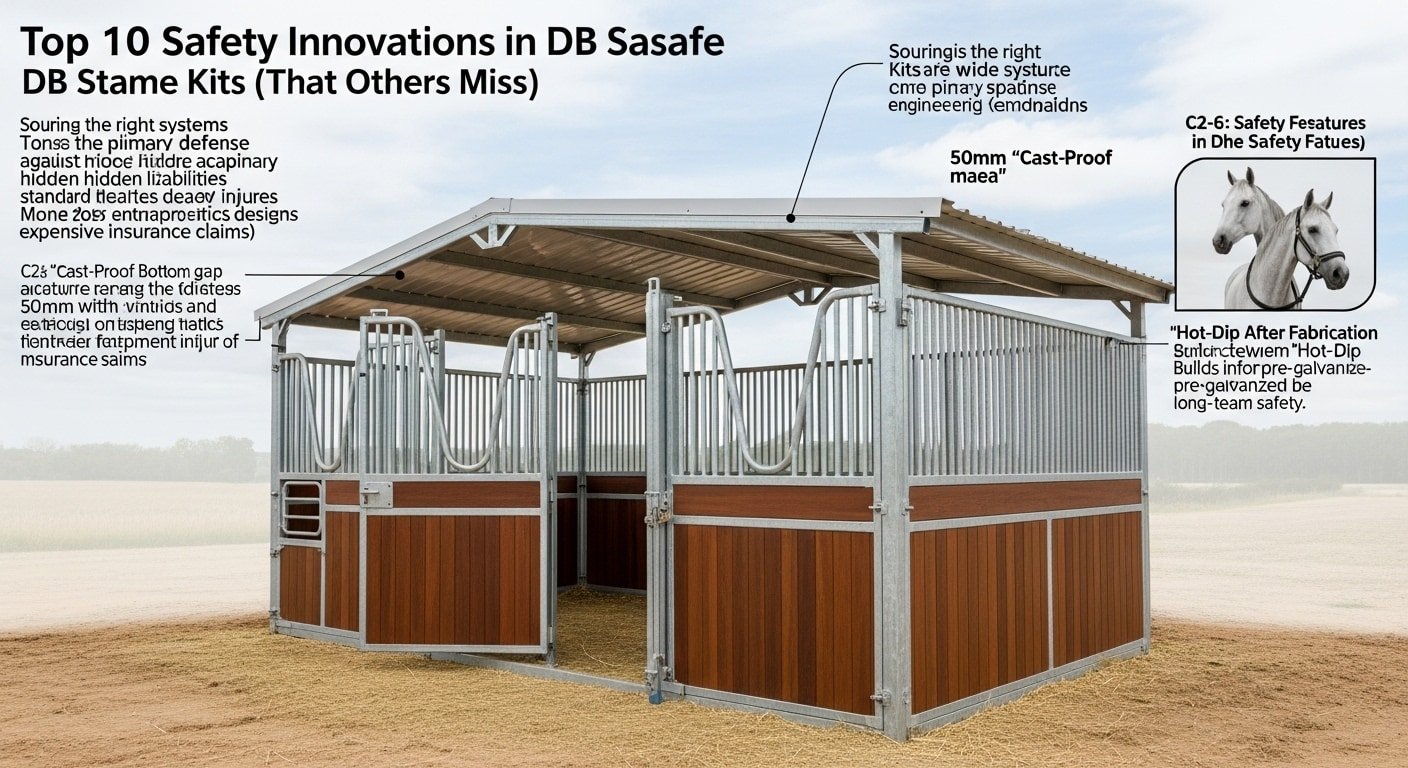
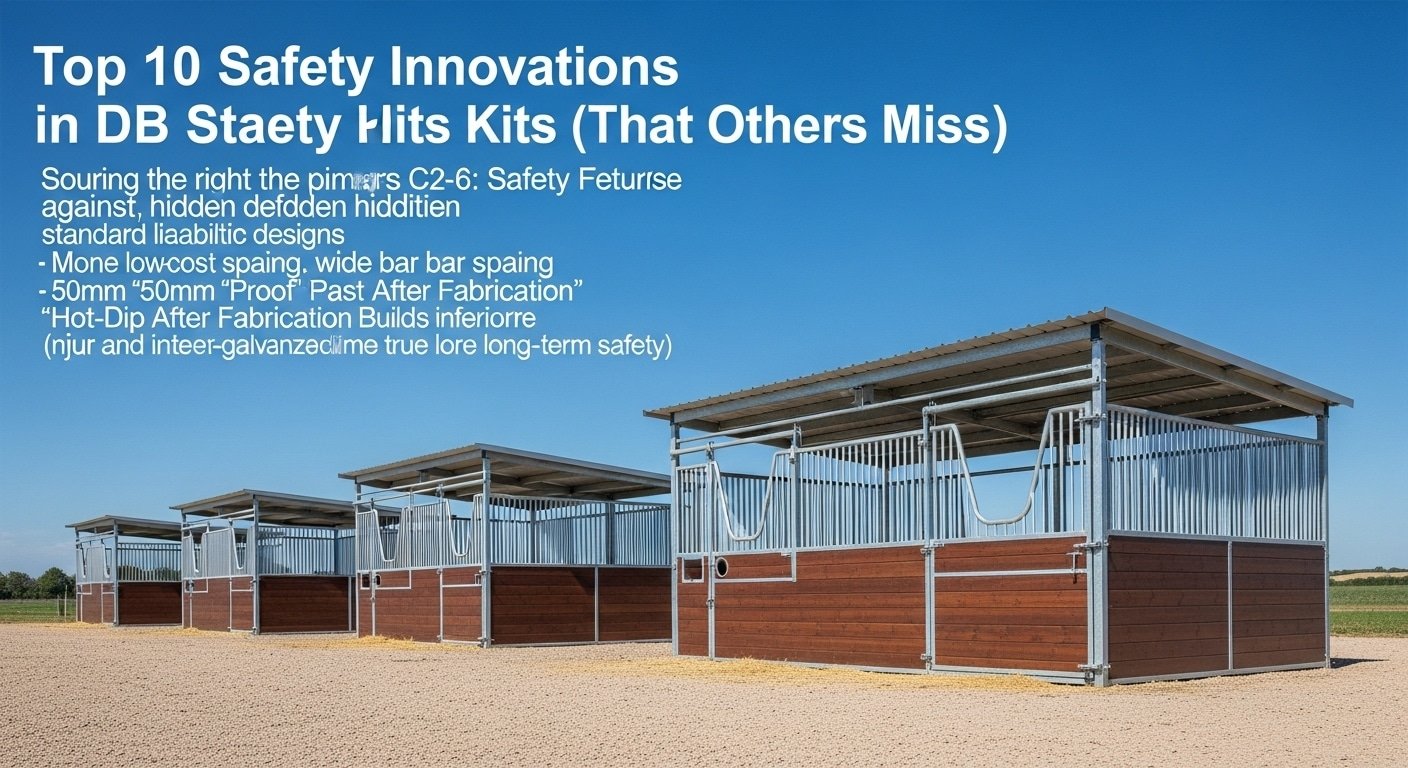
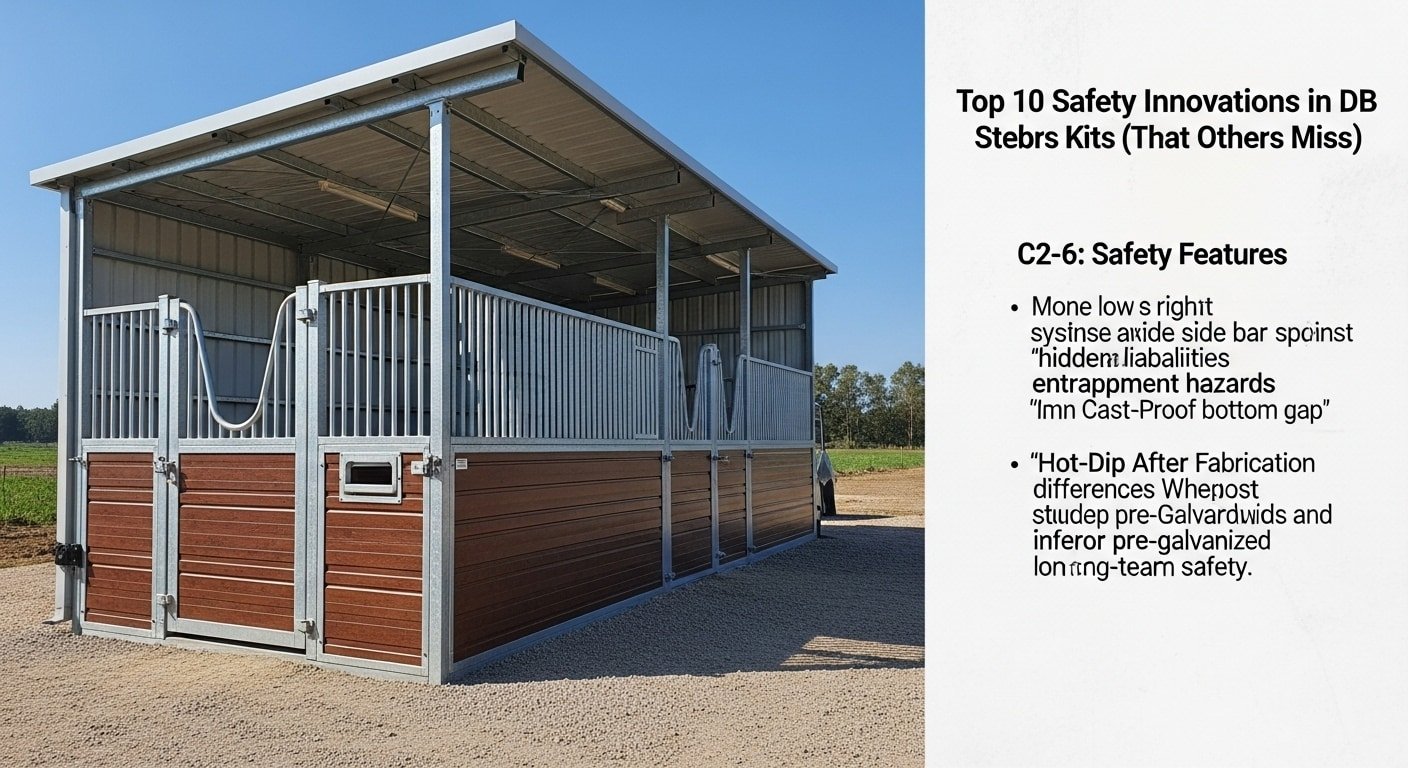
Sourcing the right C2-6: Safety Featuressafe horse stall kit is the primary defense against the hidden liabilities found in standard designs. Many low-cost kits use wide bar spacing and thin-gauge steel, creating entrapment hazards that lead directly to catastrophic injuries and expensive insurance claims.
This analysis evaluates stall systems against critical engineering standards, such as the 50mm “Cast-Proof” bottom gap. We break down the structural differences between “Hot-Dip After Fabrication” builds and inferior pre-galvanized units to identify true long-term safety.
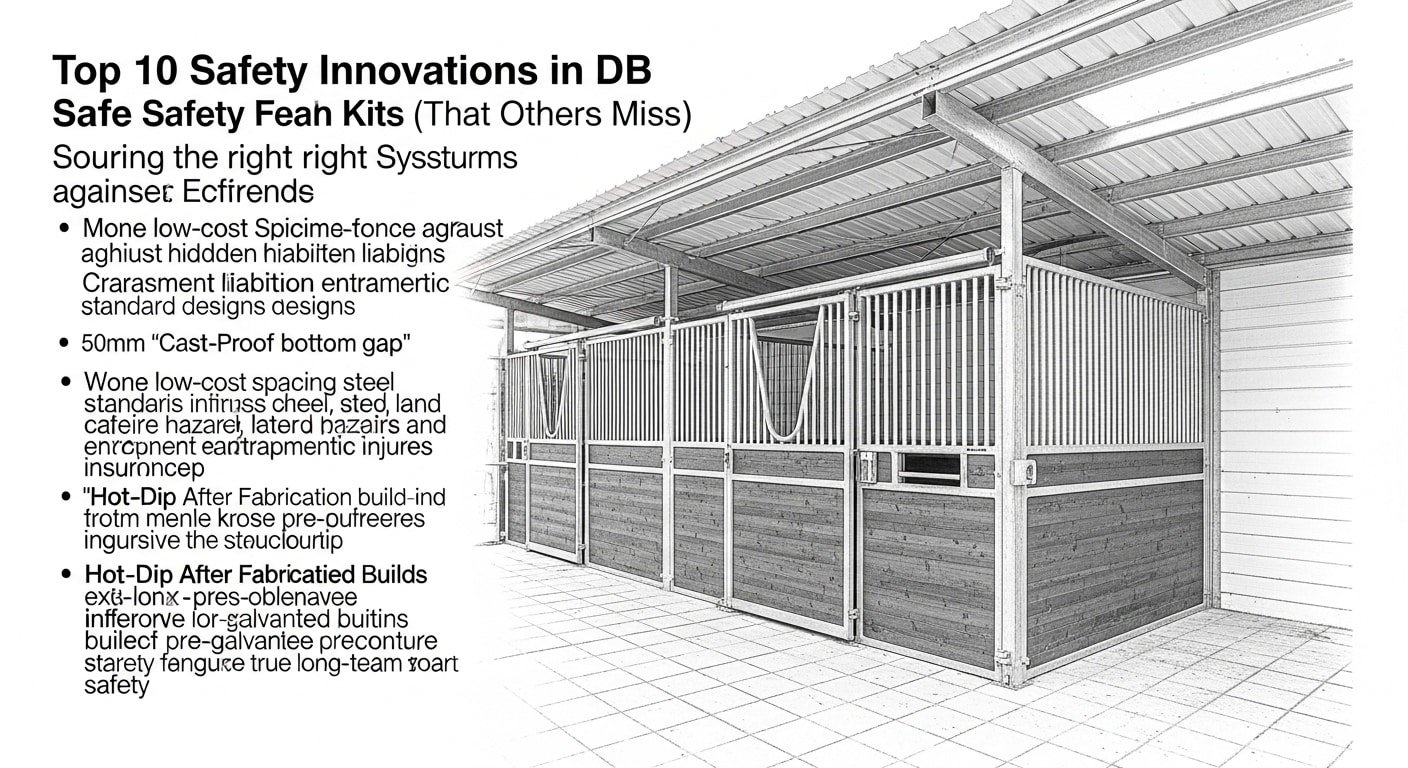
Top 10 Safety Innovations in DB Stable Kits
Schneller Vergleich
| Produktname | Am besten für | Hauptmerkmal | Urteil |
|---|---|---|---|
50mm Anti-Trap Bottom Gap | Prevents Hoof Entrapment | Structural Safety | A crucial Sicherheit measure to prevent hoof and leg injuries while simplifying maintenance. |
Hidden & Smoothed Welds | Eliminates Cuts and Scrapes | Finish Quality | A premium finishing touch that prioritizes safety by eliminating sharp points, creating a sleek, injury-free surface. |
Optimized Bar Spacing | Prevents Head and Hoof Trapping | Enclosure Design | A critical design specification that protects horses of all sizes, from foals to adults, from getting dangerously trapped. |
Covered Door Tracks | Protects from Debris and Injury | Door System | A smart design that ensures reliable door operation and enhances safety by covering sharp track edges. |
Integrated Anti-Chew Guards | Increases Stall Longevity | Material Protection | Protects both the horse’s dental health and the stall’s structural integrity from chewing damage. |
Non-Toxic, Animal-Safe Finishes | Prevents Poisoning | Material Safety | A non-negotiable feature that eliminates the risk of chemical ingestion, ensuring the horse’s well-being. |
Secure Anti-Jump Door Mechanism | Keeps Horse Securely Stalled | Door System | A robust system providing peace of mind by preventing a panicked or clever horse from escaping its stall. |
High-Strength Steel Bars | Withstands Kicks and Impacts | Strukturelle Integrität | Heavy-duty construction that guarantees maximum security and containment, even for the most powerful horses. |
Swivel Feeder System | Reduces Handler Risk | Feeding Safety | An innovative solution that dramatically improves handler safety and efficiency, especially with difficult animals. |
Rounded Edges & Corners | Prevents Puncture Wounds | Impact Safety | A thoughtful detail that minimizes the risk of bumps, scrapes, and more serious impact injuries within the stall. |
SCHLÜSSEL-EIGENSCHAFT
50mm Anti-Trap Bottom Gap
Das Urteil: A precisely engineered gap that prevents a horse’s hoof from getting trapped underneath the stall wall. This is a critical Sicherheitsmerkmal that balances injury prevention with practical drainage and ventilation.
✅ Das Gute
- Reduces risk of leg and hoof injury
- Facilitates easy Reinigung and drainage
⚠️ Das Schlechte
- Gap size must be exact to be effective.
SCHLÜSSEL-EIGENSCHAFT
Optimized Bar Spacing
Das Urteil: Optimized bar spacing is a non-negotiable safety standard that effectively prevents horses, particularly foals, from getting their head or hooves trapped. Its primary function is injury prevention through precise engineering.
✅ Das Gute
- Protects horses of all sizes
- Maintains excellent airflow and visibility
⚠️ Das Schlechte
- Spacing is not adjustable post-manufacturing.
SCHLÜSSEL-EIGENSCHAFT
Covered Door Tracks
Das Urteil: A simple yet critical innovation, covered door tracks prevent debris from jamming the sliding mechanism and eliminate sharp edges. This ensures the door operates smoothly and reliably while protecting both horses and handlers from injury.
✅ Das Gute
- Ensures smooth, reliable door operation
- Prevents tail or equipment snags
⚠️ Das Schlechte
- May require periodic access for cleaning.
SCHLÜSSEL-EIGENSCHAFT
Integrated Anti-Chew Guards
Das Urteil: A critical addition for stall durability and horse health, metal capping directly prevents wood damage from cribbing and protects the horse’s teeth. It’s an essential feature for maintaining the structural integrity and appearance of wooden stall components over time.
✅ Das Gute
- Prevents wood splintering from chewing
- Discourages habitual cribbing behavior
⚠️ Das Schlechte
- Must be securely fastened to prevent loosening.
SCHLÜSSEL-EIGENSCHAFT
Non-Toxic, Animal-Safe Finishes
Das Urteil: This is a critical, non-negotiable feature for any stable, ensuring horses are protected from poisoning if they lick or chew on stall surfaces. It combines long-term durability with essential Tierschutz.
✅ Das Gute
- Safe for cribbers, foals, and curious horses
- Provides a durable and weather-resistant coating
⚠️ Das Schlechte
- May need re-coating after years of heavy use.
SCHLÜSSEL-EIGENSCHAFT
Secure Anti-Jump Door Mechanism
Das Urteil: A critical safety feature that uses stays, guides, and a robust roller system to ensure a Schiebetür cannot be dislodged by a leaning or panicked horse, preventing escapes and potential injuries.
✅ Das Gute
- Prevents dangerous escapes and injuries
- Provides handler peace of mind
⚠️ Das Schlechte
- Proper installation is critical for function.
SCHLÜSSEL-EIGENSCHAFT
High-Strength Steel Bars
Das Urteil: High-strength steel is a non-negotiable for stall security, engineered to resist powerful impacts from even the strongest horses, ensuring the grillwork remains intact and the animal stays safely contained.
✅ Das Gute
- Maximizes containment security
- Resists deformation from powerful horses
⚠️ Das Schlechte
- Adds significant weight to stall Platten.
SCHLÜSSEL-EIGENSCHAFT
Swivel Feeder System
Das Urteil: Diese system lets you fill feed and water from outside the stall. It’s a significant safety upgrade that protects handlers from nervous or difficult horses and makes daily chores faster.
✅ Das Gute
- Allows safe feeding of difficult horses
- Simplifies and speeds up daily chores
⚠️ Das Schlechte
- Moving parts must be kept clean to operate smoothly.
SCHLÜSSEL-EIGENSCHAFT
Rounded Edges & Corners
Das Urteil: Diese design principle mandates that all metal and wood edges are machined to be smooth and round, drastically reducing the risk of scrapes, cuts, and more serious puncture wounds from accidental bumps within the stall.
✅ Das Gute
- Reduces risk of scrapes and serious injuries
- Creates a softer, safer environment
⚠️ Das Schlechte
- Adds complexity to the manufacturing process.
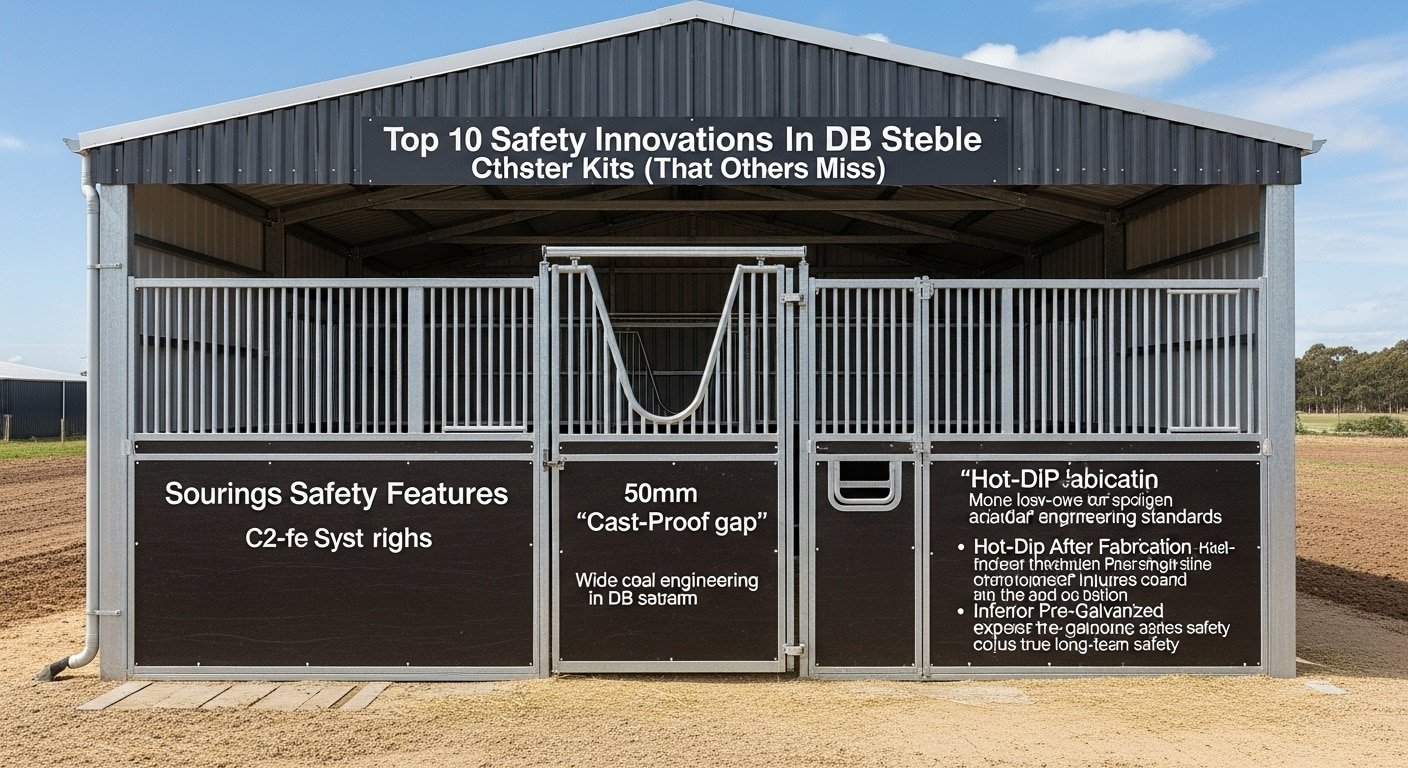
Is Your “Safe” Stall Kit Actually a Death Trap?
Many horse stalls marketed as “safe” contain critical design flaws that can lead to serious injury. Hazards like wide bar spacing that traps hooves, weak materials that fail under impact, and poor ventilation are common in low-cost kits. True safety isn’t just a marketing term; it’s a direct result of specific engineering choices, from the thickness of the steel to the Rostschutz process.
Common Design Flaws Masquerading as Safety
The most dangerous stall components are often the ones that look standard. Bar spacing is a perfect example. Gaps of 3-4 inches are wide enough for a horse to get a hoof caught, leading to panic and catastrophic injury. Our designs adhere to a strict “cast-proof” philosophy, using minimal gaps (around 50mm) to prevent entrapment. Similarly, slick concrete floors offer no shock absorption, while poorly designed full partitions can restrict critical airflow. Our systems solve this by using open-top grills that promote natural “stack effect ventilation,” creating a healthier environment.
The Overlooked Threat of Fire Safety
Fire is a real and devastating risk in any barn. Bedding materials like straw can turn a stall into an inferno in just a couple of minutes. While no stall is completely fireproof, material choice plays a role. Steel frames and our high-density infill options like HDPE and bamboo are significantly less flammable than traditional all-wood constructions. This provides a critical advantage, but it must be part of a larger fire prevention strategy that includes proper wiring, no-smoking policies, and clear evacuation routes.
What Genuinely Safe Construction Looks Like
Real safety starts with the raw materials and manufacturing process. We build our frames from Q235B or Q345B structural steel with a minimum wall thickness of 14-gauge (2.0mm). Anything thinner simply won’t withstand a kick. More importantly, we use a **Hot-Dip Galvanization After Fabrication** process. This means we weld the entire panel first, then dip it in molten zinc. This process, compliant with ISO 1461, seals every cut, corner, and weld from rust—a massive durability advantage over cheaper pre-galvanized tubes that have vulnerable welded joints. Paired with our impact-absorbing HDPE or rot-resistant Bambus infills, this creates a system that delivers on our kick-proof guarantee.
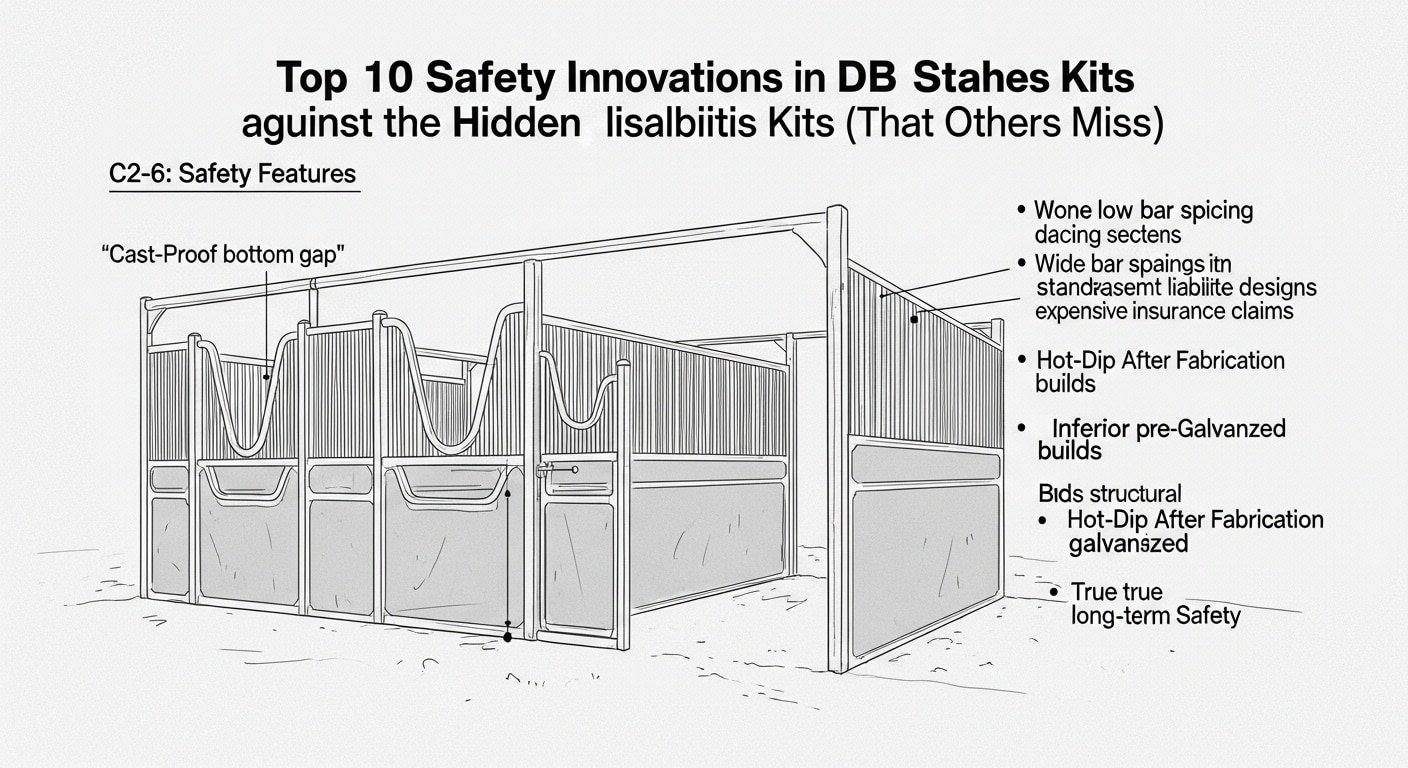
Why is the 50mm Bottom Gap Non-Negotiable?
The 50mm (2-inch) bottom gap is a critical safety standard in stall design. This precise measurement is small enough to stop a horse’s hoof from getting trapped underneath a panel when rolling or kicking. It’s a core element of our ‘Cast-Proof Design’ that protects animals from severe leg injuries like fractures and ligament damage.
Preventing Hoof and Leg Entrapment
Any gap of 3 inches or more creates a serious hazard. It allows a horse to wedge a hoof through the opening without being able to pull it back out easily. This kind of entrapment can cause immediate panic and violent thrashing, leading to catastrophic injuries. Our commitment to the 50mm gap is a fundamental part of our ‘Cast-Proof Design,’ engineered specifically to prevent a horse’s legs from getting caught underneath a partition when it lies down or rolls.
The Critical Safety Threshold
The 50mm standard is small enough to block even the smallest hooves from passing through. This measurement provides the perfect balance between animal safety and the structural integrity of the stall panel. It has become an industry consensus because years of experience show that larger gaps directly lead to a higher risk of injury. It’s not just a feature; it’s a safety necessity.
Alignment with Industry Standards
Our engineering follows established international safety protocols, including German horse breeder standards, which are among the strictest in the world. Professional manufacturers build panels with bars on 2.5 to 3-inch centers to achieve this safe 2-inch gap. This safety principle also applies vertically, where doors require less than 3 inches of ground clearance to prevent similar accidents. We don’t just meet these standards; we build our reputation on them.
Durable, Custom Horse Stables Shipped Worldwide
How Do Hidden Welds Prevent Cuts and Scrapes?
Hidden welds prevent cuts and injuries by creating a completely smooth stall surface. We achieve this by punching steel bars through the frame and welding them on the inside, which removes the sharp, raised ridges left behind by standard surface welding. This method not only improves safety but also creates a stronger, more durable structure.
Eliminating Protruding Edges and Ridges
Standard stall construction often uses butt welding, where bars are simply attached to the surface of the frame. This leaves behind raised, uneven weld beads that can easily snag a blanket, a handler’s clothing, or scrape a horse’s skin. Our process is different. We punch each steel bar through the frame channels and perform the weld on the underside, completely out of sight. The result is a perfectly smooth surface with no hazardous protrusions, a key part of our “Engineering Safety, Defining Standards” principle.
Increasing Structural Strength and Longevity
This concealed welding technique isn’t just about a clean finish; it creates a significantly stronger mechanical bond. By integrating the bar into the frame instead of just tacking it on top, the entire panel gains rigidity. This makes it far more resilient to the powerful kicks a horse can deliver. A structure that doesn’t bend, warp, or fracture under stress is a structure that won’t develop new, dangerous sharp edges over its service life. When combined with the high tensile strength of our Q235B or Q345B steel, this method ensures lasting safety and reduces long-term maintenance needs for facility owners.
Is the Bar Spacing Safe for Miniature Horses?
Yes, our stall systems are safe for all equines, including miniature horses. Safety guidelines for bar spacing are universal and not breed-specific. The key is preventing a hoof from becoming trapped, and our engineering adheres to strict veterinary-recommended standards to ensure the well-being of every animal, regardless of size.
Universal Spacing Standards for All Equines
The principles of equine safety are consistent across all breeds. A gap wide enough for a hoof to pass through but too narrow for the leg joint to follow poses a major risk. A horse getting a leg ‘hung up’ in the grillwork can lead to panic and severe injury. Our “Cast-Proof Design” directly addresses this risk by ensuring gaps are engineered to prevent entrapment, protecting the valuable animals housed in our clients’ facilities.
Our Adherence to Safe Measurements
Equine veterinarians and safety experts advise that the maximum safe gap between bars is approximately 2.75 inches (about 70mm). We engineer our stall grills with even tighter tolerances. For lower sections where a horse might roll or lie down, spacing is typically tighter. Our designs feature minimal bottom gaps of approximately 50mm (2 inches), aligning perfectly with the strictest safety protocols. This commitment to “Engineering Safety, Defining Standards” gives facility owners confidence and helps reduce the potential for injury-related claims.
Abschließende Überlegungen
While cheaper stalls seem tempting, they transfer risk directly to you and your clients. Our strict adherence to “Hot-Dip After Fabrication” galvanizing and a “Cast-Proof Design” is the only real defense against rust claims and catastrophic injury liabilities. Choosing engineered safety protects your reputation and prevents costly callbacks.
The next step is to verify our engineering for yourself. We recommend a small trial order to confirm the material quality and precision fitment before committing to a full container. Contact our team to get a quote and discuss your specific OEM requirements.
Häufig gestellte Fragen
What are the recommended stall dimensions for an average horse?
Unser stable systems are engineered to standard dimensions, typically 3.6m x 3.6m (12ft x 12ft), which is the industry-accepted size for an average 1,000-pound horse. This ensures enough room for the horse to turn, lie down, and stand up safely, meeting high animal welfare standards.
How do you ensure long-term rust prevention?
Our commitment to longevity is built on our “Hot-Dip After Fabrication” process. After all welding is complete, we submerge the entire steel panel in molten zinc. This process, which conforms to BS EN ISO 1461, creates a bonded zinc coating over 70-85 microns thick that covers every surface, including the critical weld joints. This is far superior to pre-galvanized tubing and is the key to preventing rust long-term.
Are the stalls safe for horses that tend to get cast or kick?
Absolutely. We engineer safety into every component. Our “Cast-Proof Design” features a minimal bottom gap (approx. 50mm) to prevent horses from getting their legs stuck when rolling. For powerful kickers or kalte Klimazonen, we offer our Q345B steel upgrade. This high-strength steel has superior impact toughness to prevent fractures, ensuring a “Kick-Proof Guarantee” for your facility.
What is included in a standard stall kit?
Each system is a complete solution. A standard kit includes one stabile Frontplatte (with door), one side/partition panel, pre-cut infill planks (your choice of zero-maintenance HDPE or high-density bamboo), a full hardware kit with 304 Stainless Steel connectors and anchor bolts, and a can of cold galvanizing touch-up spray for any scratches during installation.
How does flat-pack shipping benefit me as a distributor?
Our flat-pack system is designed for “Profit Protection.” By Versand panels and infill separately on steel pallets, we can load 30-45 stall sets into a single 40HQ container. Fully welded competitors can only fit 12-15 sets. This massive difference cuts your per-unit freight costs by over 60%, directly boosting your Gewinnspannen and giving you a significant competitive edge.
Can a horse get its jaw stuck in the bars?
Wir entwickeln unsere stable fronts to meet strict safety standards, which includes precise bar spacing. Industry best practices recommend gaps no wider than 3 inches (approx. 75mm) to prevent a horse’s head, jaw, or hooves from getting trapped. Our designs adhere to these critical safety dimensions, creating a secure environment and minimizing entrapment risks for the animals in your care.
Are the door tracks covered?
Yes, our Professional Series stables feature a hidden track system. This design not only provides a cleaner, more streamlined aesthetic but also protects the roller mechanism from dust, hay, and debris that can cause jamming. By concealing the track, we reduce maintenance and ensure the sliding door operates smoothly and reliably for years, a major benefit for busy equestrian facilities.
Do you use chew-guards on wood?
We use materials that naturally deter chewing, eliminating the need for add-on guards. Our high-density strand-woven bamboo is three times harder than oak, making it highly resistant to damage. For ultimate durability, we offer UV-stabilized HDPE-Füllung, which provides a zero-maintenance solution that is impervious to chewing, cribbing, and moisture. This saves our clients on repair and replacement costs.
Is the paint toxic?
Our primary rust protection is hot-dip galvanization, a non-toxic zinc coating that provides lifetime protection without any paint. For our Royal Series, we use a powder coating process over the galvanized steel. Pulverbeschichtung is a durable, non-toxic finish cured with heat, containing no solvents or Volatile Organic Compounds (VOCs). This ensures a safe environment for horses, free from harmful fumes.
Can the door jump off the track?
Unser stable door systems are engineered to prevent this. Each sliding door includes integrated safety stops on the overhead track and robust floor-mounted guides. These components work together to ensure the door remains securely engaged, even if a horse pushes or leans against it. This reliable design is a core part of our commitment to animal and handler safety.
What is the breaking strength of the bars?
We define strength through material specifications rather than breaking-strength values. Our frames use Q235B structural steel with a wall thickness of 14-Gauge (2.0-2.5mm), and we strictly prohibit thinner tubing. For colder climates or high-impact use, we offer an upgrade to Q345B high-strength steel. This focus on heavy-gauge steel provides our “Kick-Proof Guarantee” and ensures long-term durability.

 German
  English
  Spanish
  French
  Arabic
0 Kommentare