


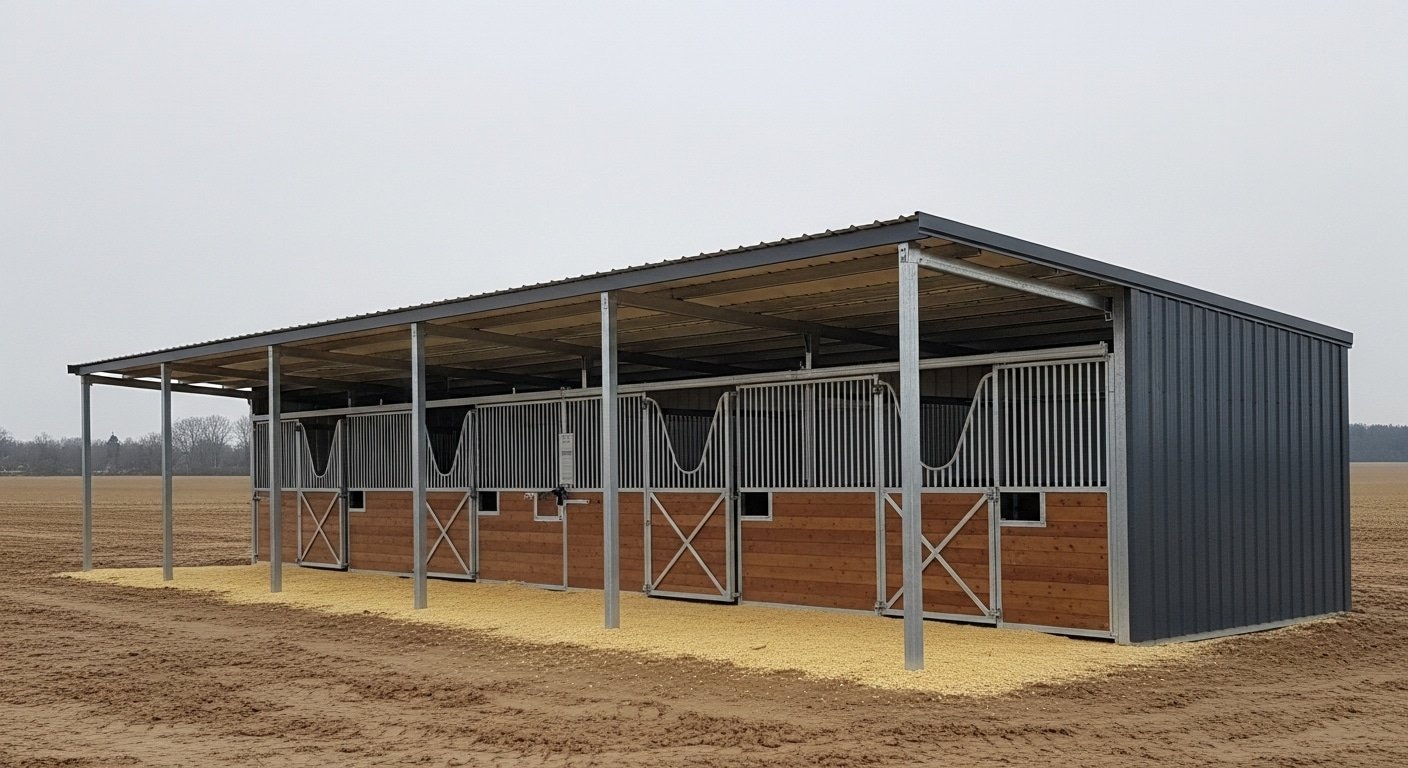
Die Auswahl der richtigen Winterpferdeboxen für kaltes Klima ist der wichtigste Schutz vor katastrophalem Materialversagen. Die Verwendung von Standardbaustahl bei Minusgraden führt zu Sprödbrüchen und verzogenen Paneelen, was direkt zu kostspieligen Garantieansprüchen und erheblichen Haftungsrisiken für Bauherren und Händler führt.
In diesem Bericht werden Bausätze auf der Grundlage des Q345B-Stahlstandards für Tieftemperaturzähigkeit bewertet. Wir vergleichen, wie Füllungsoptionen, von hochdichten Bambus zu UV-stabilisiertem HDPE, steuern die thermische Kontraktion und verhindern das Versagen von Komponenten, so dass das ganze Jahr über strukturelle Integrität und Sicherheit gewährleistet sind.
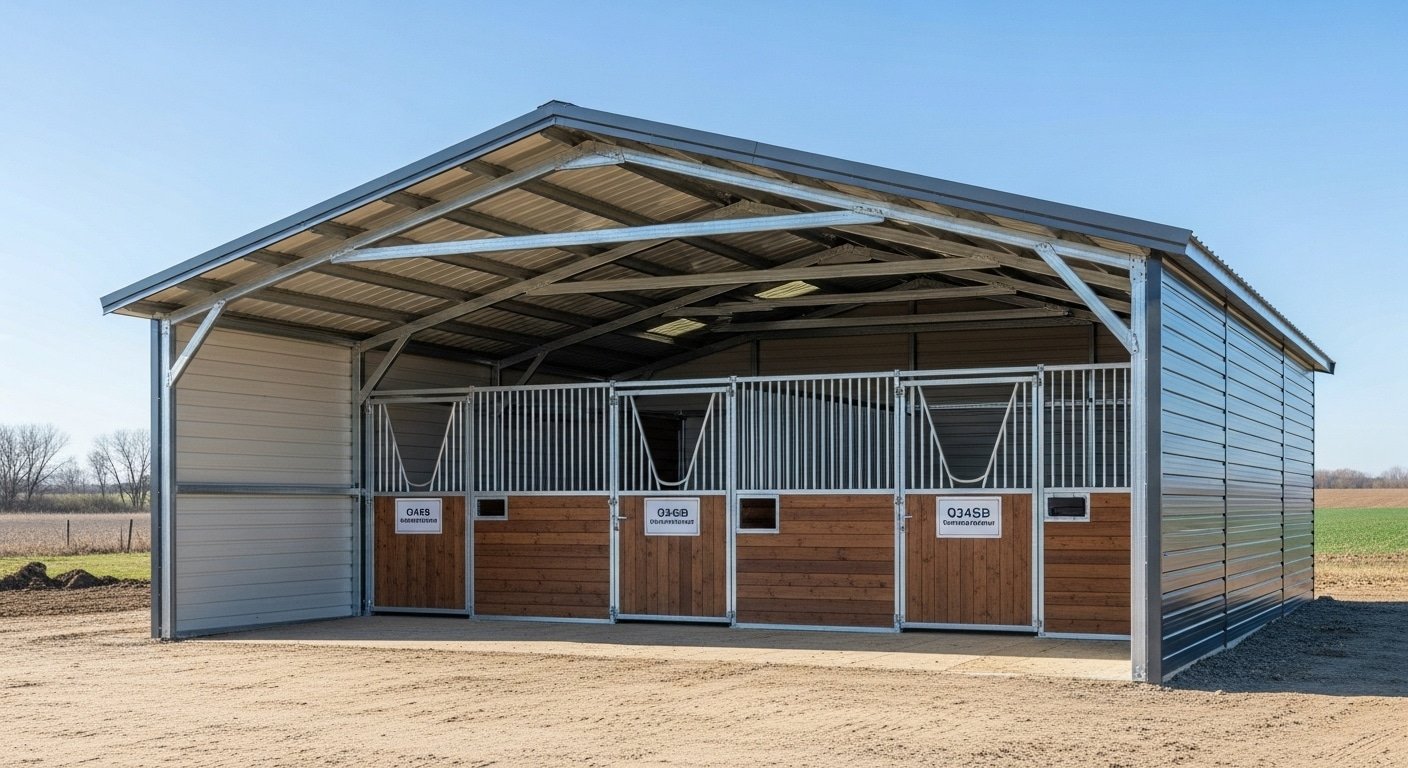
Die 10 besten Eigenschaften für wintertaugliche Stallbausätze
Schneller Vergleich
| Merkmal | Kategorie | Hauptnutzen | Urteil |
|---|---|---|---|
Beheizte Wassersysteme | Pferdepflege | Sorgt für konstante Hydratation | Unverzichtbar, um die Wehen zu reduzieren und dafür zu sorgen, dass die Pferde hydriert bleiben, um Gesundheitsprobleme in der Kälte zu vermeiden. |
Angemessene Stallabmessungen | Struktureller Entwurf | Verbessert das Pferd Komfort und Sicherheit | Eine grundlegende Sicherheitsmerkmal die eine natürliche Bewegung ermöglicht und die Verletzungsgefahr für das Pferd verringert. |
Richtige Belüftung | Luftqualität | Verhindert Erkrankungen der Atemwege | Entscheidend für die Vorbeugung von Atemwegserkrankungen durch Kontrolle der Luftfeuchtigkeit und Reduzierung von Krankheitserregern in der Luft. |
Stalltüren mit Netz oder Gitter | Struktureller Entwurf | Verbessert Luftstrom und Licht | Eine ausgezeichnete Wahl, um die Luftzirkulation und das natürliche Licht zu verbessern und gleichzeitig soziale Interaktion zu ermöglichen. |
Isolierung der Scheune | Klimakontrolle | Stabilisiert die Innentemperatur | Eine wichtige Investition zur Stabilisierung der Stalltemperatur, zur Erhöhung der Energie-Effizienz, und Verbesserung des Komforts. |
Windgeschützte Positionierung | Standortplanung | Minimiert Zugluft und Windchill | Eine intelligente, kostenfreie Designauswahl das die Pferde passiv vor Zugluft und schlechtem Wetter schützt. |
Strategische Sonnenexposition | Standortplanung | Bietet passives solares Heizen | Eine wirksame passive Strategie zur Senkung der Energiekosten und zur Schaffung einer helleren, natürlicheren Umgebung. |
Dachrinnen- und Schneemanagement | Sicherheit und Wartung | Verhindert Eisgefahren und Schäden | Eine nicht verhandelbare Aufgabe, die gewährleistet sicheren Zugang und schützt die Scheune Fundament vor Wasserschäden. |
Rutschfester Bodenbelag | Sicherheit | Reduziert Verletzungen durch Ausrutschen und Stürze | Ein wichtiges Sicherheitsupgrade, das Pferden und Betreuern sicheren Halt bietet und das Risiko von Ausrutschern und Stürzen verringert. |
Trocknungsstationen für Decken und Bettzeug | Verwaltung der Scheune | Verhindert Schimmel und Schimmelpilze | Eine praktische Lösung, die teure Ausrüstung in gutem Zustand hält und die allgemeine Gesundheit des Pferdes verbessert. |
SCHLÜSSEL-EIGENSCHAFT
Beheizte Wassersysteme
Das Urteil: Einbau von beheizten Eimern, Trögen oder automatischen Tränken verhindert Wasser vor dem Einfrieren, so dass die Pferde ständig Zugang zu trinkbarem Wasser haben und das manuelle Aufbrechen von Eis nicht mehr erforderlich ist.
✅ Das Gute
- Reduziert manuelle Arbeit
- Fördert die Gesundheit des Pferdes und verhindert Dehydrierung
⚠️ Das Schlechte
- Erfordert Zugang zu einer sicheren Stromquelle
SCHLÜSSEL-EIGENSCHAFT
Angemessene Stallabmessungen
Das Urteil: Ein Standard 12′ x 12′ Stand ist für den Komfort und die Sicherheit des Pferdes im Winter unerlässlich, da es sich natürlich bewegen kann und das Verletzungsrisiko bei längerem Aufenthalt im Stall verringert wird.
✅ Das Gute
- Erlaubt natürliche Bewegung
- Verringert das Risiko, gegossen oder verletzt zu werden
⚠️ Das Schlechte
- Erfordert eine ausreichende Grundfläche der Scheune für die Installation
SCHLÜSSEL-EIGENSCHAFT
Richtige Belüftung
Das Urteil: Ein System mit Fenstern, Ventilatoren oder Lüftungsschlitzen ist entscheidend für die Förderung der Luftbewegung. Dadurch werden Feuchtigkeit und Ammoniak abgeführt, was Atemprobleme verhindert und gleichzeitig kalte Zugluft minimiert.
✅ Das Gute
- Kontrolliert Feuchtigkeit und Kondensation
- Reduziert über die Luft übertragene Krankheitserreger
⚠️ Das Schlechte
- muss sorgfältig konstruiert sein, um kühlende Zugluft zu vermeiden
SCHLÜSSEL-EIGENSCHAFT
Stalltüren mit Netz oder Gitter
Das Urteil: Wählen Sie Stalltüren mit Netz- oder Gitterabdeckungen verbessern den Luftstrom und lässt im Vergleich zu massiven Türen mehr natürliches Licht in den Stall, was das allgemeine Klima verbessert und die Feuchtigkeit reduziert.
✅ Das Gute
- Verbessert die Belüftung des Stalls
- Ermöglicht die soziale Interaktion zwischen Pferden
⚠️ Das Schlechte
- Bietet weniger Schutz vor Zugluft als eine massive Tür
SCHLÜSSEL-EIGENSCHAFT
Isolierung der Scheune
Das Urteil: Richtige Isolierung ist ein entscheidender Faktor Funktion zur Regulierung der internen Scheune Temperaturen und schafft so ein stabileres und komfortableres Umfeld für die Tiere während extremer Kälteperioden.
✅ Das Gute
- Steigert die Energieeffizienz
- Verringert die Bildung von Kondenswasser und Frost
⚠️ Das Schlechte
- Erhebliche Vorlaufkosten für den Bau
SCHLÜSSEL-EIGENSCHAFT
Windgeschützte Positionierung
Das Urteil: Die Positionierung eines neuen Stalls abseits der vorherrschenden Winde ist ein kluger, kostenloser Weg, um Zugluft zu reduzieren und die Pferde vor rauem Wetter zu schützen, was einen entscheidenden Schritt in der ersten Planungsphase darstellt.
✅ Das Gute
- Passive, kostenfreie Klimatisierung
- Schützt strukturelle Komponenten vor rauer Witterung
⚠️ Das Schlechte
- Abhängig von der anfänglichen Konstruktion und den Standortbeschränkungen
SCHLÜSSEL-EIGENSCHAFT
Strategische Sonnenexposition
Das Urteil: Die Ausrichtung des Stalls zum Einfangen des natürlichen Sonnenlichts ist eine wirksame, passive Methode, um die Ställe im Winter wärmer und heller zu halten, Senkung der Heizkosten und Verbesserung des Pferdekomforts.
✅ Das Gute
- Reduziert den Energieverbrauch
- Schafft ein helleres, natürlicheres Raumklima
⚠️ Das Schlechte
- In den heißen Sommermonaten muss möglicherweise für Schatten gesorgt werden.
SCHLÜSSEL-EIGENSCHAFT
Dachrinnen- und Schneemanagement
Das Urteil: Die ordnungsgemäße Verwaltung von Dachrinnen und Schnee ist ein unverzichtbares Element für Stallsicherheit, Dadurch wird eine gefährliche Eisbildung verhindert und das Fundament des Gebäudes vor Wasserschäden geschützt.
✅ Das Gute
- Sorgt für sichere Ein- und Ausstiegsstellen
- Schützt das Fundament des Gebäudes vor Erosion
⚠️ Das Schlechte
- Erfordert regelmäßige Reinigung und saisonale Wartung
SCHLÜSSEL-EIGENSCHAFT
Rutschfester Bodenbelag
Das Urteil: Langlebig, rutschfest Bodenbelag Materialien sind eine wesentliche Sicherheitsmaßnahme, da sie sowohl den Pferden als auch den Betreuern sicheren Halt bieten, insbesondere bei Nässe oder Eisglätte.
✅ Das Gute
- Sorgt das ganze Jahr über für einen sicheren Stand
- Die Materialien sind oft langlebig und leicht zu reinigen
⚠️ Das Schlechte
- Kann eine höhere Installation haben Kosten als Basisbodenbelag
SCHLÜSSEL-EIGENSCHAFT
Trocknungsstationen für Decken und Bettzeug
Das Urteil: Das Anbringen spezieller Haken oder Gestelle in einem gut belüfteten Bereich ist eine einfache, aber effektive Methode, um nasse Decken und Ausrüstung zu trocknen, Schimmel zu vermeiden und die Ausrüstung in gutem Zustand zu halten.
✅ Das Gute
- Verbessert die Langlebigkeit von teuren Geräten
- Verbessert den Komfort und die Gesundheit des Pferdes
⚠️ Das Schlechte
- Erfordert die Widmung Platz in der Scheune Layout
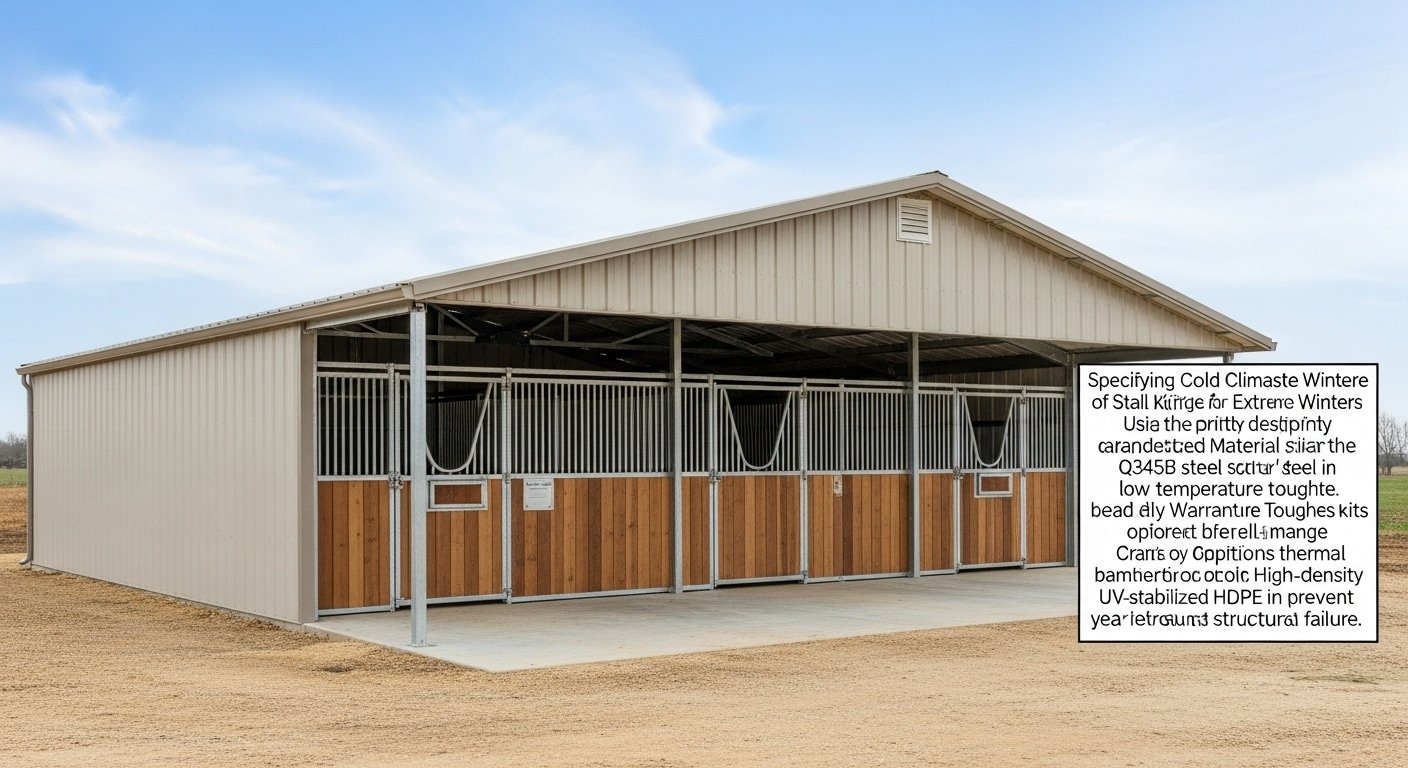
Warum versagen die Standard-Stallbausätze in frostigen Klimazonen?
Standard-Kabinenbausätze versagen oft bei Frost, weil gewöhnlicher Baustahl spröde wird und bei einem Aufprall brechen kann. Unterschiedliche Materialien schrumpfen auch unterschiedlich schnell, was dazu führt, dass sich Füllungsplatten verziehen und Türen klemmen. Unsere technischen Systeme beheben diese Probleme direkt, indem sie speziellen Stahl und entwickelte Materialien für Leistung bei Minusgraden und lange Haltbarkeit.
Wenn die Temperaturen unter den Gefrierpunkt fallen, kann die strukturelle Integrität eines Pferdestall wird auf den Prüfstand gestellt. Viele standardisierte, handelsübliche Kits sind so konzipiert Sie sind für gemäßigte Klimazonen ausgelegt und verfügen nicht über die spezielle Technik, die erforderlich ist, um den besonderen Belastungen eines strengen Winters standzuhalten. Diese Mängel führen nicht nur zu teuren Reparaturen, sondern können auch ein ernsthaftes Sicherheitsrisiko für die Tiere darstellen, die sie schützen sollen.
Sprödigkeit des Materials und Stahlbrüche
Die häufigste Fehlerquelle ist der Stahl selbst. Standardbaustahl, wie Q235B (ASTM A36), verliert bei Minusgraden seine Schlagzähigkeit. Er wird spröde, d. h. ein Tritt, der normalerweise abgefangen wird, kann dazu führen, dass das Stahlrohr reißt oder sogar zerbricht. Schweißnähte sind besonders anfällig für diese Spannungsbrüche, da das Metall weniger dehnbar wird.
Aus diesem Grund verwenden wir **Q345B niedriglegierten hochfesten Stahl** für unsere Projekte in kalten Klimazonen. Dieses Material ist so konstruiert, dass es seine Festigkeit beibehält und auch bei Frost nicht bricht und somit eine echte “Kick-Proof-Garantie” bietet, wenn es am wichtigsten ist. Es handelt sich um ein wichtiges Upgrade, das die Sicherheit gewährleistet und Ihre Investition auch in den härtesten Wintern schützt.
Thermische Kontraktion und Bauteilverformung
Alle Materialien schrumpfen bei Kälte, aber in unterschiedlichem Maße. A Stahlrahmen ziehen sich anders zusammen als Holz- oder Standard-Kunststoffausfachungsplatten. Diese unterschiedliche Kontraktion führt zu immensen Spannungen innerhalb des Stalls Panel. Es kann dazu führen, dass sich die Holzbretter verziehen, verbiegen oder Risse bekommen, so dass gefährliche Lücken entstehen, in denen sich ein Pferdehuf verfangen kann. Auch der strukturelle Rahmen selbst kann sich verziehen, so dass Schiebetüren in ihren Schienen klemmen oder Drehtüren sich verstellen, so dass sie nicht mehr Verriegelung sicher.
Unsere Ausfachungsoptionen sind so gewählt, dass sie diese Wärmebewegung ausgleichen. Das **UV-stabilisierte HDPE**, das wir verwenden, ist ein stabiles Material, das sich nicht verzieht, und unser hochdichtes **Bambusfasergeflecht** ist weitaus formstabiler als herkömmliches Holz. Dadurch wird sichergestellt, dass das gesamte System quadratisch und funktional bleibt, Vermeidung von Spalten und Aufrechterhaltung einer glatten Tür Betrieb.
Eingefrorene Mechanismen und Ausfälle von Wassersystemen
Eingeschlossene Feuchtigkeit Schiebetür Schienen, Schlösser oder Scharniermechanismen können über Nacht einfrieren und dadurch unbrauchbar werden. Dies kann ein kleines Ärgernis oder ein großes Sicherheitsproblem in einem Notfall sein. Darüber hinaus beschleunigen wiederholte Frost-Tau-Zyklen die Korrosion an allen Beschlägen, die nicht ordnungsgemäß geschützt sind. Qualitativ minderwertige beschichtete Bolzen und Verbindungsstücke rosten schnell und fallen aus. Aus diesem Grund enthalten alle unsere Einbausätze **Edelstahl 304**, der einen hervorragenden Schutz bietet. Widerstand gegen Korrosion durch Feuchtigkeit und Streusalz in die Scheune gelangt sind.
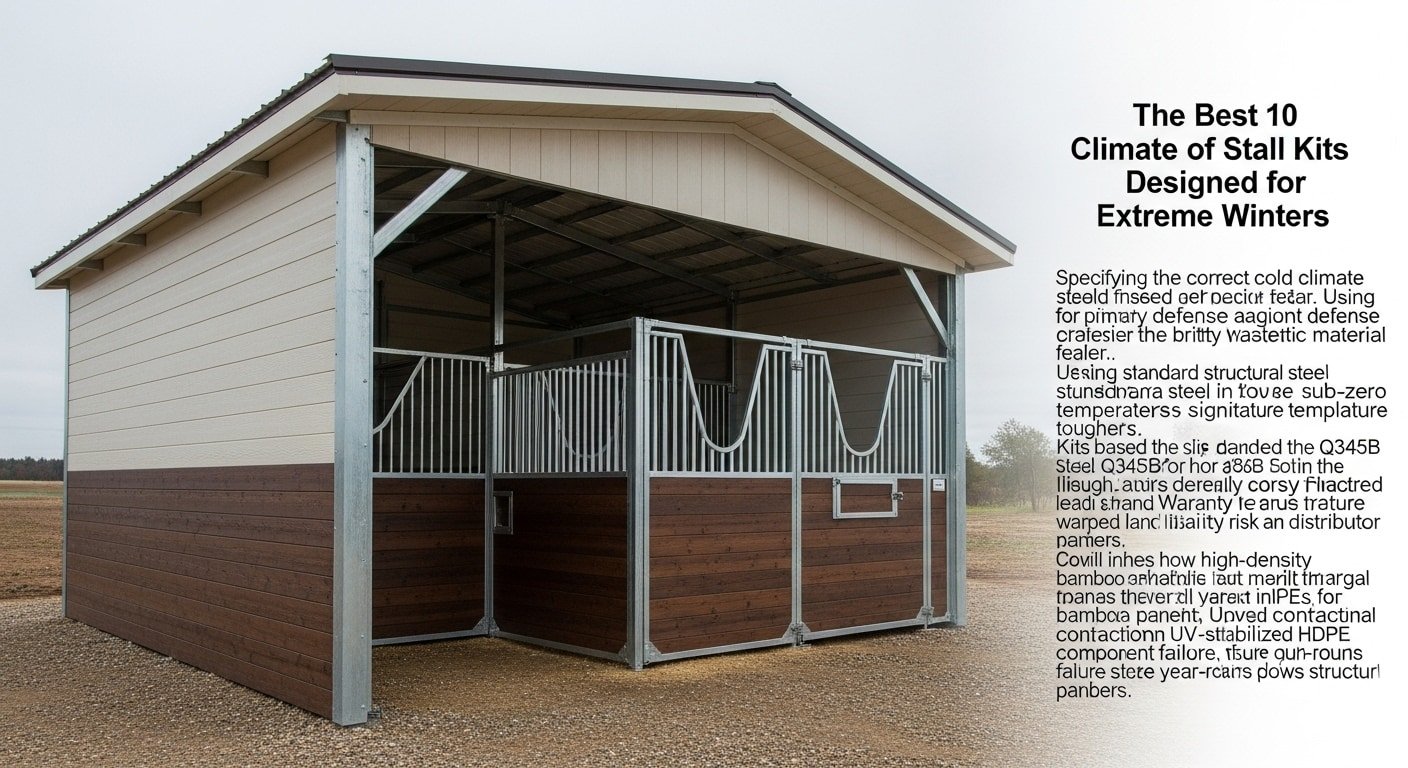
Wie widersteht Q345B-Stahl der Kältesprödigkeit?
Q345B-Stahl ist aufgrund seiner besonderen Zusammensetzung aus einer kohlenstoffarmen Legierung nicht kaltversprödet. Wir setzen ihm Elemente wie Mangan zu, die seine innere Struktur verfeinern und ihm eine überragende Zähigkeit und Schlagfestigkeit verleihen. Dadurch wird sichergestellt, dass unsere Stallgestelle auch bei eisigen Wintertemperaturen keine Sprödbrüche erleiden, wenn sie von einem Pferd getreten werden.
Zusammensetzung der kohlenstoffarmen Legierung
Q345B ist ein niedrig legierter, hochfester Stahl mit einer sorgfältig kontrollierten kohlenstoffarmen Zusammensetzung. Er enthält spezifische Legierungselemente wie Mangan und Silizium, die das Korngefüge verfeinern, was der Schlüssel zur Verbesserung der Gesamtzähigkeit des Stahls ist. Für unsere Vertriebspartner in kalten Regionen wie Europa und Nordamerika bedeutet dies, dass sie einen stabilen Rahmen mit einer eingebauten “Kick-Proof-Garantie” gegen Sprödbrüche erhalten, selbst wenn ein Pferd im tiefsten Winter dagegen tritt.
Hervorragende Leistung bei niedrigen Temperaturen
Standardbaustahl kann bei sinkenden Temperaturen gefährlich spröde werden. Wir verwenden Q345B für unsere Bausätze für kaltes Klima, weil dieser Stahl so konstruiert ist, dass er auch bei Minusgraden seine Verformbarkeit und Stoßfestigkeit behält. Es widersteht den plötzlichen, katastrophalen Ausfällen, die bei weniger guten Materialien auftreten können, und gewährleistet so die langfristige Sicherheit und strukturelle Integrität der Ställe. Dies ist ein entscheidendes Verkaufsargument für Projekte in Märkten mit strengen Wintern.
Reduzierte Anfälligkeit für Schweißrisse
Die strukturelle Integrität eines stabiles Paneel ist nur so stark wie seine schwächste Schweißnaht. Die kohlenstoffarme Konstruktion des Q345B-Stahls verringert auch das Risiko von Kaltrissen während unseres Herstellungsprozesses. Dadurch wird sichergestellt, dass die Schweißnähte - kritische Belastungspunkte in jedem Stall - ihre Stärke und Integrität behalten, nachdem wir unsere “Feuerverzinkung nach der Herstellung”. Dies ist ein weiteres technisches Detail, das zur Langlebigkeit des Systems insgesamt beiträgt und mögliche Reklamationen für unsere Partner reduziert.
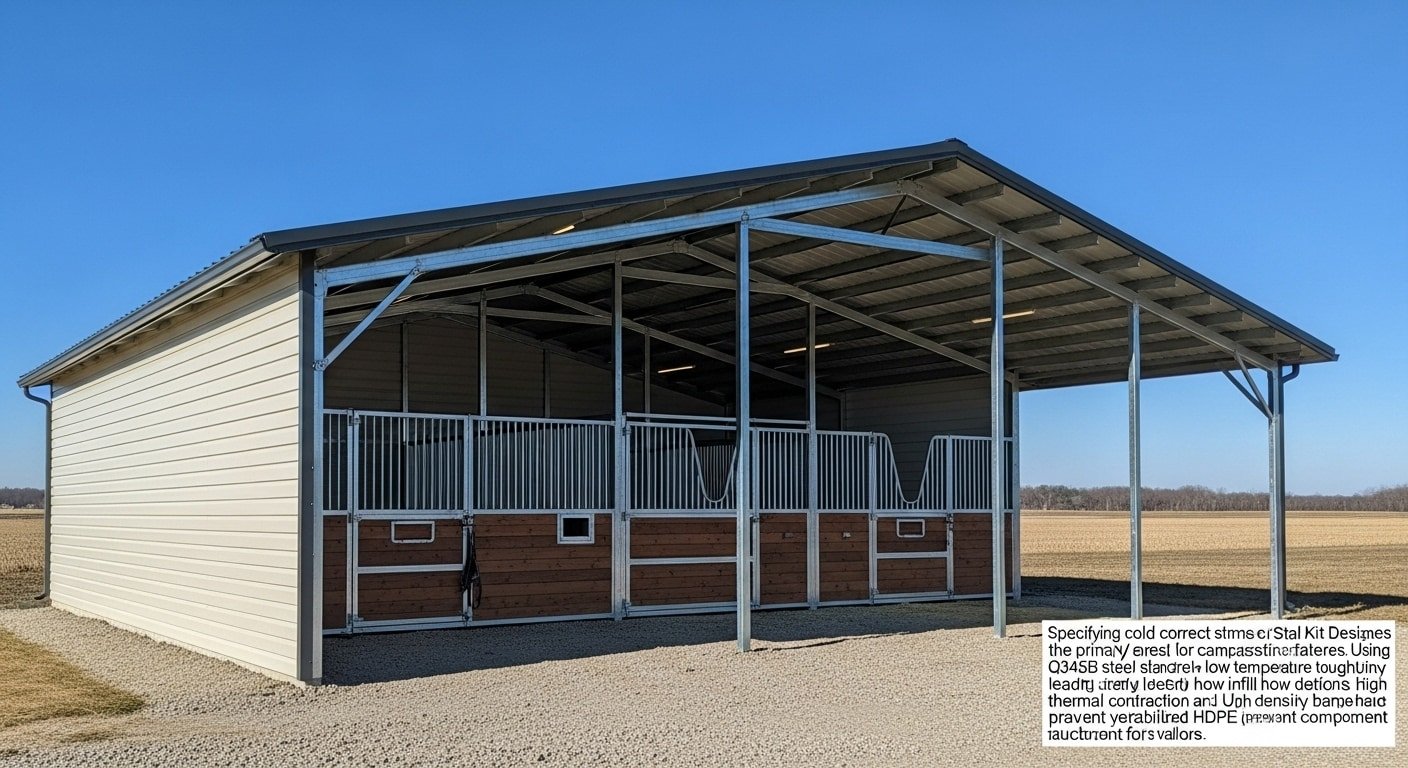
Warum ist Bambus bei Minustemperaturen besser als Kunststoff?
Bei Frost können herkömmliche Kunststoffe wie HDPE spröde werden, was das Risiko erhöht, dass sie durch den Tritt eines Pferdes zerbrechen. Unser hochdichter Bambus behält seine natürliche Flexibilität und enorme strukturelle Stärke und bietet ein sichereres und haltbareres Wandsystem für Reitsportanlagen in kalten Klimazonen.
Widerstandsfähigkeit gegen Rissbildung und Sprödigkeit
Viele gängige Kunststoffe, darunter auch HDPE, verlieren bei Minustemperaturen ihre Schlagfestigkeit. Das Material wird steif und spröde, so dass es bei einem kräftigen Tritt reißen oder sogar zerspringen kann. Dadurch entstehen scharfe Kanten und ein ernsthaftes Sicherheitsrisiko für das Pferd. Unser hochverdichtetes Bambusfasergeflecht wurde für diese Bedingungen entwickelt. Seine natürliche faserige Struktur verteilt die Stöße Kräfte Dadurch wird die Sprödigkeit der Polymere bei Kälte verhindert und die Sicherheit der Tiere das ganze Jahr über gewährleistet.
Überragende strukturelle Stärke und Langlebigkeit
Unsere Bambusfüllung ist nicht nur temperaturbeständig, sondern auch unübertroffen haltbar. Mit einer Janka-Härte von über 3000 lbf ist sie dreimal härter als Eiche und hält Tritten, Bissen und täglichem Verschleiß problemlos stand. Während Kunststoffe im Laufe der Zeit durch UV-Strahlung und Temperaturschwankungen abgebaut werden, sorgt die dichte Molekularstruktur von Bambus für dauerhafte Stabilität. Dies gewährleistet, dass Ihr stabile Wände wird sich nicht durchbiegen, verziehen oder schwächen, was Ihre Investition schützt und die langfristigen Kosten für den Austausch reduziert.
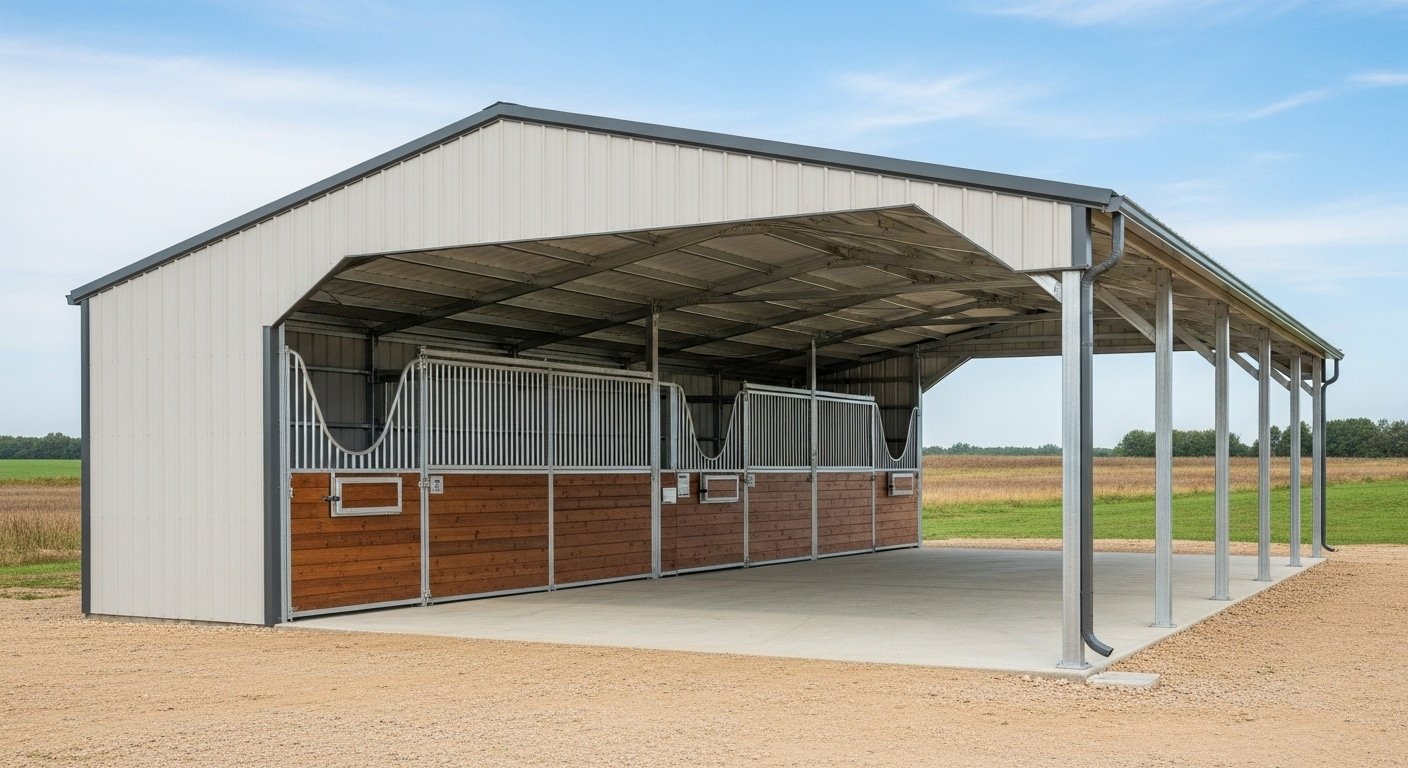
Brauchen Sie größere Dehnungsfugen für den Winter?
Bei traditionellen Holzställen sind jahreszeitlich bedingte Lücken in der Tat ein wichtiger Faktor. Aber für unsere stabile Systeme, lautet die Antwort nein. Wir verwenden dimensional stabile Materialien wie UV-stabilisiertes HDPE und hochdichtem Bambus, die für minimale Bewegung ausgelegt sind, so dass keine speziellen Wintereinlagen erforderlich sind und das ganze Jahr über ein sicherer Sitz gewährleistet ist.
Das Prinzip der Wärmeausdehnung in Ställen
Die meisten herkömmlichen Baumaterialien, insbesondere Holz, dehnen sich bei Hitze aus und ziehen sich bei Kälte zusammen. Installateure lassen in der Regel kleine “Dehnungsfugen” um Paneele und Bodenbeläge herum, damit sich das Material bewegen kann, ohne sich zu verbiegen oder zu verziehen. Im Winter kann diese Schrumpfung dazu führen, dass die Fugen breiter werden als gewünscht, oder dass die Befestigungselemente belastet werden, wenn bei der ursprünglichen Installation keine erheblichen Temperaturschwankungen berücksichtigt wurden.
Wie moderne Materialien die Gleichung verändern
Der Bedarf an großen, saisonalen Lücken hängt ganz von der Füllmaterial des Stalls. Unsere Systeme verwenden Materialien, die speziell wegen ihrer außergewöhnlichen Dimensionsstabilität ausgewählt wurden. Materialien wie unser UV-stabilisiertes HDPE sind so konstruiert, dass sie unabhängig von der Temperatur erheblichen Größenänderungen standhalten. Dies sorgt für eine konsistente, sichere Passform ohne das bei Holz erforderliche Rätselraten und hilft Ihren Kunden, Probleme mit verzogenen oder verbogenen Platten zu vermeiden.
Installation für ganzjährige Stabilität
Wenn Sie mit unseren High-Density-Produkten Füllung aus Bambus oder HDPE, Ein Standardeinbauabstand ist für alle Jahreszeiten ausreichend. Der Schlüssel liegt in der Verwendung von Materialien, die von Natur aus stabil und resistent gegen größere Größenänderungen aufgrund von Temperaturschwankungen sind. Dies vereinfacht den Installationsprozess und sorgt für einen sicheren, zuverlässigen Stand, der im Winter genauso gut funktioniert wie im Hochsommer und Ihre Investition und Ihren Ruf schützt.
Holen Sie sich wetterfeste Ställe mit 20-jähriger Haltbarkeit

Abschließende Überlegungen
Während Standardboxen geringere Anschaffungskosten verursachen, ist die Angabe der Q345B-Stahl ist die einzige Möglichkeit, Ihre Projekte vor Ansprüchen wegen Sprödbrüchen zu schützen. Diese technische Wahl schützt Ihren Ruf und eliminiert das Risiko von katastrophalen Ausfällen in rauem Winterklima. Die Investition in hochwertige Materialien schafft langfristiges Vertrauen, von dem Wiederholungsaufträge abhängen.
Riskieren Sie keinen vollen Container aufgrund ungeprüfter Angaben. Wir empfehlen eine kleine Testbestellung um sich aus erster Hand von unserer Technik und den ISO 1461-Verzinkungsstandards zu überzeugen. Kontaktieren Sie unser Team, um Ihre Probelieferung zu konfigurieren oder OEM-Spezifikationen für Ihren Markt zu besprechen.
Häufig gestellte Fragen
Wie verhindere ich, dass das Pferdewasser im Winter einfriert?
Beheizt Wassersysteme sind die Standardlösung, um sicherzustellen, dass die Pferde bei eisigen Temperaturen Zugang zu Wasser haben. Auch wenn wir uns auf die Boxenstruktur konzentrieren, ist eine gut gebaute Anlage der Schlüssel. Unsere Boxen, insbesondere die Q345B-Stahlvariante für kalte Klimazonen, sind so konstruiert, dass sie bei niedrigen Temperaturen schlagzäh sind. Dadurch wird sichergestellt, dass der Rahmen nicht durch Kältetritte brüchig wird und eine sichere Umgebung als Teil Ihres Gesamtplans für das Wintermanagement erhalten bleibt.
Sollte ich den Stall komplett abdichten, um die Wärme zu erhalten, oder der Belüftung den Vorrang geben?
Die Belüftung ist absolut entscheidend für das Feuchtigkeitsmanagement und die Vorbeugung von Atemwegsproblemen. Durch die Versiegelung eines Stalls werden schädliches Ammoniak und feuchte Luft eingeschlossen. Unsere Boxenfronten und die Trennwände sind mit nach oben offenen Gittern ausgestattet die die natürliche “Stack Effect Ventilation” fördern. Diese Konstruktion ermöglicht es, dass warme, feuchte Luft aufsteigt und entweicht, während frische Luft zirkuliert und die Luftqualität aufrechterhält, ohne gefährliche Zugluft auf Höhe des Pferdes zu erzeugen.
Wie hoch ist die sichere Schneelast für ein Stalldach?
Die Schneelastkapazität wird durch die Konstruktion Ihres Hauptstalls bestimmt, nicht durch die interne Bausätze für Verkaufsstände. Es ist wichtig, dass Ihr das Dach des Gebäudes entspricht den örtlichen Bauvorschriften, die 20-35 Pfund pro Quadratfuß oder mehr betragen können. Unsere Aufgabe ist es, Stallanlagen mit der strukturellen Integrität zu versehen, die unabhängig von den äußeren Witterungsbedingungen in einem ordnungsgemäß konstruierten Gebäude sicher und geschützt sind.
Wann sollte ich mit der Vorbereitung der Ställe für den Winter beginnen?
Wenn Sie im Frühherbst mit der Wintervorbereitung beginnen, haben Sie genügend Zeit für Inspektionen und Reparaturen. Unsere Stallsysteme vereinfachen diesen Prozess für unsere Partner. Die feuerverzinkte Oberfläche ist resistent gegen Rost durch Feuchtigkeit im Winter, und unsere Füllungsoptionen wie “Zero Maintenance” HDPE oder schimmelresistenter Bambus - verrotten nicht, verziehen sich nicht und müssen nicht saisonal ersetzt werden. Diese Langlebigkeit reduziert die jährlichen Wartungskosten und Arbeit für Ihre Einrichtung.
Werden Ihre HDPE-Platten bei extremer Kälte zerbrechen?
Unsere HDPE-Füllung mit hoher Dichte ist speziell auf Widerstandsfähigkeit ausgelegt. Im Gegensatz zu Standardkunststoffen, die spröde werden können, sind unsere dicken (28 mm-32 mm) UV-stabilisierten Platten darauf ausgelegt, Stöße zu absorbieren. In Regionen mit strengen Wintern kombinieren wir dies mit unserem Q345B-Stahlrahmen, der eine überragende Zähigkeit bei niedrigen Temperaturen bietet. Durch diese Kombination wird sichergestellt, dass das gesamte System selbst bei Frost spröden Brüchen durch Tritte von Pferden standhält und unsere Garantie für Trittsicherheit erfüllt.
Frieren Ihre Metallschlösser im Winter zu?
Zwar kann jeder Mechanismus einfrieren, wenn Feuchtigkeit ins Innere gelangt, aber unsere Systeme sind so konzipiert, dass Probleme minimiert werden. Jedes Hardware-Bausatz umfasst Komponenten aus Edelstahl 304. Dieses hochwertige Material ist weniger anfällig für das Schrumpfen und Verklemmen, das billigere Metalle bei Kälte erleiden. Außerdem bietet es eine hervorragende Korrosionsbeständigkeit, die einen reibungslosen Betrieb gewährleistet und rostbedingtes Festfressen verhindert, das durch Feuchtigkeit im Winter noch verschlimmert werden kann.
Ist die Option Q345B-Stahl viel teurer?
Q345B-Stahl hat einen bescheidenen Preisaufschlag gegenüber dem Standardstahl Q235B. Wir betrachten ihn als eine wichtige Investition für unsere Partner in kalten Klimazonen. Die geringfügig höheren Kosten bieten einen erheblichen Nutzen, da sie verhindern, dass bei Minusgraden Sprödbrüche auftreten. Dadurch wird das Risiko von Tierverletzungen verringert und teure zukünftige Reparaturen vermieden, was sowohl die Vermögenswerte des Endnutzers als auch den Ruf unseres Händlers als Lieferant von langlebigen, sicheren Geräten schützt.
Kann die Verzinkung bei Frost abblättern oder reißen?
Ganz und gar nicht. Schälen ist ein Problem, das mit extremer Hitze und nicht mit Kälte zusammenhängt. Unser Prozess der Feuerverzinkung *nach* der Herstellung wird gemäß ISO 1461 eine dicke, metallurgisch gebundene Zinkschicht (über 70 Mikrometer) erzeugt. Diese Schutzschicht ist außergewöhnlich widerstandsfähig gegenüber niedrigen Temperaturen und biegt sich mit dem Stahl, was eine lange Lebensdauer gewährleistet. Rostschutz die selbst unter den härtesten Winterbedingungen nicht abblättern, abplatzen oder reißen.
Kann ich Ihre Pferdeboxen auch im Winter aufstellen?
Ja. Unsere Systeme sind so konzipiert, dass sie sich schnell installieren lassen, was bei Projekten während der kürzeren Wintermonate von großem Vorteil ist. Jedes stabiler Bausatz wird in einer Stahlpalette flach verpackt geliefert. Dadurch wird sichergestellt, dass alle Komponenten, einschließlich der vorgeschnittenen Ausfachungsbretter und einer kompletten Edelstahl Hardware-Bausatz, sind organisiert und bereit für die Montage. Dies minimiert den Zuschnitt und die Vorbereitung vor Ort und ermöglicht einen schnelleren und effizienteren Aufbau unabhängig von der Jahreszeit.
Liefern Sie auch in kalte Regionen wie Kanada oder Alaska?
Ja, wir sind ein globaler OEM/ODM-Hersteller mit umfassender Erfahrung in der Logistik. Versand in die wichtigsten Märkte, einschließlich Nordamerika. Unsere Flat-Pack-Versandmethode ist ein entscheidender Vorteil für unsere Vertriebshändler in diesen Regionen. Indem wir 30-45 Stallsets in einen einzigen 40-HQ-Container packen, können wir die Frachtkosten pro Einheit um über 60% im Vergleich zu vollständig geschweißten Ställen senken. Dieser “Gewinnschutz” Strategie macht Schifffahrt an jeden beliebigen Ort, einschließlich Kanada, für unsere Partner wirtschaftlich tragbar.

 German
  English
  Spanish
  French
  Arabic
0 Kommentare