


Accurately forecasting construction costs for equine facilities requires navigating volatile material prices and labor variances. For investors, the difference between a profitable asset and a sunk cost often lies in selecting the right structural materials and identifying hidden site preparation expenses early.
This guide analyzes 2026 market rates per square foot, compares the ROI of prefabricated metal versus custom wood, and details the 20-year total cost of ownership to help you maximize your development budget.
How much does it cost to build horse stables per sq ft in 2026?
Quick Answer: In 2026, building horse stables typically ranges from $30 to $300 per square foot, with most standard projects averaging between $50 and $120 per square foot. Metal barns generally offer the most affordable rates starting around $30 per square foot, while timber frame and post & beam structures command premium prices often exceeding $100 per square foot depending on finishes.

Core Factors Influencing Construction Costs
Before analyzing specific square footage prices, it is vital to understand the drivers behind the wide cost variance. The gap between a budget-friendly project and a premium facility usually comes down to three specific elements.
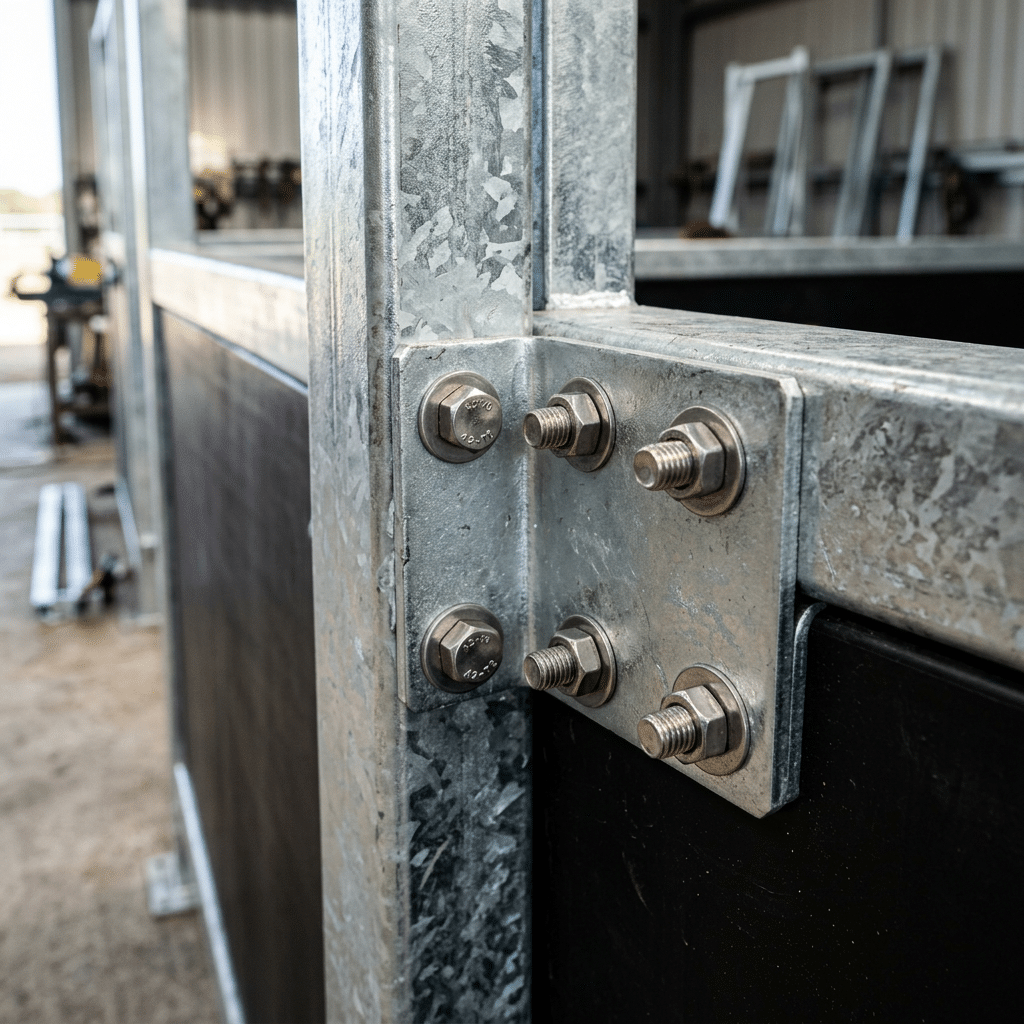
- Material Selection: Base pricing is heavily dictated by your structural choice. Steel and prefabricated kits cost significantly less than custom timber. For example, at DB Stable, we utilize hot-dip galvanized steel frames to keep material costs competitive while ensuring structural integrity that outlasts traditional wood.
- Labor Intensity: Construction methods affect your bottom line. Traditional carpentry requires skilled tradesmen at high hourly rates. In contrast, simple kit assembly drastically reduces on-site hours.
- Site Preparation: Local soil conditions and barn size dictate foundation requirements. A permanent concrete foundation is expensive; however, opting for portable or modular designs can sometimes reduce the need for extensive groundworks.
Cost Breakdown by Barn Structure Type
Different construction methods yield vastly different price points. The table below synthesizes 2026 market data to help you compare the estimated costs per square foot for the most common stable types.
| Structure Type | Avg Cost (Per Sq Ft) | Cost Breakdown & Notes |
|---|---|---|
| Metal Horse Barns | ~$37 | Typical breakdown: Materials ~$20, Build ~$12, Finishing ~$5. 💡 Value Choice: A 6-stall unit usually falls between $72,000 and $168,000. |
| Pole Barns | $35 – $70 | A mid-range option balancing durability with cost-effective construction. Widely used for agricultural storage and housing. |
| Post & Beam | $70 – $150 | ⚠️ Premium: Prices are driven by heavy timber materials and complex joinery labor. High aesthetic appeal but higher maintenance. |
| Architectural Variations | $30 – $100+ | Basic run-in sheds start low ($30–$40), while complex center-aisle designs with climate control often exceed $100/sq ft. |
Budgeting for Interiors and Essential Add-ons
The structural shell is only part of the equation. Investors must allocate funds for internal components, which are critical for the safety and health of the horses.
- Stall Components & Fencing: These typically run $15–$35 per linear foot. To maximize value within this budget, we use 10mm HDPE boards for our infills, which provide superior UV resistance and durability compared to standard wood that may require frequent replacement.
- Plumbing & Waterers: Automatic waterers streamline operations but add $200–$1,000 per stall to your plumbing budget.
- Ventilation Systems: Features like cupolas range from $500 to $5,000 depending on size. Proper airflow is non-negotiable for respiratory health.
- Weather Protection: Adding porches or overhangs increases the footprint cost by $20–$60 per square foot, providing essential shelter from elements.
How DB Stable Optimizes Costs with Prefabricated Designs
Construction costs can escalate quickly due to labor and material waste. Our manufacturing model at DB Stable is specifically designed to address these financial challenges while maintaining high safety standards for the Australian and New Zealand markets.
🚀 Direct Factory Manufacturing
By shipping directly from the factory, we reduce overhead significantly. This allows us to offer competitive pricing without sacrificing the quality of materials, such as our 42+ micron hot-dip galvanized steel which prevents rust and extends the asset’s lifespan.
✅ Reduced On-Site Labor
Prefabricated modular designs simplify the installation process. Unlike traditional construction that requires weeks of carpentry, our portable stables are designed for rapid assembly, drastically lowering your labor bill.
💡 Asset Flexibility
Permanent structures sink capital into the land. The portable nature of our stables allows owners to retain the asset value if they move or restructure their property, unlike fixed buildings which cannot be relocated.
Is a pre-engineered metal structure cheaper for horse stables?
Quick Answer: Yes, pre-engineered metal structures are generally more cost-effective than traditional wood options. While raw material costs can be similar to pole barns, metal structures typically save $3 to $5 per square foot on total installation. This is largely due to 40% faster construction times, which significantly reduces labor costs. Long-term savings also accrue through lower insurance premiums and resistance to rot, termites, and fire.
Comparing Initial Construction Costs: Metal vs. Wood
When analyzing the upfront investment for a new stable facility, the “sticker price” of materials is only half the equation. The most significant price variance often comes from labor hours and site preparation.While the raw materials for a metal barn and a wood pole barn are comparable, the efficiency of installation creates a distinct gap in the final cost per square foot.
| Construction Type | Est. Cost Per Sq. Ft. | Primary Cost Driver |
|---|---|---|
| Pre-Engineered Metal (Prefab) | ~$37 | Efficient assembly (Lower Labor) |
| Pole Barn (Wood) | ~$40 | On-site cutting & framing |
| Post & Beam (Traditional) | ~$115 | Complex craftsmanship & Heavy Timber |
The primary financial advantage of metal lies in pre-engineering. In traditional wood construction, carpenters must measure, cut, and drill lumber on-site, leading to higher waste and longer labor hours.Conversely, DB Stable designs utilize pre-cut and pre-drilled components that are shipped ready for assembly. This allows builders to simply bolt the structure together rather than fabricating it from scratch in the field. This streamlined process typically results in a 40% faster construction timeline, drastically reducing the hourly wages paid to contractors.
Long-Term Value: Maintenance and Durability Factors
The initial construction cost is only the entry fee; the “Total Cost of Ownership” (TCO) dictates the true value of the investment over 10 to 20 years. Wood structures, while aesthetically classic, introduce recurring costs related to organic decay.Investors and developers must consider these long-term financial impacts:
- ⚠️ Rot and Pest Damage: Wood is susceptible to moisture absorption, warping, and termite infestation. This requires frequent board replacement and chemical treatments.
- ✅ Maintenance Reduction: Metal structures do not require re-painting or sealing to maintain structural integrity. We utilize HDPE (High-Density Polyethylene) infill boards in our designs specifically to eliminate the warping and chewing damage common with wood planks.
- 🚀 Insurance Savings: Because steel is non-combustible, insurance carriers often offer lower premiums for metal stables compared to wood barns, which are viewed as higher fire risks.
How DB Stable Maximizes Value in Prefabricated Designs
Beyond the inherent benefits of metal, the supply chain model significantly impacts the final price. Traditional construction involves multiple markups as materials move from mill to lumberyard to contractor.DB Stable operates on a direct-factory model.
By shipping directly from our manufacturing facility to clients in Australia and New Zealand, we eliminate middleman markups. This ensures that the budget goes toward material quality rather than distribution fees.Specific technical features also protect the investment value:
Rust Prevention: We use hot-dip galvanized steel frames with a coating thickness exceeding 42 microns. This provides a rust-free lifespan of 10+ years, avoiding the need for premature structural repairs.
Asset Portability: Unlike a permanent pole barn, our prefabricated designs are modular. If the land is sold or the business relocates, the stables can be disassembled and moved. This portability transforms the stable from a “sunk cost” into a transferable asset.

What are the hidden site prep costs of building horse stables?
Quick Answer: Site preparation typically consumes 10% to 15% of a total stable construction budget, with costs ranging from $1,000 to over $10,000 depending on terrain. Beyond basic grading, significant expenses often arise from imported fill materials like limestone and sand, specialized excavation for frost lines, and unexpected geological hurdles such as bedrock or underground springs.
For investors and developers, the “dirt work” phase is often where budget variance is highest. While the cost of the stable structure itself is fixed—especially when purchasing prefabricated units—the ground it sits on represents a variable risk. Understanding these hidden costs is essential for accurate ROI calculation.
Understanding the Base Costs: Grading and Materials
Before a single post is driven into the ground, the site must be physically prepared to handle the load of the structure and the traffic of 1,000-pound animals. These costs are “visible” but often underestimated in initial pro-formas.
- Material vs. Labor Split: In typical equine projects, labor and machinery operations often outweigh the cost of the fill dirt itself. For instance, a standard $7,125 site prep job might allocate only $2,600 to physical materials, with the remainder consumed by skilled equipment operation.
- Fill Material Layers: Proper drainage is non-negotiable for equine health. This requires specific layers of fill sand, crushed asphalt, or limestone screenings. Finishing layers alone can cost upwards of $3,900 to ensure a surface that won’t turn to mud. At DB Stable, we recommend a compacted crushed rock base for our portable units, which provides excellent drainage without the expense of a full concrete slab.
- Vegetation Removal: Clearing sod and leveling organic soil is the mandatory first step. Leaving organic material beneath a stable base leads to settling and structural instability over time.
The “Invisible” Expenses: Geology and Climate Factors
Budget overruns in site preparation usually stem from what lies beneath the surface. These geological and climatic variables can force a change in construction methodology mid-project.
- ⚠️ Subsurface Surprises: Excavation can grind to a halt if crews encounter large buried rocks, bedrock, or underground springs. These hurdles require specialized heavy equipment (like hydraulic breakers), drastically increasing hourly labor rates and project timelines.
- ⚠️ Frost-Free Depths: In colder regions, local building codes may demand deep trenching to place footings below the frost line to prevent frost heave. This can add thousands to excavation bills compared to warmer climates.
- ⚠️ Equipment Variance: While simple grading can be accomplished with standard skid steers, complex terrain or hard ground necessitates expensive trenchers and large excavators.
How DB Stable’s Portable Design Simplifies Site Requirements
One of the most effective strategies to mitigate volatile site prep costs is utilizing prefabricated, portable structures. Because DB Stable’s units are engineered with a self-supporting, hot-dip galvanized steel frame (42+ microns), they reduce the dependency on invasive groundworks.
| Cost Factor | Traditional Pole Barn | DB Stable Prefabricated Unit |
| Foundation | Requires deep concrete footings below frost line. | Can sit on a simple level pad, crushed rock, or existing concrete. |
| Machinery | Heavy excavators and trenchers needed. | Minimal machinery; 9-part panel design allows hand setup. |
| Flexibility | Permanent placement. | 🚀 Portable and relocatable based on site needs. |
Adaptability to Existing Surfaces: The “flexible” nature of our structures allows for installation on existing concrete pads or compacted gravel surfaces. This capability potentially bypasses the need for deep excavation entirely, saving significant capital on “invisible” geological costs.
Modular Setup Reduces Heavy Equipment: Our specific 9-part stable panel design allows for easier handling. This means installation can often proceed without the heavy cranes or large-scale machinery required for traditional timber frame construction, further protecting the site’s ground integrity.

Prefab kits vs custom built horse stables: Which yields better ROI?
Quick Answer: Prefabricated stables generally yield better ROI through lower initial costs ($10–$45 per sq ft) and faster deployment compared to custom wooden builds ($20–$90+). Investors benefit from reduced labor expenses, predictable material pricing, and lower property tax liabilities often associated with portable structures compared to permanent pole barns.
Investors and developers must weigh upfront capital against long-term operational costs when selecting equine infrastructure. While custom builds offer limitless design freedom, prefabricated kits have become the financial standard for maximizing Return on Investment (ROI) in the equine sector.
| Comparison Factor | Prefab Metal Kits | Custom Wooden Builds |
|---|---|---|
| Cost Per Sq Ft | $10 – $45 | $20 – $90+ |
| Construction Time | 1–3 days (On-site assembly) | Weeks or months |
| Maintenance | Minimal (Rust/Rot resistant) | High (Painting, Staining, Treating) |
| Asset Liquidity | High (Relocatable) | Low (Fixed to property) |
Analyzing Initial Investment and Construction Timelines
The speed at which an equine facility becomes operational directly impacts cash flow. Custom wooden barns require extensive site preparation, specialized carpentry labor, and are subject to fluctuating lumber prices. Conversely, prefab kits arrive ready for assembly, significantly compressing the timeline from investment to revenue generation.
Key financial divergences include:
- Cost per square foot divergence: Metal prefab kits typically range from $10–$45 per square foot. In contrast, custom wooden barns often run $20–$90+ depending on the finishes and lumber grade selected.
- Inclusion vs. Add-ons: Prefab pricing models usually include essential components such as windows, doors, and partitions. Custom builder quotes frequently exclude these “upgrades,” leading to scope creep and higher final bills.
- Time-to-Value 🚀: Factory manufacturing enables rapid 1–3 day on-site assembly. This bypasses the weather delays and extended labor costs that plague custom pole barn projects, allowing owners to board horses sooner.
Long-Term Value: Maintenance, Durability, and Taxes
Operational expenses (OpEx) can erode the profitability of a facility over time. Wood structures are susceptible to cribbing (chewing), rot, and warping, necessitating frequent repairs. Steel prefab structures eliminate these organic vulnerabilities.
Financial benefits of steel prefab structures include:
- Structural integrity: Steel prefab structures offer a 25x higher strength-to-weight ratio than wood. This resilience against severe weather reduces the need for emergency capital expenditures on repairs.
- Asset Classification 💡: Many jurisdictions classify portable prefab barns as “temporary structures” or equipment rather than permanent real estate improvements. This distinction can lower property tax liabilities and insurance premiums.
- Liquidity and flexibility: Prefab kits remain relocatable assets. If the property is sold or the operation moves, the stables can be disassembled and transported, retaining value in a way permanent foundations cannot.

How DB Stable Maximizes ROI Through Material Longevity
Generic steel kits offer savings, but industrial-grade manufacturing standards amplify those returns by extending the asset’s usable life. At DB Stable, we focus on reducing the total cost of ownership through specific material choices that withstand harsh environments without constant upkeep.
Our manufacturing process supports long-term ROI through:
- Extended lifespan with Galvanization: We utilize hot-dip galvanized steel frames coated to over 42 microns. This industrial standard prevents rust for 10+ years, protecting your capital investment from corrosion-related depreciation.
- Low-maintenance infill ✅: We replace high-maintenance wood with 10mm UV-resistant HDPE boards. These boards do not require painting or treating and are impervious to rot, significantly reducing ongoing labor costs compared to traditional timber.
- Cost efficiency: By combining these industrial-grade materials with a direct-factory pricing model, we lower the initial break-even point for investors while ensuring the product endures decades of heavy use.
How much does metal roofing cost vs shingles for horse stables?
Quick Answer: Metal roofing typically requires an upfront investment 2–3 times higher than asphalt shingles, with material costs ranging from $4.00 to $40.00 per square foot versus $4.50 to $12.25 for shingles. However, this higher initial cost is offset by longevity; metal roofs often last 40–100 years, whereas shingle roofs typically require replacement every 15–30 years.
Initial Investment vs. Lifecycle Value
For investors and developers planning equine facilities, the choice between metal and asphalt roofing often comes down to a battle between immediate CapEx and long-term OpEx. Metal roofing presents a significantly steeper entry cost, often double or triple the price of an installed asphalt shingle roof. This initial financial hurdle can be substantial for large-scale commercial stable projects.
However, the Return on Investment (ROI) becomes undeniable when analyzing the asset’s total lifecycle. A single metal roof installation can effectively outlast 3–4 cycles of shingle replacements. While shingles may save money on day one, they introduce recurring replacement costs and labor disruptions every few decades.
Lifetime cost analysis heavily favors metal for permanent stable structures. Over a 50-year period, the total cost of ownership for metal is significantly lower, as it virtually eliminates the inflation-prone costs of future re-roofing materials and labor.
Comparative Cost Breakdown and Specifications
To budget accurately for your stable development, it is crucial to look at specific data points regarding material and project costs. While simple roof lines on prefabricated barns—like the designs we utilize at DB Stable—favor metal panels for faster installation, complex traditional designs can alter the labor equation.
| Cost Factor | Metal Roofing | Asphalt Shingles |
|---|---|---|
| Material Cost (per sq. ft.) | $4.00 – $40.00 | $5.00 – $7.00 (Architectural) |
| Total Project Est. (Nat. Avg.) | ~$51,800+ | ~$31,800 |
| Lifespan | 40 – 100 Years | 15 – 30 Years |
| Installation Speed | Fast (Panel Systems) | Slow (Individual Shingles) |
Note on Complexity: Complex roof designs with multiple valleys or dormers can reduce the installation speed advantage of metal. However, for streamlined agricultural buildings, the efficiency of metal panel installation often reduces on-site labor hours.
Performance, Safety, and Maintenance Factors
Beyond the price tag, the functional differences between these materials directly impact horse health and stable maintenance schedules. Investors must consider how the roofing material interacts with the environment and the animals housed within.
- Weather Resistance: 🚀 Metal roofs are engineered to withstand wind speeds up to 140 mph. This offers superior protection during storms compared to the 90 mph limit of standard shingles, a critical factor for stables in cyclone-prone regions like Australia and New Zealand.
- Sanitation and Health: ✅ Metal surfaces resist moss and algae growth, which are common issues with shingles in humid climates. This helps maintain a healthier, spore-free environment for horses.
- Noise Considerations: ⚠️ While durable, metal roofs can be noisier during heavy rain or hail. This can potentially cause stress to sensitive livestock if proper insulation is not installed to dampen the sound.
How DB Stable Optimizes Roofing Durability
To bridge the gap between high performance and cost-efficiency, we integrate industrial-grade materials directly into our prefabricated designs. DB Stable utilizes steel board roofs available in 0.4mm and 0.8mm thicknesses. This ensures structural integrity that matches the higher end of metal roofing performance standards without the exorbitant custom fabrication costs often seen in local construction.
Our approach includes specific treatments to combat corrosion:
- Double Protection: We include powder coating and hot-dip galvanized finishes. This mirrors our 42-micron galvanization standard used on frames, protecting against rust and weather wear to align with the 40+ year lifespan expected of premium metal roofs.
- Maintenance Reduction: By integrating these durable materials into our portable stable kits, we minimize the ongoing maintenance costs typical of traditional shingle structures.
- Structural Synergy: The roof works in tandem with our heavy-duty hot-dip galvanized steel frames, ensuring the entire structure—not just the roof—is built for decades of service.
What is the 20-year TCO of wood vs steel horse stables?
Quick Answer: Although wood structures often carry perceived lower entry costs, steel stables typically deliver superior ROI over a 20-year horizon. Steel construction averages $17–$30 per square foot compared to wood’s $25–$100, while virtually eliminating the annual sealing, painting, and structural repairs required to combat rot and insect damage in timber.
| Cost Factor | Traditional Wood Structure | Prefabricated Steel (DB Stable) |
|---|---|---|
| Initial Material Cost | High variance ($25–$100/sq ft) | Consistent economy ($17–$30/sq ft) |
| Installation Labor | High (Custom carpentry required) | Low (Prefabricated assembly) |
| Annual Maintenance | Significant (Sealing, painting, board replacement) | Minimal (Rinsing, checking latches) |
| Lifespan Risks | Rot, termites, chewing damage | Rust (mitigated by galvanization) |
Initial Investment Analysis: Construction and Labor
Many investors operate under the misconception that timber is always the cheaper entry option. However, when analyzing square footage costs, steel frequently emerges as the more economical choice. Wood construction typically ranges from $25 to $100 per square foot depending on timber grade, whereas steel structures average between $17 and $30 per square foot.Beyond material costs, labor expenses significantly impact the initial budget:
- Prefabrication Savings: Steel framing installation often costs 50% less than wood because the components are pre-cut and pre-welded. We leverage this at DB Stable by designing our units for rapid assembly, reducing the hours contractors spend on-site.
- Foundation Requirements: Wood often requires deep post-setting and extensive carpentry. In contrast, modular steel systems can be anchored to simple concrete pads or existing slabs.
- Predictability: Steel prices are generally more stable than lumber, which fluctuates wildly based on supply chain shortages and environmental regulations.
The 20-Year Maintenance Gap: Wood vs. Steel
The Total Cost of Ownership (TCO) diverges sharply once the stable is operational. Wood requires continuous financial input to maintain its structural integrity and appearance. Owners must budget for annual sealing, staining, or painting to prevent moisture ingress. Furthermore, wood is susceptible to “cribbing” (horses chewing on wood), which necessitates frequent replacement of boards and posts.Steel changes the maintenance profile from repair to preservation:
- ✅ Minimal Upkeep: Steel maintenance is largely restricted to annual rinsing and cleaning, rather than structural intervention.
- ✅ Decay Resistance: Unlike pressure-treated timber which has a finite lifespan before rot sets in, galvanized steel resists warping and decay.
- ✅ Insect Proof: Steel eliminates the risk of termites and carpenter ants, which can silently destroy the capital value of a wooden barn.
Hidden Financial Factors: Insurance and Resale Value
When calculating TCO, investors must look at asset appreciation and risk mitigation. Steel structures typically command lower insurance premiums because they are non-combustible. Fire resistance is a critical safety factor that insurers reward, whereas wood barns present a higher total loss risk during wildfires or electrical faults.Depreciation rates also favor metal construction:
- Resale Value: A 20-year-old wood barn often requires demolition or massive renovation, reducing property value. A maintained steel barn retains significant functional value.
- Portability: Because DB Stable units are modular, they are considered movable assets. This allows owners to sell the stable units separately from the land if business needs change, a liquidity option impossible with permanent timber poles.
- Energy Efficiency: While wood is a natural insulator, modern steel barns with proper lining systems control thermal variance effectively, managing long-term operational costs.
How DB Stable Minimizes Long-Term Ownership Costs
We specifically engineer our products to widen the TCO gap between our steel units and traditional wood. General steel is durable, but manufacturing standards dictate the actual lifespan.Here is how our specifications directly reduce your long-term expenses:
- 🚀 Superior Galvanization: We use hot-dip galvanized steel frames with a coating thickness over 42 microns. This exceeds standard “pre-galvanized” coatings, extending the rust-free lifespan significantly beyond the industry average.
- 💡 Zero-Maintenance Infill: Instead of plywood that rots, we integrate 10mm UV-resistant HDPE boards. These eliminate the cost of board painting and are impervious to moisture and urine.
- 🚀 Flexibility as an Asset: Our modular “portable” design enhances resale potential. If you relocate or sell your facility, the stables can move with you or be sold as independent assets, preserving your initial capital investment.
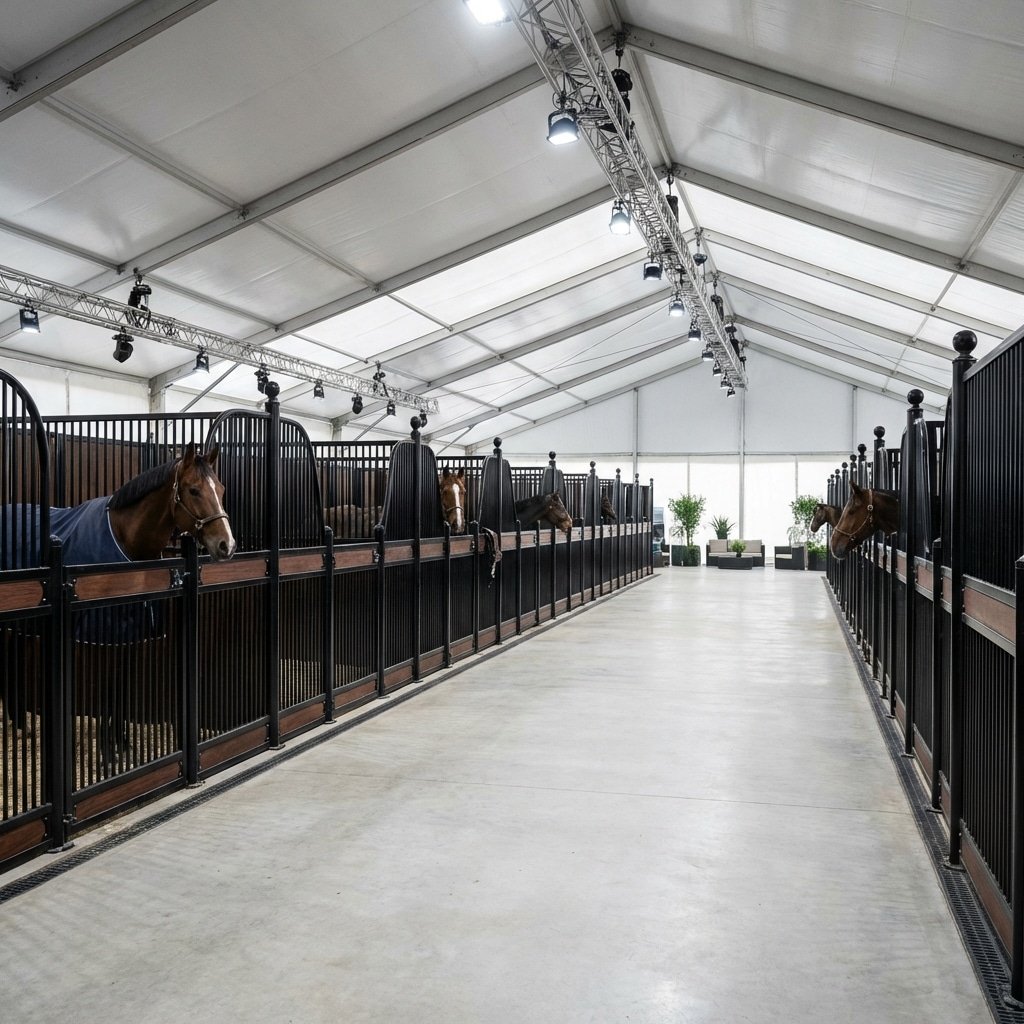
Premium Stables Engineered for Global Climates
Secure your equestrian facility with hot-dipped galvanized steel frames and weather-adaptable infills. Designed for longevity and compliant with international safety standards, our modular stables provide optimal comfort in any environment, from freezing winters to scorching summers.
Frequently Asked Questions
Quick Answer: Building a horse stable varies significantly by material, with costs ranging from $62,200 to over $240,000 for a 6-stall unit. Metal and pole barns generally offer the most cost-effective solutions—often 40% cheaper than timber frames—while prefabricated galvanized steel options provide a balance of durability, speed, and lower long-term maintenance.
How much does it cost to build a 6-stall horse stable?
The cost to build a 6-stall stable typically falls between $62,200 and $240,000, largely depending on whether you choose traditional timber framing or modern steel construction.
Timber frame barns are aesthetically pleasing but labor-intensive, driving costs up to $100+ per square foot. In contrast, prefab metal kits and pole barns offer a functional entry point at a significantly lower price per square foot.
| Construction Type | Total Cost Range (6-Stall) | Cost Per Sq Ft |
| Prefab Metal Kit | Approx. $62,200 | Entry Level |
| Metal / Pole Barn | $72,000 – $168,000 | $30 – $70 |
| Timber Frame | $168,000 – $240,000 | $70 – $100+ |
Are metal horse stables cheaper than traditional wood barns?
Yes, metal horse stables are generally 40% to 60% cheaper than traditional wood barns. While post and beam construction can cost between $110 and $150 per square foot, metal structures typically range from $40 to $60 per square foot.
The savings extend beyond material costs into labor and long-term ownership:
- 🚀 Construction Speed: Metal kits often feature pre-drilled components, reducing on-site construction time by up to 40%.
- 💰 Entry Cost: A simple 2-stall metal barn can start around $33,600, whereas wood equivalents are significantly higher.
- ✅ Long-Term Savings: Metal offers superior fire resistance, which often lowers insurance premiums, and requires minimal maintenance compared to wood that needs regular staining and pest treatment.
What is the most cost-effective way to build horse stables?
The most economical methods are Pole Barns and Prefab Metal Kits. These approaches minimize material waste and labor hours. To maximize your budget, consider these strategies:
- DIY Construction: Managing the assembly yourself can save $5,000 to $20,000 in labor costs if you have the necessary skills.
- Select “Shed Row” Styles: A simple inline design is cheaper than a center-aisle barn, with costs often falling between $18,000 and $20,000 for basic setups.
- Optimize Foundations: Pole barns utilize posts driven into the ground rather than a continuous concrete foundation, significantly reducing concrete costs.
- Material Sourcing: Using standard pressure-treated wood or galvanized steel is far more cost-effective than custom timber cuts.
Are prefab stables good quality compared to custom builds?
Prefab stables can offer exceptional durability, often surpassing custom wood builds in longevity if the right materials are used. While custom builds ($70k–$90k) provide unique aesthetics, prefab kits ($30–$70/sq ft) offer standardized reliability and engineering.
The key to quality is the steel treatment and infill material:
- ⚠️ Avoid Painted Steel: Standard paint chips easily, leading to rust.
- ✅ Look for Hot-Dip Galvanization: High-quality prefabs use steel that is hot-dip galvanized to over 42 microns. This provides a thick protective layer that resists rust for decades—a standard we strictly adhere to at DB Stable to ensure longevity in harsh climates.
- ✅ Select Durable Infills: Unlike softwoods that horses can chew or kick through, modern prefab units often utilize HDPE (High-Density Polyethylene) boards. These are UV-resistant, shock-absorbing, and require virtually no maintenance.
Final Thoughts
Developing a profitable equine facility in 2026 requires looking beyond the initial sticker price to evaluate the total cost of ownership. Selecting prefabricated steel structures over traditional timber significantly reduces upfront capital expenditure through streamlined assembly and lower labor requirements.
Beyond construction, materials like hot-dip galvanized steel and HDPE infill eliminate the recurring maintenance expenses associated with organic decay, ensuring your asset retains its value over decades rather than depreciating through wear.
Strategic foresight in material selection directly impacts your bottom line and operational flexibility. By opting for modular designs that offer portability and industrial-grade durability, investors transform a standard building expense into a versatile, liquid asset. Partnering with a manufacturer that prioritizes direct-factory efficiency secures high-performance infrastructure without the markup, positioning your project for immediate cash flow and long-term stability.

 English
  Spanish
  French
  Arabic
  German
0 Comments