A pressure treated timber horse stall is sold on its steel and rarely examined on its wood. The frame gets a section size, a coating line and a bolt schedule. The boards that face the horse — kickboards, liner panels, door infill — get whatever the purchase order happened to say.
Work from what is published here. Stall systems are offered with bamboo, HDPE or pine liners, sizes are adjustable, hot-dip galvanized steel carries a stated 20-year rust-resistance claim, the operation is ISO 9001 and CE, the entry quantity is 10 stall systems or 50 fence panels, lead time is 4-6 weeks with 1-2 weeks expedited from Sydney or Warsaw, and the market positions name Polish winters at minus 10 degrees Celsius and Australian and Spanish heat at 40 degrees Celsius. Not published: a species grade, a preservative, a retention figure, a shipping moisture content or a price. The distance between those two lists is this article.
النقاط الرئيسية
- Treatment is a document, not a look. A brown tint and a smooth face prove nothing; ask what chemical and what carrier.
- Three answers separate a specification from a brochure: active ingredient, the exposure class it is rated for, and what happens at a cut end.
- Untreated timber is reasonable on a dry internal face and a maintenance schedule wherever a board meets a mudline or standing meltwater.
- Contact outranks chemistry. Horses lick and chew stall fronts, so confirm the product suits that contact in your own market.
- Only liner options are published here — bamboo, HDPE and pine. There is no treatment sheet for the pine to read.
- Photograph the stamp and the end grain before assembly. A fastened board is the hardest thing in a barn to inspect.
The part of the stall nobody specifies
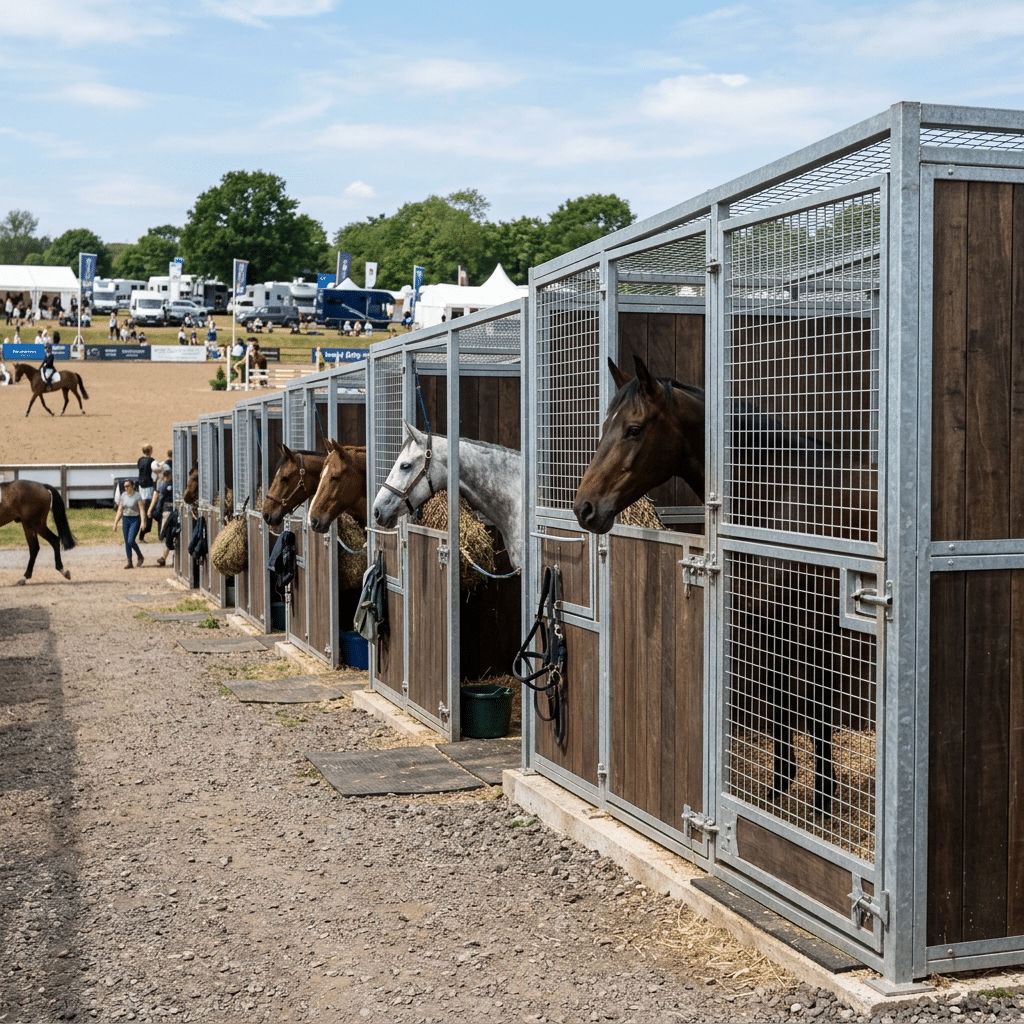
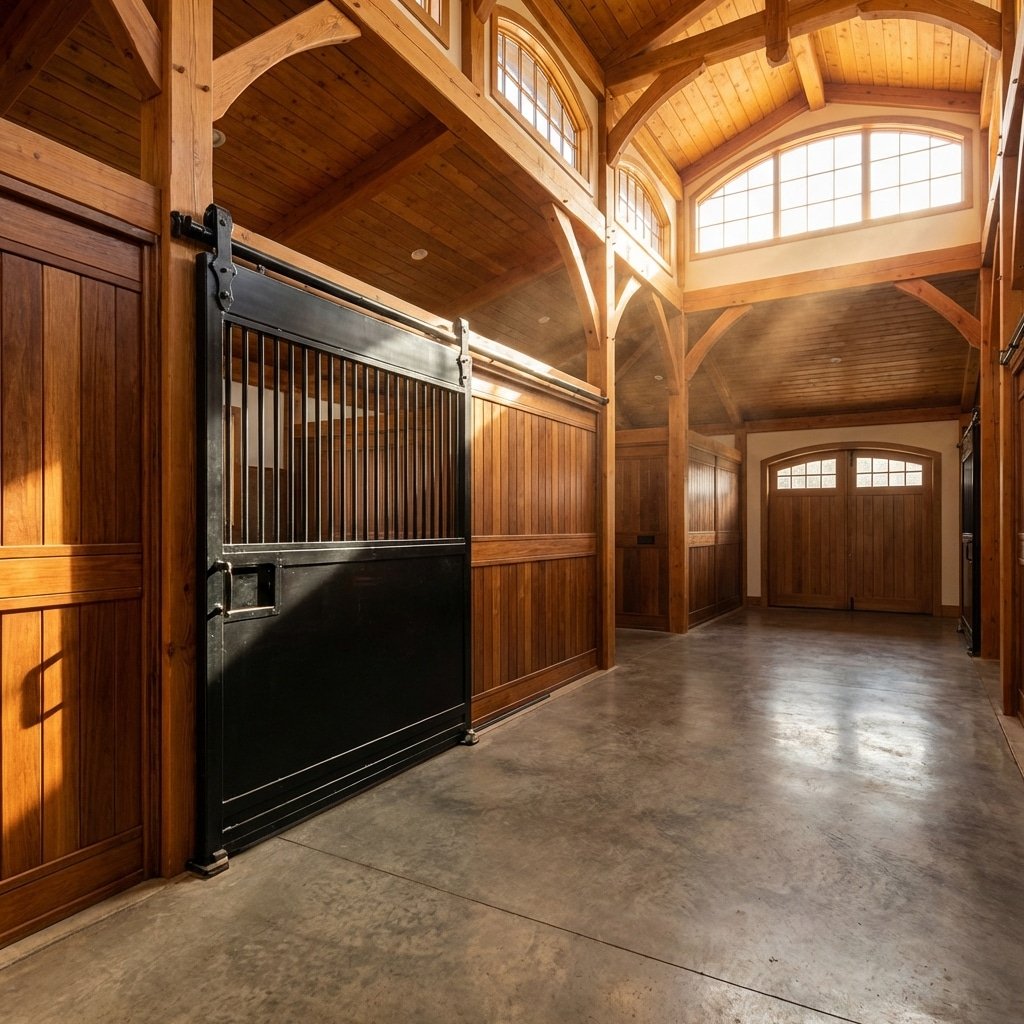
A stall front is a sandwich: a steel frame outside, a board facing the animal inside. Two things destroy that board, and they pull in opposite directions. Moisture arrives from the wash bay, a drainage channel, a wall that never dries, or splash-back at the bottom edge, and decay starts where nobody looks. An internal board in a dry, swept, ventilated stall can sit untouched for years. The galvanized frame beside it carries a stated 20-year claim; the timber carries nothing published, which is exactly why it needs a line on a specification.
Our position, stated plainly: for an internal stall face in a dry yard we would rather have a well-chosen untreated board, or one of the bamboo and HDPE liner options already offered here, than a treated softwood nobody can describe. A preservative you cannot document is a risk bought without a receipt. That is not an argument against treating timber. It is an argument against ordering it blind.
What a treatment line should state
Every framework a buyer might name — use categories, service classes, a retention target — is only useful if the supplier answers against it. So skip the vocabulary contest and ask for five fields. A quotation that fills four of them came from someone who knows the material.
| Field | Weak answer | Ask for |
|---|---|---|
| Species and grade | “Hardwood”, “marine ply” | Named species and the grade rule it is sorted to |
| Treatment status | “Treated”, “weather resistant” | Treated or untreated, per component, in writing |
| Active ingredient | A brand name, or silence | Chemical family plus a safety sheet for a vet or insurer |
| Exposure rated | “Fine outdoors” | Which use class, and whether ground contact is inside it |
| Cut and drilled edges | No mention | Site re-treatment method, because every bolt hole is raw |
Add a sixth if you intend to claim anything later: batch traceability. Ask for a lot or charge number on the packing list rather than one certificate dated to the catalog year. Species and grade decide whether a board still holds a hinge screw after years of being kicked — a softwood that passes on day one swells, shrinks and loosens its fixings — and a lot number is the only thing that connects a delivery to a conversation.
When treated is right, and when it is wrong
Read the exposure of your own building rather than a sales page. A UK or New Zealand yard is specified around drainage and wet-season expectations, so timber sits against damp walls and gets soaked from below. Poland’s stated winter position is minus 10 degrees Celsius, and freeze-thaw splits a saturated board at its bottom edge before decay finishes the work. Australia and Spain sit on the UV and 40-degree position, where sun is a finishing problem for timber rather than a rot problem — there a coating decision belongs in the specification.
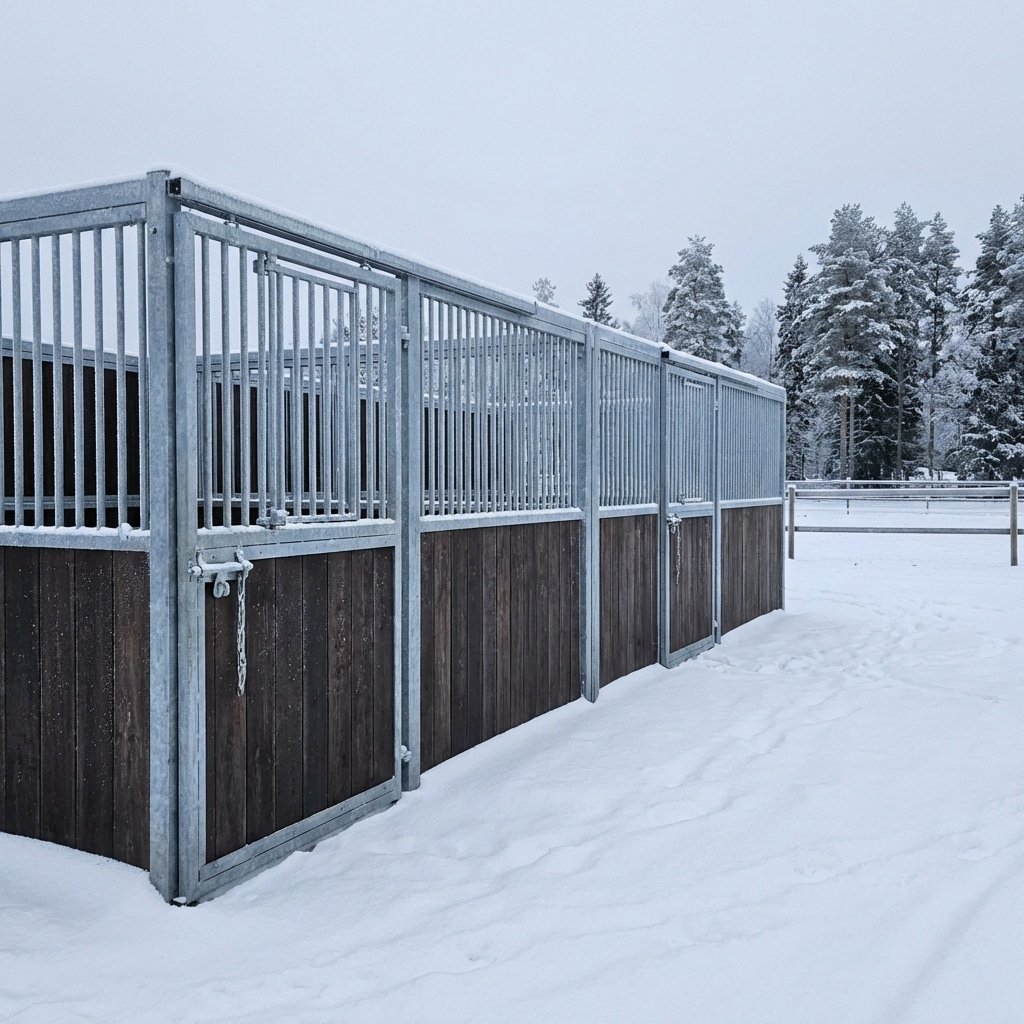
The split is practical. Where a board can stay wet, touch the ground or sit in a wash-down zone, treat it or move to a liner that is not timber at all. Whether a horse will chew a given material is a different question and belongs to another article on this site. Leave timber untreated where it is internal, ventilated and brushed dry — and then specify it on species and thickness instead of trading on the word “untreated” as a safety claim. This site already covers how a wooden barn ages once it stands, in wooden horse stables and timber builds maintenance, and the polymer half of the same choice in HDPE stall liner order questions. This site has no article on the treatment line itself, which is the gap this one fills.
What you can check when the boards land
Timber inspection is a short job with one window: before assembly. Look for a treatment stamp or brand label on a sample from each bundle. Saw an offcut and check penetration on the end grain — colored surface over a pale core usually reads as a dip or a brush coat rather than a pressure process, and may not behave like one. Note the smell, and take a moisture reading on your own meter against the figure in the specification instead of trusting either of you. Photograph stamps, stacks and bundle labels before shrinkage film goes on.
Then close the two gaps nobody considers until a horse does. First, ask whether the preservative is intended for a surface livestock licks and chews, and confirm what is permitted for that use in your market; rules differ by country and product class, and a supplier’s domestic practice is not your compliance answer. Second, write into the installation scope who re-treats every drilled hole and cut end. A stall that arrives with a documented treatment and leaves the yard with undocumented bolt holes has no treatment. It has a memory of one.
الأسئلة المتداولة
Is treated timber safe around horses?
It depends on the product and the market, so make it a written question. Ask what the active ingredient is, whether it suits a surface livestock may lick, and what is permitted where the stall stands.
Can you tell treated from untreated wood by eye?
Not reliably. A stamp and a tint help, but a stain can imitate a treatment. A sawn offcut showing penetration, matched to paperwork, is the most reliable field answer.
What does this site publish about stall timber?
Liner options only: bamboo, HDPE and pine, with adjustable sizes. No species grade, preservative or retention figure is published for the pine, which is why asking for one is worth the email.
Should every board be treated if part of the yard is wet?
Specify per component. A board under a drain channel and a board on an internal partition see different exposure, and a mixed specification is usually cheaper and more honest than a blanket one.
Does a treatment claim change the published 20-year figure?
Only if it is tied to your delivery. Ask for the lot number on the packing list, because the 20-year figure published here covers hot-dip galvanized steel and says nothing about timber.
الخاتمة
Treated or untreated is the easy half. The hard half is being able to say, years later, what was installed, what it was rated for and who decided the cut edges. That is a paperwork question, settled before the timber is ordered and before the first board is fastened.
Put the five fields into your next request for quotation and watch which supplier answers them without a pause. The adjustable stall systems with bamboo, HDPE or pine liner options are on the horse stable page.

 Arabic
 English
 Spanish
 French
 German
0 تعليق