



Selecting the right small barn features is critical to avoid expensive construction errors and long-term safety liabilities. A layout that miscalculates aisle width or uses swinging doors can reduce usable space by over 10 square feet per stall, while ignoring cast-proof designs creates risks that directly impact animal welfare and resale value.
This analysis ranks the top 10 features based on their return on investment and operational efficiency. We benchmark each اختيار التصميم, from the space-saving footprint of sliding doors to the integration of a 12×12 foot tack room, providing the data needed to build a functional and valuable facility.
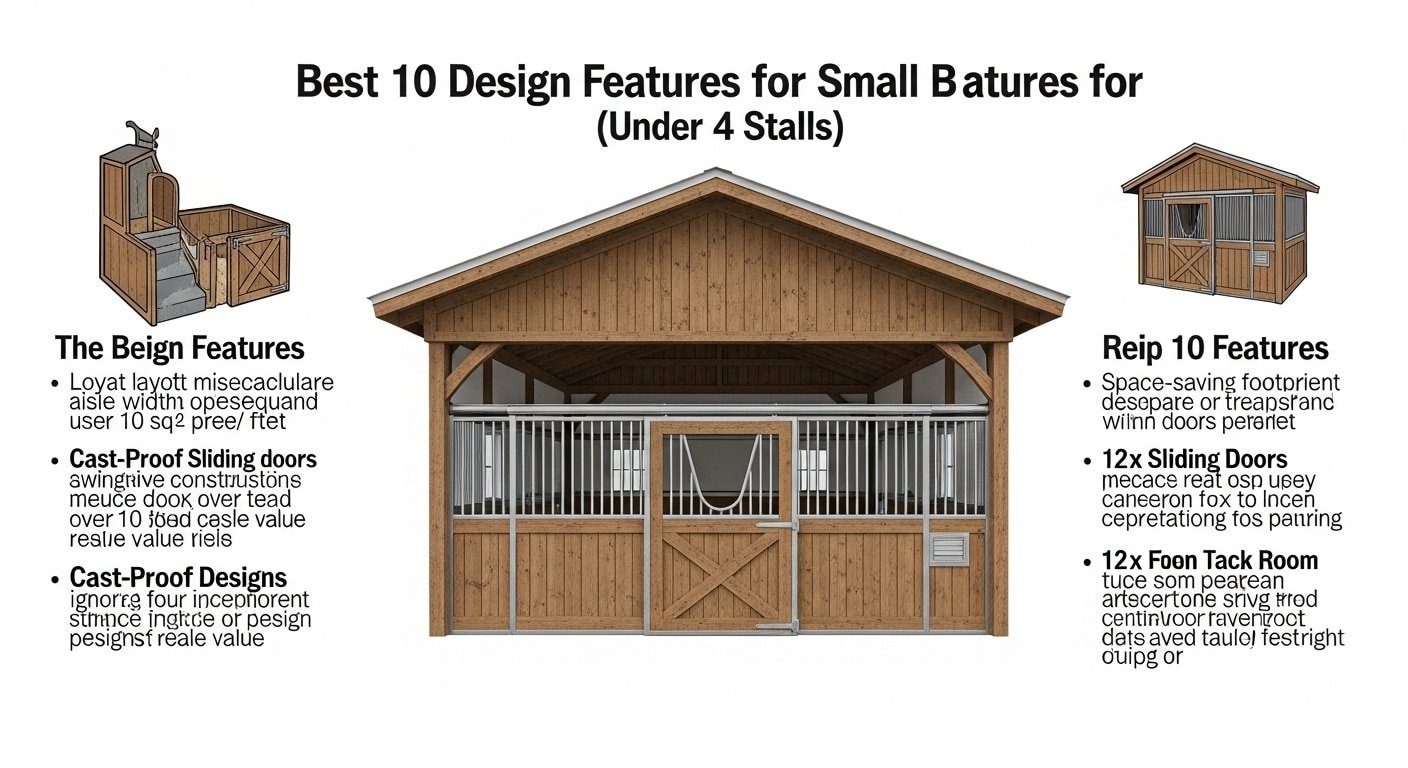
Best 10 Design Features for Small Horse Barns
مقارنة سريعة
| اسم المنتج | الأفضل لـ | الميزة الرئيسية | الحكم |
|---|---|---|---|
Proper Site Evaluation | Prevents Structural Damage | Foundation | Improves natural drainage |
Adequate Stall Sizing | Improves Horse Comfort & Safety | Design | Allows for natural movement |
Wide Stall Doors | Prevents Hip Injuries | السلامة | أبواب منزلقة do not obstruct aisles |
Solid Stall Partitions | Reduces Injury & Disease Spread | Safety & Health | Prevents negative horse-to-horse interaction |
Natural Ventilation Systems | Improves Air Quality | التهوية | Passive airflow reduces humidity |
Appropriate Barn Height | Enhances Airflow & Safety | الهيكل | Prevents potential head injuries |
Wide, Safe Aisles | Ensures Safe Movement | Logistics & Safety | Easily accommodates tractors and equipment |
Durable, Horse-Safe Materials | Increases Longevity & Safety | المواد | Resists wear and tear from horses |
Protected Windows and Openings | يمنع إصابات الاحتباس | السلامة | Provides natural light without compromising safety |
Organized Storage and Feed Rooms | Protects Equipment & Feed | Logistics | Prevents feed spoilage and contamination |
الميزة الرئيسية
Proper Site Evaluation
الحكم: A thorough assessment of topography, drainage, and wind patterns is the first step to a durable and comfortable barn, preventing water damage while maximizing natural heating and cooling.
✅ الخير
- Improves natural drainage
- Optimizes passive heating and cooling
⚠️ السيئ
- Requires a professional site assessment for best results.
الميزة الرئيسية
Adequate Stall Sizing
الحكم: A minimum 12×12 foot المماطلة is a non-negotiable standard for horse welfare. It provides the necessary space for a horse to lie down, turn, and move naturally, which directly reduces stress and prevents common injuries like getting cast.
✅ الخير
- Allows for natural movement
- Reduces stress and injury risk
⚠️ السيئ
- Larger breeds may require 14×14 feet or more for adequate space.
الميزة الرئيسية
Wide Stall Doors
الحكم: Wide المماطلة doors, especially sliding ones, are essential for preventing hip injuries during entry and exit while also maximizing valuable aisle space.
✅ الخير
- Sliding doors do not obstruct aisles
- Wide opening reduces risk of injury
⚠️ السيئ
- Ensure sliding track hardware is heavy-duty and well-maintained.
الميزة الرئيسية
Solid Stall Partitions
الحكم: Solid partitions are a fundamental safety feature. They prevent injuries from kicking or biting between horses and also help control the spread of airborne illnesses, making them essential for a low-stress barn.
✅ الخير
- Prevents negative horse-to-horse interaction
- Contains potential airborne pathogens
⚠️ السيئ
- Requires durable, kick-proof materials for construction.
الميزة الرئيسية
Natural Ventilation Systems
الحكم: Natural ventilation is essential for maintaining superior جودة الهواء in a horse barn. By using features like فتحات التلال, cupolas, and Dutch doors, this system effectively removes harmful ammonia and moisture, which is critical for the respiratory health of the horses.
✅ الخير
- Passive airflow reduces humidity
- Lowers operational التكاليف مقارنة to mechanical systems
⚠️ السيئ
- Requires strategic placement of vents and windows for effectiveness.
الميزة الرئيسية
Appropriate Barn Height
الحكم: A minimum ceiling height of 10-12 feet is crucial to prevent head strikes and improve overall air circulation. Low ceilings can trap heat, restrict airflow, and increase the risk of injury.
✅ الخير
- Prevents potential head injuries
- Promotes effective convective air circulation
⚠️ السيئ
- A height of 12-14 feet is necessary if you plan to ride in the aisle.
الميزة الرئيسية
Wide, Safe Aisles
الحكم: Wide, safe aisles are non-negotiable for barn safety and efficiency. A minimum width of 12 feet allows for easy passage of horses and equipment, while non-slip الأرضيات is essential to prevent dangerous falls.
✅ الخير
- Easily accommodates tractors and equipment
- Allows multiple handlers and horses to pass safely
⚠️ السيئ
- Flooring choice is critical; it must provide excellent traction.
الميزة الرئيسية
Durable, Horse-Safe Materials
الحكم: Using materials like powder-coated steel, heavy timber, and rubber mats is a non-negotiable for ensuring a barn’s long-term durability and the safety of the horses. These choices resist damage from kicking and chewing while providing essential comfort and traction.
✅ الخير
- Resists wear and tear from horses
- Minimizes risk of splinters, chewing, or sharp edges
⚠️ السيئ
- Involves a higher upfront cost for high-quality materials.
الميزة الرئيسية
Protected Windows and Openings
الحكم: This feature is crucial for balancing natural light and ventilation with the absolute necessity of preventing injuries. Proper installation—high placement, tempered glass, and correctly spaced bars—is non-negotiable to stop a horse from getting a head or hoof stuck.
✅ الخير
- Provides natural light without compromising safety
- Allows for additional ventilation control
⚠️ السيئ
- Bar spacing must be precise (3 inches or less) to be effective.
الميزة الرئيسية
Organized Storage and Feed Rooms
الحكم: Dedicated, enclosed rooms for tack and feed are vital. They protect valuable equipment from moisture and pests while ensuring feed stays fresh and secure, which helps streamline daily operations.
✅ الخير
- Prevents feed spoilage and contamination
- Keeps expensive tack secure and in good condition
⚠️ السيئ
- Requires a fully enclosed space, separate from the مرابط الخيول.
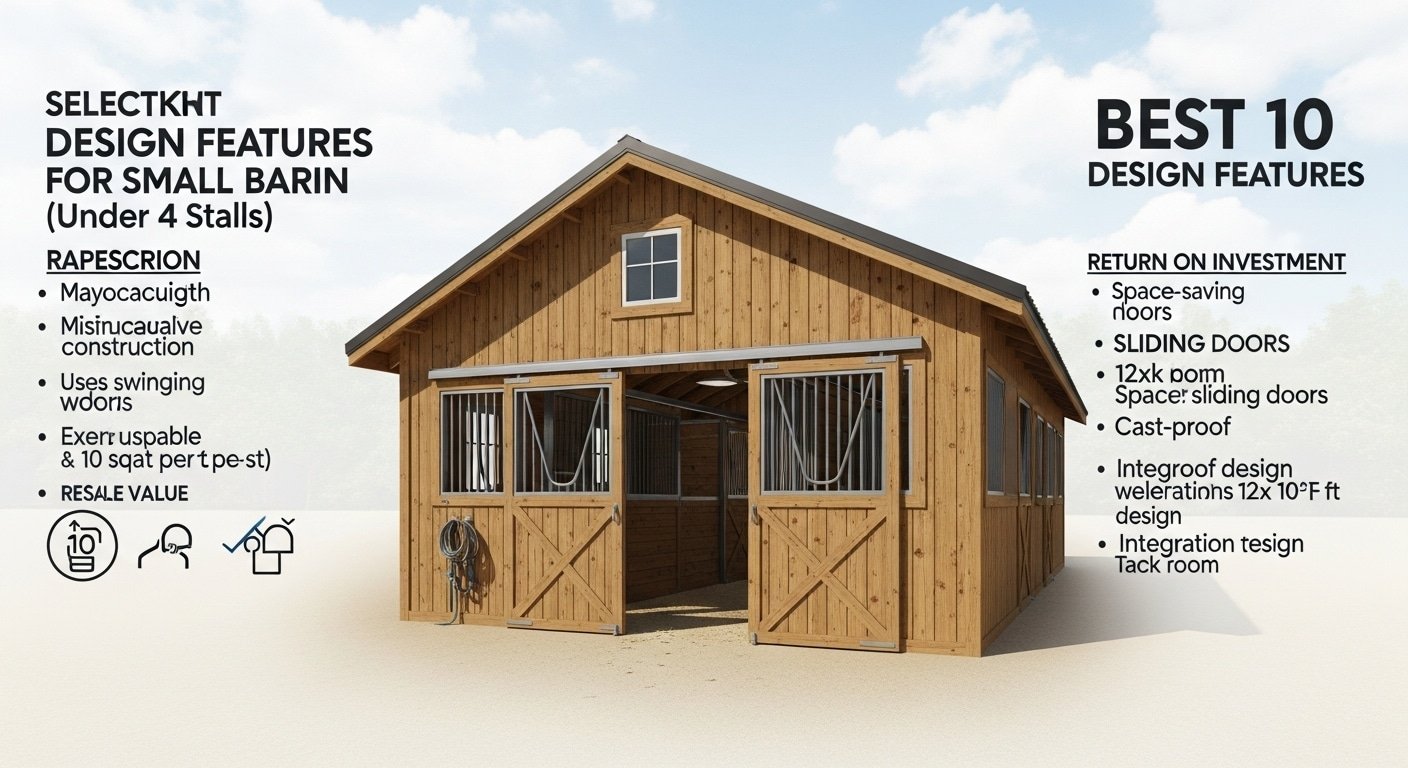
How to Maximize Space in a Compact Barn?
Maximizing space in a compact barn relies on three core strategies: utilizing vertical storage, implementing efficient organizational zones, and choosing multi-functional or space-saving designs. By building upwards, organizing intelligently, and selecting strategic components like sliding doors, you can significantly increase the usable area without expanding the barn’s physical footprint.
Utilize Vertical Space
One of the most effective ways to reclaim space is to think vertically. Install sturdy, ceiling-height shelving units for supplies, tools, and equipment. For bulkier or less frequently used items, overhead racks or a purpose-built loft can free up valuable floor space. A loft effectively converts unused “dead air” into a functional storage area, workshop, or even a small office, adding utility without expanding the barn’s foundation.
Implement Efficient Storage Systems and Zones
An organized barn is a spacious barn. Divide the interior into designated zones based on function—such as a feeding zone, a tack area, and a tool station—to prevent clutter and streamline workflow. We recommend modular solutions like stackable bins, wall-mounted pegboards for tools, and corner shelves to make use of every inch. Hanging systems for ladders, hoses, and bikes are also excellent for keeping floors clear and accessible.
Incorporate Multi-Functional and Strategic Design
Every element in a compact barn should work hard. Invest in furniture that serves multiple purposes, like a workbench with built-in drawers or benches with lift-up storage tops. The choice of doors is also critical. A traditional swinging door can consume 10–12 square feet of valuable aisle space. Our stable fronts are engineered with smooth-gliding sliding doors that operate within their own footprint. This design choice not only enhances safety by keeping aisles clear but also maximizes the return on your clients’ investment in an efficient, compact facility.
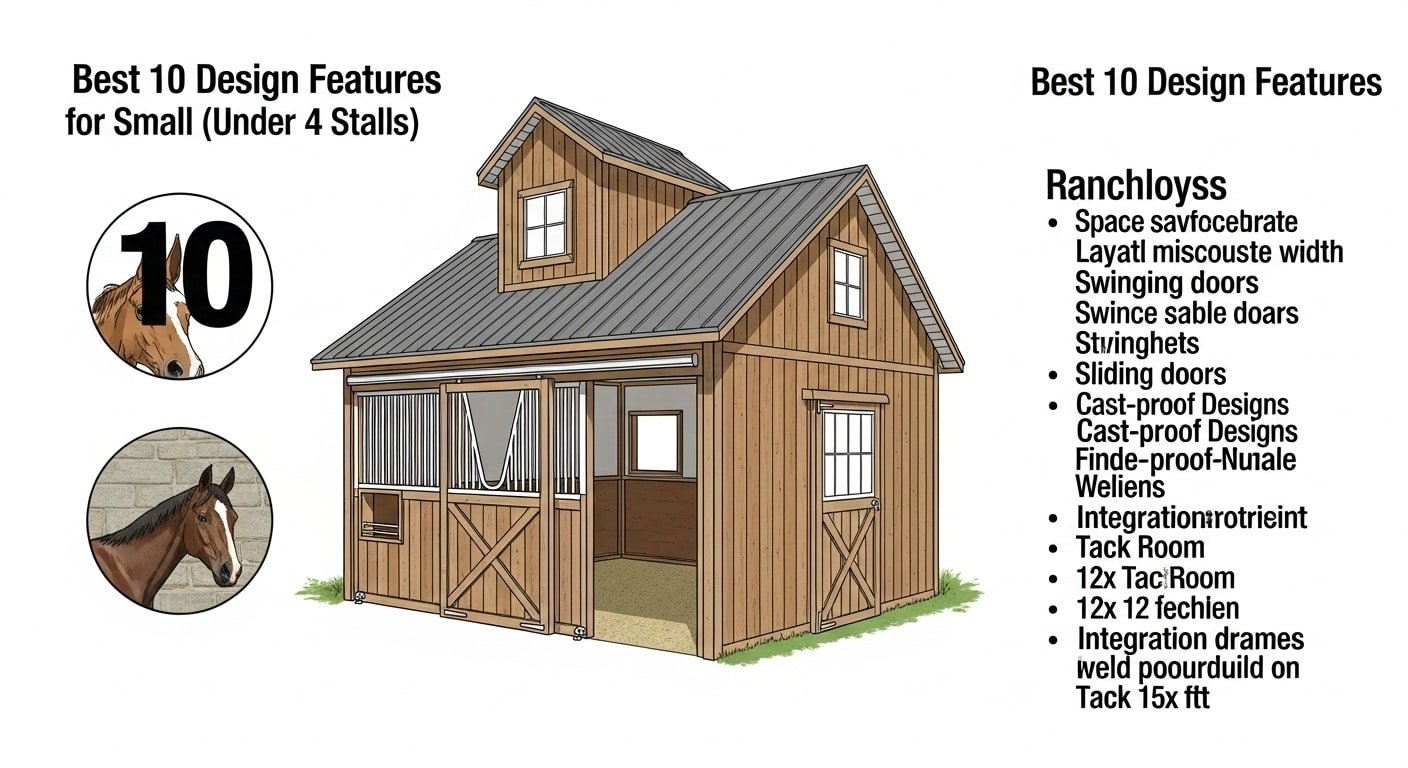
Can Rotating Feeders Save You 5 Square Feet?
While a specific “5 square feet” saving is not validated by industry research, rotating and swivel feeders are engineered to improve space efficiency. They reduce a feeder’s physical footprint, freeing up valuable floor area in the stall. We integrate this space-saving design into our Professional Series أنظمة مستقرة to maximize usability, especially in compact barn layouts.
How Feeder Design Directly Impacts Stall Footprint
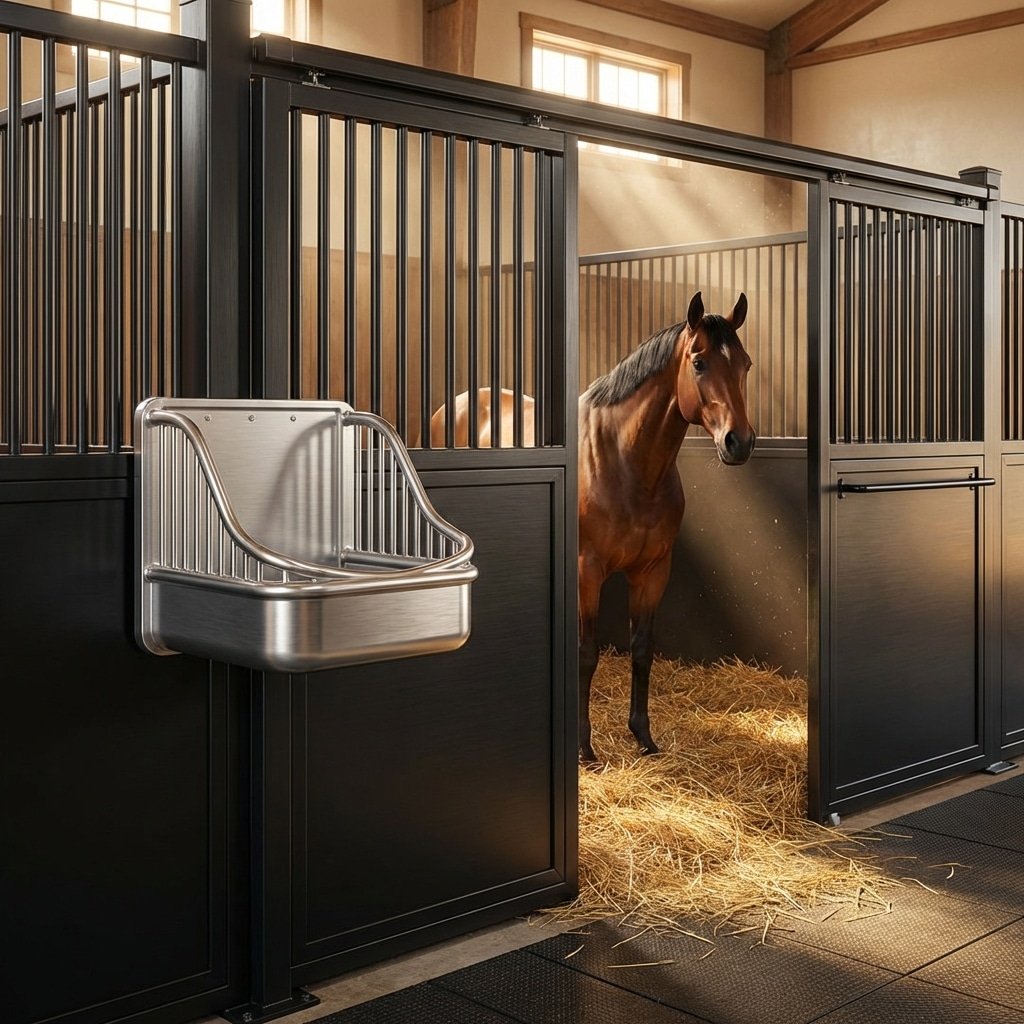
Feeder design is a critical factor in stall layout and space management. Solutions like rotating, pivoting, and corner feeders are engineered to maximize the usable area within a stall. Unlike traditional, bulky feeders that protrude into the horse’s living space, our swivel mangers tuck neatly into corners or along walls. This design choice, integrated into our Professional Series, not only frees up floor space but also improves daily workflow with features like pivoting access for easy feeding from the aisle.
Indirect Space Savings from Waste Reduction
Efficient feeder design also creates space savings outside the stall by minimizing hay waste. Some studies show that optimized feeders can reduce hay loss from over 57% down to as low as 5%. For barn managers, this translates directly into a smaller footprint needed for hay storage and less area dedicated to waste cleanup and disposal. By controlling waste, you create a more efficient and spacious barn layout overall.
Validating the 5 Square Foot Claim
While rotating feeders clearly offer space-saving benefits, the claim of saving a specific “5 square feet” is not something we can validate with precise measurements from available research. The actual space saved depends on the original feeder’s size and the specific stall layout. The real value lies in the principle of maximizing usable space, which these modern designs achieve effectively, rather than a fixed number.
Global Stables Engineered for 20-Year Durability
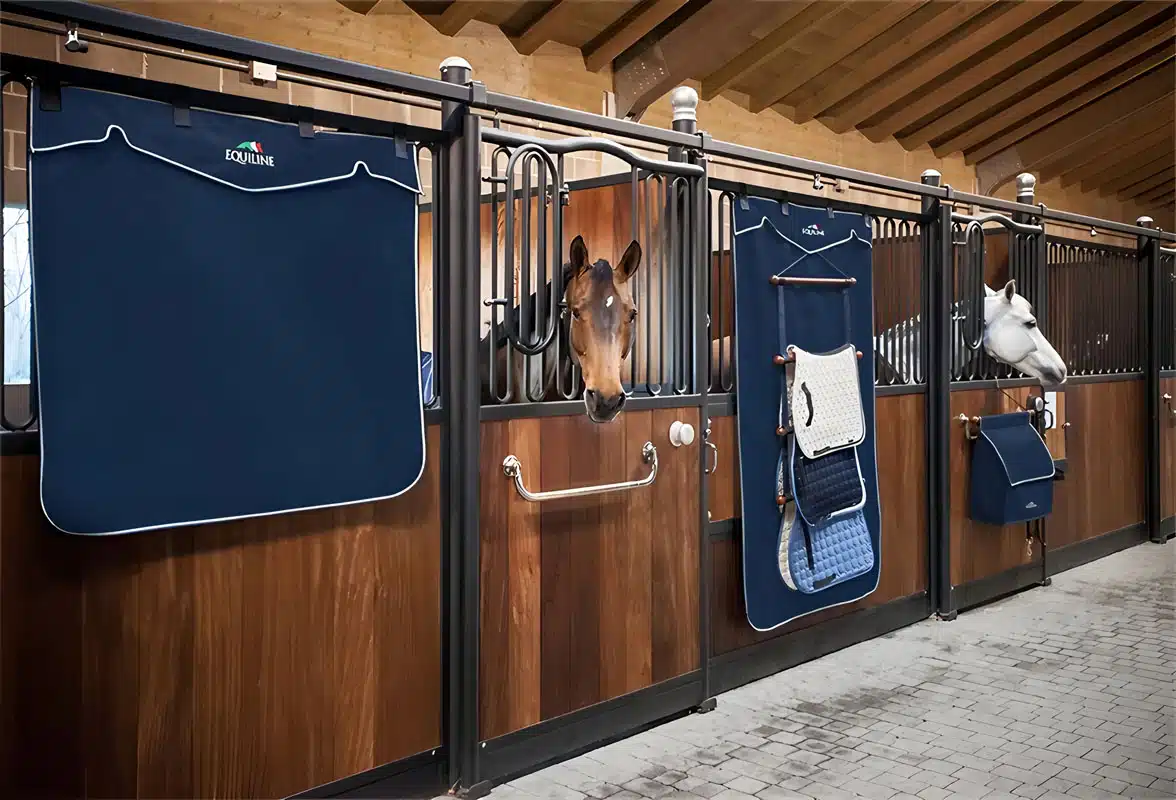
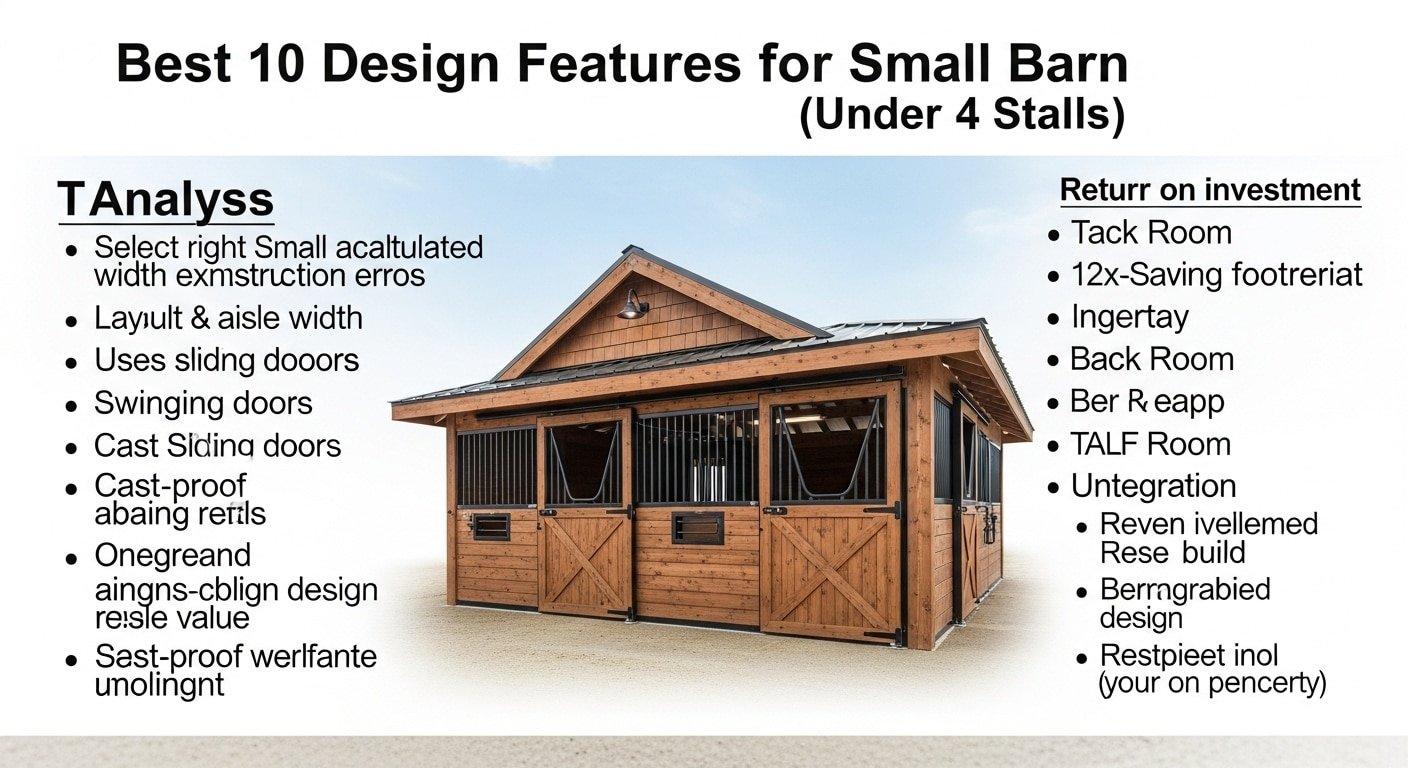
How to Integrate a Tack Room in a 4-Stall Layout?
Integrating a tack room into a four-stall layout is most effectively achieved with a center-aisle design. A common footprint of 40×40 feet comfortably accommodates four 12×12 stalls, a dedicated 12×12 tack room, and a 12-foot center aisle, creating a safe and weather-protected workspace for efficient daily operations.
Key Layout Configurations
The center aisle design is the most efficient and popular configuration. A common barn footprint of around 40×40 feet allows for four 12×12 stalls, a 12×12 tack room, and a generous 12-foot center aisle. This layout creates a valuable, weather-protected corridor for year-round horse handling. While smaller footprints like 28×30 feet are possible, they often require reducing stall sizes to 10×10, which can impact animal comfort and resale value. Our stable systems are engineered to fit these standard 12×12 layouts, simplifying project planning for distributors.
Important Design Details
When planning, it’s critical to verify that stall dimensions are a true 12×12 feet internally, accounting for the thickness of partitions. Our stable partitions are designed with these tolerances in mind to simplify installation. A 12-foot aisle provides a safe and efficient working space, and adding a 10-foot overhang offers superior weather protection. For compact designs, consider combining the tack and feed functions into a single, flexible storage room to maximize usable space without sacrificing essential functions.
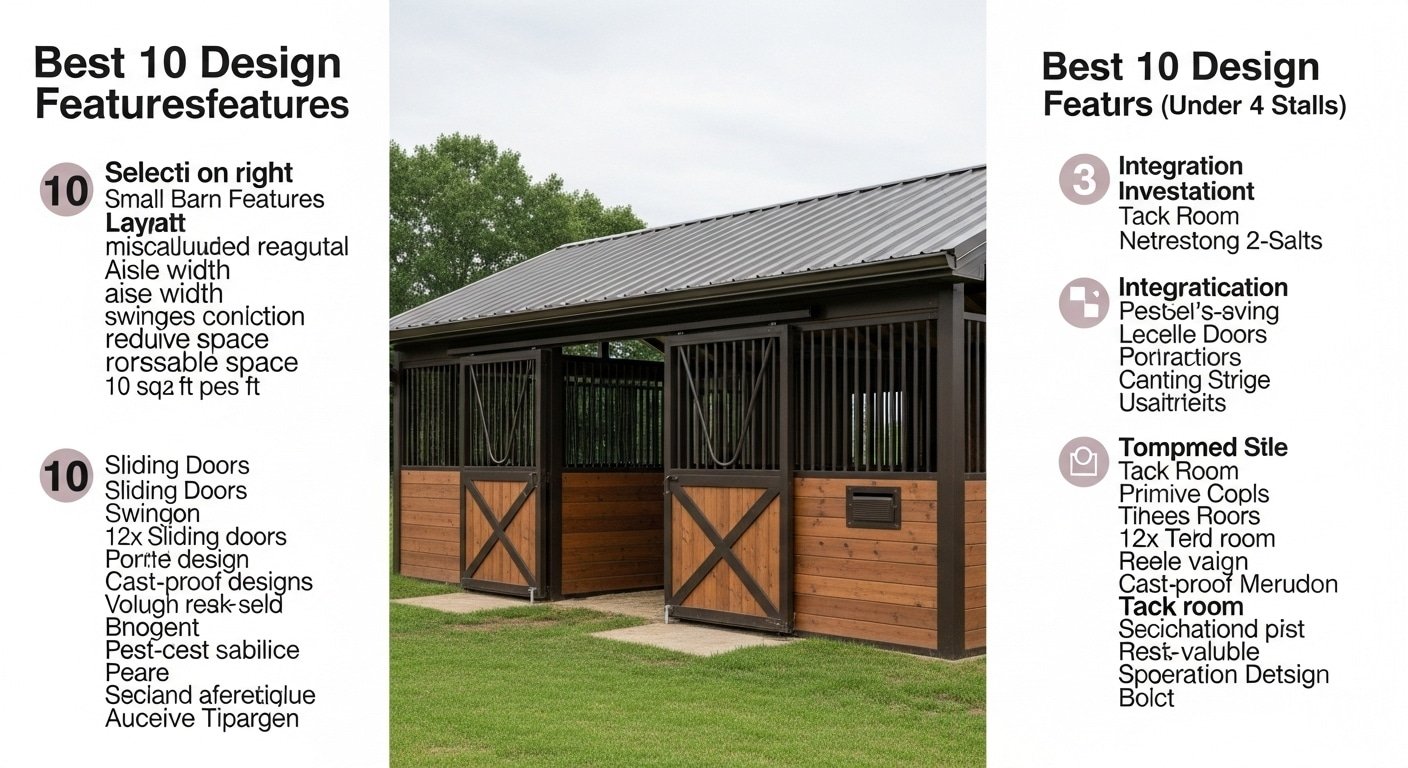
Why Sliding Doors Are a Smart Choice for Narrow Aisles
Sliding doors are not universally mandatory for narrow aisles, but building codes often permit them as a space-saving alternative to swinging doors. Their primary advantage is eliminating the swing arc that obstructs the walkway, ensuring the entire aisle width remains clear for moving horses and equipment safely.
Correcting a Misconception: Permitted, Not Mandatory
Building codes do not mandate sliding doors for all small aisles. Instead, they are an approved option under specific conditions, particularly for areas with a low occupant load, typically 10 people or less. Swinging doors remain the standard for many egress routes, but sliding doors serve as a crucial exception in space-constrained designs where safety and clearance are paramount.
The Core Benefit: Maximizing Usable Aisle Space
The main reason facility managers choose sliding doors for narrow aisles is their zero-intrusion design. A sliding door doesn’t have a swing arc that projects into the walkway. This ensures the entire aisle width remains clear and usable, preventing blockages when moving horses, feed carts, or equipment. A standard swinging door can reduce the usable aisle width by more than 7 inches, creating a significant hazard in an already narrow passage.
Safety and Clearance Regulations
Regardless of the type, doors must provide a clear opening of at least 32 inches to meet modern safety and accessibility standards. Aisles must be kept free of obstructions to ensure safe passage for handlers and animals. Our stable systems offer both sliding and hinged door options, and we engineer each one to meet these strict clearance requirements within a compact footprint, ensuring your facility is both efficient and safe.
الأفكار النهائية
Smart design features mean nothing without the engineering to back them up. While pre-galvanized components lower initial cost, our Hot-Dip After Fabrication standard is the only true defense against rust and warranty claims. This is how you protect your reputation and secure long-term client trust.
Don’t leave quality to chance. We recommend a trial order to personally inspect our ISO 1461 galvanization and heavy-gauge steel construction. Contact our engineers to discuss your project or explore how our flat-pack system can protect your الشحن margins.
الأسئلة المتداولة
What is the recommended stall size for a small horse barn?
The accepted standard is a minimum of 12×12 feet per stall. For larger breeds, it is better to provide a 14×14 foot space to ensure the horse can turn around and lie down comfortably.
How wide should the aisle be in a compact barn?
An aisle width of 14 feet or more is highly recommended. This provides enough room for a horse and handler to pass each other safely and allows for the movement of small equipment without feeling cramped.
What are the most common materials for small barns?
The main choices are metal and wood. Metal construction, especially مجلفن بالغمس الساخن steel, offers excellent durability and resistance to weather. Wood provides a classic look but may require more maintenance over its lifespan.
Should a small barn be designed for future expansion?
Yes, planning for future growth is a key consideration. تصميمات معيارية, like shed row layouts, are popular because they make it simple to add more stalls later without needing a complete structural overhaul.
Are there more cost-effective designs than a traditional barn?
Shed row and run-in style barns are excellent cost-effective alternatives. They offer functional, safe shelter and are often easier and quicker to construct than a full center-aisle barn.
Can I fit a wash rack in a 4-stall barn?
Fitting a wash rack in a 4-stall barn is possible with careful planning, though space will be tight. The minimum size for a wash rack is 8 feet wide by 12 feet long. Given that standard stalls are 12×12 feet and aisles are at least 10-12 feet wide, you would likely need to repurpose one stall area or integrate the wash rack into a utility area. Success depends on the barn’s overall layout and dimensions.
Is a 36×24 barn big enough?
A 36×24 barn, providing 864 square feet, is large enough for several uses. It can function as a two-car garage with extra storage, a small workshop, or a horse barn. A common configuration includes three 12×12 foot stalls, a 12×12 foot tack room, and a 12-foot center aisle. Its suitability depends on your specific needs, but it’s a versatile size for small-scale operations.
How do I store hay in a small barn?
For small barns, store hay indoors in a dry, well-ventilated area. Elevate the bales on pallets to prevent ground moisture absorption, which causes mold. Leave space between bales and between the stacks and walls for air circulation. Using the ‘First In, First Out’ method ensures older hay is used first, minimizing nutritional loss.
Do I need a dedicated feed room?
Yes, a dedicated feed room is essential for safety and organization. It prevents horses from accessing grain, which can cause serious health issues like colic or laminitis. A separate room also allows for better climate control to keep feed fresh and provides an organized space to prepare individual rations accurately.
Can I use the aisle for grooming?
Yes, you can use the aisle for grooming by installing crossties, but only if the aisle is wide enough. A private barn aisle should be at least 10-12 feet wide, while commercial barns need 14-16 feet to ensure safe passage for other horses and handlers. For safety, a horse should never be left unattended on crossties.
What is the smallest safe tack room size?
The smallest recommended size for a functional tack room is 10×10 feet. This provides enough space for essential equipment like saddles and bridles. If the room must also store feed or include a seating area, a size of at least 14×14 feet is more practical to allow for safe movement and better organization.

 Arabic
  English
  Spanish
  French
  German
0 تعليق